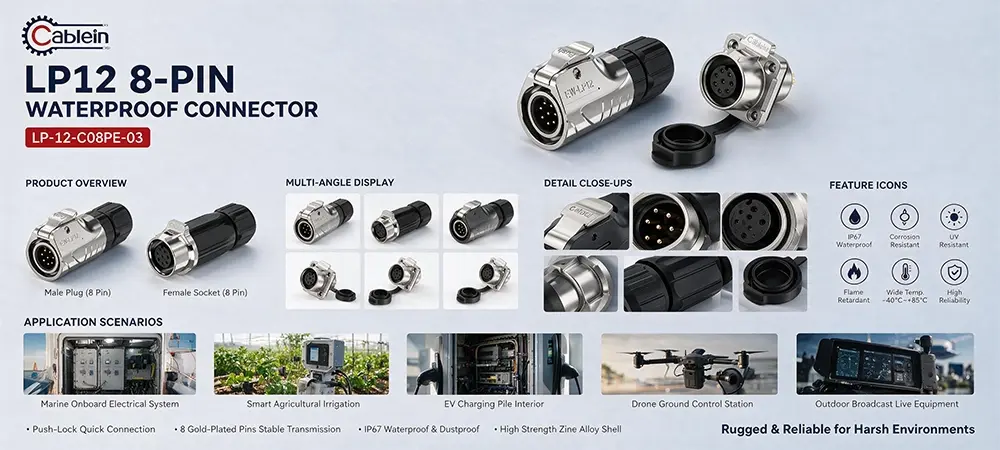
LP12 8-Pin Metal Aviation Plug
2. 8 pins give you room — power plus multiple signal lines in one plug.
3. We tested it past 2000 cycles. Field conditions are rougher than spec sheets suggest.
4. IP68 isn't just a checkbox. We dunk these in water to confirm they seal.
5. Solder terminals. No crimping tools, no training. Any tech can wire it in minutes.
6. 3A at 100V. Handles sensors, LED fixtures, small motors — without overbuilding.
7. M12 footprint. Fits where larger plugs won't go. Those millimeters matter.
8.Part Number:LP-12-C08PE-03-001 LP-12-J08PP-03-001 LP-12-J08SX-03-101 LP-12-J08SX-03-401.
LP12 8-Pin Metal Aviation Plug – All-Metal Shielded Connection for Demanding Environments
We build industrial waterproof connectors for a living, and the LP12 8-Pin Metal Aviation Plug is one of our tougher builds. It's made for equipment that runs in places where vibration, moisture, and electrical noise are everyday problems. The all-metal zinc alloy shell does two jobs at once — it takes physical abuse that would crack a plastic housing, and it shields the signal path from EMI/RFI interference. Solder terminals lock the wires in place, so vibration won't shake them loose.
LP12 8-Pin Metal Aviation Plug – Why Solder Beats Crimp in High-Vibration Settings
Here's the thing about crimped connections: they're fast, but they can loosen over time when equipment shakes. The LP12 8-Pin Metal Aviation Plug uses solder terminations instead. That's a deliberate choice. Soldered joints don't back out, don't corrode at the contact point, and don't depend on the crimp tool's calibration.
We ran this plug through 2000+ mating cycles and vibration testing. The metal shell stays locked, the solder joints stay intact, and the gold-plated contacts keep their resistance stable. In coastal air or humid factories, that matters more than any spec sheet number.
Key Features That Set This Aviation Plug Apart
The LP12 8-Pin Metal Aviation Plug isn't a general-purpose connector dressed up with a fancy name. The all-metal construction gives you EMI shielding that plastic-shell versions simply can't provide — useful when your equipment sits near motors, inverters, or radio gear. The silicone seal holds IP68 protection when mated, so rain, washdown, and short-term submersion aren't a problem.
Eight pins give you room for power plus multiple signal lines. The M12 footprint fits tight enclosures. And the threaded coupling stays put — we've seen these hold on construction equipment and marine gear without working loose.
Technical Specifications at a Glance
|
Parameter |
Specification |
|
Pin Count |
8-Pin |
|
Rated Current |
3A |
|
Rated Voltage |
100V |
|
Withstand Voltage |
1000V AC |
|
Contact Resistance |
< 5.0 mΩ |
|
Insulation Resistance |
≥ 500 MΩ |
|
Temperature Range |
-40℃ to +80℃ |
|
Protection Rating |
IP67 / IP68 (when mated) |
|
Mating Cycles |
> 2000 times |
|
Housing Material |
Zinc Alloy (All-Metal) |
|
Contact Material |
Gold-plated Copper Alloy |
|
Shielding |
EMI/RFI protection from metal shell |
|
Assembly Type |
Soldering |
Where This Aviation Plug Actually Gets Used
This connector shows up in places where signal integrity and mechanical durability both matter. Industrial control panels near variable-frequency drives. Outdoor security systems in coastal areas. Marine electronics. Solar tracking systems. Test equipment that gets moved around. The all-metal shell and soldered joints are the reasons engineers pick it over plastic-shell alternatives.
We test every batch for electrical continuity and waterproof performance. Not spot checks — actual verification. It takes longer, but it keeps field failures off your desk.
Quality Control and Certifications
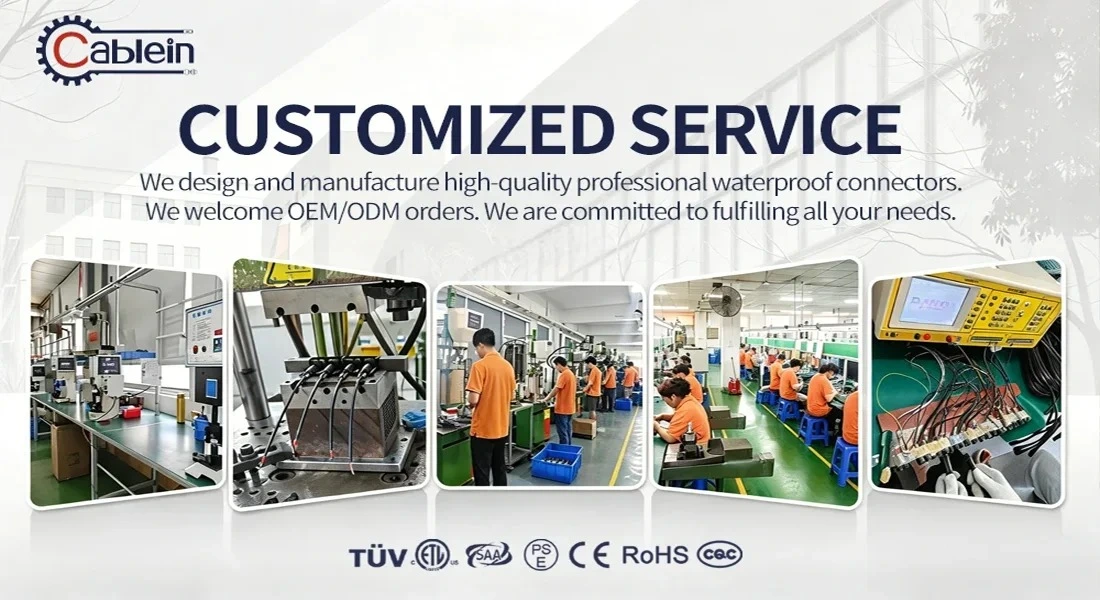
The LP12 series carries TUV, CE, and RoHS certifications, and we operate under ISO9001:2015. Consistent material sourcing, traceable production records, and a quality system that gets audited — not just claimed.
Quick Questions We Get Asked
Q: Metal shell or plastic — which one do I actually need?
A: If your equipment sits near motors, VFDs, or radio gear, go metal. The shielding cuts EMI/RFI that can corrupt signal. If it's a clean environment, plastic is lighter and cheaper.
Q: Why does this plug use solder instead of crimp?
A: Vibration. Soldered joints don't back out the way crimped ones can. On moving equipment or machinery that shakes, solder holds up better over time.
Q: Can I mix power and signal on the same 8-pin plug?
A: Yes. Up to 3A per contact, 100V. You can run power on some pins and low-voltage signal on the rest. Just tell us your pinout and we'll match it.
Q: How does the threaded coupling compare to a snap-lock?
A: Threaded coupling takes slightly longer to mate, but it resists vibration better. That's why we use it on the aviation plug — it's built for equipment that moves.
Ready to Get Started?
For technical specs, custom pinouts, or samples of the LP12 8-Pin Metal Aviation Plug, email nick@cableinco.com. If you're dealing with EMI or vibration issues, tell us about it — we've probably run into it before.