LP24 2-Pin Waterproof Solder Plug
2. Soldered joints, not crimped. They don't work loose under vibration, and they don't corrode.
3. IP68 sealing. Submersion tested at 2 meters for 24 hours — not just a splash rating.
4. Takes 6mm² cable (10 AWG) with a 14mm outer diameter. Power-class wire only.
5. Hybrid housing — metal on the coupling thread, plastic elsewhere to keep the weight down.
6. Marine use, outdoor power distribution, industrial washdown — all fine.
7. If you need field-wireable without a soldering iron, our screw-lock LP24 variants cover that.
8.Part Number:LP-24-J02PE-01-001 LP-24-C02PP-01-001 LP-24-C02SX-01-101 LP-24-C02SX-01-401.
LP24 2-Pin Waterproof Solder Plug – 35A High-Current Connection with IP68 Sealing
We build industrial connectors for a living, and the LP24 2-Pin Waterproof Solder Plug is the one we reach for when the current is high and the environment is unforgiving. 35A per contact at 500V, soldered terminals for a permanent bond, and IP68 sealing that doesn't flinch at rain, washdown, or short-term submersion. Two pins, one job — move serious power through a connection that stays sealed.
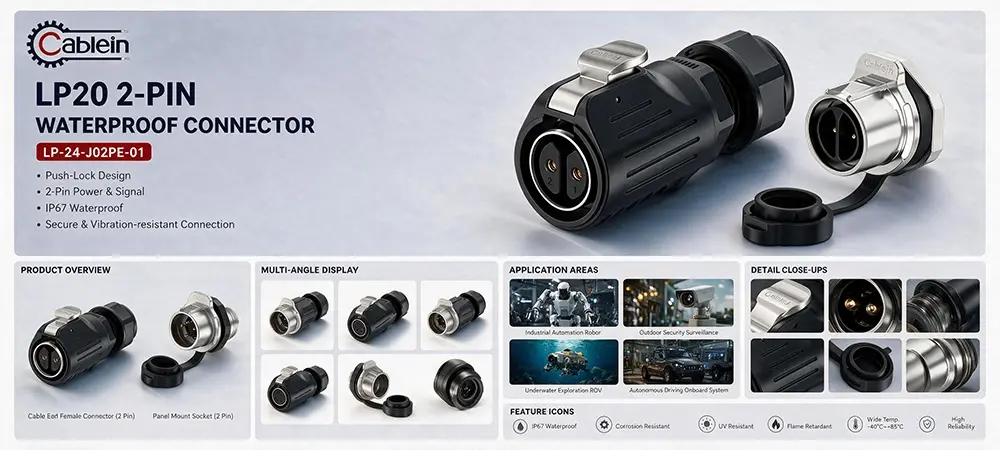
LP24 2-Pin Waterproof Solder Plug – Built for High-Current, Wet Environments
Most 2-pin connectors top out at 10A or 20A. This one handles 35A. That's the difference between powering a sensor and powering a motor, a pump, or a heating element. The solder terminals are a deliberate choice — crimped connections can loosen under vibration, but a properly soldered joint doesn't back out. For equipment that shakes, that matters.
The IP68 rating means this plug can sit in standing water or get hit by a pressure wash without letting moisture in. We've tested it at 2 meters for 24 hours. Cable entry handles 6mm² (10 AWG) wire with a 14mm outer diameter — thick cable for serious current.
Why Solder Terminals, Not Screw or Crimp
Screw terminals are fast, and crimped connections are faster still — in a factory. But at 35A, with vibration in the mix? Soldered joints win. No corrosion at the contact point. Nothing works loose over time. And you're not relying on whether someone remembered to calibrate the crimp tool that morning.
Housing's a mix — metal on the coupling thread where it wears, plastic everywhere else so it doesn't get heavy. IP68 sealing, so marine use, outdoor power distribution, industrial washdown — all fine.
Technical Specifications at a Glance
|
Pin Count |
2-Pin |
Protection Rating |
IP68 (when mated) |
|
Rated Current |
35A |
Housing Material |
Zinc Alloy + Engineering Plastic |
|
Rated Voltage |
500V |
Contact Material |
Gold-plated Copper Alloy |
|
Withstand Voltage |
2500V AC |
Cable Range |
6mm² (10 AWG) |
|
Contact Resistance |
< 5.0 mΩ |
Cable O.D. |
Φ14mm |
|
Insulation Resistance |
≥ 500 MΩ |
Assembly Type |
Soldering |
|
Temperature Range |
-40℃ to +80℃ |
Where This High-Current Plug Actually Gets Used
This connector shows up where 35A meets water. Marine shore power. Outdoor EV charging equipment. Industrial motor junction boxes. Pump stations. Construction site power distribution. Agricultural irrigation controls. Anywhere you need to push serious current through a connection that gets wet.
We test every batch for dielectric strength and waterproof performance. The solder joints get pull-tested, not just visually inspected. It adds time, but it saves callbacks.
Quality Control and Certifications
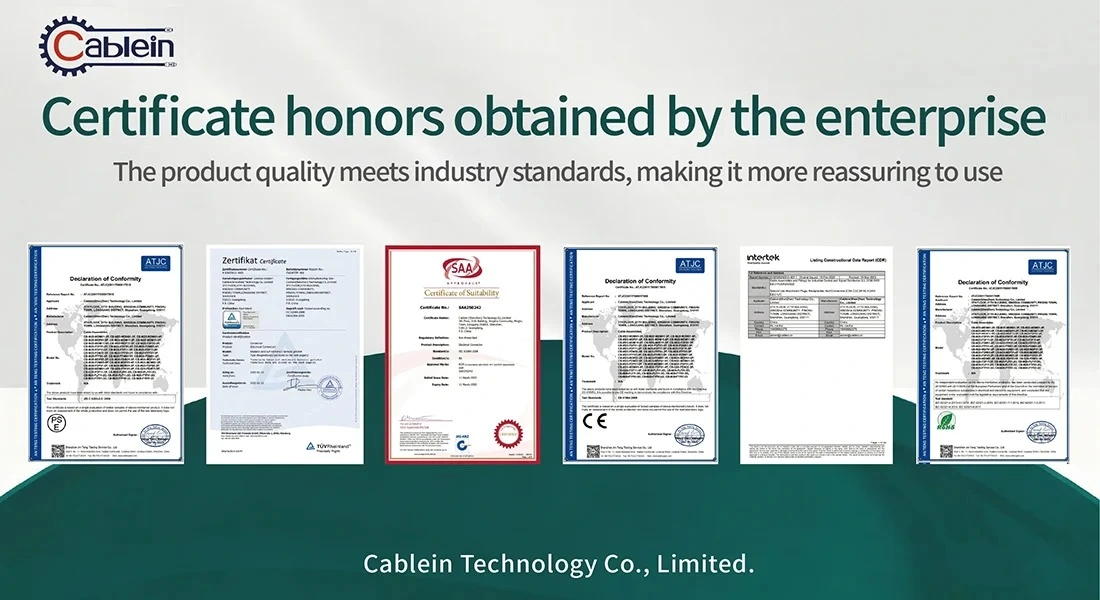
The LP24 series carries TUV, CE, and RoHS certifications, and we operate under ISO9001:2015. Consistent material sourcing, traceable production records, and a quality system that gets audited — not just claimed.
Quick Questions We Get Asked
Q: Why solder instead of screw terminals?
A: Vibration and current. At 35A, a loosened screw terminal heats up fast. A soldered joint stays put, doesn't corrode, and doesn't depend on torque specs being followed in the field.
Q: What cable size does it accept?
A: 6mm² (10 AWG) with a 14mm outer diameter. That's power-class cable, sized for the current rating.
Q: Is IP68 enough for continuous submersion?
A: Yes. IP68 means it's rated for continuous immersion under specified conditions. We test at 2 meters for 24 hours.
Q: Can I re-terminate in the field if needed?
A: Yes, but it requires a soldering iron. If you need tool-free field wiring, our screw-lock LP24 variants are a better fit.
Ready to Get Started?
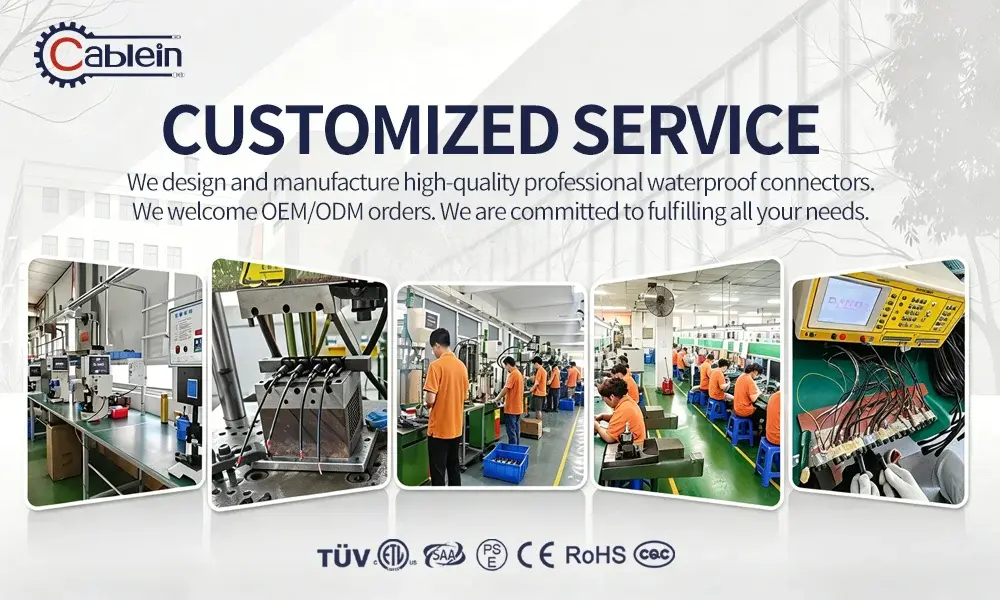
For specs, custom pin configurations, or samples of the LP24 2-Pin Waterproof Solder Plug, email nick@cableinco.com. Tell us your current and cable size — we'll confirm the right build.