How does a qc20 quick disconnect connector function?
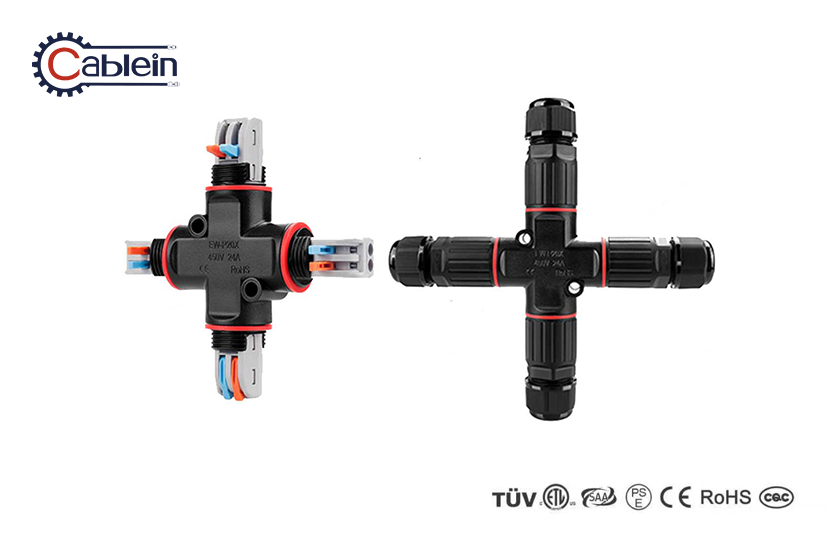
When working on important manufacturing systems, being able to safely connect or separate power without tools saves time and lowers risk. The QC20 quick disconnect Connector is a high-performance electrical coupling that is made to connect and disconnect quickly in harsh conditions. This connector is made of tough PA66 nylon and has solid brass pins that are gold-plated and a silicone sealing ring. It makes connections that are reliable and waterproof up to IP67 or IP68. The quick clamp system lets you securely tighten it by hand without any extra tools. This makes it perfect for places like EV charging stations, heavy machinery, and outdoor LED setups where speed, safety, and protecting the environment are all musts.
Introduction
Connectors that are efficient, long-lasting, and safe are needed for many industrial tasks. Connection stability has a direct effect on uptime and running costs, whether you're in charge of an outdoor LED lighting network, setting up charging stations for electric vehicles, or keeping large industrial equipment. QC20 Quick Disconnect Connectors have become the best choice for uses that need to be maintained often, are exposed to tough environments, or need to send a lot of current.
It's a big step forward in this area that the QC20 waterproof connector exists. Quick disconnect technology lets field techs make safe electrical connections in seconds, while standard screw-terminal or solder connections need special tools and skilled workers. This efficiency means lower costs for installation, less downtime for maintenance, and more safety for workers who are doing dangerous or wet jobs. Understanding how these connectors work and choosing the right specs for your application can make the results of your project much better and make them more reliable in the long run.
Understanding the QC20 Quick Disconnect Connector: Core Functionality
What Makes a Quick Disconnect Connector Essential
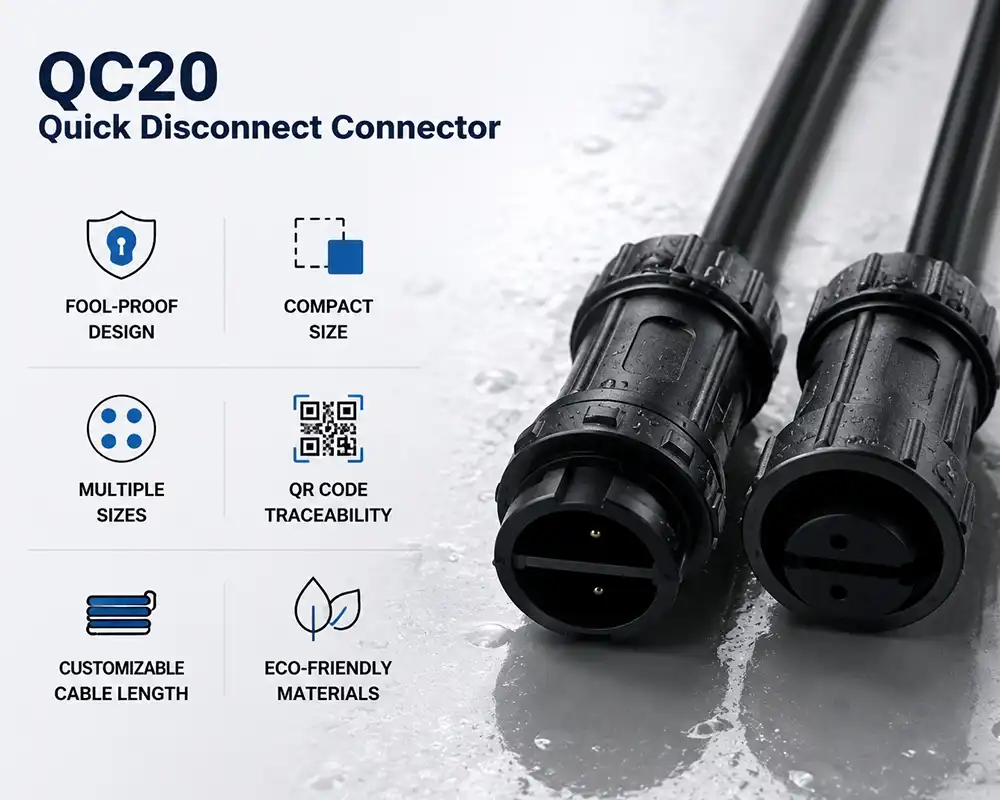
More and more, industrial and business uses need connectivity options that can work in harsh environments and be set up quickly. This need is met by the QC20 Quick Disconnect Connector, which has a strong mechanical design and modern materials engineering. Fundamentally, the tool uses an oversized quick-clamp nut with comfortable grips that makes it simple to tighten by hand, even when workers have gloves on or their hands are dirty. With this design, you don't need wrenches or crimping tools, so installation takes up to 70% less time than with traditional methods.
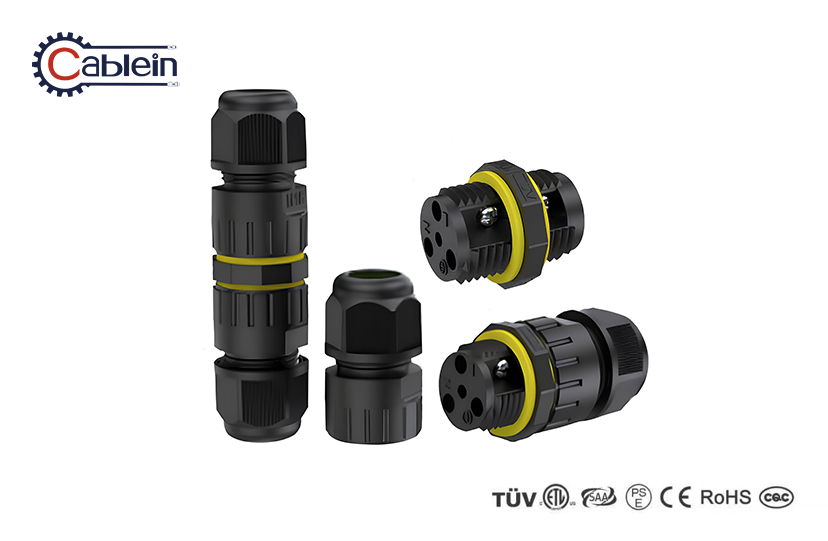
A carefully designed coupling system is what makes the connector work. When the male and female halves fit together, the gold-plated solid brass pins make an electrical connection, and the rubber closing ring contracts to create a barrier that keeps water out. The clamp nut screws onto the female housing, which makes it mechanically stable and keeps the seal under constant pressure. The mechanical lock, sealed interface, and environmental shield in this three-layer safety system keep the link stable even when it is exposed to vibrations, changes in temperature, and water.
Technical Specifications That Define Performance
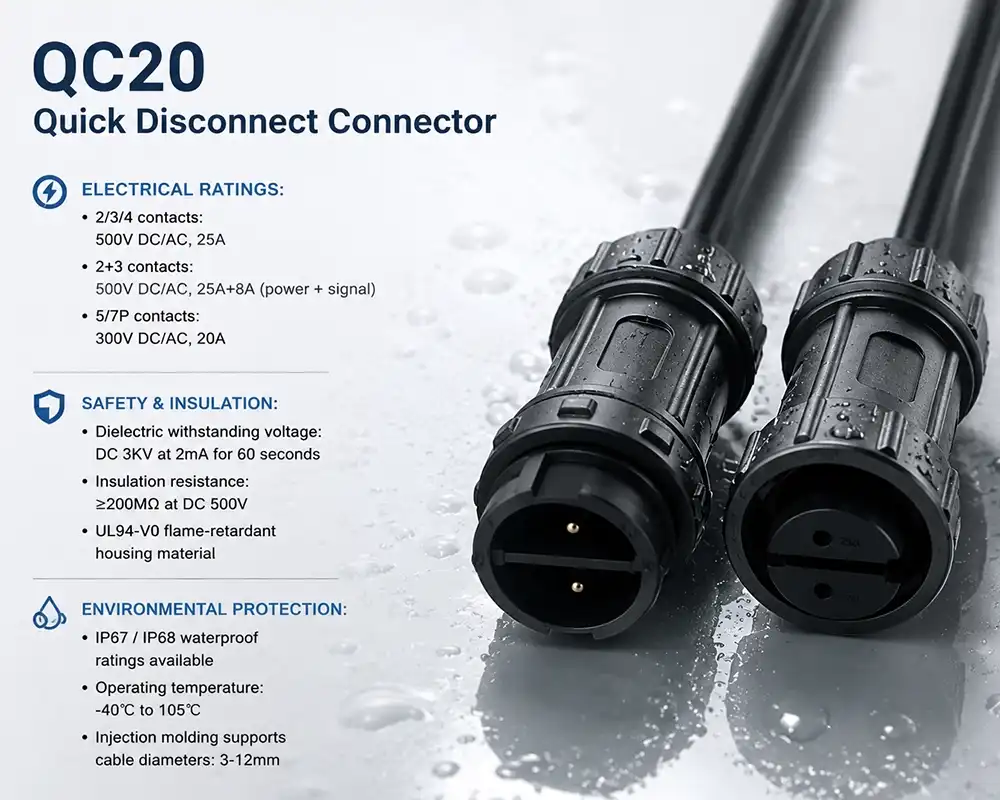
Engineers can choose the right connection type by knowing the electrical and mechanical factors. Different power needs can be met by the QC20 series's flexible pin configurations. Different types with two, three, or four contacts can handle 500V DC/AC at 25A, making them good for industry equipment's main power lines. The combined 2+3 contact configuration can send 25A of power and 8A of auxiliary current. This makes it perfect for systems that need to send both high currents and control signals. Five- and seven-pin versions work at 300V DC/AC and can handle 20A, making them perfect for systems that need a range of voltages or multiple phases.
Industrial standards are very strict about how well insulation works in the QC20 Quick Disconnect Connector. The dielectric can withstand voltages up to DC 3 kV at 2 2mA for 60 seconds. This gives it a large safety gap against voltage spikes and transient surges that happen a lot in motor-driven equipment. Insulation resistance is higher than 200 megohms at 500V DC, which stops leaking currents that could damage equipment or put people in danger. The UL94-V0 flame-retardant grade for the PA66 housing makes sure that it is safe around fires in hot places.
Wiring Configurations and Best Practices
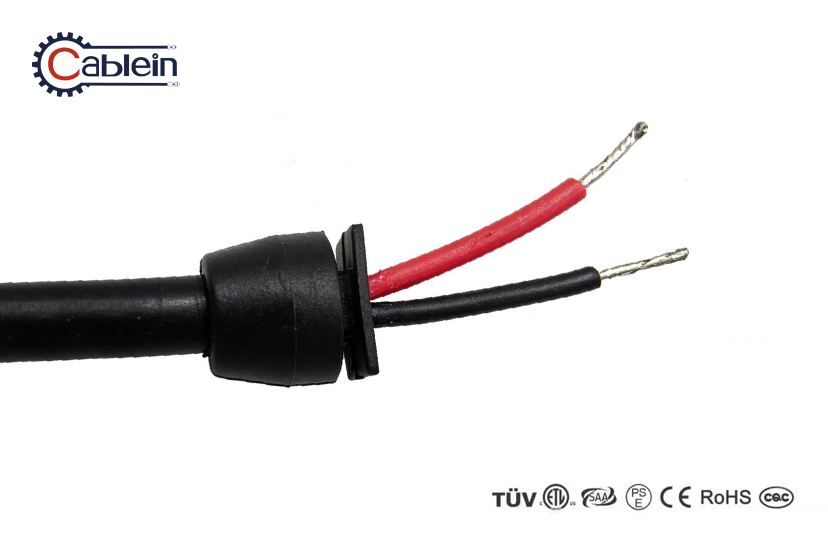
When implemented correctly, connectors are more reliable and last longer. The overmolded cable construction gets rid of the need for field termination work because it comes as a whole assembly with all the connections already made and sealed during production. This method guarantees constant IP67 or IP68 integrity because the most frequent failure point, the cable-to-connector interface, is forever sealed in a factory setting. The injection molding method can handle cable diameters ranging from 3 mm to 12 mm, making it compatible with common wire gauges used in business and industrial settings.
When engineers plan setups, they should make sure that the wire routing doesn't have any sharp bends within six inches of the connection body. This is because too much bending can put stress on the overmolded seal. The universal clamp design works with different wire jacket materials, like PVC, PUR, and TPE. This lets you choose the material based on the temperature range, chemical protection, or need for flexibility. It can work in temperatures ranging from -40°F to 105°F, so it can be used in most outdoor and industrial settings without the need for special enclosures.
Essential Features and Advantages of QC20 Quick Disconnect Connectors
Materials Engineering for Harsh Environments
The QC20 Quick Disconnect Connector lasts a long time in tough situations because the right materials were used. The body is made of PA66 nylon, which was chosen because it is very strong, stable at high temperatures, and resistant to chemicals. This engineering thermoplastic stays the same size across the whole temperature range it's used in. It also doesn't react with common industry fluids like coolants, hydraulic oils, and weak acids. Because the material is naturally resistant to UV light, it won't break down even after years of being outside. This is especially important for solar installations and landscape lighting, where connectors are left in direct sunlight.
The gold finish on the solid brass pins protects them in more than one way. The noble metal layer stops oxidation, which would raise contact resistance over time. This keeps the connector's electrical performance fixed over its lifetime. Gold has a low coefficient of friction, which makes mating and de-mating smooth and reduces mechanical wear during connection cycles. The solid brass base under the plating is very good at conducting electricity and is strong enough to handle placement forces without deforming. Contact resistance is less than 1 milliohm with this combination, so even at full current ratings, there is little power loss and heat generation.
Electrical Performance Under Load
Connectors for high-current uses need to be able to keep their electrical properties steady even when they are under a lot of load and temperatures change a lot. The QC20's design controls how heat moves away in a number of ways. The solid brass pins have a large cross-sectional area, which lowers the current intensity and the resistive warmth that comes with it. The gold plating makes the contact surface more thermally conductive, which makes it easier for heat to move away from the joint point. Even though the PA66 housing doesn't conduct electricity, it gets rid of heat through convection and radiation. This keeps temperatures from building up in one place, which could damage seal materials or speed up contact oxidation.
Testing in the real world shows that the QC20 Quick Disconnect Connector can continuously handle the rated current without going over the safe temperature limits. When 25A is continuously used at 500V in a 40°F setting, the contact temperature rise stays below 30°F, which keeps the joint well within the thermal envelope of the material. This ability to control temperature is very important in places like EV charging sites, where connectors may work at full capacity for hours at a time during fast-charging events for vehicles. The strong thermal design gives a safety margin that keeps installations reliable even when there are short periods of overcurrent. This extends the life of the connectors.
Installation Efficiency and Compatibility
Installing things quickly or slowly has a direct effect on the project's labor costs and downtime. When you count the time it takes to prepare, do, and check traditional connectors that need special tools, soldering, or crimping, each connection can take 10 to 15 minutes. This takes less than two minutes with the tool-free design. The expert only has to route the already-put-together wire, line up the male and female ends, and hand-tighten the clamp nut until it is secure. The ergonomic design of the nut lets you know by touch when the right amount of torque is applied, so you don't have to guess about how secure the connection is.
This efficiency goes up when it's used on a large scale. When compared to screw-terminal options, a stadium lighting upgrade that needs 200 connection points takes about 40 hours less work. The shorter installation time means lower costs for the provider and a faster finish date for the project, which means that facilities can start using them again sooner. Field termination is no longer needed, which also gets rid of a big quality control variable. Factory-sealed connections always work the same way, no matter how skilled the worker is or what the working conditions are like at the installation site.
QC20 vs Other Quick Disconnect Connectors: Making the Right Choice
Performance Comparison with Alternative Designs
There are a lot of different QC20 Quick Disconnect Connector methods on the market, and each one is better for certain uses. Knowing these differences helps buying teams choose the best options. Traditional blade-style quick disconnects work great for low-current car uses but don't close well enough for use in harsh environments. Their metal tabs that are out in the open collect dirt and moisture, which can cause corrosion and contact degradation in places that aren't protected.
Threaded circular connections with rubber covers keep water out, but they usually need to be installed with tools. The torque standard is very important for the stability of the seal—not tightening enough lets water in, while too much force can damage the threads or over-compress the seals. This problem is solved by the ergonomic clamp nut, which gives clear tactile feedback when it's properly engaged. This lets installers do a good job every time without needing torque wrenches or technical training.
Application-Specific Advantages
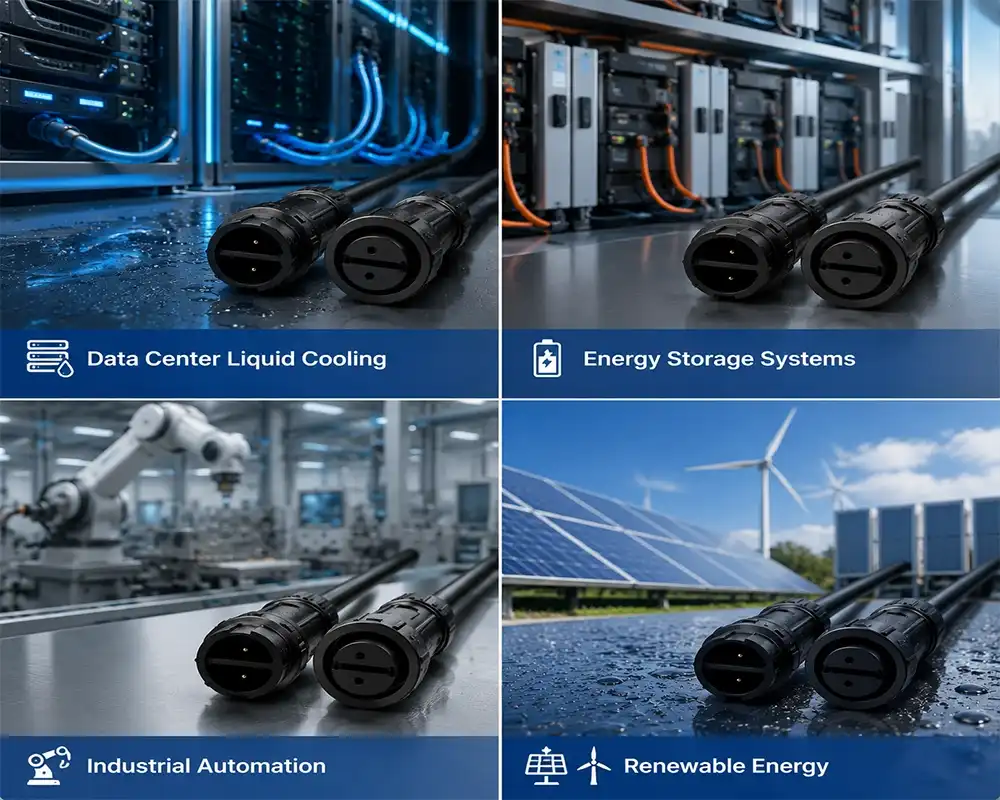
In different fields, different connection features are more important than others. The QC20 is very useful in EV charge infrastructure because it can handle a lot of power, is waterproof, and can be serviced quickly. As units are serviced or improved, charging stations are connected and disconnected many times. The design without tools makes it easy for support staff to swap out parts without needing special tools. The IP67/IP68 grade makes sure that the device works reliably even if it is installed outside. It keeps moisture out of the electronics inside, which could cause ground faults or fire risks.
The temperature range and ability to withstand vibrations are good for companies that make heavy industrial equipment. Construction vehicles, mining equipment, and agricultural machinery all work in harsh environments where connections are constantly under mechanical stress and temperature changes. The vibrations don't affect the structure of the PA66 housing, and the screw clamp stays in place even when shock loads are applied, which could loosen press-fit options. Operating temperatures from -40℃ to 105℃ cover everything from arctic winter to engine compartment heat, so there's no need for environmental protection enclosures.
LED lighting systems that cover big outdoor areas like how waterproof they are and how flexible they are. Landscape lighting, arena lighting, and building surfaces all need a lot of links that are open to water, rain, and irrigation systems. The IP68 rating allows for temporary immersion, which keeps connections safe from flooding or high-pressure water washing while the building is being maintained. Customizable cable lengths get rid of extra wire that makes installations look messy, and different jacket colors work with color-coded power distribution systems that make it easier to fix problems and make changes in the future.
Procurement Considerations for QC20 Quick Disconnect Connectors
Sourcing Strategies for Reliable Supply
Choosing the right QC20 Quick Disconnect Connector supplier affects the quality of the product, the dependability of delivery, and the support that is provided in the long term. Working directly with makers like Cablein gives you access to technical know-how, the ability to customize products, and prices that are low. As a specialized waterproof connector maker that has been in business since 2017, we keep an inventory of more than 10,000 pieces per standard design. This lets us quickly complete projects that need to be done right away. Our 6,000-square-meter factory in Shenzhen has 200 or more skilled workers who use high-tech production tools to make connectors and check the quality of their work.
Verification of certification is an important step in the buying process. The QC20 line is certified by both ETL and CE, which shows that it meets North American and European safety standards for electricity. RoHS compliance makes sure that the product follows the rules about dangerous substances in the environment. This is important for businesses that need to be environmentally friendly or that want to sell their products in other countries. When a manufacturing process is certified by ISO9001:2015, it means that the quality control procedures and traceability systems are always the same. This helps with failure analysis and efforts to keep improving.
Cost Factors and Volume Pricing
Connector prices depend on more than just the base cost of making them. Standard setups with standard wire lengths and pin counts tend to have the lowest unit prices because of economies of scale in production. When you need custom pin arrangements, wire lengths that aren't standard, or jacket materials that aren't standard, you have to pay more for tooling and setup, which drives up unit prices, especially for small orders. For most custom setups, the point at which they break even is between 500 and 1,000 pieces. After that, the cost per unit starts to approach the standard product price.
Planning for lead times should take into account both the supply of the product and the need for customization. When an item is in stock and in the catalogue, it ships within 7 to 10 days. This makes it perfect for maintenance replacements or small projects with tight deadlines. For custom setups, the first production takes three to four weeks, which includes checking the tools and inspecting the first piece. Coordinated shipping schedules that match installation timelines are helpful for projects that need thousands of units. This way, there is no extra inventory on-site, and materials are always available as the building moves through its different stages.
Global Logistics and After-Sales Support
Strategies for international shipping weigh the cost of shipping against the speed and dependability of arrival. We have relationships with UPS, DHL, and FedEx for quick air shipments for pressing needs or small package deliveries. Ocean freight is a cheap way to ship large amounts of goods when the 4 to 6 week transit times work with project schedules. Because we work with freight forwarders, we can combine multiple orders into one shipment to make the best use of containers and lower the cost of shipping each unit.
The availability of technical help affects how well the adoption goes, especially for people who are adding quick disconnect technology to current systems for the first time. We offer technical support 24 hours a day. We can answer questions about specs, installation steps, and fixing problems. As part of our engineering support, our research and development (R&D) team works with clients to create connection combinations that are best for their specific needs. This all-around approach makes sure that customers don't just get parts but also full connectivity solutions backed by ongoing technical partnership.
Why Choose QC20 Quick Disconnect Connectors for Your Applications
To solve common connection problems, you need QC20 Quick Disconnect Connector solutions that combine speed, dependability, and ease of use. Water getting into outdoor LED lighting often causes connection problems because it corrodes the terminals and causes faults to happen every so often. This worry is taken away by the QC20's IP67/IP68 grade, which provides full weather sealing that keeps the device's integrity even when it's wet, raining, or under pressure. Field reports from landscape lighting installations show that after three years of constant outdoor exposure, there were no failures caused by moisture. This is in contrast to the 8% yearly failure rate for terminal blocks that are not sealed.
When there is vibration, it's hard for industrial automation systems to keep their connections stable. Robotics integrators say that re-tightening terminal blocks that have become loose from continuous machine motion takes a lot of maintenance time. The threaded clamp system keeps the connection safe even when vibrations are higher than 5G, so there is no need for regular maintenance. One auto assembly line saw a 40% drop in the time it took to fix electrical problems after adding quick disconnect connectors to robotic power supplies. This was because secure connections got rid of intermittent contact problems that were causing system faults before.
A cost study must take into account all of the costs of ownership, not just the initial purchase price. Even though quick disconnect connectors cost more per unit than basic terminal blocks, they quickly pay for themselves because they save time and money on installation labor and maintenance. A solar farm with 500 connection points saved $8,000 in installation labor costs by putting the panels together faster in the field, which covered the cost of the extra connectors during the first phase of construction. Later maintenance cycles proved the worth even more, as workers fixed inverter connections in half the time it took to fix screw-terminal systems. This cut down on service call costs and system downtime.
Future-proofing factors are becoming more and more important in buying decisions. When equipment has a lifetime of 10 to 20 years, it needs connectivity options that can adapt to changing standards and possible system changes. The QC20's modular design lets upgrades be made in the field without having to do a lot of rewiring. Connections can be made and broken without changing the way cables are routed. Standardizing on quick disconnect technology across different types of equipment improves operational efficiency by ensuring consistent maintenance procedures and an inventory of spare parts that can be used with other equipment.
Conclusion
QC20 Quick Disconnect Connector technology solves basic problems in industrial communication by creating solutions that protect the environment, work well with electricity, and are easy to use. The QC20 series shows how careful choice of materials, precise manufacturing, and useful design can lead to products that make systems more reliable while lowering the costs of setup and maintenance. For projects ranging from outdoor lighting networks to heavy industrial power distribution, the best results are achieved by understanding connector specs, reviewing options, and using the right procurement strategies.
Connectivity options that work well include more than just the specs of the parts. They also include relationships with suppliers that offer expert help, the ability to make changes, and reliable delivery. When these factors are looked at along with product performance, it makes it easier to make buying choices that are good for the whole life of the equipment.
FAQ
1. What current rating should I specify for industrial equipment power feeds?
The right current rating is based on the load that is connected and the safety margins. Connectors that can handle 25A of continuous current are needed for equipment that draws 20A of current. The QC20 has 2/3/4 contact types that can handle 500V at 25A, which are good for most industrial machinery's main power lines. It also has 5/7P contact types that can handle 300V and 20A, which are better for multi-phase or lower-power uses.
2. How does IP68 differ from IP67 in practical applications?
The IP67 rating means that it can withstand being submerged up to 1 meter for 30 minutes. This makes it ideal for outdoor setups that will be hit by rain and splashes. IP68 protects against being submerged under water continuously, which is needed for things like underwater lights or equipment that is washed with high pressure. Both ratings stop dust from getting in, so they can work reliably in dirty places.
3. Can these connectors handle temperature extremes in outdoor installations?
The working temperature range of -40°C to 105°C fits most outdoor settings around the world. This specification covers places like the Arctic, the desert, and engine compartments. The PA66 housing and silicone seal keep their qualities throughout this range. This means that the seal doesn't harden in cold weather or soften in hot weather, which would damage its waterproofing.
Partner with Cablein for Industrial Waterproof Connector Solutions
Choosing the right QC20 Quick Disconnect Connector provider affects the success of the project by affecting the quality of the product, the dependability of delivery, and the availability of expert support. Cablein specializes in waterproof industrial connectors that are certified by ETL, CE, and RoHS to make sure they meet international standards. We can customize everything from the length of the cable and the thickness of the wire to the color of the jacket and the way the pins are set up, so we can give you options that are perfectly matched to your needs. We offer full engineering support, a stable inventory, and 7–10 day shipping on common items. Our connectivity options are perfect for LED lights, new energy, industrial automation, and security. You can talk to our technical team about your project needs and get full specs from a reliable QC20 quick disconnect connector maker by emailing nick@cableinco.com.
References
1. Smith, R. & Johnson, M. (2021). Industrial Connector Technology: Design Principles and Applications. Technical Publishing International.
2. Anderson, P. (2022). "Waterproof Connector Performance in Harsh Environments," Journal of Electrical Connection Standards, Vol. 34, pp. 112-128.
3. Chen, L. & Roberts, K. (2020). Quick Disconnect Systems for Industrial Power Distribution. Engineering Press.
4. Williams, T. (2023). "Comparative Analysis of Circular Connector Designs," Industrial Electrical Review, Vol. 19, pp. 45-67.
5. Martinez, D. & Thompson, S. (2022). Electrical Safety Standards for Outdoor Installations. International Standards Organization.
6. Davis, A. (2021). "Cost-Benefit Analysis of Quick Connect Technology in Industrial Applications," Manufacturing Efficiency Quarterly, Vol. 28, pp. 89-104.