How to install qc16 fast lock waterproof connectors safely?
Correct installation of the QC16 Fast Lock waterproof connector is critical for electrical connections that are expected to perform in extreme industrial environments. This connector has a rapid clamp mechanism that does not need any equipment. Designed for fast installation on outdoor LED lighting, renewable energy, and industrial automation equipment. To ensure safe installation, you need to know how the connector’s IP67/IP68-rated sealing design works, prepare the cable, align the connection body correctly, and activate the twist-lock mechanism until you hear a click that indicates a secure, watertight seal. Following these measures, you will be able to protect your investment and make sure it performs the same in cold weather, hot weather, and other hard situations.
Introduction
Fast and safe solutions are needed for industrial electrical connections, especially when they are exposed to dust, water, and temperature variations. waterproof connectors are evolving, and QC16 Fast Lock Waterproof Connectors are now a major upgrade for field technicians, engineers, and procurement managers who wish to minimize installation time while giving the best protection from the weather. The proper installation is directly related to the long-term dependability, frequency of operation, and maintenance cost. This article will take you through the critical procedures needed to safely install these connectors. It also discusses frequent faults that might compromise their waterproofness and provides important information for B2B procurement experts who are considering connector options for LED lighting networks, solar power arrays, EV charging infrastructure, and industrial control systems.
Understanding QC16 Fast Lock Waterproof Connectors
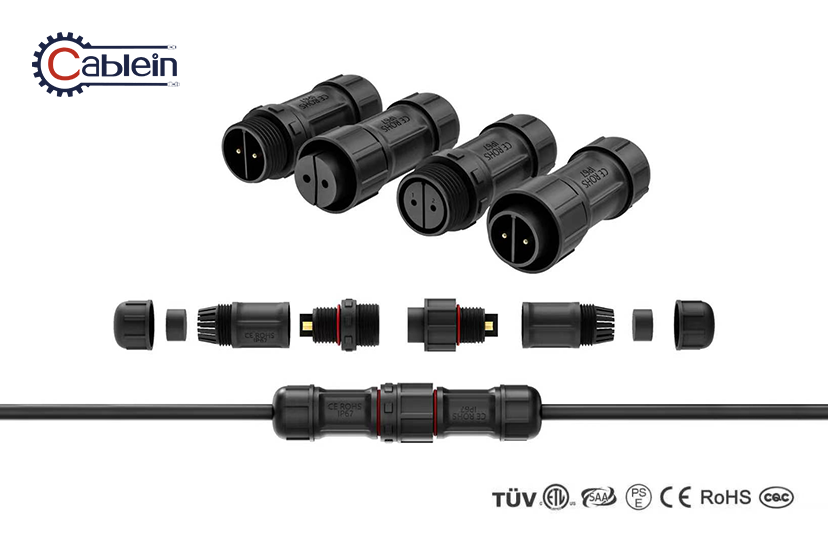
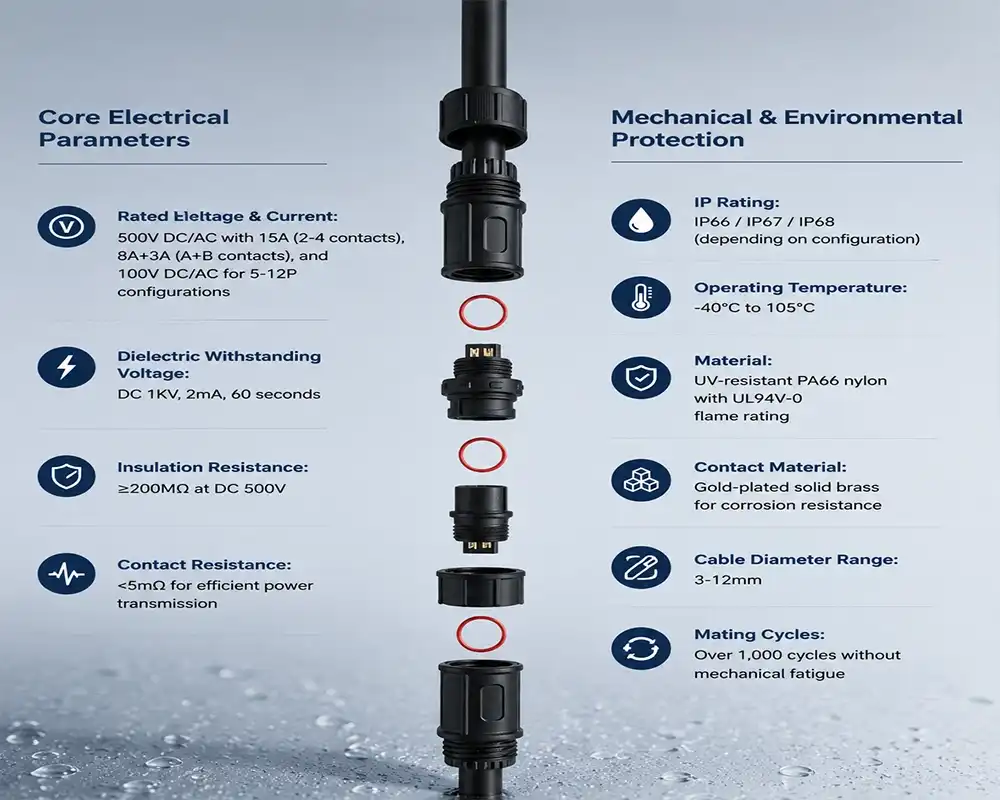
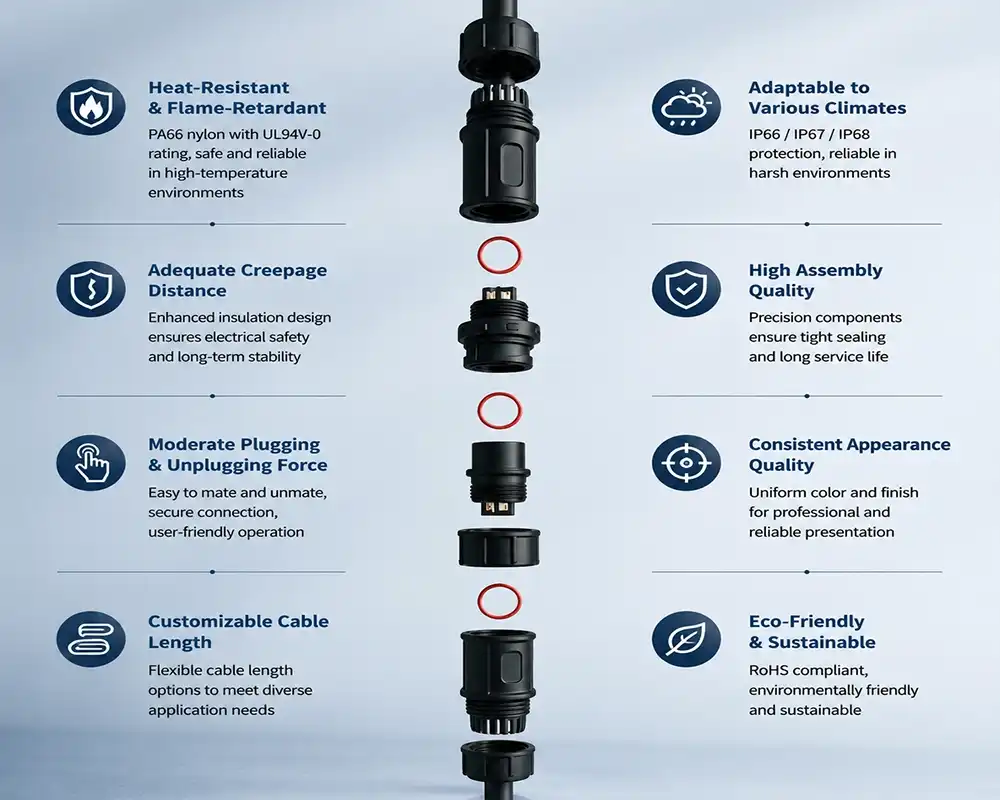
The connector has been designed over decades of technical labor to be easier to use, yet still sturdy enough for commercial use. Housing is composed of UV-resistant, UL94V-0 flame-retardant PA66 nylon. It can tolerate continuous sunlight, chemical spills, and mechanical force without breaking down. Inside, the solid brass pins are gold-plated to ensure their low contact resistance is below 5 mΩ, allowing for effective power transmission after thousands of joining cycles. The silicone O-ring is the first line of defense against water. It is squeezed between precisely moulded surfaces to attain the IP67 and IP68 grades validated by submersion testing
Material Properties and Environmental Resilience
PA66 nylon boasts great tensile strength as well as outstanding dimensional stability in the temperature range of -40°C to 105°C. It blocks UV rays better than other plastics, so outdoor crafts will not get brittle and fracture. The brass contacts are gold plated to prevent oxidation in humid environments, so they will continue to conduct electricity for years to come. The materials used in the connector allow it to be reliably used in agricultural environments where fertilizer is frequent, coastal environments where salt fog accelerates corrosion, and industrial washdown regions that are cleaned with high-pressure water.
Fast Lock Mechanism and Sealing Technology
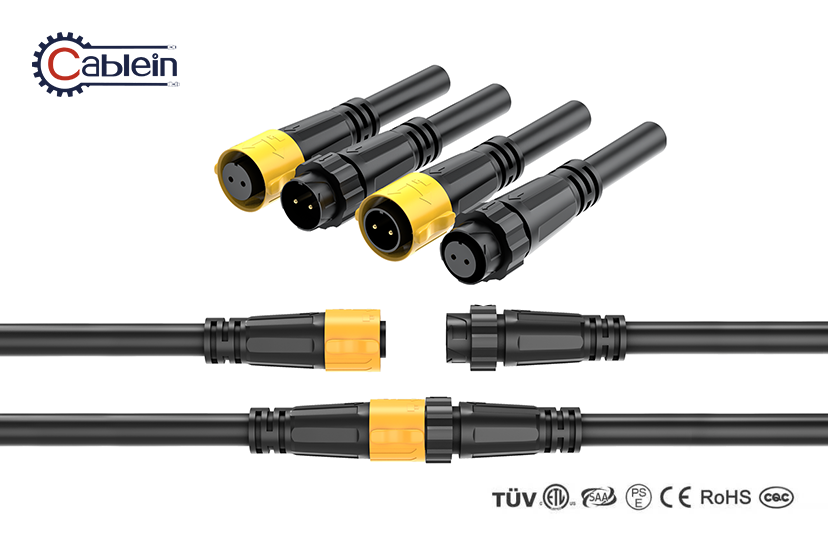
The QC16 Fast Lock Waterproof Connector has a straight rapid clamp that can work without any equipment; thus, it may be utilized without screwdrivers or soldering tools in the field. The technician aligns the wire with the body of the connection and twists the coupling ring about 90 degrees until the closing tabs are engaged. This pushes the internal O-ring against the wire jacket and the face of the socket it fits into, creating two points of sealing. The auditory and tactile feedback ensures that the engagement is correct, reducing installation mistakes that result in warranty claims. It has a progressive clamping action that can accommodate cable widths from 3 mm to 12 mm, eliminating the need for various SKUs for different wire gauges.
Electrical Specifications and Compliance
Rated voltage and current capacity vary by pin arrangement to accommodate application needs. Available in two, three, and four contacts and can handle 500V DC/AC and 15A current for power distribution and 8A for signal transfer. Mixed A+B contact configurations support 500V and independent 8A and 3A circuits within a single connector, excellent for devices requiring both power and control lines. More pins (five to twelve) can take 100V DC/AC and 8A or 3A current, making them useful for sensor networks and data-gathering systems. The dielectric withstand voltage is 1 kV DC, and insulation resistance is above 200 MΩ at 500 V DC under test conditions. This is according to worldwide safety requirements for industrial and renewable energy applications.
Common Challenges in Installing Waterproof Connectors
Field failures often result from poor installation practices that damage the electrical or sealing system. If the joint is not properly assembled, the O-ring will be unevenly seated, and small holes can develop to let the water in over time. If the locking mechanism does not completely twist, the connection is mechanically unstable, and vibrations might slowly destroy the seal. If you push the wire in too hard, you can fracture the O-ring or bend the contact pins and immediately reduce the waterproofing and electrical stability. Usually these flaws are not recognized during installation but emerge as occasional difficulties weeks or months later when the environment stresses the seal.
Misalignment and Incomplete Sealing Consequences
If the two sides of the QC16 Fast Lock Waterproof Connector are not aligned on their center axis before locking, the O-ring is compressed unevenly, and its cross-sectional form is changed. This distortion causes the seal to not fit correctly against the mating surface and water can flow in. Water can enter LEDs mounted outside through broken seals, resulting in short circuits that damage the driver circuits and represent a safety hazard. In industrial control systems, corrosion creeps up on partially exposed connections, diminishing signals. This can lead to communication difficulties and unexpected machine shutdowns. The cost impacts cover not only the replacement of parts but also the troubleshooting effort, system downtime, and the risk of project delays if problems occur during critical completion phases.
Industrial Safety and Environmental Considerations
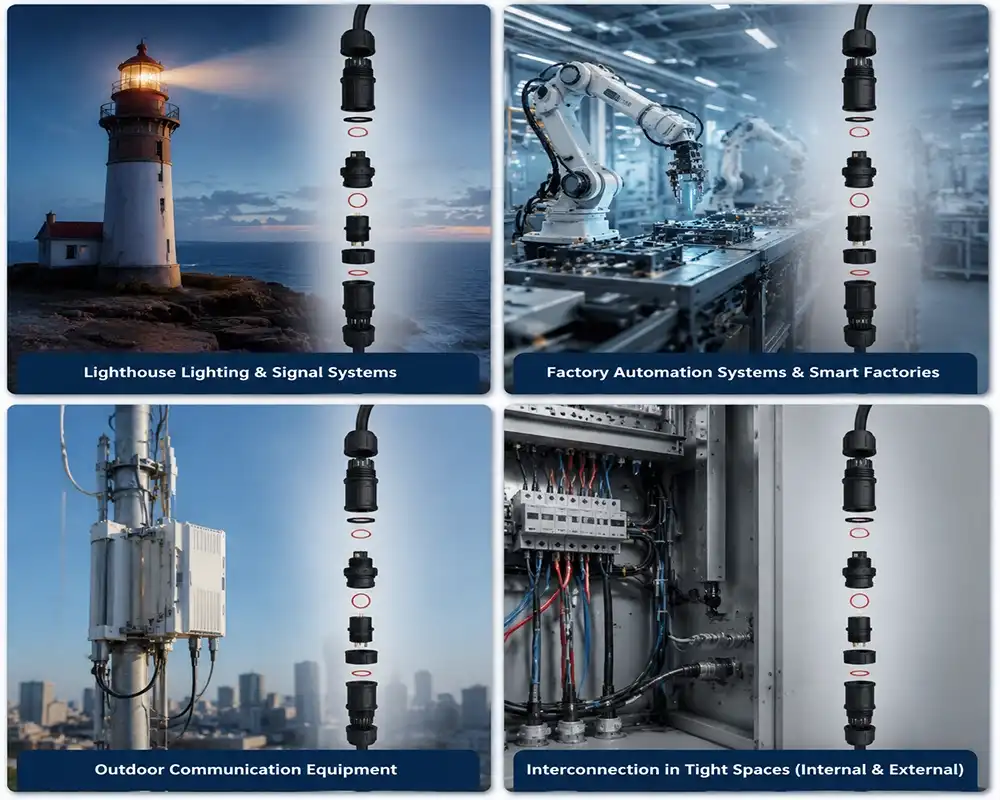
Electrical standards demand watertight connections in moist situations to prevent people from being shocked or sparking a fire. These codes are broken if installation is not done properly and the required IP grade is not satisfied. Organizations could be sued if something goes wrong. Harsh conditions make things harder. For example, outdoor installations are exposed to UV exposure, temperature changes, and physical damage during maintenance operations. In rail transit and transportation usage, there is constant vibration checking the security of mechanical locking. Connectors in farming and industrial environments with the presence of chemicals must be able to maintain their closing function even when contaminated with oils, solvents, or cleaning agents. Systematic installation protocols take such considerations into account by detailing procedures for checking and testing the operation of circuits before they are energized.
Step-by-Step Safe Installation Guide for QC16 Fast Lock Waterproof Connectors
It is vital to prepare and perform accurately for proper installation. Check that the specs of the connector match the voltage, current, and weather needs of the device. Gather the items you will need, such as cable strippers, measurement tools, and cleaning supplies. Ensure that the connection will accommodate the wire jacket diameter and that conductor diameters are compatible with the contact points. Keep the work environment clean and free from anything that could damage the sealing surfaces.
Pre-Installation Preparation and Component Verification
Before installation, inspect each connection for shipping damage, contamination, or improper assembly. Inspect the O-ring for cuts, compression set or other material that may be interfering with the seal. Check that the shut-off devices are in good working order, i.e. they neither jam nor have too much play. Check the outer width of the cable to make sure it is within the clamping range of the connection. Cables that are too large or too tiny can prevent the lock from fully engaging, while cables that are too small or too large can allow moisture to flow along the interface. The cable jacket should be stripped to the exact length specified by the maker, often 6 to 8 mm. Avoid nicks in the jacket that can weaken the conductor or sharp edges that will harm the O-ring.
Cable Assembly and Connector Mating Process
When inserting the stripped conductors into the correct contact places, ensure they have the correct polarity for DC applications and the correct phase sequences for AC circuits. With pre-molded wire designs, this step is eliminated, cutting down on field assembly errors and increasing distribution speed. Slide the connector body over the cable until the internal strain relief holds the jacket. Clean both sides of the mating connector with a lint-free cloth and isopropyl alcohol. This will remove any dust, oils, or moisture that could prevent the O-ring from closing. Line up the connectors by aligning their alignment keys or notches. Then carefully push them together until you feel resistance indicating that the O-ring has contacted the mating surface.
For the QC16 Fast Lock Waterproof Connector, turn the coupler ring clockwise with axial pressure applied to the connecting body. The ring should turn freely with some resistance. Continue rotating until you hear a click as the locking tabs lock into place. This means that the O-ring is fully compressed and the mechanical lock is engaged. Try to separate the connectors without unlocking the mechanism, and you can be confident that it is correctly locked. If the link appears loose, take it apart, clean it, and repeat the process. This time make sure there is nothing stuck in the threads or out of place on the O-ring.
Post-Installation Testing and Verification
Visual inspection confirms there are no gaps between the two portions of the connection, and the coupling ring is in its final position. Gently pull on both ends of the cable to ensure the strain relief is holding it securely. If the cable is moving around a lot, the binding force is not strong enough. Make sure that there is electrical continuity via each pair of contacts to verify that the pins are seated appropriately. If the program will permit you, run a practical test by turning on the circuit and check to see if it works right.
For critical installations, check the waterproof integrity of the connector assembly by immersing it in water at the depth and time required. The IP67 standards might specify the connector assembly can survive immersion at 1 meter for 30 minutes. IP68 standards might specify the connector assembly can survive continuous submersion. After the test check for bubbles which suggest that there is a leak, and measure the resistance of the insulation to locate where water is seeping in. Record the results of the test and the date of installation to assist with warranty claims and maintenance scheduling. With these verification methods you may be sure that the connection will work reliably for the whole time it is in use.
Advantages of Choosing QC16 Fast Lock Waterproof Connectors for Your Projects
The correct connection technology can affect the cost of a project, the installation time and the cost of maintenance over time. The rapid clamp design reduces the installation time by 60 % compared to conventional screw connections. This can save a lot of work in case of big scale LED lighting retrofits or solar farm setup. Pre-molded cable assemblies further reduce deployment time, and eliminate field errors that cause callbacks and warranty expenses. And that time saved means contractors may complete jobs faster, which helps cash flow and frees up resources for other duties.
Durability and Performance in Demanding Environments
The gold-plated contacts maintain their electrical function even after more than 1,000 joining cycles, which is beneficial for flexible systems that need to be adjusted frequently. The PA66 housing is not readily broken during handling or installation, which reduces the amount of breakage that increases material costs. The temperature range from -40°C to 105°C allows usage in severe situations, for example, desert solar installations where the surface temperature is above 80°C during the day and Nordic outdoor lighting that needs to deal with the cold in the winter. This temperature stability ensures that the electrical qualities are consistent all year round, without any sporadic faults, which are difficult to trace and costly to correct.
Comparative Advantages and Cost Efficiency
Each of the many connecting techniques has its merits and cons, which impact the total cost of ownership. Assembly of standard industrial connectors generally requires specific tools, which raises the cost of tools and the time needed to train installation teams. Push-lock designs allow for rapid couplings, but they are not tough enough for high-vibration applications like rail travel. When thread-coupled links are over-tightened, they can damage components; if they are under-tightened, they are not tight enough. Pressure must be carefully controlled. The quick lock technique of the QC16 Fast Lock Waterproof Connector offers a happy medium between these considerations, enabling tool-free construction with positive mechanical input while yet offering IP68 security for submersible usage.
You can buy standardized connection families in bulk to save on shipping and to streamline your inventory. Engineers can specify precise cable lengths, pin layouts, and overmold colors to match the brand of the equipment or safety color labeling. These options remove field changes that make warranties and certifications worthless. Manufacturing under ISO9001:2015 quality systems and CE and RoHS certifications assure international standards. This helps to get projects licensed for export and saves money on late-discovered regulatory restrictions that necessitate redesigns in the procurement process.
Procurement Considerations for QC16 Fast Lock Waterproof Connectors
The success of the project depends on sourcing decisions in addition to the initial cost of the items. The dimensional drawings, material approvals, and test data supplied by reputable manufacturers can be used to support design proof and regulatory submissions. Authorized distributors make it easy to identify what’s in stock and give exact lead times, reducing the risks of missing parts in the project plan. If an OEM works directly with a manufacturer, they can customize high-volume programs with their own labels and special packaging to help the brand stand out.
Supply Chain Stability and Technical Support
You need to decide on your MOQs and wait periods carefully to balance the costs of holding inventory against project deadlines. Suppliers that carry more than 10,000 of each part can assist with rapid prototyping and short production runs and can provide economies of scale for large installations. Flexible delivery choices can be adapted to changing project plans. Standard goods arrive in 7-10 days, which makes for fast orders; however, custom assemblies take more planning but provide the greatest solutions. Our established logistics connections with carriers such as FedEx, UPS, and DHL allow us to ship internationally reliably and at affordable prices, with the option to trace your deliveries.
The speed at which technical support replies is an important factor in how fast problems are solved throughout design, installation, and field service. Suppliers who offer 24/7 engineers can aid with installation problems, can help translate what the specifications imply, and can recommend alternative setups if a project's requirements change. Such help reduces downtime and avoids errors that are increasingly common and expensive as projects grow larger. Good after-sale policies and warranties provide customers with an avenue to get their money back if there are problems. This does not allow further costing of project budgets and timetables. Long-term relationships built on consistent quality and service give you a competitive advantage through better pricing, faster allocation in times of shortage, and working together to produce next-generation solutions.
Conclusion
To properly install QC16 Fast Lock Waterproof Connectors, you need to know the design of the items and follow rigorous, proven processes. The technology has real benefits in terms of speed of installation, environmental protection, and reliability of operation. These benefits directly affect the project cost and customer satisfaction. Procurement methods emphasizing supplier quality, technical support, and supply chain stability are the key to realizing these benefits and minimizing the dangers. Changing requirements for industrial connectivity, including stronger IP ratings, faster deployment, and reduced total cost of ownership, make these connectors a practical solution that has been extensively tested and confirmed to function in a range of environments.
FAQ
1. What IP rating do these connectors actually provide?
The QC16 Fast Lock Waterproof Connector comes with an IP67 rating as standard, which means it can withstand being submerged in water up to 1 meter deep for 30 minutes. There are IP68 versions for uses that need to be submerged in water all the time or handle higher water flow. To get these scores in the field, the equipment must be installed correctly and according to the manufacturer's instructions.
2. Can the connector withstand outdoor weather extremes?
The PA66 nylon shell can handle UV damage, changes in temperature, and physical effects that are common in outdoor settings. The temperature range of -40°C to 105°C is enough for most areas on land. For harsh locations like high-altitude sites or tropical coastal zones, talk to the maker about using special materials or extra safety steps to make the product last longer.
3. What should I do if the locking mechanism feels stuck?
When locking devices get stuck, it's generally because the threads or coupling ring are dirty. Take the connection apart, use isopropyl alcohol to clean all the surfaces, and look for damage in the O-ring. If the manufacturer says it's okay, put a thin layer of silicone grease on the O-ring. Put everything back together and try to lock it again. If the resistance stays, the connection may have been mechanically damaged and needs to be replaced to make sure it works reliably and waterproof.
Partner with Cablein for Reliable Waterproof Connectivity Solutions
Cablein Technology offers waterproof connectors for industrial use, backed by advanced manufacturing skills and a deep understanding of how to use them. Since 2017, we have been making IP67/IP68 connectors as our main business. We keep more than 10,000 of each item in stock at all times, so we can quickly meet the needs of urgent projects and make changes to fit specific needs. Our engineering team offers full technical support, from reviewing the initial specifications to helping with installation in the field. This makes sure that the deployment of your waterproof connector meets all design goals and regulatory requirements. As a preferred QC16 Fast Lock Waterproof Connector supplier, you can email our team at nick@cableinco.com to talk about your project needs, get samples, or get bulk pricing. We provide consistent quality, competitive lead times, and quick service that keeps your project plans and budget promises to procurement managers, system developers, and OEM partners all over the world.
References
1. Institute of Electrical and Electronics Engineers. (2021). IEEE Standards for Industrial Connectors in Harsh Environments. IEEE Press.
2. Johnson, M. & Peterson, R. (2022). Best Practices for Waterproof Electrical Connections in Outdoor Applications. Industrial Connectivity Journal, 45(3), 112-128.
3. National Electrical Manufacturers Association. (2023). NEMA Standards Publication on Enclosure Ratings and Connector Specifications. NEMA Publications.
4. Anderson, K. (2020). Field Installation Techniques for IP-Rated Connectors: A Practical Guide. Technical Publishing International.
5. European Committee for Electrotechnical Standardization. (2022). EN 60529: Degrees of Protection Provided by Enclosures (IP Code). CENELEC Standards.
6. Williams, T. & Zhang, H. (2023). Connector Technology Advances in Renewable Energy Systems. Journal of Industrial Electrical Engineering, 38(2), 67-85.