How Does Dust and Moisture Protection Improve Cable Connection Reliability?
Dust and moisture are two of the most stubborn hazards to cable connections in outdoor and industrial environments. Fine dust particles entering a connection point cause abrasive friction and interrupt electrical continuity. Water follows, and corrosion and short circuits quickly escalate. A square 2-way inline waterproof junction box provides an IP67/IP68-rated enclosure with a precise silicone gasket seal to fight both dangers at once, keeping out pollutants before they reach the terminal block. This leads to a quantifiable increase in connection longevity and a considerable decrease in unscheduled maintenance calls.
Understanding the Impact of Dust and Moisture on Cable Connections
Dust and moisture may cause corrosion, contact resistance, and short circuits in electrical cables. Before selecting a protective enclosure, learn how environmental conditions damage electrical joints.
How Dust Damages Electrical Joints
Unsealed regions may allow small bits of dirt, grit, and construction dust to sneak in and fill the crevices between the conductors. This permeable layer reduces the resistance of the joint, warms up the region, and the protection falls off with time. A 2019 study published in the IEEE Transactions on Components, Packaging, and Manufacturing Technology journal reported that particulates building up on exposed terminals may reduce contact forces by up to 30% after 18 months of exposure.
How Moisture Triggers Corrosion and Short Circuits
A little water vapor is enough to start corroding copper connectors. Water speeds up the process a lot. Rust forms on surfaces that contact each other. This makes a connection more likely to catch fire. This causes resistance and heat. Sometimes, severe harm might take place in months rather than years, particularly on the coast or when a lot of irrigation water is used.
Why Traditional Enclosures Fall Short
Normal plastic junction boxes with an IP rating of 44 or below have snap-on covers that won’t keep air out. Field testing demonstrates that water may ingress above a wind-driven rain pressure of 12.5 kN/m2. That restriction is often breached in the storm season for projects near highways, ports, or drip irrigation networks.
Introduction to the Square 2-Way Inline Waterproof Junction Box
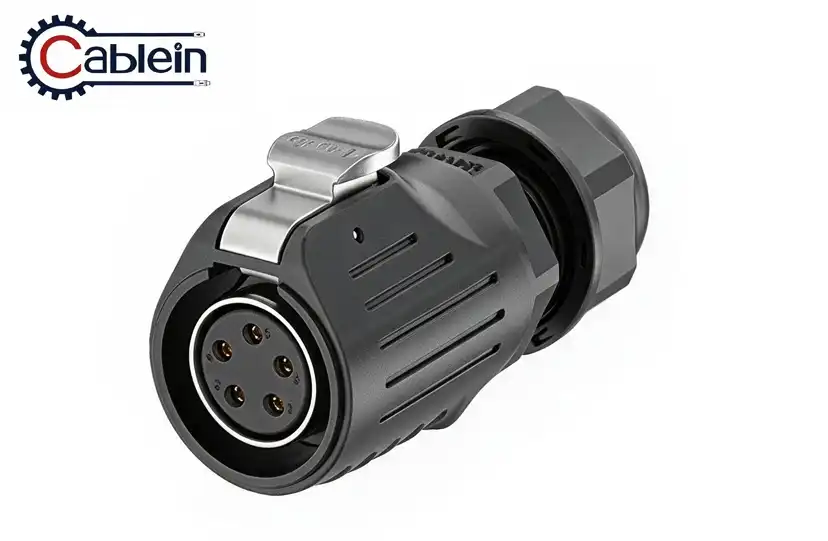
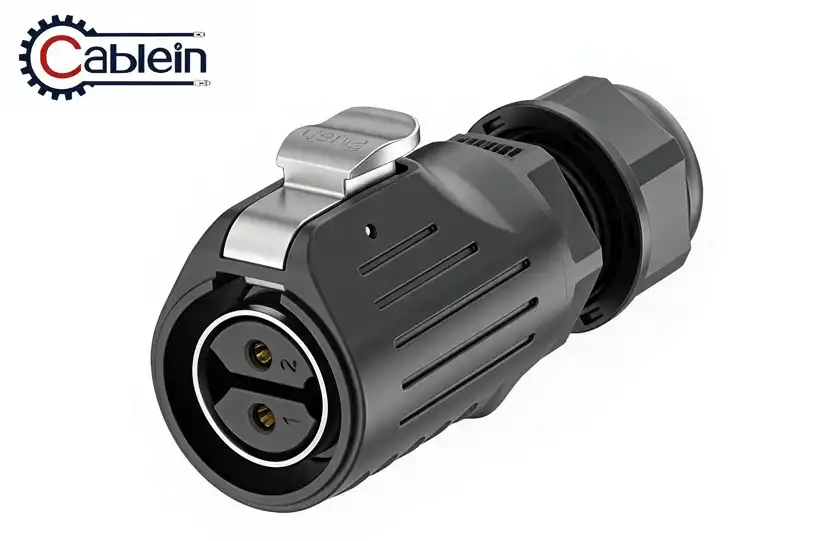
There are different ways to make a waterproof box. Cablein's square 2-way inline waterproof junction box is more than just IP67-rated. It was carefully made to do more.
Material Selection and Flame Retardancy
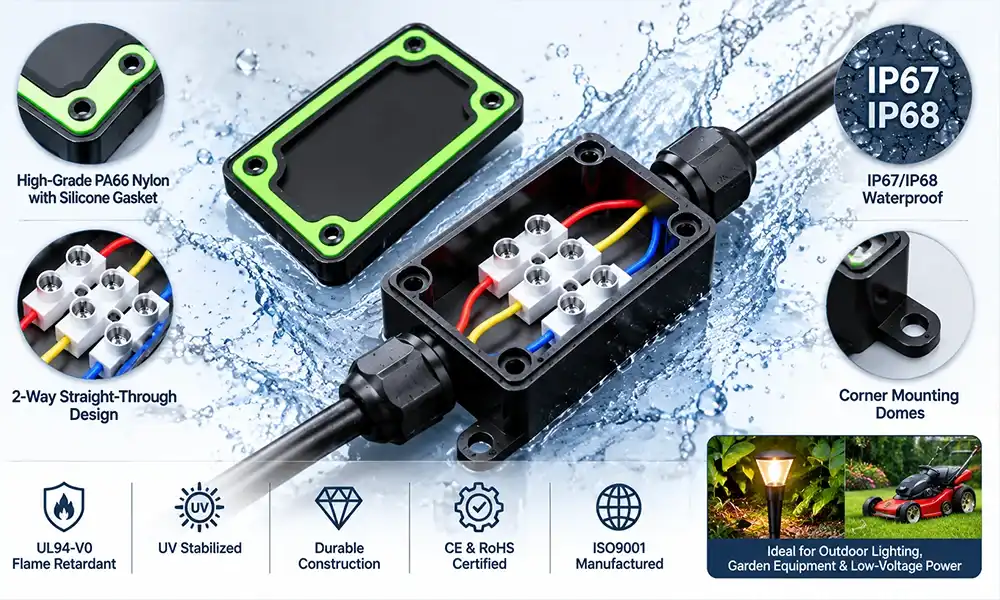
High-grade PA66 nylon is injected into the mold to make the body. This material doesn't change size when heated and cooled many times. UL94-V0 means that the material doesn't spread fire and goes out on its own without spreading. The top of the housing won't break down after years of being in full sunlight because UV stabilization is built into the stuff. Tests with a xenon arc show that it will last at least 10 years outside.
IP67 and IP68 Dual-Rated Sealing
When the four captive screws are tightened, the silicone rubber gasket around the lid flattens out all the way around. This shape always has the same closing force, and it meets both IP67 (30 minutes of submersion at 1 meter) and IP68 (continuous submersion beyond 1 meter) tests. Cablein tests all of their cables for 72 hours under high water pressure to make sure they are safe. In other words, the IP68 claim is not just a number; it is the result of a test. Internal connections that can handle conductor sizes from 0.5 mm² to 6.0 mm² can let up to 40A flow at 450V.
Design Features That Simplify Field Work
The main parts of the design that make installation go more quickly and with less chance of failure on-site are:
- Pre-molded knockouts sized for 5–9 mm and 9–12 mm cables eliminate field drilling and protect gasket integrity from the start.
- Removable terminal block allows bench pre-assembly before the enclosure goes on the wall, cutting overhead wiring time significantly.
- Corner domes with M4/M5 screws install flat to walls, cable trays, and equipment frames without brackets.
- Captive lid screws stay attached to the cover during maintenance, preventing hardware loss during overhead or muddy-site installations.
These features solve frequent installation issues that increase labour time and assembly faults. Before installing and sealing the enclosure, installers may pre-wire the detachable terminal block at ground level. Installation is easier and the seal is less likely to be compromised.
Installation and Maintenance Best Practices for Optimal Performance
Even a well-engineered enclosure will underperform if installation steps are skipped. The following practices keep the protection level at its rated specification throughout the product's service life.
Site Preparation and Cable Entry
Before mounting, inspect the knockout membrane and gasket groove for shipping damage. Select the correct knockout size for your cable outer diameter, punch the membrane cleanly, and thread a compatible cable gland before inserting the conductor. Gland torque should match the manufacturer's specification—over-tightening distorts the gasket seat, while under-tightening leaves a capillary path for water.
Sealing Verification After Installation
After completing the wiring and closing the lid, tighten each captive screw in a diagonal sequence to distribute compression evenly. In submersion-risk locations, a simple continuity check followed by a brief submersion test (bucket of water, 30 minutes) confirms the seal before backfilling or panel closure.
Periodic Inspection Protocol
Inspect gaskets annually in UV-exposed or chemically aggressive environments. Look for compression set, surface cracking, or debris lodged in the groove. A degraded gasket is a low-cost replacement that prevents expensive circuit failures. Document inspections with photographs to meet project quality records requirements.
Comparing the Square 2-Way Inline Waterproof Junction Box with Alternative Solutions
For procurement managers, IP-rated enclosures are often compared against simpler or cheaper choices. The comparison below is based on public test results and material specifications, not marketing claims.
PA66 vs. Standard PVC Enclosures
PVC square 2-way inline waterproof junction boxes are cheap and common. Depending on the PVC composition, severe temperatures may degrade its performance. Some grades of PA66 nylon can operate from -40°C to +105°C. Buyers should check each material grade's temperature range to guarantee the enclosure can survive highway sensor systems and coastal lighting arrays.
IP68 Tested vs. IP54 Rated
An IP54 enclosure keeps out splashes but will fail if in touch with water for an extended period. Enclosures are being degraded from IP54 to “non-functional” within two irrigation seasons, as shown by field data from irrigation control projects. Cablein’s IP68-tested modules, however, provide 72-hour hydrostatic validation reports that procurement teams may attach to project closeout documents.
Total Cost of Ownership
The base unit price for an IP68 enclosure is greater than a simple alternative. But one field service call – manpower, equipment access, and material — is generally greater than the price difference throughout a whole project batch. Cablein also holds common configurations for delivery within 1 to 3 days, and may accommodate batch shipments according to building phase schedules, therefore decreasing the carrying cost of on-site inventory.
Strategic Benefits of Dust and Moisture Protection for B2B Clients
Choosing certified waterproof enclosures is not only a technical decision—it carries direct business value for contractors, lighting brands, and infrastructure operators.
Reduced Downtime and Warranty Exposure
Systems in IP68-rated enclosures are less likely to have moisture-related problems. For a municipal street lighting operator with 2,000 luminaire circuits, a 15% reduction in problem call-outs represents real labor savings per year. In the case of a contractor, fewer warranty calls safeguard profits and project reputation.
Compliance with Safety and Inspection Standards
Many US states and worldwide markets include IK08 impact resistance and UL94-V0 flame retardancy on their fire marshal and electrical inspector checklists. Specifying CE- and RoHS-compliant enclosures from the beginning eliminates retroactive replacements when an inspector flags a non-compliant product.
Supply Chain Confidence Through Certifications
Cablein’s ISO9001:2015 quality management system provides verifiable inspection records for every shipment. The papers are produced in an audit-ready manner, not as retroactively compiled certifications. We provide RoHS/REACH declarations to OEM customers that need them for export.
Conclusion
Outdoor electrical systems may suffer corrosion, short circuits, insulation degradation, and expensive unscheduled repairs from dust and moisture. Choose and install an IP67- or IP68-rated enclosure to minimise these threats. The Cablein square 2-way inline waterproof junction box has a PA66 nylon shell, silicone gasket seal, pre-molded cable knockouts, and a detachable terminal block. These design characteristics safeguard cable connections from environmental exposure and facilitate installation and maintenance. The enclosure helps contractors, lighting brands, and infrastructure operators save maintenance costs and increase connection reliability by preventing moisture intrusion and assembly mistakes.
FAQ
1. What does IP68 actually mean for a junction box?
The container is completely dust-tight (first digit: 6) and can handle being submerged in water for more than one meter (second digit: 8). The manufacturer decides how deep and for how long the container can be immersed. This grade is backed up by production samples that are put under 72 hours of hydraulic pressure.
2. Can this enclosure handle cable sizes used in landscape lighting?
Yes. Low-voltage outdoor wiring can use wires from 0.5 mm² to 6.0 mm², which is the full range of sizes that can be used with the terminal block. Knockouts that are already shaped can fit wires with outside widths of 5–9 mm and 9–12 mm without having to be changed in the field.
3. Is the enclosure suitable for direct burial or underground conduit?
There is an IP68 rating, which means it can be used underground, where ground pressure and wet dirt are important. It is made of PA66 nylon. Check the electrical code in your area to see how much conduit needs to be filled before installation.
4. How do I know if my current enclosures need replacement?
There are signs when you can see cracks in the gasket, when the inside of the lid gets darker, when the terminals rust, or when the circuit keeps breaking down after it rains. If a cabinet's IP number is less than 65 and it gets dusty or wet often, it should be updated.
5. Does Cablein offer custom configurations for OEM projects?
Yes, you can pick from different colored housings, hole sizes, shapes of terminal blocks, and logos that are laser-applied. Lead times and minimum order amounts depend on the specification. Contact Cablein directly for prices that are specific to your project.
Partner with Cablein for Your Next Waterproof Junction Box Order
Since 2017, Cablein has sold IP-rated enclosures to builders, lighting brands, and people who are building infrastructure in more than 100 countries. Our square 2-way inline waterproof junction box supplier has stock that can be sent out in 1–3 days, and they can also make custom configurations in 7–15 days. Each unit comes with good paperwork that can be kept track of. You can ask for examples, look at dimensional drawings, or talk about making a big order by emailing our technical team at nick@cableinco.com.
References
1. IEEE Transactions on Components, Packaging and Manufacturing Technology — 2019
2. IEC 60529: Degrees of Protection Provided by Enclosures (IP Code) — International Electrotechnical Commission, 2013
3. EN 62444: Cable Glands for Electrical Installations — European Committee for Electrotechnical Standardization, 2013
4. ISO 4892-2: Plastics — Methods of Exposure to Laboratory Light Sources — International Organization for Standardization, 2013
5. UL 94: Tests for Flammability of Plastic Materials for Parts in Devices and Appliances — Underwriters Laboratories, 2013
6. NEMA 250: Enclosures for Electrical Equipment — National Electrical Manufacturers Association, 2020