Solar AC Connector Explained: Features, Benefits, and Applications
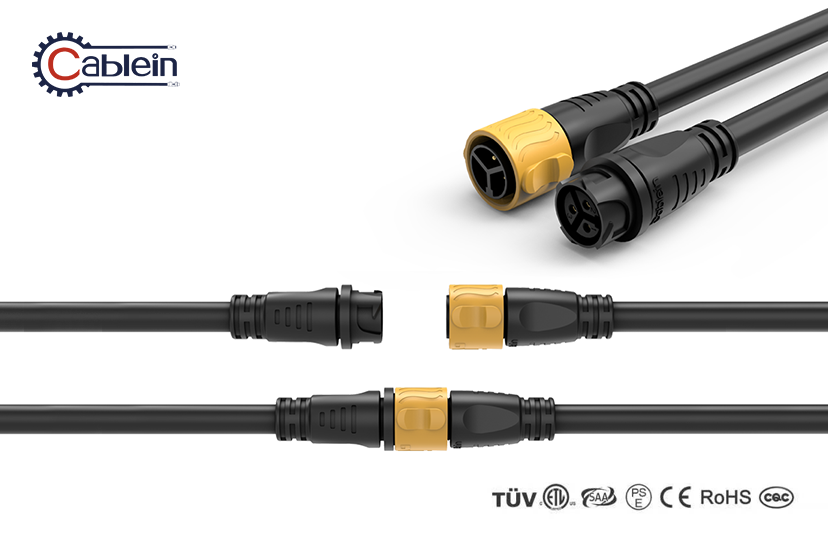
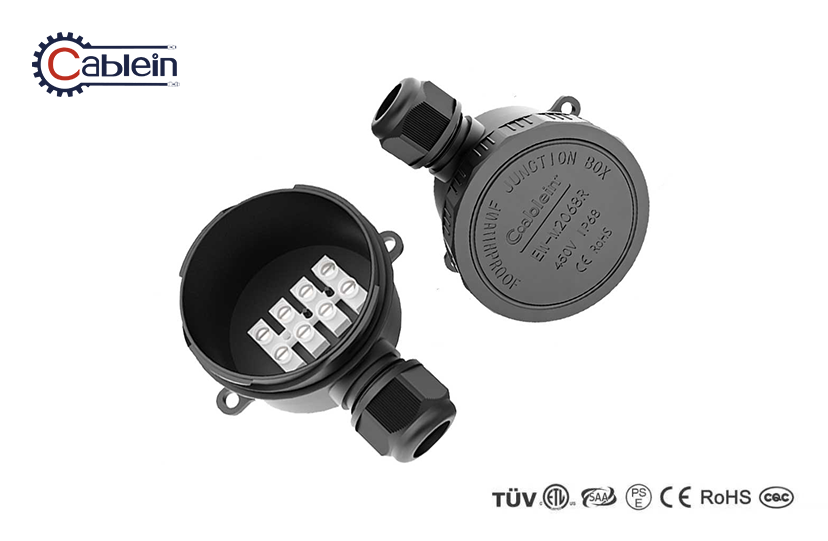
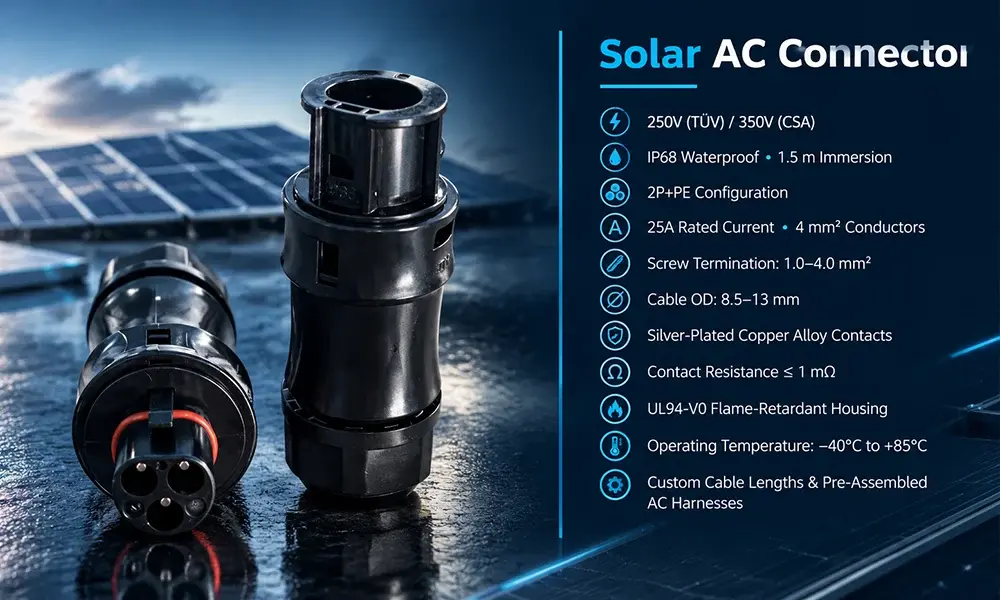
A solar AC connector is a weatherproof electrical component that links the AC output of a microinverter or string inverter to your home grid or commercial bus. Unlike DC-side connectors that carry raw panel current, this component handles converted alternating current under real-world outdoor stress — rain, heat, salt air, and vibration. Cablein's version carries dual certification at 250V (TUV) and 350V (CSA), meets IP68 immersion standards, and delivers contact resistance < 1 mΩ, making it a practical choice for residential rooftops, commercial arrays, and balcony solar builds alike.
What Is a Solar AC Connector and How Does It Work?
AC vs. DC Connectors: A Clear Distinction
A lot of installers think that AC and DC connectors are the same thing. They're not. High-voltage direct current flows between the panels and the transformer input through DC connections like MC4. The switched alternating current that comes out of the inverter is handled by a solar AC output connection. This is a very different kind of electrical load. Using a DC connection on the AC side can cause an arc, and the approval is null and void. The right part is made for the right insulation levels, contact geometry, and locking force for AC.
Core Working Principle
The three parts that make up the connector are the silver-plated copper alloy contacts that carry current, the UL94-V0 polymer housing that keeps out fire and water, and a screw-locking mechanism that keeps the connector from coming apart by accident when it shakes. When a 4mm² wire is inserted and the screw connector is tightened, the contact surface area increases the flow of electricity and keeps the resistance at or below 1mΩ. This low-resistance path keeps the junction from getting too hot, which is a major reason why connectors fail over time in outdoor PV setups.
Voltage Ratings and Industry Standards
The connector from Cablein has two separate certifications. The 250V AC certification from TUV covers the needs of the European grid, and the 350V AC certification from CSA covers the needs of North American and Canadian electrical codes. Two current-carrying poles and a safe earth make up the 2P+PE electrode layout, which lets microinverters send standard single-phase AC to the grid. Installers in the U.S. can show CSA paperwork straight to AHJs (Authorities Having Jurisdiction) during permit checks, which speeds up the approval process.
Key Features and Benefits of Solar AC Connectors
IP68 Protection and Material Durability
The case gets IP68 approval, which was confirmed by submerging it in 1.5 meters of water for 24 hours straight. This level of protection is higher than the IP65 grade that most general-purpose industrial solar AC connectors have. The polymer substance also passes the UL94-V0 flame test, which means it goes out on its own within 10 seconds of being lit. This is a requirement for any part that is placed near flammable materials on the roof. The temperature range of -40°C to +85°C is wide enough to cover installations in Arizona's desert summers and Minnesota's winters without the need for any downsizing below the upper limit.
These are the main technical benefits that make this connector stand out in the field:
- Contact resistance < 1 mΩ: Silver-plated copper alloy contacts maintain near-zero resistance across a rated 25A load, preventing junction heating that accelerates insulation degradation.
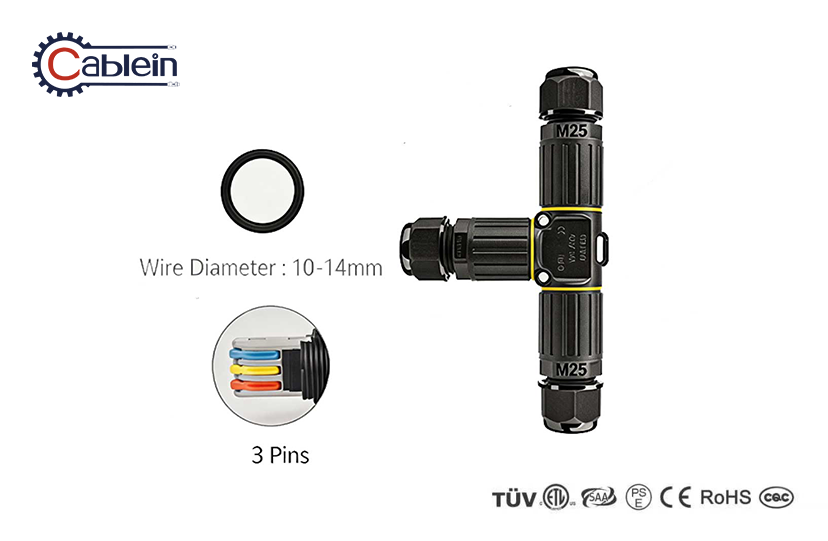
- Screw-type termination (1.0–4.0mm²): Accepts a wide conductor range and cable outer diameters from 8.5mm to 13mm, making it compatible with most standard PV wire gauges on the market.
- Salt-spray and ammonia resistance: The housing passes salt-mist testing (ASTM B117) and ammonia exposure tests, qualifying it for coastal installations and agricultural greenhouse projects where corrosive atmospheres are routine.
These benefits directly address the two most common ways that outdoor AC junctions fail: moisture getting in and oxidation happening, and high contact resistance leading to thermal runaway.
Compliance Documentation
Every unit comes with TUV and CSA approval records that can be tracked. Having full, audit-ready certification files is not a small thing for wholesale wholesalers who list goods on Alibaba or Amazon Business; it is a conversion factor. Before asking for prices, buyers in the European and North American markets look for approved parts. Cablein keeps track of certifications down to the SKU level, which means that wholesalers get papers that are specific to the production batch.
How to Choose the Best Solar AC Connector for Your Business Needs
Match Voltage Rating to Your Market
CSA-listed parts are needed for projects in North America that follow the NEC and CSA C22.2 standards. Testing protocols that are recognized by IEC 62852 and TUV are used for projects in Europe and the Middle East. One SKU for Cablein's dual-certified product covers both markets, making it easier for sellers who sell in different areas to keep track of their stock.
Evaluate Contact Quality Independently
Not all silver-plated contacts work the same. Ask vendors for contact resistance data from a third party. When the load is at full, a value above 2m© will produce heat at the junction that can be measured. This heat is enough to speed up the weakening of the housing within two to three years. The ≤1mΩ standard in Cablein's connector is backed up by tests done by a third party, not by the company itself.
Consider Installation Context and Cable Length
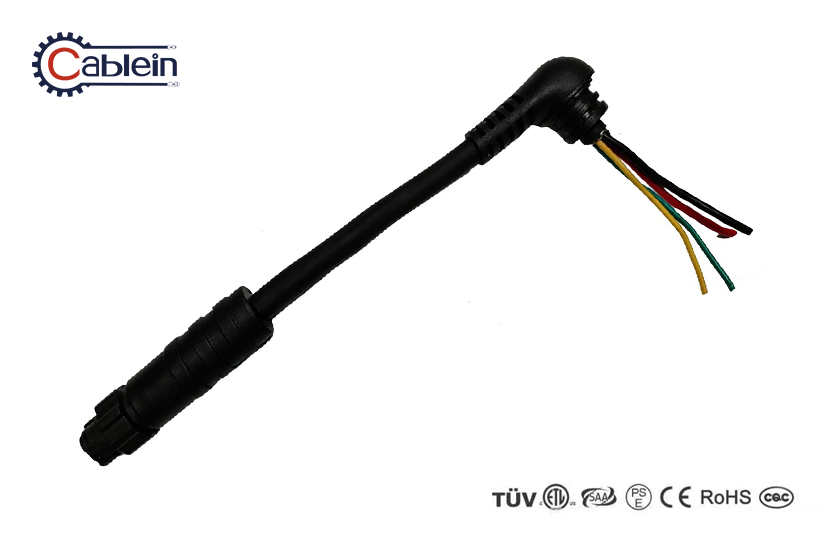
For home installers in North America like Mike, being able to buy AC harnesses that are already put together in 3ft, 6ft, or 10ft lengths saves them time in the field. Cablein takes custom cable assembly orders with low minimum numbers (100 to 300 pieces per batch), which works for small installation companies who usually buy things one at a time. This is what makes the difference between a link that is stored away and one that is asked for on every job.
Installation and Troubleshooting Guide for Solar AC Connectors
Step-by-Step Field Installation
Remove the 8–10 mm conductor, make sure the wire gauge is between 1.0 and 4.0 mm², and make sure the cable's outside width is between 8.5 and 13 mm. Fully connect the conductor to the screw terminal and tighten it to the manufacturer's recommended level, which is usually between 0.5 and 0.8 N·m for this type of terminal. Do not tighten too much; threads that are stripped in polymer housings leave tiny holes that let water in. Once everything is put together, make sure the IP68 rating is still valid by making sure the cable gland seal is tightly pressed against the cable jacket.
Diagnosing Common Failures
Discoloration on the outside of the housing, like yellowing or brown spots near where the wire enters, means that there is heat stress from high resistance. If an infrared scan of the connection body during regular use shows a hotspot that is more than 15°C above ambient, the unit needs to be replaced right away. When solar AC connector housing cracks in cold places, it's usually because of a bad polymer compound that stops being flexible below -20°C. Cablein's UL94-V0 material stays mechanically sound up to -40°C, so this failure mode is no longer an issue in cold climate installations.
Routine Maintenance Schedule
Every year, look at the AC joints to make sure they are in good shape. Look for discoloration in the housing, wear on the wire jacket where the gland enters, and any signs of water pooling around the body of the connection. For rooftop systems near the coast, you might want to do a 6-month run in the first two years to make sure the salt-spray resistance is working as it should. For these checks, you don't need any special tools; just a flashlight and an infrared thermometer will do.
Procurement Insights: Buying Solar AC Connectors for B2B Clients
Volume Pricing and Inventory Planning
Cablein has tier-based pricing that starts at 5,000 pieces per order, and they can give you FOB quotes for combining sea freight. SKUs that are normally in stock will ship within 7–10 days. This wait time gets rid of the safety stock buffer that most wholesalers keep on hand to cover source delays for sellers who manage monthly replenishment cycles of 1,000–3,000 pieces. The packaging is made for LCL (less-than-container-load) sea freight, and the moisture-barrier inner packing keeps the goods from getting damaged by condensation while they're traveling across the ocean for a long time.
Supplier Qualification Criteria
Before you place your first order with a photovoltaic AC connector supplier, make sure they have the following: original TUV or CSA test reports with file numbers, an ISO 9001:2015 certificate with current validity dates, a production sample from stock (not a pre-production prototype), and a written quality-claim response policy with a stated response window. Cablein offers all four, and they promise to respond to quality claims within one year. They also offer technical help 24 hours a day, seven days a week.
OEM and Private-Label Options
Cablein offers OEM and ODM services with TUV/CSA listing syncing for foreign solar brands that need to change the labels or get certified at the same time. Cablein has more than 30 utility model patents and its own research and development team, so it can help with mold customization and product differentiation while keeping approval valid for the end market.
Conclusion
A photovoltaic AC junction isn't just any part. Whether a solar system works perfectly for 25 years or needs repairs in the third year depends on the quality of the contacts, the scope of the certification, and how well the building performs. Cablein's solar AC connector has a -40°C to +85°C operating range, IP68 immersion protection, dual TUV/CSA certification, and < 1 mΩ contact resistance. It can be used in residential, commercial, and harsh environment settings. There is a place for everyone: installation workers who need custom harnesses and bulk wholesalers who need fast-turn inventory. The specs are out there; the only question is whether your current supplier can meet them.
FAQ
1. Can this connector be used with both microinverters and string inverters?
Yes. The 2P+PE configuration and 25A current rating cover single-phase AC output from both microinverters (typically 250–300W per unit) and small string inverters up to the rated ampacity. Confirm your inverter's AC output current does not exceed 25A before specifying.
2. Does the CSA certification cover installations in the United States?
CSA certification under CSA C22.2 standards is recognized by most U.S. AHJs and is listed in the National Electrical Code. It is widely accepted for grid-tie interconnection permits in all 50 states, though local inspector requirements can vary.
3. What is the minimum order quantity for custom cable lengths?
Cablein accepts pre-assembled AC harness orders starting at 100 pieces per batch, with cable lengths configurable to 3ft, 6ft, or 10ft based on project layout requirements.
4. How long does a properly installed unit last outdoors?
A high-quality solar AC connector is designed for a 25-year service life, matching standard panel warranties. This assumes correct torque on installation, undamaged cable jacket at the gland entry, and no sustained submersion beyond the IP68-rated 1.5m depth.
5. What documentation comes with each shipment?
Each shipment includes original TUV and CSA test reports, an ISO 9001:2015 certificate, a packing list, and a certificate of conformity. Batch-specific traceability is available on request.
Get Your Solar AC Connector Quote from Cablein Today
Since 2017, Cablein Technology has sold certified waterproof connectors to distributors and installation contractors in more than 100 countries. As a reliable solar AC connector manufacturer, we keep more than 10,000 pieces of each SKU in stock, offer normal shipping in 7–10 days, and offer full OEM support for private-label projects. You can email our technical team at nick@cableinco.com to get pricing information, samples, or certification paperwork. We answer within 24 hours.
References
1. International Electrotechnical Commission. IEC 62852: Connectors for DC Application in Photovoltaic Systems. IEC, 2014.
2. Underwriters Laboratories. UL 2238: Cable Connectors for Use with Photovoltaic Systems. UL Standards, 2021.
3. Canadian Standards Association. CSA C22.2 No. 182.3: Special Purpose Attachment Plugs, Receptacles and Connectors. CSA Group, 2020.
4. National Renewable Energy Laboratory. Photovoltaic System Component Reliability: A Review of Field Failure Modes. NREL Technical Report, 2022.
5. TÜV Rheinland. Testing and Certification Guidelines for Photovoltaic Connectors and Junction Components. TÜV Rheinland Group, 2023.
6. Solar Energy Industries Association (SEIA). U.S. Solar Market Insight Report: Residential and Commercial Installation Trends. SEIA & Wood Mackenzie, 2023.