M12 Straight vs Right-Angle Connectors: How to Choose?
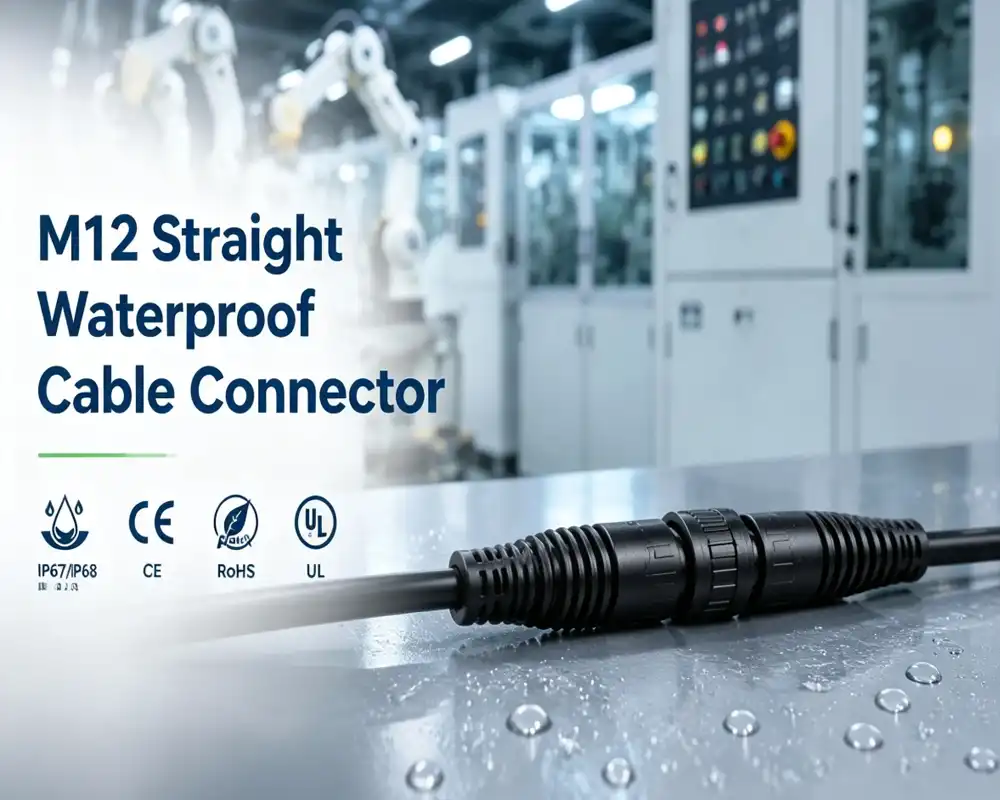
Which M12 straight or right-angle connector to use relies on where you want to place it, how you want to route the cables, and the weather. M12 straight waterproof cable connector designs work well in normal panel-mount situations where a straight cable exit is desired. They provide strong IP67/IP68 protection and make installation easier by making it easier to line up the cables. When it comes to tight spaces, right-angle versions are better because they let cables run straight to equipment surfaces, which lowers the mechanical stress on cables in small spaces. Both configurations work reliably in harsh industrial settings. Which one you choose will depend on available space, ease of upkeep, and how wires naturally run through your system plan.
Understanding M12 Straight and Right-Angle Connectors
For industrial connections to work, systems must be stable and able to handle extreme temperatures, dust, wetness, and vibration. M12 circular connectors are essential for automation, sensor networks, and installing equipment outside because they work reliably even when conditions are tough.
What Defines M12 Connector Technology
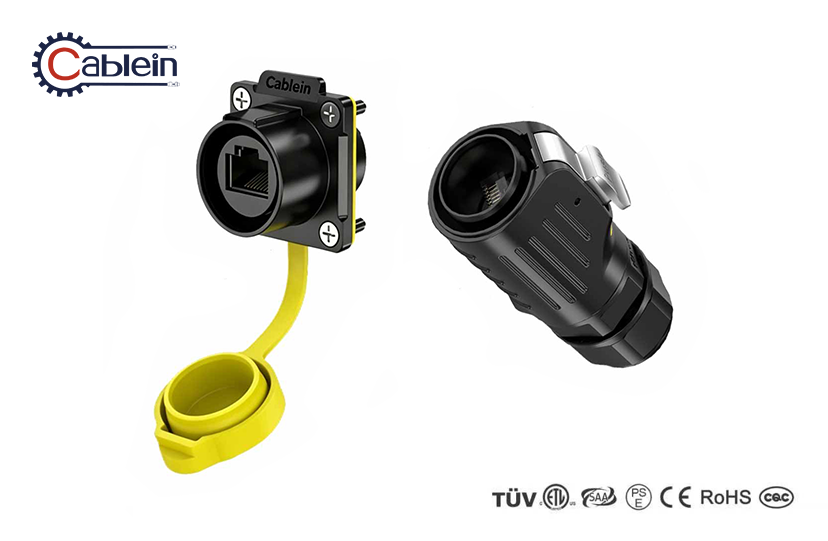
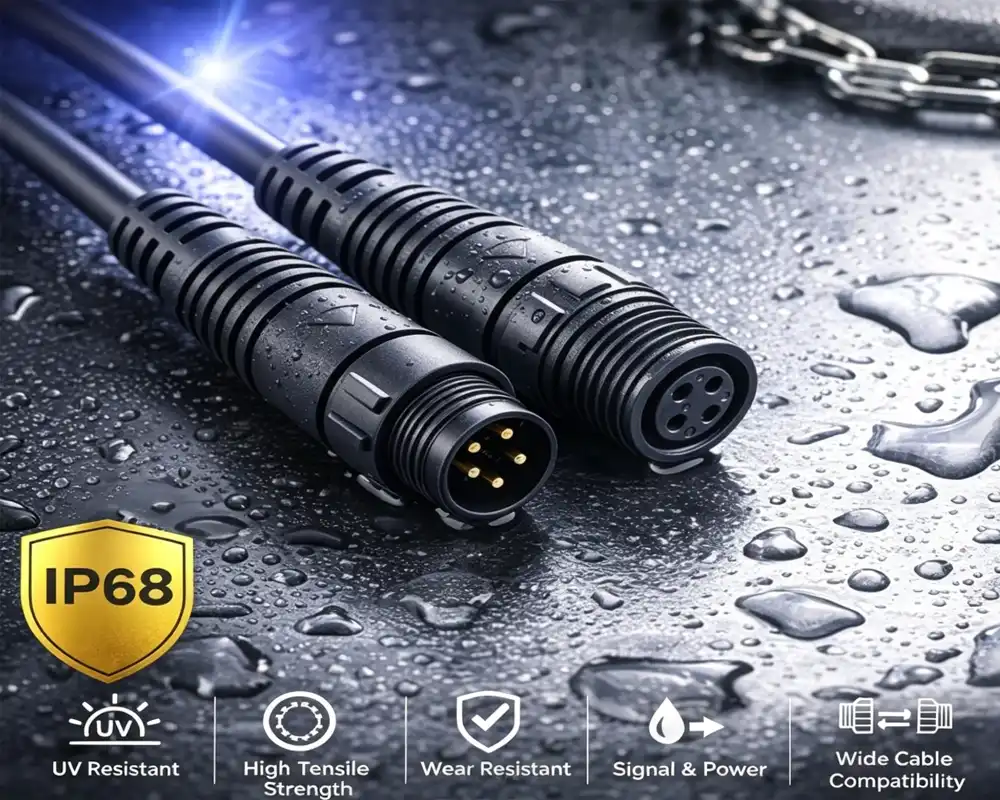
M12 connectors have a standard 12mm threaded connection system that makes sure they lock securely mechanically and keep out the environment. The straight shape makes the wire leave perpendicular to the mounting surface, which is great for panel installations where there is room behind the connector. These connections have gold-plated solid brass contacts and silicone waterproof seals inside PA66 nylon housings. Depending on the design requirements, they achieve IP67 or IP68 ratings. This way of building keeps internal contacts safe from water jets, oil contamination, and particle entry, all of which can happen on plant floors, in outdoor lighting systems, and in transportation infrastructure.
Right-angle M12 connectors change the way the wire exits so that it is parallel to the mounting plane. This makes the total footprint smaller. This position is useful for robotic arms, machine vision systems, and control boxes with a lot of parts that need to fit together closely. Both directions meet the requirements of IEC 61076-2-101, which means that products from different makers can work together mechanically and electrically. You can choose from nickel-plated zinc alloy for low-cost uses and stainless steel 316 for harsh settings like the sea and chemical processing, where rust protection is essential.
Core Application Environments
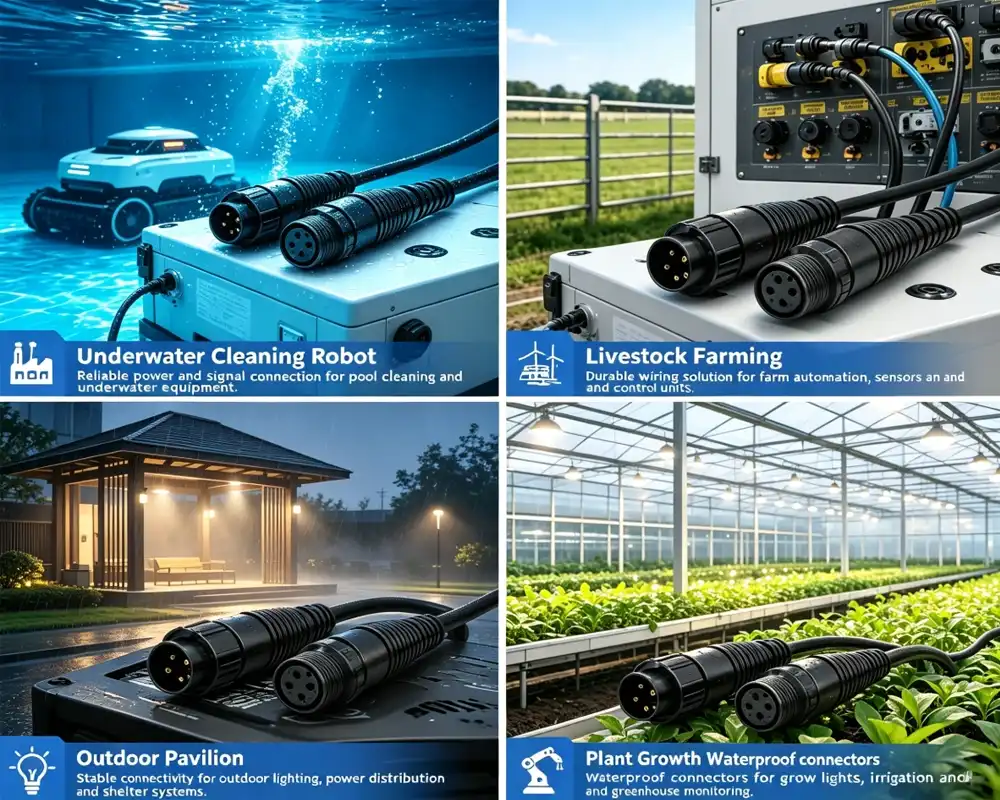
M12 waterproof connectors are used in many fields that have different weather obstacles. Outdoor LED lighting projects like arenas and landscaping need housings that are resistant to UV light and keep their seals even when the temperature changes with the seasons. Connectors that keep their electrical stability even when they are constantly exposed to rain, dust storms, and changes in temperature are needed for solar tracking systems and EV charging points. Vibrations, chemical splashes, and electromagnetic interference are common in industrial automation settings. This means that connections with threaded locking mechanisms and shielded wire constructions are needed.
For security and video systems to work on roads and along the coast, the connectors need to be able to handle high-pressure water and salt spray. In rail transit uses, there is a lot of mechanical shock and constant shaking, and worn-out connectors can cause signals to drop out and systems to fail. When procurement teams know about these operational stresses, they can better match connector specs to real-world conditions. This keeps expensive downtime and early failures from happening.
Key Differences Between M12 Straight and Right-Angle Connectors
Picking the right connector position affects how quickly and reliably the system is set up and how easy it is to keep. When used in certain situations, the physical differences between straight and right-angle layouts can be very helpful.
Physical Design and Space Optimization
M12 Straight waterproof cable connectors extend directly from the device body and are ideal for installations with sufficient rear clearance. This position makes it easier to route cables in open panel setups and lets you quickly see if the connection is working. The straight-line connection between the connector body and cable lowers the stress on the cable entry point, making the connector last longer in situations where the cable moves around a lot.
Right-angle connectors change the direction of the wire exit by 90 degrees. This lets equipment sit flush against walls or in small spaces. This design makes it less likely that a cable will get caught in a small cable tray or robotic work envelope by mistake. But the internal bend in the wire inside the connection body can cause stress to build up, so it's important to use high-quality overmolding. Purchasing managers should make sure that overmolded constructions have strain relief that spreads mechanical load properly and stops wire jackets from cracking too soon.
Performance Characteristics and Durability
When the connections are properly placed, they can resist dust ingress and temporary immersion up to 1 meter for 30 minutes. The IP67 waterproof ratings are the same for both directions when the conditions are static. In some versions, IP68, this security extends to long-term submersion, allowing use in underground sites and water treatment plants. Temperature tolerance is usually between -40°C and 150°C, which allows for extreme cold in Canadian outdoor sites and heat near industrial boilers.
The threaded closing system in both types is better at resisting vibration than push-pull options. Because of angular cable stress, right-angle connectors may need a little more force to mate, which could make fitting in awkward places more difficult. Gold-plated contacts keep their resistance below 5 mΩ for more than 500 joining cycles, which protects the security of signals in sensor networks and fieldbus communications. While stainless steel housings are more resistant to rust than PA66 nylon ones, they are also more expensive and heavier. The choice of material depends on the budget and the harshness of the climate.
Installation and Maintenance Considerations
Pre-wired M12 Straight Waterproof Cable Connectors eliminate field termination work and reduce installation time. Technicians can approach the mating process directly in line with the connector shaft with straight connectors. This makes alignment easier in dark or confined areas. Right-angle models need to be rotated in order for the keying features to line up, which can be hard to do when working above or in cases with a lot of wires.
Accessibility for maintenance is different for each direction. When loosening threaded connections, straight connectors let you use a wrench from a variety of angles, while right-angle designs might make it hard to place a tool based on what else is nearby. In straight setups, inspecting the cable strain relief is easier because the entry point of the wire can be seen without having to take the equipment off the wall.
How to Choose Between M12 Straight and Right-Angle Connectors
To get the best total cost of ownership, connection selection should take into account technical needs, space limitations, and the practicalities of buying the connectors.
Evaluating Installation Space and Cable Routing
Start by making a map of the wire paths in your equipment plan. For example, sensors on flat panels or control boxes with back cable entry are good examples of places where cables naturally run perpendicular to the device mounting lines and straight connectors work well in those situations. Right-angle connectors work great when cables need to run parallel to mounting surfaces. This happens a lot in robotic joints, sensors that are placed on conveyor belts, and thin devices where cables sticking out would get in the way of moving parts.
Check how much space there is behind the fixing points. Right-angle designs that decrease overall depth are good for equipment that is mounted against walls or in shallow spaces. On the other hand, straight connectors take up less room on the sides, which is helpful in terminal blocks with a lot of connections or multisensor arrays where connectors are mounted next to each other.
Assessing Environmental and Operational Factors
The harshness of the environment determines the choice of material and grade. Connectors that have been through thorough salt spray testing and UV resistance validation are better for use outside in places with a lot of UV light and high temperature changes. Coastal sites and chemical processing plants may be able to afford stainless steel housings even though they cost more at first because they last longer and require less upkeep.
The strength of the vibration affects the choice of direction. High-frequency vibrations in moving trains or machines that spin can wear down cables at the point where they join. Right-angle connectors focus bending stress inside, which could make failure happen faster in places with a lot of vibration unless the quality of the overmolding is very good. In these situations, straight connectors are more durable because they spread mechanical stress more widely along the wire axis.
Integrating Procurement and Supplier Considerations
Technical requirements must match what the seller can do and when the purchase needs to be made. Check that candidates have the right certifications, like CE, ETL, PSE, and TUV, to make sure they follow the rules for your target markets. Suppliers who have ISO9001:2015 approval show that they have matured their quality management, which lowers the risk of variation in big sales.
When modification is needed, lead time management is very important. Most standard straight connectors can be shipped within 7–10 days from stock. However, right-angle versions with special wire lengths or pin configurations may take up to 3–4 weeks. Having ties with providers who offer flexible OEM/ODM support and quick technical help lowers the risks that come with making changes to the design in the middle of a project. Talking about stocking deals for high-volume use guards against interruptions in the supply chain and provides continuity.
Comparison of M12 Straight Waterproof Cable Connectors with Other Connector Types
Figuring out how M12 straight waterproof cable connectors compare to other options helps you see how useful they are in certain situations.
M12 Straight vs Right-Angle Performance Trade-offs
M12 Straight Waterproof Cable Connectors are better at distributing cable strain relief, which makes them better for uses where cables need to be moved or repositioned often. Their perpendicular cable exit makes fixing and replacing connectors easier because workers can see where cables are going without taking the equipment apart. Right-angle connectors lower the size of the equipment they hold and keep cables from getting damaged when they are accidentally hit in high-traffic areas. However, the internal bend in the cable needs better overmolding to keep it reliable over time.
Cost differences between orientations are typically modest, with right-angle variants commanding a 10-15% premium due to more complex molding processes. Performance parity in electrical traits means that selection is based on mechanical and spatial factors rather than worries about signal integrity.
M12 vs M8 Connector Comparison
M8 connectors have a smaller size that makes them good for small sensors and uses with limited room, but they lose the ability to carry more power and the ability to change the number of pins. M12 connectors can handle rated currents of up to 10A and 2 to 12 poles, so they can handle both power and data pairs in one interface. Most M8 versions can only handle 4 poles and lower amperage, which means they can't be used in motors or sensor systems that need a lot of power.
M12 connectors are the most common type used in industrial machinery because they have a standard coding system that keeps signals of different types from mixing. This feature cuts down on launching mistakes and improves system stability, which is why they are widely used even though they are a bit bigger.
Material Selection Impact on Durability
Gold-plated brass contacts in PA66 nylon housings offer a great mix of price and performance for most indoor and mild outdoor uses. These systems are priced competitively and can handle common industry chemicals, oils, and changes in temperature. Marine settings, food processing plants that need to be cleaned with high-pressure water all the time, and chemical plants where harsh chemicals attack polymer materials all need stainless steel 316 housings.
Lifecycle costs, not just the original buy price, should be what procurement teams look at. Stainless steel fittings may cost 40–60% more up front, but they don't need to be replaced as often in corrosive conditions, which lowers the total cost of ownership over 5–10 years of use.
Tips for Procuring M12 Straight Waterproof Cable Connectors
When buying industrial connectors, strategic purchase practices make sure that quality, cost, and delivery efficiency are all at their best.
Supplier Qualification and Quality Assurance
Give more weight to providers who have clear quality control procedures that include helium leak testing for IP68 verification, mating cycle endurance testing that goes beyond 500 cycles, and external stress screening by exposing the parts to salt spray. For M12 straight waterproof cable connectors, specifically ask for test results showing compliance with IEC 60068-2-6 vibration standards and insulation resistance readings higher than 200 MΩ. These tests prove that connectors will work properly under certain operating pressures.
Evaluate supplier production capacity and inventory management. Manufacturers maintaining stock levels above 10,000 pieces per SKU can respond rapidly to urgent orders and production surges. Site checks or third-party certifications like ISO9001:2015 make factory controls and traceability systems clear, which is very important for businesses that have strict quality reporting rules.
Customization and Lead Time Management
Customized wire lengths, pin configurations, or overmolding colors for coding are needed for many uses. During the seller approval process, make it clear what kinds of customizing are available, as well as any minimum order amounts and technical support that is available. Suppliers that offer fast development services let you test your design before committing to large-scale production. This lowers the risk of expensive specification errors.
Balance customization benefits against lead time extensions. Standard M12 straight waterproof cable connector units from existing inventory accelerate project timelines, while custom setups may take 3–6 weeks, based on how complicated the tools are. Putting together orders with a mix of standard and unique parts lets you do phased launches that keep the project moving forward while meeting specific needs.
Negotiation Strategies and Long-term Partnerships
When you make a volume promise, you can get better pricing and better distribution of your goods. When compared to spot purchases, frame deals with yearly volume goals often offer 15–25% discounts, which boosts project margins. Talk about payment terms that work with the project's cash flow. For example, instead of upfront deposits, agree on progress payments that are tied to delivery goals.
Getting along with connector suppliers and working together is good for everyone. Sharing information about how goods are used helps suppliers improve them to better meet the needs of the industry. Also, suppliers can improve their inventory and production schedules by using regular buying patterns. Technical support that is quick to respond and ready to help with problems in the field set partners apart from transactional sellers and add value beyond what the product specs say.
Conclusion
When choosing between M12 straight and right-angle waterproof connectors, you need to think about how much space you have, how the environment needs to be protected, and how the application needs to work. Straight connectors make installation easier and better distribute cable strain, making them perfect for normal panel mounts and uses with enough space in the back. Right-angle versions work best in small areas and keep wires safe from damage in tight installations. If you buy them from a qualified seller with a history of quality control and certification compliance, both orientations offer strong IP67/IP68 protection and reliable electricity performance. Focusing on supplier dependability, customization options, and minimizing lifetime costs are key parts of strategic buying practices that ensure connectivity solutions that improve system uptime and business efficiency.
FAQ
What IP rating should I choose for an M12 Straight Waterproof Cable Connector?
IP67 connectors can handle dust getting in and being submerged in water for up to 30 minutes. This makes them perfect for most outdoor and industrial settings where water or rain might splash on them. IP68 versions can withstand being submerged in water deeper than 1 meter for long periods of time. This is needed for installations that are buried, used in the water, or equipment that is flooded. Check the depth and duration rates that the makers give you, because IP68 standards aren't all the same.
Can I interchange M12 straight connectors from different manufacturers?
Yes, as long as both connectors meet the requirements of IEC 61076-2-101 and have the same type of code (A, B, D, X, etc.). Keying features keep devices from mixing signals that aren't suitable, but the physical measurements and electrical properties stay the same. Quality differences in seal and contact coating materials can affect how long they last and how well they protect the environment. This is why choosing the right source is important, even if the parts are mechanically compatible.
How do I determine if stainless steel or PA66 nylon housing is appropriate?
PA66 nylon housings are good enough for most automation applications inside and in moderately harsh outdoor settings where chemicals are not present in large amounts. 316 stainless steel is needed in naval settings, food processing plants that need to wash down their equipment with high-pressure water, and chemical plants where polymers are attacked by violent substances. Look at the total cost over its entire life. Stainless steel's higher price at first often pays for itself by lasting longer in tough environments.
Partner with Cablein for Reliable M12 Connector Solutions
Cablein offers designed M12 waterproof cable kits that have been through strict testing and have been certified by organizations around the world, such as CE, TUV, ETL, and PSE. Our factory-integrated overmolding avoids the risk of field termination, and our customization support lets you choose the right wire lengths, pin configurations, and environmental needs. We can support both urgent deployments and large-scale production schedules because we keep more than 10,000 of each item in stock and can send standard goods in 7 to 10 days. Our engineering team is available to help you choose the best connectors for your energy grid, lights, or automation projects. Get in touch with us at nick@cableinco.com to talk about your M12 Straight Waterproof Cable Connector needs with a reputable company that cares about quality and on-time delivery.
References
1. International Electrotechnical Commission. (2021). IEC 61076-2-101: Connectors for Electronic Equipment—Product Requirements—Part 2-101: Circular Connectors—Detail Specification for M12 Connectors with Screw-Locking. Geneva: IEC.
2. Marquardt, R., & Schulz, T. (2020). Industrial Connector Systems: Design, Selection, and Application in Automation Environments. Munich: Hanser Publications.
3. Zhang, L., Wang, H., & Chen, Y. (2022). "Comparative Analysis of Waterproof Connector Performance in Outdoor LED Lighting Systems." Journal of Electrical Engineering & Technology, 17(4), 2245-2256.
4. Peterson, J. (2023). Procurement Strategies for Industrial Components: A Guide to Supplier Qualification and Quality Assurance. New York: Industrial Press.
5. European Committee for Electrotechnical Standardization. (2019). EN 60529: Degrees of Protection Provided by Enclosures (IP Code). Brussels: CENELEC.
6. Anderson, M., & Roberts, K. (2021). "Material Selection for Harsh Environment Connectors: Durability and Cost-Effectiveness Analysis." IEEE Transactions on Components, Packaging and Manufacturing Technology, 11(8), 1342-1351.