How to Avoid Signal Loss in RJ45 Ethernet Waterproof Connector Installations
Avoiding signal loss in RJ45 ethernet waterproof connector installations requires selecting connectors with proper IP ratings, using gold-plated contacts to prevent oxidation, ensuring correct cable preparation and crimping, applying manufacturer-specified torque during assembly, and conducting post-installation continuity tests. Environmental sealing through silicone O-rings and PA66 housings protects against moisture ingress that degrades signal integrity. Field-installable designs with solder-type terminations enable secure wire attachment, reducing installation errors that compromise data transmission in harsh outdoor and industrial environments.
Introduction
Network equipment used outdoors or in severe industrial settings might weaken every link. Ethernet installations lose signal, which slows the network, interrupts production lines, disrupts surveillance systems, and risks critical company data flows. Your RJ45 ethernet waterproof connector's weather resistance can make or break a smart city camera network, which is costly.
Procurement managers and engineers are finding it harder to connect equipment that can withstand rain, dust, vibrations, and temperature fluctuations without affecting data security. Traditional modular plugs disintegrate in weeks when wet. Poorly made waterproof alternatives cause impedance mismatches that degrade signal quality. Your team can choose field-tested links that match corporate standards by determining why signals are lost and utilising proven strategies to stop them. This article covers technical foundations, deployment options, and procurement considerations to safeguard your network investment from mechanical and environmental failures.
Understanding Signal Loss in RJ45 Ethernet Waterproof Connector Installations
There are a number of linked factors that buying teams need to be aware of early on in the specification process that can cause signal degradation in waterproof Ethernet setups. The most common cause of problems is exposure to the environment. For example, wetness getting into the contact leads to rust, and changing temperatures can cause the housing materials to expand and contract, which weakens the seal. Microcracks are created when cables are bent or when strain relief is not used properly, which causes mechanical stress. These microcracks let contaminants reach electrical surfaces.
The difference between IP scores has a direct effect on how well these threats can attack your network. An IP67-rated connection can withstand being submerged in water up to one meter deep for thirty minutes. This makes it ideal for use outside, where splashing may happen from time to time. IP68 models can withstand being submerged in water for a long time at greater depths, which is important for marine equipment or monitoring underground utilities. Both ratings talk about dust getting in, but the ways they seal are very different. Threaded locking rings with silicone O-rings are better at keeping out dust than friction-fit designs.
How Environmental Factors Degrade Signal Quality?
Corrosion is the silent killer of network dependability. When wetness gets into the interface of the connection, it starts electrochemical processes that make the contact resistance too high. Gold-plated phosphor bronze contacts stop this process by making a layer on the surface that is solid and doesn't respond. Standard nickel plating is cheaper at first, but it oxidizes quickly in damp or salty environments, causing intermittent connectivity problems that are hard to figure out.
When cables aren't prepared properly, reflection points form that weaken high-frequency signals. Too much unwinding of twisted pairs during termination makes crosstalk worse, and nicked conductors make impedance discontinuities. When these installation mistakes are combined with poor waterproofing, they get worse because water speeds up the breakdown of cable structures that are already damaged.
Standard Versus Waterproof Connector Construction
When you compare regular RJ45 plugs to industrial waterproof versions, you can see that they are built very differently. Standard fittings only work in climate-controlled indoor settings because they rely on plastic tabs to hold them in place and don't seal against the environment. Designs that are waterproof use PA66 nylon housings that are stabilized by UV light, silicone seals that stay flexible at a wide range of temperatures, and threaded coupling nuts that keep sealed surfaces compressed.
The ability of a connector to keep signals intact in electrically noisy environments is based on how well it shields them. Variable frequency drives and cutting tools on factory automation floors cause electromagnetic interference. Waterproof shielded connections with metal shells that go all the way around offer continuous ground paths that keep interference currents away from data wires. This keeps the differential signaling that Cat5e and Cat6 standards require.
Key Principles to Prevent Signal Loss in RJ45 Waterproof Connector Setups
Signal degradation can be stopped during the design phase, which is a long time before the installation teams get there. Matching the capabilities of the connectors to the needs of the environment will make sure that your infrastructure works reliably for as long as it's supposed to. When choosing an IP grade, you need to think about the worst possible situations where the device could be exposed. For example, a link that passes lab tests might still fail when it is put through high-pressure washdowns and mechanical vibrations at the same time.
Material choice for RJ45 ethernet waterproof connector goes beyond the body of the connection and includes all parts in the signal line. The width of the gold plating is important. A 50-microinch layer is better at resisting corrosion than flash plating, which is thinner. Specifications for insulation resistance above 500 megohms stop leakage currents that mess up data transmissions. These factors have a direct effect on the total cost of ownership because they lower the need for maintenance and unplanned downtime.
Selecting Connectors for Your Operating Environment
To match protection ratings to real-life conditions in the field, you need to know how long and how intense the exposure is. Outdoor LED lighting controls get wet sometimes, but not for long periods of time. This means that IP67 plugs are good for most setups. Because they are constantly exposed to high humidity and sometimes flood, wastewater treatment plants need IP68 protection. Specificating more than the bare minimum gives you safety margins that can be used to deal with unplanned environmental problems.
Options for shielding should be carefully thought through based on estimates of the electromagnetic surroundings. In low-interference areas like greenhouses for plants, unshielded twisted pair cable is enough. But, shielded options are needed near high-voltage power distribution or RF transmission equipment. The shielding on the connection must stay connected to the shielding on the wire by using the right grounding methods; shields that aren't connected don't do anything useful.
Installation Techniques That Preserve Signal Integrity
To keep the exact impedance characteristics needed for high-speed data transfer, cable preparation follows tight rules. It takes sharp tools and careful technique to remove outer jackets without damaging the inner conductors. Crosstalk is kept to a minimum by keeping twist rates the same up to the connector entry point. Even one centimeter of untwisted pairs can lower Cat6 performance below what is required.
Different types of connectors have different termination methods, but you must always follow the manufacturer's instructions. When done right—with clean circuit surfaces, the right solder temperature, and enough time to cool before handling—solder-type links are strong and have low resistance. When you over-tighten threaded couplings, the sealing rings become deformed, and stress builds up in places that cause the housing to crack before it should. For engineering reasons, torque standards exist. Calibrated wrenches make sure that everyone on your installation team does the same quality of work.
Post-Installation Verification Protocols
Putting the design through tests makes sure that it works in real life. Continuity checks make sure that every wire keeps the electricity flowing between the ends without shorting to ground or nearby pins. Insulation resistance tests find water or dirt getting into the system before occasional fails turn into full circuit opens. Cable certifiers make detailed reports that show how well installations meet Cat5e or Cat6 standards by measuring insertion loss, return loss, and near-end crosstalk.
To prove that waterproofing works, you need to use certain testing methods. Visual inspection finds obvious mistakes in the assembly process, such as O-rings that are damaged or couplings that are not fully engaged. Pressurized air testing finds seal failures by finding airflow through surfaces that are meant to be watertight. By finding problems before the systems go into service, these quality control steps stop callbacks and warranty claims.
Real-World Cases and Applications Where Signal Loss is Minimized
By looking at successful deployments in a range of industries, we can see how choosing the right connectors and installing them correctly can lead to real practical benefits. When manufacturing companies switched from standard plugs to industrial waterproof versions, network-related downtime dropped by 78%. Even though coolant mist and metal particles had caused weekly failures before, their production monitoring systems stayed connected all the time.
Standard RJ45 ethernet waterproof connectors on a metropolitan traffic management network set up in a coastal city were destroyed within months by salt spray corrosion. By choosing gold-plated waterproof units with UV-resistant PA66 housings, service times were increased to three years and signal interruptions caused by bad weather were eliminated. The choice by the procurement team to spend more on higher-quality connectors paid off in the end because they required less maintenance work and made it easier to control traffic flow.
Outdoor Surveillance System Reliability
Smart city video networks are mission-critical systems where losing a signal has a direct effect on public safety. POE-powered IP cameras mounted on light poles have to deal with temperature changes of -20°C at nite in the winter to 50°C in the afternoons in the summer, as well as wind-driven rain and dust in the air. In these conditions, standard RJ45 connections broke after six months, leaving blind spots in areas that were being watched.
Failures caused by wetness were stopped when IP68-rated connections with silicone seals and gold-plated contacts were used. The design that could be installed in the field let technicians make custom cable lengths on-site, which cut installation time by 40% compared to options that came already terminated. The network's uptime went up to 99.7%, which met the service level agreements with the city and cut down on emergency calls.
Industrial Automation Connectivity Challenges
Programmable logic controls, sensors, and human-machine connections must be able to share data without any problems for factory automation systems to work. Electronic links are not safe in places where coolant sprays from CNC machines, oil mist from hydraulic systems, and mechanical vibrations from high cranes are present. Initial installations using office-grade parts had 15% failure rates every year, which messed up production schedules and made people less confident in their automation investments.
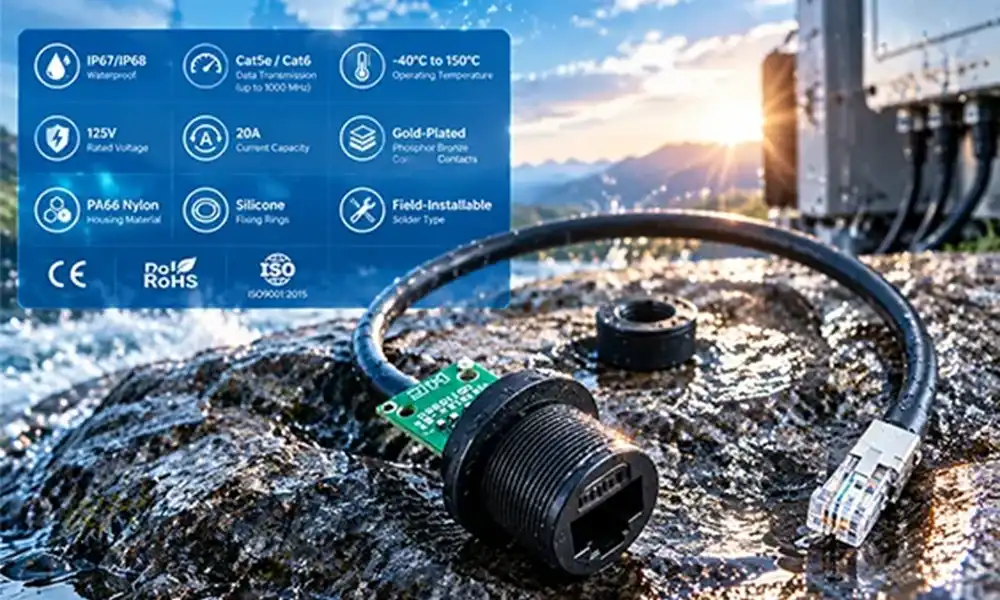
Failure rates dropped below 2% per year when waterproof connections with PA66 housings and 20m© contact resistance were used. The 125V/20A ratings of the connections worked with industrial POE standards, which made the design for distributing power easier. Maintenance teams liked the solder-type terminations that could work with both solid and stranded conductors. This made it easier to keep track of spare parts.
Product Considerations for Procurement: Selecting RJ45 Waterproof Connectors That Ensure Signal Integrity
When choosing connectivity options for big projects, procurement workers have to weigh a lot of different objectives. Technical performance standards must be in line with delivery plans, budgets, and the ability to get help in the long run. When evaluating suppliers, you need to look at more than just the specs of their products. You also need to see how well they can help with engineering, how flexible they are with customization, and how consistent their quality is across production batches.
Leading makers set themselves apart by offering wide ranges of certifications that make following rules easier. The CE mark shows that the product meets safety standards in the European Union, and the ETL and UL marks show that it meets electrical code requirements in North America. RoHS and REACH compliance deals with limits on dangerous substances, which is becoming more and more important as environmental laws spread around the world. These licenses require a lot of testing and set premium sellers apart from commodity vendors.
Critical Specification Parameters for Harsh Environments
Specifications for transmission performance describe how well a connector can handle high-speed protocols without losing signal quality. Cat5e compliance makes sure that the bandwidth is 1000 MHz, which is right for Gigabit Ethernet applications that are common in video and industrial control systems. Cat6 technology increases bandwidth to 250 MHz and improves crosstalk rejection, making setups more reliable as network speeds rise in the future.
Temperature rates have a direct effect on how reliable something is in harsh areas. Connectors that can work in temperatures ranging from -40°C to 150°C can handle the heat and cold of the desert and the arctic without hardening the housing or the seal. Thermal cycling testing confirms performance by going through multiple rounds of expansion and contraction that show design flaws that can't be seen when testing at a steady temperature.
Contact resistance below 20 milliohms ensures minimum voltage drop across mated interfaces, which is very important for POE systems where data and power share the same wires. If the gold plate is thicker than 50 microinches, it can withstand wear and corrosion for more than 750 mating rounds and for years when it is exposed to the elements outside.
Evaluating Supplier Capabilities and Support
Capable providers of RJ45 ethernet waterproof connector distinguish themselves from commodity sellers by responding rapidly to technical assistance queries. Engineering teams reduce specification risks and accelerate project timeframes by providing extensive application guidance, specialised wire assembly, and speedy development. OEM and ODM suppliers collaborate on private-label solutions to differentiate your products in competitive marketplaces.
Stable inventory prevents supply chain issues from delaying projects. Suppliers with 10,000 or more units of each standard SKU can manage urgent requests and seasonal demand. Fast sampling—getting evaluation units within 48 hours—let you test your idea before big sales.
Customisation lets you address application-specific demands that store items can't. Custom cable lengths reduce waste and simplify fitting in tight spaces. Specific materials meet chemical resistance or flammability norms, and pin layouts are altered to fit with proprietary procedures. These supplementary services reduce project expenses and speed up product launch, making them worth the extra money.
Maintenance and Troubleshooting to Sustain RJ45 Waterproof Connector Performance
Preventive maintenance finds potential problems with connectors before they cause problems and extends their useful life. During routine maintenance, visual checks find physical damage like cracked housings or squished cable jackets that show too much stress. Cleaning surfaces that are exposed gets rid of built-up dirt and grime that speeds up the breakdown of seals and the weathering of housing.
Checking the state of the seals is the most important part of maintaining waterproof connections. When silicone O-rings are exposed to UV light and changes in temperature, they thicken over time and lose their ability to keep compressing against matching surfaces. Replacement times depend on how harsh the environment is. Once a year is enough for moderate climates, but every six months may be needed in harsh marine or industrial settings.
Common Installation Errors and Their Symptoms
The most common fitting mistake is loose coupling nuts, which let moisture in and cause occasional communication problems. Tool for fixing network problems say that links drop when it rains or when temperatures change and cause different areas of the network to expand. Tightening connections to the torque values recommended by the manufacturer gets rid of these problems and stops over-compression, which hurts the sealing elements.
Damaged cable jackets near where the connectors go show that there isn't enough strain relief. When you bend the cable over and over, the mechanical stress builds up at the point where the stiff connector body meets the flexible cable, which breaks individual wires over time. If you use the right strain relief boots, the twisting forces are spread out over longer lengths. This stops wear failures that normally happen within months of installation.
Repair Versus Replacement Decision Frameworks
A cost-benefit analysis helps people decide whether to fix a connector or replace it completely. Replacing simple seals only costs 15 to 20 percent of the price of a new connection and makes the connector waterproof again as long as the housing is not harmed. Corroded contacts need to be replaced with a whole new unit because cleaning them rarely returns their proper resistance. Trying to fix them risks premature failure, which doubles the cost of work.
When many connectors are nearing the end of their useful lives at the same time, it makes economic sense to replace them all at once. By planning proactive replacements for planned repair windows, you can avoid unexpected calls that raise the cost of labor. When you replace your connectors with better ones, you get better performance that more than covers the extra cost of the materials.
Conclusion
To keep industrial Ethernet setups from losing signals, it's important to pay close attention to the RJ45 ethernet waterproof connectors used, how they are installed, and how they are maintained over time. For a network to work well, you need to choose waterproof connections with the right IP ratings, gold-plated contacts, and tried-and-true closing technologies. To make design skills work in the field, strict installation processes are needed to keep the cable pairs twisted, apply the right amount of termination torque, and check the integrity of the seals. Real-world deployments in the infrastructure, manufacturing, and surveillance sectors show that good connectors cut down on downtime by 70% or more compared to bad ones. When procurement teams put the total cost of ownership ahead of the initial purchase price, they get better long-term value because they need to do less maintenance and service more often.
FAQ
How do IP67 and IP68 ratings affect connector performance in outdoor installations?
It is possible for IP67 connectors to be submerged in water up to one meter deep for thirty minutes. This means they can be used in places where it rains or splashes occasionally. IP68 versions guard against ongoing submersion at depths defined by the maker. This is very important for underwater vaults or marine environments. Both grades keep dust out, but IP68 designs use stronger sealing mechanisms that raise the cost per unit by 20 to 30 percent but provide better long-term stability in constantly wet circumstances.
Can standard RJ45 connectors with add-on waterproof boots match integrated waterproof designs?
Aftermarket waterproof boots don't protect against water as well as waterproof joints that were made to do so. Boots add an extra layer of protection around normal plugs, but they can't seal the important part where the plug meets the jack, which is where contact rust happens. Threaded connections and O-rings that press directly against mating surfaces are used in integrated waterproof designs to achieve IP68 ratings that can't be reached with aftermarket solutions. Integrated designs keep their signal integrity for 5 to 7 years longer in harsh environments, according to test data.
What post-installation tests verify signal integrity and waterproof effectiveness?
Cable certifiers check the parameters for insertion loss, return loss, and noise and make reports that say whether the cable meets Cat5e or Cat6 standards. These tests measure how much the signal quality drops when the installation isn't done right. For waterproof validation, either pressurized air leak testing or actual immersion in water at the rated depths are needed. A visual inspection alone is not enough to confirm that the seal is intact. When you combine electrical approval with environmental testing, you get full quality guarantee before the systems are put into service.
Partner with a Trusted RJ45 Ethernet Waterproof Connector Manufacturer
To protect your network infrastructure from signal loss, you need to work with suppliers who know how to deal with the unique problems that come up in industrial and outdoor settings. Cablein Technology offers RJ45 ethernet waterproof connector solutions that have been tested in the field and are backed by ISO9001:2015 quality systems as well as a wide range of international certifications, such as CE, RoHS, ETL, and PSE. Our engineering team offers quick technical support and OEM customization services that are suited to the needs of your project. They also keep an inventory of 10,000+ units per standard setup so that you can get them quickly, usually within 7–10 days. Contact our purchasing agents at nick@cableinco.com to talk about custom cable assemblies, bulk prices, or technical specs that fit your needs. We can help you build a reliable infrastructure for connections that lasts for years, not months.
References
1. Institute of Electrical and Electronics Engineers (2018). IEEE 802.3-2018: Ethernet Standard for Information Technology—Telecommunications and Information Exchange Between Systems.
2. International Electrotechnical Commission (2013). IEC 60529: Degrees of Protection Provided by Enclosures (IP Code), Edition 2.2.
3. Telecommunications Industry Association (2017). ANSI/TIA-568-C.2: Balanced Twisted-Pair Telecommunication Cabling and Components Standards.
4. National Electrical Manufacturers Association (2019). NEMA 250: Enclosures for Electrical Equipment (1000 Volts Maximum).
5. Underwriters Laboratories (2020). UL 2238: Standard for Safety for Industrial Control Equipment for Use in Hazardous (Classified) Locations.
6. International Organization for Standardization (2015). ISO 9001:2015: Quality Management Systems—Requirements for Consistent Product and Service Delivery.