How Does an LP16 USB-C Waterproof Connector Work?
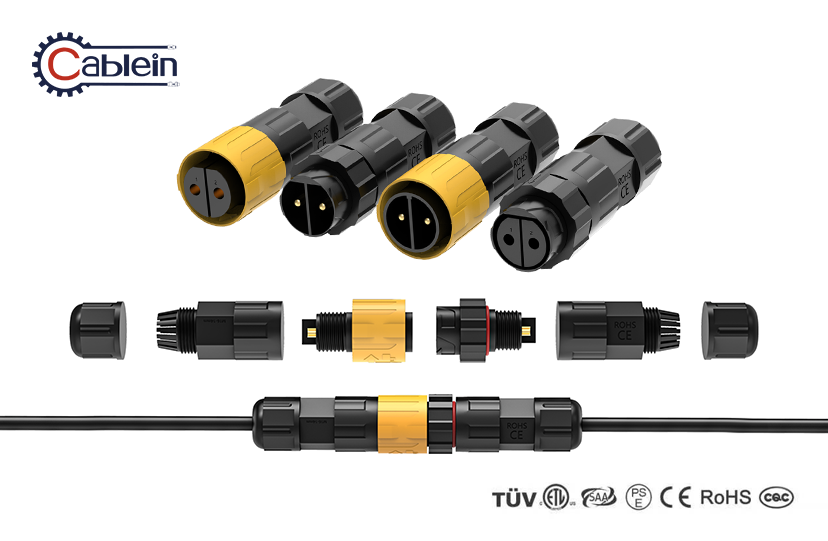
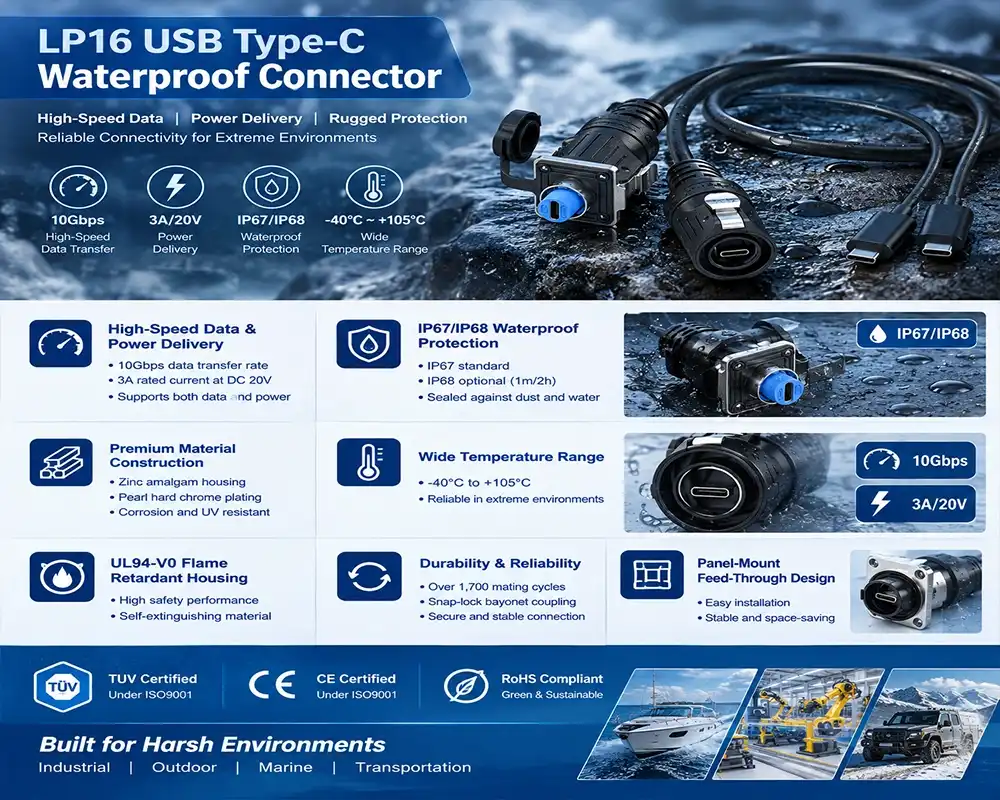
The LP16 USB Type-C waterproof connector operates through a sophisticated combination of panel-mount feed-through architecture, precision sealing systems, and ruggedized mechanical design. At its core, this industrial-grade component utilizes IP67/IP68-rated gaskets and O-rings to create a hermetic barrier around the USB-C interface, protecting sensitive electrical contacts from moisture, dust, and contaminants. The female-to-female feed-through design allows seamless data transmission up to 10Gbps and power delivery up to 100W through both sides of an equipment enclosure, while the snap-lock bayonet coupling mechanism ensures secure, vibration-resistant connections. Constructed with UL94-V0 flame-retardant PBT housing, gold-plated copper alloy contacts, and corrosion-resistant zinc alloy shells, this connector maintains signal integrity and electrical stability across an operating temperature range of -40℃ to +105℃, delivering reliable performance where standard USB ports fail.
Understanding the LP16 USB-C Waterproof Connector
You need connectors that don't just work when you're specifying parts for outdoor LED displays or EV charging stations. They need to thrive in conditions that would destroy normal hardware. The LP16 line is a big change from USB ports made for consumers to industrial connectivity options made to work in harsh environments.
IP67/IP68 Waterproof Ratings Explained
The ingress protection ratings tell you exactly how well this connector keeps outside elements out. If something is certified IP67, it means it is completely resistant to dust and can withstand being submerged in water up to one meter deep for 30 minutes. The IP68 version goes even further; it can work continuously underwater at certain levels, which is very important for marine sensors and subsea data logging gear. These scores aren't just marketing claims; they've been proven through strict testing methods that mimic years of exposure to the environment at high speeds.
Environmental Durability and Mechanical Strength
Extreme temperatures damage standard connectors by causing them to expand and contract differently and breaking down the materials. Our panel-mount solution works well in both -40°F (-40°C) Arctic conditions and +105°F (105°C) desert conditions. The pearl nickel-chrome plating on the zinc alloy housing makes it very resistant to corrosion. This was proven by 96-hour salt spray tests that mimicked coastal and marine deployment scenarios. UV stabilization keeps plastic housings from breaking and cracking after being outside for a long time without protection.
Waterproof Sealing Mechanisms
The multi-layer sealing architecture is the most beautiful part of the engineering. Precision-molded silicone gaskets keep wetness out around the panel cutout, and secondary O-rings cover the places where cables enter both sides of the connection. With this double-layer sealing method, the backup system will still protect even if one barrier wears down. The bayonet locking mechanism creates compression forces that keep the seal pressure constant even after thousands of mating cycles. This stops the gradual wear and tear that leads to failures in the field in less durable designs.
Comparing LP16 USB-C Waterproof Connector with Standard USB-C Connectors
Knowing the difference between consumer and industrial connectors helps procurement teams make smart choices that keep projects from failing and costing a lot of money. The standard USB-C ports work great in climate-controlled spaces, but that's not where your gear works.
Superior Waterproof Ratings and Industrial Durability
Most consumer-grade connectors don't have any real protection against water getting in. They're made to be used indoors, with cables inserted every so often. When the housing is exposed to humidity, condensation forms inside it. This makes electrical paths that lead to short circuits and rusting. The waterproof LP16 USB Type-C waterproof connector version completely gets rid of this weakness. The sealed cage keeps the inside dry even when it rains for a long time or when the humidity is high. This protection isn't just against water; the sealed chamber also stops dust from building up, which weakens contact resistance in exposed connectors over time.
Resistance to Environmental Factors
In transportation and industrial machinery, vibration resistance is very important. Standard friction-fit USB connections only depend on the internal contact springs' ability to hold their shape. When these links are shaken, they become less stable, which leads to signal drops that mess up communication methods. The snap-lock bayonet coupling makes a positive mechanical lock that physically stops the connection from coming loose, no matter how strong the vibrations are. This design has been proven to work in rail transit installations where normal connections would break quickly under constant mechanical stress.
Specific Use Cases and Reliability Benefits
Instruments that are used outside are exposed to acidic air conditions that quickly wear down metal contacts that are not secured. The gold-plated copper alloy pins don't rust and keep the contact resistance below 30mΩ for the entire 1,700-cycle mechanical life of the connector. When field workers don't have to repair corroded connections in the middle of a job, maintenance costs go down by a huge amount. Factory automation equipment can be used with one hand and without tools, which cuts down on downtime during repair. When your production line depends on stable connections, these benefits of reliability directly lead to more uptime and lower total cost of ownership.
Installation and Practical Usage of LP16 USB-C Waterproof Connectors
Whether your waterproof connector works as expected or becomes a system failure point depends on how well it was installed. Too many projects have put security at risk by taking short-cuts during installation.
Preparation and Surface Requirements
To make sure the sealing works, the panel mounting surface needs to be prepared in a certain way. Any burrs or rough spots on the surface around the hole circle make ways for water to leak around the gasket system. Deburring tools and carefully preparing holes only take minutes, but they keep the field from failing, which could cost thousands of dollars to fix. Isopropyl alcohol can be used to clean the fastening surface and get rid of grease and other things that get in the way of the gasket sticking properly. The panel cutout sizes must exactly match the connector specs. Holes that are too big stop the seal from compressing properly, and holes that are too small damage the connector body when they are inserted.
Proper Mating and Locking Techniques
Before turning to lock, the bayonet connection needs to be lined up correctly. Forcing joints that aren't lined up right hurts the locking tabs and weakens the mechanical integrity. Line up the guide keys on both halves of the connection and press them together until you feel the first touch. Turn the outer collar counterclockwise until you hear a clear click that means it is fully engaged. This sound input makes sure that the locking is correct; when it is, there should be no space between the connector faces. When the torque is too low, the housing can crack, and the link is more likely to become loose due to shaking.
Common Installation Errors and Maintenance Tips
Don't use gaskets or O-rings that are broken again with the LP16 USB Type-C waterproof connector. Over time, these parts will become compressed, and they won't shut properly after being taken out. When doing upkeep, check the sealing areas for damage or dirt. Leak paths can be made by even small particles stuck in the gasket groove. When putting the parts back together, put a thin layer of silicone grease on the O-rings. This will lubricate the seal without breaking it. In places with a lot of vibration, check the cable strain relief connections often. If there is enough strain relief, the connector interface won't bend, which wears out the cable conductors over time and leads to intermittent failures.
Procurement Considerations for LP16 USB-C Waterproof Connectors
Beyond the initial buy price, your procurement plan has a big effect on the success of the project. We've worked with supply chain managers who found out this lesson the hard way when the lowest bidder sent parts that didn't pass certification tests.
Supplier Evaluation Criteria
Certifications are objective proof of quality systems and the ability to make things. Look for companies that are certified with ISO9001:2015. This shows that their quality control processes have been written down and checked. Product-specific certifications are more important than general company qualifications. For example, don't assume that all goods have TUV, CE, and RoHS certifications; instead, check that the exact connector model has these certifications. To make sure the claimed performance specs are met, ask for test results that verify the IP rating, show resistance to salt spray, and show mechanical cycle. Legitimate makers easily provide this paperwork; evasive answers suggest possible quality problems.
MOQ and Pricing Dynamics
Minimum order amounts keep the costs of keeping supplies in check with the benefits of unit prices. Depending on what you need, the minimum order quantity (MOQ) for industrial waterproof connectors is usually between 100 and 500 pieces. Standard setups that use current tools often have lower MOQs than unique designs that need molds that are made just for them. When you buy 1,000, 5,000, or 10,000 pieces, the volume pricing curves usually break in a big way. Figure out your total yearly needs across all of your projects so that you can combine orders and get savings for buying in bulk. But don't order too many custom configurations that take too long to ship, because that will tie up your working capital in extra inventory.
Customization and OEM Collaboration
Panel cutout sizes often need to be changed to fit the designs of existing equipment. Reliable makers let you choose the length of the housing, the shape of the mounting flange, and the cable specs, and they don't require you to spend a lot of money on tools. When your project needs more than 10,000 units a year or when IP protection needs unique connection designs, private mold development becomes a cost-effective option. Check out the engineering support that manufacturers offer—technical teams that understand your application needs add a lot of value beyond just making hardware. Rapid prototyping shortens the time it takes to make something, and it lets you test fit and function before turning to production tools.
Real-World Applications and Case Studies
Knowing how these links work in real-world situations helps tech teams confidently choose LP16 USB Type-C waterproof connector components. Let me talk about what we've seen in a number of different industries.
Telecommunications Infrastructure
Cell tower equipment is exposed to harsh weather and changes in temperature that damage connections that are not protected. After having 23% of their remote tracking systems fail in the field in the first year, a major telecommunications contractor switched from normal USB ports to waterproof LP16 versions. The waterproof joints got rid of all failures caused by moisture, which cut the number of repair truck rolls by 87% and paid for themselves in eight months of lower labor costs. The snap-lock coupling came in very handy during tower climbs, when techs had to work in tough weather with heavy gloves and little sight.
Smart Grid and Energy Storage Systems
Installing solar monitoring systems in places where they will be exposed to the elements is impossible without reliable data connectivity. A solar EPC company in California chose LP16 connectors for their utility-scale projects after winter storms caused communication problems in several arrays because of water getting in. The IP68-rated connectors kept working even when it rained hard and when it froze in the morning, which used to stop data transmission. The dependability of system tracking went up from 94.3% to 99.7%, which made it possible to accurately analyze performance and find problems quickly. The connector's lower temperature value of -40℃ was very important for installations at high altitudes, where normal parts became weak and broke.
Automotive and Transportation Systems
Infrastructure for charging electric vehicles needs connectors that can handle both sending high-power signals and sending data in uncontrolled outdoor settings. A charging network operator who had to deal with theft and damage from the weather moved their repair ports from exposed standard USB ports to panel-mount waterproof connectors because the exposed standard USB ports kept breaking. The tough design could handle being outside and being hit, which cut down on station downtime from 8.2 days per incident on average to less than 24 hours. The UL94-V0 flame-retardant housing gave them more fire safety compliance, which made the UL approval process for new station designs easier.
Future Trends in Industrial Connectivity
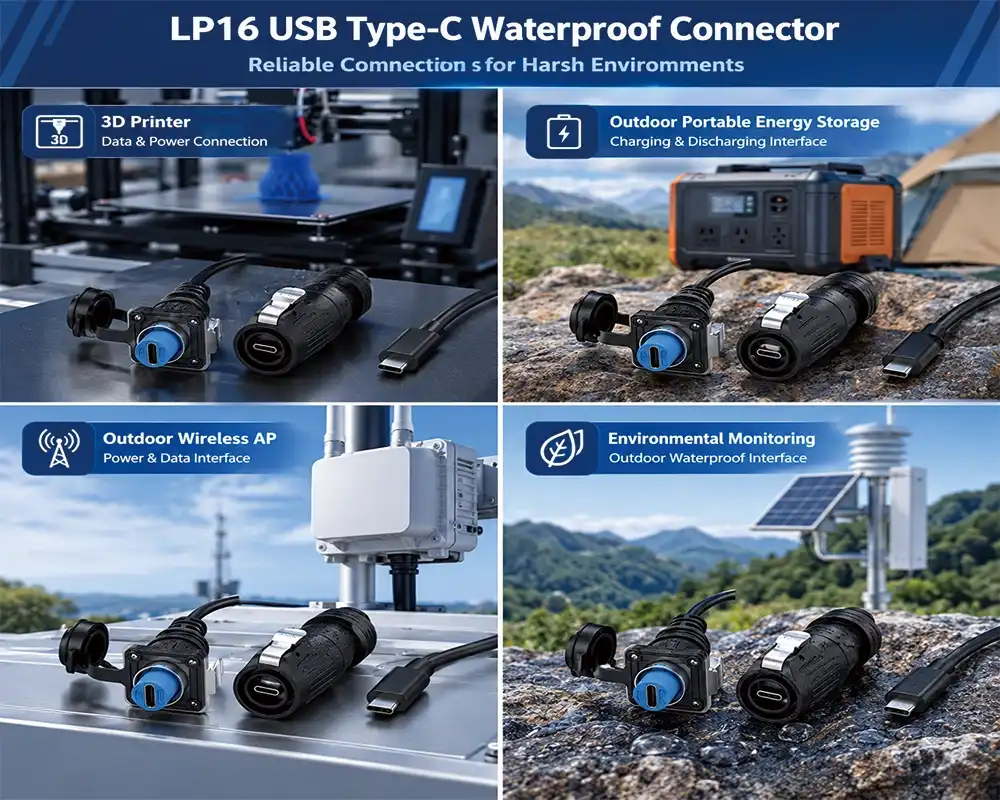
IoT sensor networks make it more important than ever to have reliable outdoor connectivity for more than just industrial uses. As edge computing moves into harsh environments, the need for high-speed data interfaces that are waterproof grows very quickly. More and more people are interested in Power Delivery features that let links talk to and power up faraway devices through a single interface. This merging cuts down on the number of cables needed and the cost of installation. It also makes the system more reliable by reducing the number of connection spots. New research on materials offers even wider temperature ranges and chemical resistance, which means they can be used in more areas, like processing petrochemicals and studying harsher environments.
Conclusion
The LP16 USB Type-C waterproof connector solves important connectivity problems that engineers and procurement teams face when putting equipment to use in harsh conditions. This industrial-grade solution is more reliable than regular consumer connectors because it has sealing systems that are rated IP67 or IP68, a ruggedized mechanical design, and tested performance across wide temperature ranges. Panel-mount feed-through design lets safe data transfer and power delivery go through equipment enclosures while protecting the environment. As more industrial IoT devices are put in place and outdoor infrastructure gets more complex, waterproof connection solutions move from being niche parts to being basic system needs. In LED lighting, renewable energy, industrial automation, and transportation applications, knowing how these connectors work and how to correctly specify them has a direct effect on the success of the project, the uptime of operations, and the total cost of ownership.
FAQ
Can the LP16 connector support USB 3.1 data speeds in wet conditions?
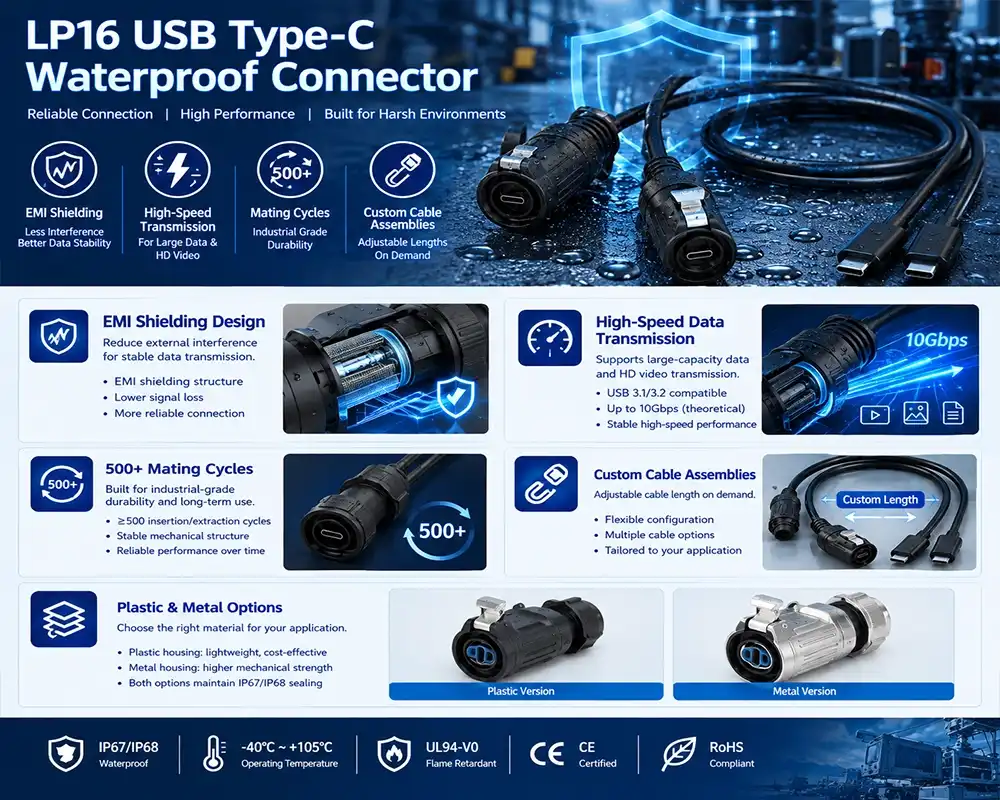
Yes, even when the outside environment is wet, the waterproof sealing design keeps the signal integrity needed for USB 3.1 Gen 2 data transmission up to 10Gbps. The hermetic seal keeps water from getting to the electrical contacts, and the EMI/EMC shielding keeps the signal quality high in places with a lot of electrical noise, where interference can mess up high-speed communication protocols.
What distinguishes IP67 from IP68 rating for this connector?
The IP67 version can handle being submerged in water up to one meter deep for 30 minutes. This means it can be used on equipment that is sometimes flooded or gets wet during heavy rain. The IP68 version can be submerged continuously at greater depths for longer periods of time. This is important for marine applications, underwater robotics, and hydrographic instruments that need to work all the time while submerged.
Does the bayonet lock require special tools for connection?
No, the snap-lock bayonet system lets you operate it with just one hand and no tools, which makes installation and upkeep easier in the field. Technicians line up the connection, press the two halves together, and turn the collar until they hear a click that proves the locking is correct. This easy-to-use design cuts down on installation time while still providing a safe link that doesn't break due to vibration or accident for the entire life of the connector.
Industrial Waterproof USB-C Solutions from Cablein
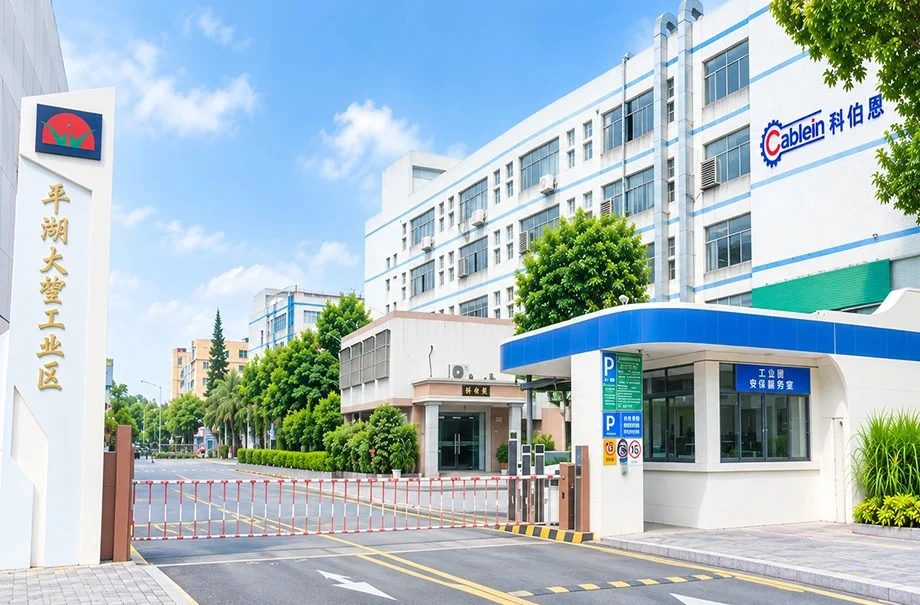
For your projects to work, you need connection options that don't give up when things go wrong. Cablein Technology is an expert at making waterproof industrial links that engineering teams trust for important tasks. We are a seller of LP16 USB Type-C waterproof connectors with TUV and CE approvals, ISO9001:2015 quality management, and more than 15 patents in waterproof interconnection technology. We give procurement managers the dependability and speed that they need with our modern production facilities that cover 6,000 square meters and a stable inventory of more than 10,000 pieces per standard setup. Whether you need standard IP67 options or unique IP68 solutions with different housing dimensions, our engineering team can help you with everything from making a prototype to mass production. Get in touch with nick@cableinco.com to talk about your specific application needs and get detailed technical datasheets that will help you choose the best connector solution for your next project.
References
1. International Electrotechnical Commission. "IEC 60529: Degrees of Protection Provided by Enclosures (IP Code)." 2013 Edition with Amendment 1:2016.
2. USB Implementers Forum. "USB Type-C Cable and Connector Specification, Revision 2.1." August 2021.
3. Underwriters Laboratories. "UL 94: Standard for Safety of Flammability of Plastic Materials for Parts in Devices and Appliances." 2013 Edition with Revisions through 2018.
4. Society of Automotive Engineers. "SAE J1128: Low Voltage Primary Cable Standard." Revised 2019.
5. American Society for Testing and Materials. "ASTM B117: Standard Practice for Operating Salt Spray (Fog) Apparatus." 2019 Edition.
6. International Organization for Standardization. "ISO 9001:2015 Quality Management Systems—Requirements." 2015 Edition with 2024 Guidance Documents.