M20 Field-Wireable Quick Clamp vs. Pre-Molded Cable Assembly: Which Should You Choose?
Choosing between a Field-Wireable Quick Clamp and a Pre-Molded Cable Assembly is one of the most practical decisions a procurement manager or electrical engineer faces when specifying an M20 feed-through wire-to-wire waterproof connector for outdoor or industrial power runs. The right choice directly affects installation speed, long-term sealing integrity, and total project cost. Field-Wireable Quick Clamps give crews on-site flexibility with tool-free termination, while Pre-Molded Cable Assemblies deliver factory-tested consistency that suits high-volume OEM lines. This article walks through both options so you can match the connector format to your actual project conditions.
Understanding M20 Field-Wireable Quick Clamp and Pre-Molded Cable Assemblies
Before comparing the two formats, it's helpful to know what they are and how well they work when things get tough.
What Is a Field-Wireable Quick Clamp?
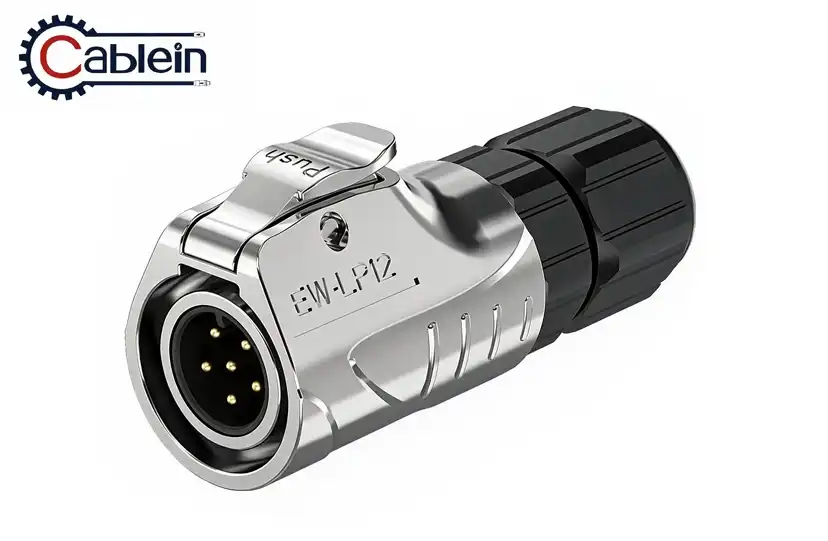
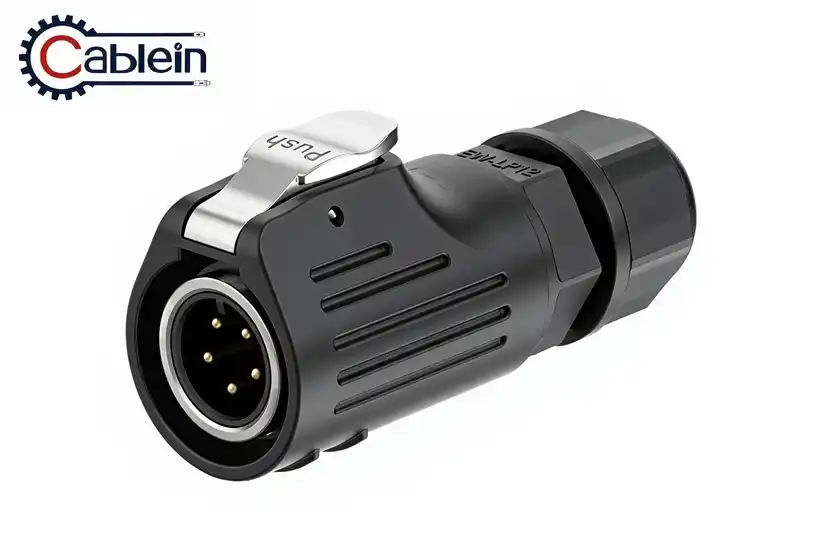
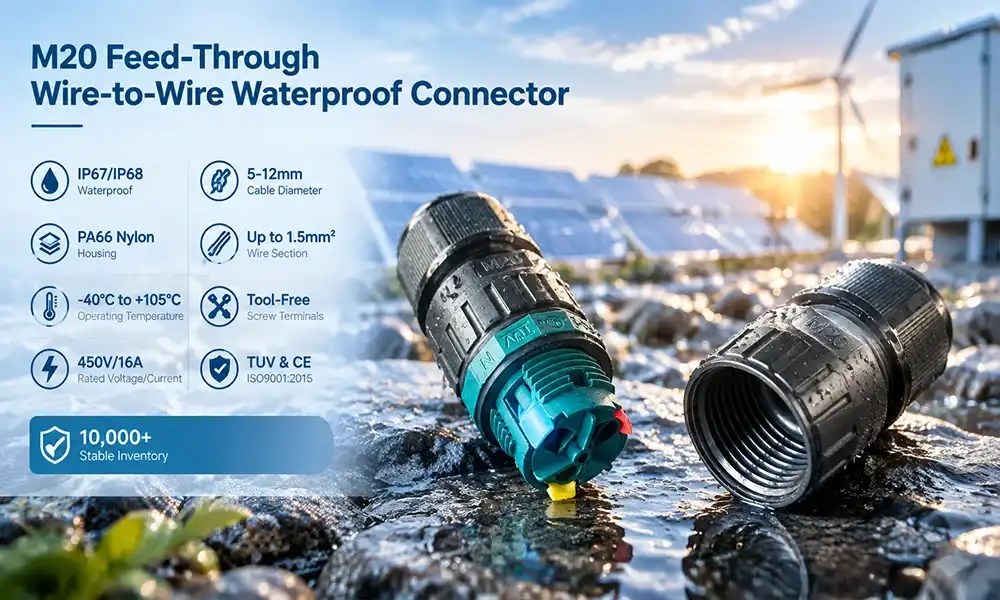
A Field-Wireable Quick Clamp is an M20 waterproof connection that is put together by techs on-site. A bare wire end can be put into the housing, and screw-clamp connections hold conductors in place without the need for soldering or crimping tools. The version made by Cablein has a flame-resistant PA66 nylon housing, gold-plated brass contacts, and a silicone sealing ring that keeps IP67 or IP68 protection from -40°C to +105°C. The cable OD ranges from 5 to 12 mm, which means it can be used for main-run power lines in outdoor lighting and floodlight daisy-chain circuits.
What Is a Pre-Molded Cable Assembly?
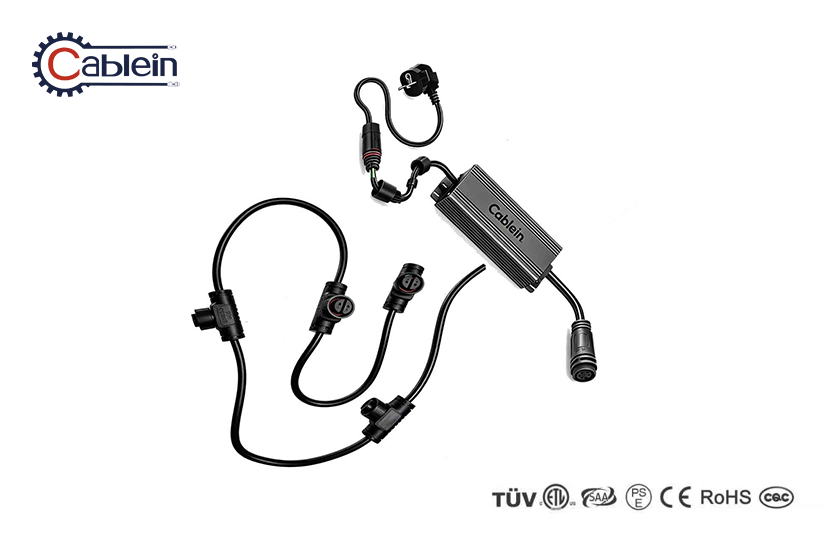
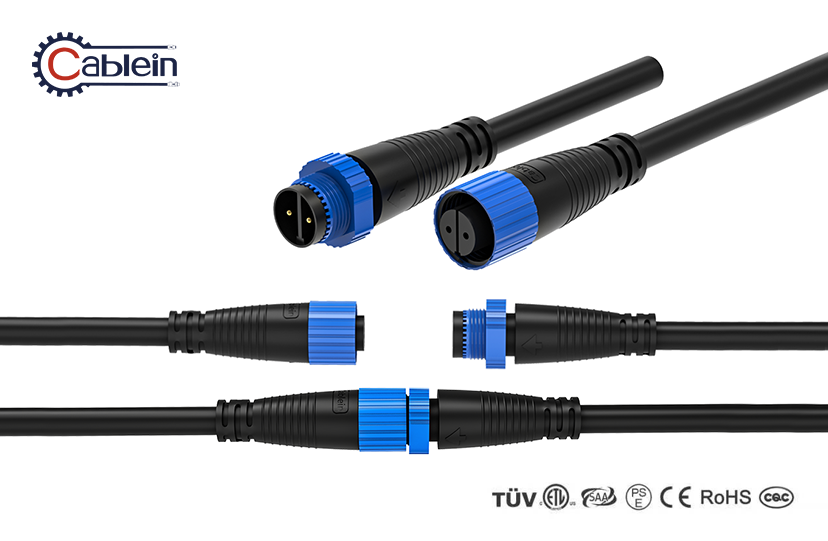
When a Pre-Molded Cable Assembly leaves the factory, the connector body is already molded onto a set length of cable. The seal between the connector and the cable jacket is made by controlled injection pressure. This makes a bond that is structurally continuous instead of mechanically compressed. This way of making things takes away the factor of expert ability during installation. The rated voltage is 450V, and the current capacity is up to 16A. The assembly comes ready to plug in, which cuts down on the time needed for on-site work on OEM production lines and big infrastructure rollouts.
How Each Type Seals Against Water
Field-Wireable connections get their IP68 rating from a silicone O-ring that is pushed down by the mating nut. It is the same IP68 rating for pre-molded assemblies because they have a molded polymer interface that bonds to the cable jacket. Immersion testing can be done either way, but the molded interface doesn't depend on the right force being applied in the field.
Key Differences Between Field-Wireable Quick Clamps and Pre-Molded Cable Assemblies
These two types of M20 feed-through wire-to-wire waterproof connectors have the same thread size and grades, but they are very different in how they are put together, how much they cost, and where they work best.
Installation Speed and Labor Cost
With Field-Wireable Quick Clamps' screw terminals that don't need to be used with tools, a crew can shut off a conductor in less than two minutes per connection. Because the work is already done at the factory, there is no need for termination time on-site for pre-molded assemblies. If you use pre-molded assemblies instead of field-terminating each joint separately for a 200-fixture landscape lighting job, you can save 30–40% on on-site electrical work.
Flexibility vs. Factory Consistency
Field-wireable plugs work with cables with sizes ranging from 5 mm to 12 mm. They also let workers cut cables to exact lengths on the job site, which cuts down on waste from uneven runs. Cablein offers custom pre-assembled cable lengths as a normal choice, but pre-molded assemblies come in set lengths, so procurement teams need to be very clear about lengths when placing an order. Mistakes in length specifications cause delays, but Field-Wireable connections can handle last-minute changes to the spot without having to reorder.
Cost Structure and Lead Time
Field-Wireable connections cost less per unit, but they require more work to install. The higher price per unit of pre-molded assemblies covers the cost of labor in the field. The Pre-Molded format usually has a lower total installed cost for installations that are done over and over again, like wiring smart city cabinets or setting up 5G small cells. Cablein's basic Field-Wireable units have a lead time of 7–10 days from stock. Custom pre-molded assemblies follow a plan that is agreed upon at the time of the order.
Practical Benefits and Use Cases for Procurement Managers and Engineers
Both types of connectors work to solve real problems, but they are best used in different situations. These are the main situations where each style is most useful.
- Outdoor landscape and architectural lighting (Field-Wireable): When crews daisy-chain wall-washers and floodlights across a stadium facade or waterfront promenade, cable runs vary by fixture spacing. Tool-free quick-clamp termination lets electricians adjust lengths on the spot. The PA66 housing resists UV degradation and salt spray in coastal installations, and the -40°C to +105°C rating handles the thermal cycling between pre-dawn cold and midday summer heat that degrades inferior connectors over two to three seasons.
- OEM production lines and smart city cabinets (Pre-Molded): Control cabinet wiring for traffic management systems and 5G base stations requires every connection to behave identically, batch after batch. Factory-molded assemblies pass 48–96-hour salt spray testing per ASTM B117 and 100% IP68 verification before shipment. Assembly teams simply plug in the pre-tested harness, and UL94-V0 flame retardancy satisfies the fire safety clauses written into most municipal procurement specifications.
- Marine and aquaculture installations (either format, IP68 mandatory): Underwater oxygenation pump circuits and submersible sensor arrays demand continuous immersion protection. Both formats achieve IP68, but Pre-Molded assemblies remove the risk of incomplete O-ring compression that can occur when field teams work in cold, wet conditions.
These benefits directly lead to fewer warranty callbacks, lower maintenance dispatch costs, and better project close-out documentation. These are all outcomes that procurement managers at landscape lighting companies and smart city integrators value highly.
Comparing M20 Connectors with Other Connector Types
M20 vs. M16 and M25 Sizes
Because they can only fit wire ODs up to about 8 mm, M20 feed-through wire-to-wire waterproof connectors can only be used in signal and low-power systems. Over 13 mm OD wires can go through M25 plugs, which are also good for high-current three-phase runs. The M20 size, which has an outside diameter of 5–12 mm and fits most 16A power lines in outdoor lighting and automation panels, is the most common size chosen for main-line feed-through uses.
M20 Connectors vs. Cable Glands
Wire glands cover a hole where a wire comes in, but they don't have a matching part for disconnecting. With an M20 feed-through waterproof connector, the circuit can be broken and then fixed without cutting the cable. This makes maintenance and taking down fixtures for the winter easier. A cable gland is cheaper for long-term installations where the connection isn't going to be taken apart. The connector format quickly makes up for its higher cost in installations that need service only during certain times of the year.
Brand and OEM Considerations
Before ordering an M20 feed-through wire-to-wire waterproof connection for OEM projects, procurement teams should check cable lengths, conductor configurations, wiring assignments and electrical ratings. These parameters eliminate assembly mistakes and assure equipment compatibility.
Suppliers should also offer product specifications, IP protection test results, and certification documentation. Before mass production, request samples for fit, wiring, and sealing inspections for large-volume orders to ensure the connection fulfils project requirements.
Procurement Guide: How to Choose and Where to Buy M20 Connectors
There are four questions that will help you choose the right format: How flexible are the lengths of your cables? How skilled is your construction crew, and how rushed are they? How much is your acceptable unit cost compared to the cost of labor? Also, does the end customer need verified copies of the project file?
If there is a lot of length variation and crew time is expensive, ask for Field-Wireable Quick Clamps that can be terminated without tools. Pre-Molded Cable Assemblies lower risk if your production plan is set, your numbers are high, and you have strict paperwork rules. A split specification that includes trunk runs with pre-molded assemblies and branch drops with field-wireable connectors often works best for projects that need to meet both conditions. This is common in phased urban lighting rollouts.
When looking at different suppliers, make sure they have ISO9001:2015 certification, ask for test results for IP68 and ASTM B117 salt spray, make sure they have enough stock for the amount you need, and ask if they offer tiered prices for quantities of 500, 1,000, and 5,000 pieces. Schedules for projects are kept safe by written time promises from leads.
Conclusion
Both types of M20 connectors meet the basic need for a safe, sealed in-line power link, but they are used in different ways when buying things. Field-Wireable Quick Clamps are best for projects with a lot of crew members and varying lengths that need to be able to be changed quickly on-site. Pre-Molded Cable Assemblies are good for projects with a lot of paperwork and a lot of cables. Factory regularity lowers the risk of installation. Both formats are supported by Cablein's M20 feed-through wire-to-wire waterproof connector line, which also comes with TUV/CE certification, IP67/IP68 ratings, and options for specialized assembly. The fastest way to a trouble-free installation is to make sure that the connector style fits the conditions at your spot.
FAQ
1. What waterproof rating do M20 feed-through connectors typically carry?
The rating for most M20 feed-through wire-to-wire waterproof connectors is IP67 or IP68. IP67 protects against short-term submerging up to 1 meter for 30 minutes. IP68 allows continuous submersion up to the depths specified by the maker. Before they are sent out, Cablein's M20 connectors are tested for IP68 and hydrostatic pressure.
2. Can a Field-Wireable Quick Clamp be reused after disassembly?
Yes. Screw-clamp terminals are made to be used more than once. Once the parts are apart, check the silicone O-ring for damage to the surface or tension set. If you can see any damage in the O-ring, you should replace it before putting it back together in a new IP68-rated installation.
3. How do I verify correct wiring for a Pre-Molded Cable Assembly?
Assemblies that are already molded come with a wiring plan and a list of wire colors. Use a continuity tester before installation to make sure that the pin-to-wire mapping matches the circuit drawing. Cablein sends full test documentation with every batch, so you can compare your own bench check to the record of the factory inspection.
4. What chemical resistance does the PA66 housing offer?
Normal oils, fuels, and chemical cleaners won't damage PA66 nylon. Because of this, both types of connectors can be used in areas that are washed down in the plant and outside, where fixtures and cabinets are cleaned with pressure-wash cleaners.
5. What cable sizes does the M20 connector accept?
The M20 format works with wire cross-sections ranging from 0.5mm² to 1.5mm² and line outer sizes ranging from 5mm to 12mm. Some 16A main power cables are used in architectural lighting and control cabinet wiring, and this range works for them.
Get Your M20 Waterproof Connector Quote from Cablein Today
Cablein has been making M20 feed-through wire-to-wire waterproof connectors for 9 years, has ISO9001:2015 certification, and has more than 10,000 pieces in stock. We have different prices for large orders and full OEM customization. Our engineering team will find the right standard for your project, whether it needs flexible wiring in the field or pre-molded assemblies that are ready to go from the workshop. To get a sample or bulk quote right away, email your needs to nick@cableinco.com.
References
1. International Electrotechnical Commission. IEC 60529: Degrees of Protection Provided by Enclosures (IP Code). IEC, 2013.
2. ASTM International. ASTM B117: Standard Practice for Operating Salt Spray (Fog) Apparatus. ASTM, 2019.
3. Underwriters Laboratories. UL 94: Standard for Tests for Flammability of Plastic Materials for Parts in Devices and Appliances. UL, 2018.
4. International Organization for Standardization. ISO 9001:2015: Quality Management Systems — Requirements. ISO, 2015.
5. Whitaker, Jerry C. AC Power Systems Handbook. CRC Press, 2007.
6. Harper, Charles A. Electronic Packaging and Interconnection Handbook. McGraw-Hill, 2004.