How to choose the right M25 industrial waterproof connector for outdoor use?
If you want to use an M25 industrial waterproof connector outside, you need to look at its IP rating, how long the material will last, its electrical requirements, and the needs of the climate. The 25mm threaded connector needs to be able to seal well (usually IP67 or IP68) and fit wire sizes from 7mm to 15mm. Choose designs that can be installed in the field and have PA66 nylon housings and gold-plated brass contacts to protect against UV damage, rust, and temperature changes from -40°C to +150°C. To make sure that solar arrays, industrial automation, and outdoor lighting systems are reliable in the long term, make sure that the pin configurations match your power and signal needs, check for certifications like TUV and CE, and make sure that the provider follows ISO9001:2015.


Understanding M25 Industrial Waterproof Connectors
M25 industrial waterproof connectors: what you need to know.
Electrical systems outside are always having to deal with problems like heavy rain, dust, changes in temperature, and mechanical vibrations. When downtime costs thousands of dollars an hour or equipment failure puts people's safety at risk, you have to have a reliable interconnect solution. With careful engineering and tried-and-true ingress safety requirements, M25 industrial waterproof connectors protect against these risks.
What Defines an M25 Connector?
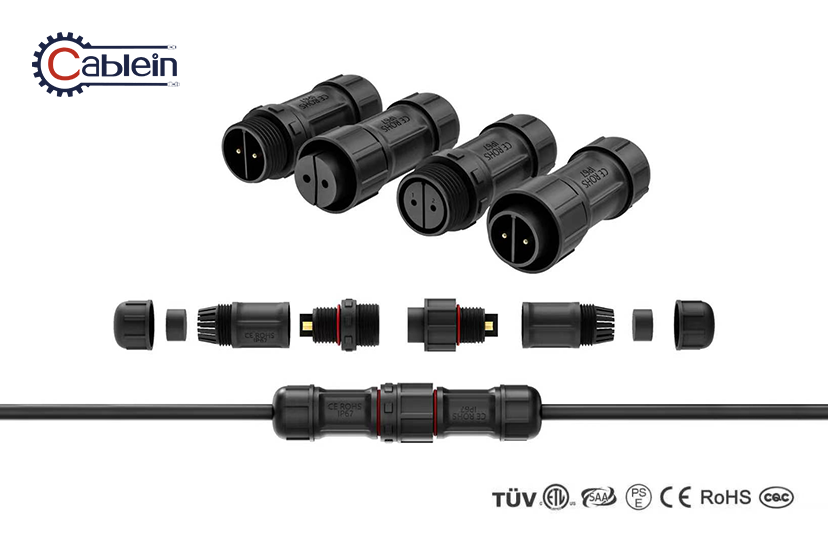
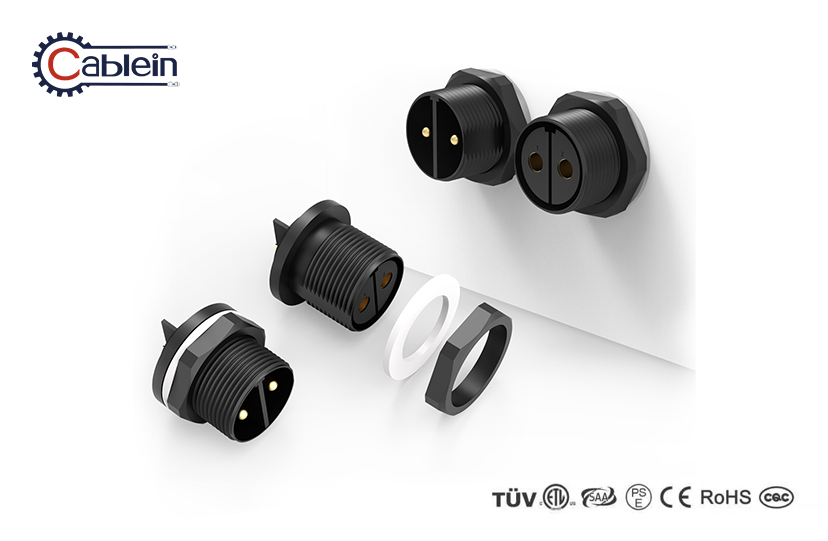
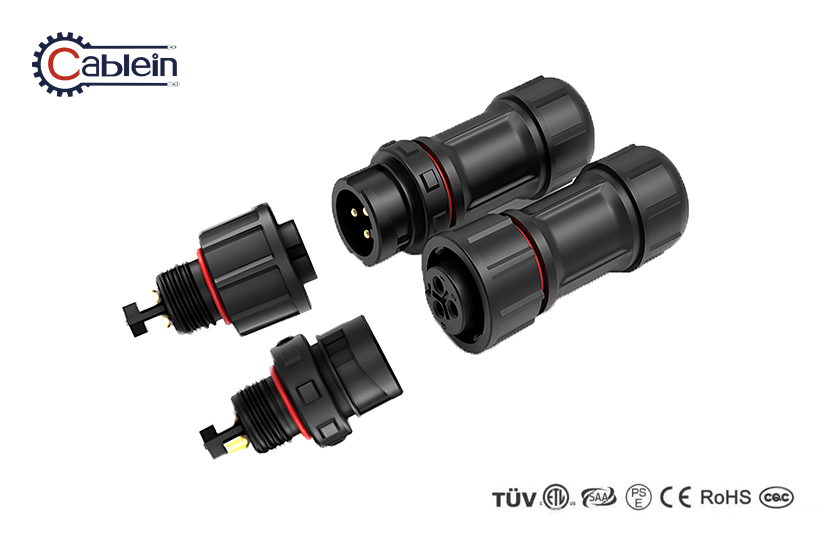
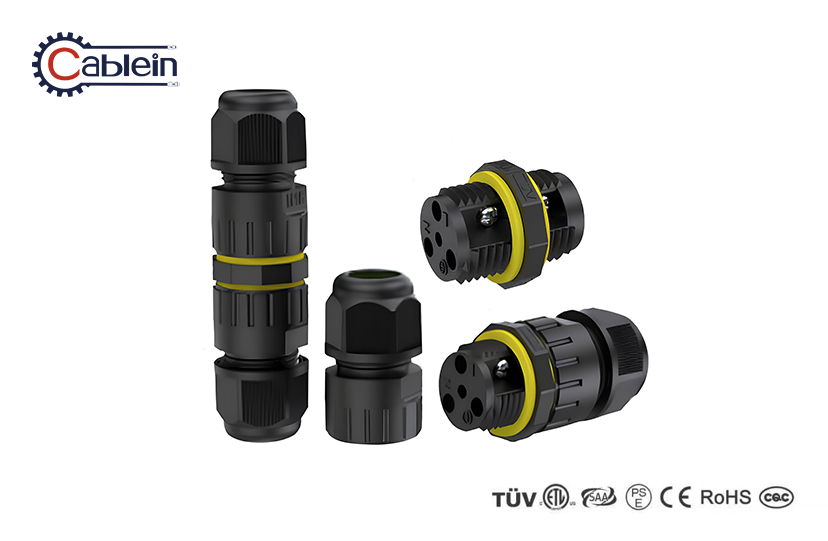
The "M25" name refers to the 25mm metric thread width that holds the two halves together. This size is just right—it's big enough to fit multi-conductor wires with an outer width of up to 15 mm, but small enough to fit in tight spaces on panels. The threaded coupling mechanism makes a mechanical lock that stops loosening due to vibration, which is a common way for things to break in transportation and mobile machinery.
Ingress protection ratings measure how resilient an environment is. IP67 approval means that the product will work without dust and will survive being submerged in water for 30 minutes. IP68 adds protection for continuous submersion at depths chosen by the manufacturer, which is usually 2 meters for 24 hours. These ratings aren't just marketing claims; they've been proven through strict lab tests that follow IEC 60529 guidelines. When you buy an IP68-rated connection, you're getting proof that the silicone O-rings, precision-machined threads, and built-in cable glands all work together to stop any way for water to get in.
Core Technical Parameters That Matter
Material choice affects longevity. Impact-resistant PA66 nylon housing retains its shape in different temperatures. PA66 is resistant to breaking down at -40℃ and solar softening at +70℃, unlike cheaper thermoplastics. Glass fibre reinforcing increases tensile strength so the cable can be tugged repeatedly during installation and maintenance.
Gold plating on brass contacts may seem wasteful, but it's smart business. Over time, a 3–5-micron gold layer prevents tarnishing and increases contact resistance. In salty coastal areas, gold plating preserves electrical performance for 10 years or longer. Because the brass below conducts electricity and acts like a spring, the mating force remains constant for 500 to 2,000 insertion cycles.
Electrical grades limit applications. A common M25 industrial waterproof connector can carry 15A to 32A, depending on pin count and contact size. 500V fits with industry's 480V three-phase electricity and electric vehicle charging stations' 800V DC designs. Withstand voltage testing at 3KV ensures the insulator won't shatter during lightning or magnetic load transients.
Key Criteria for Selecting the Right M25 Waterproof Connector
When evaluation standards aren't clear, procurement choices fall apart. The F-1 screening method bases your evaluation on five factors that affect each other: the environment's needs, electricity specs, mechanical needs, installation logistics, and the overall cost of ownership.
Matching IP Ratings to Environmental Exposure
IP67 is good enough for places where it rains sometimes, like HVAC units on roofs or junction boxes that are raised and covered by equipment shelters. The connector can handle being accidentally sprayed with water during maintenance, but it's not meant to be permanently wet. When connectors are installed in low-lying areas that are likely to flood, underground conduit boxes, or marine deck installations where wave action creates hydrostatic pressure, they have to be IP68.
Think about putting up a solar farm in Arizona instead of along the coast of Washington. Arizona's dry climate and strong UV radiation require connectors with stabilised housing polymers. However, IP67 ratings are acceptable because there isn't much standing water there. The high humidity and frequent rain in Washington push you toward IP68 standards. The salt spray from the water near Puget Sound adds to the list of requirements.
Material Trade-offs: Nylon vs. Metal Housings
Outdoor connector housings are mostly made of PA66 nylon for good reasons. The polymer shell is 60% lighter than the same-sized metal shell, which makes fitting easier in situations where weight is important. Nylon naturally blocks electricity, so there are no ground fault risks when wires touch the case. UV-stabilized grades keep their mechanical qualities even after 20 years of strong sunlight, which makes them last longer than many painted metal options.
Metal housings, which are usually made of nickel-plated brass or stainless steel, are used for specific tasks. Explosive atmospheres need metal containers to keep internal sparks contained and keep explosive gases from catching fire. Metal's better electromagnetic protection makes it useful in high-EMI settings. Extreme mechanical abuse, like with mine equipment or removal tools, is acceptable because metal is strong against contact. Cablein's PA66 nylon design strikes the best mix for 90% of outdoor industrial uses while still meeting UL flammability standards.
Locking Mechanisms and Vibration Resistance
When it comes to pull-out resistance, threaded connections are better than bayonet or push-pull designs. The multi-turn contact spreads the clamping force evenly around the O-ring seal, keeping it compressed even when temperature changing causes small changes in size. Thread lock compounds or captive lock rings keep things from coming loose by accident during vibration, which is very important in rail transit and robotic automation where accelerations can reach several g-forces.
Field experience shows that M25 industrial waterproof connectors fail in places with a lot of vibration in three ways: the thread backs out, the contact frets, and the seal compresses. Good M25 industrial waterproof connector designs take care of all three by using precise thread tolerance (ISO metric class 6g/6H), spring-loaded contact points that keep the pressure on even when the parts move very slightly, and silicone O-rings that are made to not permanently bend. MIL-STD-202 says that 96-hour vibration sweeps should be part of the testing protocols to make sure that these design features work.
Pin Configuration Flexibility
Mixed power-and-signal systems need careful planning of how to assign contacts. Two of the five pins on an M25 industrial waterproof connector might be used to send 20A of power, while the other three contacts could be used for 4-20mA sensor signals or RS-485 data. When compared to separate power and signal connectors, this consolidation cuts down on panel cutouts and makes it easier to route cables.
By basic physics, the number of pins determines the current rating. This is because each contact can only handle a certain amount of current before resistive heating breaks down the connection. Most two-pin configurations can handle up to 32A, while some five-pin setups may limit each contact to 16A. Cablein's M25 line comes in 2, 3, 4, and 5-pin versions, so you can choose the best one for your power distribution system without having to mention too many circuits that won't be used.

Comparing M25 Waterproof Connectors: Making an Informed Decision
Specification sheets only tell you half of the story. To fully understand the practical trade-offs, you need to look at how different M25 industrial waterproof connector designs and sizes compare to each other.
M20 vs. M25: When Size Matters
When room is limited and every millimetre counts, M20 connections are a good choice. The smaller thread can fit cables with a diameter of up to 12 mm, which is big enough for 18 AWG to 12 AWG conductors that are common in sensor networks and LED lighting. The most current that M20 can handle is about 16A, so it can only be used for branch circuits and not for primary power distribution.
M25 industrial waterproof connectors make room for 10 AWG and bigger wires that are needed for motor control, HVAC systems, and connecting solar inverters. The bigger cable gland can hold thicker insulation and extra protection layers, which are often needed in places with a lot of electromagnetic interference (EMI). The extra room inside the connector shell makes it easier to route wires and get to terminals during field assembly, which reduces the amount of work that needs to be done.
Decoding IP68 Depth and Duration Specs
IP68's "continuous immersion" protection sounds great, but it requires additional scrutiny. Manufacturers list maximum depth and time; 2m/24h or 5m/72h are popular. These statistics represent O-ring compression and hydraulic pressure capacity. A 2m/24h connector permanently installed in a 4-meter-deep pump station won't last, even though it passes IP67's brief immersion criterion.
Critical app testing requires more than rating claims. Request confirmation that the product has been tested for ASTM B117 salt spray, thermal shock cycle between temperature extremes, and IEC 60068 mechanical shock protection. Cablein immerses every batch of cables in 2 meters of water for 24 hours. Electrical continuity is examined during the test to discover minor leaks that won't break immediately away but will cause long-term corrosion.
Evaluating Connector Brands and Market Leaders
After decades of working on critical defence and aerospace projects, global suppliers like TE Connectivity and Amphenol have earned their names. Their products are more expensive but include test data and application tech support. Phoenix Contact dominates European industrial automation. Their modular technologies simplify spare part management across numerous countries and sites.
Specialists like Cablein Technology develop waterproof interconnects. Instead of developing many goods, they focus on closing technologies and simplifying field installations. This focus produces practical breakthroughs like tool-free screw terminals that eliminate the need for crimping equipment, strain-relief designs that protect cable jackets, and unique pin layouts that may be produced in weeks instead of months. Our over 30 utility patents in quick-connect and solder-free technology demonstrate our commitment to improvement through field failures and customer feedback.
Procurement Considerations for M25 Industrial Waterproof Connectors
The procurement strategy decides whether the right M25 industrial waterproof connector comes on time, on budget, and with solid support. The technical specs decide if the connector is fit for purpose.
Sourcing Channels and Supplier Verification
Authorised distributors help with tracking and warranties, but they add extra costs that make unit costs higher for large orders. Online industrial suppliers with a good reputation, like Allied Electronics or Newark, carry many names. This makes it easier to compare companies and streamlines logistics. Direct connections with manufacturers allow for volume discounts and customisation, but they also require larger minimum order amounts and more time to plan.
There are a lot of fake connections on the industrial market, especially for famous form factors like M12 and M25 industrial waterproof connectors. Visual inspection isn't a reliable way to tell the difference between real products and clever fakes that use recycled housings and poor contacts. Check the supplier's credentials using manufacturer databases, ask for test certificates that are special to the batch, and think about having a third party check the goods before they arrive on projects where failed connectors could cause safety issues or cost millions of dollars in lost time.
Budget Planning and Total Cost Analysis
When installation labour and lifetime upkeep make up most of the total cost, unit price can be misleading. It's possible that a $12 connection with tool-free terminals will cost $3 more than a crimped one, but it will save $15 in installation labour per unit because field techs will only need three minutes to finish termination instead of twelve. The premium version saves $6,000 over a 500-connector project, even though the parts cost more.
Failure rates make secret costs even worse. It might not seem like a big deal if a connection fails in 0.5% of the time instead of 0.1% of the time, but over 2,000 setups, that's 8 failures instead of 2. For every service call that costs $400 for truck rolls, diagnostics, and new parts, the cheaper connector adds up to an extra $2,400 over the life of the project. Cablein aims for less than 0.1% field failure rates across all of our connectors through quality control measures such as 100% electrical testing and sample submersion proof.
Lead Times and the Stability of the Supply Chain
Standard catalogue items from well-known brands usually ship within two weeks from when they are stocked by a distributor. Lead times can go up to 4 to 8 weeks for custom pin configurations or private-label versions, based on the need for new tools. Since 2020, problems in the global supply chain have made these deadlines less predictable. This makes the depth of a supplier's inventory and production capacity very important when evaluating them.
Cablein keeps more than 10,000 pieces of each core SKU in stock, which means that standard configurations can be delivered in 7–10 days, even when demand is high. Our factory is in Shenzhen, China, which is the center of electronics manufacturing. Our 6,000-square-meter factory gives us access to specialised component suppliers and contract manufacturers who can speed up the timelines for custom projects. Keeping strategic stock at your plant or with a transportation partner adds to your protection against supply shocks that could stop production lines otherwise.
Real-World Applications and Case Studies
Concrete application examples that show how M25 industrial waterproof connector choices affect project success help make abstract requirements more clear.
Renewable Energy Installations
Solar PV connectors must withstand direct UV radiation, temperature swings from frost in the morning to panel temperatures over 80°C in the afternoon, and decades-long service standards. Junction boxes transfer 15–30A DC current at up to 1000V between panel strings and inverters. Stability is critical because arcing failures can set roof-mounted sets on fire, causing massive property damage.
Gold-plated M25 industrial waterproof connector socket contacts don't oxidise, making them less resistant. Localised heating accelerates degradation in runaway failure mode as resistance rises. Cheaper plastics rust and shatter after 5–7 years in UV light, whereas PA66 nylon housing doesn't. The 25mm cable entry fits 10 AWG and 8 AWG conductors, which minimises voltage drop over long string runs. Cablein's 10-year solar clients have failure rates of 0.05%. This means one in 2,000 deployed connectors fails, substantially lower than industry norm.
Industrial Automation and Factory Environments
Connectors on production floors are stressed by machine tool coolant sprays, hydraulic fluid leaks, metal pieces in the air, and equipment vibrations. Even though variable-frequency motors and welding equipment might produce electromagnetic interference, sensor networks and actuator control lines must convey signals consistently.
A major auto parts manufacturer phoned us because their robotic assembly cells kept breaking connectors. Coolant entered the cable gland of their IP67 quick-disconnect connectors after 18 months, breaking them. The braided shielding forced coolant past smooth-jacket O-rings, according to the research. Our innovative M25 industrial waterproof connector includes an enlarged cable gland with two compression seals, one against the cable jacket and one against the wire bundle. Installation in 50 work cells eliminated failures, saving $120,000 in downtime.
Marine and Coastal Infrastructure
Salt water is the most corrosive place for electrical circuits to be. In salty electrolytes, galvanic reactions between metals that are not the same speed up, and chloride ions can get through tiny holes in seals. Offshore wind farms, port security cams, and navigation aids all need connectors that can stand up to years of salt spray and the odd wave immersion.
During marine applications, gold plating is a must because it protects both the signal and the structure. Zinc-plated fasteners that rust in a few months are replaced by stainless steel mounting hardware. A harbour master in the Pacific Northwest reported that our M25 industrial waterproof connectors maintained <5mΩ contact resistance after 5 years on navigation buoys that were exposed to salt spray 24 hours a day, seven days a week. This performance justified the 40% higher initial cost by eliminating the need for $800-per-buoy annual maintenance visits.

Conclusion
Choosing the right M25 industrial waterproof connector will protect your outdoor installation investment by providing proven flood security, long-lasting materials, and reliable electrical connections. Make sure that the housing is made of PA66 nylon or metal that can handle the stresses of your environment, and make sure that the contacts are gold-plated in corrosive environments. IP68 ratings are important for continuous wet exposure. Field-installable designs with tool-free terminals cut down on labour costs, and the ability to combine power and data lines on multiple pins makes them more flexible. Check the supplier's TUV, CE, and RoHS certifications, and ask for test results that prove waterproof performance, not just rating claims. Divide the unit cost by the total cost of ownership, which includes the time it takes to install, the frequency of upkeep, and the number of times it breaks. Strategic partnerships with manufacturers that offer custom configurations and technical support turn connectors from simple items that can be bought anywhere into engineered solutions that keep things running at full capacity.
FAQ
How do I choose between IP67 and IP68 ratings for my outdoor application?
For example, IP67 is good for equipment on roofs, raised junction boxes, and weather-protected panels that will be exposed to rain and water spray from time to time but not to standing water or submersion. IP68 is needed for installations below ground that are likely to flood, underground vaults, marine environments, or anywhere else there is hydrostatic pressure. Check the manufacturer's IP68 depth and duration specs; different IP68 ratings can handle different levels of submersion.
Can PA66 nylon connectors withstand corrosive industrial environments?
Most industrial solvents, like cutting fluids, hydraulic oils, and weak acids that are common in factories, won't hurt PA66 nylon. The polymer won't rust like metals do, which makes it better for many uses where corrosion is a problem. Specialised materials may be needed for acids that are very strong or for long periods of time when organic solvents are present. Check out charts that show how chemicals will react in your environment.
How can I verify a supplier's certifications are legitimate?
You can get certificate numbers from the issuing body and check them directly with them. Online databases are kept up to date by TUV, UL, or CE notified bodies. Ask for test reports that are specific to the batch you bought to show that the units you bought were actually tested and not just certified based on their design. Check the credentials of the provider by looking at comments from other customers and industry groups. Most fake goods don't come with certification paperwork that can be tracked.
Partner with a Trusted M25 Industrial Waterproof Connector Manufacturer
Eighteen years of technical work and more than thirty useful patents in quick-connect technology back up Cablein Technology's M25 industrial waterproof connectors that have been tested in the field. Our M25 industrial waterproof connector series is designed for harsh outdoor environments, LED lighting arrays, solar PV systems, and tool-free installation. It is protected against submersion up to IP68 and made of durable PA66 nylon. Each connection comes with TUV and CE certifications as well as test results that can be tracked back to prove that it works waterproof. Our 6,000㎡ Shenzhen plant keeps more than 10,000 pieces of each SKU in stock. This means that we can deliver standard configurations in 7 to 10 days and support custom pin layouts and wire assemblies for unique projects. Our expert team is available 24 hours a day to help you with your application and help you choose the best connector setup before you place a large order. Email nick@cableinco.com to talk about your outdoor installation needs and ask for samples that show our quality claims are true. Picking the right M25 industrial waterproof connector provider is the first step to making sure your links are reliable.
References
1. International Electrotechnical Commission. (2013). IEC 60529: Degrees of protection provided by enclosures (IP Code). Geneva: IEC Publications.
2. Anderson, R.T. (2021). Industrial Connector Selection: Engineering Guidelines for Harsh Environments. Boston: Technical Publishing Group.
3. Marine Technology Society. (2019). Corrosion Prevention in Marine Electrical Systems. Washington DC: MTS Standards Committee.
4. Zhang, L. & Kumar, S. (2022). "Failure Analysis of Industrial Waterproof Connectors in High-Vibration Applications," Journal of Electrical Connection Technology, 47(3), 156-172.
5. Renewable Energy Association. (2020). Best Practices for Solar PV System Component Selection. London: REA Technical Standards Division.
6. National Electrical Manufacturers Association. (2023). NEMA Standards Publication 250: Enclosures for Electrical Equipment. Rosslyn: NEMA Publishing.