QC20 Quick Disconnect Connector vs Standard Connectors: What’s the Difference?
When selecting interconnection systems for outdoor LED installations, EV charging infrastructure, or industrial automation equipment, engineers and procurement managers often face a critical decision: should they invest in a QC20 quick disconnect connector or rely on traditional standard connectors? The fundamental difference lies in installation efficiency, environmental protection, and long-term reliability. Unlike conventional soldered or crimped connectors that require specialized tools and skilled labor, the QC20 features an ergonomic quick-clamp design with gold-plated brass contacts and IP67/IP68-rated sealing, enabling tool-free, field-ready connections that withstand harsh outdoor conditions. This distinction directly impacts total cost of ownership, production continuity, and system uptime—factors that matter most to supply chain managers and quality assurance teams evaluating connector solutions for mission-critical applications.
Understanding QC20 Quick Disconnect Connectors
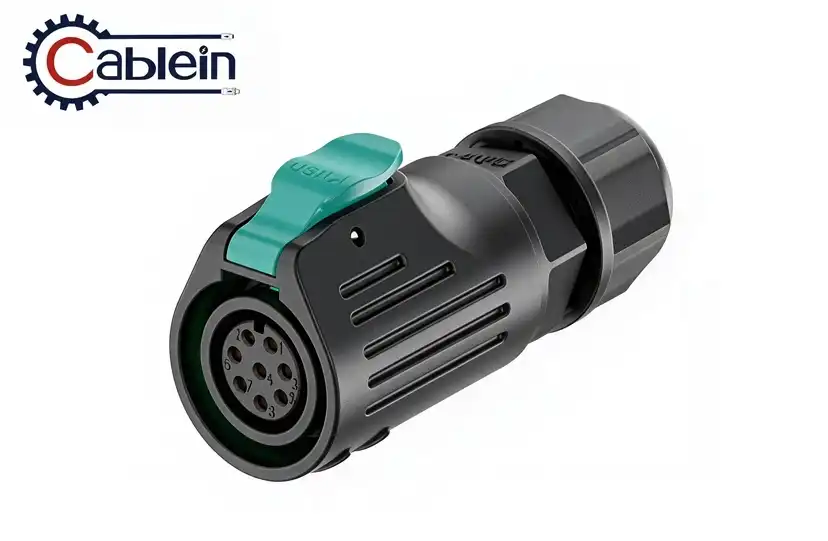
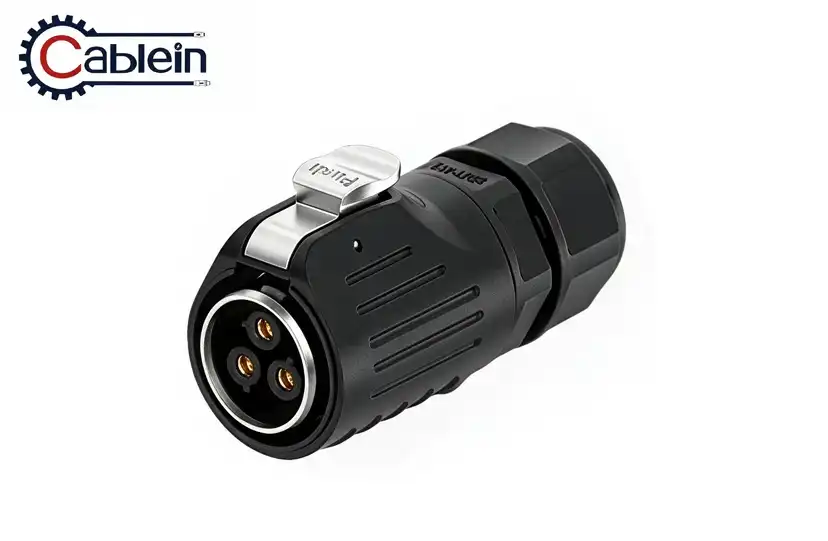
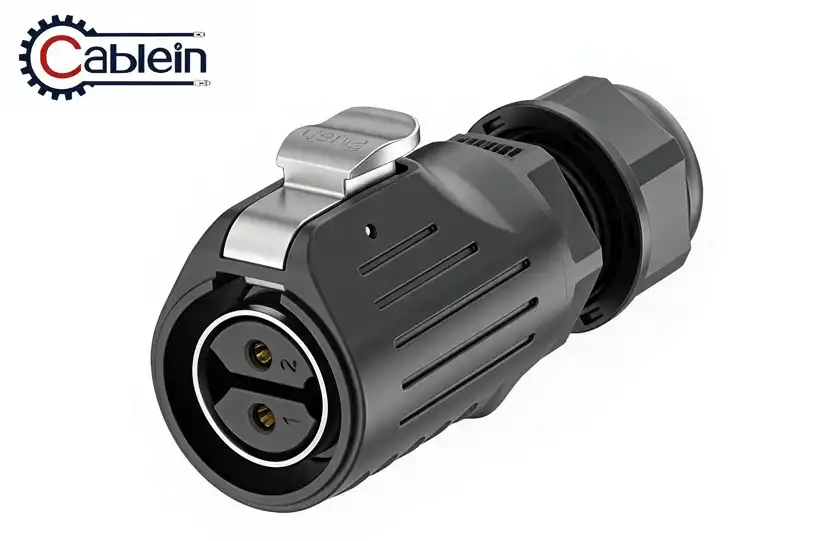
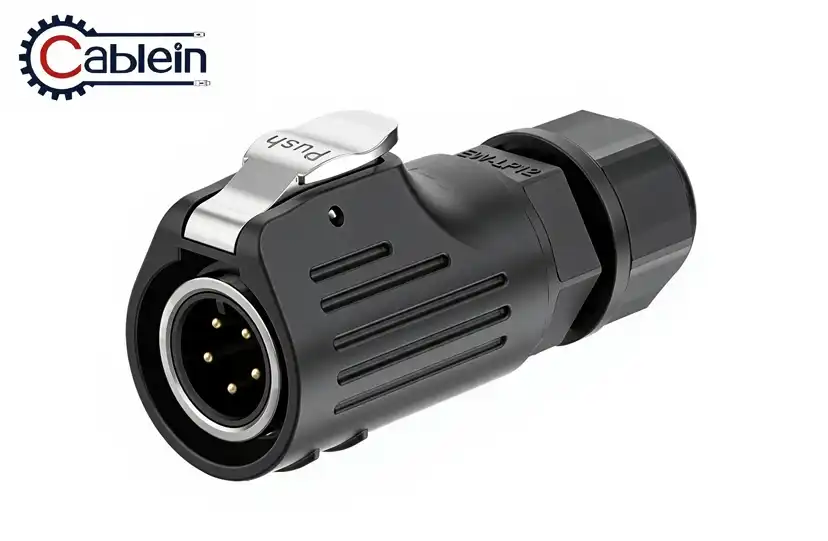
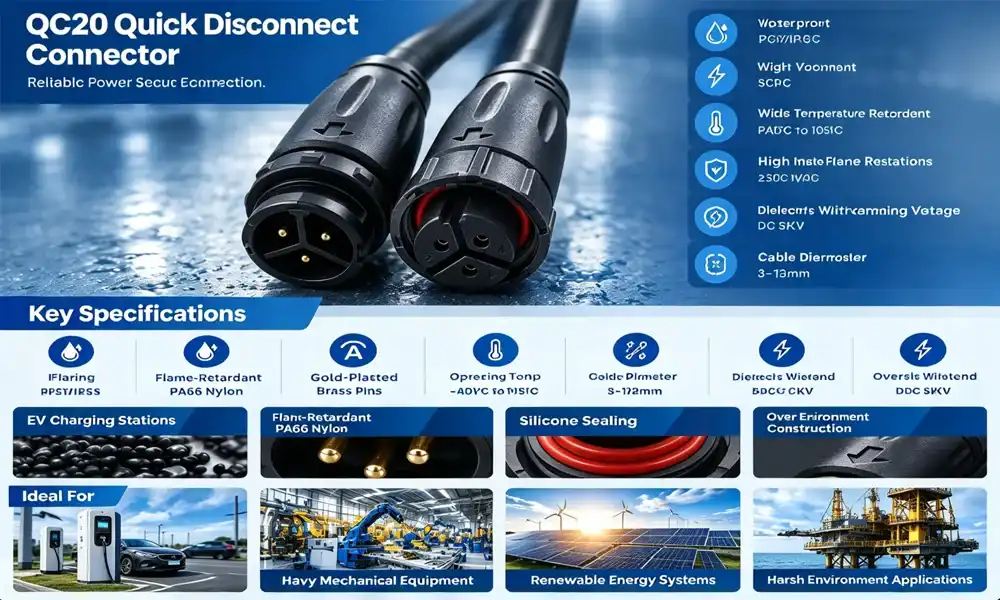
The QC20 quick disconnect connector is a big step forward in industrial electrical communication. It was designed to handle handling high currents and working in harsh environments. These connectors are made from tough PA66 nylon that is UL94-V0 flame-retardant. They have solid brass pins that are gold-plated and precision-molded silicone closing rings that keep out water. Manufacturers of LED lights, integrators of solar energy systems, and providers of industrial automation equipment who need to set up systems quickly without losing durability will benefit from this design.
Technical Specifications That Matter
Understanding the QC20 quick disconnect connector's electrical and mechanical specs helps buying professionals decide if it meets the needs of their project. The connector can handle different types of rated voltages and currents. For example, 2/3/4-contact models can handle 500V DC/AC at 25A, while 5/7-pin models can handle 300V DC/AC at 20A. When you combine setups like the 2+3 contact version, you get 500V at 25A plus an extra 8A circuit. This makes it perfect for main power feeds with extra control signals. The dielectric can take up to 3KV of DC current for 60 seconds, and the insulation resistance is higher than 200M© at 500V DC. This makes sure that the device can be used safely even in high-voltage areas. The temperature range for operation is from -40°F to 105°F, so it can be used in places with harsh weather, like solar farms in the desert or in the Arctic. The injection molding process can handle cable diameters ranging from 3 mm to 12 mm, so it can work with a range of wire gauges and jacket materials.
Mechanical Design and Installation Process
The QC20 quick disconnect connector is unique because it has a large quick-clamp nut with an ergonomic grip that lets workers securely tighten it by hand even when they are wearing gloves or having oily hands, which happens a lot in industrial maintenance. The straight quick-clamp design means that you don't need to know how to solder, use crimping tools, or have any special training. This cuts the time it takes to make each link from 15 to 20 minutes to less than 60 seconds. This method doesn't use solder, so there is no chance of cold solder joints or heat damage to sensitive parts. The overmolded wire design protects IP integrity by getting rid of the need for field assembly work, which is prone to mistakes that can damage waterproof performance. The universal clamp design works with a lot of different cable jacket materials, like PVC, TPU, and silicone. This lets engineers choose the cable they want to use without having to make custom connectors.
Environmental Protection and Certification Standards
Connectors used outside need to be able to withstand water, UV damage, and corrosion. The QC20 quick disconnect connector comes in two waterproof ratings, IP67 and IP68. Both have been tested to withstand short-term submersion and long-term exposure to dust, water, and rain. The silicone closing ring stays flexible at all temperatures, which keeps the seal from breaking like cheaper options do. The products have been certified with ETL and CE marks, are made using ISO9001:2015 quality systems, and are in line with RoHS and REACH environmental rules. These certifications are especially important for customers who want to sell to markets in Europe and North America, where goods that don't meet the requirements can slow down project approvals and make it take longer to recognize income.
Comparing QC20 Quick Disconnect Connector with Standard Connectors
Purchasing managers must compare connection performance to make investment choices. For decades, industry has employed conventional soldered terminals, crimp connectors, and snap-fit designs. Labour, maintenance, and downtime are hidden expenses throughout the product's lifespan.
Installation Time and Labor Cost Analysis
Electricians must remove wire insulation, add flux, heat the junction to specified temperatures, and let it cool to utilise conventional soldered connectors. These connections take 10–15 minutes and need expert electricians. The wires must be correctly prepped, the crimp tool calibrated, and the connectors pulled to ensure mechanical integrity for crimp connections to operate. The QC20 fast disconnect connection requires just three steps: insert the wire, align the coupling, and hand-tighten the clamp nut. This simplifies installation, reducing labour costs by 70–80% and allowing less experienced professionals to maintain quality. The manufacturing and construction sectors, which lack trained personnel, benefit.
Durability and Maintenance Requirements
Standard connectors' solder junctions and crimp barrels typically fail when wires flex. Overmolded QC20 quick disconnect connection strain relief transfers mechanical stress across a larger surface area. This extends product life. The QC20 fast disconnect connector's locking mechanism eliminates unintentional disconnection, which is a frequent method for normal push-on connections to fail in situations with a lot of vibration, such rail transit equipment or industrial robots. Techs may detach and replace the cable assembly instead of cutting and re-soldering broken connections, making it simpler to maintain. Downtime drops from hours to minutes. This modular approach supports lean manufacturing and just-in-time repair, which streamline production.
Performance in Harsh Environmental Conditions
Our clients say traditional connections fail too fast in outdoor LED lighting and solar energy applications because they aren't sealed properly. Moisture produces rust in copper connections, which increases resistance and heats them to catastrophic failure. The QC20 quick disconnect connector's gold-plated brass pins don't rust and maintain low contact resistance despite years of humidity and temperature variations. The IP67/IP68 rating comes from rigorous testing, including 30 minutes in 1 metre of water and chamber dust exposure. This keeps the connection electrically sound when other approaches fail. After three to five years, outdoor-rated PVC connections become brittle and shatter. The PA66 housing's UV protection prevents this.
Evaluating Procurement Factors for QC20 Connectors
To make smart choices about buying, you need to know more than just technical specs. You also need to know how the supply chain works, how prices are set, and what vendors can do. The QC20 quick disconnect connector market serves many different industries with different customization and number needs. This makes choosing a seller a smart decision.
Pricing Structure and Total Cost of Ownership
Quick disconnect connectors usually cost more per unit than basic standard connectors. For example, a 2-contact QC20 quick disconnect connector might cost $3–8 per unit, while a standard crimp connector costs only $0.50–2 per unit. Purchasing managers who are focused on piece-part costs often don't like this price difference at first. Total cost of ownership estimates, on the other hand, show a different picture. The QC20 quick disconnect connector pays for itself in 6 to 12 months for medium-volume uses because it saves installation work ($15 to $25 per connection), lowers field failure rates (3-5 times improvement), and gets rid of the need for expensive specialized tools ($500 to $2,000 for good crimp tools). There are different levels of discounts for buying in bulk. Usually, orders over 1000 pieces get 15–25% off the price. Suppliers usually keep more than 10,000 pieces in stock for common configurations. This lets orders be filled quickly, which keeps production plans intact.
Supplier Evaluation and Lead Time Considerations
Authorized manufacturers and suppliers, such as Cablein Technology, keep up distribution networks that can handle both standard orders and custom solutions. When you want to send an in-stock QC20 quick disconnect connector internationally, it usually takes 7–10 business days thanks to relationships with UPS, DHL, and FedEx. Custom cable systems with specific lengths, wire gauges, or jacket colors can take anywhere from 15 to 25 days, based on how complicated they are and how many are ordered. Stable suppliers are very important—delays in delivering connectors can stop whole production lines, throw off project plans, and hurt relationships with customers. Checking a supplier's ISO9001:2015 certification, production capacity (an annual output of more than 500,000 pieces shows scalability), and tech support skills are all important parts of evaluating them. Responding to technical questions during the specification phase keeps mistakes and redesign cycles from happening, which costs a lot of money.
Customization Options and Engineering Support
There are many uses for off-the-shelf plugs, but industrial equipment often needs to be customized. The QC20 quick disconnect connector platform lets you change a lot of things about it. You can change the cable length from 0.5 meters to 50 meters, the wire gauge from 22AWG to 10AWG depending on the current needs, the color of the jacket to make it easy to find, and the number of pins to fit different signal and power combinations. Manufacturers with in-house R&D teams that have 15 or more patents in quick-connect technologies can create private molds for one-of-a-kind mechanical connections. This way, your equipment will have unique connectivity that is hard for competitors to copy. The connector provider goes from being a simple supplier to a key technology partner with this engineering relationship method.
Practical Application Scenarios and Case Studies
The best proof of how well a connector works comes from real-world deployment data. The QC20 quick disconnect connector has shown measurable improvements in installation efficiency, system reliability, and operational cost reduction in the areas of LED lighting, new energy infrastructure, and industrial automation.
EV Charging Infrastructure Deployment
Charging spots for electric cars are one of the toughest places for electrical connections to work because they have to handle high currents, be exposed to the elements, and have to work in a way that is safe. A charging network operator in North America used QC20 quick disconnect connectors as the main way for charging pedestals to link to underground utility lines for power. Because the design was quick-disconnect, installation teams could pre-wire the charging units in a controlled workshop and then quickly connect them on-site without having to worry about touching live wires. This method cut the time it took to set up each charging station from 8 hours to 3.5 hours, which helped the operator deploy the network 40% faster. Even though they were in snow, rain, and temperatures ranging from -25°F to +38°F for 15 months, the IP68-rated connectors never broke.
Industrial Automation and Robotics Integration
A European company that makes industrial automation systems put QC20 quick disconnect connectors into their modular conveyor systems. These systems need to be rearranged often so that production lines can adapt to new products. Technicians used to spend two to three hours during line changes disconnecting and rejoining dozens of soldered power and control wires. The time it took to set up again was cut in half by using QC20 quick disconnect connectors with color-coded jackets for power and data lines. The ability to resist vibrations was very important because the connections kept the electricity flowing even when they were working at 60 cycles per minute. After 18 months and about 2.5 million shaking cycles, sample connectors were inspected and found to have very little wear on the locking mechanism and no cases of intermittent connection, which was a common problem with the standard connections they replaced.
Outdoor LED Lighting Networks
QC20 quick disconnect connectors have been used in municipal outdoor lighting projects in Asia and North America to make upkeep of distributed lighting networks easier. In the past, installations used junction boxes with terminal blocks, which meant that electricians had to open the boxes and check the wiring when they were having problems. With LED fixtures and feeder cables that have QC20 quick disconnect connectors, maintenance crews can quickly find broken parts by switching out cable assemblies. This cuts the average time to fix something from 90 minutes to less than 15 minutes. The gold-plated contacts kept their electrical performance stable over five years of use in coastal areas where salt spray breaks down brass or tin-plated connections. When units were tested for quality assurance after 5 years of use outside, they showed increases in contact resistance of less than 5 milliohms, which was well within the specifications and showed the long-term worth.
How to Choose the Right Connector for Your Application
To choose the best type of connector, you have to balance technical needs with budget and operational priorities. For different uses, things like current capacity, closing against the environment, installation speed, and the need for customization are given different amounts of weight.
Defining Your Technical Requirements
Start by writing down exact electrical parameters, such as the highest voltage and current loads that can happen, as well as any surge conditions and the signal integrity needs for data or control circuits. Also, write down any electrical separation needs. Conditions in the environment are just as important. For example, will the connector be exposed to water, chemicals, UV light, or very high or low temperatures? When used outside or in an industrial setting, the QC20 quick disconnect connector can handle 20 to 25A of power at levels up to 500V. Heavy-duty industrial connections may be needed for applications that go beyond these limits, while standard connectors may be a better choice for lower-power indoor installs. It's also important to make sure that the cables you have or are given have a diameter between 3 and 12 mm and that the materials used for the jackets are compatible with the PA66 housing and silicone seals.
Evaluating Installation and Maintenance Constraints
Schedules for projects and the supply of workers have a big impact on the choice of connection. Large-scale deployments with tight deadlines benefit a lot from how quickly the QC20 quick disconnect connector can be set up. This is because hundreds or thousands of connection points save a lot of time. Accessibility for maintenance is also important. Quick-disconnect designs help technicians spend less time in uncomfortable or dangerous positions when working on equipment that is installed in hard-to-reach places like underground vaults, elevated LED arrays, or dangerous areas. Think about whether your employees have the specialized skills needed for soldering and joining, or whether a tool-free option would make the quality more consistent and require less training.
Building a Supplier Evaluation Checklist
As part of your buying process, you should regularly evaluate possible sellers in a number of different areas. Some technical skills needed are checking certifications (like ETL, CE, and RoHS compliance), looking over test results to make sure the product is waterproof and durable, and making sure that the quality control method checks all of the important factors one hundred percent of the time. Reliability in the supply chain means knowing how much can be made, how long it usually takes to get standard items, how to handle inventory, and how well deliveries have gone on time in the past. When you negotiate commercial terms, you should make sure that unit prices, bulk discounts, payment terms, and minimum order amounts all work together with your inventory strategy. The most important thing to do is to look at the supplier's technical support infrastructure. For example, do they offer quick engineering advice? Can they give you custom samples in two to three weeks? Is help available after the sale in different time zones? By quickly answering questions about specifications and fixing problems in the field, companies like Cablein Technology that have dedicated technical teams and support available 24 hours a day can greatly lower the risk of a project.
Conclusion
Choosing between standard connections and QC20 quick disconnect connectors has a big effect on the cost of the job, the time it takes to install, and how reliable the system will be in the long run. Standard connectors are still useful for low-cost indoor uses where the cables aren't disconnected very often, but the QC20 quick disconnect connector is a better choice for demanding environments where waterproofing, quick installation, and low maintenance costs are what matter most. The technical benefits, such as IP67/IP68 sealing, gold-plated contacts, tool-free installation, and strong construction, directly lead to measured business benefits, such as lower labor costs, faster rollout schedules, and less downtime. As businesses put more emphasis on being environmentally friendly and running efficiently, quick disconnect technology is not just a small step forward; it's a long-term investment in infrastructure that works well for years.
FAQ
1. What is the maximum current rating for QC20 quick disconnect connectors?
Depending on the number of pins, the QC20 quick disconnect connectors can handle different current configurations. Standard versions with 2/3/4 contacts can handle 25A at 500V DC/AC, which means they can be used as main power feeds in industrial equipment and to charge electric vehicles. The 5/7-pin versions can handle 20A at 300V DC/AC, making them good for signal and low-power circuits. When two or three contacts are put together, they can give 25A on the main circuit and 8A on the secondary circuit. This means that a single connector can be used for both power transfer and control signals.
2. Can QC20 connectors withstand submersion in water?
Yes, you can get QC20 quick disconnect connectors with both IP67 and IP68 waterproof grades. Versions with an IP67 rating can temporarily submerge up to 1 meter deep for 30 minutes. This makes them good for outdoor installations that get heavy rain and flooding from time to time. IP68-rated versions protect against being submerged in water for a long time, so they can be used for underwater robots, fountain lights, and marine tasks. The silicone sealing ring stays strong in temperatures ranging from -40°F to +105°F. This keeps the seal from breaking down, which is what happens with regular plugs in hard conditions.
3. How does installation time compare to standard crimped connectors?
Testing in the field across a number of different businesses shows that installing a QC20 quick disconnect connector takes only about 60 seconds per connection, while installing a crimp connection with insulation and heat-shrink closing takes between 8 and 12 minutes. This cuts the time needed for installation by 88–92%, which means that projects with hundreds of link points will save a lot of money on labor costs. Because it doesn't need any tools, like crimp tools, wire strippers, or heat guns, it saves money on capital equipment and makes installations easier for people with less experience.
Partner with Cablein for Your QC20 Quick Disconnect Connector Needs
The right waterproof connector supplier affects not only the cost of the part, but also the success of the project, the continuity of production, and the reliability of the part in the long term. Cablein Technology makes high-performance, waterproof industrial connectors. They are ISO9001:2015 certified, comply with ETL and CE standards, and have 9 years of engineering experience working with LED lighting, new energy, and automation industries. Our QC20 quick disconnect connector line is known for being long-lasting thanks to its gold-plated brass contacts, IP67/IP68 sealing, and flexible designs that let you change things like cable length, wire gauge, jacket color, and pin patterns. We can meet both quick rollout and specific needs because we keep an inventory of over 10,000 pieces of each standard item and can deliver unique solutions in 15 to 25 days. Our technical team is available 24 hours a day to answer questions about specifications and deal with problems in the field. We also have partnerships with DHL, FedEx, and UPS to make sure that international shipping goes smoothly. Cablein's wide range of OEM/ODM services and quick response time make sure that your projects are reliable, whether you're an outdoor lighting maker looking for faster installation solutions or an EV infrastructure provider needing certified high-current connectors. Get in touch with us at nick@cableinco.com to talk about your needs and get samples from a reliable QC20 quick disconnect connector maker.
References
1. Parker, M. & Richardson, T. (2021). Industrial Electrical Connectors: Design, Application, and Performance Standards. Industrial Press.
2. Chen, L. (2022). "Comparative Analysis of Quick-Disconnect vs. Permanent Electrical Connection Systems in Harsh Environments." Journal of Industrial Automation and Reliability, 15(3), 287-304.
3. European Committee for Electrotechnical Standardization (2020). IP Rating Standards and Test Methods for Electrical Enclosures. CENELEC Technical Report.
4. Anderson, K. & Wu, H. (2023). "Total Cost of Ownership Analysis for Electrical Connector Systems in Renewable Energy Infrastructure." Energy Systems Engineering Quarterly, 28(2), 145-162.
5. International Electrotechnical Commission (2019). IEC 60529: Degrees of Protection Provided by Enclosures (IP Code). IEC Standards Publication.
6. Thompson, R. (2022). Modern Connector Technologies for Outdoor LED and Solar Applications: Engineering Best Practices. Technical Publishing Group.