The Underground Survival Code: How Rugged Connectors Keep Mining Equipment Alive Below the Surface
Rugged connectors keep mining equipment alive by protecting power, sensor, and control links from water, slurry, dust, and constant vibration. A tough M12 quick lock waterproof connector does this with a sealed housing, a secure locking interface, and strain relief that holds the cable steady while machines drill, haul, and crush. I find that most underground failures start at a weak connection, not at the sensor or motor itself. In this article, I explain the specifications, selection steps, and purchasing checks that help mining OEMs, engineers, and buyers choose connectors that last.

Why Underground Connections Fail and What Failure Costs
Water, Slurry, and Dust Attack the Weakest Link
Underground air is rough and wet. There may be leaks in a connection that let water, mud, slurry, and fine dust in. These things can damage the wiring, cause corrosion, and lead to short circuits. Charged particles can also make signals less stable, which can show up as wrong sensor readings or random machine faults. Based on IEC 60529, the IP Code is as follows: IP6X means dust-tight, IPX7 means temporary immersion, and IP68 means ongoing immersion under the conditions set by the maker. To be valid, those scores must show that the connection is fully made and the wire entry is properly sealed. The IP rating is what I start with, and then I ask the supplier what tests they used to give that rating.
Vibration and Shock Loosen Weak Interfaces
During each shift, drills, breakers, conveyors, and haul trucks move and shake the connections for hours. Rocks can add sudden shock loads, and weak interfaces can come loose when they hit something. Wear and tear can happen to contacts and wire ends close to the link. When engineers compare data from different sources, they can use the same standards to do so. IEC 60068-2-6 checks for rhythmic shaking and IEC 60068-2-27 checks for shock. When I read a request, I don't just accept the phrase "vibration resistant." I also ask what the test method is, the frequency range, and the length. Moving the machine won't pull on the terminals if the lock is tight and there is enough strain relief.
Why Downtime Below the Surface Costs More
It's annoying when a surface machine's connector breaks. Below ground, it could mean that the machine has stopped, a worker is ready to be let in, and extra safety checks need to be done before anyone touches the machinery. Tunnels are small, so there isn't much room for tools and work. This means that a slow repair takes longer. This is the reason why lifecycle cost is more important than unit price and why OEMs ask suppliers for records of claims of failure. It may be worth the extra money if it saves you one service call from having to call for help. It is important to compare the time it takes to access, shut down, get spare parts, and be outside of warranty.
Tough M12 Quick Lock Waterproof Connector Specifications and Design
Specifications That Matter Before You Order
An M12 family member is a 12 mm round connector, and IEC 61076-2-101 covers the screw-locking type. Size and IP rating aren't the only things that matter. You should look at the code, the number of pins, the pinout, the wire length, the jacket material, the temperature range, the shielding, and the highest voltage and current. There are a lot of A-coded types of sensors and motors. It's not enough to just look at the number of pins to choose a replacement. Three-pin and four-pin layouts are used for different circuits. Make a drawing that shows the shield's end point, the pin numbers, and the wire. It's also important that the wire fits well. For the link to work, the wire size, bend radius, and closing range of the cable entry must all match. If they don't, water will get in.
How the Quick Lock Design Works
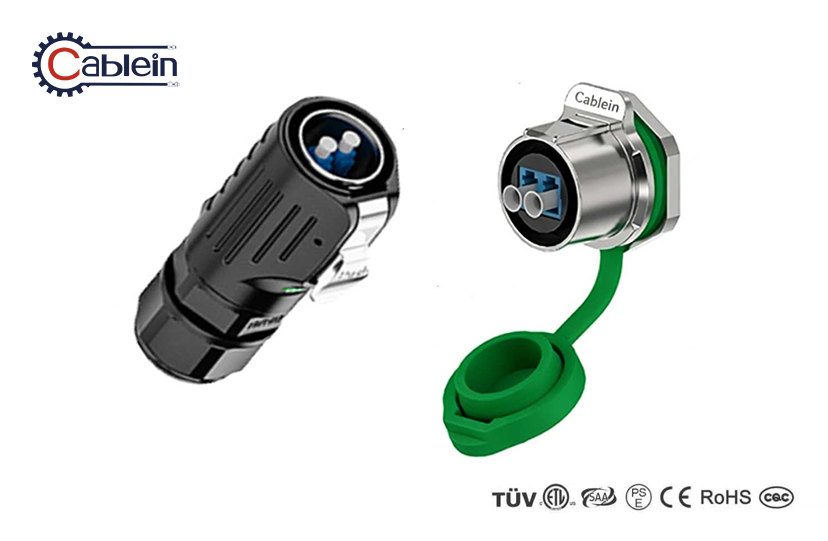
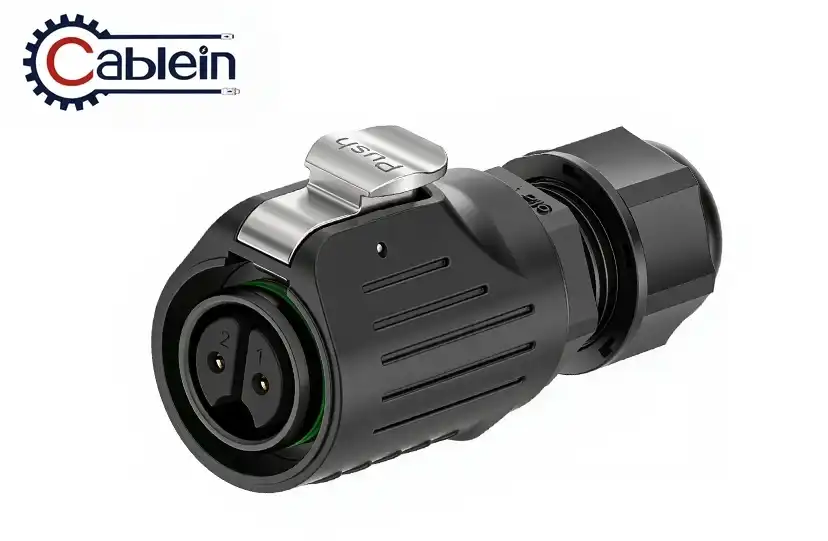
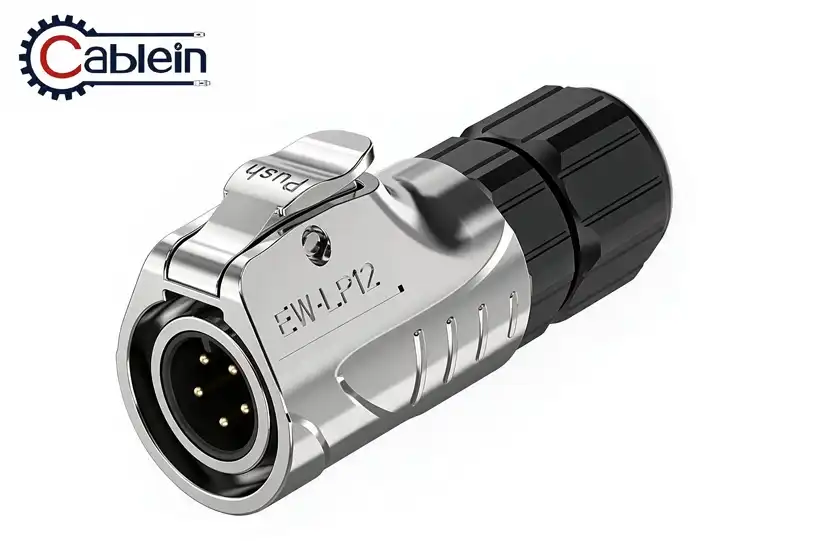
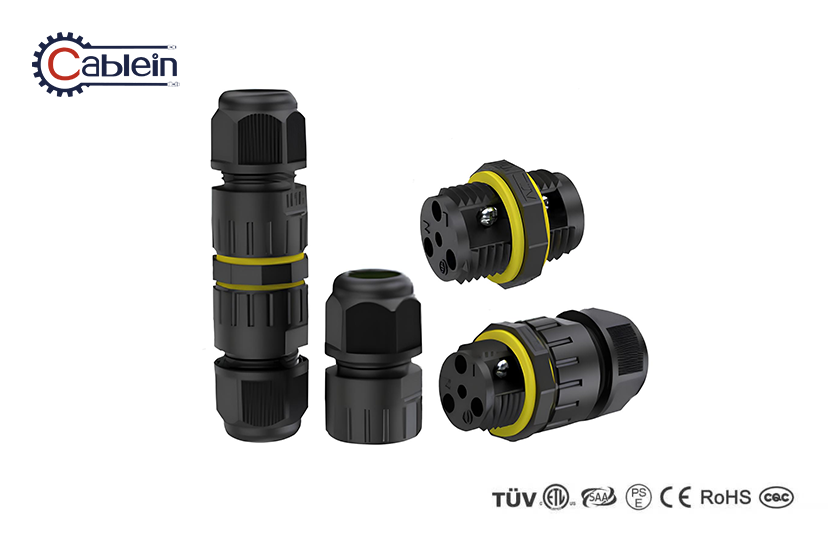
Instead of many thread turns, a quick lock interface only needs to be pushed or latched once. A tough M12 quick lock waterproof connector makes it quick to connect and easy to see or touch that it is in place in a small machine bay. Its line of waterproof push-lock, quick-connect, and solder-free connections can be used for this. For the seal to work properly, the internal O-ring must be fully compressed when the lock is closed. Look at the codes, the seals, the keyway, the lock all the way closed, the strain relief, and then check for continuity and insulation before mating. Versions that can be installed in the field are good for fixes that need to be done on-site, and prewired cable assemblies help OEMs make fewer mistakes.
Comparing M12 With M8, M20, and Threaded Options
Yes, every style does a unique job. Most of the time, M12 connectors are stronger and can connect more things than M8 connectors. M8 connectors, on the other hand, might work better with small instruments. They are still a good choice for systems that need to keep screws in place because they are threaded M12. Because of changes in how they close, fit, and seal, quick lock devices and push-pull connections can't be switched out. For Cablein's M20 quick lock series, look at the datasheet to see if it works with your track. It has IP67 or IP68 protection and 2 to 12 pins. It can handle 5A to 20A at 250V to 500V. Then, the version is either straight or at an angle based on the room, direction, and how the wires will be run.
Where Rugged M12 Connectors Work in Mining Equipment
Common Mining Applications
M12 waterproof connectors can be used on many machines that work underground, like cutting tools, drills, conveyors, pumps, ventilation fans, and shuttle vehicles. Usually, they link things like pressure and temperature sensors, airflow monitors, motor controls, emergency stop circuits, battery systems, and sensors that measure water level and flow. For panels that don't have a lot of space, the small size is helpful. The sealed design keeps dust, water, and slurry from getting into the connections. Cablein makes custom wiring harnesses for automation equipment and circular and panel-mount connectors that are IP67 and IP68. These can be used for this type of work. To begin, you need to map each sensor and actuator. Next, you need to pair each signal type with a unique set of connections.
Hazardous Areas and Safety-Critical Functions
An IP rating shows how well it keeps out dust and water. For places that could blow up, it doesn't let you join. 30 CFR Part 18 tells US underground coal mines what kinds of electric tools are okay to use. This has to be done by the Mine Safety and Health Administration, so an IP number can't be used instead of that process. If your machine works in a gassy area or the connector is in an emergency-stop circuit, make sure the system has the right approvals before you order the part. I'd rather talk about this now than have the project get held up while it's being inspected. Here at Cablein, we certify each line of products, so we go over each case with you.
Washdown, Chemicals, and Temperature Checks
Oils, salts, and chemicals are some of the other things that OEM tools have to deal with. IP69K tests for high-pressure and high-temperature water jets are part of the ISO 20653 standard. This number is not the same as IP67 or IP68. Cablein's M20 quick lock data shows that it can handle oils, salts, and typical industrial fluids from -40°C to +105°C. If you pick any M12, I want the team to look at the datasheet to see the temperature range, jacket material, and chemical resistance. For continuous immersion, strong chemicals, and washdown, we need more technical proof. If your engineer gives you a short exposure list with fluids, temperatures, and washdown pressure, that review will go faster.
How to Choose and Buy the Right Connector
Build a Selection Checklist from the Real Environment
You shouldn't pick based on a picture of the product, but on the whole work area. Write down what kind of machine it is, where it's placed, how much water and dust it encounters, as well as the temperature, space, chemicals, vibrations, shocks, and how often it needs to be serviced. Once that's done, check the code, pinout, current, voltage, IP protection, wire width, jacket material, shielding, and joining cycles to make sure they are all right. Check to see if the plug, receptacle, cable, panel, and device being connected all work with each other. The strength of the housing is important in impact zones, so ask the supplier what the housing is made of. The housing is made of different materials for each series. A sample of any tough M12 quick lock waterproof connector part is the last thing I ask for. I also want CAD files and records of how the part was made.
Write an RFQ That Gets Accurate Quotes
A clear RFQ cuts down on weeks of talking back and forth. When people buy something, I want to see three kinds of information:
- Electrical and mechanical data: List the type of connector, the number of pins, the code, the orientation, the need for a quick lock, the IP rating, the rated voltage, and the rated current. Assign each contact to the right place on the wiring plan or pinout drawing so engineers don't have to guess. What kind of mating device do you need? Let us know if you need one that is already wired or one that can be installed in the field.
- Cable and environment: Write down the cable's length, the size of the conductors, the jacket's material, the bend radius, the temperatures the cable will be exposed to, the path it will take, and the temperature range. These details decide the range of sealing, the type of strain relief, and the choice of jacket. So, the cord and connection body don't match up wrong, which could cost a lot of money.
- Commercial and documentation needs: Make a list of how many items you need, where you want them delivered, when you want them delivered, any certifications that are needed, what the warranty covers, and any failure claim history you want to look over. This is for business and paperwork purposes. The seller can plan their stock and production better with clear yearly volume forecasts. The cost team can also use them to compare the prices of batches from different suppliers in a fair way.
Qualify the Supplier Before Volume Orders
The conditions are discussed, a sample road test is done, a small batch is made, and then the list of approved suppliers is given. This is how a lot of OEM plans work. A lot of people wait three to six months. That's why you should test your samples in real life, shaking, dusting, and washing them. Compare more than just the price per unit. Think about how long it takes to put together, test, and install, how much it costs to fix, whether there are any customs fees, and how long it is down when something goes wrong. Cablein was set up in Shenzhen in 2017. It uses ISO9001:2015 standards, makes sure all of its products are waterproof, and lets OEM/ODM customers make changes. You can ask us or any other seller for test results and guarantee terms that match the length of time your machine's warranty lasts.
Installation, Testing, Maintenance, and What Comes Next
Install Correctly the First Time
The right placement keeps the cover safe. Before I put them together, I check the contacts, O-rings, housings, cable jackets, and lock parts for damage or grit. Things that could damage or pull on the cables should be kept away from them. The bend radius should be followed. The lock or connection must be fully closed or tightened because an IP67 or IP68 grade does not protect parts that do not fit together properly. Put a drip ring around machines that are washed or sprayed so that water flows away from where the wire enters. Before putting two parts together, clean the faces that touch. Also, never force a part into place if it's not there.
Test at Commissioning and Inspect on a Schedule
When the circuit is being set up, continuity, polarity, insulator resistance, grounding, shield termination, and mechanical retention should all be checked. Techs will need to write down the numbers so they can use them to compare it to new numbers later on. Check for corrosion, loose locks, cracked housings, broken seals, and too much cable bending while the machine is running. Check more often in places where there is a lot of water or shaking. But field checks are still important because every machine has different installation conditions. Cablein checks every product to make sure it is waterproof and will last. You should keep a spare-parts list with all the names of the connectors and cable assemblies that are okay. So, when the technician comes, they can just swap in the right one.
Where Rugged Connectivity Is Heading
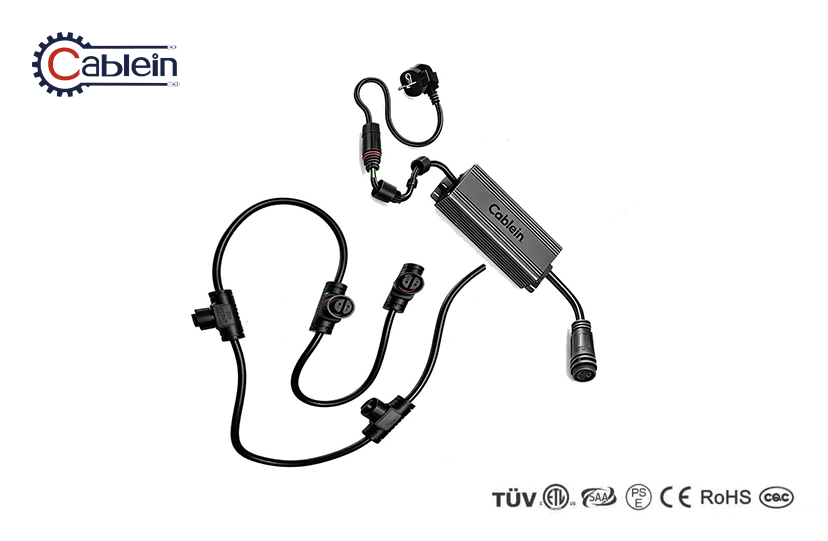
More and more mining machines have sensors that check the machine's state, energy use, vibration, temperature, and airflow. This helps with repairs that are planned. A lot of these instruments are linked with M12 wires. Assemblies that are plug-and-play and modular can make upgrades easier and cut down on the time it takes to change parts in the field. Buyers can get ready by making a short list of standard accepted connector families, asking for digital models and data on traceability, and choosing service providers that can make custom harnesses. At Cablein, the R&D team works on high-power, waterproof, quick-connect technology that doesn't need soldering. There are more than 30 utility model patents for this technology, which is good for OEMs whose designs change a lot. It's just as important for long-term value as it is for durability to have good documentation and technical support.
Conclusion
There are penalties for weak links in deep mining. It's water, slurry, dust, vibration, and shock that break most connectors. Because of safety rules, fixing something that is hard to get to costs more and takes longer. A tough M12 quick lock waterproof connector can handle these risks as long as the type of code, circuit, current, voltage, IP rating, wire fit, case material, and temperature range are all right for the job. Even though quick lock designs make it easier to mate, the seal still needs to be fully engaged, have the right pressure relief, and fit properly. The M8, M20, threaded, and push-pull formats all work well for what you need. Approval to work in a dangerous area is still needed, even if the product has a grade of IP. Chemical contact or washdown also needs its own approval. Buyers can pick a seller more safely if they look at more than just the price per unit. A sample of the test results, the paperwork, and the warranty terms should also be looked at.
FAQ
1. Does IP67 mean a connector can stay underwater indefinitely?
No, IEC 60529 says that IP67 is the only way to protect against short-term flooding. Under IP68, the product can be submerged in water all the time, and the supplier sets the test conditions. Get a written copy of these terms before you sign off on a part.
2. Is a quick lock connector better than a threaded one for mining?
It can be when meeting speed and clear locking feedback are important. Threaded ones can be used with systems that need to hold screws in place. If you want to be sure that the seal and retention work, you should shake and wash the item yourself.
3. Can an M12 connector go into an explosive atmosphere?
Not just because of an IP address. MSHA rules in 30 CFR Part 18 say what kinds of tools can be used in deep coal mines in the US. Before you choose a connection, make sure that all of the system-level approvals have been given.
4. What should I send with a quote request?
Write to nick@cableinco.com with the order number, pinout, code, amount of pins, cable length, jacket material, and working conditions. After that, our team can check to see if it fits and give you options.
Request a Tough M12 Quick Lock Waterproof Connector Quote from Cablein
Shenzhen is where Cablein makes tough M12 quick lock waterproof connectors. They have a steady stock of more than 10,000 pieces of each item, support OEM and ODM, test connectors to be 100% waterproof, and offer IP67 and IP68 connectors and custom cable kits. In 7–10 days, things that are in stock are sent out. Our team will get back to you with a datasheet or price after you email nick@cableinco.com with your pinout, cable length, location, and number.
References
1. IEC 60529: Degrees of Protection Provided by Enclosures (IP Code), 2013
2. IEC 61076-2-101: Circular Connectors – Detail Specification for M12 Connectors with Screw-Locking, 2012
3. IEC 60068-2-6: Environmental Testing – Tests – Test Fc: Vibration (Sinusoidal), 2007
4. IEC 60068-2-27: Environmental Testing – Tests – Test Ea and Guidance: Shock, 2008
5. ISO 20653: Road Vehicles – Degrees of Protection (IP Code) – Protection of Electrical Equipment Against Foreign Objects, Water and Access, 2013
6. Code of Federal Regulations, Title 30, Part 18: Electric Motor-Driven Mine Equipment and Accessories, 2023