Wiring for the Elements: A Guide to M12 Waterproof Connectors in Electronic Systems Introduction
A reliable m12 quick lock waterproof connector joins sensors, actuators, and controllers with power and data lines while keeping water, dust, and vibration away from the contacts. The M12 name refers to the 12 mm thread (M12x1), and the quick-lock version replaces several turns of a nut with a fast push-and-lock motion. In this guide, I explain how these connectors work, how IP67 and IP68 ratings should be read, how coding and pinouts affect wiring, and how quick-lock, threaded, and push-pull designs compare. I also cover sample testing and supplier checks, so your team can approve parts with confidence.

M12 Quick-Lock Basics and Waterproof Ratings
What an M12 Quick-Lock Waterproof Connector Includes
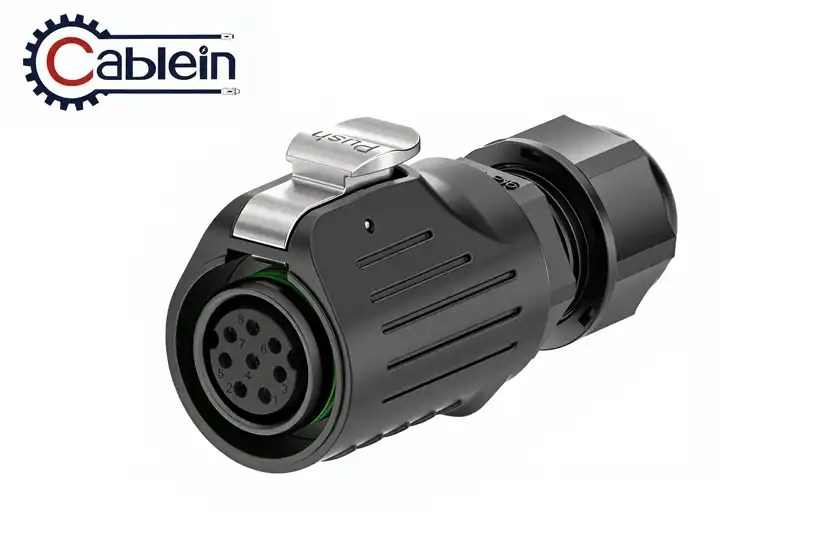
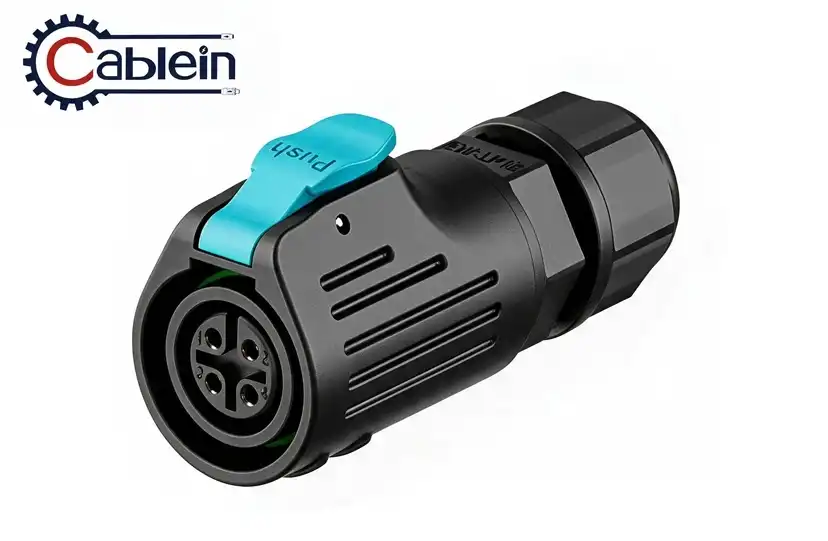
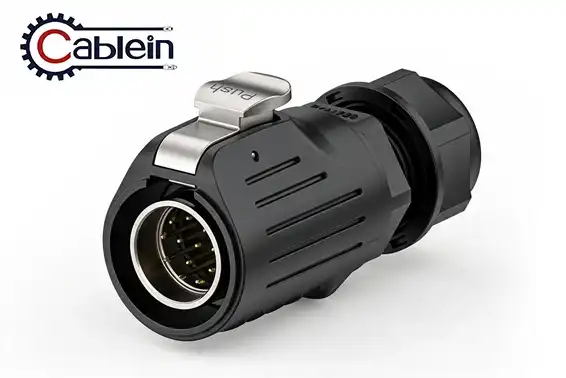
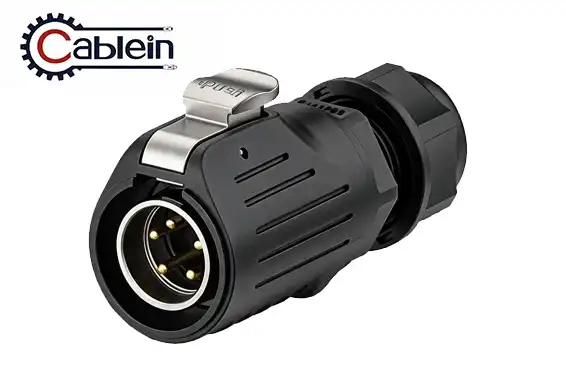
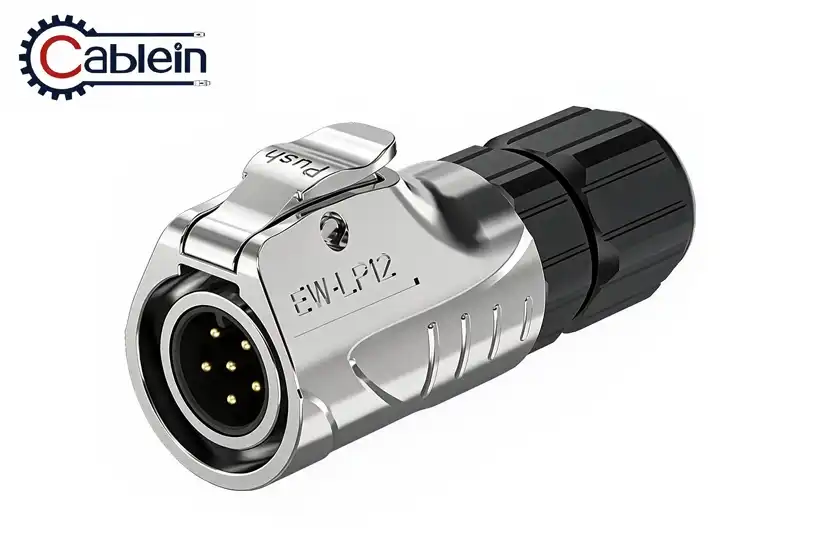
An M12 quick-lock waterproof connector is a small, round plug. The connection is 12 mm wide. A strain relief, a sealing element, a locking mechanism, and metal contacts are some of the things inside the housing. The cable goes into the strain relief. With the quick-lock method, all you have to do is push the matched pair into place. You won't have to turn the threaded nut more than once. This saves time when service work needs to be done often or in a cabinet or machine frame that isn't very big. But not every M12 port can link to every other port. Two parts must have the same code, pin count, gender, electrical grade, and mating measurements in order to fit and work together. Most of the time, they are found in motors, sensors, robot arms, PLC systems, and valve pipes.
How to Read IP67 and IP68 Ratings
IEC 60529 gives the IP number. The first number, 6, means that dust can't get in. The second number, 7, is for short-term 30-minute dives of up to one meter. With an IP68 rating of 8, it is possible to be submerged in water for a long time. This is only true if both the buyer and the seller agree to the terms. That's why I always check the depth and length-of-time claims. A grade tells you about a good seal. Water can get in if the plug isn't fully set, the seal is broken, or the wire is too far from where the seal should be. High-pressure jets have their own rules, so IP67 doesn't test them. If you are going to be submerged for a long time or more than once, make sure you get IP68 test data that has been checked and mounting instructions.
Quick-Lock, Threaded, and Push-Pull Designs Compared
Locks come in many styles and are used for many things. Quick-lock designs let you connect more quickly and work well for maintenance or setups with a lot of devices. IEC 61076-2-101 says that threaded M12 links should have a screw joint. A lot of well-known tools can already do this. Also, you don't need any tools to connect push-pull items. However, they lock differently, so I never assume they will work with quick-lock items. You can tell a lot about a choice by how quickly it can be put in place, how well it seals, and how much it will cost over its whole life. If a cheaper connection breaks in the field, the time and work that are lost are worth more than the price difference. Write down your choice on the bill of materials so that replacements are the same.
M12 Coding, Pinouts, and Wiring Steps
M12 Coding Options and What They Carry
Codes make it so you can't mate with the wrong animal. A lot of sensors and motors use this kind of connection. It has a number of different pin counts. Types with a B-code can be used in field bus networks like PROFIBUS. Four-pin Fast Ethernet can be used with types that have a D-code. X-coded types have eight pins for fast data, and IEC 61076-2-109 covers X-coded reliable m12 quick lock waterproof connectors for frequencies up to 500 MHz. It's a waste of time to code if you make the wrong choice because the keys won't match. First, I make sure that the code is right for the type of signal. After that, I check the document to see how much the change was.
Pin Count, Gender, and Mounting Style
The number of pins is the same as the number of electrical connections. A simple monitor is something with three pins that can handle power and one data. It has 4 pins, so there are different ways to connect it to a signal, a reference, or the ground. Connecting Pin 1 to 24 volts, Pin 3 to 0 volts, and Pin 4 to it makes it switch. But wiring is different for every device and maker, so before I turn on a circuit, I always check the specs for the gear. You can connect them to a panel or a wire, and they come in both male and female styles. It works with some types of control boxes and machine housings when they are put on a panel. You can use other types that are attached to cables with drops and extension lines. Stick a note on each line that tells you what each pin does. This will save you time when you need to fix something.
Installation Steps for Quick-Lock Connectors
Make sure you know the code, number of pins, gender, voltage, current, and link specs before you try to fix something. Before putting it all together, I check the sealing range, the housing, the cable jacket, the cable diameter, the locking surfaces, the contacts and seals, and the sealing range. I connect each wire to the right pins and make sure that grounding and shielding stay the same when I'm done. Put the keys in the right place, push the connection all the way home, and then turn on the lock until you see or feel the signal that it's locked. The last thing you should look for are lines that stick out, uneven seals, tight bends, and locks that aren't fully closed. Also, make sure to check for value, consistency, polarity, and shielding.
Selecting an M12 Connector for Industrial Equipment
Match the Connector to the Operating Environment
The connector's size never tells you what to do by itself. Being near water, dust, oil, chemicals, moving, flexing, UV light, and changes in weather are at the top of my list. The seal, cable jacket, and IP rating are all set by these inputs. They also let you choose the type of housing material. Then I write down everything I need for electricity, such as the number of pins I need, the voltage, the current, the type of signal, the data speed, the level of protection, and the code. If you want to sell your gear in more than one place, make sure that the series you buy has the right certifications for each area. For example, in Europe, it should have CE listing, and in North America, it should have ETL listing. If it's going to be near the water or somewhere that will rust, I need to know about the materials and see proof that they can handle ISO 9227 salt spray.
Cable Assembly Details That Affect Service Life
You need to pay attention to the wire and the joint. The number of conductors, the material of the jacket, the bend radius, and the number of conductors should all be checked. When the cables are used for straight runs on a fixed frame, they can be made in a different way than when they are used on robots or moving axes for continuous flex. Be clear about the kind of motion you want when you ask for it. It has overmolding to protect the part where the wire meets the connector and strain relief to keep the contacts from being pulled too far. There is a relationship between the length of the cable and both voltage drop and routing. Don't guess; compare it to how the machine is set up. If you need unique wire connections, a company can match these features to your gear. This means that during testing, you won't have to repeat as much work.
Common Selection and Installation Mistakes
When you think that all M12 items can be used together, bad things start to happen. If two things of the same size have different scores, codes, or touch styles, they might not work together. People often trust an IP rating without checking the condition of the seal, how the cables are routed, or whether the connector is fully mated. If you use the wrong pinouts, you could end up with a short circuit, a signal problem, or a sensor fault. Moving tool parts can wear out faster if you don't watch out for shaking, pulling on wires, and bending over and over again. Teams also choose based on the price per unit, and then they have to deal with things like downtime, extra work, insurance claims, and each batch being different. You might want to think about how much the whole thing will cost before you decide to buy a part.
Buying M12 Quick-Lock Connectors for Global B2B Projects
Write an RFQ That Gets an Accurate Quote
When the RFQ is clear, emails don't go back and forth. Let them know about the area, the number of pins, the gender, the length of the line, its IP rating, the area, the certificates they need, the demand each year, the packaging, the location, and the length of time they want to wait. Also, people in the US should say whether the gear needs ETL or UL paperwork. Describe the kind of action, the temperature range, and the elements that were there. They can match a real part instead of a close fit if you want a reliable m12 quick lock waterproof connector. Each type of cable assembly order has a different price, which is based on labeling, testing, expected stability, and how the wires are set up and labeled. Tell the truth about your prediction when you talk about it.
Validate Samples Before Production Approval
Tests on samples help people trust each other. Someone first asks for a sample, which is then kept in a lab for two to four weeks and checked there. Then there is a small test batch, and finally an agreement to supply every year. Also, check the parts' fit, temperature, flexibility, shaking, continuity, and the accuracy of the pinouts during that time. You should add a salt spray test and ask for the material statement if water or salt spray will be used in your process. IEC 60512-9-1 talks about how to test the durability of mechanical operations to see how long they last. Talk to the seller about the test method used to come up with their run numbers. It's best to keep track of things by lot so that you can compare later orders to the chosen sample.
Evaluate a Supplier's Quality System and Capacity
Check to see if a company can make what you need, if they have quality control systems, if they can keep track of batches, if they have exported before, if they offer engineering help, test reports, OEM services, and if they have good customer service after the sale. To get ISO 9001 certification, you need to know which certificates apply to these product lines. There may be a different set of approvals for each run. Also, don't forget to look at the steps that go into the inspection process. These include the materials that are sent in, the assembly, the continuity, the waterproofing, the visual, and the review before shipping. If you are going to make more than one order, you should find out how lots are tracked and how corrective steps are kept track of. Take a quick look at these written rules before you agree to a test run. What kind of technical questions were asked during the samples? These questions also show how the customer service will work after the first order.
How Cablein Supports M12 Waterproof Connector Projects
Who Cablein Is
The main office of Cablein Technology Co., Limited is in Longgang, Shenzhen, and the company was founded in 2017. This is a high-tech company from across the country. We make one-of-a-kind wire systems and waterproof industrial links. Our factory, which costs 6,000 naira, has at least 15 patents for waterproof, quick-connect, high-power technology that doesn't need to be soldered. It also has high-tech production lines with more than 200 workers. We have customers in more than 100 different places. For quality control, we follow the rules set by ISO9001:2015. ETL, PSE, SAA, CQC, CE, RoHS, REACH, and TÜV have all approved our goods. Based on the series you need, we'll let you know which certificates are applicable.
Product Lines and Core Advantages
When installers need to connect things, they often ask me what Cablein does.
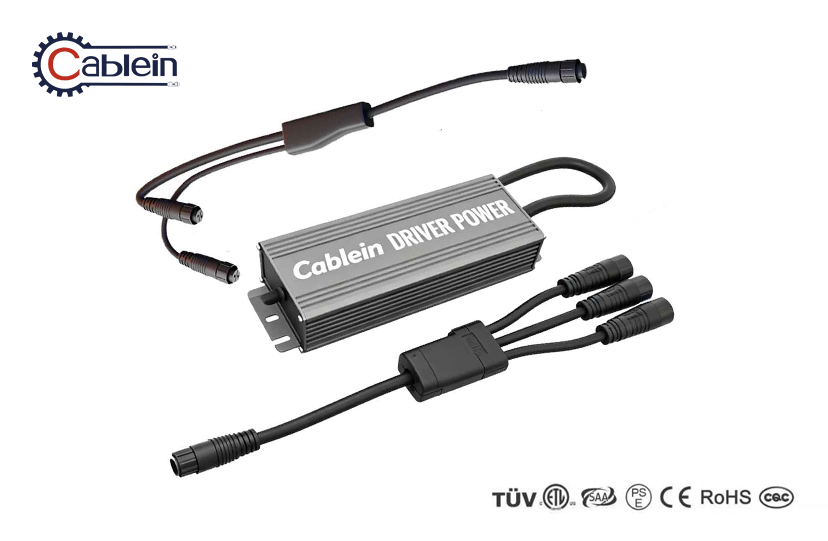
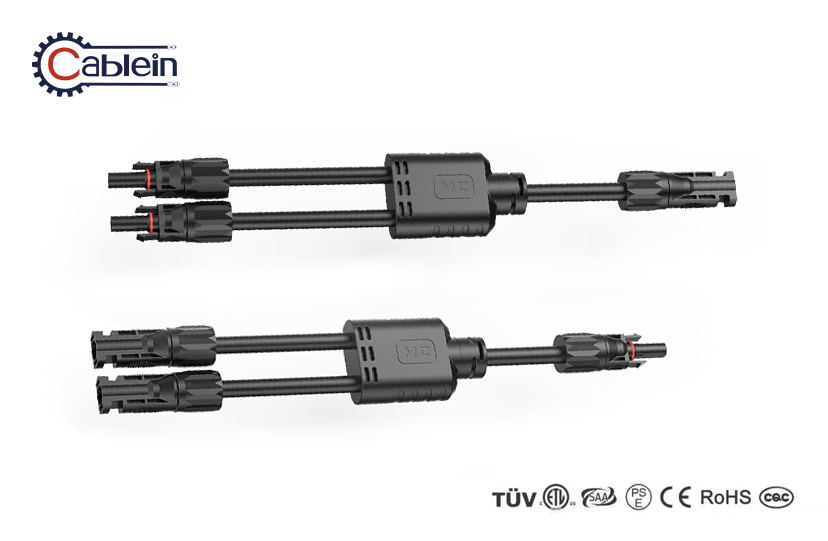
• Waterproof range: For each line of products, we make waterproof circular and panel-mount connectors with IP67 and IP68 ratings. You can find T/Y splitters, push-lock and quick-connect types, as well as UL2238- and EN61984-certified industrial plugs and sockets that don't need to be soldered. For each machine in this range, more than one connection point is taken care of by the same supplier. This range is used for projects that use LEDs, new energy, automation, and robots that can work underwater.
• Quality control: We follow ISO9001:2015 and carefully check each job to make sure it is waterproof and will last a long time. Installers check to see if each batch is the same before agreeing to a yearly supply deal. This way, they can find it, and while they look at it, our experts can walk your team through each step of it. People who buy things and people who work on them can both see the same record.
• Supply and service: We always have more than 10,000 of each item in stock, and it only takes 7–10 days to ship them out. Orders that are made just for you move at a certain speed. UPS, DHL, FedEx, and freight forwarders help us ship all over the world. Always on call, our tech team is here to help with private models and OEM/ODM customization.
A Practical Decision Checklist
Do these five things before you place a big order. First, write down what it will be used for. Then write down how much water, dust, chemicals, pressure, and temperature it will be exposed to. Second, choose the code, color, number of pins, gender, way to connect, IP rating, wire types, electrical values, shielding, and mating cycles. Third, think about what you need from screwed, push-pull, and quick-lock ones. Fourth, use tools and conditions that are common in the area to test the samples. Fifth, choose a provider that gives clear directions, experts who can help, quality that is always the same, and reliable schedules. You get orders over and over again when you have a reliable M12 quick-lock waterproof connector program. This is because the approved part, test records, and supplier contact all stay the same.
Conclusion
Pick M12 waterproof fittings based on the job, not the size of the thread. This is the best way to use them. If a reliable m12 quick lock waterproof connector has an IP67 or IP68 rating, it only works with the right cable and when it is fully mated and sealed. The door is easier to set up because it has a quick-lock design. There are four things that tell you if the wiring is right or wrong: the number of pins, the gender, and the code. Parts don't always work together even though they look like they should. Weak signals and short circuits can happen because of this. You can tell how long a wire lasts by how it was made, how it is used, and how it moves. It's safer to buy in bulk if you can test samples, get certificates, learn about salt spray and mating cycles, and keep track of batches. When installers look at more than just the unit price, they can be sure that they will be able to go from a sample order to a return order.
FAQ
1. What does quick-lock mean on an M12 connector?
You don't have to turn the pair several times; you can just push it in and lock it. Make sure the interface always fits on the part it's supposed to connect to.
2. Does IP67 mean a connector is permanently waterproof?
It's possible to do this as long as the connector is fully sealed and on. You can be submerged in water up to 1 meter deep for 30 minutes with IP67.
3. Which certificates should I request for a US project?
Get the right test records and certificates for your items, such as ETL, CE, RoHS, REACH, or TUV. There is a list of these rights on Cablein that is broken down by series.
4. Can Cablein supply custom cable assemblies?
Yes. We can make private molds and wiring lines just for LED, new energy, and automation equipment, and OEM/ODM items can be changed to fit your needs.
5. How quickly can orders ship?
In stock, there are always more than 10,000 of each item. They can be sent out in 7–10 days. We'll stick to a plan that works for both of us if you buy something made just for you.
Start Your M12 Sample Request with Cablein
Nick@cableinco.com needs your goal number, code, and the number of pins on the line. Someone from our team will look over your work. You can count on us to give you a reliable m12 quick lock waterproof connector. There are two options: IP67 or IP68. You can also choose OEM or ODM customization. Our quality control is ISO9001:2015, and we keep over 10,000 of each item in stock. Delivery takes 7–10 days.
References
1. IEC 60529: Degrees of Protection Provided by Enclosures (IP Code), 2013
2. IEC 61076-2-101: Connectors for Electronic Equipment – Circular Connectors – Detail Specification for M12 Connectors with Screw-Locking, 2012
3. IEC 61076-2-109: Connectors for Electronic Equipment – Circular Connectors – Detail Specification for Connectors with M12x1 Screw-Locking for Data Transmission up to 500 MHz, 2014
4. IEC 61984: Connectors – Safety Requirements and Tests, 2008
5. ISO 9227: Corrosion Tests in Artificial Atmospheres – Salt Spray Tests, 2022
6. IEC 60512-9-1: Connectors for Electronic Equipment – Tests and Measurements – Endurance Tests – Test 9a: Mechanical Operation, 2010