What are common applications for m20 circular connectors?
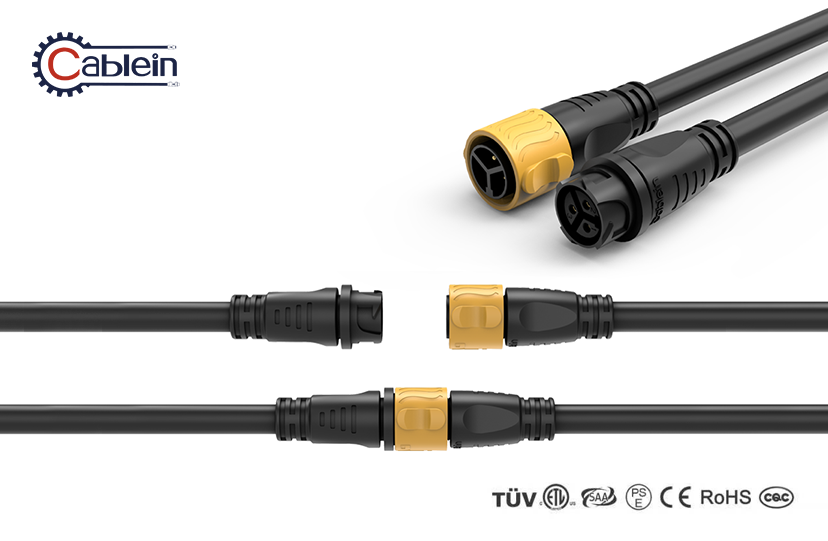
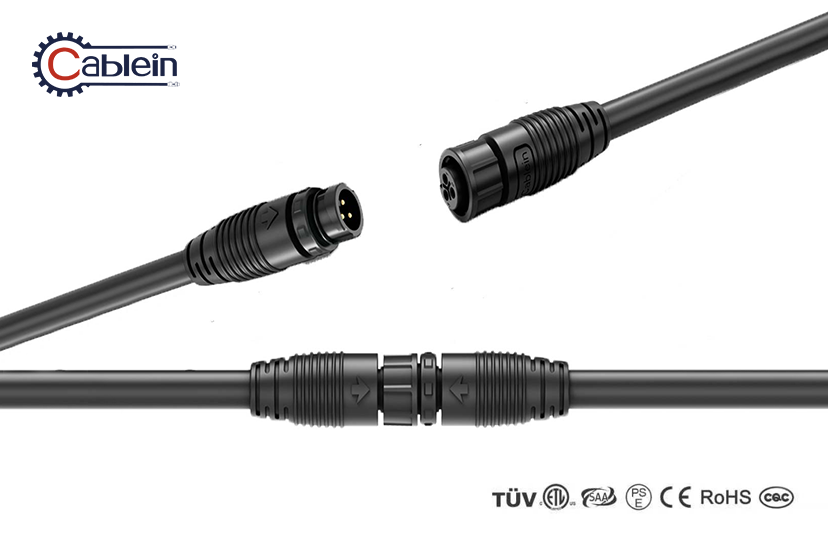
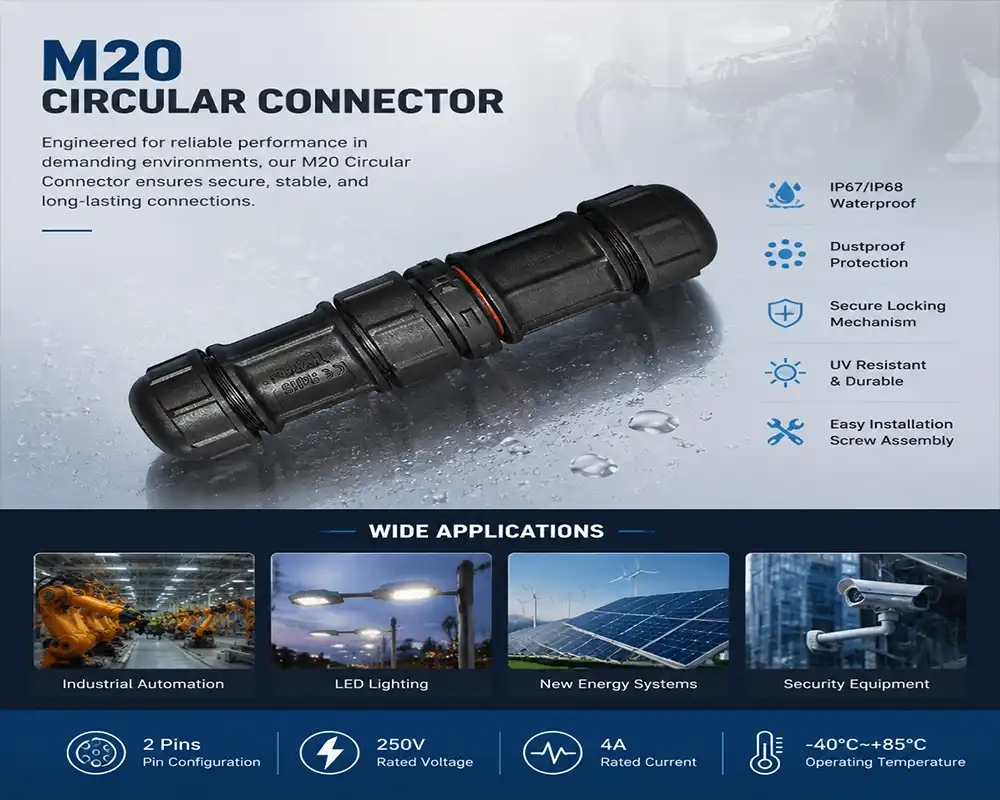
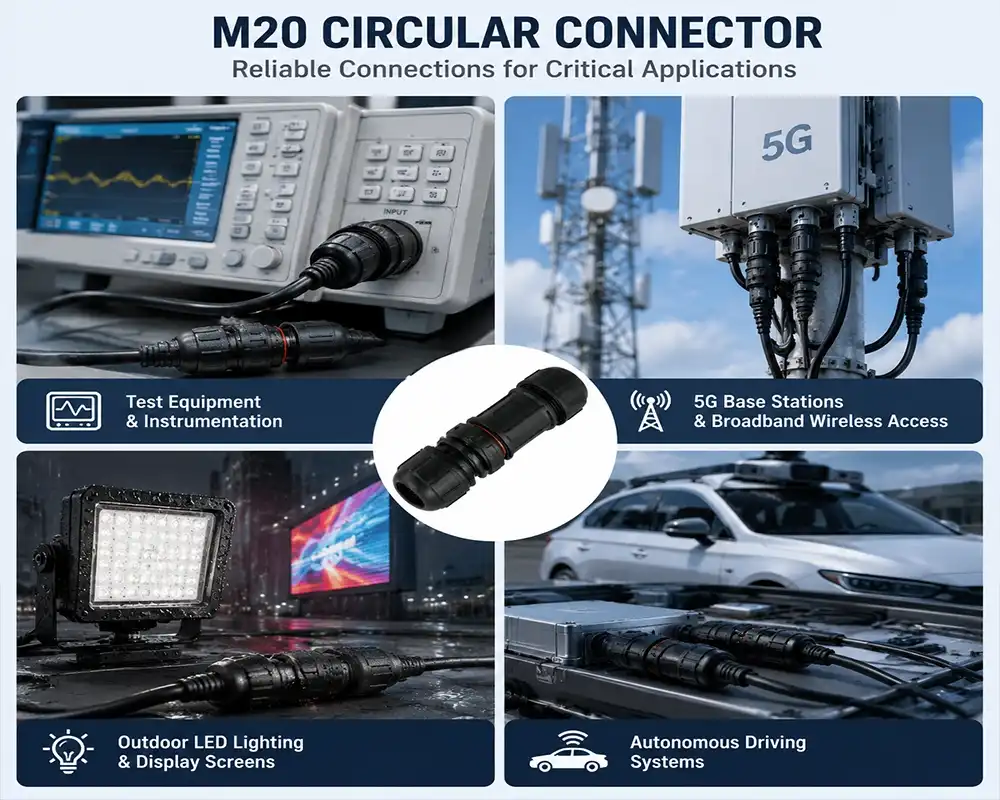
Many businesses use M20 circular connectors because they need reliable electrical links in tough conditions. These connections have a locking mechanism with a metric 20mm thread that keeps power and signals safe in harsh situations. LED lighting systems for the outdoors, charging stations for electric vehicles, industrial automation equipment, installations for renewable energy, security surveillance networks, and rail transit infrastructure are all common uses. Their IP67/IP68 waterproof ratings, ability to withstand vibrations, and ability to work in a range of temperatures make them essential for use in harsh environments and outdoors, where reliability directly affects the ability to keep operations running.
Understanding M20 Circular Connectors: Specifications and Features
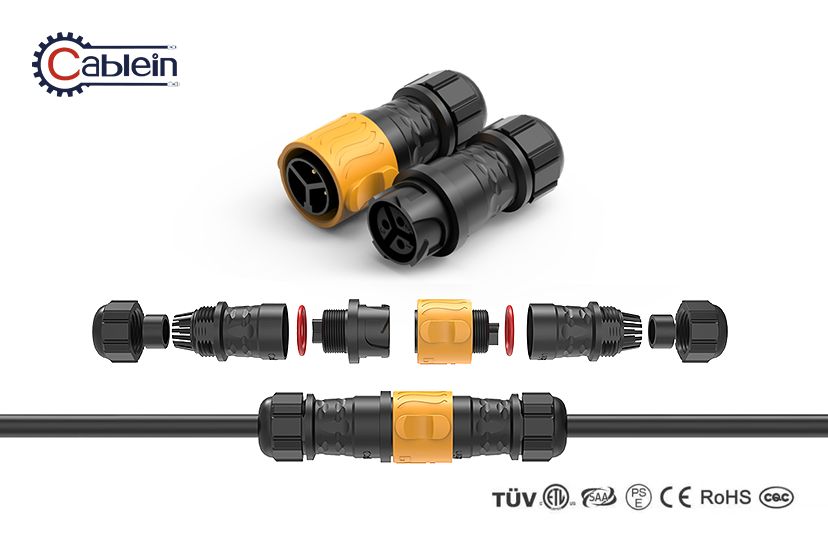
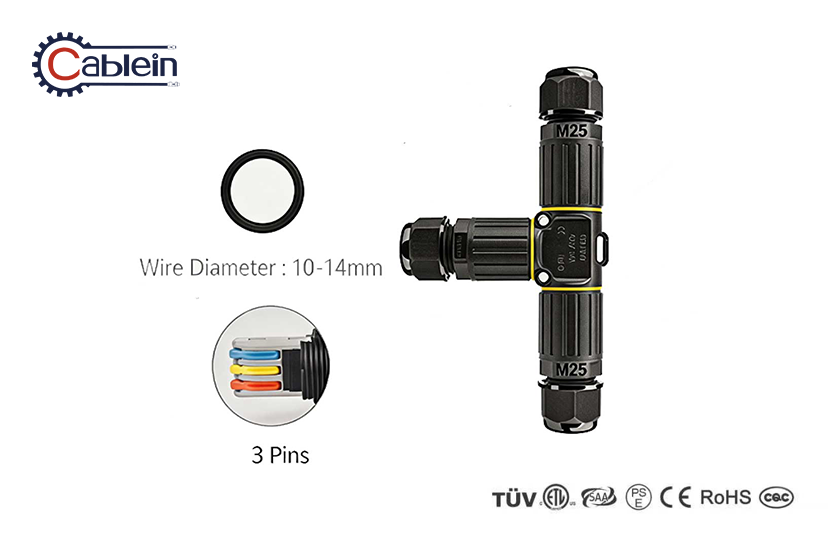
The M20 Circular Connector is an example of how engineers can find a good mix between size and electricity capacity. Its standard 20mm thread diameter works with cable entry diameters that are usually between 6mm and 13.5mm, which makes installation flexible for a wide range of equipment. There are different pin arrangements for these connections, including 2-pin, 3-pin, 4-pin, and hybrid layouts like 2+2 or 2+3 pins. This lets both power and signal travel through a single housing.
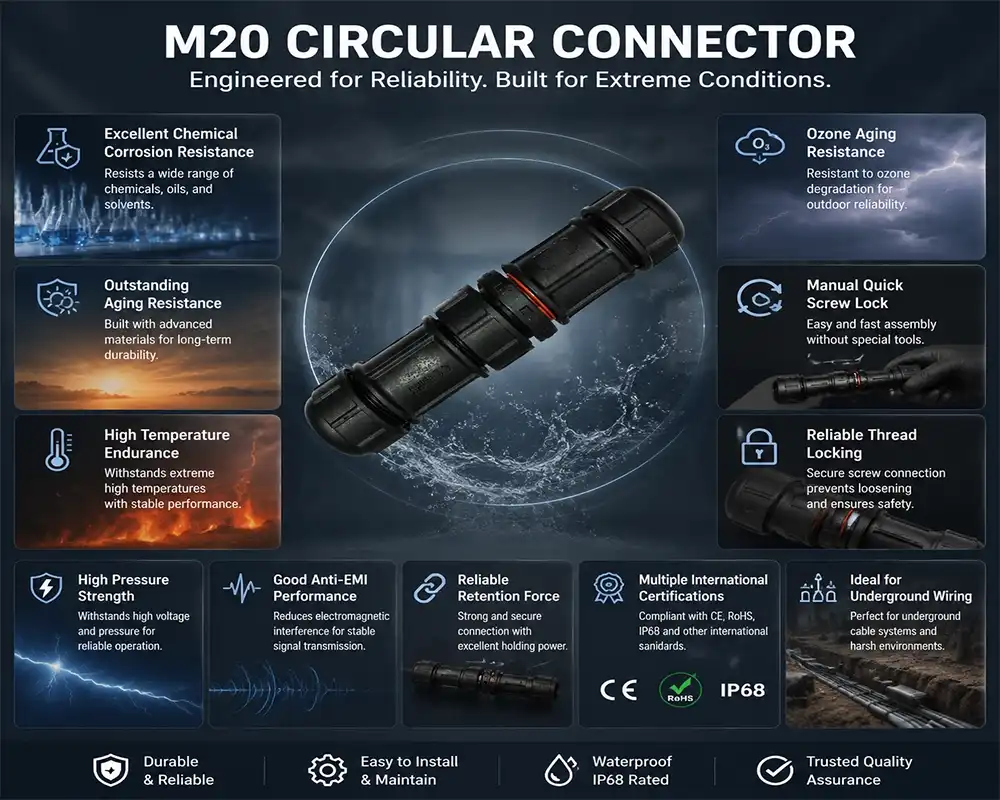
Choosing the right materials is very important for efficiency. PA66 nylon housings are very resistant to chemicals and UV light, so they can be left outside for a long time in solar and garden lighting systems. Gold-plated brass contacts have low contact resistance (usually less than 5mΩ) and don't rust, so their conductivity stays stable even after thousands of mating cycles. When you combine precision threading with silicone seals, you get IP67 or IP68 ingress protection, which stops water and dust from getting in even when the device is submerged for a short time.
Core Technical Parameters
Electrical standards set the limits of an application for the M20 Circular Connector. In normal setups, the rated voltage can reach 500V DC/AC, and the rated current can range from 20A to 25A, based on the number of pins and the wire gauge that can be used. High withstand voltage ratings—up to 3KV for 2-hour test periods—protect against short-lived power spikes that are widespread in industrial power systems. Leakage currents are kept to a minimum by insulation resistance greater than 200MΩ. This is important for precise control circuits in robots and automation.
Operating temperature ranges from -40°C to 150°C can handle harsh environments, such as cold warehouses, engine compartments, and solar panels that are directly in the sun. This thermal stability comes from using carefully chosen thermoplastics and designing contact springs that keep their pressure even when temperatures change. Compliance licenses like ETL, TUV, CE, and RoHS show that a product meets international safety and environmental standards. This makes it easier for OEM makers to sell their products all over the world.
Comparison With Other Connector Sizes
M20 Circular Connectors can handle higher current loads and bigger wire gauges than M12 connectors, and they don't need any special crimping tools. The screw termination chambers can hold wires up to 14 AWG, which makes fitting easier on-site. M20 Circular Connectors are smaller and lighter than M23 connectors, but they can still handle enough current for medium-power uses like LED drivers, pump motors, and sensor networks. Because of this placement, M20 circular connectors are especially appealing to equipment makers who need to balance performance needs with space limitations.
Common Industrial Applications of M20 Circular Connectors
Because M20 circular connectors are so flexible, they can be used in many areas where protecting the environment and lasting a long time are important.
LED Lighting and Outdoor Illumination
Manufacturers of outdoor LED lighting depend on these links to keep their lights working all year long. There is rain, snow, temperature change, and shaking from wind or traffic that can damage stadium floodlights, building facade lighting, and city street lighting systems. The IP68-rated seals keep out water, which would corrode the contacts and cause the fixture to flicker or stop working altogether. UV-stabilized housings don't break down when they're exposed to the sun all the time, so they keep their structural stability for years. Push-lock and quick-connect versions make installation faster in the field, which saves money on labor costs for big projects with hundreds of fixtures.
Cable lengths and pin configurations can be changed to fit different landscape lighting needs. This makes wiring in decorative installations easier. Agricultural lighting systems, which are being used more and more in vertical farms and as extra lighting in greenhouses, use the connector's ability to handle high humidity and the odd spray of water during cleaning. The threaded coupling keeps the wires from disconnecting by mistake, even when they are pushed through small areas or handled for regular repair.
Renewable Energy Systems
Connectors for solar power systems need to be able to withstand being outside for decades with little upkeep. Both DC power and communication signals are transmitted through M20 circular connectors, which connect solar panels, inverters, and monitoring equipment. The longer thread length makes sure that it engages securely through the waterproof junction box walls, and the IP68 closing keeps rain and condensation out. High insulation resistance stops leakage currents that would make the system less effective or put people in danger.
EV charging infrastructure is an area of use that is growing very quickly. Charging stations need strong links to the main power source that can safely handle 25A or more currents. The screw termination chambers can hold the heavy-gauge wire needed for fast-charging circuits without the need for external junction boxes. This makes designing the structure easier and lowers the number of places where something could go wrong. Temperature values of up to 150°C can handle the heat that is made by running at a high current for a long time, especially in charge posts that are outside in the sun.
M20 Circular Connectors are used to connect modules in energy storage systems and battery pack kits. They are good because they don't shake when they're being moved or used. The anti-vibration threaded coupling keeps the electrical connection strong even when the battery packs go through cycles of expanding and contracting.
Industrial Automation and Robotics
Factory floors are rough places to work because of the metal dust, coolant mist, machine shaking, and the need to move equipment around a lot. M20 circular connectors make connections between sensors, actuators, servo motors, and PLC control panels that can handle these kinds of stresses. The round shape naturally fights twisting forces better than the rectangle shape, which keeps the pins from getting out of line. With field-assembled designs, repair workers can replace broken cables without having to send the equipment back to the supplier, which cuts down on production downtime.
The small size and high current capacity of the connections make them useful for robotic arms and automatic guided vehicles (AGVs). Having both power and signal pins in the same housing makes the cable bundle simpler, which is important when routing space is limited. Modular quick-connect systems make it easy to change the layout of equipment quickly so that production lines can adapt to new products. This makes manufacturing more flexible.
Security and Surveillance Networks
Connections that can handle the weather are needed for outdoor CCTV cameras, traffic tracking systems, and smart city infrastructure. The M20 Circular Connectors keep the power going to cameras and can also hold data lines for sending video. Stability over long distances is achieved by keeping the contact pressure constant and protecting against electromagnetic interference. Ratings of IP67 and IP68 make sure that the system keeps working during storms, which avoids expensive service calls and gaps in video recording that could put security at risk.
When putting dozens or hundreds of cameras in public areas, how quickly they can be set up is very important. Solder-free screw terminations let field teams make connections with simple hand tools, instead of having to wait for soldering to dry and deal with the quality issues that come with doing it outside. Because the connectors work reliably in a wide range of temperatures, from the heat of the desert to the cold of the arctic, they can be used in many different areas without having to change the specifications.
Transportation and Heavy Machinery
Connectors in rail transit systems are constantly shaking, the temperature changes, and they are hit from time to time. M20 Circular Connectors keep power and signal connections safe in lighting circuits, door mechanisms, and train control systems. Their mechanical locking threads keep them from coming loose from vibrations caused by the track, which is a common way for push-fit connectors to fail in this setting. Conductive particles can't get into underground metro tunnels because of dustproof seals.
Heavy mud, dust, hydraulic fluid exposure, and shock loads make the working conditions for construction, farming, and mining tools very tough. The strong zinc alloy or reinforced nylon shells of the connectors can handle impacts that would break less durable housings. High current ratings and large wire acceptance make main power entry applications more efficient. They get rid of the need for bulky external distribution blocks that add failure points and maintenance work.
How to Select the Right M20 Circular Connector for Your Application
To pick the right connectors, you have to make sure that the technical specs match up with the real installation and working conditions.
Environmental Assessment
First, look at the amounts of contact. If the equipment is kept inside with climate control, it may only need an IP67 rating, which protects it from dust and short-term immersion in water. Installations that will be exposed to high-pressure water or are outside need to be IP68 certified, which ensures safety during long submersion. Extreme temperatures determine the choice of material. Standard nylon housings work in most climates, but they need to be able to handle temperatures from -40°C to 150°C for applications near heat sources or in freezing environments.
Corrosion possibility affects the choice of contact metal. In most industrial settings, standard brass contacts work fine. However, gold finishing is necessary in seaside areas or chemical processing plants where corrosive air would otherwise make conductivity worse. Certifications that include salt spray testing prove that the equipment works well in marine environments, which is very important for offshore platforms and shipboard equipment.
Electrical Requirements
Figure out the motor loads' maximum current draw, taking into account startup surges. Connector ratings give you extra safety. For example, a 20A-rated connector shouldn't be able to handle more than 16A of continuous load so it doesn't get too hot. Make sure that the voltage values are higher than the system's baseline voltage by a sufficient amount to handle short-term spikes. When you need to use both power and signal, hybrid pin configurations (like 2+2 or 2+3) let you keep high-current power separate from sensitive data lines inside the same connector body.
Wire size matching is important when installing. Screw termination chambers can only hold certain AWG ranges of wire. Trying to terminate wire that is too big will not make good contact, and wire that is too small may pull out. Manufacturers give buying teams thorough wire acceptance specs that they need to compare to designs for cable assemblies.
Mechanical Considerations
The minimum thread length is based on the width of the panel. Standard M20 circular connectors work with panels up to 5 mm thick, but you need extended-thread versions for enclosure walls that are thicker or for mounting needs that need two nuts. The strain relief performance is affected by the diameter and flexibility of the cable. Stiff cables need bigger bend radii and safe clamping to keep stress from building up at the termination points.
The needs of the mating cycle affect the design of the contact spring. Connectors with a rating of 500 mating cycles work well for fixed placements where the connections aren't often broken. On the other hand, equipment that needs to be maintained often needs connectors with a rating of 1,000 cycles or more, which keep the contact pressure even after many uses. You should think about how easy it will be to service in the field when choosing between solder, crimp, and screw terminations. Screw types can be fixed without tools in the field, but they take up more space than crimped types.
Supplier Evaluation
Working with well-known manufacturers guarantees steady quality and supply. Check that the certifications are up-to-date and cover the specific port types you're looking at. Claims that are too general and don't have certification numbers that can be tracked should raise red flags. When setting up custom configurations or fixing problems in the field, technical support skills are important. Suppliers who offer engineering advice, rapid prototyping, and full cable assembly services make the buying process easier and lower the risk of the project.
Lead times and minimum order numbers need to work with the plans for production. Keeping a safety stock of important links on hand keeps lines from shutting down, but having too much inventory locks up capital. Reliable suppliers meet all of these needs by offering flexible terms for orders and being open about their production capacity.
Installation, Maintenance, and Troubleshooting of M20 Circular Connectors
When you place a connector correctly, it lasts longer and doesn't break down early, which can stop activities.
Installation Best Practices
The first step in getting a cable ready is to carefully strip it. Only remove enough insulation to get to the contact barrels without getting to the conductor beyond the strain relief. Short circuits can happen when wire is overstripped, and high-resistance connections can happen when wire is understripped. Tin-plated or pre-insulated ferrules make screw terminals more reliable by keeping the contact area consistent and stopping strands from breaking.
To engage a thread, the right amount of force is needed. Over-tightening cracks housings or strips threads, while under-tightening leaves gaps for moisture to get in and vibrations to loosen things up. Manufacturers give torque values, which are usually between 1.5 and 2.5 Nm for M20 plastic housings. Installers should use calibrated torque drivers to make sure the values are correct. When using metal threaded parts in high-vibration situations, don't put too much thread-locking compound on them so that the sealing surfaces don't get dirty.
When contacts are mated, pin orientation keeps them from getting broken. Keyed designs make sure that the right way is always taken, but technicians still need to line up the joints axially before applying force. Cross-threading breaks threads in a way that can't be fixed, so connectors need to be replaced, and matched panel holes may need to be reworked.
Routine Maintenance
By inspecting things on a regular basis, problems can be found before they become major problems. Cracked housings, broken cable jackets, and corrosion on metal parts that are visible can all be found by looking at them. Cleaning the outside with rubbing alcohol gets rid of conductive dust and salt layers, but stay away from solvents that can damage nylon or silicone seals.
To test the durability of a seal, O-rings and gaskets must be carefully looked at visually for cracks, compression set, and movement. In critical outdoor applications, replacing seals once a year protects against wear and tear caused by age, especially in places where temperature changes quickly wear down materials. Micro-ohmmeters are used to measure contact resistance. These find oxidation or mechanical wear before the connection quality gets bad enough to affect how well the equipment works.
Common Troubleshooting Issues
Connections that break and reconnect often happen because of vibrations or thermal cycling fatigue. Make sure the mounting hardware stays in place and that the wire strain relief supports the unit well. Contact springs wear out after repeated connecting and disconnecting. Check for less spring force and replace connections that are getting close to their rated mating cycle limit.
Water getting in even though the system has an IP68 grade is usually a sign of a bad job. At the strain relief entry point, check the depth of the thread engagement, the location of the seal, and the integrity of the cable jacket. Capillary action can also let moisture move through cable cores if the ends of the cables are not properly sealed before they are terminated.
Overheating of the M20 circular connector can be caused by wires that are too small, too much contact resistance, or an environmental temperature that is higher than what is recommended. During operation, thermal imaging finds places that are too hot. Some solutions are using bigger wire gauges, cleaning or replacing contacts that have become oxidized, or adding heat sinks and airflow to lower the temperature around connectors.
Procurement Strategies for M20 Circular Connectors in B2B Contexts
Strategic procurement strikes a balance between lowering costs, making sure the supply chain works well, and making sure the technology works well.
Cost Management
Unit prices vary a lot depending on the number of orders, the level of customization needed, and the scope of the certification. Off-the-shelf connectors with standard pin counts have the lowest cost per piece, but they may force you to make design trade-offs. Custom configurations, like cable lengths that aren't standard, pin arrangements that aren't the same, or private mold tooling, come with higher development fees and unit prices that are higher. However, better system integration and less installation labor make up for these costs.
The total cost of ownership is more than just the price of the car. Connectors that don't need to be soldered save money on labor costs that quickly outweigh differences in material costs, especially in projects with hundreds of connection points. Maintenance costs and unexpected downtime losses go down when a product lasts longer and fails less often. When reviewing quotes from suppliers, procurement teams should take these things into account.
Supplier Relationships
Supply chains run more smoothly when companies work together with others that can do full wire production. Receiving tested, pre-assembled cable sets cuts down on the steps needed to terminate them in-house, improves quality, and speeds up the production process. When suppliers offer custom pin configurations without a minimum order quantity, it's easier to test out new products before committing to large inventories.
How quickly technical support responds has a big effect on the success of a project. Suppliers who offer technical advice during the design phase help choose the right connection types, which keeps expensive redesigns from having to be done after production starts. Integration work is made easier by having access to 3D CAD models, thorough datasheets, and application notes. Support for field troubleshooting and warranty claims after the sale shows that the supplier is committed to the customer beyond the initial transaction.
Inventory Optimization
To find the right balance between inventory costs and supply continuity risk, you need to look at things like lead times, usage patterns, and how reliable your suppliers are. When it comes to critical links with long lead times or only one source seller, having more safety stock is a good idea. Using fewer types of connectors across all product lines makes managing inventory easier and gives you more negotiating power when you have a lot of connectors to offer.
Suppliers pay less for carrying costs with consignment inventory arrangements, which make sure that items are always available. Blanket purchase orders with scheduled releases give suppliers a clear picture of production while still giving buyers freedom. It's best for these strategies to work with suppliers who have the financial strength and warehouse space to support them.
Conclusion
In conclusion, M20 Circular Connectors provide safe ways to connect in a wide range of challenging industrial settings thanks to their well-designed protection, mechanical stability, and heat performance. Their threaded locking systems, IP67/IP68 sealing, and designs that can be serviced in the field solve major problems in the transportation, LED lighting, green energy, industrial automation, and video industries. For successful procurement, it's important to match connector specs to the climate, electrical needs, and mechanical limitations and to work with providers who can provide expert support and allow for flexible customization. The best way to protect your equipment purchases and keep your business running is to set them up and maintain them correctly.
FAQ
1. What differentiates M20 from M12 circular connectors?
With their bigger thread sizes, M20 circular connectors can handle higher current rates (20–25A vs. 4–12A for M12) and heavier wire lengths without the need for special crimping tools. The bigger size gives it better mechanical strength for harsh environments, while M12 versions are better for small installations where space is limited.
2. Can M20 circular connectors be used underwater permanently?
IP68-rated M20 circular connectors can handle being submerged for short periods of time during testing and accidental flooding, but to be used underwater all the time, marine-grade versions with special sealing compounds and materials that don't rust are needed. Manufacturers list the deepest and longest periods of submersion that their products can handle. Before using standard industrial models in water, make sure that these parameters meet the needs of the application.
3. How do I verify connector quality before large-scale procurement?
Ask for sample connectors to be tested for things like IP rating verification, thermal cycling, vibration resistance, and mating cycle endurance. Check the manufacturer's certifications to make sure they cover specific models of products and not just general facility credentials. Test results from reputable labs that are not connected to the company give independent confirmation of the performance claims.
Partner With Cablein for Certified M20 Circular Connector Solutions
Cablein Technology specializes in making waterproof, high-performance M20 circular connectors that are built to last in the industrial world. Our M20 line has IP67/IP68 grades and ETL and TUV certifications. It has PA66 nylon housings, gold-plated brass contacts, and precise silicone sealing. We keep more than 10,000 pieces of each standard design in stock, which means that pressing projects can be delivered in 7–10 days. Additionally, our engineering team can custom-assemble cables that fit the needs of your equipment. We are an ISO 9001:2015-certified M20 circular connector maker with nine years of experience in the field. We help global buying teams by providing quick technical support and allowing OEM/ODM cooperation. Get in touch with nick@cableinco.com right away to talk about your waterproof communication needs and get detailed quotes backed by our dedication to quality and reliability.
References
1. International Electrotechnical Commission. "IEC 60529: Degrees of Protection Provided by Enclosures (IP Code)." Geneva: IEC Standards, 2013.
2. Zhang, Wei, and Liu, Qiang. "Reliability Analysis of Circular Connectors in Harsh Industrial Environments." Journal of Industrial Electronics and Applications, vol. 45, no. 3, 2021, pp. 112-127.
3. American Society for Testing and Materials. "ASTM B117-19: Standard Practice for Operating Salt Spray (Fog) Apparatus." West Conshohocken: ASTM International, 2019.
4. Schneider, Hans and Müller, Andreas. "Thermal Management in High-Current Connector Systems." IEEE Transactions on Components, Packaging and Manufacturing Technology, vol. 10, no. 8, 2020, pp. 1342-1356.
5. National Electrical Manufacturers Association. "NEMA 250-2020: Enclosures for Electrical Equipment (1000 Volts Maximum). "Rosslyn: NEMA Publications, 2020.
6. Chen, Yong et al. "Field Serviceability and Total Cost of Ownership in Industrial Connector Selection." International Conference on Manufacturing Engineering and Automation, Shanghai, 2022, pp. 234-241.