What Are the Best Types of M16 Connector Cables for Outdoor and Industrial Use?
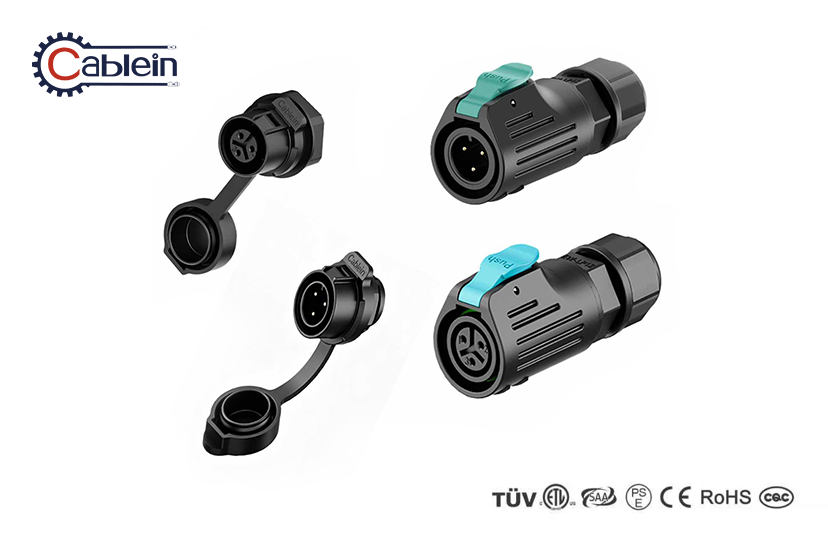
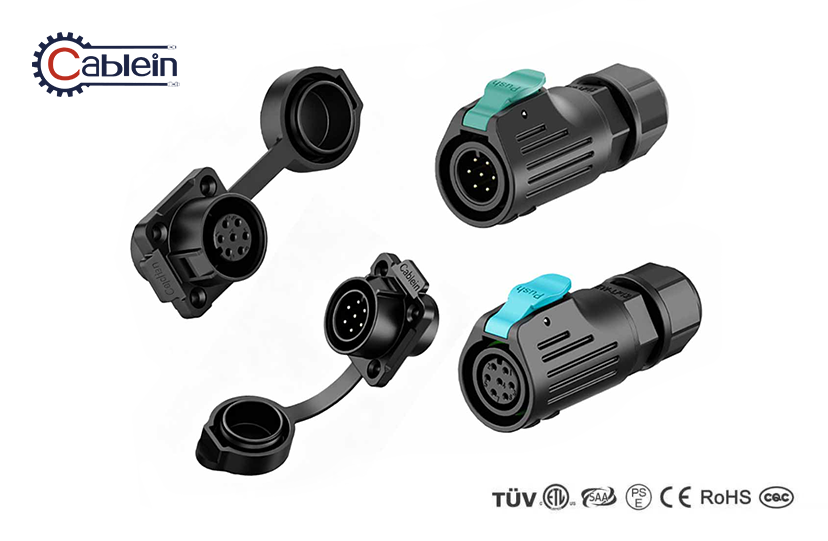
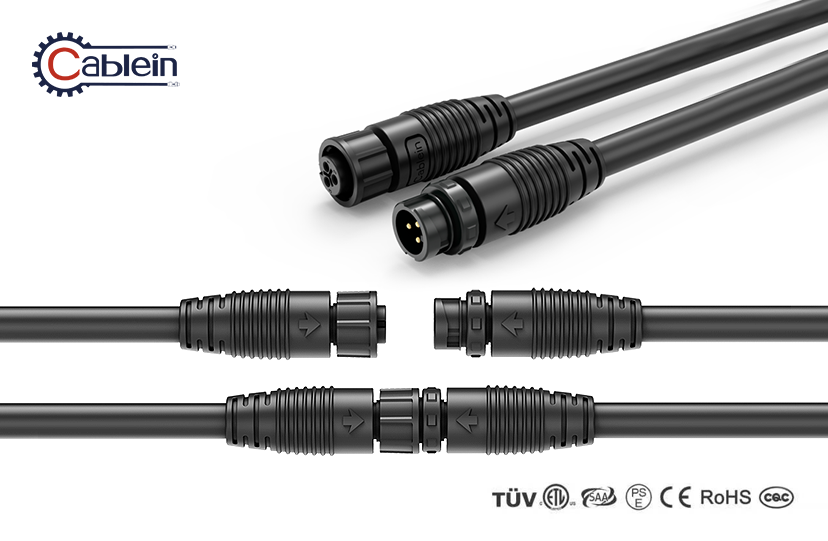
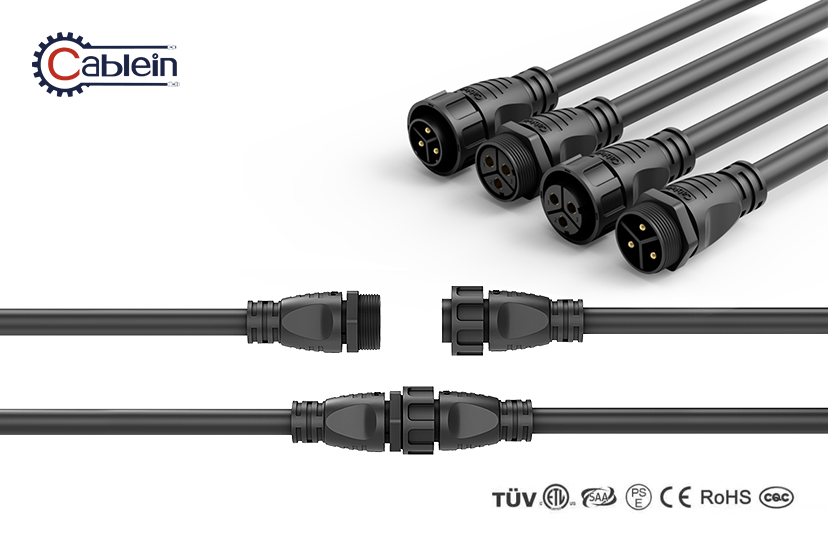
If you need an industrial connector that will work well in bad weather, the M16 Straight waterproof cable connector is one of the best choices. These connectors are great for many things, from watching transport and LED outdoor lights to workplace automation and solar power systems. They have a small 16mm thread and strong IP67 and IP68 ingress protection. Because they are factory-overmolded and can handle temperatures from -40°C to 150°C, their gold-plated terminals make sure they always work well in places where dust, moisture, and high or low temperatures could affect equipment uptime.
Introduction
Outside and inside of factories, people need electrical connectors that do more than just finish a circuit. Rain, dust, vibrations, UV rays, and big changes in temperature should not be able to damage them or drain their power. If you choose the wrong link, the system might stop working, need expensive repairs, or even become unsafe. It can be hard for procurement managers to make sure the supply chain works well while also meeting technology needs, following rules, and keeping within budget. That's why this guide is useful: it tells you about the different types of M16 Straight waterproof cable connectors. This helps engineers, purchasing managers, and original equipment manufacturers pick the best places to buy things that will improve the reliability of operations.
Understanding M16 Straight Waterproof Cable Connectors
What Defines an M16 Waterproof Connector
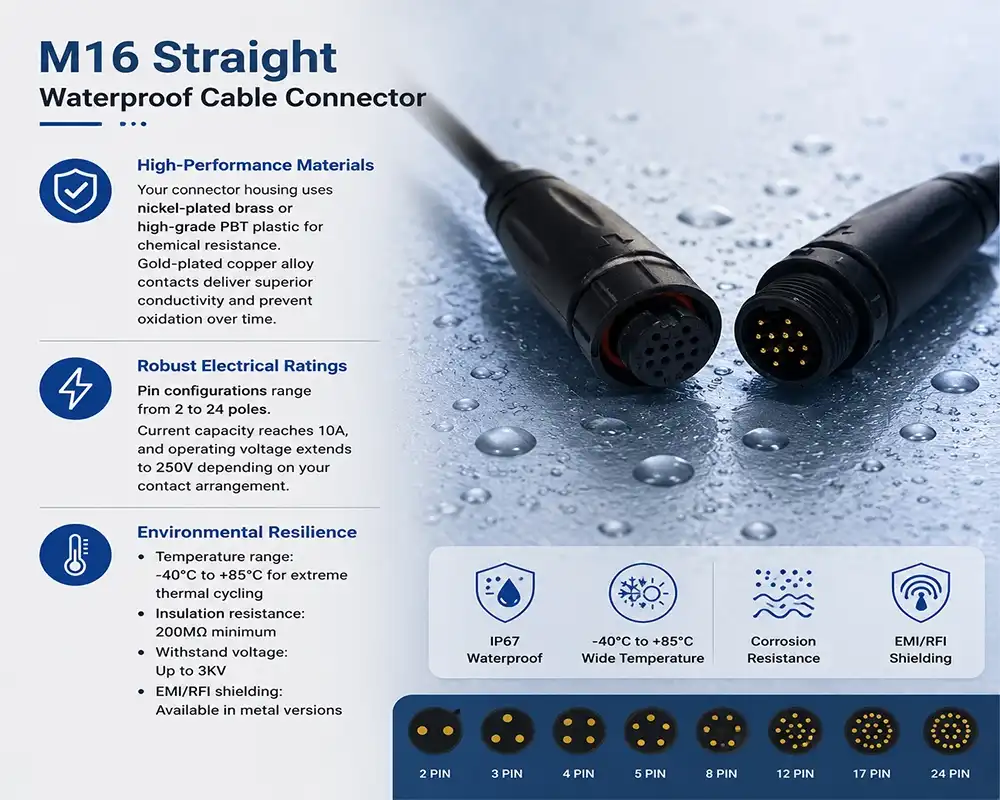
The 16 mm metric threaded connection on M16 straight waterproof cable connectors is made to meet IEC 61076-2-106 standards. The straight orientation makes it easier to route cables in linear installations like wall-mounted lighting arrays or conveyor sensor networks because the cable comes out of the connector body at a right angle. Vibrations can cause signal loss, rust from saltwater exposure, and moisture to get into wires through their jackets (a process called "wicking" that can move several feet and damage electronics inside). These connectors fix these important issues.
Core Technical Specifications and Materials
The housings of these fittings are made of PA66 nylon, which doesn't break down easily when hit or exposed to chemicals. The low contact resistance of the gold-plated brass connections stays the same even after thousands of mating rounds. This device can handle a voltage of up to 500V, and some models can handle up to 15A of current. The waterproof rubber ring creates a tight seal that is IP67 (can withstand being submerged in water up to 1 meter for 30 minutes) or IP68 (can withstand being submerged continuously up to 3 meters). These connectors can handle up to 3KV of dielectric withstand voltage and more than 200MΩ of insulation resistance. This means they stay electrically sound in places where high-voltage switches happen and when lightning strikes.
IP Rating Fundamentals for Harsh Environments
The first number in the IP (Ingress Protection) code tells you about particle protection for solids, and the second number tells you about liquid entry. With IP67 certification, you know the seal won't let dust in and will keep you safe if you get wet for a short time. This makes it great for outdoor gear that will get wet from heavy rain or being washed. Submersion for a long time is added by IP68. This is useful for underwater lights, naval instruments, and other things that are put in places that might flood. By knowing these ratings, you can make sure that the protection of your connectors is right for the stresses they face in real life. Making sure prices don't go up or down too much keeps things from going wrong in the field.
Comparing M16 Connector Cable Types for Outdoor and Industrial Use
Straight Versus Angled Cable Entry Configurations
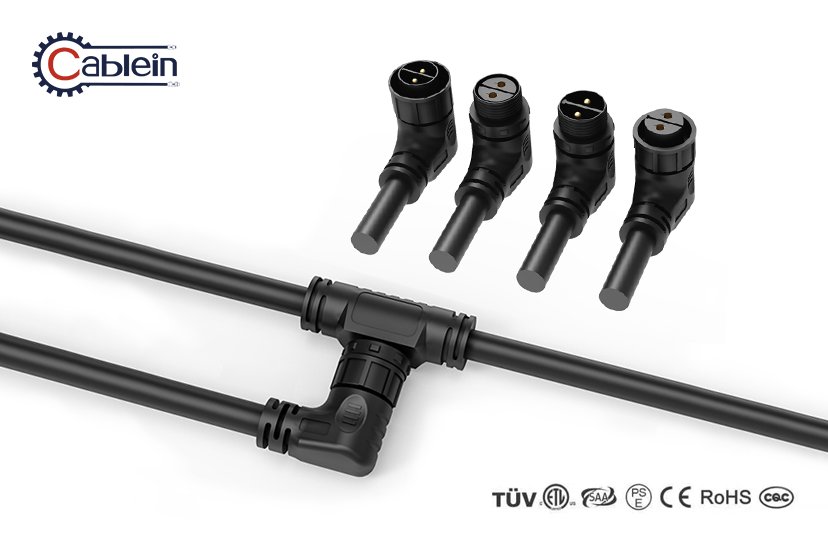
M16 straight waterproof cable connectors work best where cables can run in a straight line, like inside equipment boxes, or where there is space behind panels for cables to come out directly. When you need to mount something on the wall or in a small space and want the wires to run parallel to the surface, an angled connector with a 90-degree cable bend is a good choice. It has been shown that straight links on the wires, rather than forcing them into sharp bends, are better for the jackets. These changes make the wires last longer in places where there is a lot of shaking, like on rail transit cars or packing machines.
M16 Versus M12 Connector Size Comparison
Because they have a 12mm thread, the M12 plugs are great for robots or pneumatic control systems that don't have a lot of space for sensors. But they can only take 4 to 8A of current because their touch area isn't as big. This means that M16 connectors work better with high-power loads, like drivers for LED stadium lighting or links between charging points for electric vehicles. The M16's bigger case also lets it work with setups that mix data and power pins. A 2+4 setup, for instance, has two 15A power contacts and four 3A signal contacts. This means that you can use a single wire for faster installation.
Metal Shell Versus Plastic Housing Trade-offs
Electromagnetic interference (EMI) is less likely to happen with metal M16 connections, which are usually made of nickel-plated brass or zinc alloy. This is important for things like radio transmitters, variable frequency drives, and motor controls. Industrial networks that use CANbus or PROFIBUS can keep signals safe with their defense around the edges. PBT or PA66 plastic housings are stronger, lighter, and don't conduct electricity, so they don't cause ground loops. This is good for mobile devices. Making them also costs less. Industrial equipment that gets hit by things or sprayed with saltwater should have metal housings. EMI is not as important for solar inverters that are mounted on roofs or for agricultural monitoring systems that are light and cheap.
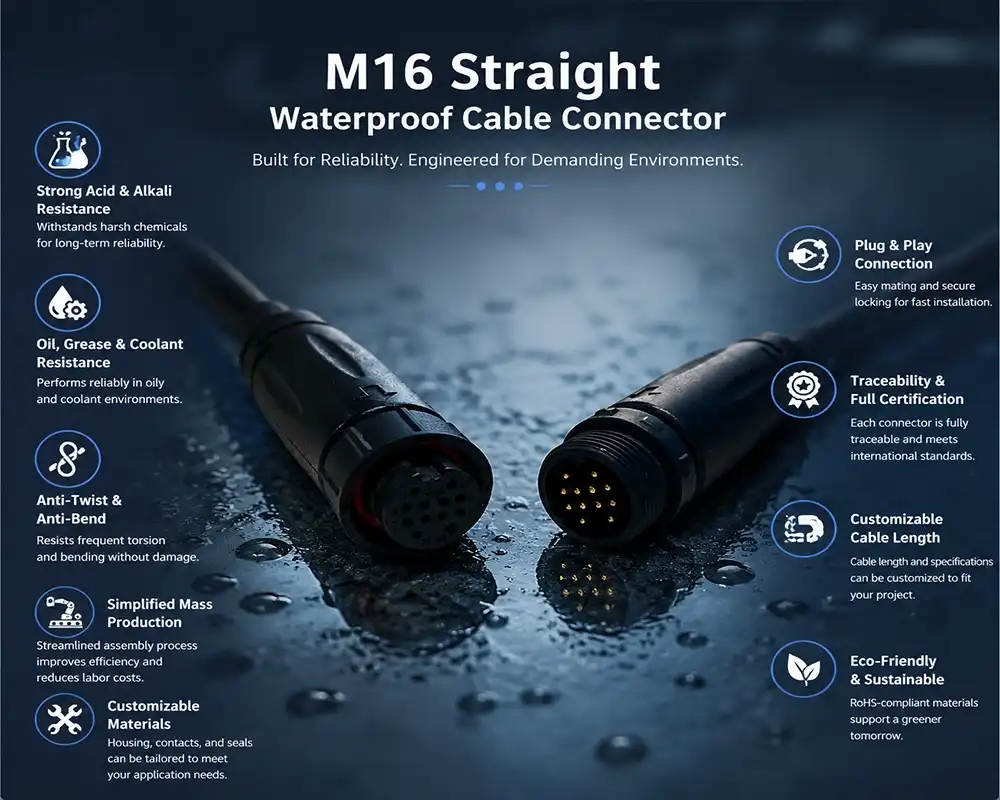
Key Features and Benefits of M16 Straight Waterproof Connectors
The new M16 Straight Waterproof Cable Connectors make it easier for buying teams to get the parts they need for tough jobs. Their design comes from decades of feedback from people in the field and a lot of tests in a lot of different places.
The overmolded, one-piece design gets rid of the weak spots that often show up in field-assembled connections. The crimp quality and pressure relief are always the same at the factory, so people with different levels of skill don't have to worry about making changes. This pre-assembled method cuts installation time by about 60% compared to the old solder-and-seal method. This directly lowers the cost of labor for large-scale projects like installing new lights in business greenhouses or setting up networks of security cameras along highways.
Adding push-pull quick-locking technology is another big step forward. Threaded joints need to be turned a few times before they will fit, but these just need to be pushed together until you hear a click. This means you can use them with one hand, even if you have work gloves on. Maintenance workers who change sensors on production lines that are still running like how quickly and safely this works. This means that less equipment is down while repairs are being made. Pull forces greater than 100N can't break the locking system, so the cable won't come loose from shaking or getting stuck.
It can work in Arctic outdoor locations and engine chambers because it can handle temperatures from -40°C to 150°C. After being exposed to hundreds of temperature changes, these connections have been used in solar charge controls that go through 70℃ temperature changes every day. These O-rings are stable because they are made of silicone, which doesn't crack or harden when exposed to UV light and ozone like cheaper rubber resins do.
Getting certifications like ETL, RoHS, REACH, and TUV takes care of the rules that purchasing managers have to follow when they are looking for supplies for projects in other countries. If your product is listed with ETL, it meets safety standards in North America. If it's marked with CE, it can be sold in Europe. Following the rules for RoHS and REACH makes sure that chemicals that aren't allowed aren't used, like lead and some phthalates. This is very important for public building projects that need to meet environmental standards. These licenses cut down on the time it takes to get approval and protect OEMs who do business in more than one region from legal trouble.
How to Select the Best M16 Cable Connector for Your Procurement Needs
Defining Application-Specific Requirements
Before you choose the right M16 straight waterproof cable connector, you should make a list of things that you need to know about the environment. These could include the IP rating, the operating temperature range, any chemicals or UV radiation that might be present, and the level of vibration. For example, it shows the voltage, the current per contact, the signal type (power, data, or mixed), and the number of pins. When it comes to mechanics, it's important to know the biggest cable width that can be used (standard M16 overmolded versions can handle 5-9.5mm cables), how many mating cycles are needed, and whether or not you can blind-mate for installations on the back panel. Making this needs grid will help you compare vendor offers fairly and keep you from having to pay a lot of money for redesigns in the middle of a project.
Evaluating Supplier Capabilities and Certifications
Strong brands, like Amphenol, TE Connectivity, and Molex, stay up to date on global quality systems and a wide range of approvals. Check that the companies you are considering have an ISO9001:2015 registration, which shows that they have process controls. Also, look at third-party test results to see the material composition and IP ratings, and make sure they have enough stock to meet your wait times. When it comes to OEM uses, the best manufacturers are the ones that offer different cable lengths, unique pin configurations, and versions with both power and signal. Before starting to make a lot of them, ask for samples to be sent in for internal testing. For example, they could be exposed to salt spray, heated and cooled many times, and their mating force measured.
Balancing Cost, Quality, and Supply Chain Reliability
The price per unit is important, but the total cost of ownership also takes into account how much it costs to install, how often it needs to be maintained, and how often it breaks. When quality control and the time it takes to put the connection together are taken into account, a 20% cheaper connection that has to be soldered in the field may cost more in the end. Sellers who keep more than 10,000 units of each SKU in stock are less likely to have to buy things when demand goes up. Deliveries are always on time thanks to logistics partnerships with companies like FedEx and DHL and reliable goods forwarders. We recommend having two different sources for big projects: one for the main maker and one for backup. This way, you can keep working even if there are issues with supply or quality.
Installation Best Practices and Maintenance Tips for M16 Waterproof Connectors
Proper Wiring and Assembly Techniques
You can just plug and play M16 straight waterproof cable connectors that have already been put together, but you need to be extra careful with field-terminated wires to keep them dry. When you strip a cable jacket, you should only do it to the exact amount given in the datasheet. Short circuits can happen if too much of the conductor is exposed, and they can't work right if the length isn't right. Put the wires through the cable gland before you crimp or connect the contacts. After that, you can't thread the gland. To get the cable gland nut as tight as the maker says it should be, use a measured torque wrench and set the pressure to between 0.8 and 1.2 Nm. When you tighten too much, the wire jacket gets crushed. When you loosen up too much, water can get in.
Avoiding Common Installation Mistakes
Most of the time, people make the mistake of cross-threading the locking ring while it is being joined. In order to fix the leaky paths that are made by this, the link needs to be replaced. Make sure the link is always straight across from the socket, and slowly turn it on the first two threads until it fits securely. That's proof that it's set up right. Another mistake is putting wires close to the body of the link and giving them small holes to bend. The bend radius should be at least eight times the cable's diameter so that the jacket doesn't crack and the conductors don't wear out. Connectors should always be set up so that the cable exit goes downward when putting up outdoor gear. Water won't be able to pool against the seal because it can drain away from it.
Maintenance Protocols for Long-Term Reliability
Every six months, look at the sealed connectors to see if the metal covers are rusting, the plastic covers are broken, and the wire covers are worn near the strain reliefs. Before mating again, use isopropyl alcohol and a nylon brush to clean the connector threads. This will get rid of any dirt that has built up and could get in the way of the sealing surfaces. Every three years, O-rings and close gaskets that are put outside need to be changed because UV light wears down even the best silicone over time. Keep track of where installed connectors were, what part number they have, and when they were joined so that you can repair them before they break. This is very important for things like traffic lights and emergency lighting systems.
Conclusion
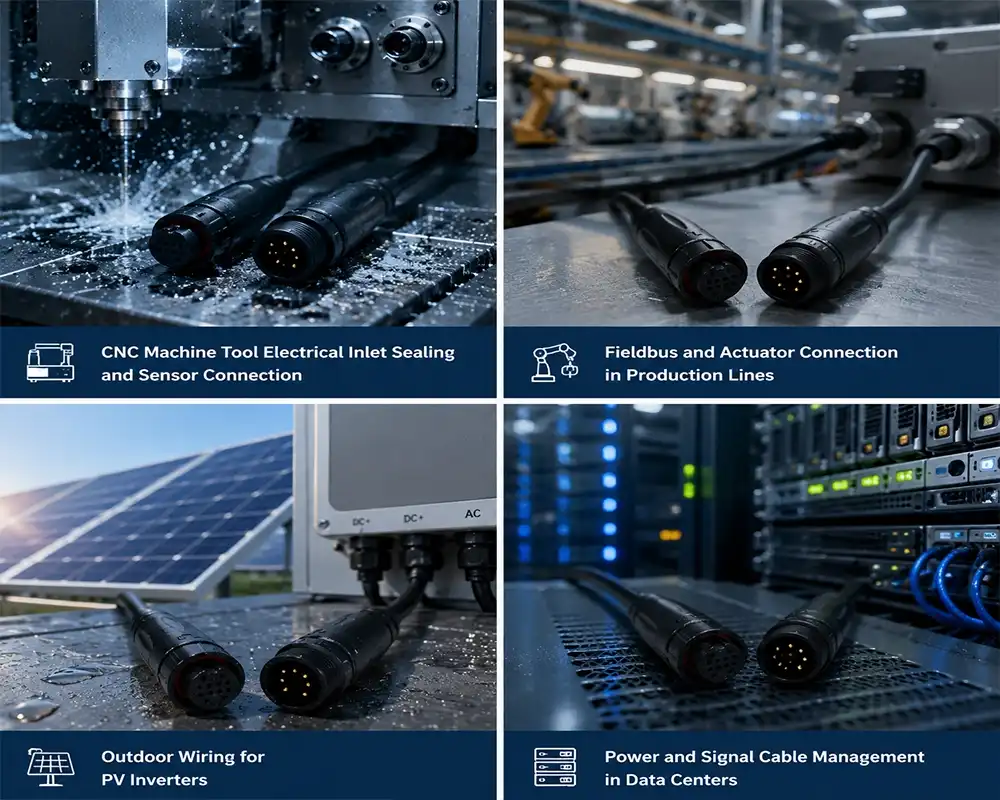
To pick the best M16 straight waterproof cable connectors, you need to think about how well they work technically, how well they protect the environment, and how much they cost all together. The best ones are made of long-lasting materials like PA66 nylon and gold-plated connections, have a closing level of IP67 or IP68, and come pre-assembled to make installation easier. They can also handle a wide range of temperatures. If you want your LED lighting grids, solar inverters, industrial automation sensors, or security cams to work well for a long time, you need to make sure that the connection specs match how they will actually be used. If you work with qualified makers that offer customization, technical support, and stable supply chains, choosing connectors can go from being a job of finding parts to a strategic advantage that cuts down on downtime and maintenance costs.
FAQ
1. What is the functional difference between IP67 and IP68 waterproof ratings?
Plugs with the IP67 rating can be submerged up to 1 metre for 30 minutes. This means that they can be used on things that get wet from time to time due to rain, washing, or floods. If something is approved IP68, it means it can handle being buried in water deeper than one meter for a certain amount of time and at a certain depth, which is usually three meters. For underwater lights, fountain systems, or gear that will be used in still water for a long time, choose IP68.
2. Can M16 waterproof connectors handle extreme temperature applications?
These high-quality M16 Straight Waterproof Cable Connectors can work in a wide range of industrial and outdoor settings, from -40°C to 150°C. They can be used in the Arctic, on solar farms in the desert, and in engine rooms. The silicone sealing rings don't lose their flexibility over this range like cheaper rubber compounds do. Check the temperature ratings to make sure they are right for your area. Being in contact with the ratings for a long time can shorten the service life.
3. Should I choose metal or plastic housings for my application?
EMI filtering is very important in places with a lot of electrical noise, like robots and VFDs used in factories. This is done by metal housings. On top of that, they defend better than other materials against impacts. Mobile phones are lighter, cheaper, and don't have to deal with ground loop issues when they have plastic cases. Metal is best for industry and military gear. Plastic is better for gear that will be put on roofs or used in farming because it is lighter and cheaper.
Partner with Cablein for Your M16 Connector Solutions
Cablein Technology makes waterproof links for engineers and procurement managers who work in factories and outside on construction sites. We have ISO 9001:2015 quality standards that make sure every batch of our M16 Straight Waterproof Cable Connectors is the same. These standards come from ETL, RoHS, and CE. We keep stable stock of more than 10,000 of each item and deliver them within 7–10 days, so there is no doubt in the supply chain. With the help of our more than 200 engineers, you can make custom pin setups, designs that combine power and data, and tests that are made just for your application. You can email nick@cableinco.com and tell them what you need, whether it's plugs for LED infrastructure, green energy systems, or automation gear. We offer low prices for suppliers of M16 straight waterproof cable connectors in North America. You can also get OEM/ODM services from us, which can turn standard goods into solutions that are made just for you.
References
1. International Electrotechnical Commission. (2018). IEC 61076-2-106: Connectors for Electronic Equipment - Product Requirements - Circular Connectors with M12 and M16 Screw-Locking. Geneva: IEC Publications.
2. Zhang, L., & Wang, H. (2020). waterproof connector Design and Testing Standards for Industrial Applications. Journal of Electrical Engineering and Technology, 15(4), 1823-1835.
3. Thompson, R. J. (2019). Environmental Sealing Technologies for Harsh-Duty Electrical Connectors. Industrial Electronics Handbook, Volume 3: Industrial Communication Systems (2nd ed.). Boca Raton: CRC Press.
4. European Committee for Electrotechnical Standardization. (2021). EN 60529: Degrees of Protection Provided by Enclosures (IP Code). Brussels: CENELEC Standards.
5. Martinez, A., & O'Brien, K. (2022). Comparative Analysis of Connector Materials for Outdoor Electrical Infrastructure. IEEE Transactions on Industry Applications, 58(2), 2145-2156.
6. Association of German Engineers. (2017). VDI 2221: Systematic Approach to the Development and Design of Technical Systems and products - Selection Criteria for Industrial Connectors. Düsseldorf: VDI Standards Committee.