Where to buy QC20 quick disconnect connectors online?
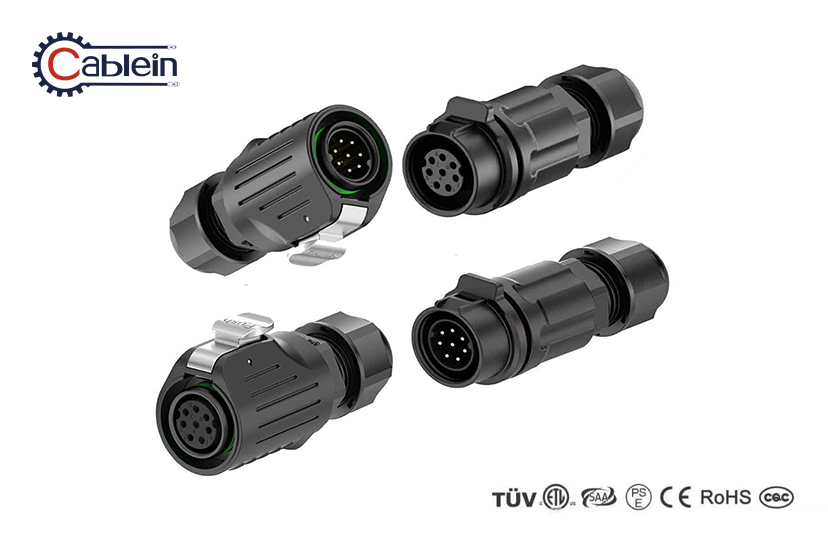
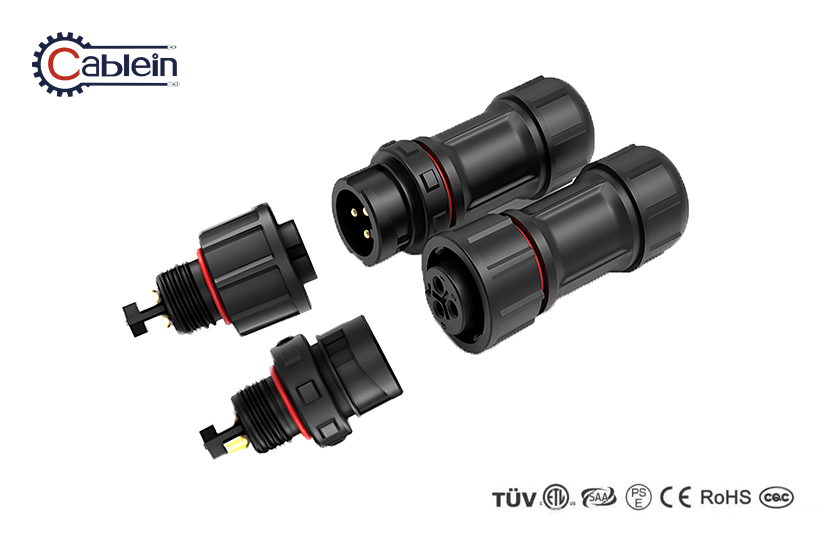
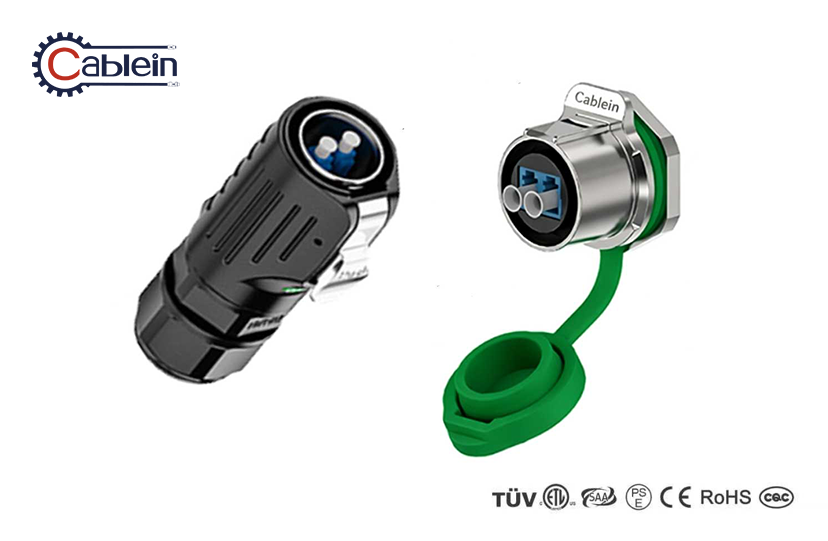
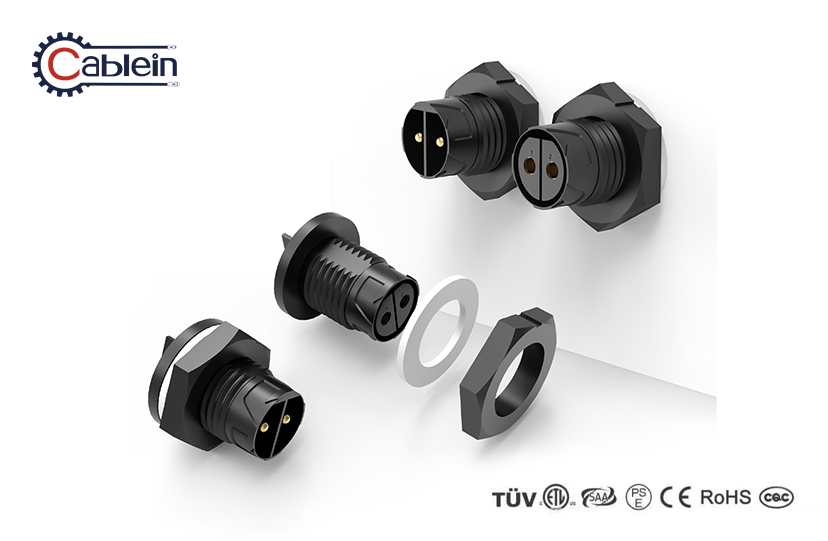
When searching for reliable quick disconnect connectors for industrial power applications, the QC20 quick disconnect Connector stands out as a robust solution that combines high-current handling with waterproof protection. After evaluating multiple sourcing channels, I recommend purchasing from specialized waterproof connector manufacturers who offer ETL and CE certifications, such as Cablein Technology. Their direct factory approach ensures proper technical support, customization flexibility, and compliance documentation essential for B2B procurement. B2B marketplaces like Alibaba and Global Sources provide access to verified suppliers, while authorized distributors offer faster delivery for urgent projects.
Introduction
The QC20 Quick Disconnect Connector is an important part of current industrial infrastructure. It connects electrical systems in heavy-duty machinery, outdoor LED installs, and new energy equipment. Unlike regular plugs, these high-current connections need to keep sending power even when they are exposed to high or low temperatures, moisture, or mechanical vibration. Finding these connectors needs careful thought because if they break, it could lead to expensive downtime, damage to equipment, or safety risks.
This guide will show you how to buy industrial waterproof plugs online, even if it's not easy. I want to make it easier for quality teams to check compliance credentials, help purchasing managers find reliable sources, and help R&D engineers evaluate technical specs. We'll look at reliable online platforms, explain what certifications are needed, and give you application tips that will keep your money safe. This plan will make it easier for you to find suppliers, whether you're upgrading equipment for charging electric vehicles or adding more solar panels.
Understanding QC20 Quick Disconnect Connectors
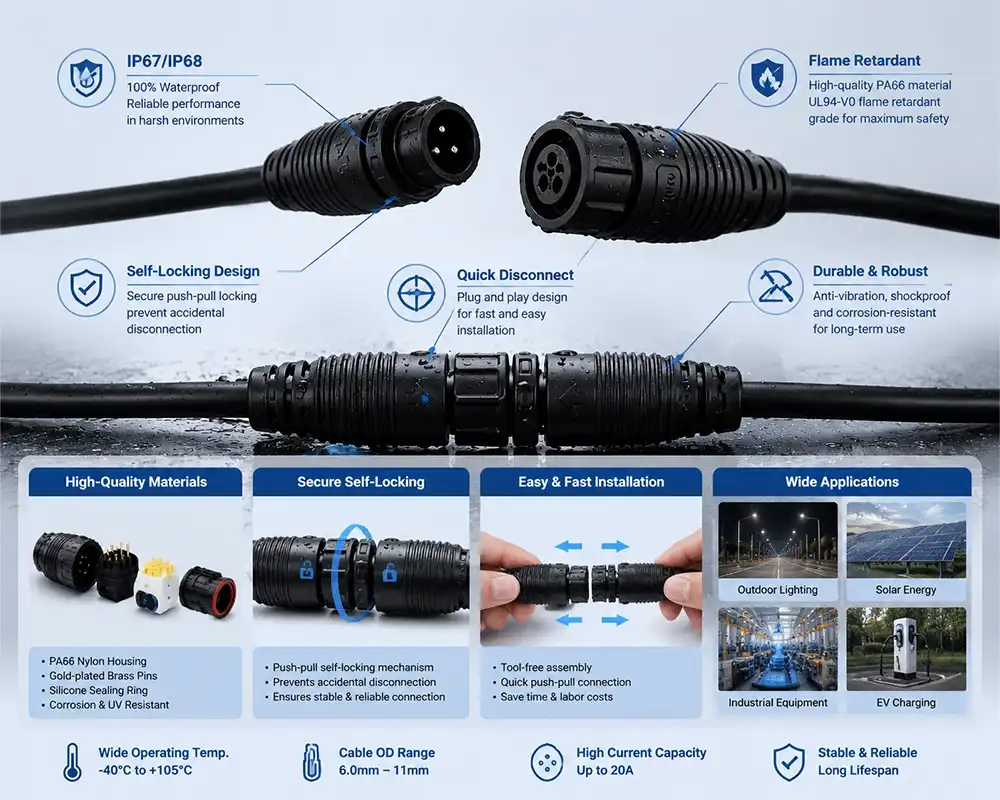
Industrial waterproof QC20 Quick Disconnect Connectors are the backbone of electrical systems that need to be maintained often or are set up in modules. These devices allow for easy assembly and disassembly without the need for tools, and they keep the environment sealed. This makes them essential in situations where traditional wiring would require more work and more mistakes. With the push-lock mechanism, technicians wearing gloves can make secure connections outside without lowering IP protection.
Key Technical Specifications
Modern outdoor-use industrial power connections are made with a number of high-tech materials and design elements. The housings are usually made of PA66 nylon, which is UL94-V0 flame-resistant and keeps its shape at temperatures ranging from -40°C to 105°C. Solid brass pins that are gold-plated in contact systems don't rust and keep their conductivity fixed over thousands of joining cycles. The sealing system is based on precisely molded silicone rings that flatten evenly when the ergonomic quick-clamp nut is tightened. This stops water from getting in.
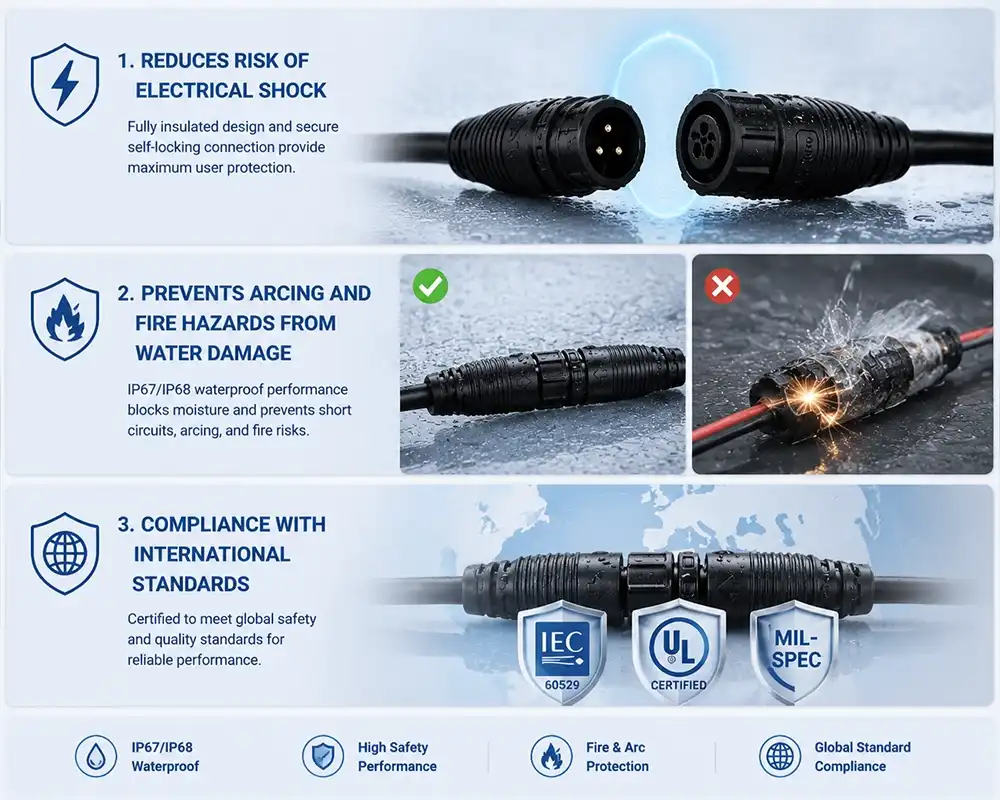
Specifications for electrical performance take into account both safety gaps and real-world application needs. Standard layouts can handle 500V DC/AC at 25A for arrangements with 2 to 4 contacts, while hybrid pin combinations like 2+3 designs can send both power and signals at the same time. The dielectric withstanding voltage of 3 kV DC provides substantial protection against transient surges, and insulation resistance exceeding 200 MΩ prevents leakage currents even in humid conditions. Overmolded cable construction gets rid of possible entry points where cable jackets meet connector housings. This makes sure that the whole assembly meets IP67 or IP68 ratings, which are good for situations where it might be submerged for a short time.
Primary Application Scenarios
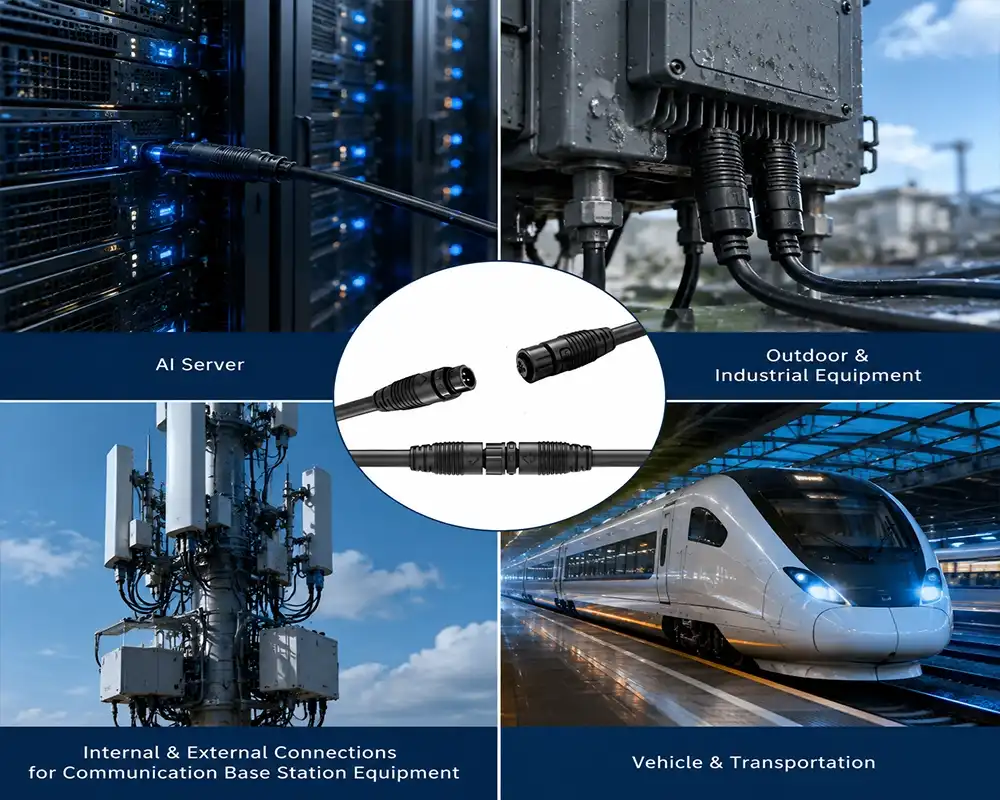
New energy infrastructure represents one of the fastest-growing sectors for the QC20 Quick Disconnect Connector. Connectors for solar array setups need to be able to handle UV light and changes in temperature while still having low contact resistance. EV charging stations need to be able to handle a lot of current and have connections that are so safe that even non-technical people can use them. These quick break designs make energy storage systems more flexible, which lets battery packs be swapped out quickly and without tools.
When working with industrial automation, anti-vibration properties are very important because of the unique problems they create. Robotic manufacturing lines subject wire harnesses to repeated motion and mechanical stress that would fatigue standard screw ends. When used on dusty factory floors, PLC control boxes need to be protected with IP68 to keep electrical particles from shorting out contacts. The quick clamp nut design works with cable jackets made of different materials and diameters (3–12 mm), which gives you options when putting together systems with sensors, actuators, and power feeds.
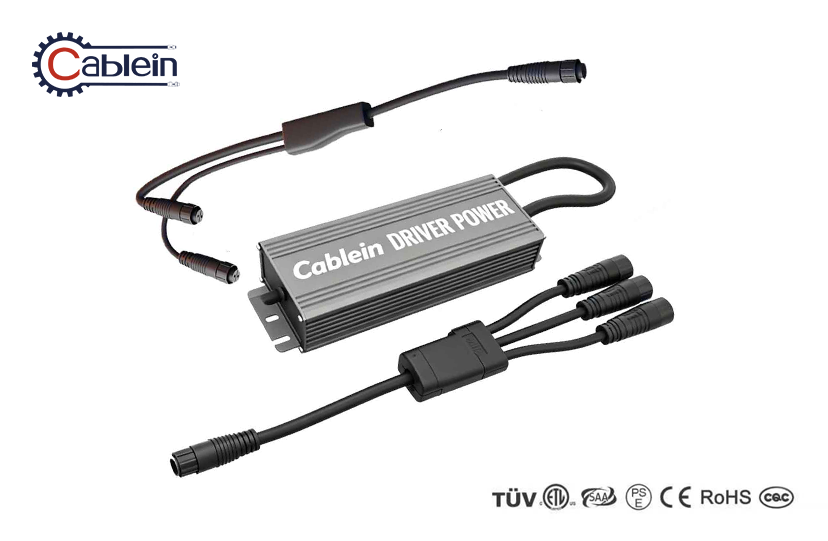
The speed with which these connectors allow installation makes outdoor LED lighting projects a lot better. Before, electricians had to hand-wire each bulb in a stadium lighting retrofit. Now, pre-assembled cable harnesses with overmolded plugs cut the amount of work that needs to be done by 60%. Landscape lighting designers like that they can change the lengths, gauges, and colors of the jackets on the cables to meet specific voltage drop requirements across distributed installations. This makes it easier to keep track of inventory.
Where to Buy QC20 Quick Disconnect Connectors Online: Trusted Platforms and Suppliers
To find your way around digital procurement, you need to know what the pros and cons of each sourcing channel are. When you work directly with a manufacturer, you can get the best professional help and customization options. However, because of differences in time zones, contact may take longer. B2B marketplaces bring together many suppliers and protect transactions, but it is still important to check the credentials of factories. Regional distributors usually only have popular combinations in stock so they can get orders out quickly, but they aren't always able to accommodate special requests.
Evaluating B2B Marketplace Options
Big platforms like Alibaba and Made-in-China have built complex systems to check the trustworthiness of suppliers. These systems help buying teams make decisions. Check for "Verified Manufacturer" badges that show the plant has been inspected by a third party, and look at the transaction past to see if orders have always been filled. Trade assurance programs on these platforms protect payments by holding on to funds until shipment confirmation. This lowers the financial risk of doing business internationally.
When looking at lists of suppliers, give more weight to those that show complete certification profiles. ETL marks show that the product meets North American safety standards, and CE statements let the product enter the European market. RoHS and REACH compliance paperwork shows that you care about the environment and can track materials. Manufacturers who follow ISO9001:2015 quality management systems usually use regular process controls to lower differences from batch to batch. This keeps your production going.
Direct Manufacturer Advantages
When you work with specialized waterproof connector manufacturers like Cablein Technology for the QC20 Quick Disconnect Connector, you can get help from engineering teams that know how to solve problems that are unique to your application. Their 6,000-yuan building in Shenzhen is where both injection molding and cable assembly are done. This way, quality control can be done on the whole process, from the raw materials to the finished cable connections. This vertical merger gets rid of the factors related to outsourcing that could weaken the integrity of a waterproof seal.
Direct connections with factories open up customization options that aren't available through distributors. Engineers can choose exact pin configurations, cable conductors that match their voltage drop calculations, and jacket materials that work with the places where they will be deployed. Being able to talk directly with designers who hold 15 or more utility model patents about mechanical stress factors, expected mating cycles, and environmental exposure makes sure that solutions meet the needs for long-term reliability. There are still no set minimum order sizes. Standard things can be bought in bulk in quantities of 10,000 pieces, and custom designs can usually be made with as few as 500 units for test runs.
Local Versus International Supplier Considerations
Geography has a big effect on processes for buying things and figuring out overall costs. Domestic providers in the US have benefits like more predictable lead times, easier customs processes, and faster settlement of warranty claims. But their prices usually reflect the fact that they have to pay their workers more and make fewer things at a time. International manufacturers can save you a lot of money on large orders, but you have to plan your logistics carefully and wait longer for your money to be converted.
The choice of shipping way strikes a balance between need and cost. Through established partnerships with UPS, DHL, and FedEx, air freight delivers samples or urgent restocking within 5 to 7 days, but the costs go up quickly for large shipments. When you ship by sea, it's cheaper for container loads, but arrival times are longer (25–35 days), so you need to be very good at predicting demand. Progressive procurement teams often set up two-source strategies, using local stock for instant needs and planned foreign packages for later use.
How to Choose the Right QC20 Connector Supplier: Key Procurement Criteria
Comparing unit prices is only one part of choosing a supplier. The total cost of ownership across all stages of a product's lifecycle is also important. The cheapest option often comes with hidden costs like poor quality, missing technical documentation, or bad customer service after the sale. To find partners who can support multi-year projects, thorough evaluation systems look at things like manufacturing skills, compliance records, and service infrastructure.
Certification Verification and Technical Validation
International safety approvals are necessary for goods to enter controlled markets and can't be skipped. ETL certification shows that a product meets UL safety standards for electrical safety, which include tests for things like dielectric withstanding voltage and flammability resistance. PSE marks let you sell your goods in Japan, and SAA approval meets the rules in Australia. Because fake claims happen in global trade sometimes, procurement teams should ask for real certification numbers and check them against databases of certifying bodies.
Technical datasheets show if suppliers really know a lot about engineering. Detailed specifications should include full electrical ratings for all pin configurations, mechanical dimensions with tolerances, material callouts that list grade and manufacturer, and results from environmental testing that show the IP rating is valid. Temperature cycling data that shows stable contact resistance from -40°C to 105°C gives users confidence for outdoor use. Insulation resistance values measured at 500V DC show the quality of the material and how well the manufacturing process is controlled.
Pricing Structures and MOQ Negotiations
Understanding what causes costs helps procurement managers negotiate better. Custom adapter projects mostly use amortization for their tools, and the initial mold costs can be anywhere from $3,000 to $15,000. Suppliers often set their prices so that they can collect these costs over a large number of orders. This means that talks about a long-term relationship are more productive than talks about a single purchase order. Standard catalogue items don't require tooling fees, but they can't be changed much.
Minimum order quantities for the QC20 Quick Disconnect Connector reflect production efficiency thresholds where per-unit costs stabilize. Scaling up to 2,000 to 5,000 units usually unlocks 15–25% cost savings through material buying leverage and setup amortization. Minimums of 500 pieces work well for pilot projects. Payment terms also affect the total cost of acquisition. Suppliers with net-30 or net-60 terms offer working capital benefits over prepayment requirements, though they may do a creditworthiness check.
Service Infrastructure and Long-Term Support
Support after the sale is what sets excellent suppliers apart from transactional ones. Look for engineering teams that can help you with installation problems or field failures 24 hours a day, 7 days a week. Product development processes are sped up by being able to quickly make dimensional plans for custom enclosure design or 3D CAD models. The warranty terms should make it clear how long the coverage lasts (usually 12 to 24 months) and how to get a replacement for a faulty material handler.
OEM and ODM capabilities show if suppliers can change along with your product roadmap. As your designs get better, you might need private label packing, different color coding to make your products stand out, or integrated cable systems that cut down on the number of steps you have to do during the manufacturing process. Suppliers with stable teams of 200 or more people and separate engineering and quality departments can handle growing accounts without lowering the quality of their deliveries.
Installation and Troubleshooting Tips for QC20 Quick Disconnect Connectors
Using the right installation methods will make connectors more reliable and extend their useful life. While quick disconnect designs make field work easier than traditional connecting ways, making sure you follow the manufacturer's instructions is still important for waterproofing and electrical performance. When repair teams know about common failure modes, they can quickly figure out what's wrong and keep equipment from being down for too long.
Recommended Installation Practices
The first step in getting cables ready is to choose entry diameters that meet the overmolding requirements. For standard industrial power connectors, these diameters are usually between 3 and 12 mm. When terminating field-installable models, remove the wire insulation to reveal the conductor lengths specified in the assembly instructions. Too much exposed copper can cause short circuits, and not enough insertion depth raises contact resistance. When you crimp, use calibrated tools and the force levels recommended by the manufacturer. If you under-crimp, the connections will break, and if you over-crimp, the conductor strands will get damaged.
The mating sequence of the QC20 Quick Disconnect Connector changes how the seal is compressed and how the locking mechanism engages. Make sure the connector bodies are lined up correctly before applying axial force so that the quick clamp nut doesn't get cross-threaded. Tighten the curved nut by hand until the resistance goes up significantly. This means that the silicone seal has been pressed against both housing surfaces. Do not use pliers or wrenches unless the assembly instructions say to do so. Over-torquing plastic threads can lead to stress fractures that hurt the environment. A visual check should show that the seal is compressed evenly all the way around.
Common Troubleshooting Scenarios
Most of the time, moisture gets in when the nuts aren't fully engaged or the closing rings are broken. If condensation forms inside clear housings or continuity testing shows unexpected resistance, turn off the power right away and check the seal for any cuts, debris, or improper seating. Before putting it back together, clean the contact surfaces with rubbing alcohol and make sure the nut threads turn easily. When replacing seals, the new material should be exactly the same as the old one. Using elastomers that aren't suitable can make the seals less resistant to chemicals or higher temperatures.
Contact poisoning or not enough mating force are common causes of electrical links that come and go. In dusty places, conductive particles can cross insulated surfaces, slowly turning to carbon during arcing until the resistance goes up. Every year in harsh environments, take connectors apart, clean the contacts with an electronics-safe solvent, and make sure the spring tension hasn't changed. Gold plating on brass pins protects them from oxidation better than raw copper, but repeated insertions will eventually show the base metal, which means the connection needs to be replaced.
When problems happen with more than one link in the same installation, look into general problems instead of failures in individual parts. If there is too much shaking, it could mean that the wire doesn't have enough strain relief, which lets mechanical stress build up at the solder joints or crimp connections. Thermal cycling that goes beyond the rated limits causes different materials to expand at different rates, which could loosen contact pressure or crack housing materials. Consulting with seller tech teams helps find the root causes and put in place fixes that stop problems from happening again.
Conclusion
When you shop online for the QC20 Quick Disconnect Connector, you have to find a balance between technical requirements, approval needs, and the supplier's abilities. The best procurement strategies make sure that both short-term project needs and long-term reliability goals are met by thoroughly validating specifications and building relationships with suppliers. By giving more weight to makers who have experience with IP67/IP68 designs, a wide range of certifications, and the ability to customize products in a variety of ways, engineering and buying teams can be sure that the connectors they choose will work well in harsh environments and require less installation work. Remember that the total cost of ownership includes more than just the unit price. It also includes the quality of professional support, the dependability of shipping, and the safety of warranties. These are all things that affect the success of the project and the continuity of operations.
FAQ
1. How can I verify if a supplier is authorized to sell genuine waterproof power connectors?
Manufacturers that are doing business legally keep dealer networks and offer verification tools on their official websites. For supplier authorization letters on company letterhead, ask for them and check the contact information with official channels. Certification groups such as Intertek (ETL) and TUV keep public files where you can compare certificate numbers to real test results. Be wary of sellers who can't provide original language certification papers or whose prices are much lower than the market average. These are signs that the parts they're selling are fake.
2. What lead times should I expect for bulk orders of industrial quick disconnect connectors?
Standard catalogue items that are kept in stock by the maker usually ship within 7–10 business days of receiving payment proof. For foreign orders, air freight adds an extra 5–7 days. It takes three to four weeks to set up and make custom cable assemblies with specific lengths, wire gauges, or connector combinations. For private mold development for unique link designs, the time frame grows to 8–12 weeks, which includes making the tools, inspecting the first product, and making sure the production works. Setting up blanket purchase orders with planned releases helps makers divide up their production space and keep delivery schedules stable.
3. Are waterproof quick disconnect connectors suitable for both AC and DC power transmission?
Industrial power connectors of good quality list voltage ratings that work with both AC and DC systems, but the ampacity may be different. In AC applications, the current's periodic zero-crossing stops small arcing, but in DC systems, stronger contact designs are needed to stop the steady-state current. Most industrial equipment voltages can be handled by 25A connectors with a 500V DC/AC rating, but make sure the specifications match your specific needs. Hybrid pin designs let power and control signals be sent at the same time, which helps smart energy devices communicate.
Partner with Cablein for Certified Waterproof Connector Solutions
Cablein Technology has been making waterproof connections for nine years and has a wide range of certifications, including those for ETL, CE, PSE, SAA, and RoHS. Our QC20 Quick Disconnect Connectors have flame-resistant PA66 housings, gold-plated brass contacts, and precision-molded rubber seals that always get IP67 and IP68 ratings. As a QC20 Quick Disconnect Connector maker with a 6,000 yuan factory in Shenzhen, we keep more than 10,000 of each common item in stock and let you choose the cable length, wire gauge, jacket color, and pin configuration.
When you ask a technical question, our engineering team answers within 24 hours with CAD models, assembly instructions, and suggestions that are tailored to your application. This speeds up the development of your product. We provide consistent quality backed by ISO9001:2015 process controls and 100% waterproof inspection, whether you need 500 units to test a prototype or sign a contract for 50,000 pieces a year. Get in touch with nick@cableinco.com to talk about your needs for a high-current waterproof connection and get a quote that fits your exact needs.
References
1. International Electrotechnical Commission. (2016). IEC 60529: Degrees of Protection Provided by Enclosures (IP Code). Geneva: IEC Publications.
2. National Electrical Manufacturers Association. (2018). NEMA 250-2018: Enclosures for Electrical Equipment (1000 Volts Maximum). Rosslyn: NEMA Standards Publication.
3. Society of Automotive Engineers. (2020). SAE J1772: Electric Vehicle Conductive Charge Coupler. Warrendale: SAE International.
4. Underwriters Laboratories. (2019). UL 2238: Standard for Industrial Connectors for Use in Hazardous Locations. Northbrook: UL Standards & Engagement.
5. Zhang, L. & Chen, W. (2021). Reliability Analysis of Waterproof Connector Systems in Outdoor LED Applications. Journal of Industrial Electronics and Manufacturing, 12(3), 234-247.
6. Martinez, R. (2022). Procurement Best Practices for Electrical Components in New Energy Infrastructure. Supply Chain Management Review, 26(2), 18-29.