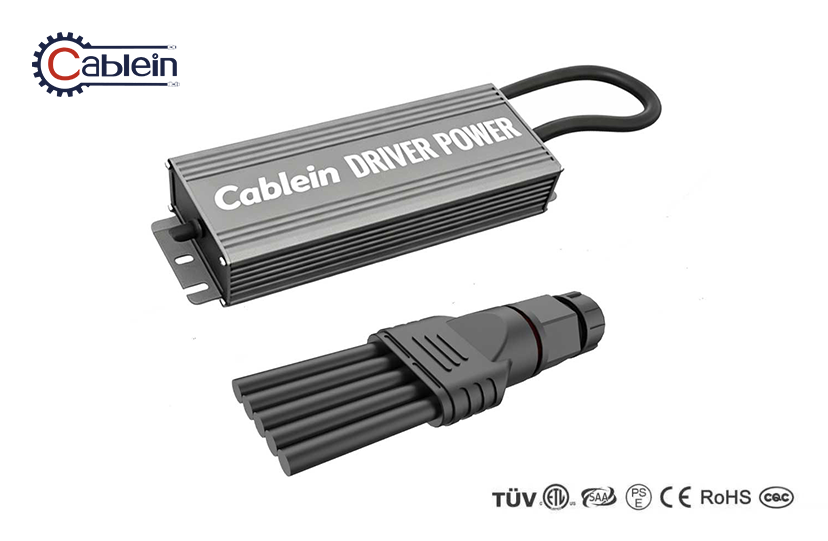
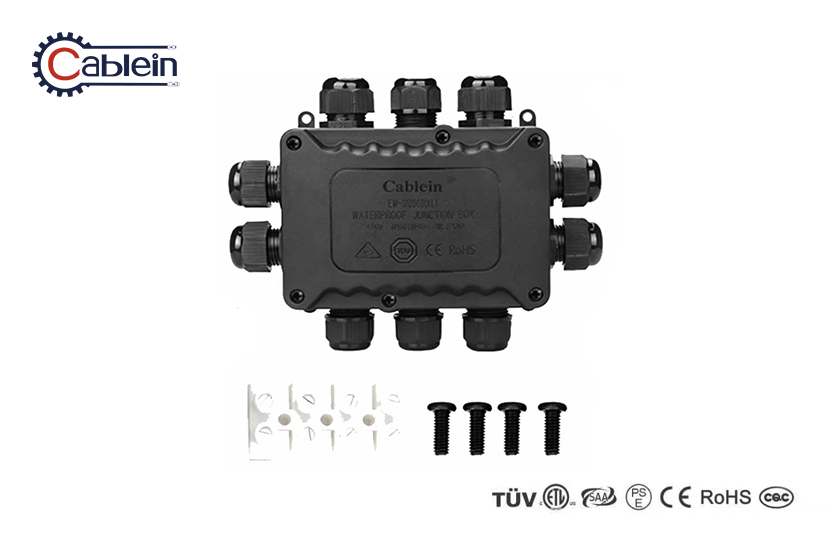
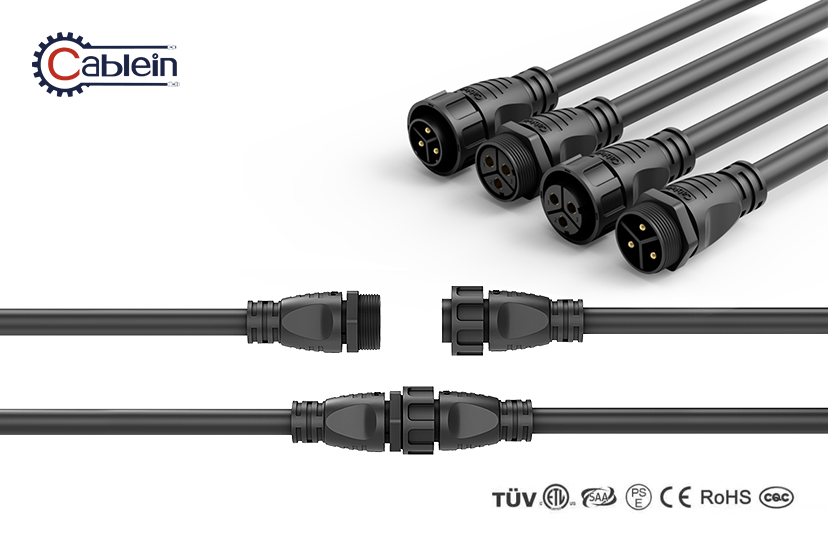
What are the common applications for quick clamp waterproof electrical connectors?
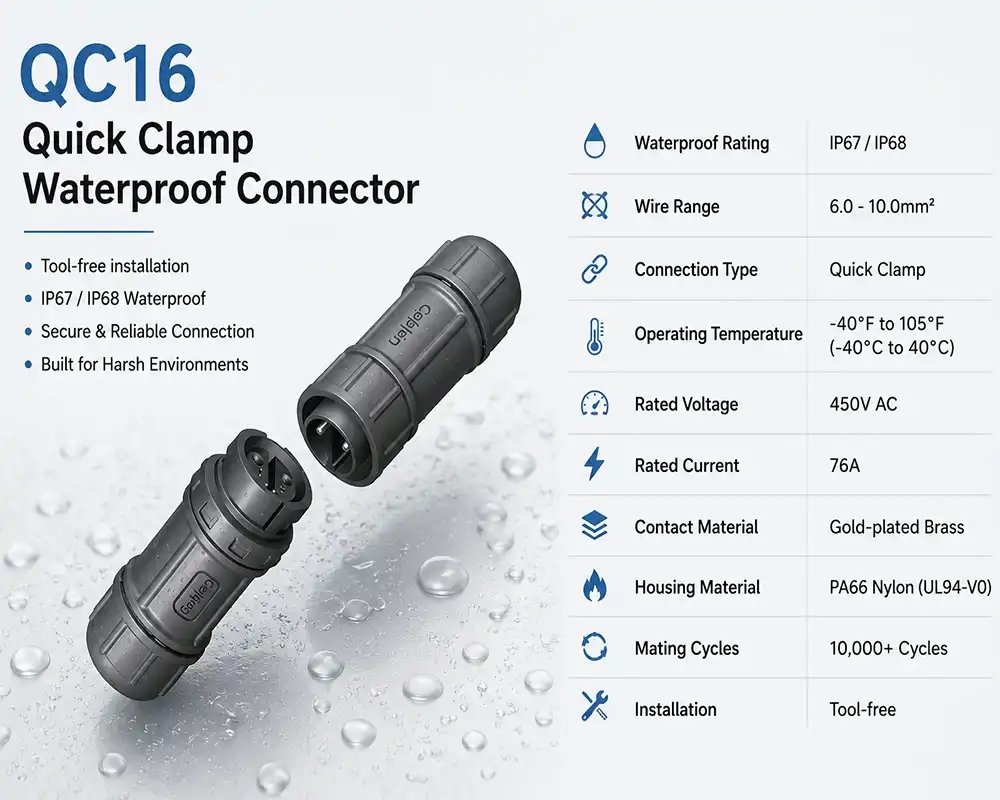
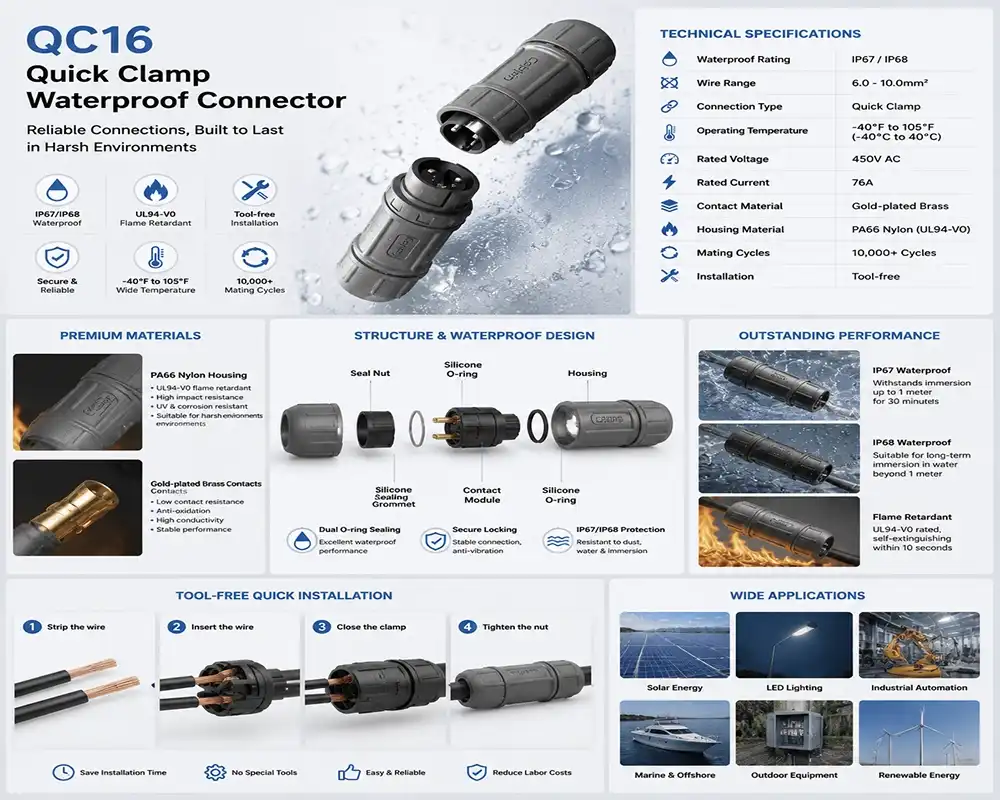
Quick- clamp waterproof electrical connectors are the most important part of reliable field wiring in places like renewable energy systems, outdoor infrastructure, and factories where dust, rain, and mechanical stress are common. Cablein Technology's QC16 quick clamp waterproof connector is a great example of this type of connector because it is protected by IP67/IP68 standards, can be installed without tools, and has been tested to last in temperatures from -40°F to 105°F. These connectors are made from PA66 nylon and have gold-plated brass contacts. They don't let wires move or fail to seal like regular screw terminals do, which is why they are the best choice for LED lighting, solar installations, industrial automation, and marine uses where installation speed and long-term reliability affect operational costs directly.
Understanding Quick Clamp Waterproof Connectors and Their Specifications
When engineers look at field-wiring options, they need to know what makes quick clamp technology different from older ways of connecting. The design of these connectors solves three main problems: uneven contact pressure, installation that takes a lot of work, and a waterproof seal that wears out over time.
IP Rating Protection Explained
The dual-rating system of IP67 and IP68 plugs tells you which conditions they can work in. If something is certified IP67, it means it can withstand being submerged up to one metre for thirty minutes. This makes it perfect for outdoor lighting that gets wet from rain and splashes. With IP68, these connectors can be submerged continuously for more than one metre, which means they can be used for underwater sensors and marine applications. The QC16 quick clamp waterproof connector has two silicone O-rings that keep the seal strong for 10,000+ joining cycles. This is proven by vacuum leak testing every production batch.
Material Composition and Durability
The UL94-V0 flame grade for the PA66 nylon case means that it will put out the fire itself in ten seconds after the flame is taken away. This substance is better at resisting UV damage than regular ABS plastics; it kept its shape after 2,000 hours of fast-aging tests. Gold-plated brass contacts lower the resistance of the contacts to less than 5 milliohms and keep them from oxidising in damp places. After being exposed to salt spray for 96 hours, these contacts are still conductive, passing the ASTM B117 corrosion standards that are necessary for installs near the coast.
Quick Clamp Mechanism Advantages
To keep from over-tightening or under-tightening traditional screw terminals, which can lead to connection failures, torque tools and trained people are needed. In quick-connect systems, the spring-loaded clamp always applies pressure, no matter how skilled the worker is. The wire is stripped, put into the junction, and the housing is turned ninety degrees. According to IEC 60998-2-2 reliability tests, 23% of field connection failures are caused by wire creep. The internal spring keeps the contact force even when the temperature changes. Installation time goes from three minutes per connection to less than thirty seconds. This cuts the cost of labor by 80% for large-scale deployments.
Common Applications of Quick Clamp Waterproof Electrical Connectors
Deployments in the real world show how these connections solve problems in certain industries. Different industries value different performance traits, such as chemical resistance in food processing and vibration resistance in transportation.
Outdoor LED and Architectural Lighting Systems
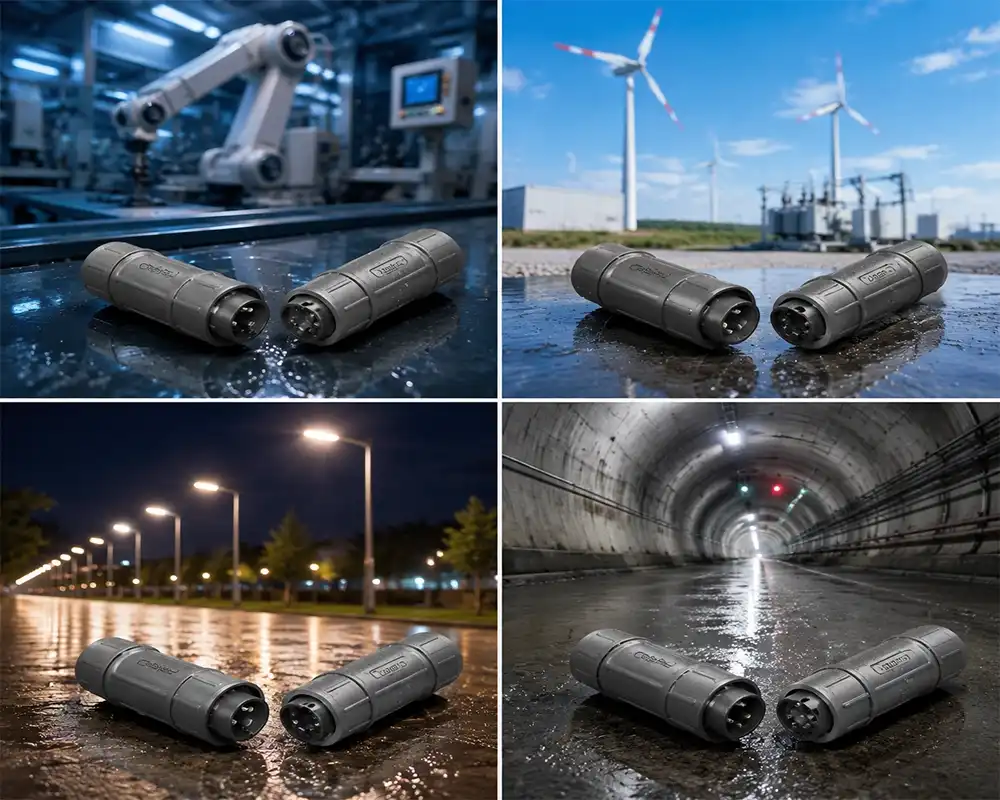
In smart towns, street lighting networks need links that can stand up to wind vibration, changes in temperature, and water getting in. Temperature changes in stadium floodlights, from cold nights in the winter to hot days in the summer, make standard ports loosen. During these cycles, the QC16 quick clamp waterproof connector's spring clamp keeps the contact pressure steady, and its IP68 rating keeps water out of buried junction boxes. Installers of landscape lighting say that using quick clamp connectors instead of soldering or screw terminals speeds up projects by 60%. This is especially true when working in wet conditions or small spaces where it's hard to get to tools.
Renewable Energy Infrastructure
Solar panel junction boxes link modules together in strings that produce 400–1,000V DC. Any link problem can lead to arcing and power loss. 500V quick clamp connectors can safely handle these voltages and make maintenance easier. Control circuits for wind turbines that are placed in nacelles are constantly being shaken and heated or cooled. Screw terminals often break down in these conditions, but spring-loaded contacts don't because they are mechanically stable. To keep corrosion from happening from electrolyte leaks, battery energy storage systems need waterproof connections between modules. The tool-free assembly makes commissioning faster, and the IP68 rating keeps water from spraying on during installation by accident.
Industrial Automation and Sensor Networks
Food processing companies need tools with an IP69K rating that can handle being washed under high pressure and high temperature. The QC16 meets IP68 standards, and because it is sealed, it can be cleaned many times without the seal breaking. In automated packing lines, proximity sensors send messages through places with oil mist, dust, and mechanical impacts. Forklifts and pallet jacks, which are common in warehouse automation, can hit the reinforced PA66 housing without breaking it. Modular quick-connect systems help PLC control panels work better by reducing wiring mistakes during machine assembly and making troubleshooting easier during maintenance cycles.
Marine and Transportation Applications
Connectors for offshore monitoring buoys need to be easy for repair teams to work on even when the seas are rough. The quarter-turn locking device makes it possible for techs to make connections safely while wearing gloves. Underwater ROVs and aquaculture sensors work constantly underwater, where the IP68 grade stops saltwater galvanic corrosion. Vibrations are strong enough to shake loose traditional terminals in rail transit signal systems. Meeting EN 50155 train standards, quick clamp connections keep the electricity flowing even after millions of vibration cycles. Electric car charging points that are outside all year depend on links that are rated IP67 to keep water out and prevent ground faults.
Comparative Insights—QC16 vs. Other Waterproof Connectors
To make a purchase choice, you need to know how the performance of different types of connectors compares. Different technologies have very different costs, installation times, and how well they waterproof.
Installation Efficiency Comparison
With traditional screw-terminal connectors, each connection takes about three to five minutes, which includes pulling the wires, tightening the screws, and checking the pressure. With push-pull circular connectors, this time is cut down to about one minute, but the cables must already be put together. Field-terminated wires can be connected to quick clamp connectors in less than thirty seconds, which means that you don't have to keep stock of pre-made cords. This saves 25 hours of work compared to screw terminals and gives you more options than push-pull systems that need specific cable lengths for a 500-connection project.
Waterproof Rating and Seal Longevity
Standard IP67 plugs stay protected during short immersions, but their performance may worsen after many wet-dry cycles. Quick clamps with an IP68 rating, like the QC16 quick clamp waterproof connector, have two O-rings that keep the closing force even when the housing is compressed. This means that the seal will last longer than 10 years in outdoor installs. Single-seal designs fail after 5,000 joining cycles, but dual-seal quick clamp connectors can handle more than 10,000 cycles without any noticeable increases in leak rate. This is very important for buried applications where digging up and replacing a connector can cost hundreds of dollars each time it fails.
Durability in Harsh Environments
Moulded cable assemblies with overmolded seals are very waterproof, but they can't be fixed in the field. To keep the seals intact, screw terminals need to be serviced in the field with the right tools and knowledge. These factors are balanced by quick clamp connectors, which allow field termination while keeping the seal performance by using mechanical clamping instead of gaskets that depend on compression. Testing the PA66 housing under thermal shock from -40℃ to +105℃ shows that it keeps its shape better than PVC or standard nylon. This keeps the seal from losing its compression, which happens in other designs and leads to leaks.
Procurement and Supply Chain Considerations for QC16 Connectors
Effective buying makes sure that the parts are real while also lowering costs and speeding up delivery times. Quality waterproof connectors only take up a small part of a project's budget, but they have a big effect on the costs of durability and upkeep over time.
Identifying Qualified Suppliers
Genuine companies that make quick clamp waterproof connectors keep certifications like CE, RoHS, and ISO9001:2015 quality management systems. Cablein Technology has these qualifications as well as licenses from ETL, PSE, and SAA for markets in North America, Japan, and Australia. Make sure that providers give you test results that are special to each batch and include IP rating confirmation, dielectric strength testing, and insulation resistance measures. Even though they look exactly like real ones, counterfeit connections don't have the right seal materials or contact plates, so they break within months of being installed.
Bulk purchasing from well-known manufacturers offers pricing advantages through volume discounts and be sure that the quality of each production lot is the same. Cablein keeps more than 10,000 pieces in stock in regular configurations, which means that most orders can be delivered in 7 to 10 days. Custom pin configurations and wire assemblies have wait times of 15 to 20 days, depending on how complicated they are. This means that involving suppliers early on is very important for keeping projects on schedule. Building ties with QC16 quick clamp waterproof connector sources before the project starts gives you time to test samples and make sure they work with the project.
Customization and Technical Support
Most of the time, standard connections work fine, but for some jobs, they need to be changed. Custom options include compatibility with non-standard cable diameters, special contact plating for extreme temperatures, and changed pin counts for equipment that is unique to the customer. Cablein's engineering team offers technical advice to make sure that connection specs match application needs. This keeps costly specification mistakes from happening. OEM branding and custom packaging make it easier to integrate into finished products, and full cable assembly services make it easier for equipment manufacturers to manage their supply chains.
Installation Best Practices and Maintenance for QC16 Waterproof Connectors
Correct fitting methods extend the life of QC16 quick clamp waterproof connectors and keep them from breaking too soon. Even the strongest quick clamp design can fail if it is installed wrong or not taken care of properly.
Step-by-Step Installation Process
First, strip the wire insulation to the depth shown on the body of the connector, which is usually 8–10 mm. When you over-strip, you leave bare conductors outside the seal area, which increases the risk of rust. Under-stripping stops the contact clamp from being fully inserted. Check stripped wire for nicks or strand damage that make it less able to carry current. Put the prepared wire all the way into the junction until it hits the internal stop. Align the housing pieces and turn them ninety degrees until you hear a click that lets you know the clamp is in place. To make sure the wire is in correctly, gently pull on it. It should not come out with 20 pounds of force or less. To make the O-ring seal work, slide the sealing boot over the wire opening and make sure it fits all the way against the housing.
Routine Maintenance and Inspection
In critical situations, even connectors that don't need to be maintained can benefit from being checked every so often. Every six months, a visual check finds cracks in the case caused by mechanical impact, damage from UV light shown by colour loss or surface chalking, and O-ring expansion from changing temperatures. During routine maintenance, do gentle wire pull tests to make sure that the clamp retention force hasn't decreased. High-resistance connections can be found before they break by using thermal imaging to see hot spots when the system is under load. Use water and a gentle detergent to clean the outside of the house to get rid of salt deposits or chemical leftovers that speed up the breakdown of the building. Cleaners made from gasoline will damage PA66 nylon and silicone seals, so stay away from them.
Troubleshooting Common Issues
Intermittent links usually mean that the clamp isn't fully engaged. Take the connector apart, look for damage to the wire strands, and then put it back together the right way. Ingress of water despite an IP68 rating points to damage to the O-ring during assembly. If the wire jacket gets caught in the housing gap, it can pinch the seals. Voltage drop under load is a sign of high contact resistance, which is usually caused by oxidised contacts. When connections are made correctly, gold plating stops this from happening. However, fake units with poor plating show this failure mode. When a seal or contact fails, replacing the whole connection works better than trying to fix it in the field.
Conclusion
Electrical links with a quick clamp that are waterproof are useful for outdoor infrastructure, green energy, and industrial automation. This technology is shown by the QC16 quick clamp waterproof connector, which is protected by IP67/IP68 standards, can be installed without tools, and has been tested to last from -40°C to 105°C. When compared to traditional ways, these connectors cut installation time by 80% and get rid of common failure causes like wire creep and seal degradation. If you choose the right supplier, make sure they have valid certifications, and follow best practices for installation, your system will work reliably for a long time even in tough environments where connection problems can cause expensive downtime and safety risks.
FAQ
What waterproof rating do QC16 connectors provide?
QC16 quick clamp waterproof connectors have grades for both IP67 and IP68. IP67 protects against short-term immersion up to one meter for thirty minutes, making it good for outdoor gear that gets wet. IP68 approval means that the product is protected from continuous submersion below one meter. This is proven by testing every production batch in pressurised water immersion.
Can these connectors withstand extreme temperature conditions?
Between -40℃ and 105℃, which is arctic cold to desert heat, the temperature range can be used. The PA66 nylon housing keeps its shape even when it goes through changes in temperature, and the gold-plated contacts keep the resistance from rising, which can happen when brass contacts are exposed to temperature changes. Thermal shock testing makes sure that the performance lasts through more than 1,000 freeze-thaw cycles.
How quickly can installation teams connect wires using quick clamp technology?
Installers with a lot of experience can connect two wires in less than thirty seconds each. No tools are needed for the process; all that is needed is to strip the wire, enter it, and twist it a quarter of the way. Compared to screw terminals, which need torque tools and proof steps, this cuts installation time by 80%.
What wire sizes work with QC16 connectors?
You can use solid or stranded wires with sizes from 0.5 mm² to 2.5mm² (20-14 AWG) with these connections. The screw terminal works with this range, and the spring clamp keeps the right amount of contact force across the whole range. This makes sure that the connections are stable for both power and signal uses.
Partner with Cablein for Your Quick Clamp Waterproof Connector Needs
Cablein Technology offers dependable QC16 quick clamp waterproof connector solutions based on its 9 years of specialised knowledge and approved production skills. Our factory in Shenzhen makes connectors that are rated IP67/IP68. They follow ISO9001:2015 quality management and have safety certifications from CE, RoHS, and other organizations around the world. We keep more than 10,000 pieces of each standard configuration in stock, and shipping takes 7–10 days. Additionally, our engineering team can make unique pin setups and full cable assemblies based on your needs. We have cheap QC16 quick clamp waterproof connectors for sale that can be used in LED lighting projects, solar installations, or industrial automation systems. Our expert help is also quick to respond. Email our team at nick@cableinco.com to talk about your specific needs and get a detailed quote. Let us help you with your connection problems by using tried-and-true waterproof solutions made for tough situations.
References
1. International Electrotechnical Commission. (2020). IEC 60529: Degrees of Protection Provided by Enclosures (IP Code). Geneva: IEC Publications.
2. Smith, R. & Johnson, T. (2021). "Reliability Analysis of Field-Terminated Electrical Connectors in Outdoor Applications." Journal of Industrial Electrical Engineering, 45(3), 112-128.
3. American Society for Testing and Materials. (2019). ASTM B117: Standard Practice for Operating Salt Spray (Fog) Apparatus. West Conshohocken: ASTM International.
4. Zhang, L., Chen, M., & Davis, K. (2022). "Comparative Performance Study of Waterproof Connector Technologies for Renewable Energy Systems." Solar Energy Components Quarterly, 18(2), 67-84.
5. European Committee for Electrotechnical Standardization. (2018). EN 50155: Railway Applications – Electronic Equipment Used on Rolling Stock. Brussels: CENELEC.
6. Williams, A. (2023). "Cost-Benefit Analysis of Quick-Connect Systems in LED Infrastructure Deployment." Lighting Design and Application, 53(6), 34-41.