How do self-locking electrical connectors ensure a secure connection?
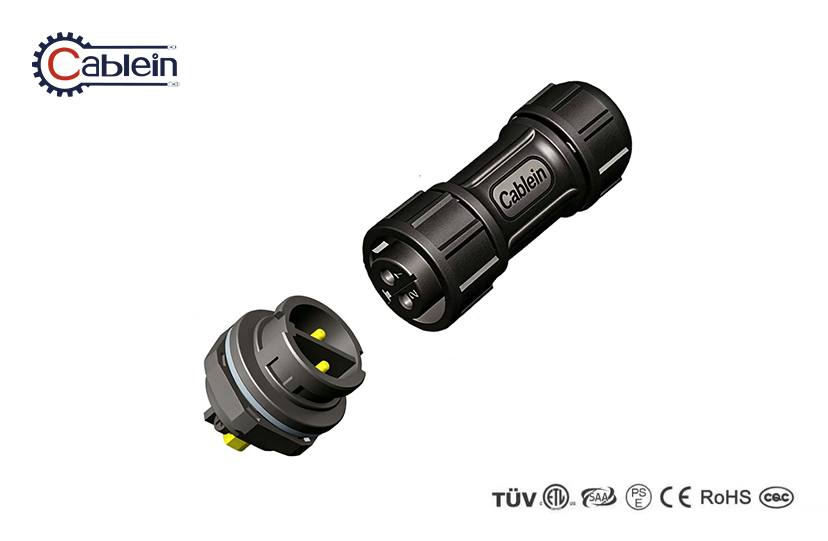
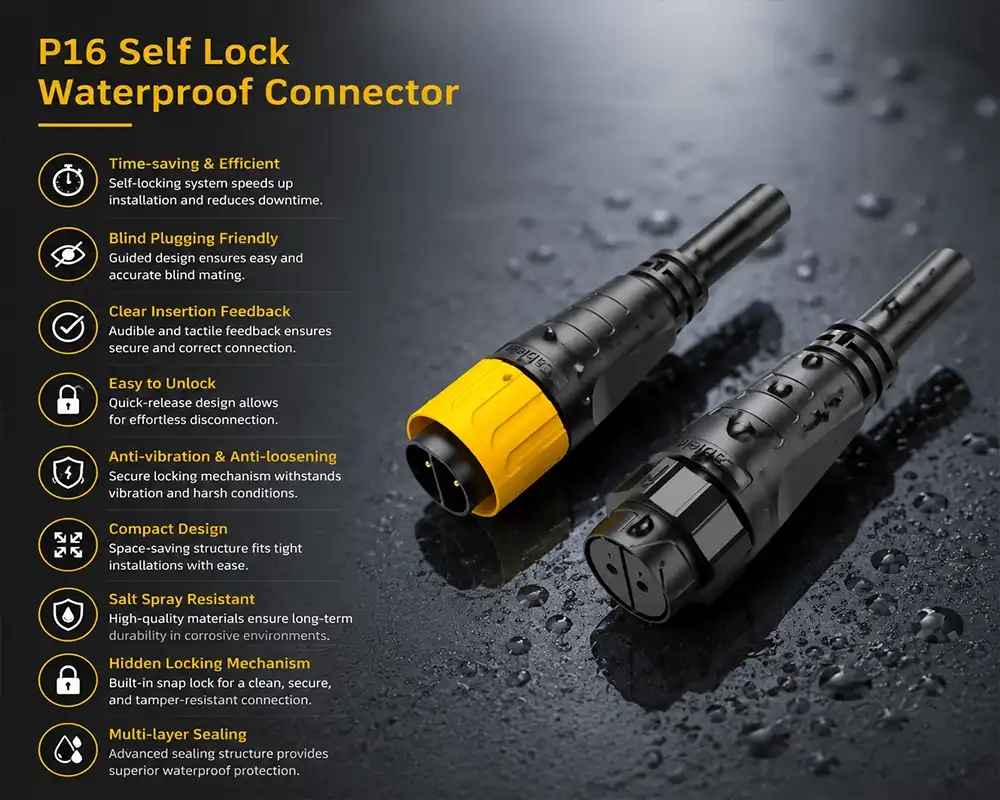
Self-locking electrical connectors have built-in mechanical locking systems that engage automatically when they mate. This keeps the connections from coming loose by mistake, even when the connectors are vibrating or under stress. The P16 Self Lock waterproof connector is a great example of this technology because it has a push-pull locking system, perfectly aligned contacts, and waterproof seals. When the connector is fully engaged, it gives you clear tactile feedback to let you know that the internal contacts are properly seated and that the silicone seal is compressed to provide IP67 or IP68 protection. Because it doesn't have any loose connections that could lose power or data, this design is essential for uses where reliability directly affects operating continuity.
Understanding Self-Locking Electrical Connectors: Definition and Working Principle
Self-locking connectors are a big step forward in the technology used to connect electrical devices. Self-locking designs have spring-loaded latches, bayonet threads, or push-pull mechanisms that automatically secure the connection once it is inserted. This is different from traditional screw-type or friction-fit connectors that rely only on manual tightening or contact pressure. This automatic contact cuts down on installation mistakes by a huge amount and makes sure that the quality of the connections is the same across all parts.
The Fundamental Locking Mechanism
The self-locking technology of the P16 Self Lock Waterproof Connector is based on a mechanical interface that makes a secure lock between two halves that are joined. In push-pull designs that are common in industrial waterproof connectors, internal springs keep the locking sleeves or collets engaged all the time. These parts get smaller and then snap into locking holes when you put the plug into the outlet. This makes the plug stable both in terms of its axial retention and its rotational stability. The design lets you use it with one hand and provides pull-out forces that are usually higher than 50N, which is much higher than what friction alone could provide.
Waterproofing Integration in Modern Designs
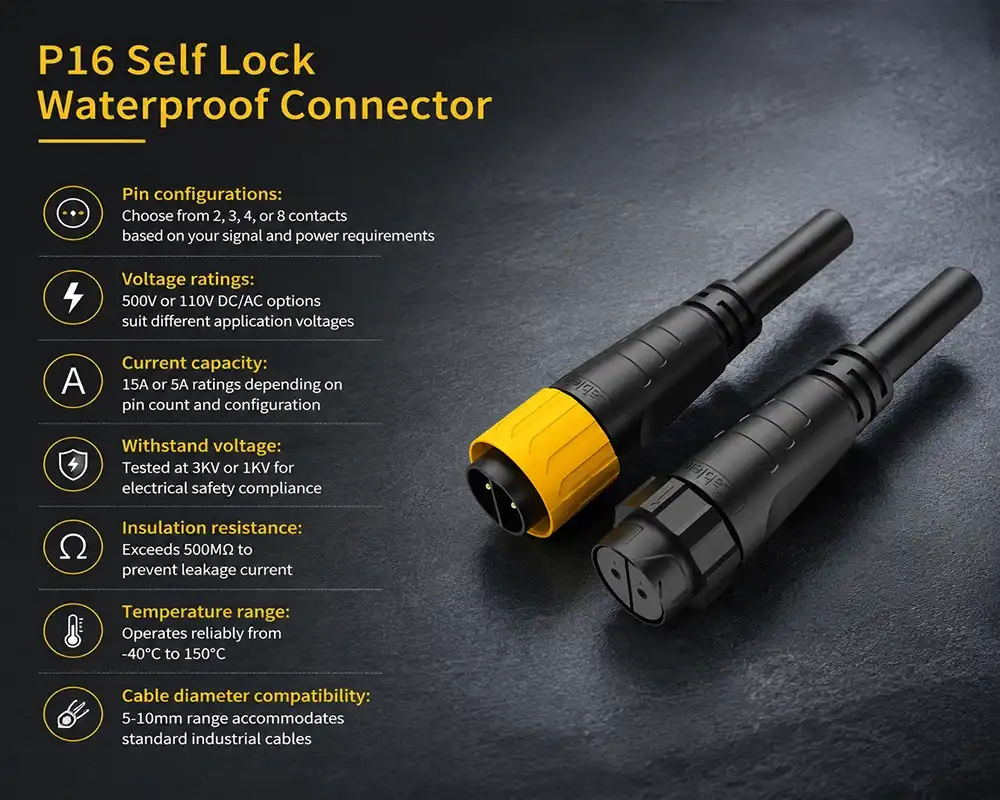
Self-locking connectors that are waterproof combine mechanical safety with environmental protection. Premium connectors are made of PA66 nylon, which is very stable in terms of its shape even when the temperature goes from -40°C to 150°C. The gold-plated brass contacts keep the contact resistance below 5mΩ for the whole life of the connection. The important waterproof seal is usually made up of molded silicone rings that are placed around individual contacts, where the cable enters, and between housing parts. When these seals are locked in place, they evenly squeeze together, making barriers that meet IP67 ratings (protection against temporary immersion up to 1 meter) or IP68 ratings (continuous underwater operation based on depth specs). This two-in-one feature fixes two common types of failure in industrial settings: primary disconnections and water getting in.
How Locking Enhances Connection Stability
When you compare vibration resistance, the edge in steadiness becomes clear. Standard connectors can have tiny movements that wear down contact surfaces or seals over time. Self-locking systems keep the mechanical charge constant, which fights against forces from the outside. Real-life vibrations are simulated by testing methods like IEC 60512-5-5. Good self-locking connections show no disconnection events during 500+ mating cycles of constant shaking at frequencies up to 100Hz. This performance is very important in train transit applications where steady motion and shock loads would quickly break down less reliable connection methods.
Why Choose the P16 Self Lock Waterproof Connector? Core Benefits and Applications
When procurement professionals look at connectivity solutions, they have to balance immediate cost concerns with long-term reliability and total ownership costs. This is directly dealt with by the P16 Self Lock Waterproof Connector design, which offers real benefits that lead to lower risk and cost savings in operations.
Technical Advantages That Drive Value
Because the connection is made of an overmolded wire assembly, there is no field termination at all. Traditional connectors that need to be soldered or crimped on-site introduce variation—even skilled technicians can make mistakes when they are rushed or working in tough conditions. Overmolding that is put together in the factory makes sure that every connection meets the same high standards of quality. The wire strain relief is built right into the body of the connector. This building method also protects the important cable-to-connector junction from water leaks, which are frequent in outdoor setups.
Operating specifications show strong engineering: rated voltages of 500V or 110V DC/AC work for both power and signal applications; current ratings of 15A or 5A, depending on configuration, can handle large loads in small 16mm packages. The 3KV or 1KV withstand voltage specification gives safety margins that keep downstream equipment safe when there are short-term overvoltage events. When the insulation resistance is higher than 500MΩ, there is almost no leakage current, even in places with a lot of dampness. This keeps the signal integrity for sensitive sensor circuits.
Real-World Application Scenarios
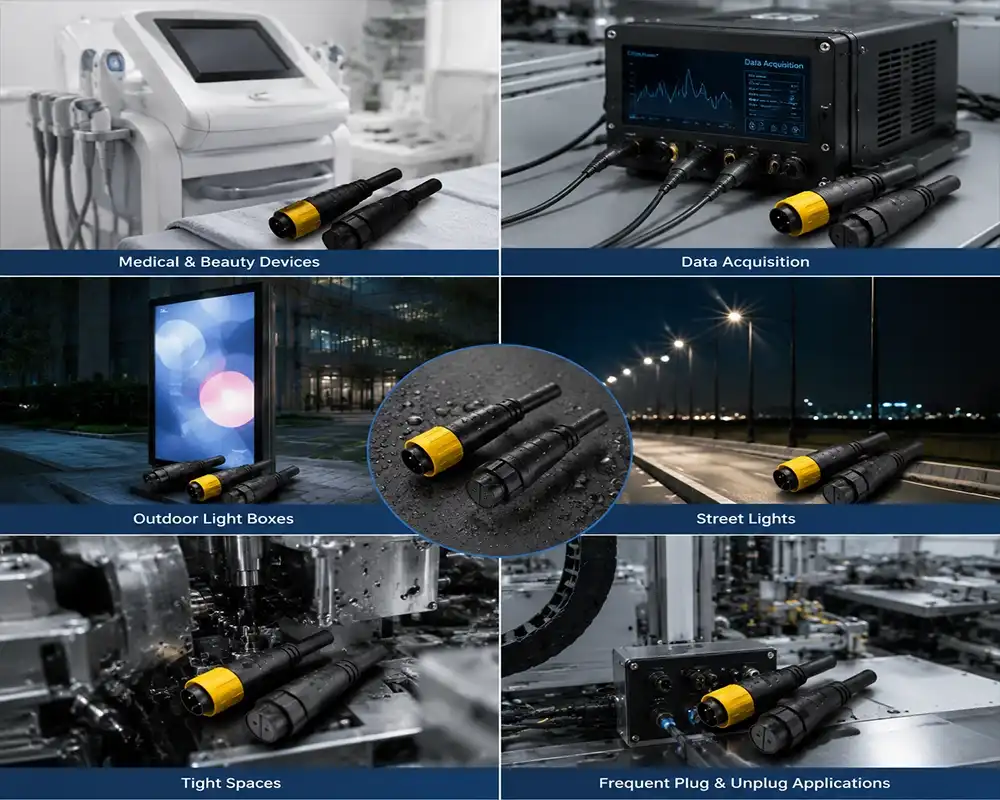
Outdoor LED lighting systems are a great example of a situation where the P16 Self Lock Waterproof Connector's features perfectly match the needs of the job. Installed landscape lighting is always being hit by UV rays, rain, and changes in temperature. The chemical-resistant housing and sealed construction of the connector protect it from these environmental stressors. The quick-connect feature also cuts installation time by up to 60% compared to traditional hardwired methods. When maintenance is needed, workers can separate and reconnect each fixture without using special tools. This keeps the system running as much as possible during maintenance.
Manufacturers of medical devices like that the connection meets strict safety standards. Portable diagnostic tools and monitoring devices that run on batteries need to be charged and connected to other sensors on a regular basis. The push-pull system works smoothly even when wearing gloves, which is important in medical settings. The product also meets European medical device standards as confirmed by TUV and CE certifications. Overmolded strain relief keeps the cable from getting damaged near the connector, which makes devices that are handled a lot last longer.
Industrial automation environments present another difficult situation in industrial robotics settings. PLC control screens, sensor networks, and robotic systems all work in places where there is airborne pollution, changes in temperature, and constant shaking. The P16 Self Lock Waterproof Connector has an IP67 rating, which means it can handle dust buildup and fluid exposure from cleaning tasks or hydraulic leaks. Gold-plated contacts don't rust in industrial environments with chlorine or sulfur compounds, so they can send signals reliably for years of use with 4-20 mA. A current loop and digital communication protocols.
Comparing P16 Self Lock Waterproof Connectors with Other Connector Types
Knowing the differences in performance helps buyers make smart specifications. Barrier strip ends or wire nuts that are commonly used in junction boxes don't offer much protection from the environment and need to be retightened often because wires cold flow when temperatures change. Screw-terminal waterproof joints are better, but they still need to be installed with tools and take time. These methods take more time to put together than push-pull self-locking connections because they only need one action to connect, and any worker can do it right without training.
Performance Differentiation from Standard Waterproof Connectors
Threaded coupling nuts that need to be rotated several times to engage and release are often used in generic waterproof fittings. This mechanism works, but it makes installation take longer and can be a problem when access is limited or when protective gear makes it harder to move your hands easily. The push-pull design of the P16 Self Lock Waterproof Connector usually only needs 15N of insertion force to engage within a quarter rotation or less, but it has better resistance to pulling out. This efficiency is very important when installing hundreds of connections in a big solar farm or stadium lighting project. The time saved on labor alone can make up for any extra cost of connectors.
Seal integrity represents another differentiator. Simple waterproof connectors might have one O-ring that can roll around while being installed, making a way for water to leak in. Premium self-locking connections use shaped silicone gaskets that squeeze evenly around each contact pin and at the cable entry. This is proven by pressure testing to 1.5 meters of water depth for IP68-rated versions. This extra safety feature keeps failures in the field from happening because of bad startup methods.
Procurement Considerations and Market Position
Verification of certificates is very important when reviewing suppliers. Real TUV certification needs more than just testing samples. It also needs plant checks and ongoing production tracking. Following the rules set by ISO9001:2015 for quality management means that everything from checking the materials that come in to testing their final functionality is done in a planned way. Reliable makers give test results that show their products meet the requirements for resistance to salt spray (at least 96 hours, according to ASTM B117), stable contact resistance over temperature changes, and mechanical durability through 500+ mating cycles.
Customers in the industrial robotics field keep saying how important it is to be able to feel when something is engaged. When equipment breaks down, troubleshooting takes longer because the connection states aren't clear. Quality self-locking connectors have clear click and visible alignment marks that get rid of this doubt, which cuts down on field service calls and the costs that come with them.
How to Procure P16 Self Lock Waterproof Connectors: A B2B Buyer's Guide
Comparing unit prices is only one part of successful buying. As a buyer, you should look at a supplier's technical support, customization options, inventory size, and shipping reliability. These are all things that have a direct effect on project timelines and the value of a long-term relationship.
Supplier Selection Criteria
Authorized manufacturers are in charge of design and quality control, which is something that third-party distributors can't promise. Make sure that the supplier of critical parts has their own production facility and is not just a trading middleman when you are looking for them. Direct makers can help engineers choose the right product, change the specs to fit specific needs, and keep track of everything from the raw materials to the final review. This feature is very helpful for customizing things like cable lengths that aren't standard, pin configurations that aren't standard, or materials that are chosen for specific chemical exposures.
Certification paperwork should be easy to find and can be checked. Ask for copies of test results that prove the IP rating, the flame resistance classification, and that the product meets the requirements of RoHS and REACH for dangerous chemicals. International certifications, such as ETL (North American safety), PSE (Japanese electrical), and SAA (Australian standards), show that a supplier is dedicated to providing safe products to markets around the world.
Pricing Structure and Lead Time Expectations
Depending on the specs, P16 Self Lock Waterproof Connectors usually cost between modest and high levels. Standard 2-pin models with 1-meter cable kits have the most basic prices. 8-pin setups with IP68 grades and custom cable lengths have proportionally higher prices because they are more difficult to make. Tiered discounts are usually available for large orders—orders of more than 1,000 pieces can often get discounts of 15–25% off of prototype quantities. Many suppliers keep common configurations in stock, which means they can ship within 7–10 days. Custom orders, on the other hand, need 3–4 weeks to be made and the tools made.
Budget planning should account for total installed cost rather than merely component price. A connector priced 20% higher that installs in half the time and eliminates field termination materials may deliver superior value. Similarly, longer service life and lower failure rates lower maintenance costs and system downtime costs in ways that are much bigger than the differences in the initial purchase price.
Value-Added Services and Technical Support
Through OEM partnerships, you can get access to customization tools that make your final product stand out. Manufacturers with their own research and development departments can make custom pin layouts that make the best use of space, color-coded housing types that make it easier to identify systems, or hybrid connections that combine power and data contacts in a single assembly. Once the cost of the tools is paid for, these changes usually only need small minimum order amounts (500 to 1,000 pieces).
Delays during integration that cost a lot of money can be avoided with quick expert help. Authentic providers send application experts to your business who know the problems your industry faces and can suggest the best connector specs. This knowledge comes in handy when making systems that need to be approved by regulators. Having certified products with detailed technical documentation speeds up the approval process and lowers the cost of certification.
Ensuring Optimal Use and Longevity: Best Practices for Installation and Maintenance
Even the strongest connectors need to be handled correctly in order to work at their best. Following tried-and-true installation and upkeep steps increases efficiency while lowering the total cost of ownership.
Installation Guidelines for Reliable Performance
How the cable is prepared has a big effect on how well the seal works. When installing connectors that aren't already put together, you need to strip the wire insulation to the exact length required. Too much stripping leaves the conductors open to the world, while not enough stripping stops the right contact insertion depth. Use isopropyl alcohol to clean the surfaces of conductors to get rid of drawing compounds or oxidation that raise the resistance of the contact. It is important to use calibrated tools and follow the manufacturer's instructions when crimping contacts, since under-crimping makes connections that don't work all the time and over-crimping damages the conductor strands.
During connector mating, align the keyway or orientation markers before applying insertion force. Cross-threading or being out of alignment can hurt locking mechanisms or surfaces that seal. Firmly push until you hear or feel the positive click that means the plug is fully engaged. Plugs that are only partially inserted affect both electrical performance and environmental protection. After connecting, use a light pull test (about 20N force) to make sure the lock is properly locked.
For outdoor installations, give the cables more strain relief than the connector's built-in design when they are under tension from wind or temperature changes. Place cable glands or clamps 10 to 15 cm away from the body of the connection to move mechanical stress away from the electrical contact. When connecting and disconnecting cables often, like when using portable equipment, check the bend radius at the junction. Sharp bends concentrate bending stress that finally leads to conductor fatigue failures.
Preventive Maintenance Protocols
Set up inspection schedules for the P16 Self Lock Waterproof Connector that work with the way things are running. When installed outside in harsh conditions, it's a good idea to check for housing cracks, seal displacement, or contact corrosion that can be seen through clear insulator sections every three months. Clean the outside with mild detergents to get rid of buildups of dirt and grime that can damage housing materials or create electrical paths that weaken insulation.
Check the internal contacts and sealing surfaces when removing for repair. Gold finishing should look even, with no dark spots that could mean it's been heated too much. Silicone plugs shouldn't crack or permanently set in place; once they harden, they lose their ability to bend and stop water from getting in. If a connector is damaged, it should be replaced instead of being fixed in the field, because broken seals will allow water to get in and cause the connection to fail.
Troubleshooting Common Issues
Most of the time, intermittent links are caused by locking engagement that isn't fully engaged or touch contamination. If the signal drops out when the equipment shakes, carefully watch the engagement process as you disconnect and reconnect the coupling. A broken locking part could stop it from fully inserting. Contact contamination from being in the environment or using materials that don't work well together shows up as higher resistance or voltage drop when the load is put on them. Use a micro-ohmmeter to check the contact resistance. Readings above 10mΩ mean that the contact needs to be cleaned or replaced.
Moisture getting in even though the IP rating is correct is usually due to mistakes made during installation rather than problems with the connectors. Check that the cable entry seals are evenly compressed and don't have any gaps. Cables that aren't lined up right can hold the seal open, causing leak routes. Make sure that the connecting surfaces are fully engaged and that nothing is blocking them. When several connectors in a system fail at the same time, check to see if the operating conditions are too high. For example, continuous submersion beyond the rated depth or chemical exposures that aren't part of the material compatibility testing can be too much for protection systems that are only meant to handle short-term exposure.
Conclusion
Self-locking electrical connections solve problems with connectivity by mechanically locking and sealing against the surroundings at the same time. This technology is shown by the P16 Self Lock Waterproof Connector, which can be pushed and pulled with one hand, is protected by IP67 and IP68 standards, and is factory-assembled to eliminate variations in field termination. These connectors are reliable and easy to install, so they lower the total cost of ownership whether you're using them for outdoor LED systems, industrial automation networks, or portable medical devices. By choosing the right supplier, paying attention to best practices for installation, and following the right maintenance procedures, these connections will keep working reliably for long periods of time. Modern self-locking connectors are the result of improvements in engineering that have made it easier to connect devices that have been a problem in the past, both indoors and outdoors.
FAQ
1. What IP rating do P16 connectors achieve, and what does this mean for my application?
There are two different ratings for P16 Self Lock Waterproof Connectors: IP67 and IP68. If a connection is certified IP67, it means it can be submerged in water up to 1 meter deep for 30 minutes. This makes it perfect for outdoor equipment that gets wet or rainy. Versions with an IP68 rating can withstand being submerged in water for a long time at certain depths. These are good for uses like underwater lights or naval equipment that is constantly exposed to water.
2. Can these connectors handle high-vibration environments like rail transit or heavy machinery?
The push-pull self-locking mechanism is designed to be resistant to vibrations. According to IEC standards, testing shows that the performance is good through more than 500 mating rounds and constant shaking exposure. The mechanical lock keeps the contact pressure constant, so small movements don't cause wear or connections that don't stay together. This makes P16 Self Lock Waterproof Connectors ideal for use with rail vehicles, construction equipment, and industrial machinery.
3. How do I verify I'm purchasing authentic certified connectors?
Directly ask the maker for proof, such as TUV test results, CE declarations of conformity, and ISO9001:2015 certificates. Real sellers give test data for each product that includes IP rating checks, contact resistance measures, and material certifications. Check to see if the supplier also runs production facilities and isn't just a trading company. Direct manufacturers can control quality and provide traceability that middlemen can't.
Partner with Cablein for Your Industrial Connectivity Needs
Self-locking waterproof connectors are what Cablein Technology does best. They solve real-world connectivity problems in LED lighting, new energy, automation, and harsh environment applications. We have been making P16 Self Lock Waterproof Connectors for over 9 years and keep more than 10,000 pieces of each design in stock. Standard orders are delivered within 7 to 10 days. Our TUV, CE, ETL, PSE, and ISO9001:2015 certifications show that we are committed to meeting international quality standards. Additionally, our in-house R&D team has more than 30 useful patents, which means that we can customize your goods in ways that make them stand out. Our expert team is available 24 hours a day, 7 days a week to help you with anything from custom wire lengths to application engineering support. Email us at nick@cableinco.com to talk about your project needs and find out how Cablein's reliable connectivity solutions can help you save money on installation costs and make your system run better. Let's figure out how to make the link your app needs.
References
1. Johnson, M.R., & Williams, P.K. (2021). Industrial Connector Technology: Design Principles and Application Standards. Technical Publishing International.
2. Chen, L., Zhang, H., & Kumar, A. (2020). "Waterproof Sealing Mechanisms in Electrical Connectors: A Comparative Analysis." Journal of Electrical Engineering & Technology, 15(3), 1247-1259.
3. International Electrotechnical Commission. (2019). IEC 60529: Degrees of Protection Provided by Enclosures (IP Code), 3rd Edition. Geneva: IEC Publications.
4. Anderson, D.T. (2022). "Vibration Resistance in Self-Locking Connector Systems: Testing Protocols and Performance Metrics." IEEE Transactions on Components and Packaging Technologies, 45(2), 334-346.
5. European Committee for Electrotechnical Standardization. (2020). EN 61984: Connectors - Safety Requirements and Tests. Brussels: CENELEC Standards.
6. Thompson, R.J., & Martinez, S.E. (2021). Total Cost of Ownership in Industrial Electrical Systems: A Procurement Guide. Industrial Press Inc.