IP67 vs. IP68: Choosing the Right Harsh Environment Connector for Telecommunications and Smart Cities
ip67 modular connectors are ideal for outdoor telecommunications and smart city projects where the primary dangers are rain, dust and short-term floods. According to IEC 60529.1, IP67 implies it is dust-proof and can tolerate being immersed in water up to 1 metre deep for 30 minutes. If the equipment will be under water for a long period or at a greater depth, such as in subterranean vaults or pits that are prone to floods, use IP68. (Only if the provider logs the precise test depth and duration. Always examine the whole mated assembly, including the cable, seals and locking technique, since the rating is for the entire system.
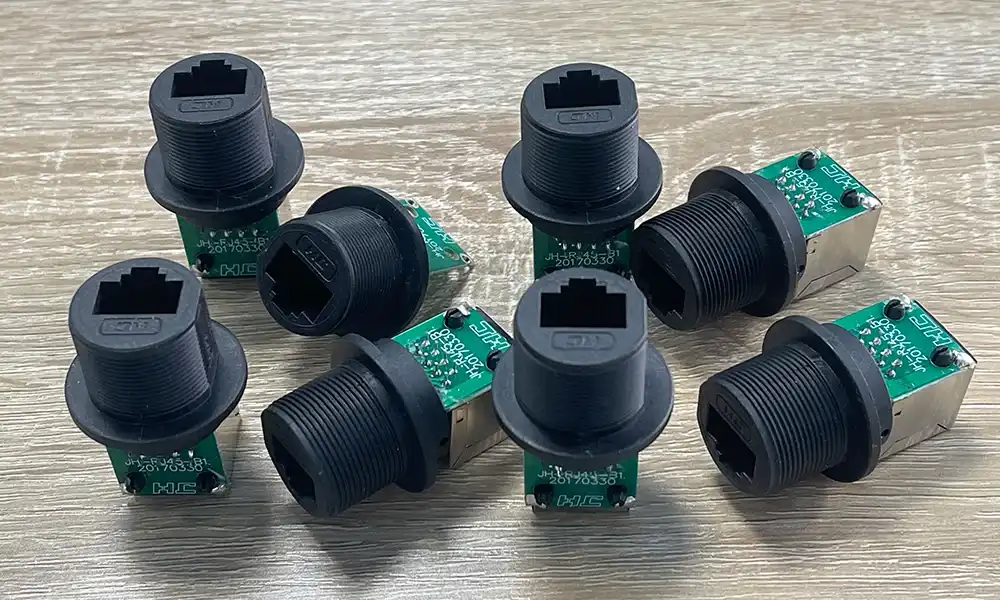
What Are IP67 and IP68 Modular Connectors?
Why Protection Ratings Matter Outdoors?
I start every connection inspection with the IP code, since it tells me a lot. The first number of the IEC 60529.1 rating describes the device’s protection against solids and dust, and a 6 signifies it is dust-tight. The second number is a measure of how much it protects against water. Every day telecom cabinets, street poles and roadside controllers are rained on, humidified, UV light shines on them, they are shaken and the temperature varies. The transparent rating allows purchasers to compare items on an equal footing. Note that the rating is for the connector body only and not for the properly connected unit. If the plug or cable is not correctly terminated water may enter. In the US, NEMA 250 enclosure types do the same thing but are evaluated differently.
IP67 and IP68 Water Ratings Explained
The IP67 test puts the connector in water up to one meter deep for thirty minutes. That's about 9.8 kPa of pressure, which is good for a unit that was hit by a big storm or a short flood. There isn't a single test for IP68. IEC 60529 lets the manufacturer and user agree on the depth and length of time, and the conditions must be worse than those for IP67. So an IP68 label on a datasheet doesn't tell you much until the seller says how deep it is in meters and how long it will last in hours or days. I always ask for that information in writing, along with the test report. When put together correctly, both ratings include dust-tight protection.
Specifications to Compare Before You Buy
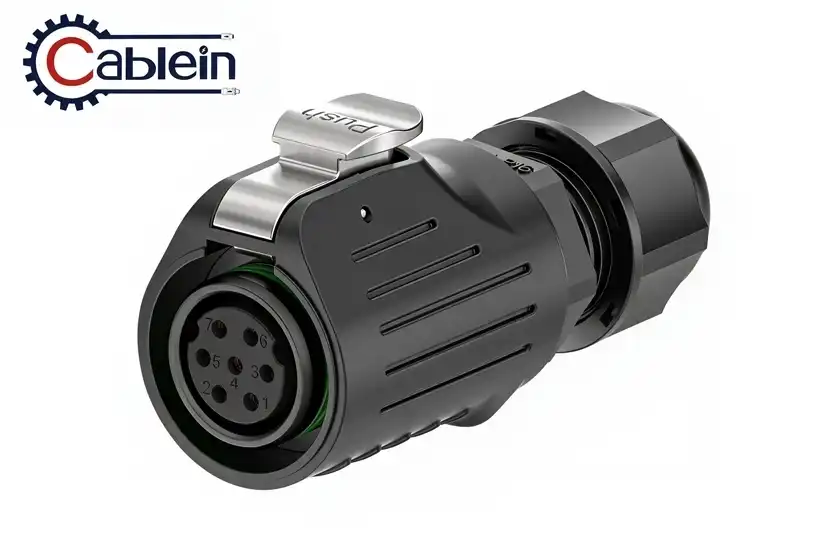
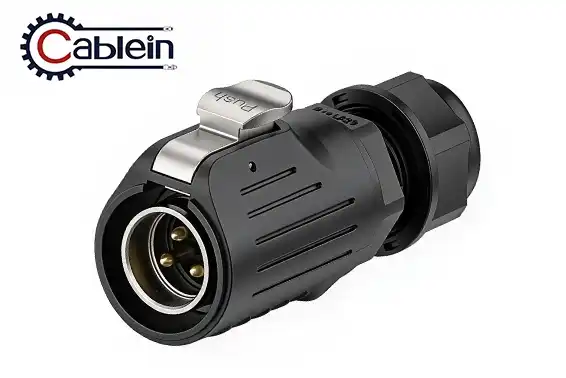
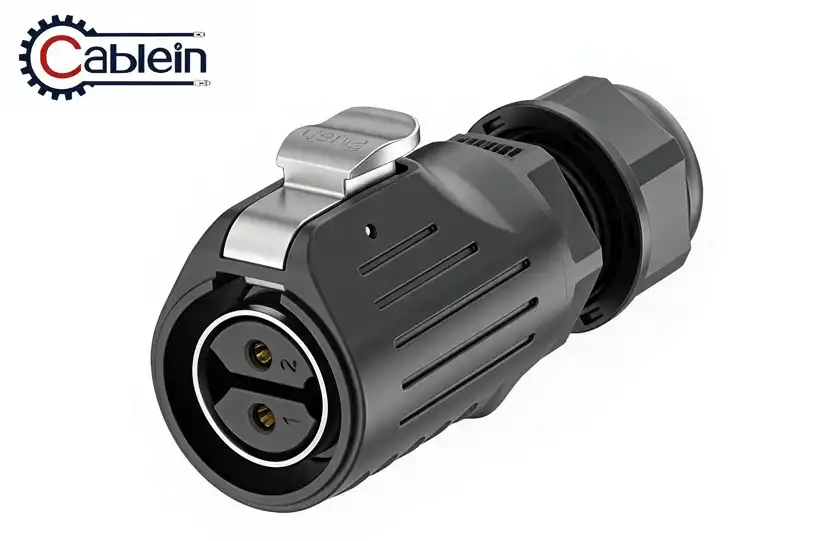
There is only one line for a rating on a datasheet. I evaluate rated voltage and current, contact resistance, insulation resistance, operating temperature, mating cycles, accepted cable diameter, and sealing components for IP67 modular connectors. Next, I look at the paperwork. For projects in the US, CE, RoHS, and ETL or UL files are important. Customers can check that Cablein's LP-24 Series HDMI Cable Connector IP67 has a contact resistance of less than 30 m©, an insulation resistance of more than 500 M©, an operating range of -40°C to +80°C, and a bayonet lock that has been tested over 500+ mating cycles. Get the same set from each supplier so you can compare them line by line.
IP67 vs. IP68: Key Differences for Harsh-Environment Applications
Immersion Performance and Real Exposure
IP67 is good for outdoor gear that gets wet from splashes, rain, and short-term flooding by accident, like radios on poles, cabinets by the side of the road, and smart lighting drivers. IP68 is good for things that can stay underwater, like handholes in the ground, drainage monitoring points, and vaults that are likely to flood. Standing water can last for days, so a 30-minute test doesn't tell you if you will be submerged for a long time. Mounting direction is also important. Cable entries that face up take in water, while entries that face down take it out. First, I tell buyers to map out the worst possible water event for each site. Then, they should choose the rating that covers that event plus some extra space.
What the IP Code Does Not Cover
A bigger number doesn't always mean better. Not a single thing in IEC 60529 talks about UV aging, salt corrosion, chemicals, vibration, or EMI shielding. One more trap is washdown. Two different standards are used to test water jets, IPX5 and IPX6. This means that a product with only an IP67 rating is not automatically approved for high-pressure spray. When cleaning crews or storms bring jets, look for ratings that say both IP66 and IP67. When you ask for salt spray results for coastal sites, use ASTM B117 and IEC 60068-2-11 as guides. Cablein puts the LP-24 series through at least 48 hours of salt spray, and often up to 72 hours for the more expensive models. This is done on the metal shell and gold-plated pins.
Lifecycle Cost: When IP68 Pays Off
It can be bigger or take more steps to put together IP68, and it usually costs more per unit. That extra cost may not seem like much when you compare it to the cost of truck rolls, crane time, and replacing a broken cabinet link at a bad site. An above-ground, dry site can get the protection it needs for less money with IP67, since it doesn't have to pay for depth that the site never sees. Two numbers that I compare are the unit cost and the expected number of service calls over the life of the project. Water problems that happen over and over in a batch can also mean that many poles need to be reworked, which can wipe out any savings from buying a cheaper part.
How IP67 Modular Connectors Work in Telecommunications and Smart City Systems
Sealing Parts That Block Water and Dust
The barrier is made up of several parts. An O-ring or gasket keeps the two faces together. The cable entry is closed with a cable gland or compression seal. The termination is protected by a backshell, and potting compound can be used to fill in gaps around contacts when the design calls for it. The strength and corrosion resistance of a housing are determined by its material. Depending on the model, the LP-24 series uses either zinc alloy or PBT plastic. Each seal depends on the right amount of compression, so the barrier is broken by an O-ring that is damaged or a cable that is too big for the gland. Cablein checks the LP-24 series seals for integrity by looking for vacuum leaks and immersing them in water.
Locking Methods and Modular Contact Layouts
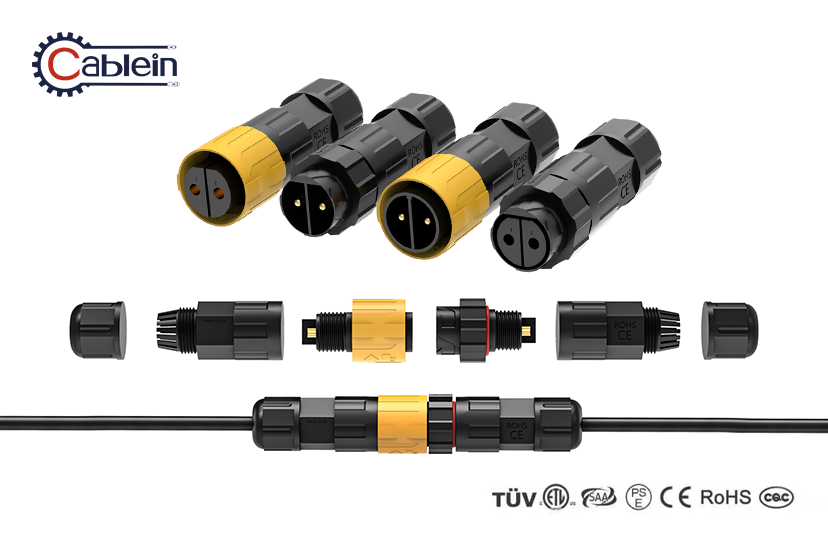
The locking style changes how a connector works in the real world. Screw-lock designs stay in place even when the object moves. It's faster to lock mates with a short twist when you're on a pole or in a cabinet. Push-pull and latch styles make service faster, but they need a clear way to make sure they don't open by accident. With modular contact layouts, power, signal, data, shielding, and ground can all be combined into one interface. This cuts down on the number of separate cable runs that need to be made. That means there are fewer joints to seal and faster plug-in assembly on the line for LED lights. The LP-24 series has a snap-button/bayonet lock that can be used with one hand.
Wiring and Installation Steps That Protect the Seal
Because mistakes in installation can make a certified connector less safe, I do things in a certain way. First, check the datasheet to make sure that the pinout, polarity, conductor size, and cable diameter are correct. Keep the O-ring, gasket, and gland clean and free of any nicks or dirt on the jacket. Use the right tool to break each contact, add strain relief, and make sure the cable exit doesn't have any tight bends. Because too much torque can break a seal, only tighten threaded parts to the specified torque. Check for continuity, insulation resistance, and grounding after the wires have been mated. Add a leak or vibration check where the site calls for it. Time Domain Reflectometry is also used by CableIn to check the LP-24 series and confirm that the HDMI impedance is 100© +/-15%.
Choosing the Right Connector for Telecommunications and Smart City Applications
Matching Connectors to Telecom Sites
Cabinets, base stations, outdoor network equipment, and power or fiber junctions are all parts of telecom sites. Most of them are above ground, where rain, dust, and sun are the main dangers. As long as the housing is UV-resistant and the cable entry faces down, IP67 modular connectors are typically used in those locations to protect against exposure. There is a higher risk in pits, vaults, and enclosures near the coast where water or salt air is present. Make sure to check the grounding, data rate, and current load as well. Some connectors pass water tests but fail the project because they get too hot when they're under a lot of stress or lose their signal. Technicians also have to work in cold and wet conditions, so pick locks that they can use while wearing gloves.
Matching Connectors to Smart City Equipment
Street lighting, traffic systems, surveillance cameras, EV charging stations, environmental sensors, and utility controls are all examples of smart city equipment. Cablein's uses include lighting for parks and stadiums, security and surveillance, new energy, and public transit. As cars and wind shake the poles, the lock has to stay in place. UV and rain can get into stadiums and sign projects. The LP-24 series is made for outdoor LED displays and digital signage, and it protects against UV, rain, and dust. If you put a sensor or light fixture in a roadside drain or tunnel, you should switch to IP68 connectors and ask for proof of immersion data.
IP67 Modular Connectors vs. Other Options
IP65 can handle water jets but not immersion, so it's good for out of the way places that won't flood. IP67 adds protection against short-term immersion, and IP68 adds protection against longer immersion that the supplier has documented. When it comes to shape, modular layouts combine contacts for power, signal, and communication, while circular connectors work well for small designs with only one interface. To make things stronger and safer, metal housings are used. Plastic housings are lighter and less likely to rust. IP67/IP68 circular and panel-mount waterproof connectors, push-lock quick-connect and solder-free types, and T/Y splitters are all in Cablein's range, so buyers can get all the information they need to compare formats in one place. Choose the lock based on how much it shakes, how easy it is to open, and how quickly it can be fixed.
How to Choose IP67 or IP68 Modular Connectors: A B2B Procurement Process
Define Environment and Electrical Needs
Start with the site. Make a note of whether the connector lives outside, underground, near the water, in a lot of dust, or in an area that floods. Then write down the voltage, current, number of contacts, data protocol, cable size, shielding, and grounding. Type of housing, mounting style, cable entry, lock type, and expected mating cycles should all be added. This list becomes the specification you send to suppliers, and it keeps you from having to pay a lot of money for mistakes later on. When I work with OEM luminaire makers, I also record the steps needed to put the fixtures together. This is because a plug-in design that saves one minute per fixture quickly adds up to thousands of units.
Request Documents, Test Data, and Supplier Proof
Find out what the IP test report says about vibration, shock, salt spray, UV light, chemicals, and temperature changes that happen at your site. Check to see if certificate files like ETL, UL, CE, and RoHS are valid for the series you want to buy. You can use IEC 61984 as a guide because it talks about safety standards and tests for connectors. Cablein checks that all of their products are waterproof and has approvals from ETL, PSE, SAA, CQC, CE, RoHS, REACH, and TUV. These approvals are different for each product series, and they work under ISO9001:2015. Over 10,000 of each item are always in stock, and we ship within 7–10 days. We also offer technical support 24 hours a day, 7 days a week, and OEM AND ODM customization.
Avoid Common Mistakes and Apply the Final Rule
It's easy to avoid making most mistakes. Some buyers always ask for IP68 and pay extra for depth that the site never sees. Others only look at the unit price, match the number of pins but not the diameter of the cable, or accept an IP68 label that doesn't say anything about depth or length. The rule I use to decide is short. If you want to keep your outdoor gear protected from rain, dust, splashes, and short-term immersion within certified limits, choose IP67. If your gear will be submerged for a long time, is buried or in an area that is likely to flood, or is exposed to more depth and pressure than IP67 covers, choose IP68. Next, put the whole connector, cable, enclosure, and equipment interface through real-life tests. Make sure engineering, quality, and procurement agree with the results.
Conclusion
When it comes to water, ip67 modular connectors and IP68 are mostly different. IP67 means that the protection is dust-tight and that it can be submerged up to 1 meter for 30 minutes. This covers most above-ground communications and smart city equipment. IP68 means that equipment can stay submerged for a certain amount of time and at a certain depth. The value of the protection is based on test data that has been recorded. UV, salt, chemicals, vibration, and shielding are not covered by the IP code and need to be checked separately. What makes a rated connector protect itself in the field? The sealing parts, locking style, cable fit, and quality of installation are all things that are looked at. To make a good choice, you should start by looking at the worst water event that could have happened at the site. Then, you should compare features, certifications, test reports, and lifecycle cost instead of just unit price.
FAQ
Is IP67 enough for outdoor telecommunications equipment?
Yes, for most sites above ground that get wet, dusty, or briefly flooded. The material for the housing, cable, and mated assembly must also be able to handle the UV, temperature, and vibration conditions at the site.
When do I need IP68 instead of IP67?
Choose IP68 for places that are underground, likely to flood, or submerged. Check the test report for the exact depth and length of time, as IP68 conditions vary from manufacturer to manufacturer.
Can IP67 connectors handle high-pressure washdown?
Not just based on that score. Different standards are used to test jet protection, so if you're going to be pressure washing, ask for a dual rating like IP66/IP67.
Which documents should I request from a supplier?
Ask for datasheets, drawings, pinouts, IP test conditions, certification files, sample information, lead times, and sample data. Cablein can also talk about customization and helping with production.
Request Your IP67 Modular Connectors Quote from Cablein
With stable stock of over 10,000 pieces of each item, 7–10 day delivery, and 24 hour technical support, Cablein helps with projects in telecommunications, smart cities, and LED lighting. Send your drawings, quantities, and rating needs to nick@cableinco.com if you need a supplier for ip67 modular connectors.
References
1. IEC 60529: Degrees of Protection Provided by Enclosures (IP Code), International Electrotechnical Commission, 2013
2. NEMA 250: Enclosures for Electrical Equipment (1000 Volts Maximum), National Electrical Manufacturers Association, 2020
3. IEC 61984: Connectors – Safety Requirements and Tests, International Electrotechnical Commission, 2008
4. MIL-STD-202G: Test Method Standard, Electronic and Electrical Component Parts, U.S. Department of Defense, 2002
5. ASTM B117: Standard Practice for Operating Salt Spray (Fog) Apparatus, ASTM International, 2019
6. IEC 60068-2-11: Environmental Testing, Part 2-11: Tests, Test Ka: Salt Mist, International Electrotechnical Commission, 2021