Waterproof Connector Types & IP Ratings Guide
A waterproof connector types and IP ratings guide starts with one rule: match the connector, the seal, and the test condition to the job. For waterproof connectors m12 m16 m19 ip68, that means checking thread size, pin count, cable diameter, and the tested mated condition before you order. M12 suits compact sensor wiring, M16 adds pin count and cable space, and M19 handles larger cable assemblies. IP68 means dust-tight and continuous immersion under conditions the manufacturer states, so depth and duration must appear on the datasheet. This guide helps panel builders and integrators choose with fewer surprises.
Waterproof Connector Types and IP Ratings Explained
What Are Waterproof Connectors and What Does IP68 Mean?
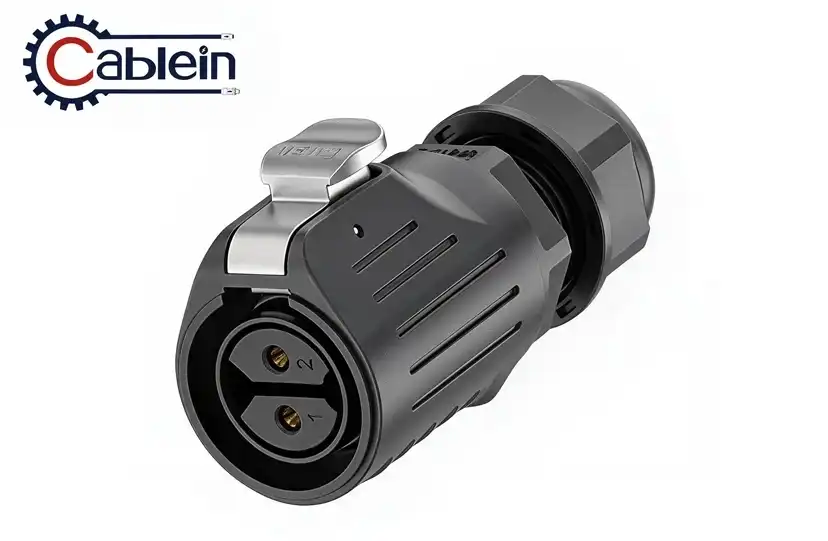
Waterproof circular connections keep dirt and water away from the contacts on power, signal, or data lines. Some of the most common parts of an assembly are plugs, receptacles, contacts, an insulation insert, O-rings or seals, locking hardware, and a cable gland with strain relief. The IP number comes from IEC 60529. The first number, 6, means it doesn't let dust in. As long as both the buyer and the seller agree to certain terms, the second number, 8, means that the enclosure can stay submerged below 1 meter. Waterproof connectors M12, M16, M19 IP68 are not a single certificate that can be used anywhere in the water. What happens is different depending on the depth, length, cable diameter, state of mating, and installation method. Under IP67, on the other hand, you can be submerged up to 1 meter for 30 minutes. First, I look at how long and how in-depth the test was. After that, I check the voltage, current, number of pins, temperature range, shielding, and certificates.
How IP68 Waterproof Connectors Protect Against Water
There are three places where IP68 sealing works: where the two parts fit together, where the cable goes in, and where they touch. They need to be the right size, have a clean surface, and be fully squeezed before they are put together. With the strain relief, pulling force can't go through the crimps, solder joints, and overmolded parts. The cable clamp closes the gap around the jacket. Contacts that are far apart and insulating inserts are used make it less likely that short circuits and moisture will leak. It's important to remember that IP protection is not the same as grounded or circuit protection. Temperature changes, condensation, wire movement, and getting older can all weaken a seal over time. That's why I read both the test report and the fitting conditions at the same time.
Materials, Locking Methods and Cable Compatibility
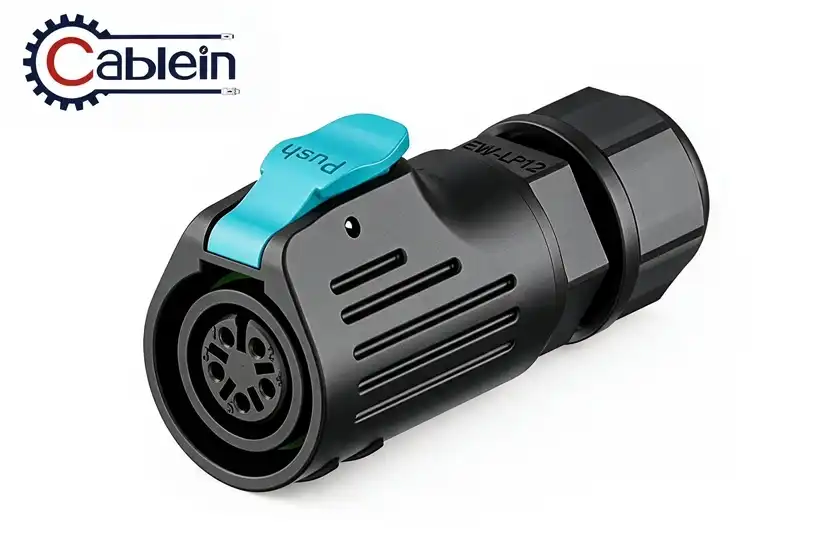
The case, contacts, seals, locking system, gland, and wire as a whole all affect how well it works. The metal is stronger and could be used as a cover because it has nickel on it. Polyesters that are stronger, like PA66, are usually lighter, don't rust, and cost less. Most M16 datasheets list nickel-plated brass or UL94 V-0 PA66 housings with gold-plated copper alloy contacts. Screw-lock styles stay in place well when there is vibration, but push-lock or snap-lock styles can be put in place faster when the conditions are better. The gland needs to be able to cover the whole width of the cable. Most M16 grommets are between 4 mm and 10 mm wide. The jacket material, elasticity, shielding, and structure of the wires must all be the same as well.
M12, M16 and M19 IP68 Connector Types Compared
M12, M16 and M19 IP68 Connector Types Explained
There are three sizes because different people have different needs when it comes to strength, space, and wiring. In business, Waterproof connectors M12 M16 M19 IP68 is the standard for small sensors, motors, robots, and data lines. Most of them have between 3 and 12 pins, and sensors' wiring is kept separate from Ethernet signals by coding (A, D, or X). M16 can be used in some power circuits, lights, instruments, control screens, and more because it has more room for contacts and wire routing. In a standard set, it can hold up to 24 pins. This cable assembly is good for M19 because it is bigger, has more links, or needs to be stronger. What you pick isn't just the thread size that will work best for electricity. You have to pick the male or female, the mounting style, the locking system, the pin layout, and the coding.
M12 vs M16 vs M19: How to Compare Waterproof Connectors
This is how I look at the picture and compare the three sizes:
- M12: There isn't much room on the panel, and the load is signal-level or low power. This is the best choice. The seal can't handle too much stress from a small connection with a thick wire. Check the wire bend radius, the number of pins, and the code. Make sure the current rating on the datasheet is correct before you connect it to sensors or fieldbus lines.
- M16: This is the one to get if you need more pins than most M12 kinds give you. There are 24 pins, 250 V, and 3 A to 10 A per contact on most models, but this can vary depending on the layout. If you are in a cold place, check the derating and make sure the gland range fits your wire.
- M19: If you need stronger cables, motors, actuators, or tough gear that needs to make a lot of contacts, you might want to look into it. Make sure the mounting hole is the right size, and there is enough room for the wrench. There needs to be more room on the panel for bigger plugs. For current, voltage, and sealing, make sure you get the exact numbers from the datasheet because ratings change for each series.
Vibration, UV light, chemicals, and salt spray can also change the housing and seal that you choose. That's why the datasheet is the last word.
Selecting the Best M12, M16 or M19 Connector for Different Applications
There should be more than one reason to pick, not just size. A lot of sensors, encoders, robotics, and automation signals use M12 because it is small, can be coded, and doesn't shake easily. M16 works well for computer screens, LED lights, and instruments outside. It can handle coolant and oil on assembly lines and heavy rain on light poles. Motors, actuators, and cable assemblies that are bigger can be used with M19. Solar, marine, video, and phone systems need to be checked more often for UV light, salt spray, temperature changes, and wire movement. I also look at where the connectors are placed on water treatment skids and control cabinets in relation to the glands and the walls of the enclosures. This is because the final seal is affected by how well the enclosures fit together.
Wiring, Installation and Inspection for IP68 Connectors
Waterproof Connector Wiring and Installation Guide
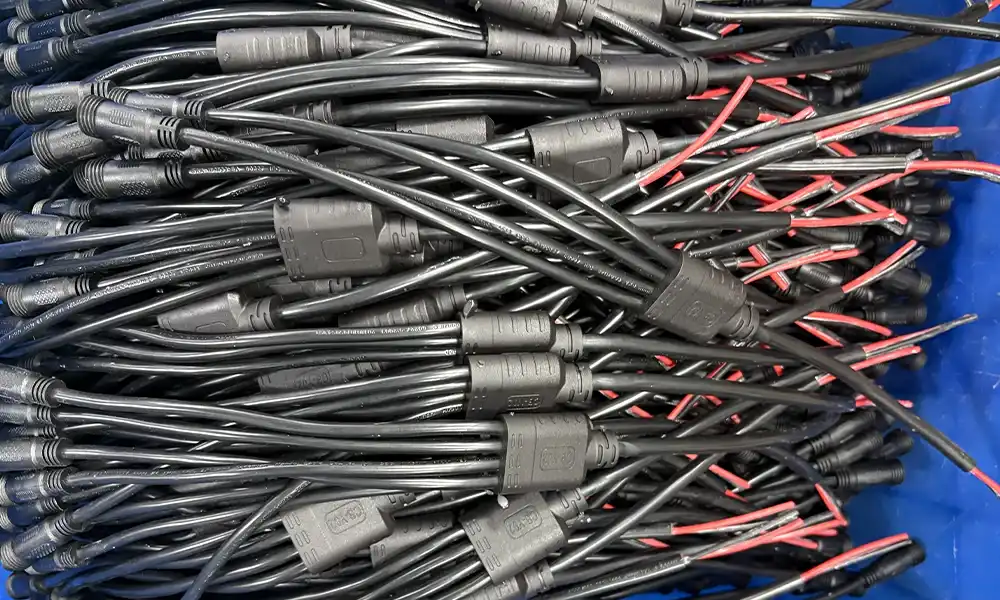
If the wiring is done right, both the signal and the IP68 seal are safe. Make sure you have the right part number, code, and pin assignment before you put the connector together. Also, look at the picture to see if it shows the connector's front or back. Get the right tools and cut the wire to the right length. Then, join, solder, or waterproof connectors M12 M16 M19 IP68 terminate it. For long-term installations that will shake a lot, solder joints work well. For quick repairs in the field, screw terminals are better. Make sure the contacts, seals, backshell, and gland are in the right order. Then, use the given force to tighten the gland. To join, line up the coding features and turn the lock all the way on without pushing it. Finally, make sure that the ports that aren't being used have caps, strain relief, continuity, insulation, and a good seal.
Common Waterproof Connector Selection and Installation Mistakes
Some problems with connectors aren't caused by broken parts but by wrong ideas. Just because it says M12, M16, or M19 on the thread doesn't mean it's waterproof, can handle a certain amount of current, or fits your cable. Check the exact part number, the state of the matched test, the derating, and the gland range. IP68 also doesn't protect against UV light, oil, solvents, salt spray, impact, or high-pressure washing. Based on IEC 60529, a product can't handle water jets if it only has the IPX5 or IPX6 code. It also can't have the IPX7 or IPX8 code. If you mess up during installation, signals could go out, polarity could be off, short circuits could happen, water could get in, and seals and wires that are under a lot of stress could get injured. Tests that are controlled, review steps, and functional tests all help lower these risks.
Inspection Checks Before Installation
After a cabinet is wired, expensive work doesn't have to be redone because of a short receiving check. For each part number, open a box and compare what's written on it to your bill of materials. Check the grade, number of pins, thread size, and code. The locking nuts should be easy to turn, the O-rings should stay in place, and the cable range on the datasheet should match the cable you have. You need to check a sample wire assembly for continuity and insulation. After that, write down the results and the lot number. Ask the supplier for the IP68 test conditions and report for the series you bought if your project needs proof that the seal was made. To make sure that every Cablein product is waterproof and will last, we check it one more time. Your sample checks are like a second guarantee.
Buying Waterproof Connectors for B2B Projects
Waterproof Connector Selection Guide for B2B Procurement
For more than one project, you need waterproof connectors M12 M16 M19 IP68. An organized process helps you avoid getting specs that don't match and costs that you didn't expect. First, write down what is around you, how deep the wire is submerged, how it moves, the temperature, the sounds, the chemicals, how long it will last, and the volume. Next, write down the number of pins, series, current, voltage, cable diameter, materials, locking method, mating cycles, certifications, and mating cycles. In the US, people should also look at how scores fit with their own rules. If you want to go from an IP code to a NEMA type number, you can, but not the other way around. Like Type 6P, which is for long-term submersion. Next, check how long it takes to make standard parts, custom designs, and stock wire kits. Also, check how much work it takes to make sure they work and how often they can be used. You should look at drawings, examples, IP proof, inspection records, capacity, export papers, and wait times to decide which providers to work with.
How to Buy M12, M16 and M19 IP68 Waterproof Connectors
I believe your RFQ should be based on three groups of data:
- Connector data: Write down the size (M12, M16, or M19), gender, mounting style, number of pins, code, locking method, IP requirement, and assigned number of pins for each BOM line. Give a part number to each line so the seller doesn't have to guess. Don't use different numbers for lines of different sizes. Do not forget to add the updated drawing.
- Cable and electrical data: It is important to list the length, outside diameter, current, voltage, temperature range, shielding, and materials of the cable. Based on these numbers, you can pick between a standard connector and a cable that has already been put together at the factory. Please send an explanation of the wire and a picture of how it is set up right now if you have them.
- Commercial data: Give the goal lead time, the number of items needed for each job, when they need to be delivered, and where they need to go. Also, list any certificates that are needed. When suppliers split orders up by project node, they can plan exports step by step and make sure each box is clearly marked. Make sure that every line is signed off on in writing before the order goes out. This way, the people who get the goods can check them against a single list.
If this is all in one file, the supplier can quote the whole bill of materials and confirm stock line by line.
Stock Depth, Mixed Batches and On-Time Delivery
Project buyers often worry about packages of different sizes, orders that come in at the last minute, and changes in quality between sizes. A business called Cablein was set up in 2017 in Longgang, Shenzhen. Over 200 people work there, and the company has more than 30 utility model rights. Its building facility is 6,000 ㎡. There are always more than 10,000 of each item in stock, and we can ship them out in 7 to 10 days. We'll work with the plans for your project when you place a custom order. Under ISO 9001:2015, we check each and every item to make sure it is waterproof and will last. We can get certifications from CE, RoHS, ETL, PSE, SAA, and TUV for some lines of products. UPS, DHL, and FedEx are freight forwarders we trust and use to ship. On the labels of the boxes, look for part numbers. To avoid making mistakes, compare each packing list to your bill of materials.
Conclusion
If you want to use the right waterproof connectors for a job, you need to make sure they fit the thread size, pin layout, seal design, wire, and test situation. Waterproof connectors M12 M16 M19 IP68 mean that they can be submerged in water for a long time without getting dusty. This means that the datasheet's depth, duration, and mated state are more important than the label. An M12 connector is good for small sensors and data wiring. An M16 connector adds pins and cable room for lights and control panels. An M19 connector is good for larger cable systems and tough gear. The range of the cable, the material of the housing, and how it locks all have an effect on how well it seals. Protect it with the right connections, force, and checks. Bad installation and having the wrong ideas about ratings are what lead to most mistakes. You can be more sure that the specs are correct and avoid mistakes if you send a full BOM-based RFQ that includes data on shipping, connections, and cables.
FAQ
1. Does a connector's size guarantee waterproofing?
No, M12, M16, and M19 only talk about thread size. The seal, the cable gland, and how well they are joined all affect how waterproof something is. The datasheet has the exact part number's IP grade, test depth, and test time. You can also ask for proof that you've been tested.
2. Can an IP68 connector work underwater at any depth?
Not at all. Both the manufacturer and the user must agree on the IP68 test conditions, which are set out in the IEC 60529 standard. These conditions must be stricter than IP67. Look at your project and the depth and time given against them. Also, look at them for the structure that is connected by cables.
3. How do I choose between M12, M16, and M19?
Some good places to start are with the number of pins, the wire width, the current, the voltage, and the panel space. With M16, you can add pins and space for cables, and M19, you can fit bigger assemblies. The housing can be made of metal or plastic; pick one based on how well it shields, how heavy it is, and how much chemical contact it will have. Then make sure it matches the exact document and ask for examples before telling everyone it's okay.
Request a Quote for Waterproof Connectors M12 M16 M19 IP68 from Cablein
Type your BOM into nick@cableinco.com and send it. We're going to read it line by line. When it comes to waterproof connectors M12 M16 M19 IP68, we offer OEM/ODM customization and expert help 24 hours a day. We always have more than 10,000 of each item in stock, and we can deliver in 7–10 days. When you tell us the size, number of pins, cable thickness, and IP68 requirement, we'll give you a clear price. Learn about projects, get datasheets, and see examples at connectorswaterproof.com.
References
1. IEC 60529, Degrees of Protection Provided by Enclosures (IP Code), 2013
2. NEMA 250, Enclosures for Electrical Equipment (1000 Volts Maximum), 2020
3. ISO 20653, Road Vehicles – Degrees of Protection (IP Code), 2013
4. IEC 61076-2-101, Connectors for Electrical and Electronic Equipment – Circular Connectors with M12 Screw-Locking, 2012
5. UL 50E, Enclosures for Electrical Equipment, Environmental Considerations, 2020
6. NFPA 70, National Electrical Code, 2023