M25 Threaded Inline Waterproof Connector: The Ultimate Guide to Features and Applications
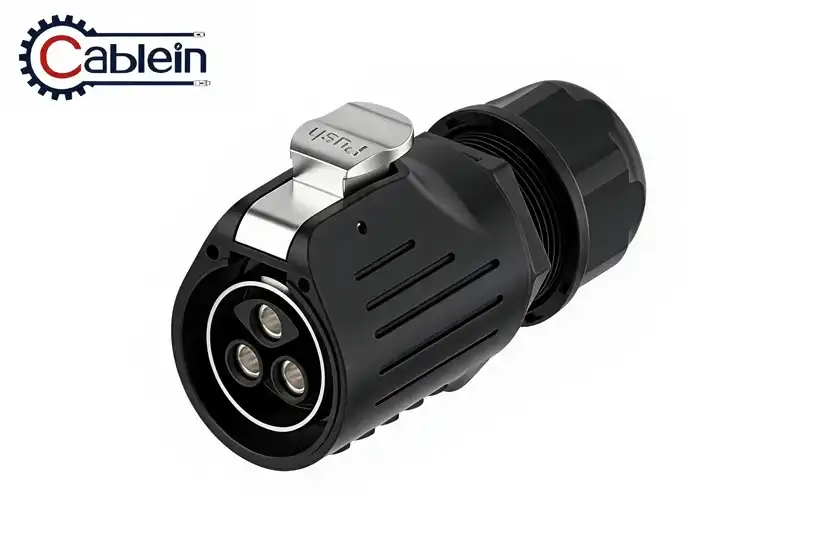
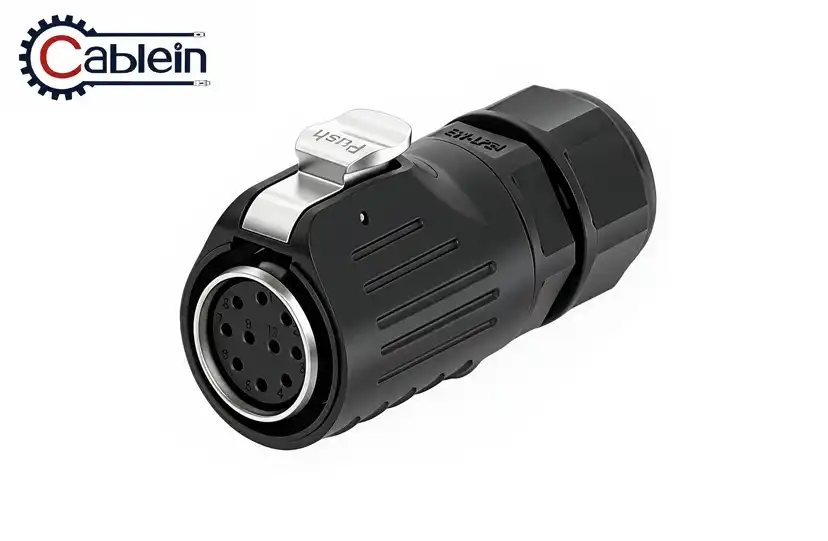
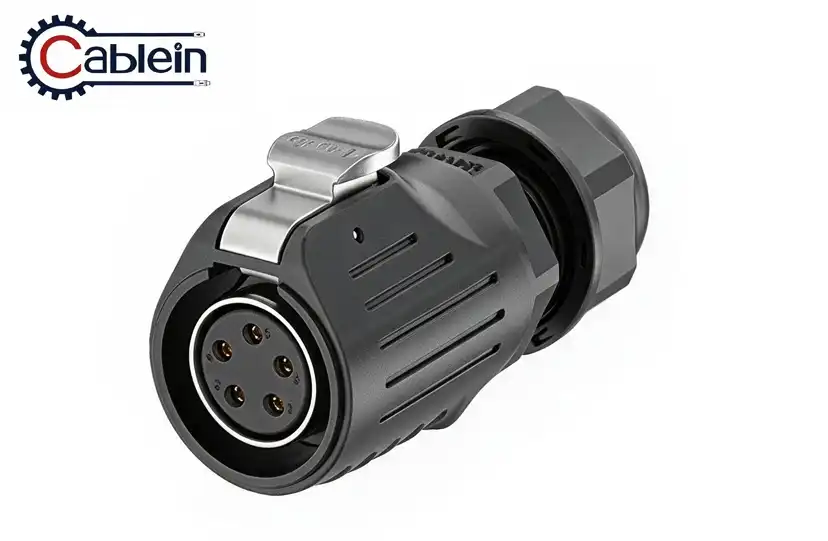
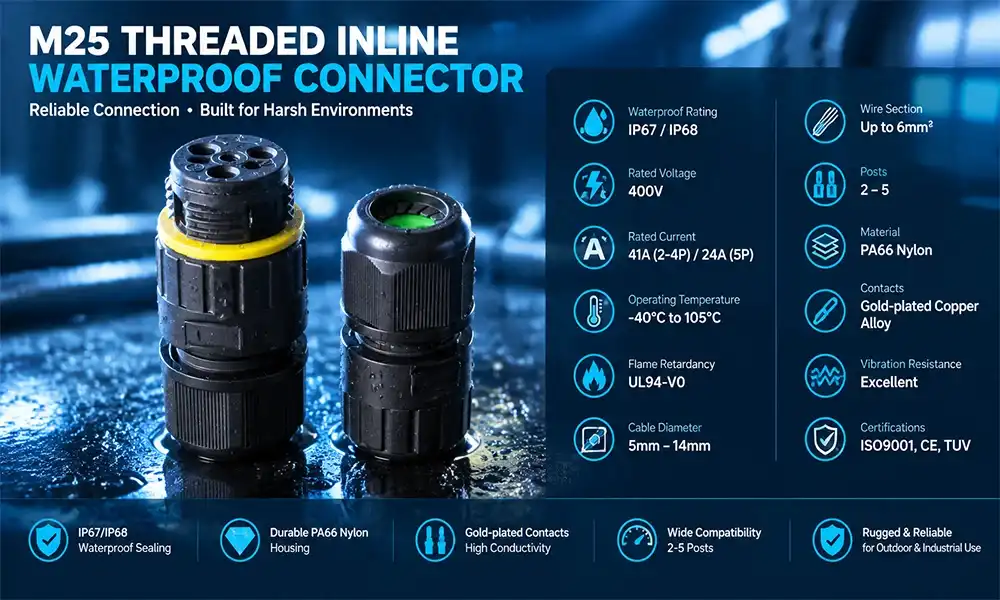
If you've ever had a connector fail mid-project — whether on a solar farm, a factory floor, or a marine installation — you know exactly how costly that single point of failure can be. The M25 threaded inline waterproof connector addresses that problem directly. Designed for cable-to-cable extension in harsh environments, this connector combines a 25mm metric threaded coupling with IP67/IP68 ingress protection, gold-plated copper alloy contacts, and a PA66 nylon shell rated UL94-V0. It handles 2–5 poles at 400V AC/DC, supports current loads up to 41A, and operates reliably from -40℃ to +105℃ — all without a junction box.
Understanding M25 Threaded Inline Waterproof Connectors
What Is an M25 Threaded Inline Connector?
An M25 threaded inline waterproof connector is an electrical coupling device made for direct cable-to-cable connections in places where protection from the elements is important. The "M25" designation refers to the 25mm metric thread diameter, which creates a lock between two halves that is mechanically secure and doesn't shake. The inline configuration doesn't have any external enclosures, as a standard junction box does. This means that engineers can run power through narrow conduit paths or open outdoor trays without adding extra bulk.
How the Sealing System Works
A precision-molded silicone O-ring and compression gaskets that flatten evenly as the threaded coupling tightens are the two parts that make up the sealing architecture. IP67 protection means that it is dust-tight and can be submerged up to 1 meter for 30 minutes. IP68 protection means that it can be submerged continuously at the rated depth. IEC 60529 says that IP68-rated enclosures must keep their seal under pressure conditions set by the manufacturer. Every Cablein M25 connector meets this standard because it is 100% factory tested for leaks.
Core Material Specifications
The shell is made of PA66 nylon that has been strengthened with UV stabilizers. It has a flammability grade of UL94-V0, which means that it goes out on its own in 10 seconds when a flame source is removed. The contacts are made of a copper alloy that has been covered in gold. This keeps the resistance below 5 mΩ and stops the buildup of oxide that happens with bare copper contacts and raises resistance over time. The temperature range is from -40°C to +105°C, so it can be used for projects in the Arctic winter and on rooftops in the desert without the materials changing shape.
Comparing M25 Threaded Inline Connectors with Alternatives
M25 vs. M20 Connectors
The M20 connection is the one that works the best. Most M20 units can handle up to 16A and can handle cables with a diameter of up to 9mm, which is big enough for sensor wiring but not big enough for power trunk lines. The M25 format works with three gland ranges (5–9mm, 9–12mm, and 10–14mm) and cable outer diameters from 5mm to 14mm. It can also handle wire cross-sections of up to 6 mm² on 2–4 pole configurations. When current margins are important, like in EV charging trunk cables or solar string conductors, the M25's 41A rating gives you a safety buffer that you can measure.
M25 Threaded Connector vs. Cable Glands
Cable glands connect the end of a single cable to a box; they do not connect one cable to another directly. A gland makes you add an extra box when you need to extend a run between two wire parts. For example, to connect a floodlight to a power supply across a rooftop, you would need to add an extra box. The M25 threaded inline waterproof connector gets rid of that step completely, which saves money on materials and cuts down on possible entry points. Over a 25-year service life, fewer sealed openings means fewer places where things will break.
Plastic vs. Metal Housings in This Class
Metal-shell inline connectors are more resistant to mechanical damage, but they are heavier, cost more, and may rust in salt spray environments if they are not coated. In 96 hours of salt spray testing (ISO 9227), PA66 nylon with UV stabilizers works better than zinc alloy shells that aren't coated. This is because polymer housings don't have a risk of galvanic corrosion. A well-specified PA66 shell is the best choice for most outdoor lighting, solar, and automation uses because it is light, cheap, and resistant to chemicals over time.
How to Choose the Best M25 Waterproof Inline Connector for Your Application
It's not enough to just match the thread size when choosing the right connector. The following things have a direct effect on long-term performance and confidence in procurement.
Match Current Rating to Your Actual Load
Choosing a connection at its rated limit is a common mistake in design. When engineers work with IEC 60364, they usually give continuous loads a 1.25× derating factor. If your string current is 32A, the M25 2–4 pole version, which is rated at 41A, will keep you in that derating range. It has 5 poles and a wire range of 0.5 to 2.5 mm². It is rated at 24A and is best for control or signaling circuits rather than main power trunks.
Verify Certification Traceability
If you want to connect solar panels to the grid or charge your electric car, the certification number on the datasheet needs to match the number on the connector and the test report. CableIn's M25 connector line is CE and TÜV certified, and each production lot comes with a 2000V AC dielectric withstand test record and an IP seal proof log. The batches can be tracked. This set of documents directly answers the EN 61984 parallel compliance standards that European EPCs check when they do audits of grid connections.
Consider Termination Method and MOQ
The connection has two ways to connect: screw-type terminals for field assembly (all you need is a normal screwdriver), and solder-cup contacts for pre-assembly into wire harnesses in the workshop. The solder-cup option can be added without having to retool OEM harness makers who use automatic crimping lines. Cablein lets you choose your own overmold colors, pin counts, and pre-assembled cable lengths, and their minimum order quantities (MOQs) are flexible enough to handle both large production orders and test runs for samples.
Installation and Maintenance Guide
Cable Preparation and Assembly Steps
First, remove the cable jacket until 8–10 mm of the conductor insulation can be seen. Before putting the wires into the screw terminals, slide the back nut and gland body over the cable. Tighten each screw on the terminal to the torque listed in the datasheet. Contact resistance drift in field installations is most often caused by terminals that are not torqued enough. Once the wires are connected, turn the connection nut by hand until the silicone O-ring fits. Then, use a wrench to make one more quarter-turn to get the compression needed for IP68 stability.
Gasket and O-Ring Inspection
Before each time you put something back together, look at the silicone O-ring. Check the surface for cracks, cuts, or flat spots. Even if the coupling nut is tightened all the way, a damaged O-ring will still let water in because it can't keep its compression geometry. Cablein says that the O-ring should be replaced after any installation where the connection was buried deeper than its recommended depth or exposed to hydrocarbon solvents, which can make silicone compounds swell.
Preventive Maintenance Schedule
Every 12 months, you should do a visual inspection of outdoor installations. Check the torque on the coupling nuts, look for changes in the color of the housing that could mean heat stress, and make sure there are no cracks in the wire jacket where the gland entry is. A four-wire milliohm meter can show that the contact resistance of a M25 threaded inline waterproof connector is higher than 10mΩ. These connectors should be taken apart, their contacts cleaned, and then they should be torqued again. Because the threaded design can be used again and again, hundreds of mating cycles are possible. This means that routine maintenance rarely needs to replace the whole unit.
Case Studies and Real-World Applications
Outdoor Architectural and Facade Lighting
A lighting company that was putting up LED wall washers on the front of a high-rise building needed a trunk-extension system that could withstand being washed with water during building upkeep. At each drop point for a luminaire, sealed junction boxes were replaced with the M25 IP68-rated inline connector. Because of this, there was no moisture entry during two annual wash cycles, and the time it took to install each connection point went from 25 minutes (for box assembly) to less than 8 minutes.
Solar PV String Wiring
For a 5MW ground-mount solar project in southern Spain, trunk cables had to be stretched across rough terrain between combiner boxes. The 4-pole M25 connectors, which can handle up to 41A of current and 6 mm² wire, were able to handle string currents with enough derating room. The batch tracking paperwork passed the TUV grid-connection check with no requests for a second look. This was an important detail that directly protected the project's feed-in tariff window.
Factory Washdown Automation
A Midwest food processing plant needed sensor-to-PLC wiring that could handle being washed with caustic chemicals every day at 60°C. The M25 threaded coupling and the PA66 shell's chemical resistance to alkalis kept the IP67 rating even after 18 months of daily cleaning. According to maintenance reports, there were no downtimes caused by connectors during that time. This is in contrast to the previous year, when four junction boxes failed when a competing push-lock product was used.
Conclusion
With the M25 threaded inline waterproof connector, you can safely extend power lines in dirty, wet, or temperature-changing areas without having to add enclosures. It can handle 41A of current, has a dual rating of IP67/IP68, a UL94-V0 housing, and full CE/TUV certification, which makes it a technically sound choice for solar EPCs, automation integrators, marine equipment builders, and architectural lighting contractors. The screw-terminal design can be put together in the field using common tools, and the solder-cup design can be used in automated production lines for harnesses. This connector is made to meet the needs of both engineering BOM sign-off and quality audit documentation. It has been tested for 100% factory seal and can be tracked down to the batch level.
FAQ
1. What cable diameter range does this connector accept?
The M25 threaded inline connector supports three gland size ranges: 5–9mm, 9–12mm, and 10–14mm outer cable diameter. This covers most standard industrial and solar cable gauges.
2. Can the connector be reused after disassembly?
Yes. The threaded coupling design supports hundreds of mating cycles. As long as the silicone O-ring is intact and contacts are clean, each reassembly achieves the same IP rating as the original installation.
3. Does it require special tools for field assembly?
A standard flathead screwdriver handles the screw terminals. A small wrench is recommended to achieve the final quarter-turn torque needed for IP68 sealing, but no proprietary crimping or insertion tools are required.
4. Is it suitable for continuous 41A current loads?
The 2–4 pole version is rated at 41A. For continuous loads per IEC 60364 derating guidelines, size your cable and connector so the operating current stays at or below 80% of the rated value — approximately 32A for uninterrupted service.
5. What certifications does the connector carry?
Production is certified under ISO 9001:2015. The product carries CE and TÜV compliance documentation. Each batch ships with a 2000V AC dielectric withstand test record and IP seal test log for procurement audit purposes.
Get a Quote from Cablein — Your Trusted M25 Threaded Inline Waterproof Connector Supplier
From 2017 to now, Cablein Technology has sent waterproof connections with IP67 and IP68 ratings to projects in over 100 countries. It comes with full CE/TUV paperwork, batch traceability records, and 100% factory seal test results for our M25 threaded inline waterproof connector. This gives your engineering and quality teams everything they need to sign off on the audit. We offer OEM customization, bulk discounts, and fast shipping (7–10 days for standard stock).
Get in touch with us right away at nick@cableinco.com.
References
1. International Electrotechnical Commission. IEC 60529: Degrees of Protection Provided by Enclosures (IP Code). IEC, 2013.
2. International Electrotechnical Commission. IEC 61984: Connectors — Safety Requirements and Tests. IEC, 2008.
3. Underwriters Laboratories. UL 94: Tests for Flammability of Plastic Materials for Parts in Devices and Appliances. UL Standards, 2013.
4. International Organization for Standardization. ISO 9227: Corrosion Tests in Artificial Atmospheres — Salt Spray Tests. ISO, 2017.
5. International Electrotechnical Commission. IEC 60364-5-52: Electrical Installations of Buildings — Selection and Erection of Electrical Equipment. IEC, 2009.
6. International Organization for Standardization. ISO 9001:2015: Quality Management Systems — Requirements. ISO, 2015.