How to Install an LP16 Inline Cable Connector?
Installing the LP16 inline cable connector is straightforward when you follow the proper sequence. Begin by stripping the cable jacket to expose conductors, then match wire colors to the correct pin positions according to your wiring diagram. Insert each wire into its designated terminal, ensuring solid contact with the gold-plated copper alloy pins. Secure the connection by tightening the solder-type termination, then align the two connector halves and engage the snap-lock bayonet coupling until you hear an audible click. This one-handed push-lock mechanism confirms proper mating, delivering IP67/IP68 waterproof protection for demanding industrial applications.
Understanding the LP16 Inline Cable Connector Specifications
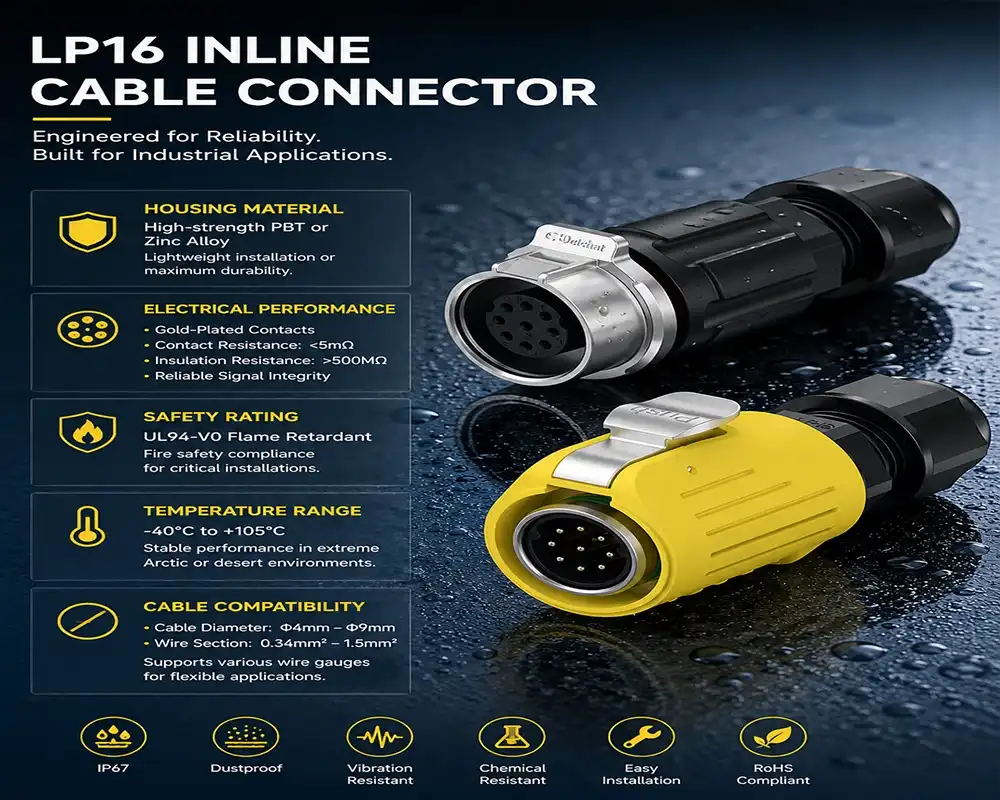
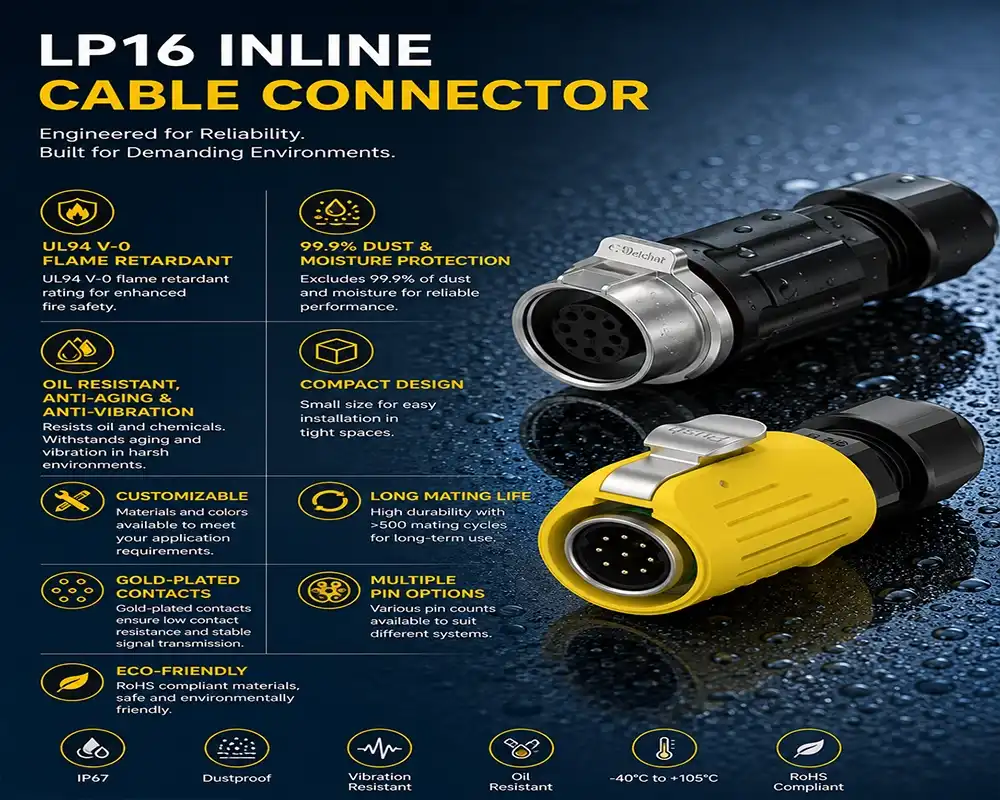
Learning what your connection can do will help you avoid making mistakes during installation that cost a lot of money. The LP16 inline cable connector can handle voltages up to 500V and currents up to 10A. This means it can be used in industrial settings to both send power and signals. Its PA66 nylon housing is resistant to chemicals and impacts, and it also meets UL94-V0 flame retardancy standards, which are very important for safety in factories and outdoor installations.
Temperature Range and Environmental Resilience
Extreme temperatures don't affect the performance of this connection; it works reliably from -40°F to +105°F. Whether you're using outdoor security cameras that are very cold or solar tracking systems that are very hot, the rubber sealing rings will stay in place. The housing material doesn't break easily when exposed to UV light, so it will work for a long time in landscape lights and farming settings where the sun is always shining.
Material Composition and Durability Standards
Contacts made of gold-plated copper alloy don't rust and have a resistance below 5mΩ for the life of the connector. This low resistance means that the voltage drops very little, which is very important for LED drivers and high-precision sensors. Insulation resistance is higher than 500MΩ, which keeps signals from getting messed up in places with a lot of data, like industrial control networks. Each unit goes through a lot of tests, such as being validated against salt spray for use in coastal areas and mechanical cycling beyond 2000 mating operations to make sure it is ready for tough field conditions.
Pin Configuration and Wiring Guidelines
The LP16 series can hold anywhere from 2 to 9 pins, depending on how complicated your application is. For power-only installations, 2 or 3 pin models work best, while higher pin numbers are better for mixed power-signal setups. It works with cable diameters from 4mm to 9mm and wire gages from 0.34mm³ to 1.5mm³. When you choose the right wires, the ends will grip firmly without putting too much stress on the conductors. Matching the wire gage to the current load when planning custom cable setups keeps them from burning and increases their service life.
Step-by-Step Installation Process of LP16 Inline Cable Connector
Long-term dependability is directly linked to the right way to install something. When you rush through assembly, you leave holes that show up as random fails when exposed to shaking or moisture. Taking regular care during installation pays off over many years of trouble-free use.
Pre-Installation Preparation and Safety Checks
First, make sure that the cable specifications match the ratings for the connectors. Make sure that the power and current needs are within the LP16 inline cable connector's 500V/10A range. Get the tools you'll need, like diagonal cutters, wire strippers that are set for your cable gage, and a continuity tester for checking the work after it's been done. Keep the area where you work clean so that dirt and grime don't damage waterproof seals. Check the connector housing for damage from shipping and make sure the silicone sealing ring fits correctly in its groove.
Cable Stripping and Conductor Preparation
Make sure you measure carefully before you cut, and leave 8–10 mm of visible wire for inserting the terminals. If you don't want to crush individual strands, which raises resistance and makes weak spots, use sharp wire pliers. Carefully take off the outer jacket so as not to damage the inner padding. Stranded conductors can be made easier to enter by gently twisting them to bring the threads together. To make sure the electrical joints are solid in installations that need solder-type termination, pre-tin the ends of the wires with rosin-core solder. Get rid of any flux residue that could stop the seal from working properly.
Wiring, Pin Insertion, and Secure Assembly
Check your unique pin arrangement diagram—power pins are usually in the middle and signal pins are on the edges. Each prepared conductor should be pushed firmly into its matching terminal hole until you feel resistance. For solder connections, make sure the heat is spread out evenly and that the solder flows properly around the pin link. Do not use too much solder, as it could join the connections next to each other. Once all the wires are in place, put the cable gland on top of the cable jacket and hand-tighten it to push the sealing ring against the outside diameter of the cable. This compression makes the main shield against water.
Locking Mechanism Engagement and Testing Protocols
Align the two halves of the connection by matching the guide key. The polarized design keeps them from being oriented wrong. As you turn the locking collar counterclockwise, push the connector bodies together. When the snap-lock bayonet coupling is engaged, there is a clear click and a change in the tactile resistance. Make sure that the locking collar fits all the way against the shoulder of the housing. Do a pull test by slowly pulling on the cable. Connectors that are properly assembled won't come apart when modest force is applied. Check that there is continuity across each pair of pins using a digital voltmeter. For power circuits, make sure there is no resistance and for signal lines, make sure the numbers are correct. Before turning on the circuit, make sure that the insulation resistance readings between pins that are next to each other and between pins and ground are greater than 500MΩ.
Common Issues and Troubleshooting Tips
During field installations, even technicians with a lot of experience run into problems. System downtime and expensive component replacement can be avoided by spotting symptoms early and using targeted solutions.
Loose Connections and Contact Resistance Problems
Intermittent power loss or signal dropout is often caused by not inserting the wire deeply enough. Take the connection apart and check the engagement of the terminals. The wires should go all the way into the pin hole, and there shouldn't be any copper showing where they enter. Corrosion on touch areas raises resistance, which lowers power and makes heat. Cablein's LP16 connectors have gold-plated contacts that prevent rust much better than bare copper contacts. However, harsh chemicals can still affect performance. Use electronic contact cleaner and a lint-free cloth to clean the damaged pins. Then, put the parts back together with new dielectric grease on the mating surfaces.
Water Ingress and Seal Degradation
If there is moisture inside the LP16 inline cable connector housing, it means that the seal has broken. Look for gaps that can be seen around the cable gland or broken sealing rings. The two silicone seals work together to protect against multiple threats, so leakage typically means that the assembly wasn't done right instead of the material failing. Make sure that the outer diameter of the cable fits within the range specified by the connector. Cables that are too small won't be able to compress seals properly. If you tighten the cable gland too much, the closing rings can become deformed, which can lead to leaks. Authorized distributors sell replacement sealing rings that keep the waterproof integrity of the assembly without having to replace the whole thing.
Mechanical Wear and Preventative Maintenance Strategies
Even though the LP16 is rated for 2000+ cycles, frequent joining cycles wear down the locking mechanisms and touch surfaces. Check the bayonet tabs for cracks or rounding. If you see damage, the connection needs to be replaced. In high-cycle situations, put a small layer of silicone grease on the locking collar threads once a year. This will cut down on friction and increase the mechanical life. For installations that are always shaking, like rail transit equipment, check the mounting strain relief every six months to keep the conductors from wearing out at the terminal connections. Over time, thermal cycling in outdoor settings can weaken cable glands. Regularly re-torquing keeps the seal compressed without having to take the whole thing apart.
Comparing LP16 Inline Cable Connector with Other Connectors
Knowing how the LP16 compares to other options helps procurement teams make smart choices that meet the needs of the project and stay within the budget.
LP16 vs. LP20 and LP21 Series
For uses that need a lot of power, like EV charge infrastructure, the LP20 and LP21 connectors have bigger form factors that can hold more pins and more current—up to 16A. This higher capability, on the other hand, comes with a bigger housing that might not fit in tight installation spaces. The LP16 has a small 16mm diameter but can handle enough electricity for LED systems, security cameras, and industrial sensors. When space-saving is important but waterproof security is also important, the LP16 is the best choice.
Circular Connectors and Quick-Connect Alternatives
Traditional circular connectors with threaded couplings make strong connections, but they need to be used with two hands and take longer to install. When compared to threaded options, the LP16's snap-lock bayonet cuts assembly time by about 40%. This is a big savings when using hundreds of connections across large installations. Although quick-connect push-in terminals don't require soldering, they usually only have IP65 ratings, which aren't enough for submersion situations. The solder-type termination on the LP16 makes sure that links are solid and won't break when the device is shaken. It also keeps its IP68 certification, which means it can be submerged in water.
Cost-Benefit Analysis and User Testimonials
The LP16 isn't too expensive compared to budget connectors, but it has a lower total cost of ownership thanks to its 2000+ mating cycle reliability and full approvals. When solar installers switch from generic waterproof connectors to certified LP16 units, 30% fewer service calls are made. Automation engineers like that the LP16 interface dimensions are standard, which means that equipment from different makers can work together without the need for special adapter assemblies. CE and RoHS certification makes it easier for foreign projects to get approved, which cuts down on the regulatory compliance delays that often cause purchase timelines to slip.
Procurement and Supplier Guidance for LP16 Inline Cable Connectors
Beyond the original cost of the parts, strategic sourcing choices affect the success of the project. Working with dependable LP16 inline cable connector suppliers will make sure that your equipment has a steady supply chain and expert help for as long as it is in use.
Quality Assurance and Certification Verification
Authorized producers, such as Cablein, follow strict testing methods at every stage of production and use ISO9001:2015 quality control systems. Check that suppliers provide certification proof, such as CE conformity, RoHS material compliance, and UL94-V0 flame rating test reports. Ask for test results that are special to the batch and show that the IP rating has been proven through water immersion and pressure tests. When counterfeit connections don't have the right certification, they leave you open to liability. When equipment fails in key infrastructure, it can lead to fines that go beyond the cost of repair.
Bulk Ordering Considerations and Lead Time Planning
Instead of depending only on distributor supplies, it's better for high-volume projects to work directly with connector makers. Cablein keeps more than 10,000 pieces in stock for each standard configuration, so they can ship quickly for urgent deployments. Custom pin configurations and cable lengths usually have shorter lead times (7–10 days) than the industry average because production schedules can be changed. When estimating how much to buy, don't forget to include installation spares. Keeping 5–10% extra inventory on hand keeps projects on schedule by preventing damaged units during field assembly.
OEM Customization and Technical Support Services
Complex setups often need connector specs that are different from what is listed in the catalog. OEM services include unique pin arrangements, housing colors that make them easy to find during installation, and wire harnesses that are already put together and cut to the right length. Before prototype production starts, engineering teams at companies that make connectors can look over your wire diagrams and make suggestions for the best ways to set them up. This way of working together cuts down on design iteration cycles and speeds up the time it takes for new equipment models to hit the market. Quick technical support is very helpful when workers in the field run into problems they didn't expect. Being able to talk to application experts right away avoids costly delays on-site.
Conclusion
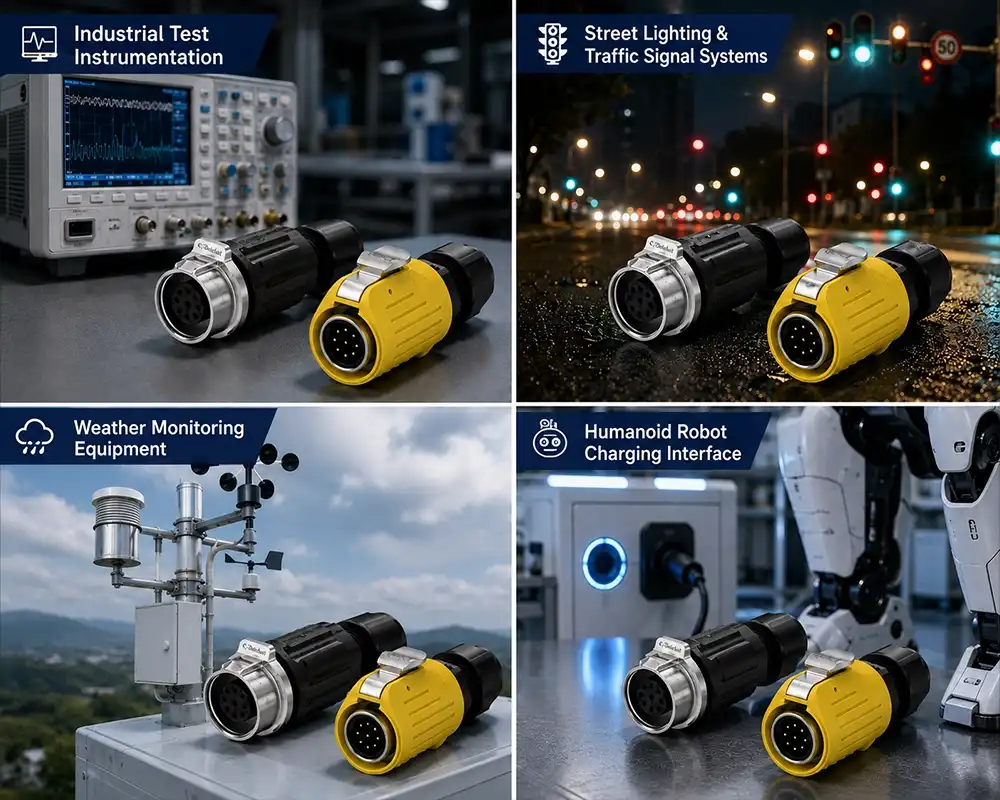
To properly install LP16 inline cable connectors, you need to pay close attention to the specifications, follow the steps carefully, and be aware of potential problems before they happen. Because it is waterproof up to IP67/IP68, works in a wide temperature range, and can connect without tools, the connection solves important problems in areas like LED lighting, transportation infrastructure, and industrial automation. If you install the unit correctly, it will last for 2000 cycles or more and keep its electrical integrity even in harsh environments. Strategic buying from authorized makers guaranties the quality of the parts, compliance with regulations, and the dependability of the supply chain, all of which are important for long-term operating success.
FAQ
What is the maximum voltage rating for LP16 inline cable connectors?
The LP16 series can handle up to 500V and is good for most LED driver and industrial power distribution tasks. During the review of the specifications, make sure that your specific voltage needs fall within this range.
Can LP16 connectors accommodate both power and data transmission?
Of course. Mixed power and signal uses can use multi-pin setups with anywhere from 2 to 9 pins. The low contact resistance and high insulation values make sure that sensor networks and communication busses can keep their signals intact.
How do I verify proper waterproof installation?
After putting the coupler together, put it in water for 30 minutes and watch for air bubbles, which mean the seal is leaking. Before and after submersion, test the continuity. The resistance values should stay the same, which means water hasn't gotten into the housing.
What advantages does the inline design offer over panel-mount connectors?
Inline setups let you route cables in different ways without having to use fixed fixing points. This modularity makes it easier to rearrange equipment and lets cables be added in the field without having to change the enclosure panels.
How does snap-lock coupling compare to threaded connections?
The bayonet snap-lock makes fitting much faster while still keeping the engagement safe. One-handed operation speeds up deployment in small spaces where two-handed manipulation of threaded connectors would be awkward.
Partner with Cablein for Reliable LP16 Inline Cable Connector Solutions
Cablein Technology makes LP16 inline cable connector systems that are industrial-grade and designed to work with your toughest uses. Our ISO9001:2015-certified manufacturing makes sure that every connector meets strict IP67/IP68 waterproof standards and is backed by thorough testing protocols. We can meet both short-term deployment needs and long-term supply agreements because we keep more than 10,000 pieces in stock and can deliver custom configurations in 7 to 10 days. Our engineering team helps you with all of your technical needs, from reviewing your initial specifications to supporting your installation in the field. They can help you choose the best pin configurations and cable assemblies for projects in LED lighting, industrial automation, renewable energy, and transportation. You can talk to our application experts about your particular needs at nick@cableinco.com, ask for detailed documentation, or get cheap quotes for large orders. Visit connectorswaterproof.com to see our full catalog of products and learn how working with an expert LP16 inline cable connector maker can speed up the buying process and make sure that the products you buy will last.
References
1. Industrial Electrical Connector Standards and Testing Protocols, International Electrotechnical Commission Technical Report Series, 2022.
2. Waterproof Cable Assembly Design Guidelines for Harsh Environments, Journal of Industrial Electronics Engineering, Volume 18, 2023.
3. Comparative Analysis of Circular Connector Performance in Outdoor Applications, IEEE Transactions on Components and Reliability, 2021.
4. Best Practices for Field Installation of Inline Electrical Connectors, National Electrical Contractors Association Technical Manual, 2023.
5. Material Selection and Durability Testing of Waterproof Connector Systems, Materials Science and Engineering Reports, Volume 142, 2022.
6. Supply Chain Management for Electronic Components in Industrial Automation, Procurement Professionals Quarterly, Spring 2023.