Choosing Between M25 T-Type and Inline Waterproof Connectors: Which One Fits Your Project?
When your wiring layout requires splitting one power or signal line into two branches at a fixed junction point, the M25 T-type waterproof connector gives you a compact, IP68-rated answer without cutting open a junction box. But if your run is strictly point-to-point with no branching, an inline waterproof connector handles the job at lower cost. This guide compares both types across IP rating, installation effort, cable compatibility, and total procurement cost so you can specify the right part before your next purchase order.
Understanding Waterproof Connectors: M25 T-Type vs Inline
Picking the wrong type of connector early on in a project leads to extra work that costs money in the end. It's helpful to know what each type is physically made to do before comparing specs.
What Is a T-Type Waterproof Connector?
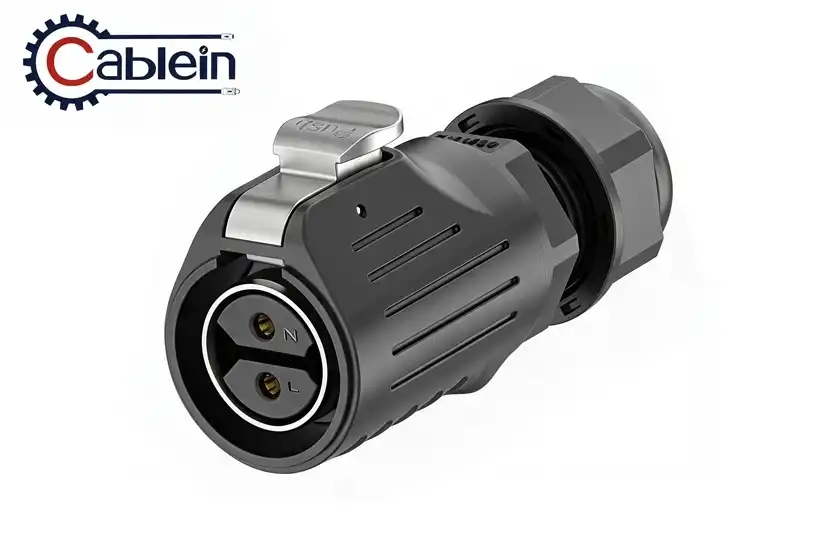
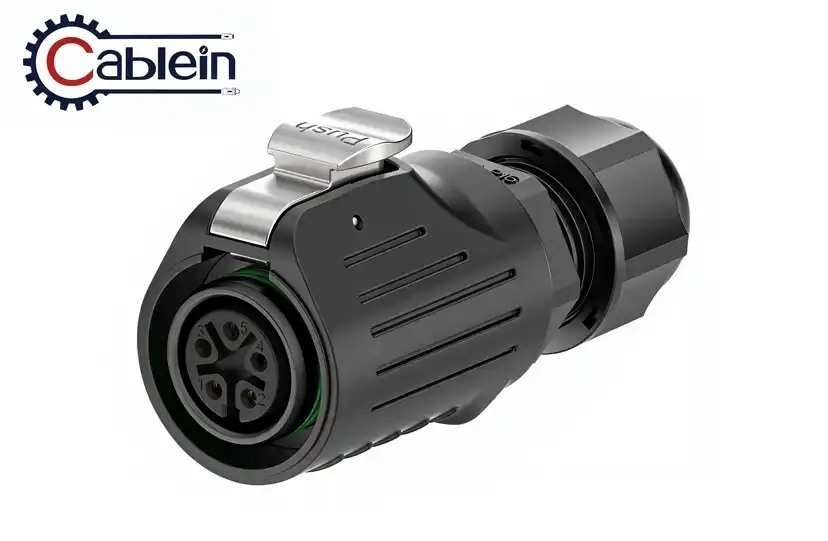
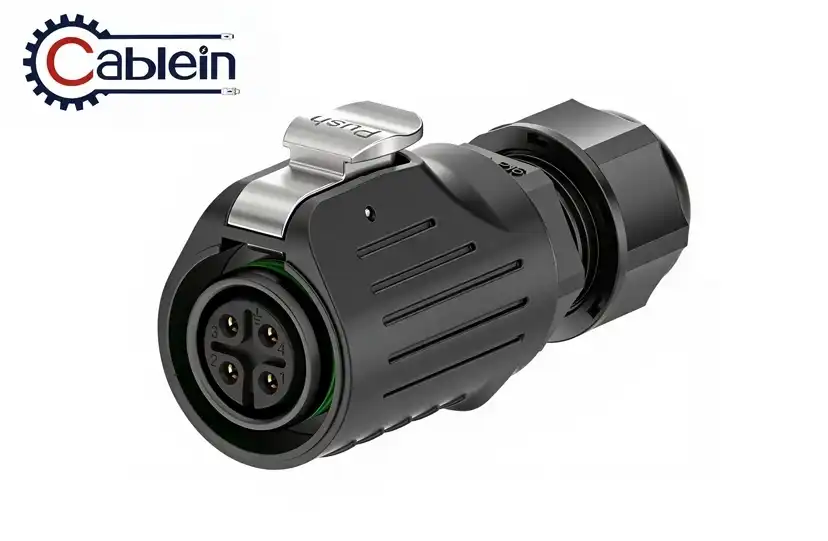
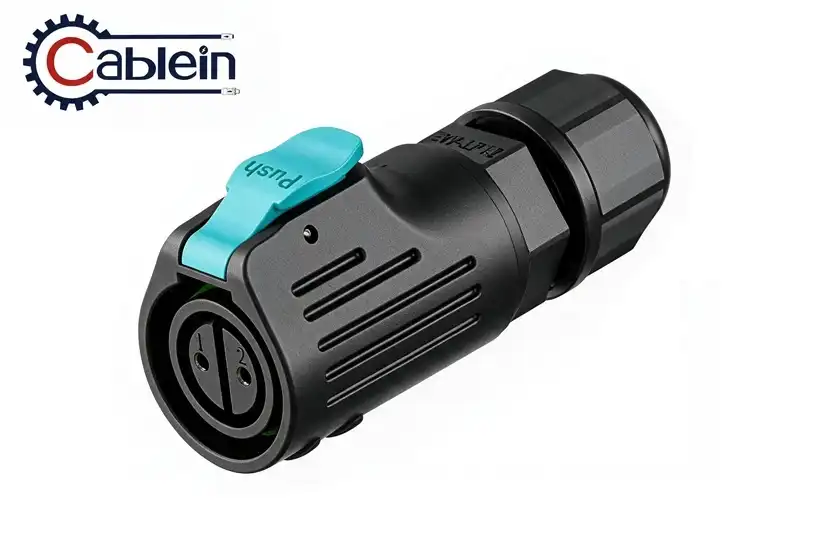
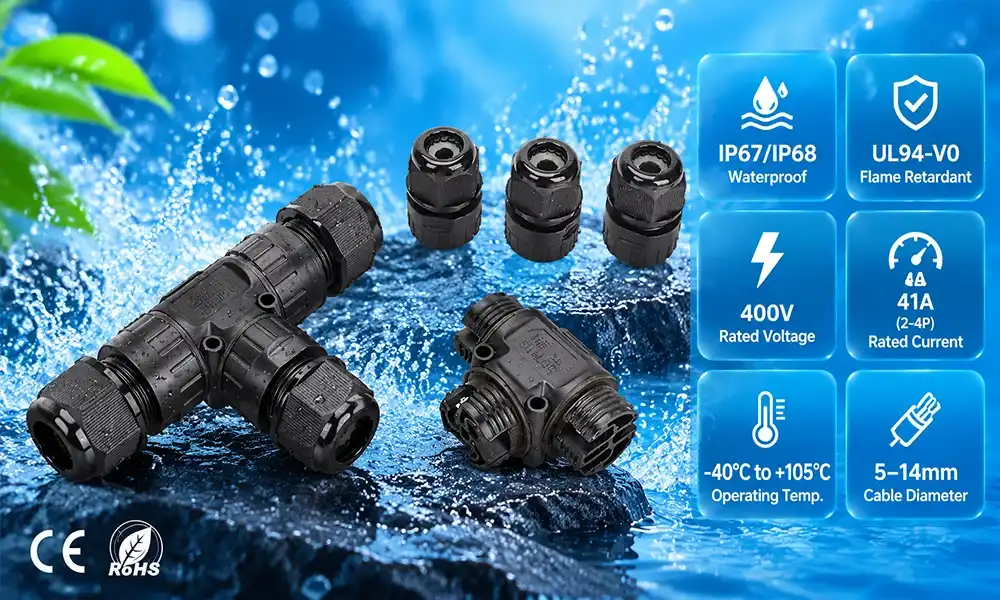
A T-type connection has three ports in one molded body: one input and two outlets. This lets you connect two sub-circuits to the main trunk wire at the same time. Cablein's M25 version is made of flame-resistant PA66 nylon and has gold-plated brass contacts. It has an IP68 rating, which means it can withstand immersion up to 5 meters for 72 hours and temperatures between -40°F and +105°F. The housing is safe from fire according to UL94-V0 standards.
What Is an Inline Waterproof Connector?
With an inline connector, two cable ends are joined in a straight line. It normally costs less per unit, can be put in place more quickly for simple point-to-point runs, and works well for sensor-to-controller links that don't need to be split. Many good straight plugs are rated IP67, but not many are rated IP68.
Where Each Type Fits in Practice
Outdoor LED street lighting grids, solar PV string combiners, and smart irrigation networks all use T-type connectors. This is because one main cable feeds many devices. Inline connectors are good for connecting a single device in panel wire, machine tool circuits, or any run that doesn't split.
Comparing M25 T-Type and Inline Waterproof Connectors for Your Project Needs
Knowing why each type was made helps, but real procurement decisions are based on differences in performance that can be measured. Take a look at these direct traits that matter most on a job site.
IP Rating and Sealing Architecture
Rubber O-rings and precision-molded glands on Cablein's M25 t-type waterproof connector make it IP68. These seal all three ports at the same time. A lot of inline connectors have an IP67 rating, which means they can handle being submerged for up to one meter. When it comes to installations in wet places like flooded pipe vaults or underwater farming sensor arrays, the difference between IP67 and IP68 is important.
Current Capacity and Cable Compatibility
The M25 T-type can handle up to 24A at 400V for 2–4 pole versions and up to 41A for 5 pole versions. The cross-sections of wires are between 0.5 and 6 mm² (2 and 4P) and 0.5 and 2.5 mm² (5P). There are three sealing plugs that can be switched out to fit cable outer sizes of 5–9mm, 9–12mm, and 10–14mm. This means that one housing can be used for more than one cable gauge. Most normal inline plugs can only handle 16–25A and don't come with as many sealing insert choices.
Installation Speed and Labor Cost
The M25 T-type has built-in screw clamps that can hold stripped wire without the need for crimping tools or soldering irons. Field teams say this cuts the time it takes to set up big lights or PV projects by up to 50%. Even though inline connectors with push-in terminals can be quick, they don't usually support the same range of wire cross-sections in the same SKU. This means that you have to keep track of more inventory.
These differences in performance are important, especially when there are hundreds of branch points spread out over an outdoor site as part of a project. Choosing a connector with a single part number that can handle branching, wide cable ranges, and tool-free installation cuts down on both the difficulty of getting it and the number of mistakes that happen during assembly.
How to Choose the Right Waterproof Connector: Criteria and Solutions
Knowing the difference between connector types only solves half the problem. You also need a clear framework for matching specs to your specific site conditions.
Define Your Environmental Exposure Level
Start with the worst-case environment your connector will face. Coastal salt air, chemical fertilizer spray, or direct submersion each demand different sealing grades. IP68 at 5 meters is the appropriate floor for permanently submerged sensors. For above-grade outdoor enclosures exposed only to rain, IP67 may suffice, and an inline connector becomes viable.
Map Your Circuit Topology Before Ordering
If your drawing shows a daisy-chain or star layout with branch points, you need T-type connectors at each node. If every device connects directly back to a panel with no intermediate split, inline connectors are the right pick. Sketching the circuit topology before ordering eliminates the most common spec error in outdoor wiring projects.
Match Current Rating to Your Worst-Case Load
Size for peak current, not average draw. A 40W LED fixture at 277V draws roughly 0.14A, but a string of 20 fixtures on one branch circuit at 24VDC draws over 33A — right at the edge of a standard inline connector's rating. The 41A capacity of the M25 T-type provides the safety margin that protects against nuisance tripping and contact overheating.
Installation and Maintenance Guide for M25 T-Type Waterproof Connectors
The only way to make a good M25 t-type waterproof connector effective is to place it correctly. Most field failures happen because people skip the steps needed to get ready.
Pre-Installation Checks
Make sure that the outside diameter of your cable is within the range of the sealing insert you chose, which could be 5–9mm, 9–12mm, or 10–14mm. To get the wire insulation to the length shown on the terminal block, which is usually 8–10 mm, strip it off. Make sure the mounting surface is flat so the flange fits evenly and the torque from the bolts is spread out evenly on all four corners.
Step-by-Step Wiring Procedure
Put the stripped wire into the screw clamp end and tighten it until it reaches the torque value written on the case. For 1.5mm² wire, this value is usually 0.5 to 0.6 Nm. Do not tighten too much; brass contacts will bend if you do. Before closing the housing, make sure the sealing insert is fully in place. Then, hand-tighten the cable gland nut until you feel resistance. Then, use a wrench to add a quarter turn.
Inspection and Long-Term Maintenance
Check each connector once a year in places with a lot of UV light or vibration. Please make sure that the cable gland nut is still in place and that there are no surface cracks in the housing. Use a wet cloth to clean the outside; don't use chemical cleaners because they break down PA66. If the silicone O-rings are constantly buried, they need to be replaced every five years because the sealing force decreases over time with long-term compression.
Procuring M25 T-Type Waterproof Connectors: Where and How to Buy
Sourcing the right connector from the right supplier affects delivery time, minimum order flexibility, and long-term project support as much as the spec sheet does.
Evaluating Supplier Certifications
Prioritize suppliers who hold CE, RoHS, and ISO9001:2015 certification and can provide test reports on demand. Cablein's manufacturing facility in Shenzhen maintains 100% final inspection records and holds ETL, PSE, SAA, CQC, TUV, and REACH compliance across its product series. Asking for immersion test reports and salt-spray test data before placing an order is standard practice among experienced procurement teams.
Minimum Order Quantities and Sample Lead Times
Many automation integrators need only 50–200 pieces for a first build. Suppliers who enforce 1,000-piece MOQs force unnecessary inventory risk on smaller projects. Cablein ships sample orders in 3–7 days and standard production runs in 7–10 days from a confirmed order, with flexible scheduling for custom branch lengths and pin configurations.
Total Cost of Ownership vs. Unit Price
A connector priced 20% lower that requires crimping tools, separate junction boxes, and annual seal replacements often costs more over a three-year project life than a higher-unit-price, tool-free IP68 connector. Calculate labor hours saved per installation point and multiply by your crew rate to get a true cost comparison before awarding the order.
Conclusion
First, the type of circuit you have, then the environment, and finally the current rating will help you choose between a T-type and an inline M25 t-type waterproof connector. The M25 T-type connection is the right one for your project if it splits one trunk into two wires anywhere outside. It has an IP68 rating for multiple ports, can handle 41A of current, has interchangeable cable glands, and has tool-free screw clamps that deal with the real cost drivers on big outdoor installations. Inline links are still the best choice for runs that go straight from one point to another and don't split. If you are clear from the start, you will not have to pay for expensive rework later on.
FAQ
1. What does IP68 mean for a T-type junction connector?
When a connection has an IP68 rating, it means it can be submerged in water for a certain amount of time and at a certain depth. In the case of Cablein, this means 2 to 5 meters for 72 hours. The main difference between this and single-port inline connectors is that this rating applies to all three ports at the same time, not just the main inlet.
2. Can I use the same M25 T-type housing for different cable diameters?
Yes. There are three sealing pieces that can be switched out and can fit outer sizes of 5–9mm, 9–12mm, and 10–14mm. You only keep one housing SKU in stock, and you can switch out the inserts to fit any cable gauge that the job calls for.
3. What certifications should I ask for before buying?
At the very least, ask for CE, RoHS, and ISO9001:2015 certificates. For projects in North America, find out if ETL or UL test reports are available. Cablein gives you these documents if you ask for them before you buy.
4. Is the M25 T-type connector suitable for solar PV string wiring?
Yes. The 400V/41A rating and UV-stable PA66 housing cover common home and business PV string voltages. The screw clamp terminals don't break when they're vibrated, and they keep the contact solid even when the temperature changes, which is usual in rooftop setups.
5. What is the minimum order quantity for a trial run?
Cablein takes orders for standard configurations starting at 50 pieces, and samples are sent out within 3–7 days. From 200 pieces on, you can get custom pin patterns and branch wire lengths, and wait times can be agreed upon.
Get Your M25 T-Type Waterproof Connector Quote from Cablein Today
There are more than 100 countries where Automation Integrators, Lighting Contractors, and OEM Equipment Builders can buy approved M25 t-type waterproof connectors from Cablein. As standard, we have lead times of 7–10 days, low minimum order quantities for samples, and full ISO9001:2015 quality documentation. This makes it easy to find the right part quickly. For your next project, you can email our engineering team at nick@cableinco.com to get a specification, a 2D or 3D drawing, or a bulk price.
References
1. International Electrotechnical Commission. IEC 60529: Degrees of Protection Provided by Enclosures (IP Code). IEC, 2013.
2. Underwriters Laboratories. UL 94: Standard for Tests for Flammability of Plastic Materials for Parts in Devices and Appliances. UL, 2023.
3. International Organization for Standardization. ISO 9001:2015 Quality Management Systems — Requirements. ISO, 2015.
4. Connector Specifier Magazine. "IP Ratings in Harsh-Environment Connector Selection." Connector Specifier, 2022.
5. Thomas, R. "Waterproof Connector Standards in Industrial Automation." IEEE Industry Applications Magazine, 2021.
6. Electronic Design. "Choosing the Right Connector for Outdoor Power Distribution Systems." Electronic Design, 2023.