RJ45 Ethernet Waterproof Connector: Complete Guide for Outdoor Networking
Outdoor network infrastructure faces relentless challenges from rain, dust, temperature extremes, and corrosive elements. An RJ45 Ethernet waterproof connector transforms standard networking into industrial-grade communication by combining familiar RJ45 interface compatibility with advanced ingress protection. These ruggedized components maintain signal integrity and mechanical stability in environments where conventional modular plugs fail within weeks. For purchasing managers overseeing smart city deployments, engineers designing industrial control systems, and OEM clients developing outdoor equipment, selecting the right waterproof Ethernet connector directly impacts system uptime, maintenance costs, and long-term reliability across telecommunications, transportation, security, and renewable energy sectors.
Understanding RJ45 Ethernet Waterproof Connectors
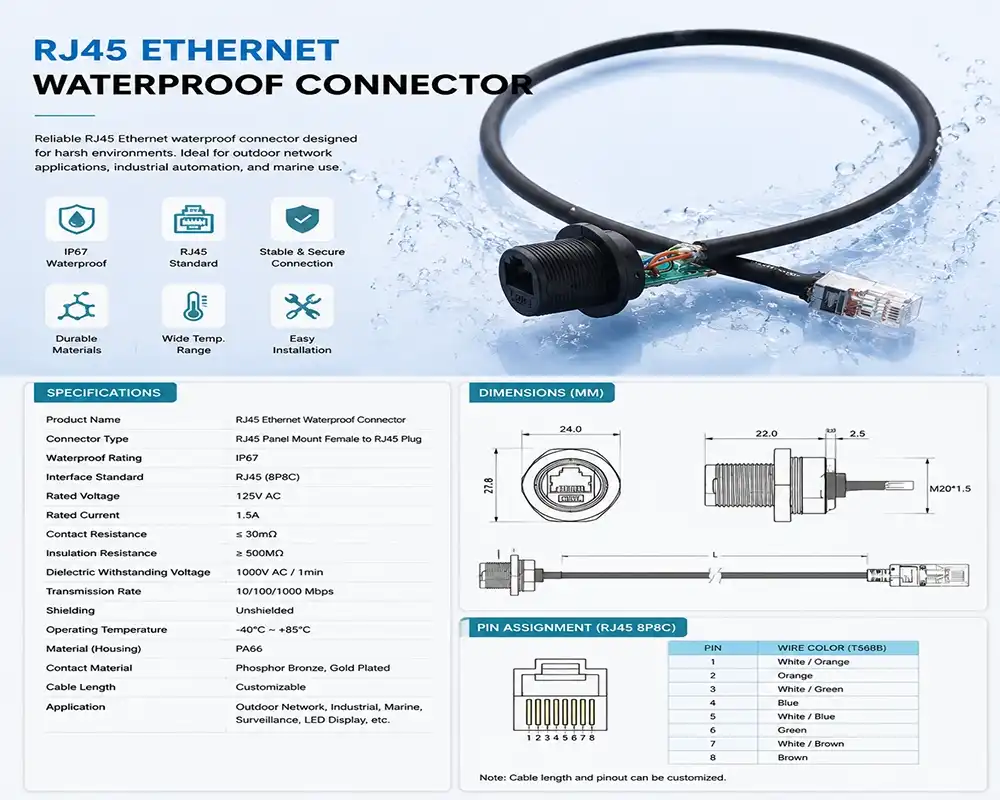
This is the main difference between regular office-grade RJ45 plugs and waterproof ones: RJ45 Ethernet waterproof connectors are designed to keep water out. Traditional connectors have simple plastic housings, but RJ45 Ethernet waterproof connectors have multiple sealing layers that keep out water, dust, and other contaminants. This safety is measured by IP ratings, which are Ingress Protection standards set by IEC 60529 and describe levels of resistance to dust and water.
How Waterproofing Technology Works
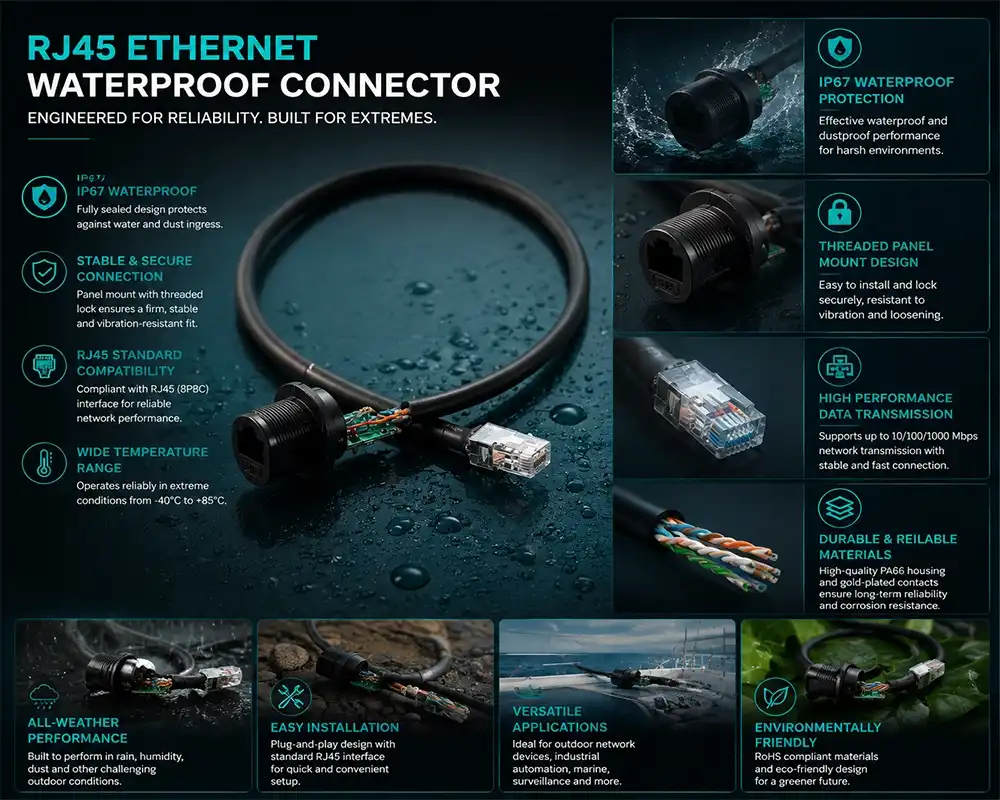
For waterproof covering to work, the housings must be precisely moulded from materials like PA66 nylon, which doesn't break down when exposed to UV light and keeps its shape even when temperatures change. Around the points where the cables enter, internal silicone O-rings make compression seals, and threaded locking mechanisms keep the pressure constant between the matching surfaces. Gold-plated phosphor bronze contacts keep signals from being lost due to oxidation, and overmolded strain reliefs take stress away from solder joints. When you combine material science with mechanical design, you can make hurdles that regular connections can't.
IP67 vs IP68 Protection Standards
The first number of an IP grade tells you how well it protects against dust, and the second digit tells you how well it protects against water. Connectors with an IP67 rating can be submerged in water up to one metre deep for thirty minutes. This means they can be used in places where it rains a lot or floods sometimes. IP68 versions offer better protection for continuous submersion, but makers set limits on the depth and length of time that the protection is good for—often two meters for long amounts of time. For procurement workers, IP67 is enough for most outdoor installs, like surveillance on rooftops and controls for outdoor lights. However, IP68 is required for marine environments, underground conduits, or watching farm irrigation systems that are in touch with water for a long time.
Operational Advantages in Harsh Environments
In addition to keeping water out, these connections deal with a number of environmental problems. Coastal structures are protected from chloride, which is corrosive, by salt spray protection. UV stabilisers stop polymers from breaking down in direct sunlight. Wide operating temperature ranges, usually from -40°C to 150°C, allow for use in both arctic and desert environments. Electrical continuity is kept on moving platforms like ships or trains by vibration resistance. These features work together to lower the total cost of ownership, increase the time between maintenance checks, and lower the number of failures that happen in the field compared to using normal connections that break down in the weather.
Types and Materials of RJ45 Ethernet Waterproof Connectors
Different manufacturers offer different connection designs to meet the needs of different applications. Knowing about these differences helps procurement teams choose parts that meet performance needs and stay within budget.
Connector Design Variations
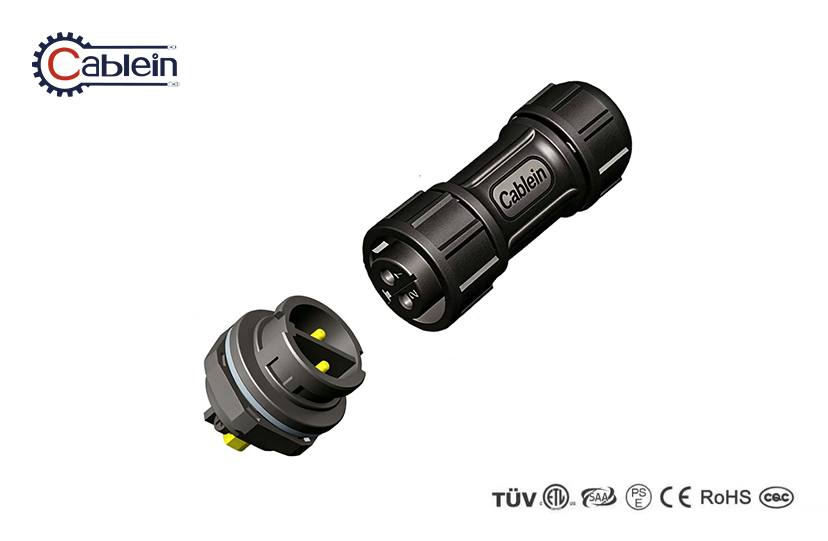
Field-installable RJ45 Ethernet waterproof connector models come with solder-type or crimp terminations that technicians can put together on-site. This means that you don't have to keep a lot of pre-made cables in different lengths on hand. This freedom makes inventory less complicated and lets installers make custom wire runs. Panel-mount versions fit into equipment cases and give outdoor cabinets sealed Ethernet access points. Inline couplers make current network runs longer without leaving weather-sensitive connection points open. Push-lock quick-connect systems speed up installation on large projects with a lot of parts, like replacing the lights in a stadium, where labour costs have a big effect on the overall project price.
Material Selection and Performance Impact
The housing material has a direct effect on how long a connection lasts. PA66 nylon is the normal choice for most industrial uses because it is reasonably priced and very good at resisting impacts and chemicals. When installing near high-power equipment or needing better RFI/EMI protection, zinc alloy with nickel plating is the best electromagnetic shielding material. It doesn't matter what the contact is made of—gold finishing of 50 microinches or more on phosphor bronze pins keeps the contact resistance below 20 milliohms even after hundreds of mating cycles. When temperatures are very high or very low, silicone sealing rings work better than rubber gaskets. They also don't bend, which weakens seals over time.
Performance Trade-offs and Cost Considerations
Because they have more complicated sealing systems and stricter testing requirements, IP68 connectors usually cost 30 to 50 percent more than IP67 counterparts. This price hike makes sense for important uses where water getting in costs a lot of money in downtime, but it's not necessary for setups that already have enough IP67 protection. Cablein's field-installable designs help find a balance between quality and cost by lowering the cost of stocking pre-assembled cables while keeping their strong IP67/IP68 performance through standard parts. When you buy connector bodies and different wire spools in bulk, you save 20 to 35 percent on the cost of materials compared to when you buy pre-made assemblies in custom lengths.
Selecting the Right RJ45 Ethernet Waterproof Connector for Your Needs
To choose the right connector, you need to make sure that the technical specs match the needs of the application and that the seller has the skills to ensure uniform quality and on-time delivery.
Critical Selection Criteria
First, figure out how much exposure you have to the environment. Installations in covered but not heated rooms may work fine with IP67 protection, but IP68 certification is needed for underground vaults or marine platforms. Check the mechanical pressures. Locking threaded connections work better in places with a lot of shaking, like rail equipment, than push-lock designs. Check to see if the electrical compatibility matches your network design. Cat5e support is enough for 100BASE-TX applications, but Gigabit Ethernet and POE+ setups need Cat6-compliant connections that meet the right standards for impedance and crosstalk. Extreme climates require very specific temperature ranges. For example, connectors rated to -40°C keep wires from breaking in cold places, while 150°C upper limits allow equipment to be placed near parts that produce heat.
Manufacturer Verification and Certification
Manufacturers with a good reputation provide a lot of paperwork that shows they follow international standards. Check for CE marking to show that the product meets European standards, RoHS certification to show that it doesn't contain any restricted substances, and product-specific test records to show that the IP rating is true. Cablein's ISO9001:2015 certification makes sure that quality is managed in a planned way throughout the whole production process, from checking the raw materials to testing the final waterproofing. Established suppliers keep a steady stock of popular configurations—usually 10,000 or more pieces per SKU—so that production orders can be filled quickly and without delays in wait times that throw off project schedules.
Balancing Cost Efficiency and Quality
To get the best price, you must first be clear about what you want. When you over-specify safety levels or bandwidth capacity, costs go up without speed going up, and when you under-specify, things break down early and need expensive repairs. Before making a big purchase, ask for samples to test in different environments. Reliable manufacturers offer evaluation units to make sure they work with your cables and equipment. Think about the total cost of installation instead of just the price of the parts. Field-installable plugs may cost more per unit, but they save money on labour costs and the cost of keeping supplies. When you work with the same provider for a long time, you can often get bulk discounts, priority access when supplies are low, and customised engineering support, all of which add value above and beyond unit price.
Installation and Maintenance Guide for RJ45 Ethernet Waterproof Connectors
When installing and maintaining networks outside, the longest-lasting connectors and most reliable networks are those that are set up correctly and regularly.
Step-by-Step Installation Process
A clean, correct preparation of the cables is the first step to a successful field installation. Carefully remove the outer jacket so as not to damage the inner conductors, making sure to stick to the manufacturer's recommended strip length, which for most RJ45 Ethernet waterproof connectors is 25 to 30 mm. Only untwist wire pairs as much as is needed for termination; undoing too much hurts the performance at high frequencies. Cablein's solder-type connections can work with both solid and stranded wires, so they can be used with a variety of cable types. When soldering, spread the heat out evenly to make strong joints that won't damage the insulation. Before the final assembly, check the O-rings for damage or contamination. Even small pieces of dirt can weaken the seal. Thread locking rings finger-tight at first, then use the torque recommended by the maker. Too much torque can damage seals, while too little torque lets water in.
Common Installation Mistakes to Avoid
Several mistakes make the connection less effective, even though the right components were chosen. Capillary action pulls moisture toward electrical contacts when the cable jacket stays inside the connector body. This is called wicking. When O-rings are not properly seated in their grooves, seals are not complete and can be broken by pressure washing or submersion. When you solder, using too much heat can melt insulation and lead to short circuits. Because O-ring sizes and thread pitches are not universally standardised, mixing connecting parts from different makers can cause seal problems. Before applying connection force, always check that the matching connectors are facing the same way. Crossed threads hurt both parts beyond repair.
Preventive Maintenance Best Practices
Even RJ45 Ethernet waterproof connectors that have been installed correctly should be checked every so often. Installments that will be used in harsh places, like seaside areas or industrial parks, should have eye checks every six months. Check for cracks in the case, sagging seals, or rust on metal parts. Use isopropyl alcohol to clean surfaces that are out in the open to get rid of salt deposits and other environmental pollutants. Use network cable certifiers to check the integrity of the connection and find signs of degradation before the connection fails completely. Keep a supply of spare connectors on hand for important infrastructure; quick replacement cuts down on downtime when they fail. Keep track of the dates of installations and inspections to find trouble spots that need more frequent attention or better parts. When compared to reactive maintenance methods, these proactive steps usually cut down on unplanned network breakdowns by 60 to 75%.
Application Scenarios and Industry Use Cases
RJ45 Ethernet waterproof connectors make networking possible in many fields where protecting the environment is important.
Smart City Infrastructure
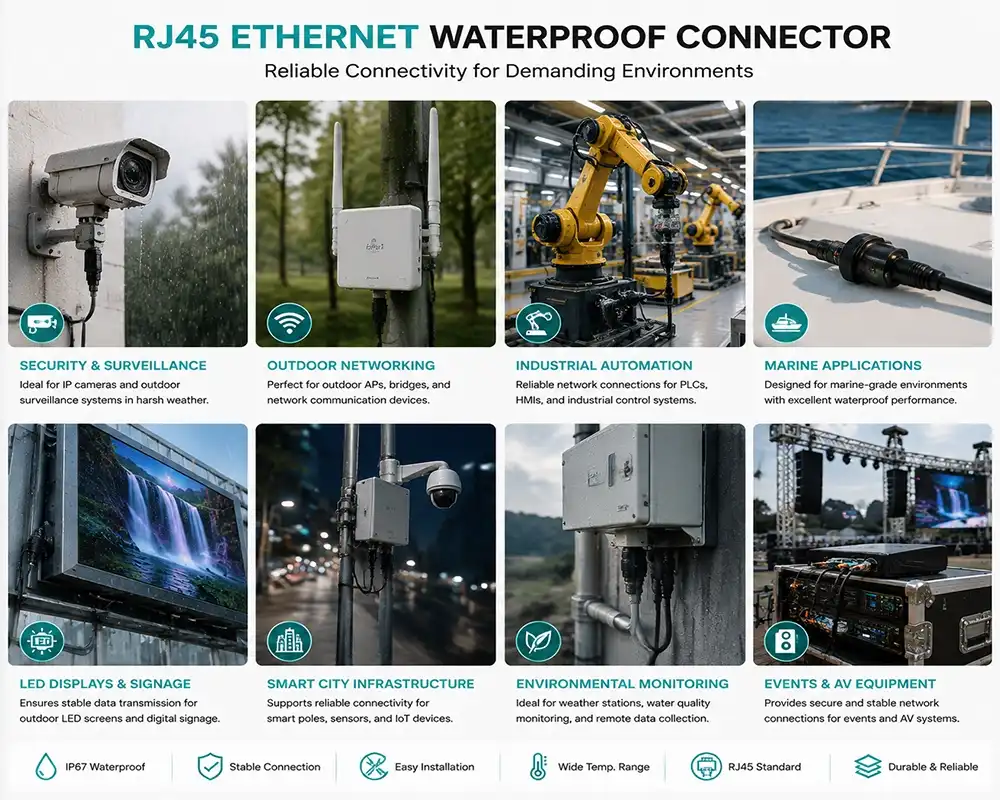
For traffic control, public safety, and city services, modern cities rely on outdoor network connections. For IP cameras to watch intersections, they need RJ45 Ethernet waterproof connectors that can handle both data and power over a single wire. This makes placement easier and ensures that the cameras are always online, even when it rains, snows, or the temperature changes. Smart streetlight systems connect sensors, wireless access points, and environmental monitors through Ethernet networks that can work in any weather. Cities that use these systems say that they are 40% faster to set up than standard hardwired methods, and they cost less to maintain because they don't need to repair connectors as often.
Industrial Automation Environments
Chemical exposure, mechanical vibration, and electromagnetic interference are all problems that can only happen in manufacturing facilities. Standard connections would quickly corrode in cleaning solutions, coolant spray, and metal particles found on production lines, but RJ45 Ethernet waterproof connectors keep the communication links between programmable logic controls and sensors safe. Ruggedised Ethernet links are helpful for robotics setups because they can handle constant movement without losing the signal. One automaker reported that network-related output stops dropped by 85% after IP67-rated industrial Ethernet connectors were added to plant floor connections.
Renewable Energy Installations
Solar and wind farms are located in open areas where regular network infrastructure breaks down quickly. Monitoring systems for turbines send performance data over Ethernet connections that are constantly shaking, changing temperatures, and being wet. RJ45 Ethernet waterproof connectors that can work in temperatures as low as -40℃ keep working during the winter in northern sites. For solar tracking systems to work, the network connections between the controllers and motor drives that are spread out over large arrays need to last. Marine and offshore renewable energy projects need to be protected against saltwater soaking and spray with an IP68 rating. These uses show how special connectors allow for remote monitoring that improves energy production and lowers the cost of maintenance trips.
LED Lighting Networks
More and more, networked controls for dimming, timing, and energy management are being added to large-scale LED systems. POE-capable RJ45 Ethernet waterproof connectors are useful for lighting systems in stadiums, parking garages, and the front of buildings. Cablein's design that can be installed in the field is especially useful for retrofit projects where custom cable lengths need to fit through existing conduit. Environmental monitors and LED controls are all connected to a single waterproof network for agricultural lights in greenhouses. Networked control systems let theme parks and entertainment places use lights in ways that wouldn't be possible with standard hard-wired dimming methods.
Conclusion
RJ45 Ethernet waterproof connectors that don't get wet are important parts of outdoor networking systems for industrial automation, smart cities, green energy, and other uses. To make the right choice, you need to carefully weigh the cost of the product against its IP rating, material requirements, and the conditions of the environment. Quality of installation has a direct effect on long-term dependability. For maximum network uptime, using the right technique and doing regular preventative maintenance are essential. Strong connection options will become even more important as edge computing and IoT deployments move into harsher settings. When companies buy good RJ45 Ethernet waterproof connectors, build relationships with dependable manufacturers, and follow set maintenance procedures, they set themselves up for operational excellence in outdoor infrastructure that is becoming more and more connected.
FAQ
What distinguishes IP67 from IP68 waterproof ratings?
IP67 approval means that the product is safe from dust and water exposure up to one metre deep for thirty minutes. IP68 offers better water resistance for continuous submersion up to a certain depth and length of time set by the maker, which is usually two meters for hours. IP67 protection is enough for most outdoor installations to work reliably. IP68 protection is needed for applications that are underground, in water, or regularly submerged.
Can these connectors support Power over Ethernet applications?
When rated correctly, good RJ45 Ethernet waterproof connectors can handle power delivery for POE (IEEE 802.3af), POE+ (802.3at), and POE++ (802.3bt). With a 20A current capacity, Cablein's connectors can handle POE+ needs, sending both network data and device power over a single cable. To keep things from getting too hot, make sure that the current levels of the connectors match your POE setup.
Do I need special tools for field installation?
Many modern RJ45 Ethernet waterproof connectors can be put together without tools or with only a few tools. For Cablein's solder-type terminations, all you need are normal wire strippers, cutters, and a soldering iron, which is stuff that most techs already have. This makes it possible to make changes on-site without having to use expensive installation tools or special crimping tools.
Source Reliable Waterproof Connectors from a Trusted Manufacturer
Cablein Technology focuses on creating high-performance, waterproof connection options for tough industrial and outdoor uses. Our qualifications as a supplier of RJ45 Ethernet waterproof connectors include ISO9001:2015 approval, full compliance with CE and RoHS regulations, and thorough IP67/IP68 validation testing on every production batch. With a stable inventory of more than 10,000 pieces per configuration and normal product delivery times of 7 to 10 days, we can meet the needs of both pressing projects and planned production runs without any supply problems.
We understand procurement choices stretch beyond component specifications to cover supplier dependability, expert support, and total cost optimisation. Our engineering team responds quickly to technical questions, can customise the length of the wire and the direction of the connectors, and can give application advice that makes sure the specifications are correct the first time. Cablein gives you the speed, consistency, and relationship you need for smart city infrastructure, industrial automation networks, or tracking systems for green energy.
Email our team at nick@cableinco.com to talk about your specific needs, get technical datasheets, or set up a sample evaluation. Let us show you how good RJ45 Ethernet waterproof connectors, low prices, and quick help can make your outdoor networking projects more valuable over time.
References
1. International Electrotechnical Commission. IEC 60529: Degrees of Protection Provided by Enclosures (IP Code). Geneva: IEC Standards, 2020.
2. Institute of Electrical and Electronics Engineers. IEEE 802.3: Ethernet Standards for Local and Metropolitan Area Networks. New York: IEEE Press, 2022.
3. Telecommunications Industry Association. TIA-568.2-D: Balanced Twisted-Pair Telecommunication Cabling and Components Standards. Arlington: TIA Publications, 2021.
4. Society of Automotive Engineers. SAE J1113: Electromagnetic Compatibility Measurement Procedures and Limits for Components of Vehicles. Warrendale: SAE International, 2019.
5. National Electrical Manufacturers Association. NEMA 250: Enclosures for Electrical Equipment (1000 Volts Maximum). Rosslyn: NEMA Standards, 2020.
6. European Committee for Electrotechnical Standardization. EN 50173: Information Technology - Generic Cabling Systems. Brussels: CENELEC, 2021.