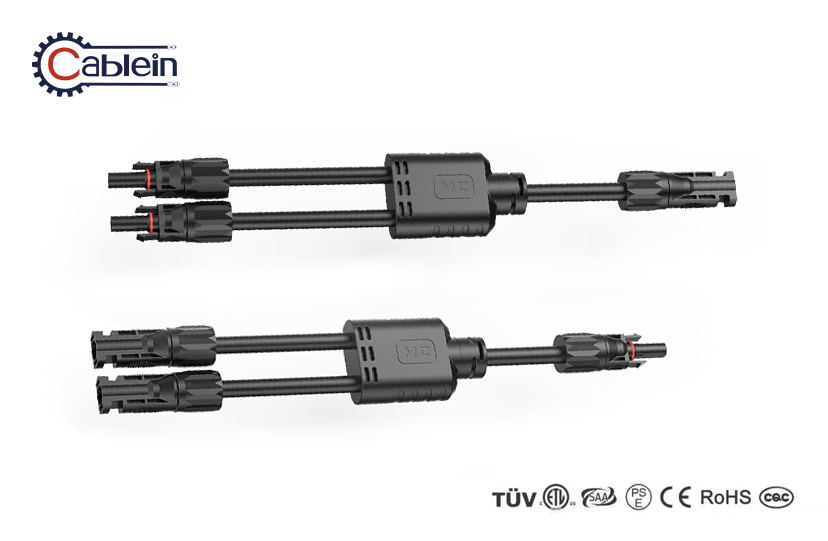
Solar: The Power of MC4 Connectors
When your solar installation demands uncompromising reliability, the right photovoltaic connector makes all the difference. The MC4 solar connector has become the global industry standard for interconnecting solar panels, inverters, and battery storage systems. This single-contact electrical connector, developed by Multi-Contact (now Stäubli Electrical Connectors), addresses critical pain points in renewable energy systems—DC arc-fault risks, thermal expansion failures, and environmental degradation. With its secure snap-in locking mechanism and IP67/IP68 waterproof protection, it ensures long-term electrical stability in high-voltage DC circuits where power loss and fire hazards threaten inferior connections.
Understanding MC4 Solar Connectors: Functionality and Specifications
Photovoltaic connections are what make solar systems work well. MC4 solar connectors have a plug-and-play male-female joining design that lets them be put together quickly in the field without the need for special tools. The name comes from the 4mm diameter contact pin, but the design is much more than just those dimensions.
Core Design Features
You can hear and feel that the snap-in locking mechanism makes mating safe. That audible click makes sure the link is always correct, which cuts down on installation mistakes that happen a lot during large-scale operations. Unlike cheaper options, this design needs special tools to disconnect, so it can't be accidentally disconnected when the load is high, which could cause dangerous arcing. Gold-plated contacts don't oxidize like regular copper links do, so they keep conducting electricity even after years of being outside.
Technical Specifications
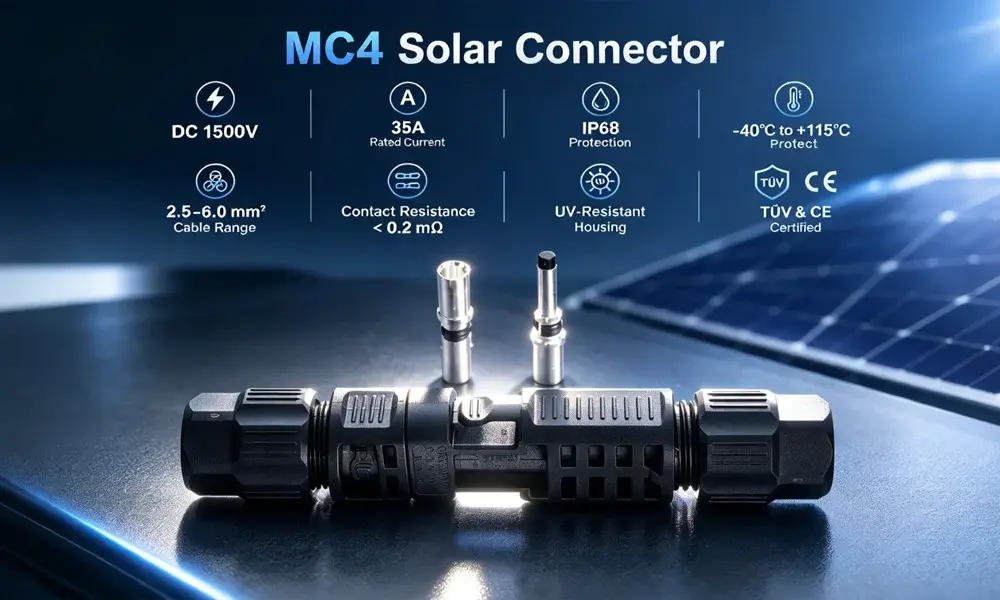
Modern photovoltaic connectors can handle 1500V DC systems, which supports the move in the industry toward higher-voltage installations that lower transmission losses across large arrays. The constant current rating is usually 35A, and cable sizes from 2.5mm² to 6.0mm² can be used. Contact resistance below 0.2mΩ is much better than the average in the industry. This keeps heat from building up at hundreds of connection points in large plants. Operating temperature ranges from -40°C to 115°C cover harsh climates all over the world, from installations in the Arctic to deserts in the Middle East.
Material Durability and Safety Standards
Polyphenylene Oxide (PPO) insulation with a flammability rating of UL94 V-0 is used in the housing. This is the highest fire safety standard that is available. Copper wires (C1100 or C3602) are plated with tin to make them resistant to corrosion over time in salt spray settings. UV-resistant housing keeps its mechanical strength after years of being in the sun, which stops the photodegradation that makes regular plastics break easily. IP68 sealing means defense against submersion, not just splash resistance. This is very important for ground-mounted plants in flood zones or near the coast where salt fog is common.
Comparing MC4 Connectors to Other Solar Connectors: What Makes MC4 the Preferred Choice?
There are many choices for photovoltaic connections on the market, but MC4 solar connectors are the most common in expert setups for a reason that can be measured.
MC4 Versus MC3 Connectors
In the past, MC3 connectors worked well for the industry when system voltages were less than 600V DC. As installations went from lower voltage to higher voltage, they showed that creepage distances and insulation performance were limited. Longer creepage paths in MC4 solar connectors stop electrical tracking, which is when conductive paths slowly form across insulator surfaces and cause short circuits. Better insulation can handle 1500V DC systems, which are now normal in large-scale operations.
Material Impact on Lifespan
Premium plastic composites don't break down when exposed to UV light because they contain stabilizing additives that soak up the UV rays before they can break the polymer chains. We engineer for these facts to be true. Changing temperatures from very cold at night to very hot during the day put stress on all of the parts. Our housing is immune to UV light and keeps its mechanical integrity through temperature cycles that would break less durable materials in five years. Galvanic corrosion happens when different metals come into contact with each other in wet places. Corrosion-resistant metal alloys stop this from happening in touch areas.
Specialized MC4 Connectors with Integrated Fuses
Connectors that have built-in overcurrent protection can help with some installations. With these specialized units, you don't need different fuse boxes, which cuts down on installation time and possible failure spots. When the current level goes over the safe limits, the built-in fuse instantly cuts off the strings. This stops failures from spreading across arrays. This feature comes in handy for commercial rooftop installations where fast changes in temperature can cause problems.
IP Rating Significance
The IP67 rating means that the seal is dust-tight and the device can withstand being submerged in water for 30 minutes. IP68 certification adds more submersion protection so that underwater operations can go on all the time, which is very important for floating solar farms. Before it is shipped, every unit is tested to make sure it is completely waterproof. This is done by putting the seal through thousands of thermal cycles that simulate decades of field exposure.
How to Select the Best MC4 Solar Connector for Your Projects
When making procurement choices, you have to find a balance between technical requirements, certification compliance, and the reliability of the seller. When thousands of link points make the wrong choice, small speed gaps become big system inefficiencies.
Matching Voltage and Current Ratings
Minimum creepage distances and insulation thickness are set by the system voltage. For installations working at 1500V DC, you need plugs that are rated for that voltage. Using 1000V-rated units can cause fires and lose your insurance coverage. The current capacity must be 25% higher than the maximum string current. Because high temperatures lower the ability to carry current, a string that is putting out 12A at its peak needs MC4 solar connectors that can handle at least 15A.
Verification of Compliance Certifications
TUV and CE approval show that a project meets European safety standards, which are needed for projects to be sold in EU markets. ETL approval proves that the product meets North American electricity standards. RoHS and REACH compliance limits the use of dangerous chemicals, which is becoming more and more important for buying policies. All of our products are still TUV and CE-certified, and they meet NEC safety standards with opening devices that require tools and stop people from disconnecting them without permission.
Assessing Brand Reliability
Quality standards are set by well-known companies like Amphenol and Stäubli, but their high prices may be out of reach for projects that need to stay within budget. This gap is filled by Cablein Technology. Our 6,000㎡ building has high-precision soldering machines and automatic testing systems that meet tier-one quality standards while keeping prices low. Five critical inspection protocols that go above and beyond industry standards are used by more than 200 skilled workers to keep an eye on quality at every stage of production.
Cost Considerations and Bulk Pricing
The unit price is only one part of the total cost of ownership. Installation speed has a direct effect on labor costs. Connectors that need special crimping tools are more expensive, but crimp-free designs that aren't made well fail quickly. We always have more than 10,000 units of each SKU in stock, which lets us offer bulk discounts and quick delivery within 7–10 days. Custom cable lengths and pre-assembled harnesses for certain projects get rid of the need for field assembly, which cuts installation time by 40% compared to connections that are terminated in the field.
Installation Best Practices and Troubleshooting for MC4 Solar Connectors
Installing something correctly increases its performance and longevity while avoiding the safety risks that come with bad work.
Step-by-Step Installation Protocol
Careful stripping is the first step in getting a cable ready. Take off the outer jacket to expose the conductors without damaging the wire strands. To meet connection requirements, strip the insulation to a length of 8 to 10 mm for normal units. Crimp the contact pin with tools that have been calibrated to meet the manufacturer's torque requirements. When crimping by hand, the pressure isn't always the same, which causes high resistance and failure before it should. Put the crimped contact into the housing of the connector until it clicks into place. Cross-connection errors between storage inverters and PV string ports are not possible with the 45-degree tilted mating face. This is a common installation mistake that leads to system breakdowns.
Common Installation Mistakes
Polarity that is backwards is the most common field mistake. Before termination, make it clear which conductors are positive and which are negative. Waterproofing is less effective when seals are damaged. Check O-rings for cuts or deformation before putting them together. Joints with high resistance that heat up when they are loaded are caused by bad fitting. Pull-out force tests shows that the crimp is solid; the links should be able to handle 50 pounds of force without coming apart. Cross-mating different types can cause problems with compatibility because differences in manufacturing tolerances create tiny holes that let water in.
Maintenance Routines for Extended Life
An annual inspection finds problems as they start to form before they become major problems. Look for discoloration around the contact points, which could mean the product is too hot. Check the contact resistance between two random samples; readings above 0.5mΩ should be looked into. Try to separate the connectors by hand to make sure the locking device works. Connectors that are properly locked will not come apart by hand. In places with a lot of shaking, like rooftop installs, you should re-torque cable glands once a year.
Conclusion
Photovoltaic connections that you can rely on are the building blocks of safe and effective solar power systems. MC4 solar connectors are widely used because they have been tested and proven to work in millions of setups around the world. The best way to protect your investment and get the most energy out of it is to choose the right connectors, make sure they are certified, and have professionals install them. Cablein Technology offers approved connectors that meet strict international standards by combining advanced production skills with quick response times for customers. Because we know how to connect things in tough environments, we can be your strategic partner for solar projects that need to be delivered on time and with the highest quality. We think that link is power, and we make sure that it works for you no matter where you work.
FAQ
1. Can I mate different brands of MC4-compatible connectors?
Standards in the industry say that mixing names is not a good idea. Different manufacturing standards and rates of material growth lead to high resistance and failure at high temperatures. For each type of metal, each manufacturer figures out the best housing size and contact pressure. Cross-brand mating makes interfaces where neither design works as well as it could, which raises contact resistance and lowers current capacity.
2. What causes MC4 connectors to overheat?
Most of the time, high temperatures are caused by bad crimping or high contact resistance. When there isn't enough binding pressure, there are small touch areas where the current density is too high to be safe. Over time, corrosion on contact surfaces makes them less resistant. Check the strength of the crimp by trying the pull-out force. Check the contact resistance. Readings above 0.25mΩ mean there are problems that need to be fixed right away to avoid a fire.
3. How do I verify authentic connectors versus counterfeit products?
Genuine units have logos, certification marks, and date codes molded into the housing that are made by the manufacturer. Ask for verification paperwork that matches the product serial numbers. Fake connectors are often made of lower-quality materials. Real ones feel solid and have smooth shaping that doesn't have any flash or sink marks. Buy from approved sellers whose supply lines can be tracked.
4. Is specialized tooling mandatory for installation?
For guarantee and safety reasons, only professionals should use MC4 solar connector crimping tools and torque wrenches for cable glands. Crimping by hand gives effects that aren't uniform and don't hold up under thermal cycling. The unlocking mechanism that needs a tool stops safety violations while maintenance is being done and makes sure that connections stay safe during high winds or earthquakes.
Secure Reliable MC4 Solar Connector Supply with Cablein Technology
Connectivity options for your solar projects should be backed by proven production quality and quick expert support. Cablein Technology makes waterproof connectors and unique cable systems for green energy uses that need them. Rapid prototyping, variable OEM/ODM customization, and end-to-end engineering contact are some of the things that our MC4 solar connector provider can do. We keep more than 10,000 units of each SKU in stock in standard configurations, and we can also make custom cable lengths and pre-assembled harnesses to fit your needs. Email our team at nick@cableinco.com to talk about the needs of your project, get detailed information, or get a quote for your next solar installation. Our more than 200 skilled workers are ready to give your renewable energy systems the reliable interconnection solutions they need.
References
1. Multi-Contact Corporation. (2019). MC4 Photovoltaic Connector Technical Specifications and Installation Guidelines. Stäubli Electrical Connectors Technical Documentation Series.
2. National Electrical Code (NEC). (2023). Article 690: Solar Photovoltaic Systems - Connector Requirements and Safety Standards. National Fire Protection Association Publication.
3. International Electrotechnical Commission. (2021). IEC 62852: Connectors for DC-Application in Photovoltaic Systems - Safety Requirements and Tests. IEC Standards Catalogue.
4. Solar Energy Industries Association. (2022). Best Practices for Photovoltaic System Installation: Connector Selection and Quality Assurance Protocols. SEIA Technical Guidelines.
5. TUV Rheinland. (2020). Testing and Certification of Photovoltaic Connectors: Environmental Durability and Electrical Performance Standards. TUV Product Safety Division.
6. Photovoltaic Systems Engineering Handbook. (2023). Chapter 8: DC Electrical Interconnections - MC4 Connector Technology and Field Application. Renewable Energy Technical Publishers.