What Is an M12 Waterproof Connector and Where Is It Used?
An M12 waterproof connector is a specialized circular interconnect system defined by its 12mm metric locking thread, engineered to deliver signal integrity and power transmission under extreme environmental stress. Trusted across industrial automation, sensor networks, and outdoor equipment, this connector type solves critical pain points such as fluid ingress from coolants, water, and oils, mechanical failure in high-vibration environments, and the need for rapid deployment in modular production setups. With IP67, IP68, or IP69K rated sealing, M12 systems eliminate the risk of short circuits and corrosion that typically compromise standard connectors in wash-down or outdoor applications, ensuring zero-downtime in mission-critical operations.
Understanding the M12 Waterproof Connector
Core Functionality and Design Principles
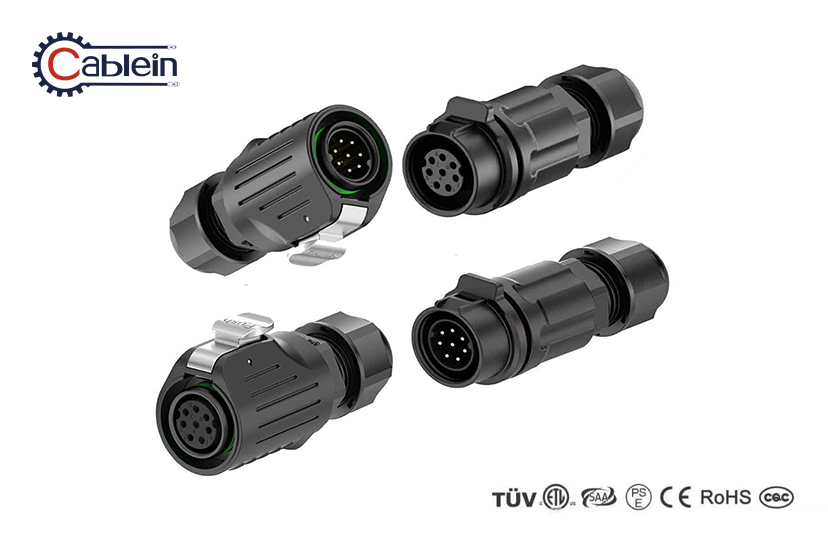
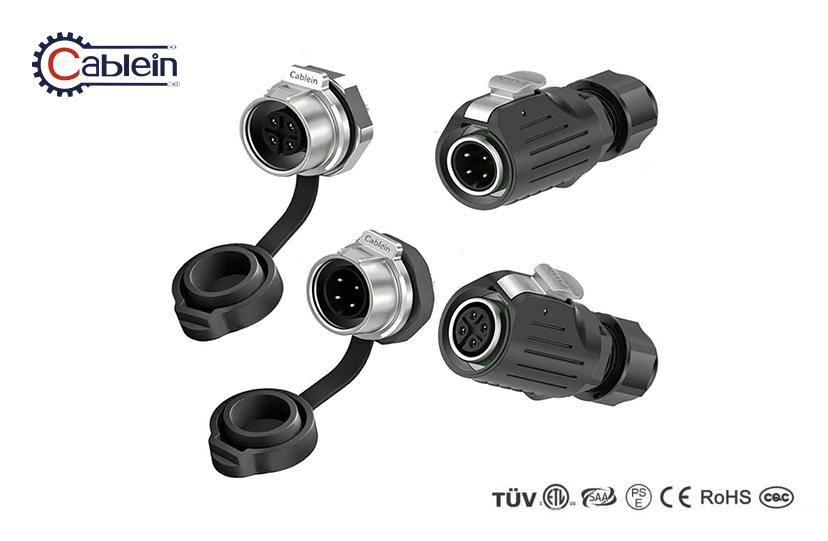
Threaded connection devices are necessary for M12 waterproof connector systems. Mechanically holds things together and keeps water out. A silicone gasket or O-ring separates the connecting body and threaded nut. To protect against dirt, dust, and other pollutants, this gasket or O-ring compresses during assembly. The 12mm thread width fulfils IEC 61076-2-101, thus it may be utilised by other producers and linked to other industrial automation ports. Standardisation simplifies purchase and eliminates the need for specialised adapters in multi-vendor setups.
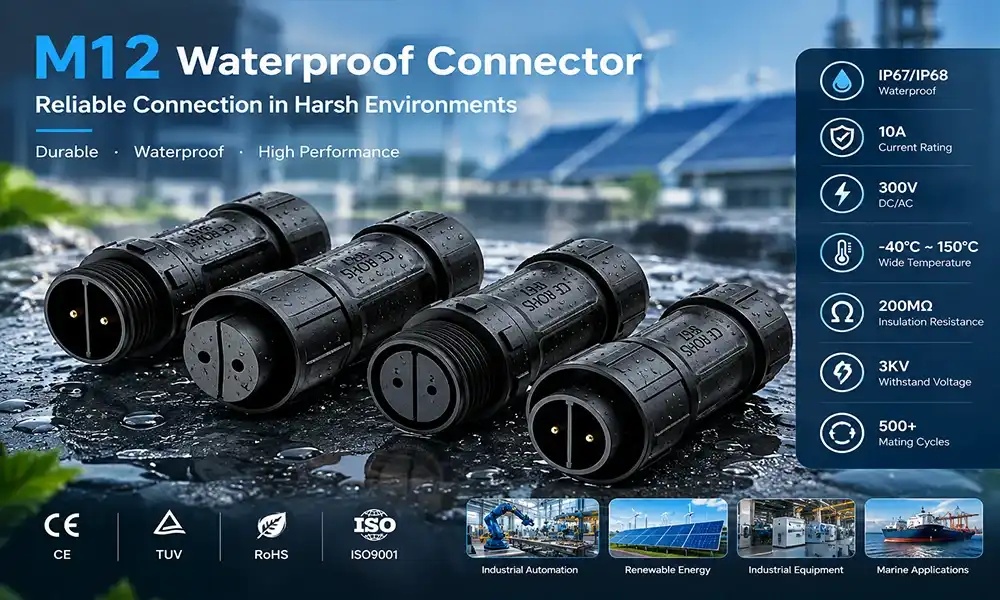
Our field-assembled designs are made of chemical-resistant PA66 nylon. The gold-plated brass contacts provide minimal contact resistance (less than 5mΩ) for 500+ mating cycles. On-site wiring without crimping equipment is possible using the screw termination technique for 18 AWG to 24 AWG wire gauges. Standard solder procedures complicate and increase failure risk in large-scale operations, while this approach reduces installation time and labour costs.
IP67 and IP68 Ratings Explained
The M12 waterproof connection is IP67-certified and can survive dust and 30 minutes in 1 metre of water. It works for outdoor LED lights, agricultural equipment, and wet or cleaned security cameras. IP68 is ideal for underwater robots, marine electronics, and wastewater treatment sensors since it protects against submersion up to 3 meters. Long-term seal performance is the key difference. Due to superior gasket materials and stricter manufacturing requirements, IP68 connections are more costly but helpful in constant-water environments.
Consider how deep, long, and frequently your tools will be in water while deciding between these classes. A stadium lighting system that gets wet needs an IP67 certification, whereas a solar farm with ground-level junction boxes in a flood-prone location needs an IP68 rating. Temperature may also impact seal performance. IP68 seals can withstand temperature variations from -40℃ to 105℃ without impacting O-ring shrinkage.
Pin Configurations and Coding Types
Multiple code standards—A, B, D, X, S, T, K, and L—are available for M12 waterproof connectors. Each is meant to keep them from mismating and make sure that signals work with each other. A-coded versions are most common in sensor and actuator uses; they can handle DC power and separate I/O signals up to 10A. D-coded choices work with 100Mbit Industrial Ethernet and have four pins set up in a way that reduces noise and electromagnetic interference. X-coded connections raise data rates to 10Gbps, which is used for high-speed Ethernet backbones in transportation systems and automated workplaces.
There are 2, 3, 4, 5, 6, and 8-pin configurations in our product line, as well as normal and reverse positions. In normal orientation, the key notch is at 12 o'clock, which is for connecting sensors. In reverse mode, it is at 6 o'clock, which is for connecting actuators or power. The 2+3 hybrid version combines the power and data paths into a single housing. This makes it easier to place in small spaces and reduces the number of cables that need to be arranged. Pin-to-pin voltage values are between 60V and 100V, and insulation resistance is more than 200MΩ to stop leaking currents in places with a lot of moisture.
How M12 Waterproof Connectors Work and Their Core Advantages
Sealing Technology and Materials
Outer thread seal, cable gland compression, and contact chamber isolation keep water out of M12 waterproof connectors. While assembling, the threaded nut presses a silicone or TPE O-ring against the container face. Primary obstacle. To suit 3.5mm to 8mm cable jackets, a cable gland at the rear of the connection squeezes. Stops water from entering the contact chamber via the cable. Each contact chamber conductor has a pin seal. Despite maintenance breaking the outside seal, this keeps moisture out.
Gold plating on brass contacts enhances conductivity for low-resistance contact surfaces and prevents corrosion in damp or chemically rich situations. The electrical characteristics of gold remain unchanged over hundreds of mating cycles, unlike nickel or tin coatings. Minimises voltage drop and signal degradation. If an electrical fault occurs, the PA66 nylon shell's UL94-V0 flame rating will extinguish it. Safety is crucial for unmanned solar inverters and remote monitoring stations.
Comparative Advantages Over Standard Connectors
Traditional RJ45 Ethernet jacks and barrel-style power plugs break easily when wet, vibrated, or heated. When mechanically pressured, RJ45 plastic locks crack. High wire stress breaks barrel plugs, which don't lock. Mechanical retention M12 waterproof connector systems solve these issues. Cable glands alleviate strain in both directions and threaded couplings may bear pull strengths above 100 N. Anti-vibration washcloths in the nut increase vibration resistance. Robots and transportation systems operate continually, therefore this prevents the nut from loosening.
The M12 waterproof connection can carry 10A, compared to 4A for M8. Industrial actuators may directly control motors and power. Eliminating power lines decreases the expense of materials and simplifies wiring harnesses. Due to its push-lock or quick-connect equipment, aviation-style circular connections require longer to install than M12 systems. Technician time directly affects project costs, therefore this speed advantage saves time and money on field equipment setup and maintenance.
Maintenance Best Practices and Troubleshooting
Keep the O-ring clean before assembling. Debris might damage the seal and allow water in. A small coating of silicone oil on the O-ring helps threading and prevents ripping. A calibrated torque wrench should tighten the coupling nut to the manufacturer's recommendation. Usually 0.4–0.6 Nm. When overtightened, the O-ring distorts and wears out faster. Undertightening creates water-inletting holes.
Inspect the M12 waterproof connections' cable jackets at the gland while the system is functioning for damage. Coat abrasions let moisture past the seal. Use a voltmeter to verify contact resistance if signals are intermittent. Above 10mΩ indicates oxidised or contaminated contact, requiring rubbing alcohol cleaning. Take the connection apart, clean all sealing surfaces, replace the O-ring, and reassemble with fresh grease once a year for dusty systems. Anticipatory maintenance extends the service beyond 500 mating cycles and prevents unexpected malfunctions and costly downtime.
Industrial and Commercial Applications of M12 Waterproof Connectors
Industrial Automation and Robotics
In workplace automation, M12 waterproof connectors join programmable logic controllers (PLCs) to distributed I/O units. This lets sensors on the production line, robotic arms, and conveyor belts be controlled in real time. Standardized coding keeps power and signal lines from accidentally connecting with each other, which lowers the number of mistakes that happen during system integration. A-coded versions connect proximity sensors that find parts, and D-coded versions connect machine vision cameras over Industrial Ethernet protocols such as EtherNet/IP or PROFINET. This modularity lets production lines be quickly rearranged without having to be rewired, which supports strategies for agile manufacturing.
M12 waterproof connectors provide power, safety signs, and encoder input to collaborative robots (cobots) that work with people. Vibration-resistant threading keeps the connection strong during repeated motion cycles, which stops signal loss that could cause emergency stops. Our 8-pin X-coded connectors work with cobot controllers that need to send data quickly for vision-guided pick-and-place tasks. They offer 10Gbps Ethernet performance in small packages that can fit into robotic joints that aren't very wide.
Transportation and Rail Transit Systems
In rail transit applications, M12 waterproof connectors are exposed to diesel fuel, hydraulic fluids, cleaning solvents, and a lot of vibration and temperature changes. For moving stock, M12 systems have housings made of stainless steel 316, which doesn't rust in acidic or de-icing salty conditions and works better than nickel-plated brass in coastal or underground metro systems. The threaded connection can handle the constant shaking of train travel, while bayonet-style connectors become loose over time. Our models with the IP68 rating keep water out during the high-pressure washing that is needed for passenger car maintenance. This keeps lighting and HVAC control systems from short-circuiting.
For outdoor dependability, traffic management equipment like variable message signs, toll collection systems, and intersection cameras needs M12 waterproof connectors. In remote areas, solar-powered signs use M12 connectors to connect photovoltaic panels to battery charge controllers. The IP68 sealing keeps rain out, which could drain the batteries or damage the terminals. The working range of -40°C to 105°C allows for missions in both deserts and the arctic without affecting performance, allowing year-round use in a variety of climates.
LED Lighting and Outdoor Displays
M12 waterproof connectors for outdoor LED systems, like streetlights and stadium floodlights, need to be able to handle UV light, changing temperatures, and condensation of water. Our PA66 housings have UV stabilizers built in that keep the plastic from breaking down after years of being in the sun. This keeps the mechanical strength where untreated plastics would break down and crack. Because the screw terminal can handle stranded copper wires, which are common in LED driver outputs, you don't need any special crimping tools to install it. This makes it easier for electrical contractors working on big projects like updating the lights on highways or lighting up parking garages to put the panels together in the field.
Agricultural lighting systems in greenhouses need M12 waterproof connectors that are waterproof and can handle high humidity, fertilizer mist, and being washed every day. IP68-rated models connect LED grow lights to dimming controllers. This lets you tune the spectrum without putting electrical contacts in contact with chemicals that break down metal in agriculture. When compared to rubber gaskets, which harden and lose their flexibility over time, silicone seals don't break down when exposed to ozone and the heat from high-intensity discharge lamps. Custom cable kits with pre-wired connectors cut down on installation time, so growers can add more lights without having to hire qualified electricians for each one.
New Energy and EV Charging Infrastructure
Solar energy systems use M12 waterproof connectors in junction boxes that connect strings of panels to inverters. The IP68 sealing keeps water out, which could cause an arc across the DC contacts and start a fire. Even if the connectors are partially submerged in water during flooding or heavy snowmelt, the high insulation resistance (at least 200MΩ) keeps them safe. Our 10A current rate lets you connect multiple panel strings in parallel, which cuts down on the number of home runs to the inverter and makes wiring the array easier. Gold-plated contacts keep voltage drop across connections to a minimum. This increases energy harvesting by lowering resistive losses that would otherwise turn power into heat.
M12 waterproof connectors are used in EV charging stations to connect the charge controller to payment terminals, car recognition sensors, and cloud connection units. D-coded versions send metering data over Industrial Ethernet, which makes sure that bills and load control are done correctly. The IP67 rating keeps the electronics inside the outdoor charging stand safe from rain and snow, and the threaded locking keeps people from tampering with the cables or disconnecting them by accident. Standardized connections make maintenance easier because technicians can carry universal replacement parts instead of station-specific parts as charging networks grow along highways and in urban parking lots.
Choosing the Right M12 Waterproof Connector: A Buyer's Guide
Critical Selection Criteria for B2B Procurement
The basic requirements for choosing an M12 waterproof connector are set by the environment. Installations that are splashed with water from time to time, like industrial equipment inside near cooling systems, work effectively with IP67 protection. For example, wastewater level monitors or naval instrumentation that will be submerged in water all the time need to be IP68 certified. Extreme temperatures also affect the choice of material. For example, silicone O-rings work well in environments that cycle between -40°C and 105°C because they stay flexible in this range, while TPE seals are fine for smaller temperature ranges. Material suitability must be checked before it is exposed to chemicals. PA66 is resistant to most industrial solvents, but housings made of PVDF or stainless steel may be needed if it is exposed to strong acids or bases.
The configuration of the pins matches the electrical needs of the devices that are connected. Most sensor uses use A-coded M12 waterproof connectors with three or four pins set aside for power, ground, and signal lines. For network compatibility, Ethernet-enabled devices need either D-coded 4-pin or X-coded 8-pin versions, with pin assignments that follow T568B wiring standards. 2+3 configurations keep power conductors and signal lines separate, which lowers electromagnetic interference. This is useful for hybrid applications like smart sensors that send data and draw power. The voltage and current ratings must be 20% higher than the load. For example, a 10A sensing circuit should specify a connector value of at least 12A to account for the currents that come in when the power is turned on.
Procurement Strategies for Cost and Delivery Optimization
Through economies of scale, buying M12 waterproof connectors in bulk lowers unit costs. This is especially true when using the same few pin setups for all product lines. By negotiating yearly supply deals with stable inventory promises, you can get your hands on preferred price levels and make sure you know when your orders will arrive. Our warehouse keeps more than 10,000 of each item in stock in common configurations, so standard orders can be shipped within 7 to 10 days. Lead times can go up to 4 weeks if you need custom pin assignments, wire lengths, or housing colors. However, if you plan carefully during the design phase, you can order these things at the same time as long-lead components, which keeps the project from being held up.
The total cost of ownership must be calculated by taking into account the labor needed for installation, the frequency of maintenance, and the expected service life. Field-assemblable M12 waterproof connectors save money at first because they don't need factory overmolding, but they need to be put together correctly by skilled techs. Overmolded assemblies cost more up front, but they come ready to install, which cuts down on the time needed to build out a production line. For large-scale uses, our OEM cable assembly services pre-wire connectors to specific lengths and send them on reels so that automatic installation equipment can put them in place. This moves quality control upstream to our plant, which lowers the number of failures in the field and guarantee claims that cut into finished goods' profit margins.
Brand Comparison and Supplier Evaluation
Companies around the world that make M12 waterproof connectors, like Phoenix Contact, TE Connectivity, and Amphenol, have large portfolios with many codes and pin count choices. These names work great in situations where they need to be certified for dangerous areas or meet industry standards like ATEX or IECEx. Cablein Technology offers similar performance at a reasonable price, and its CE, TUV, RoHS, and REACH certifications meet the requirements of North American and European regulations. Our technical support team answers engineering questions within 24 hours and provides custom wire assembly drawings as well as compatibility checks against the specs of the customer's equipment.
When you're looking at providers, you should look at more than just basic product approvals. ISO9001:2015 certification means that the manufacturing process is consistent and that there are systems in place to track down problems and help with failure analysis if they happen in the field. The ETL, PSE, and SAA marks show that a product meets safety standards in North America, Japan, and Australia, which makes it easier to launch products in more than one market. RoHS and REACH compliance makes sure that limits on dangerous substances are followed, which keeps imports from being held up at customs. Our more than 15 utility model patents show that we are constantly investing in new M12 waterproof connector designs, especially push-lock and solder-free ones that make installation faster and more reliable in difficult conditions.
Conclusion
Because they work so well in difficult situations, M12 waterproof connectors are now required in many fields, such as industrial automation, outdoor infrastructure, and new energy. Standardized threading, strong sealing technologies, and different pin configurations work together to solve the main problems of moisture entry, vibration resistance, and quick deployment. Professionals in procurement can make better decisions that balance initial prices with long-term performance when they know the real differences between IP ratings, coding types, and material options. M12 waterproof connector systems will continue to be the most reliable way for industries to connect as they use modular equipment and grow into more difficult environments.
FAQ
1. What practical differences exist between IP67 and IP68 ratings?
IP67 protects against dust getting in and water immersion for up to 30 minutes at a depth of 1 meter. This makes it good for equipment that gets splashed or wet from time to time. IP68 protects against long-term submersion, usually of 3 meters or more. This is why it's needed for underwater devices, naval electronics, or installations in areas that are likely to flood. Tighter manufacturing tolerances and higher-quality gasket materials are needed for the better sealing, which means higher costs that are only worth it when the M12 waterproof connector is constantly in contact with water.
2. Can M12 connectors function in hazardous or explosive environments?
Standard M12 waterproof connectors don't have the right safety standards to be used in listed dangerous areas. Connectors that are certified to ATEX, IECEx, or Class I Division 2 standards are needed in places where explosives are used, like petrochemical plants or grain handling facilities. These special versions come from companies that focus on making products for dangerous places and have spark-limiting designs and materials that don't spark. Standard IP-rated plugs are fine for less important tasks outside of classified areas as long as they are paired with the right circuit safety.
3. How do I ensure proper installation and wiring in industrial automation?
To avoid mismatching, start by making sure that the plug and outlet have the same code type. Before putting it together, check the O-ring for damage and use silicone grease to make threading easier. To make sure that the wires fit fully into the screw terminals and there is no copper sticking out of the contact chamber, cut the cable insulation to the length stated in the M12 waterproof connector datasheet. This length is usually between 5mm and 7mm. Using a torque wrench, tighten the coupling nut to 0.4 Nm to 0.6 Nm. Then, do a pull test at 50 N to make sure it stays in place before turning on the circuit.
Partner with Cablein for Reliable M12 Waterproof Connector Solutions
Cablein Technology offers M12 waterproof connector options that are custom made to meet your needs by combining technical knowledge with flexible manufacturing. Our factory in Shenzhen makes overmolded and field-assemblable connectors that meet international standards. These are backed by ISO9001:2015 quality systems and strict testing protocols. Our engineering team is ready to create unique cable assemblies with specific pin assignments, cable lengths, and housing materials. We keep more than 10,000 pieces of each setup in stock so that orders can be filled quickly. Our flexible supply chain and technical help make sure that your project runs smoothly, whether you need small amounts for testing or large amounts for global deployments. Get in touch with us at nick@cableinco.com to talk about your M12 waterproof connector needs with a source who is dedicated to helping you solve your industrial interface problems.
References
1. International Electrotechnical Commission. IEC 61076-2-101: Circular Connectors with M12 Screw-Locking. Geneva: IEC Publications, 2020.
2. Schmidt, H. & Weber, K. Industrial Ethernet Technologies: Performance and Reliability in Harsh Environments. Berlin: Springer Verlag, 2019.
3. Anderson, R. Waterproof Connector Design: Materials, Testing, and Application Standards. New York: McGraw-Hill Professional, 2021.
4. Li, J. et al. "Comparative Analysis of Contact Resistance in Gold-Plated versus Nickel-Plated Connectors under Thermal Cycling." Journal of Electronic Materials, vol. 48, no. 6, 2020, pp. 3542-3551.
5. European Committee for Electrotechnical Standardization. EN 60529: Degrees of Protection Provided by Enclosures (IP Code). Brussels: CENELEC, 2018.
6. Williams, P. Cable Assembly Handbook for Industrial Applications: Best Practices and Quality Control. London: Technical Publications Ltd, 2022.