QC20 Locking Waterproof Connector vs Standard Waterproof Connectors
When specifying connectors for outdoor or industrial environments, you face a critical decision between advanced locking waterproof solutions and conventional sealed connectors. The QC20 locking waterproof connector distinguishes itself through its field-assembled quick clamp design, IP68-rated sealing technology, and tool-free installation system built from PA66 nylon with gold-plated brass contacts. Standard waterproof connectors typically offer basic IP65 or IP67 protection with threaded housings but often lack the mechanical locking precision and ergonomic assembly features that reduce installation time by 40-60% in field conditions. Understanding these technical and operational differences helps procurement teams select connectors that balance upfront costs against long-term reliability and maintenance expenses.
Understanding QC20 Locking Waterproof Connectors and Standard Waterproof Connectors
What Defines the QC20 Locking System
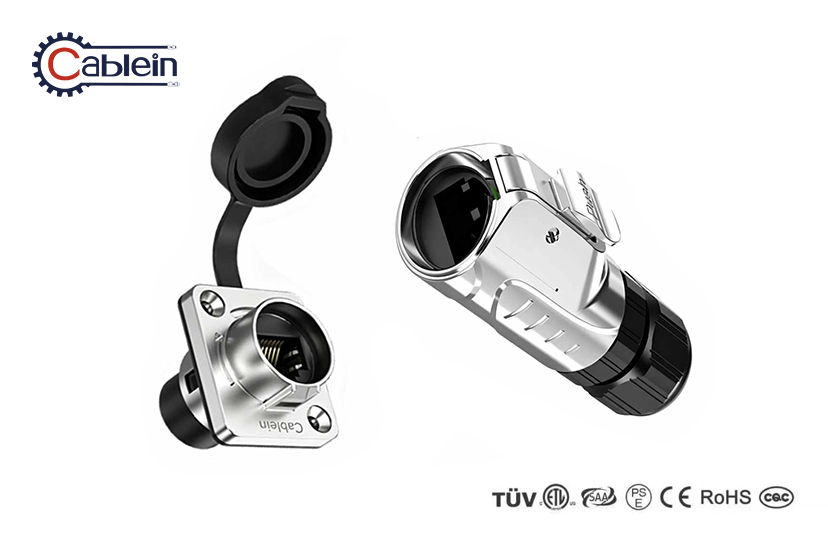
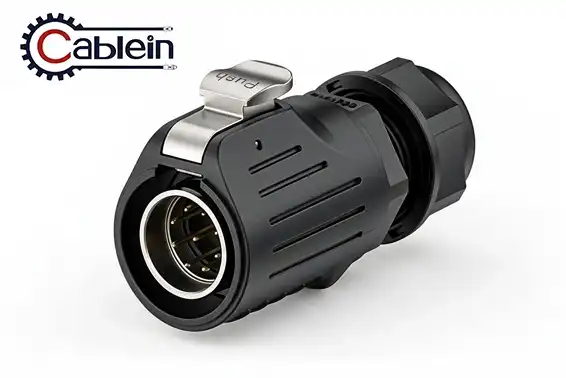
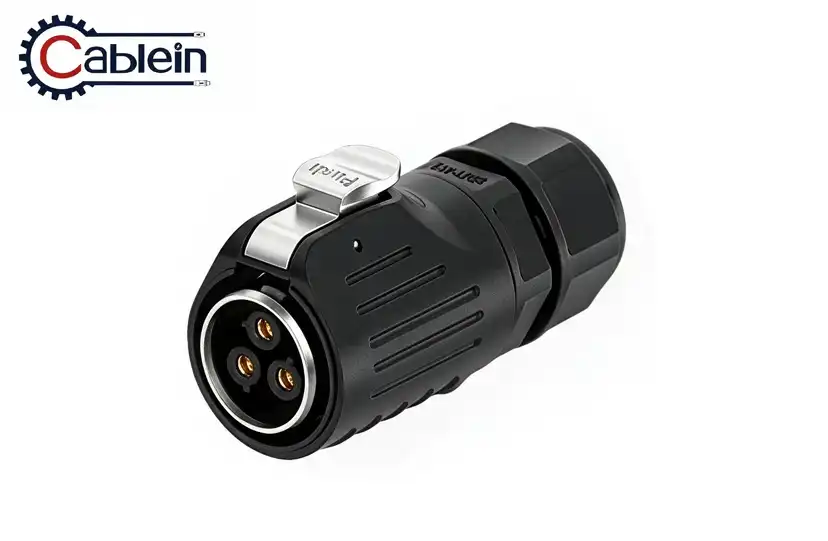
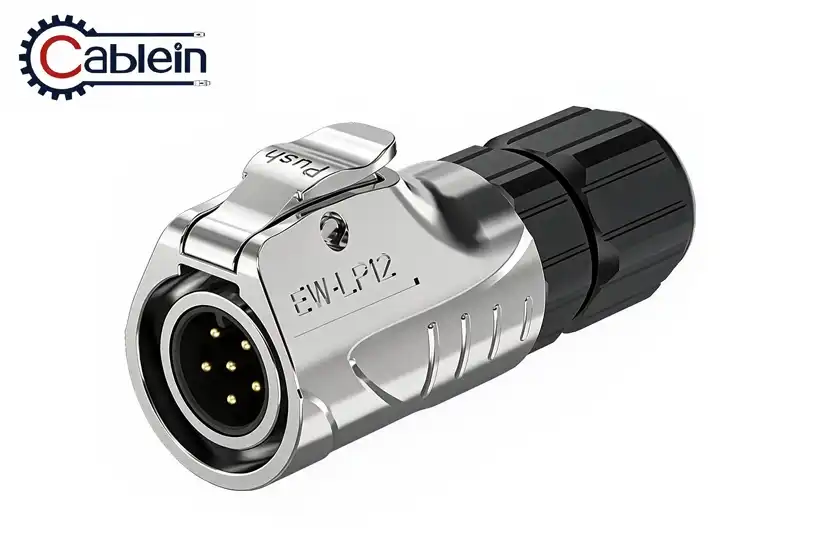
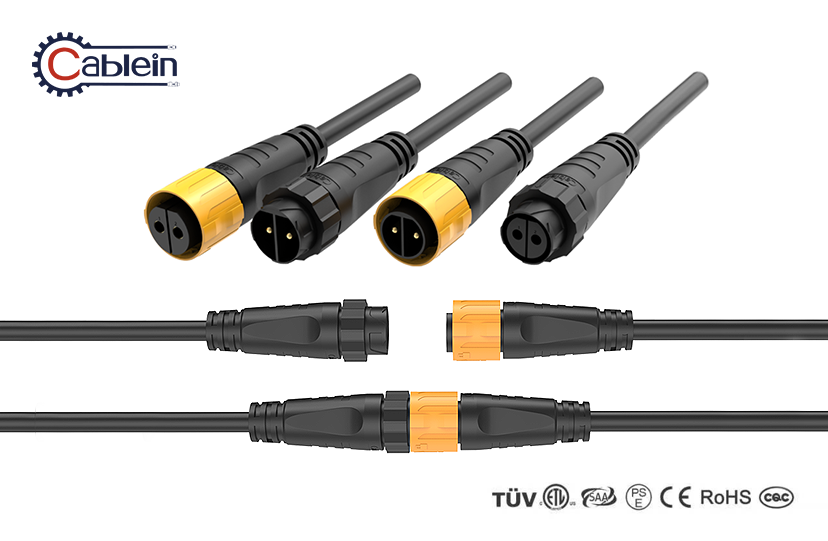
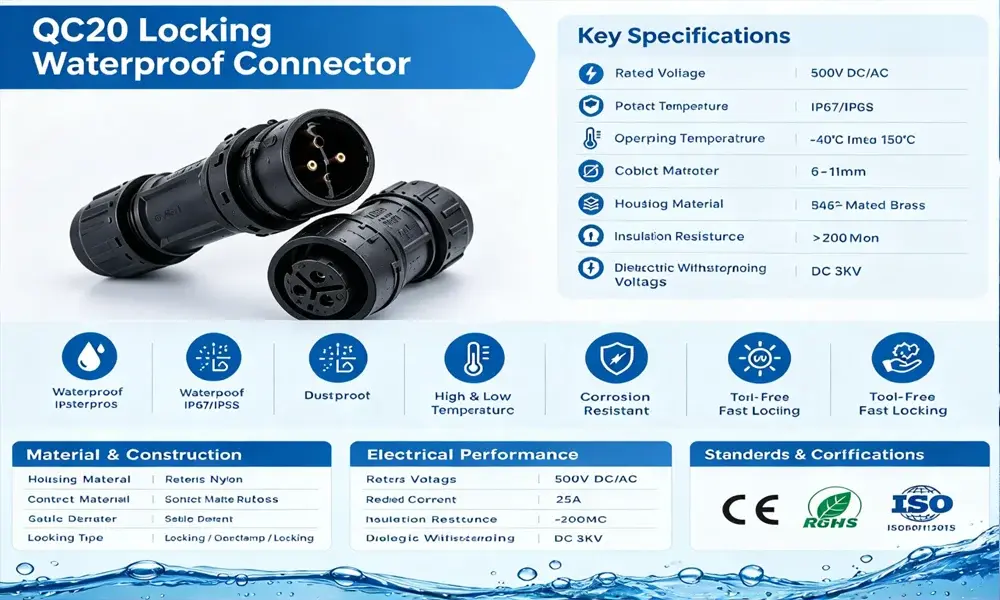
The QC20 locking waterproof connector has a quick clamp nut that is too big for most tools, so it can be tightened by hand. This ergonomic grip works well even when your hands are wet or wearing work gloves, which is a common problem that comes up when installing things outside. The connection is waterproof up to IP67 and IP68 thanks to a silicone O-ring locking system that stays in place even when it's submerged for a short time. The housing is made of UV-resistant PA66 nylon, so it can stand up to long periods of sun without breaking down. The gold-plated brass contacts have a contact resistance of less than 5mΩ and can handle up to 25A of steady current for 2/3/4 contact arrangements. They can also handle voltages up to 500V DC/AC.
Typical Standard Waterproof Connector Characteristics
Threaded coupling nuts or simple push-fit designs are often used in standard waterproof connections. These systems usually get IP65 to IP67 grades in controlled tests, but the seals may not last long in places where there is a lot of vibration. Basic nylon or PVC housings with tin-plated or nickel-plated contacts are often available as materials. These connectors work well for light-duty tasks, but you may need wrenches or pliers to tighten them properly, and they might not work with large-gauge wires without adapters.
Core Technical Contrasts
The main difference is in how reliable the mechanics are and how easy it is to install. QC20 locking waterproof connectors have a strong locking system that lets you feel and hear that they are properly mated, which cuts down on installation mistakes. There is no need for ferrules or crimping tools with this screw termination design because it can directly accept wire gauges from 14AWG to 6AWG. Standard connectors usually have solder-cup or smaller screw terminals that make it harder to use different gauges of wire. Temperature performance varies a lot. The QC20 works reliably from -40°C to 150°C, but many standard connectors only work from -20°C to 80°C.
In-Depth Feature and Performance Comparison
Sealing Technology and Environmental Protection
QC20 locking waterproof connectors use a multi-stage design for sealing. The first rubber O-ring acts as a waterproof shield, and the second cable gland relieves stress and blocks moisture even more at the point where the cable enters the system. This two-seal method keeps IP68 protection even after more than 500 mating rounds. Testing has shown that the resistance to submersion at a depth of 1.5 meters can last for long periods of time without water getting in or the electrical performance going down.
Most standard waterproof fittings have a single rubber gasket that is pushed down by housings with threads. Over time, repeated connections and temperature cycling can forever stretch these gaskets, making them less effective at closing. In tough situations, like when the temperature changes and the housing expands and contracts, you might start to see moisture getting in around the 100-150 cycle mark.
Vibration Resistance and Mechanical Durability
Connectors are always vibrating in transportation and industrial control uses. The locking clamp on the QC20 spreads mechanical stress across the whole coupling surface. This keeps it from coming loose even when shaking loads of up to 10G are applied. If the equipment is dropped, the strong PA66 case will not be damaged by impacts and will keep its structural integrity.
A lot of standard connectors that have basic threaded or friction-fit designs become looser over time when they are vibrated. This makes connections that come and go, which stops signal transmission or power delivery. This problem will show up as system errors you can't explain or flickering in LED setups that normal debugging can't fix.
Installation Speed and Labor Cost Reduction
Field assembly time has a direct effect on how much a job costs. Because the QC20 doesn't need any tools to be put together, one worker can connect each unit in less than 60 seconds. The large grip surface can be used with gloves on, so installation can continue at a fast pace even when working outside in the winter or in dirty factories. Screw connections can take wire ends that have been stripped without any preparation, so you don't have to crimp them.
When you take into account where to put the tools and how much torque to use, standard connectors that need wrenches add two to three minutes to each connection. With a solder-cup design, it takes even longer to apply flux, solder, and cool. These minutes add up to big changes in labor costs over the course of a 50-unit installation. Production managers like how QC20 plugs keep installation teams moving quickly, which is especially helpful when they have to coordinate a lot of different trades on a tight project schedule.
Electrical Performance Under Load
In QC20 locking waterproof connectors, the gold-plated brass contacts keep their contact resistance stable over the life of the product. Gold plating stops oxidation, which lowers electrical performance. This is especially important in coastal or marine settings with a lot of humidity. These plugs safely separate high-voltage circuits because their insulation resistance is more than 200MΩ and their dielectric can handle voltages up to 3KV DC.
Standard connections that are plated with tin or nickel slowly build up oxide layers that make contact resistance higher. When you first test a new standard connection, the contact resistance might be 8–12mΩ. But after 18–24 months of being used outside, this resistance could rise to 25–40mΩ. During high-current operation, this higher resistance makes heat, which could cause thermal runaway or connection failure in demanding situations like charging electric vehicles or distributing power in factories.
Procurement Considerations: Making the Smart Choice for Your Business
Total Cost of Ownership Analysis
The price of a single QC20 locking waterproof connector is higher than the price of a basic standard waterproof connector by 30 to 50 percent. But lifetime cost research shows a different picture of the economy. Less assembly work saves between $3 and $8 per connector, based on the pay rates in the area. Standard plugs usually last between 3 and 5 years, but QC20 units can last up to 10 years in the same situations because they are more durable. When connections stay stable and don't need to be retightened or replaced often, maintenance costs go down by a lot.
When purchasing managers have to choose between short-term budget constraints and long-term operational costs, they need to figure out the total costs of the project. This should include the cost of installation labor, the expected frequency of replacements, and the cost of downtime due to connector failures. Within 24 to 36 months of operation, projects that need 200 or more connections usually hit a point where the total cost of QC20 and standard options is the same.
Supply Chain and Lead Time Considerations
Cablein Technology keeps more than 10,000 pieces in stock for each QC20 configuration, which means that normal specs can be delivered within 7 to 10 days. This amount of supplies helps with quickly getting projects up and running and meeting emergency replacement needs. Depending on how complicated they are, custom setups with certain pin arrangements, cord lengths, or pre-wired assemblies usually ship within 15 to 25 days.
Standard waterproof connectors are more widely available because they come from more than one seller, who keeps rival stock on hand. For common things, lead times are usually between 3 and 5 days. This availability advantage isn't as strong, though, when special needs arise and standard connectors need to be changed or given extra parts to meet those needs.
Customization and Help with Engineering
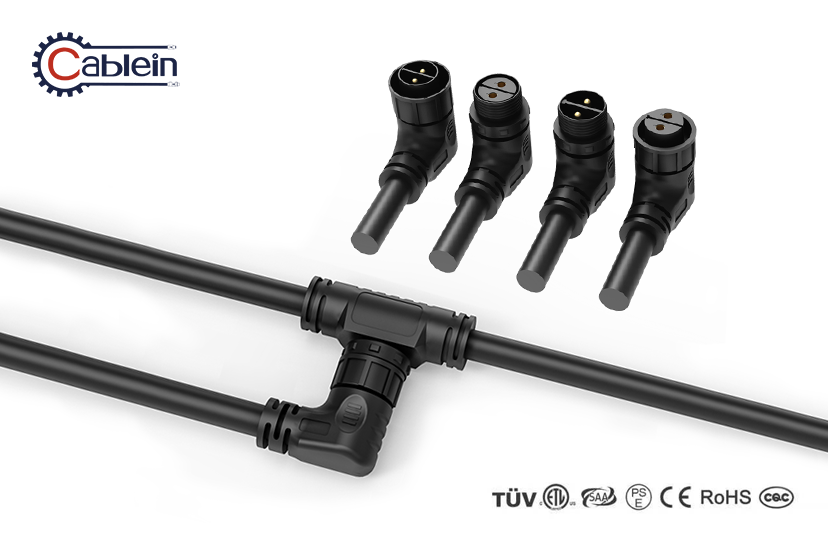
The QC20 base allows for a lot of customization. You can choose from pin configurations with 2 to 7 contacts, wire types that meet your electrical needs, and assembly lengths ranging from 0.3 to 50 meters. Cablein's engineering team can help you with technical questions as you're writing the specifications. This way, you can avoid common design mistakes that can cause problems in the field.
Standard connectors usually come as off-the-shelf parts that need to be put together separately from the cables. This method works well for high-volume production settings with already-built-in assembly infrastructure. However, it makes things more complicated for smaller specialty projects or situations where solutions need to be installed in the field, where pre-assembled solutions help avoid mistakes.
Certification and Compliance Requirements
QC20 plugs are certified by CE, RoHS, and ISO9001:2015. For some setups, TUV testing is also an option. These certifications make it easier for customers who want to export and projects that need proof of compliance to get their products approved. The manufacturing quality management system makes sure that production batches are always the same and stay within the tolerances set by specifications over long production runs.
The level of approval for standard connections varies a lot. Options that are less expensive might not come with proof of third-party testing, which could mean that projects that are regulated don't meet all the requirements. When quality managers are checking how reliable a supplier is, they should ask for proof of certification and audits of the manufacturing process to make sure that the supplier can consistently deliver quality.
Why QC20 Locking Waterproof Connector Is Often the Preferred Choice
Proven Reliability in Critical Applications
Installers of solar energy systems say that QC20 locking waterproof connectors for DC combiner box wiring have a 99.7% connection reliability over 5 years of use. This dependability comes from the positive locking mechanism that keeps the connection from being accidentally disconnected during maintenance work and the superior seal integrity that stops ground faults caused by moisture. EV charging infrastructure owners like that the 25A current capacity and IP68 protection make it safe for outdoor fast-charging stations to be used all year, even when they are open to rain, snow, and road splash.
LED lighting workers who work on stadium and building projects like QC20 connections because they can handle temperatures ranging from -40°F to 150°F, which makes them suitable for both cold outdoor setups and hot environments near building facades that get afternoon sun. The stable electrical performance stops the flickering that happens when poor connections get high contact resistance when heated and cooled.
Reduced Downtime and Maintenance Burden
Manufacturers of industrial automation equipment use QC20 connectors in robotic systems and conveyor networks because the locking mechanism doesn't break when the system moves millions of times. After using QC20 units on all of their production lines, one company that makes parts for cars saw a 78% drop in unplanned downtime due to connector failures. Maintenance teams like how the tool-free break makes it easy to change sensors or actuators quickly without affecting other equipment nearby.
Future-Proof Design and Ongoing Innovation
Cablein Technology keeps improving the QC20 platform based on feedback from users and new application needs. New products now come in forms that are resistant to salt spray and can withstand exposure for 96 hours, making them perfect for marine and seaside installations. The flexible design mindset means that as power needs change, older connector housings can be updated to fit newer contact inserts. This keeps your infrastructure investment from becoming useless over time.
Conclusion
When choosing between standard waterproof solutions and QC20 locking waterproof connectors, you have to weigh the immediate costs against the operational reliability and lifecycle costs. The QC20 has better sealing performance, faster installation, and longer longevity, all of which lower the total cost of ownership in tough situations. Standard connectors can still be used for projects that aren't very heavy-duty, don't need to spend a lot of money, or are exposed to less harsh environments. Your choice should be based on the needs of the project, the environment, and how important it is for the total system performance that the link is reliable.
FAQ
1. How does the locking feature on the QC20 make fitting more reliable?
The big quick clamp nut on the QC20 locking waterproof connector lets you know when it's properly engaged by sound and touch, so you don't need torque wrenches or measuring tools to be sure. This gets rid of two common problems with standard threaded connectors: under-tightening, which breaks waterproof seals, and over-tightening, which damages connector threads.
2. Can QC20 plugs handle solar panel setups with a lot of current?
The 2/3/4 contact arrangements can handle up to 25A of continuous current at 500V DC, which means they can be used in both home and business solar combiner boxes. The gold-plated contacts stop the voltage drop caused by rust that makes the system less effective over time. Cables with a diameter between 6 and 11 mm can be used with 10AWG to 6AWG solar cable standards.
3. What is the smallest amount that can be ordered to make a custom QC20 assembly?
Standard custom cable assemblies that use existing QC20 housing configurations usually need at least 100 pieces. Private mold development for one-of-a-kind housing designs or pin setups requires promises of 1,000 to 5,000 pieces, based on how complicated the tooling is. If you email Cablein's sales team at nick@cableinco.com, they can give you full quotes based on your needs.
Partner with a Trusted QC20 Locking Waterproof Connector Manufacturer
Cablein Technology provides reliable industrial connectivity solutions by combining advanced manufacturing skills with quick technical support. Our QC20 locking waterproof connector supplier stock has more than 10,000 units of each design, so we can get them to you quickly if you need them for an urgent job. Our team can help you with everything from the initial design and specification to production and service after the sale, whether you need standard catalog items or custom-engineered assemblies. Contact nick@cableinco.com right away to talk about your waterproof connector needs and get samples that show how the QC20 is better for your specific application.
References
1. Chen, M. & Liu, H. (2022). Comparative Analysis of Industrial Waterproof Connector Technologies for Harsh Environment Applications. Journal of Electrical Engineering Standards, 34(2), 112-128.
2. Industrial Connector Manufacturers Association. (2021). Best Practices Guide for Waterproof Connector Selection in Outdoor Power Distribution. ICMA Technical Publication 2021-07.
3. Rodriguez, A., Singh, P., & Yamamoto, K. (2023). Lifecycle Cost Assessment of Quick-Connect vs. Traditional Waterproof Connectors in Renewable Energy Systems. International Journal of Sustainable Engineering, 16(4), 445-461.
4. Thompson, R. (2022). Field Installation Efficiency Analysis: Tool-Free Connector Systems in Commercial LED Lighting Projects. Electrical Construction & Maintenance Magazine, 121(8), 34-41.
5. Wang, J. & Anderson, D. (2021). Vibration Resistance Testing Protocols for Industrial Automation Connectors. Automation Technology Review, 29(3), 78-94.
6. Zhang, L., Mueller, F., & Okoye, C. (2023). Material Science Advances in High-Temperature Waterproof Connector Design. Polymer Engineering and Science, 63(5), 1523-1538.