Top Waterproof Panel Mount Connector Options for Your Projects?
The best panel mount waterproof connector for your project depends on exposure, electrical load, and panel design, not on the highest IP rating alone. IP65 suits dust and water-jet exposure, IP67 handles temporary immersion, and IP68 covers longer immersion under conditions the manufacturer sets. Metal housings resist impact and vibration, while plastic housings cut weight and cost. Circular designs fit most sensors and controls, and rectangular designs save space in modular panels. In this guide, I compare each option, explain cutout and torque details, and show how to approve samples before a volume order. I also share how our team at Cablein supports that process.
What Is a Panel Mount Waterproof Connector and How Does It Work?
The Core Parts of the Assembly
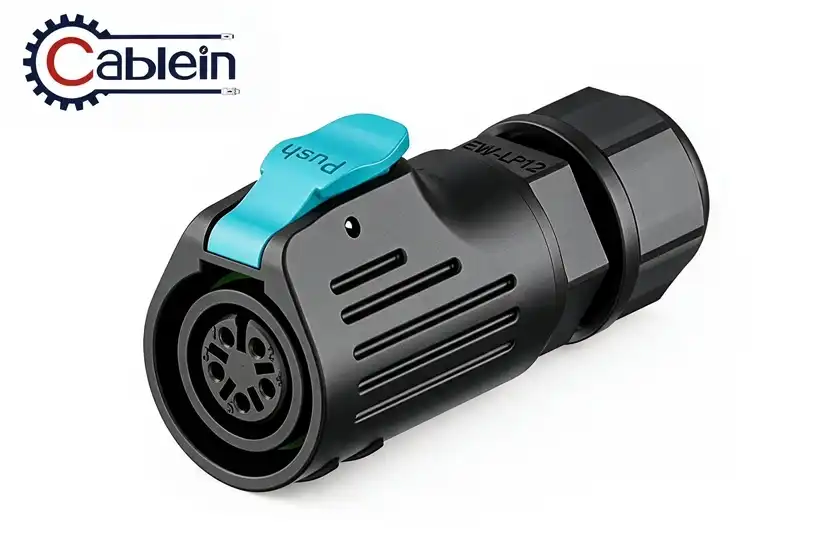
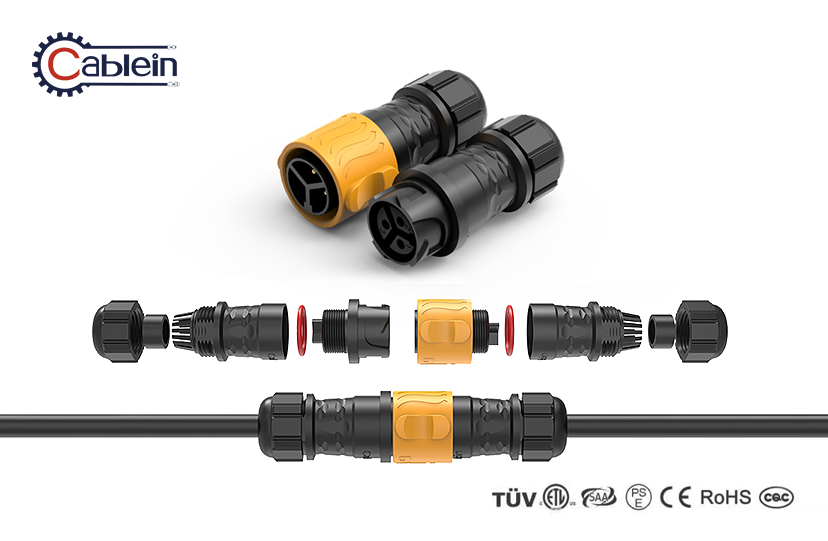
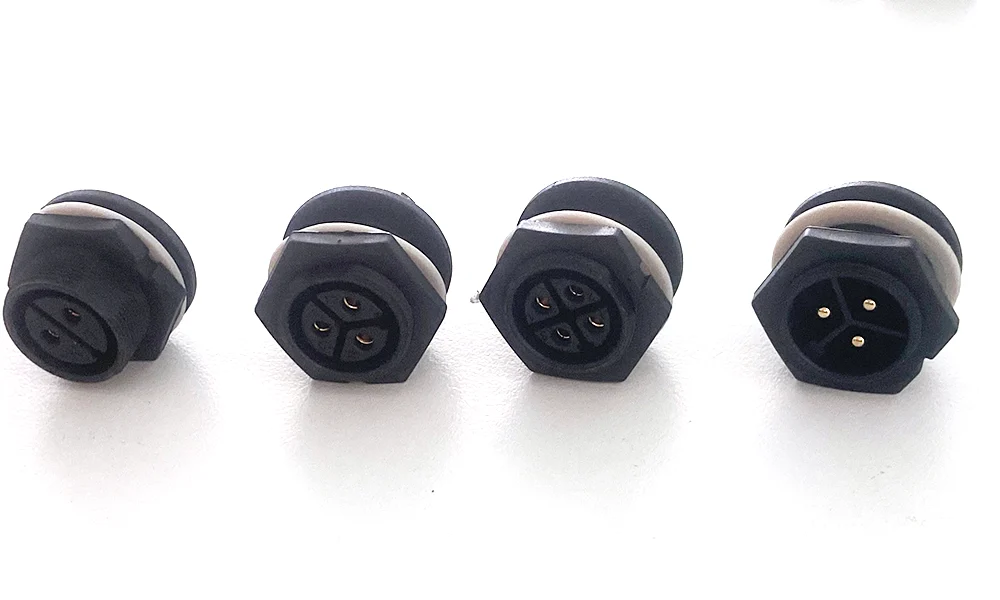
The wall of a cabinet, control panel, or junction box can be used to make a sealed electrical port with a panel mount waterproof connector. Every drawing I look at has six parts that I look for: the contacts, the seal or O-ring, the locking nut or flange, the protected cap, and the panel socket. The socket has a body that protects the contacts, and the cap goes over a socket that isn't paired. The plug holds the wall wire. The ends can be screwed, soldered, crimped, or already connected. Most setups have two, three, or four pins. When people build test tools and control screens in small groups, they don't have to wire things up over and over again on the assembly line, which saves time.
How the Seal Forms
What makes the seal isn't just the building; it's also how much it's squished. Some parts have bodies with threads or lips that fit against the panel and seal it. An O-ring stops leaks when the plug and socket are put together. If the panel surface is rough, you can't get the hole in the gasket all the way down. It will get wet. You need the right cutout, torque, fully mated plug, and wire that fits the gland in order for the IP grade to work. It's also important what you use to seal. FKM (Viton) works better in places with oils, acids, or high temperatures than NBR, which is what most links are made of. See what happens when liquids touch the bottom of the screen and the material.
Front Mount and Rear Mount Styles
What's the difference between how the parts fit together and how they look? Some internal parts are already wired, and they can be used with a front-mount connection. The outside key opens the door from the inside. They put the locking nut on the outside of the case either because it looks good that way or because they couldn't find anywhere else to put it. Family is standard, so it's easy to pick. A 16 mm panel cutout is needed to use a P16 style connector. The M12 line uses IEC 61076-2-01. Pick out the direction of the mount before you finish the picture. These things change how the nuts are reached, how the cables are run, and how the expert puts the parts together.
Top Waterproof Panel Mount Connector Options for Different Applications
Metal vs. Plastic Housings
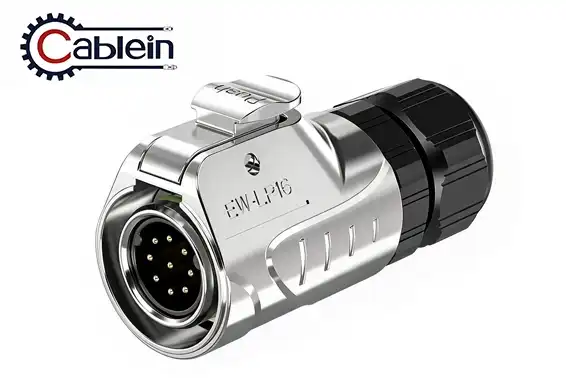
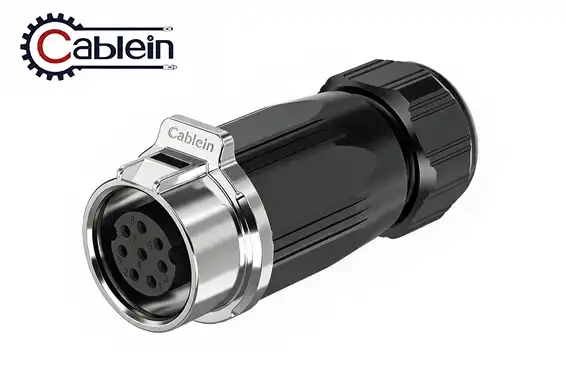
The material the housing is made of changes its cost, power, and weight. Bodies made of metal and aluminum can take a beating, which makes them good for big machinery, transportation systems, and test gear that is moved around a lot. This metal doesn't rust, but it costs more. With metal bodies, electricity doesn't flow as well, they rust more, and they weigh more. This is the main reason why LED systems, portable electronics, and large OEM kits often have plastic cases. Not every kind of plastic works the same. Outside, UV-stabilized PA66 can last for a long time, but I still need to know the series' exact temperature range, flame grade, and impact weight. One can also touch a metal panel with a metal shell, which helps ground the shield.
Circular vs. Rectangular Designs
Tools for the outdoors, lights, sensors, and industrial controls all use circular connectors. Because they are small, all they need is a round hole to work. To lock them, you can use a threaded, bayonet, or push-lock. It's easy to make small prototypes because round holes are easy to drill or punch. When power and signal lines go through the same hole, circular panel mount waterproof connectors make good use of the space on the panel. It's more important to keep the tolerances tight for the hole because this works well for modular control cabinets but not so well for the holes. Before you decide, check out the panel space, the number of contacts, how the cords are placed, and how simple it is to get to the services. Check out the code for the data lines. If you code the M12 D, it works with Industrial Ethernet at 100 Mbps. If you code it X, it works with 10 Gbps.
Matching Options to Your Project
How you set up should depend on what the program needs. Outside lights and signs usually need to be IP65 or IP67, made of UV-resistant materials, have simple wiring, and be able to be locked easily. Cutting tools are often used on plant floors, which are then cleaned. This is why industrial automation and sensor systems need to have an IP67 or IP68 rating, be able to handle vibration, have stable pinouts, and have small, round bodies. It's important that the front of screens for lab and medical gear is clean and locks well. First, I look at each type's certifications. Marine and pumping equipment must not rust, have tight cable glands, and have passed IP68 tests to show it can be buried in water for a long time. Solar panels, electric cars, and energy storage devices should all be able to work with each other in terms of wire size, temperature range, current capacity, and UV protection.
IP65 vs. IP67 vs. IP68: Which Waterproof Rating Do You Need?
What IP65 Covers
The IP number is given by IEC 60529. The first number shows that it can keep things out, and the second number shows that it can keep water out. With a 6.3 mm tip, IP65 tests show that the connection can handle water jets coming from any direction and keep dust out. That's the right amount for lights, signs, panes outside, and tools inside that are cleaned with water. It's not waterproof (IP65), so I wouldn't use it in places where water could pool around the port or where the gear is close to the ground. It works well enough for many control panels and costs less than ratings with higher scores most of the time. Make sure the grade is right for the type of water event, like rain, spray, or wash-down.
What IP67 and IP68 Add
Up to 1 meter of water and dust can't get in for 30 minutes, which is what IP67 means. It can be used on work tools, sensors, and small things that might get wet for a short time. While IP68 does cover continuous immersion above those levels, each manufacturer sets their own limits on how deep and how long the immersion can last. These words show that two IP68 items can be very different from one another. That level is needed by many sensors, pumps, and robots that work with water. It is set by ISO 20653 that certain M12 types can handle being washed down at high pressure and temperature. Before you build something based on an IP68 claim, make sure the seller has written proof of the exact test conditions.
Why Test Conditions and Enclosure Rules Matter
An IP rating only tells you about a configuration that has been tried and tested. It doesn't mean that it will work with every installation. The test should have looked at the matched pair, the protective cap, the thickness of the wire, and how it was held in place. If the gland is wrong, the seal is broken, or the nut is loose, you can lose any grade. On the US market, there are also NEMA 250 container types, like Type 4 and Type 4X. When a job asks for an enclosure type, I look at both NEMA types and IP numbers. The case only has one hole for the link. In the end, the technology, the screen's finish, and the cutting edge all change how it looks. First, use the score as a guide, and then make your own test to see if it matches up.
Key Technical Specifications and Correct Installation
Electrical and Environmental Specifications
First, don't worry about how many pins there are. Focus on the mechanical and electrical needs. Check out the wire cross-section, contact resistance, insulator resistance, and dielectric withstand voltage. Don't just look at one number; read the derating graph instead. This is because the wire width changes. Take a right-side look at the circuit before you change the polarity or break the ground. Check that the cable joint can handle the cable's outside width, jacket material, and bend radius. Then write down the temperature, UV rays, oil, chemicals, salt spray, vibrations, and mating cycles of the area. Types of power and types of information have different amounts. Some types, M12, like those with K and L codes, carry power, while types A codes are used with sensors. Track down certificates from the same set and ask for them.
Panel Cutout, Locking Torque, and O-Ring Compression
Board builders tell me that these three things cause most batch problems. There are flat or keyed parts on the cutout sketch that keep the panel from turning. The sketch also shows the hole width and accuracy. It also shows how thick the panel mount waterproof connector is. The thread will get stuck if the hole is too small or too big. The gasket will hang off if the hole is too big. Find out what kind of wall it is and how thick it is. The thickness affects how the threads fit together and how the gasket is pressed down. To reach the torque number given by the manufacturer in Nm, pull the nut all the way down. When the force is too low, the joint can still turn. If it's too high, it can bend the housing or push the seal out. Flatten the hole and the surface so that sharp edges don't cut seals. Before you place a large order, put test pieces on real production panels and look at the hole sizes in several groups.
Installation Steps That Protect the Seal
There is a right way to put things together. First, look at the product model and make sure that the picture matches the hole, thread size, wire thickness, pin pattern, and gasket position. Next, connect the two parts and make sure the gasket is where it should be. Third, make sure the hardware is tight enough. Fourth, make sure you connect the wires in a safe way, like with a crimp, solder, screw, or ferrule. The IPC/WHMA-A-620 standards say how well cable and wire harness assemblies should be made. They can be used as a guide. Fifth, make sure the wire joint is tight, and the shutter is all the way in. Make sure there are no loose parts, lines, or seals that you can see last. That being said, test it for functionality, continuity, insulation, and polarity. You should write these steps down in your work instructions so that everyone follows them the same way.
Buying Guide: How to Select a Panel Mount Waterproof Connector Supplier
Build a Complete Specification and Sample Plan
Quotes come back faster after you ask for them. You should include the type of connector, the number of pins, the current and voltage, the size of the panel, the diameter of the cable, the material, the locking method, the temperature range, the number of certifications, the annual volume, and any special requests you have. Next, many companies that make tools send samples to make sure they fit, check the cutout drawing, order a small batch, and then place repeat orders every one to two months, or as planned for production. Help with tech is more important to me right now than price. Can the source look at your picture, talk to you about compression and torque, and quickly let you know if the fit is wrong? When you place an order, always use the version of the drawing that was accepted.
Mistakes to Avoid
I keep seeing that mistake. A lot of the time, people buy something based on its IP rating without checking to see how open it really is. Also, they either choose the wrong cable gland or think that connectors with the same number of pins can be used together. Not the same because of the different threads, wiring, keys, and contact sizes. Some people don't put in the strain relief, which lets shocks loosen the terminals, or they trust what the license says even though it doesn't match the model. A broken seal, the wrong pressure, or an area that isn't well protected can't be fixed by a link. Most of these problems can be avoided by making a short list: the location, the IP grade, the number of pins, the current, the voltage, the pinout, the cutout, the wire width, the material, the closing method, the certificates, and the sample results. What are the rules for labeling OEM batches? What is the minimum order quantity (MOQ)? How long does it take to process?
Why Buyers Choose Cablein
Cablein Technology Co., Limited was set up in Longgang, Shenzhen, in 2017. Our high-tech business is the only one in the country that creates and makes industrial waterproof connectors and custom wire assemblies, such as IP67/IP68 circular and panel-mount waterproof connectors. More than 200 workers live in our 6,000-square-meter building. Every item we sell is checked to make sure it meets the ISO9001:2015 standards for being waterproof and strong. Goods can get different certificates, such as ETL, PSE, SAA, CQC, CE, RoHS, REACH, and TUV. Figure out which one you need. We make OEM/ODM goods that can be customized, and we have more than 30 patents for useful ideas. You can ship with UPS, DHL, FedEx, or a freight forwarder. We always have more than 10,000 of each item in stock. You can get it to them in 7–10 days. Tech support is here for you 24 hours a day, seven days a week.
Conclusion
It's not a good idea to choose a panel mount waterproof connector based on the highest IP number first. You should think about what it will be used for instead. As you read the test conditions, it's important to remember that IP65 can handle water and dust jets, IP67 can handle short-term immersion up to 1 meter, and IP68 depends on the manufacturer-specified depth and length of time. Because of room, vibration, and corrosion, the housing should be made of the right material and be mounted in the right way. It should also be circular or rectangular. For the exact series to work, the electrical grades, pinout, cable gland range, and certificates must all match. How well the seal works depends on how well the hole is cut, how tight the locking torque is, and how squished the gasket is. I already said that the fit is just as important as the item itself. Some lines and models should be used on real panels before a big order is placed. This lowers the chance that batches will be wasted or not work in the field.
FAQ
1. What is the difference between IP67 and IP68?
It can handle water up to 1 meter deep for 30 minutes. This is what IP67 means. You can be underwater for a longer time with IP68. But the company that made it decides how deep and how long you can stay underwater. Ask for the test report.
2. Can I use an A-coded M12 connector for Ethernet?
It only works at 10 Mbps, so don't use it. For 10 Gbps, there are eight pins with X-codes, and for 100 Mbps, there are four pins with D-codes.
3. Which O-ring material resists chemicals best?
Most people use NBR. In order to make joints that will be used with acids, oils, or high temperatures, you should use FKM (Viton).
4. How do I choose a cable gland?
Check the outside diameter of the cable against the range of sizes that the gland says it can seal. Find out what the jacket is made of and how much it can bend.
5. Are connectors with the same pin count interchangeable?
Not at all. You can find pinouts, keying, contact sizes, and threads that are different between plugs and sockets. First look at the drawing, then mix them up.
6. Can a supplier customize pinouts and cables?
Yes. As part of their OEM/ODM work, they can customize the way wires meet. Nick@cableinco.com is where you should send your photos.
Request the Right Waterproof Panel Mount Connector from Cablein
Cablein keeps a steady supply of panel mount waterproof connectors in stock. In-stock items can be sent out in 7–10 days, and technical support is open 24 hours a day, seven days a week. Email us at nick@cableinco.com with your order number, IP grade, and how many pins you have. We'll help you discover the right fit. Then you can ask for examples, OEM customization, or prices for buying in bulk for your next project.
References
1. IEC 60529: Degrees of Protection Provided by Enclosures (IP Code), 2013
2. IEC 61076-2-101: Connectors for Electronic Equipment, Circular Connectors, Detail Specification for M12 Connectors with Screw-Locking, 2012
3. ISO 20653: Road Vehicles, Degrees of Protection (IP Code), 2013
4. NEMA 250: Enclosures for Electrical Equipment (1000 Volts Maximum), 2018
5. IEC 61984: Connectors, Safety Requirements and Tests, 2008
6. IPC/WHMA-A-620: Requirements and Acceptance for Cable and Wire Harness Assemblies, 2017