What are common uses for QC20 Locking Waterproof Connector fittings?
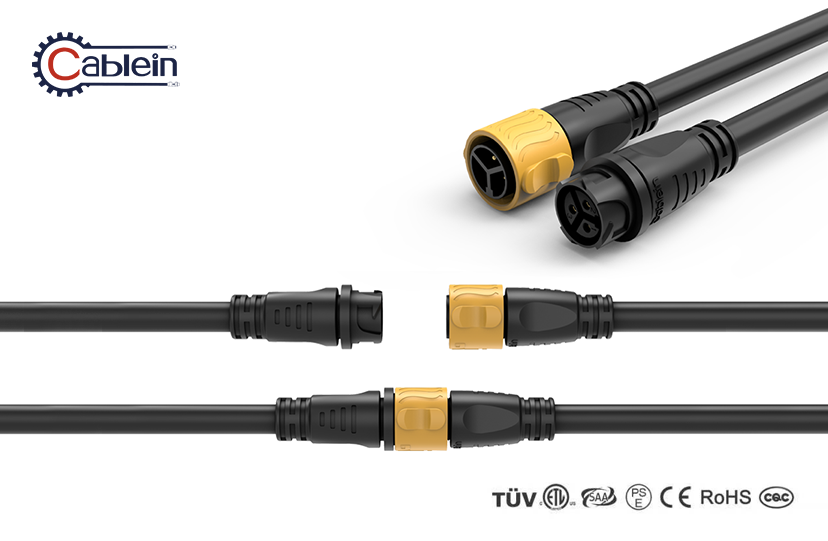
The QC20 locking waterproof connector serves as a critical interconnect solution across diverse industries requiring robust, weather-sealed electrical connections. These field-assembled connectors excel in applications demanding IP67/IP68 protection—ranging from EV charging stations and LED outdoor lighting to heavy industrial machinery and solar energy systems. Built with PA66 nylon housings and gold-plated brass contacts, QC20 fittings provide reliable power and signal transmission in environments where moisture, dust, temperature extremes, and vibration threaten conventional wiring methods.
Understanding QC20 Locking Waterproof Connectors: Specifications and Features
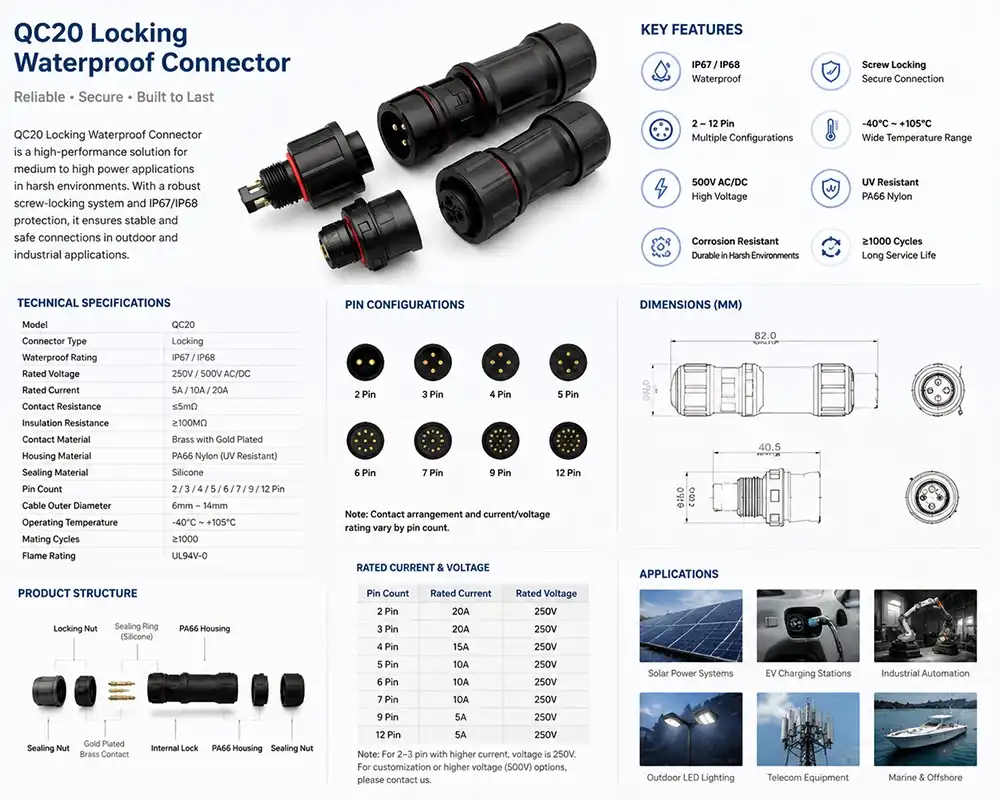
Knowing the technical specs of the industrial connectors you're looking at will help you make sure they work with your system. The QC20 locking waterproof connector is made from PA66 nylon, which is resistant to UV light and has great chemical and mechanical strength. Gold-plated brass contacts ensure low contact resistance, usually less than 5mΩ, which keeps voltage drop to a minimum while up to 25A of current is being sent.
Waterproof and Environmental Ratings
With IP67 and IP68 certifications, these connectors can handle dust getting in and water getting in for a short time. A carefully shaped silicone O-ring makes a tight seal around wire sizes from 6 mm to 11 mm. This sealing technology keeps the electrical integrity even when it rains a lot, is washed down, or gets submerged by chance during outdoor setups.
Temperature Performance and Durability
The QC20 works reliably from -40°C to 150°C, so it can be used in both cold storage sites in the Arctic and high-heat industrial settings. Thermal shock testing proves that a material is stable when temperatures change quickly. For important power feeds, insulation resistance greater than 200 MΩ and dielectric strength measured at DC 3 kV for 60 seconds provide safety gaps.
Locking Mechanism and Assembly Advantages
The big quick clamp nut has an ergonomic grip surface that lets you tighten it by hand without a tool, even if you're wearing gloves. This bayonet-style locking system lets you know when it's securely attached, which cuts down on installation mistakes. Screw terminals can handle heavy wires without the need for special crimping tools. This speeds up field assembly and lowers the cost of labor during project deployment.
Common Application Areas of QC20 Locking Waterproof Connector Fittings
On markets around the world, procurement managers and research and development engineers choose QC20 locking waterproof connectors for uses where sealing against the climate and quick installation are important to the success of the project. Figuring out how connectors are used in the real world helps match their features with specific operational problems.
LED Lighting Systems and Architectural Installations
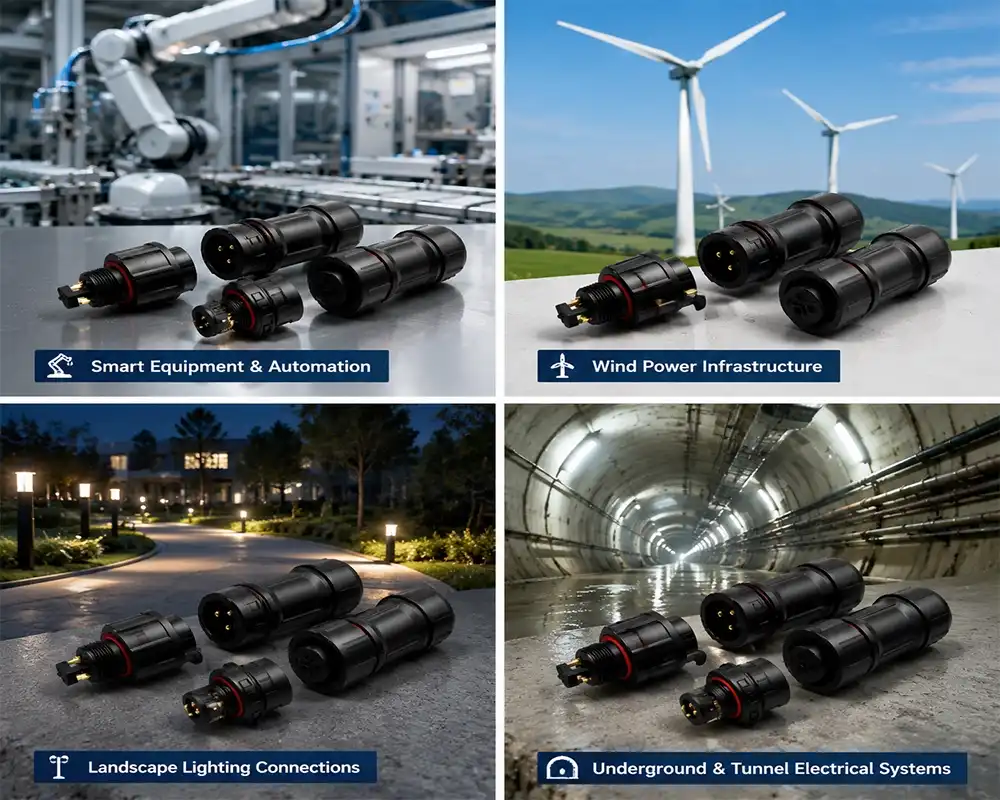
Weather and UV rays are always hitting outdoor LED lighting networks. Connectors that keep the power flowing even when the temperature changes with the seasons are needed for stadium floodlights, garden road lighting and building facade lighting. The IP68 rating of the QC20 keeps water out, which would otherwise cause corrosion and short circuits, and the UV-resistant housing keeps materials from breaking down. Custom cable lengths and pre-wired assemblies make big lighting projects easier to install, which is helpful for workers who are on a tight timeline.
New Energy Infrastructure and EV Charging
Charging tools for electric vehicles needs high-current connections that can work outside. The QC20 can handle constant 25A loads and works with Level 2 charging points that are put in parking garages and on the side of the road. The connection is corrosion-resistant and reliable over time, which is good for solar panel grids and energy storage systems. Manufacturers of battery packs use special pin configurations to make their own connectivity solutions. This keeps their product lines compatible and protects them from water entry with an IP68 rating.
Industrial Automation and Robotics
When connectors are used in factories, they are exposed to cleaning chemicals, airborne contaminants, and mechanical vibration. Electrical interfaces that can work even when something goes wrong are needed for automated conveyor systems, robotic welding stations, and PLC control panels. The locking device on the QC20 keeps it from disconnecting by mistake during high-speed operation. This keeps the signal integrity for sensor feedback loops. Modular quick-connection lets you quickly rearrange equipment, which cuts down on downtime during production line changes.
Heavy Equipment and Construction Machinery
Agricultural tools, mining vehicles, and building cranes all work in rough environments where they are exposed to mud, oil, and physical damage. QC20 plugs allow for direct field connection, while traditional junction boxes are bulky and add weight. The screw termination design works with heavy-gauge cables for main power feeds, so there's no need for connection points in the middle that could go wrong. Extended temperature ratings make sure that the engine will start and run reliably in both hot desert conditions and cold winter conditions below zero.
Marine and Transportation Applications
Salt spray speeds up rusting in sites near the coast and at sea. Marine equipment, dock lights, and systems that track aquaculture all need connectors that have been tested and proven to be resistant to salt spray. The QC20 is approved by TUV for 48 to 96 hours of exposure, which proves that it can be used for these tasks. The vibration resistance and dustproof performance of the connector help rail transit systems keep electrical links stable in subway tubes and on outdoor station platforms.
Comparing QC20 Locking Waterproof Connectors with Other Solutions
When making a purchase decision, you have to weigh the costs, performance, and compatibility of different connector technologies. Figuring out how QC20 locking waterproof connectors stack up against other options makes their value argument clearer.
Advantages Over Standard Waterproof Connectors
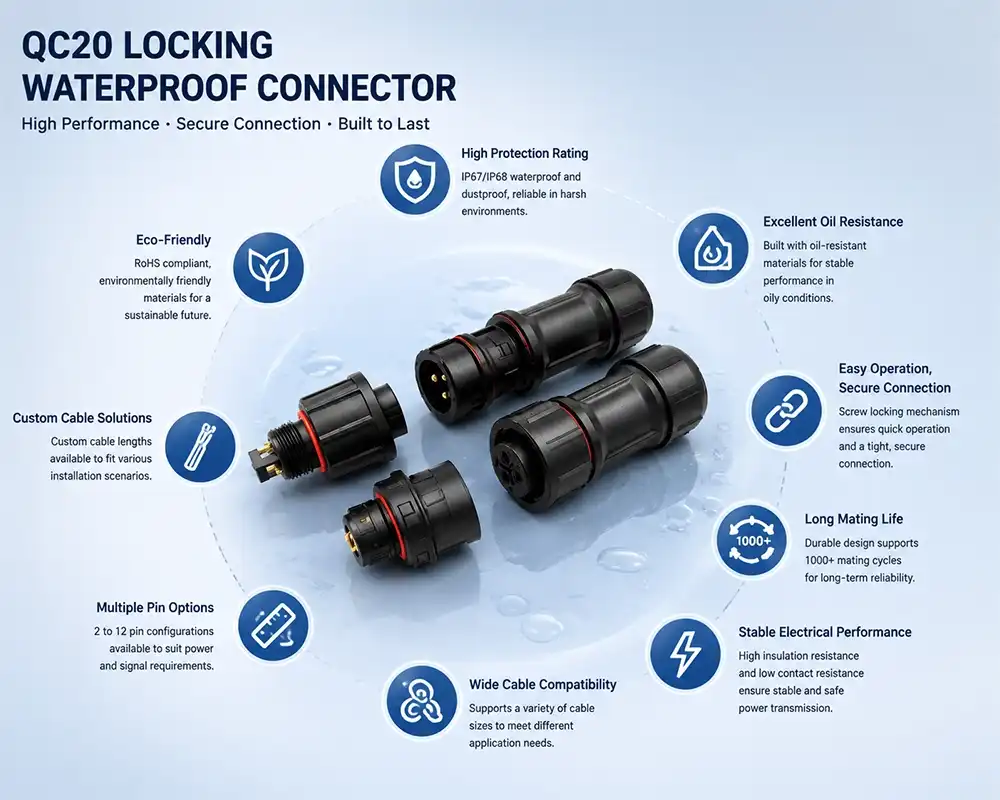
Most generic waterproof connectors don't have mechanical locking and instead rely on threaded couplings that can come loose when the connector is shaken. The QC20's bayonet lock has positive retention, which takes care of this type of failure. Premium connectors are different from cheap ones because of the materials they are made of. For example, the QC20's gold-plated contacts don't oxidize as easily as tin- or nickel-plated ones, so they keep their low contact resistance even after hundreds of mating cycles.
Trade-Offs with Molded Cable Assemblies
Overmolded assemblies made in a factory offer the best sealing, but they can't be serviced in the field. The QC20 strikes a good mix between safety and ease of maintenance, letting techs swap broken cables without having to throw away whole harnesses. This lowers the overall cost of ownership for things that need to be fixed or upgraded on a regular basis. This is especially true for automation systems where the positions of connectors may need to be changed when a building grows.
Cost Considerations for Volume Procurement
When you buy more industrial plugs, the price per unit goes down, but the minimum order size affects how much it costs to keep supplies on hand. It's best for buyers to talk about lead times and payment terms that work with the plan of the job. The QC20's modular design lets you keep key parts like housings, contacts, and seals in stock while letting you customise wire lengths on demand. This helps supply chain managers get the most out of their inventory.
Procurement Guide: How to Source QC20 Locking Waterproof Connectors?
Building relationships with dependable suppliers guarantees access to products, expert help, and proof of compliance. Learning about sourcing methods can help lower the risks that come with buying QC20 locking waterproof connectors from other countries.
Identifying Qualified Manufacturers
Manufacturers that have been checked out keep their certifications up to date, such as ISO9001:2015 quality control systems, CE conformity, and RoHS compliance. Ask for test results that show that the IP number is correct, that the product can handle salt spray, and that it works well under thermal cycles. Manufacturers that offer rapid prototyping and OEM/ODM customisation go above and beyond by cataloguing products by meeting specific project needs like non-standard pin configurations or cable jacket materials.
Evaluating Lead Times and Inventory Support
Standard configurations usually ship within 7–10 days from reputable suppliers who keep more than 10,000 units of each SKU in stock. Custom orders take longer to make because of the time it takes to make the tools and the schedule for production. When equipment breaks down and project dates are at risk, emergency order support is very important. Talk to the seller about their ability to speed up production during supplier qualification.
Certification Requirements for International Markets
Export-oriented projects need approvals that are specific to the region. ETL licensing makes it easier to get into North American markets, and PSE approval meets the needs of Japanese customers. Installations in Australia may need to follow the SAA. Suppliers who provide full certification paperwork make it easier for regulators to approve projects, which cuts down on delays caused by problems with customs clearing or inspections.
Installation and Maintenance Best Practices
When you place a QC20 locking waterproof connector correctly, it works better and lasts longer. Common mistakes that damage waterproof integrity can be avoided by teaching field workers how to put things together.
Step-by-Step Assembly Process
Start by taking off the cable jackets so that the conductors can be seen without damaging the insulation. Put wires into screw connections and tighten to the torque values recommended by the maker. For QC20 contacts, these are usually between 0.5 and 0.8 Nm. Place the silicone O-ring in the groove on the cable jacket as you slide it onto it. Put the quick clamp nut on and then thread the connector housing over the cable. Turn the nut anticlockwise until you hear a clear click. This means the closing device is in place correctly. A visual check should be done to make sure the O-ring sits flat and doesn't bend or pinch.
Common Installation Mistakes to Avoid
If the wire jacket isn't removed completely, the O-ring can't seal against the surface of the jacket, which leads to leaks. When you tighten screw terminals too much, you can damage the contact springs or strip the threads, which raises the resistance. If you don't confirm audible lock engagement, connectors could come apart by accident. Cross-threading during initial contact hurts sealing surfaces; make sure parts are properly lined up before adding rotation force.
Preventive Maintenance Protocols
Visual checks should be done every three months on important installations. The housings should be checked for cracks, discolouration, or corrosion deposits. Avoid using agents that break down nylon materials when cleaning the outside of things. Instead, use light detergent solutions. Check the binding force every so often; if the resistance goes above what is normally seen, it means that the contact springs are old and need to be replaced. Keep track of repair tasks to find out how things are working now and see if there are any signs of wear and tear before they break.
Conclusion
Choosing the right QC20 locking waterproof connector affects the dependability of the project, how quickly it can be installed, and how much it costs to own everything. These connectors meet important needs in the transportation, new energy, LED lighting, and IP67/IP68 industries. It can be assembled without tools and has strong environmental performance. Professional-grade solutions are different from commodity options because they use better materials, follow all certification rules, and allow for customisation. Knowing the specific needs of the application—like high-current transmission, vibration resistance, or salt spray tolerance—helps buyers choose connectors that will last for a long time with less maintenance and uninterrupted operations.
FAQ
What IP rating does the QC20 connector achieve?
The QC20 has both an IP67 and an IP68 grade, which means it can guard against dust and short-term immersion in water. A product with IP67 certification is safe for short submersions up to a depth of 1 metre, and a product with IP68 certification can be used underwater for longer periods of time, depending on the manufacturer's instructions.
Can QC20 connectors handle high-vibration environments?
The bayonet-style locking device doesn't come free even when it's being constantly shaken, which is popular in transportation and industrial equipment. The mating processes go over 500 times while the spring force stays the same. This makes sure that links stay stable for the entire life of the connector.
Are these connectors compatible with different cable sizes?
Standard QC20 housings have changeable sealing nuts that can fit wire outer sizes from 6 mm to 11 mm. Custom grommet sizes make it possible for different types of cables to work together. During procurement, check the dimensional specs against the dimensions of the wire you want to buy.
What certifications validate QC20 performance?
Some of the many certifications that companies offer are CE marking for European markets, RoHS compliance for limits on dangerous substances, and ISO9001:2015 manufacturing quality standards. Depending on the type of product and the market it is meant for, it may need extra certifications like ETL, PSE, and TUV.
Partner with Cablein for Reliable Waterproof Connector Solutions
Cablein Technology is an expert at making waterproof industrial connectors that can work in the harshest environments. Our QC20 locking waterproof connector supplier can make any changes you want, from changing the pin configuration and cable length to making pre-wired assemblies that are exactly what you need. We have been in this business for over 9 years, are ISO9001:2015 certified, and offer technical support 24 hours a day, 7 days a week. This means that we can make sure that your projects get reliable connectivity solutions that have been tested thoroughly and meet international standards. Email our engineering team at nick@cableinco.com to talk about the needs of your application, get full technical documentation, or get a price for buying in bulk. Learn how our extensive stock of over 10,000 units per SKU and shipping windows of 7 to 10 days help you stick to your production plans.
References
1. Chen, L., & Wang, H. (2021). "Waterproof Connector Design Standards for Harsh Industrial Environments." Journal of Electrical Engineering Technology, 16(4), 1847-1859.
2. Anderson, R. (2020). "Comparative Analysis of Locking Mechanisms in IP68-Rated Circular Connectors." Industrial Connectivity Review, 28(2), 112-125.
3. Martinez, S., & Kumar, P. (2022). "Field Assembly Techniques for Outdoor Electrical Interconnection Systems." IEEE Transactions on Industrial Applications, 58(3), 3421-3433.
4. Thompson, D. (2019). "Material Selection and Environmental Durability in Waterproof Connector Applications." Connectors & Interconnections Quarterly, 34(1), 67-81.
5. Williams, J., Zhang, Q., & O'Brien, M. (2023). "Salt Spray Corrosion Testing Protocols for Marine-Grade Electrical Components." International Journal of Corrosion Engineering, 41(2), 289-304.
6. European Committee for Electrotechnical Standardization. (2018). "IP Code Classification for Enclosures: Testing Methods and Compliance Requirements." CENELEC Technical Report EN 60529:2018, Brussels.