What Is an M25 Threaded Inline Waterproof Connector and How Does It Work?
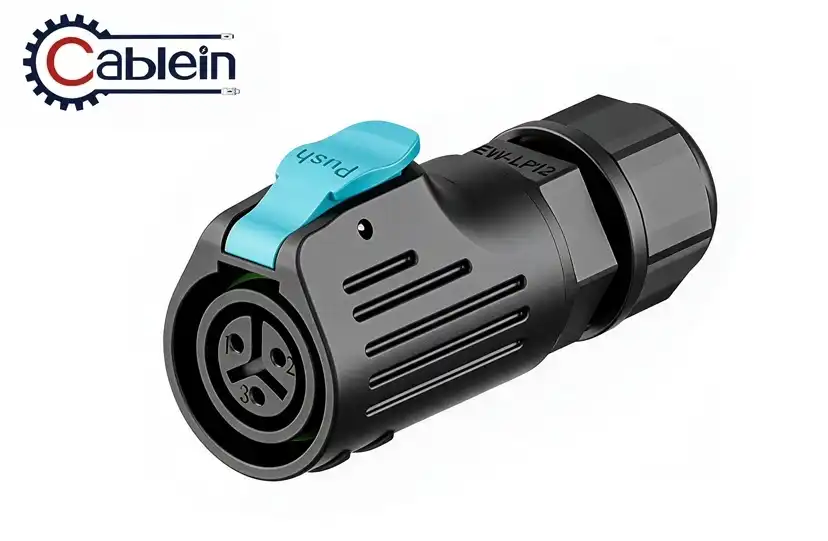
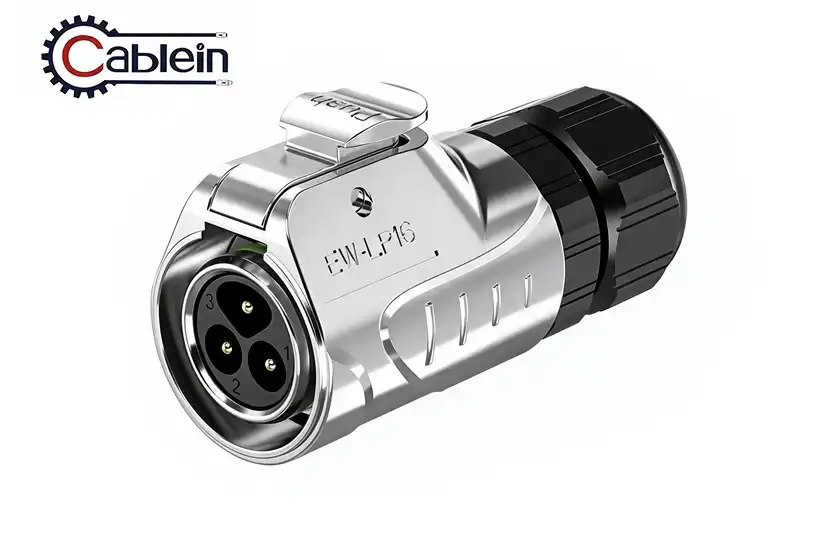
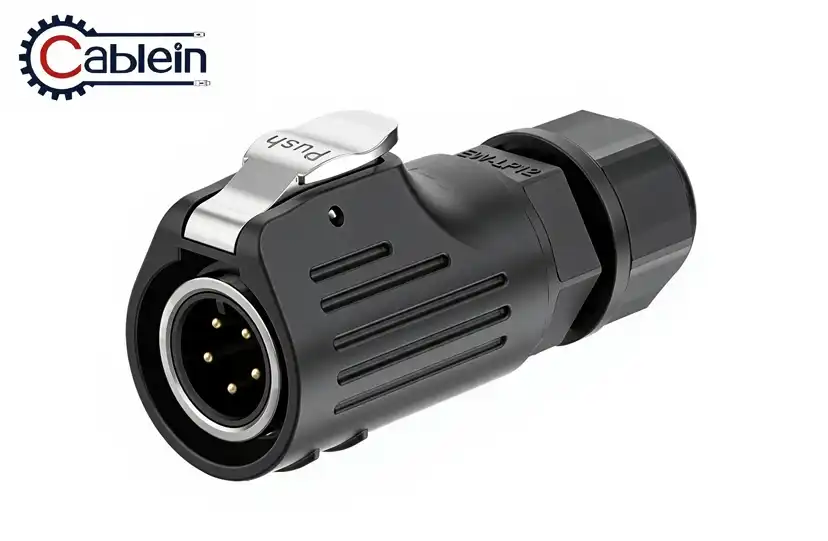
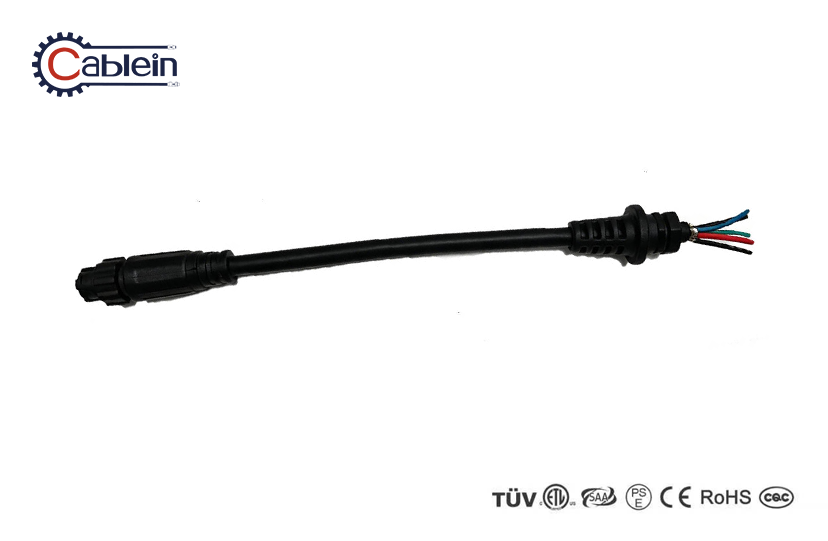
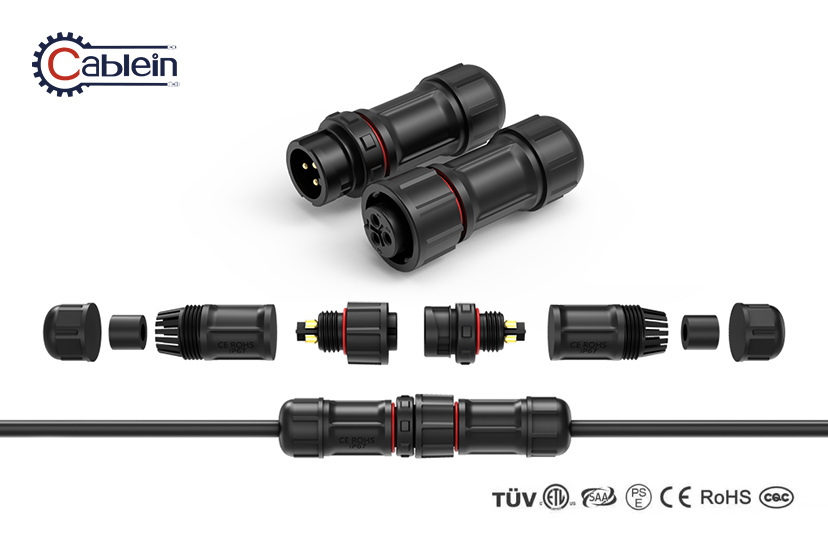
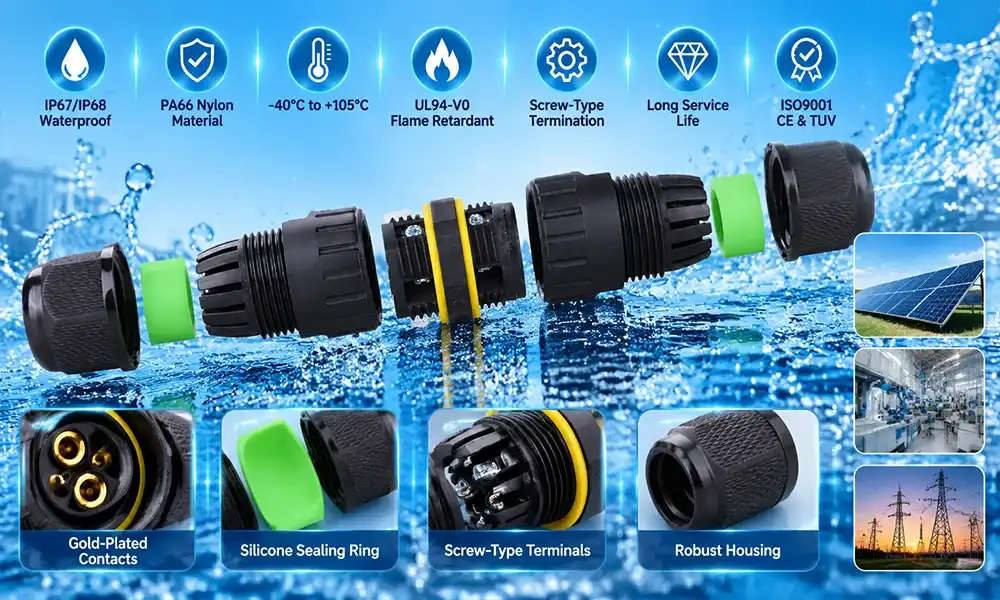
An M25 threaded inline waterproof connector is a 25mm metric threaded electrical coupling device that connects two cable ends directly and does not need a junction box. It provides a sealed, moisture-proof connection rated IP67 or IP68, resistant to water immersion up to 1 meter or more. The two parts are kept together by the threaded locking collar under vibration and mechanical force. Inside, gold-plated copper alloy contacts transfer current across the joint, and a silicone O-ring pushes against the mating faces to keep water, dust, and impurities out of the conductors.
Understanding the M25 Threaded Inline Waterproof Connector
This device is of the “inline” kind, not the panel-mount or bulkhead versions. Instead of running cables through a wall of an enclosure, you just connect two cable ends together in the middle of the run. This reduces the expense and footprint of a sealed box, important in tight cable trays or conduit runs on roofs and industrial ceilings.
What the M25 Thread Size Means in Practice
The M25 name is based on the ISO metric thread standard, which specifies a 25mm nominal outside diameter and a specified pitch. The size accommodates cable outer diameters from 5mm to 14mm across three grommet ranges: 5–9mm, 9–12mm, and 10–14mm. It is much bigger than the standard M20 version, which bottoms out at around 10mm cable diameter; hence, M25 caters to higher duty conductors, up to 6mm² wire cross-section for 2–4 pole variants, without pushing the cable into an inadequate seal.
How the Sealing System Works
When tightened, the coupling nut squeezes a silicone O-ring located between the faces of the plug and socket. This compression forms a circumferential seal rated IP67 (30 minutes immersion to 1 meter) or IP68 (continuous immersion beyond 1 meter, IEC 60529). The PA66 nylon body is resistant to oils, dilute acids, and alkalis, so the housing itself will not break down and weaken that seal over time.”
Contact Architecture and Current Capacity
Cablein’s version has 2-5 poles. The 2-4 pole configurations are rated at 41A, 400V AC/DC – adequate for the majority of distributed solar string currents with a 1.25× safety margin. The 5-pole model is rated at 24 Amps. The contacts are gold-plated copper alloy to maintain the contact resistance below the level at which heat builds up at the joint and to withstand oxidation that increases resistance in humid outdoor situations.
Technical Dimensions and Performance of M25 Connectors
Knowing specific numbers is what makes the difference between a M25 threaded inline waterproof connector that passes a 25-year solar field audit and one that fails in the third year. This is a list of the most important performance indicators.
IP Rating Comparisons: IP67 vs. IP68
IP67 is good for most outdoor lights and automation uses where water might get in accidentally, like when it rains or when you clean and a puddle forms. IP68 protects connectors that will be submerged in water for a long time, like accent lighting in pools or irrigation controls that will be buried in wet soil. Cablein sends out batch-traceable test records for every shipment, and both ratings require 100% factory leak testing for every batch.
Temperature Range and Flame Rating
The PA66 nylon body stays strong from -40°C to +105°C. At -40°C, the material doesn't break easily, which is important for Nordic solar installations or industrial buildings that aren't heated. Plus, 105℃ doesn't make the housing soft or cause it to move around the wire, which would make the seal gap bigger. The UL94-V0 flame rating means that the material will put out the flame on its own within 10 seconds of being taken away from an ignition source. This is required by many codes for business buildings and EV charge stations.
Certifications That Matter to Engineers
Cablein has ISO9001:2015 production certification, and some product lines also have CE and TUV marks. For European grid-connection sign-off, the model number on the TUV certificate must exactly match the part number that was shipped. If they don't match, the grid-connection permit is usually turned down. If you ask, the company will also give you REACH SVHC declarations, salt spray test reports (96 hours of exposure according to ISO 9227), and thermal cycle test records.
Installation and Best Practices
How well an IP68 connector works in the field depends on how it was installed as much as how it was designed. Don't make these mistakes by following these steps.
Cable Preparation and Grommet Selection
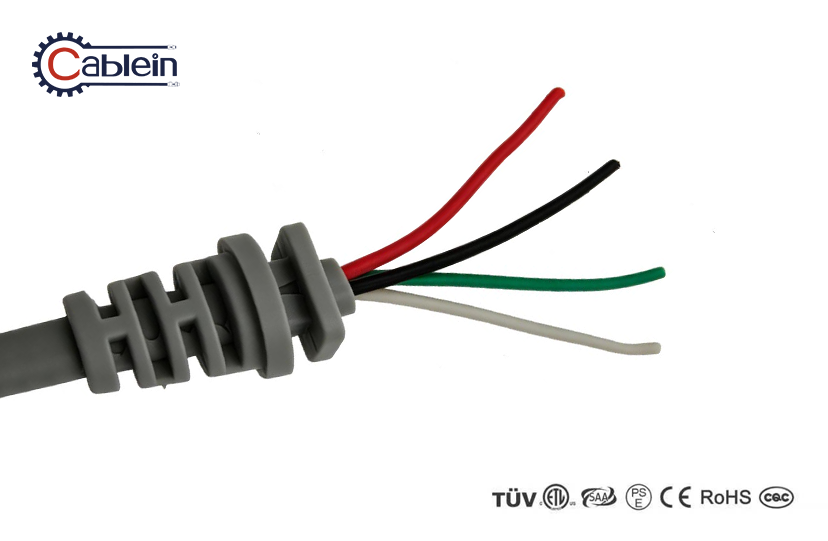
Cut the cable jacket to the length that the terminal tells you, which for screw terminals is usually between 6 and 8 mm. Choose the grommet range that has the same outer diameter as your cable. There is no way to seal a 7mm wire in a 9–12mm hole, no matter how tight you turn the nut. If you're not sure what the written size on the reel means, measure the cable with calipers instead. This is because real diameters can change by up to 0.3 mm.
Torque and Thread Engagement
Tighten the coupling nut by hand until the O-ring touches the mating face. Then, use a strap wrench or an open-end wrench to tighten it another quarter to half turn. When the nylon connection nut is over-tightened, it cracks. When it is under-tightened, the O-ring is not squeezed enough and leaks at depth. The torque number in the datasheet should be used to tighten the screw connections. For 1.5mm² conductors, this is usually 0.5–0.8 N·m, and for 6mm² conductors, it can be up to 1.2 N·m. This is to meet the 100N pull-out requirement of IEC 62444.
Post-Installation Verification
Once a run is over, make sure there is continuity and, if required by law, a 2000V AC dielectric withstand test between the poles and the shell. Make a permanent mark or a cable tie tag on the attached connection and write the batch number on it. Years from now, this tracking step will come in handy if an insurance claim or warranty claim needs proof of which batch of connectors went into a certain array or building area.
Comparing M25 Connectors with Alternatives
Selecting the proper connection format saves money and time to perform work again. Below is a comparison of the M25 threaded inline waterproof connector type with the two most typical possibilities that engineers consider.
M25 Threaded vs. M20 Threaded Connectors
M20 connections are cheaper and lighter, but they cannot be used for high-power runs since they do not have adequate wire width or current capacity. M20 connections can take most up to 16A or 20A. M25 connectors can take 41A continuously. M20 is too tiny for solar string combiners or EV charging trunk cable. The larger the thread diameter, the greater the amount of thread interaction in each round. This provides higher vibration resistance for mobile or rail-mounted applications.
M25 Inline Connectors vs. Cable Glands with Junction Boxes
The wires are led into a separate enclosure containing the splice or terminal block by means of cable glands. This set-up works well for long-lasting terminations with a lot of conductors, but it costs more since it requires a box, mounting hardware, and internal terminals. An inline connection removes the box entirely, speeding up installation and allowing the wire to be relocated or expanded later without having to cut into a permanent enclosure. It may be used again and again and saves hours of effort for solar O&M teams who need to repair a damaged section of cable.
Procurement Guide for M25 Waterproof Inline Connectors
At the $80K-$400K per year buy decision level, a datasheet just won’t cut it. This is an organized technique really used by procurement engineers and buying managers.
Certification Verification Before Sampling
Request the TUV or CE certificate and verify that the model number on the certificate matches the part number on the quote. Then verify the certificate number in the online database of the issuing agency. This one procedure solves the most common compliance issue before a sample is ever requested.
Sample Testing Protocol
Order a sample batch of 20-50 pieces and perform in-house salt spray (96 hours), temperature cycling (-40℃ to +105℃, 25 cycles), and a contact resistance check throughout the batch. Batch-to-batch variance in contact resistance should be < 5mΩ. Note batch number, date of test, and results. This file will serve as the baseline for incoming quality inspection for any future purchase orders.
Commercial Terms and Lead Time Planning
Standard wait time for Cablein stocked products is 7-10 days. Pre-assembled cable lengths, custom overmold colors, and private-label printing are scheduled separately. For projects that have firm deadlines for grid connection, place the first order at least 10 weeks ahead of schedule for shipping, inspection, and any re-order of uncommon combinations.
Conclusion
The M25 threaded inline waterproof connector is a useful solution for linking two cable lines together securely in dusty, wet, or extremely hot or cold locations without the need for a junction box. It is a wonderful choice for solar panels, EV charging trunks, maritime lighting, and industrial automation. The PA66 enclosure, gold-plated contacts, silicone sealing, and 41A current capability make it a perfect option for these applications. The two elements most likely to affect the long-term integrity of a seal are the right installation torque and matching the cable to the groove. Procurement teams have two stages in place to ensure projects are done well, from the moment they are signed off at the start to the end of an asset’s life: certification-to-part-number verification and batch tracking documentation.
FAQ
1. What cable diameters does the M25 connector accept?
The M25 inline connector accepts cable outer diameters in three ranges: 5–9mm, 9–12mm, and 10–14mm, selected by choosing the correct grommet size. Wire cross-section capacity is 0.5–6 mm² for 2–4 pole versions and 0.5–2.5 mm² for the 5-pole version.
2. Can I reuse this connector after disconnecting it?
Yes. The threaded coupling and silicone O-ring are designed to maintain IP67/IP68 sealing performance through hundreds of mating cycles. Each reconnection restores the same compression seal as the first, which is not possible with heat-shrink splices or permanent crimp sleeves.
3. Does it meet fire safety requirements for commercial buildings?
The PA66 body carries a UL94-V0 flame rating, which is required by many commercial electrical codes. The material self-extinguishes rapidly after an ignition source is removed, limiting flame propagation risk in enclosed cable trays.
4. What certifications are available for EU grid-connection projects?
CE and TÜV certificates are available per product series, along with ISO9001:2015 production records, REACH SVHC declarations, 96-hour salt spray test reports, and 2000V AC dielectric withstand test records with batch traceability numbers.
5. Is solder termination available, or only screw terminals?
Both options are available. Screw-type terminals suit field wiring where a screwdriver is the only tool on hand. Solder termination suits workshop pre-assembly in cable harness production, where consistency and speed on an automated line take priority.
Request Your M25 Inline Connector Samples from Cablein Today
Since 2017, Cablein Technology has been making waterproof connectors with an IP67/IP68 rating. They are certified by ISO9001:2015, CE, TÜV, and RoHS. Our M25 threaded inline waterproof connector ships in 7–10 days from stock and comes with full test records that can be used to track each batch. We can help you as an M25 threaded inline waterproof connector supplier with either a standard 3-pole configuration or a custom overmold color. Our engineering team is ready to help. You can email us at nick@cableinco.com to get examples and datasheets.
References
1. International Electrotechnical Commission. IEC 60529: Degrees of Protection Provided by Enclosures (IP Code). IEC, 2013.
2. International Electrotechnical Commission. IEC 61984: Connectors — Safety Requirements and Tests. IEC, 2008.
3. Underwriters Laboratories. UL 94: Tests for Flammability of Plastic Materials for Parts in Devices and Appliances. UL Standards, 2013.
4. International Organization for Standardization. ISO 9227: Corrosion Tests in Artificial Atmospheres — Salt Spray Tests. ISO, 2017.
5. International Electrotechnical Commission. IEC 62444: Cable Glands for Electrical Installations. IEC, 2013.
6. International Organization for Standardization. ISO 9001:2015: Quality Management Systems — Requirements. ISO, 2015.