Best practices for installing P25 radio locking connectors
Installing a P25 locking cable connector correctly is one of the most important steps in building a dependable electrical system. These connectors are engineered for heavy-duty use—rated at 300V DC/AC and 25A continuous current—and are trusted across industrial power distribution, renewable energy storage, and medical equipment platforms. When installed with care and the right technique, a quality P25 locking cable connector delivers IP67-rated waterproof protection, vibration-resistant contact, and long service life even in environments ranging from -40℃ to 150℃.
Understanding P25 Locking Cable Connectors
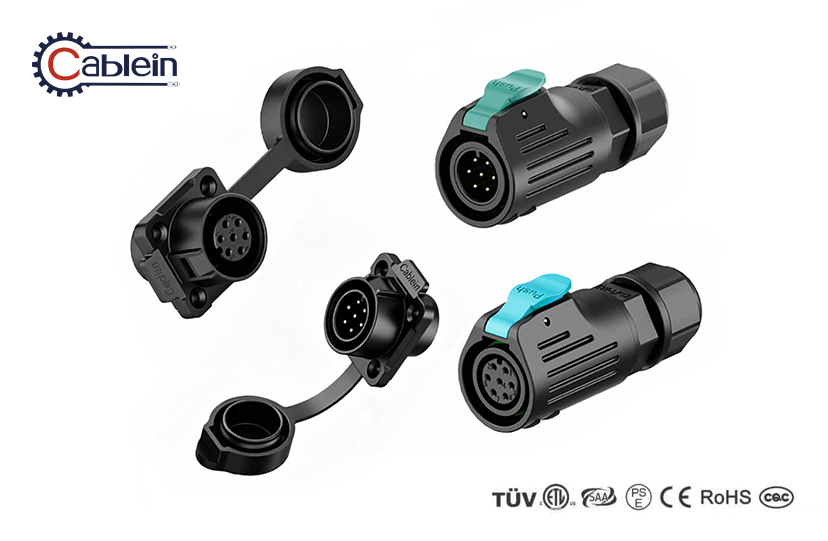
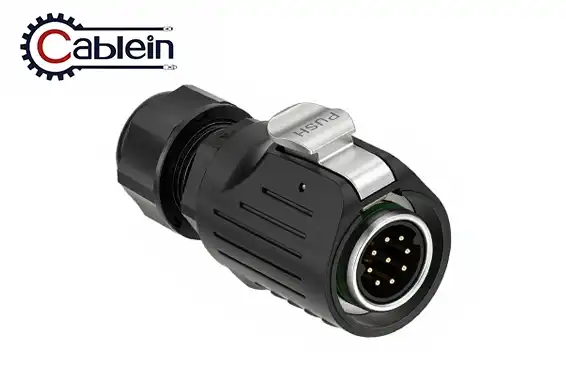
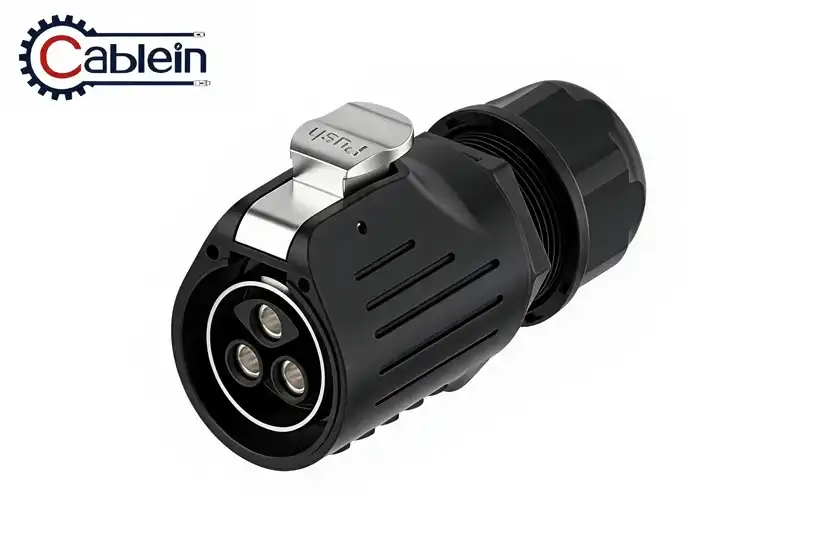
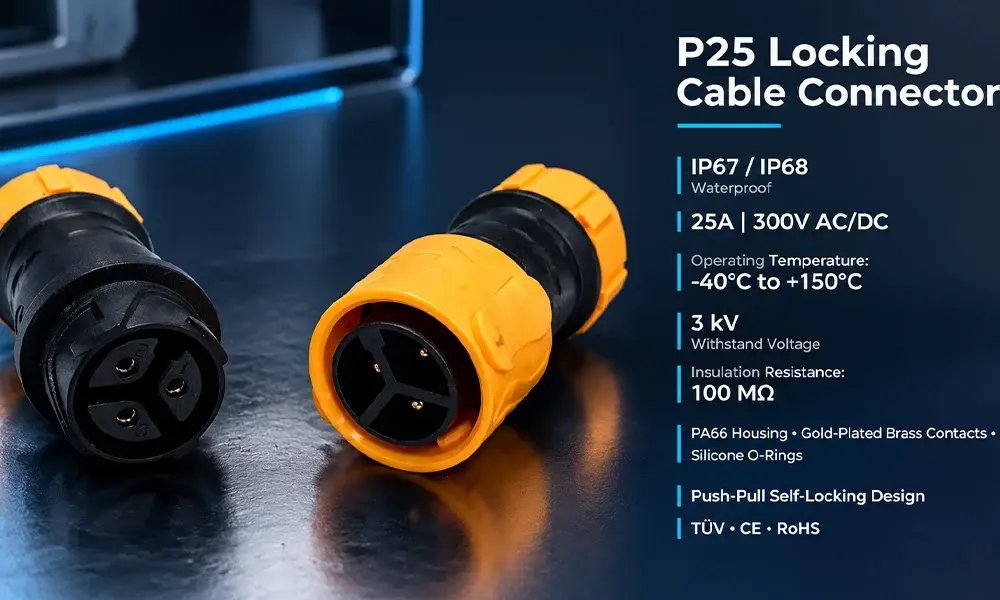
It is helpful to know what you are working with before you pick up a tool. The P25 locking cable connector is an industrial connector that is round and has a push-pull self-locking system built into it. The housing locks itself once it is in place. To detach, all you have to do is pull the top sleeve back. This design gets rid of the chance of decoupling by mistake due to vibration or mechanical stress, which is a problem that causes repair teams to lose a lot of time in the field.
Core Construction and Materials
The body is made from high-strength PA66 nylon, which doesn't rust or break down when exposed to UV light. Gold-plated brass contacts have lower interface resistance and won't rust after being used outside for years. A silicone O-ring in the mating face ensures consistent IP67 and IP68 waterproof ratings. This is proven by pressure testing each unit at the factory.
Electrical Specifications
The normal three-pin layout can handle a maximum current of 25A and a maximum voltage of 300V DC/AC. The 3+9 hybrid pin version can handle 25A on the power contacts and 5A on the signal contacts, so it can be used for both power and signal wiring in a single small body. The 3-pin model has a minimum insulation resistance of 100M© and a maximum stand voltage of 3KV. These are important specs to know if your system is going to be near high-voltage equipment.
Where These Connectors Are Used
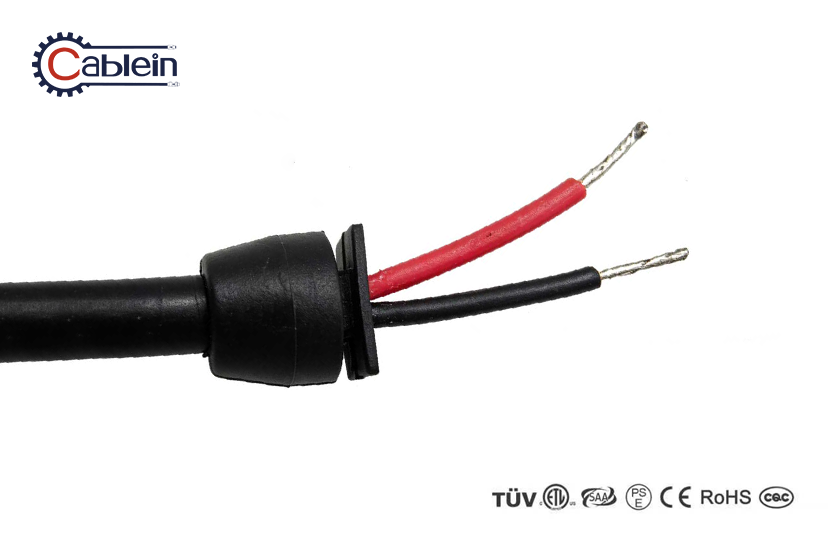
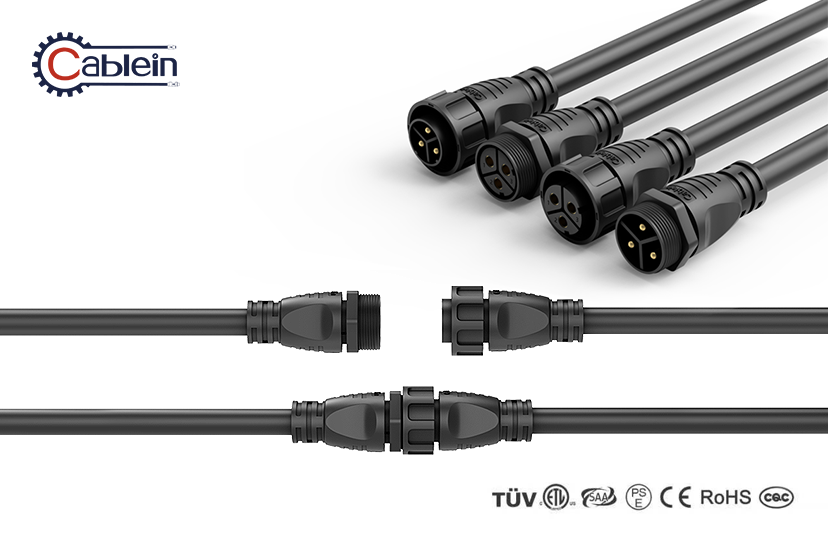
This type of connector is found in large medical systems, communication base stations, industrial control panels, and cabinets that store renewable energy. Its overmolded cable assembly comes factory-pre-assembled with a multi-conductor wire and connection as a single unit. It is shipped ready to install, which saves a lot of time in the field. Most heavy-gauge harness uses can be met by cables with a width of 7 to 15 mm.
Best Practices for Installing P25 Radio Locking Connectors
By ensuring that the installation is carried out correctly from the very beginning, it is possible to prevent these challenges. This is due to the fact that it is able to remove potential problems such as water penetration, signal loss, and connection failure. As an illustration of a realistic technique that is used by field engineers who have years of experience doing their duties, the objective of this article is to offer an example of such a plan.
Pre-Installation Checklist
Inspect the silicone O-ring for any nicks or deformation before mating. Verify that the cable jacket outer diameter falls within the 7–15mm accepted range for the overmold entry. Confirm pin assignments match your wiring diagram, especially on the 3+9 hybrid version where power and signal contacts sit in the same housing. Clean the mating face with a lint-free cloth to remove dust or moisture.
Step-by-Step Installation Process
Align the key slot on the P25 locking cable connector body with the guide pin on the mating receptacle. Push firmly and steadily until you hear or feel the locking mechanism engage—there should be no rocking movement. Tug gently on the cable to verify the lock is seated. For the push-pull self-locking system, the housing should not release under axial pull; it only releases when you retract the outer sleeve intentionally.
Avoiding Common Installation Errors
The most frequent mistake is forcing an off-axis insertion, which can damage the gold-plated contacts or crack the PA66 housing. Another common error is using the wrong cable gauge, which strains the overmold at the cable entry point and eventually compromises the IP rating. Never use metal tools to release the locking sleeve; hand operation is sufficient and prevents housing damage.
Comparison and Selection of Locking Cable Connectors
There is a relationship between the connection model that is chosen and the simplicity of installation as well as the dependability of the system throughout the course of its lifespan. This is because the connection model is a factor in both of these aspects. This particular model, the P25, is at a certain performance level that differentiates it from other options that are simpler in terms of their level of responsibility.
P25 vs. Standard Push-Lock Connectors
A lot of standard push-lock connectors don't have a secure locking mechanism. This means that over time, vibration can separate the mating faces. The P25 version adds an engineering sleeve lock that has to be deliberately pressed in order to separate. Because of this, it is the best choice for outdoor energy storage units, rail-mounted control systems, and mobile equipment where cables will move around by accident.
Evaluating Environmental Resistance
When looking at different connectors for use outside or in an industrial setting, the two most important numbers are the waterproof rating and the temperature range. This group of connectors has been approved by TUV and CE, and it also meets RoHS and ISO9001 standards. It can handle temperatures from -40°F to 150°F, which is more than many competing models that can only handle temperatures up to 85°F. This is important for solar combiner boxes and motor drive cabinets that go through extreme heat cycles.
When to Request a Hybrid Pin Configuration
The 3+9 hybrid pin arrangement is worth specifying if your application needs to send both power and sensor signals through a single connector point. This is common in energy storage systems and medical device interfaces. It cuts down on the number of connector parts needed for each assembly, which lowers the cost of all the P25 locking cable connectors and makes moving cables easier. You can ask for custom pin designs, such as non-standard contact arrangements.
Procurement Considerations for P25 Locking Cable Connectors
For the purpose of obtaining the suitable connection at the appropriate volume and lead time, it is necessary to work together with a supplier who is able to keep a constant inventory and who is also able to react to changes in the specifications without incurring major delays. It is essential to do this in order to accomplish the goals that have been set.
Evaluating Supplier Qualifications
Verified certifications are a non-negotiable baseline. Look for TUV, CE, RoHS, and ISO9001:2015 compliance documentation before placing a production order. These certifications confirm that the manufacturing process and materials meet international safety and environmental standards, which is particularly important for export-oriented buyers who must satisfy import compliance in the US, EU, and other regulated markets.
Managing Cost Against Total Ownership Value
The purchase price of a connector represents only part of the actual cost. Installation speed, failure rate, and maintenance access all factor into total ownership cost. An overmolded pre-assembled cable assembly, for instance, eliminates field crimping labor and reduces the risk of field-level waterproofing errors. Over a production run of thousands of units, this difference in assembly time can be significant.
Delivery and Stock Requirements
For projects with fixed commissioning dates, supplier delivery reliability matters as much as product quality. Confirm that your supplier maintains consistent stock levels and can support emergency order quantities. Custom harness orders—specifying cable length, conductor gauge, and connector configuration—should be scheduled with the supplier's production team early in the project timeline to avoid delays.
Ensuring Long-Term Performance and Maintenance
It is essential to do routine checks on a connection after it has been appropriately installed by a qualified professional. The purpose of this action is to ensure that the connection will continue to operate at the highest feasible level for the duration of the period that it was intended to operate at that level. This continues to be the case in spite of the fact that the link has been established in the authorized manner.
Routine Inspection Protocols
Every six months, look at the joining face and cable entry overmold to see if there are any signs of UV cracks, mechanical damage, or water getting in. Check to see if the locking tube can move easily and snaps back into place. It's time to plan a replacement before something breaks if the sleeve feels stiff or the contact engagement force has changed.
Cleaning and Protection
Before you reconnect, use a burst of dry compressed air to clean the plug's socket of dust. Solvents derived from petroleum should not be used on the silicone O-ring because they can break down the elastomer and make the waterproof seal weaker. Putting a little dielectric grease on the O-ring before joining it helps keep the seal working well in places with a lot of humidity.
Accessing Technical Resources
Your connector provider can give your field teams the exact torque values, cable preparation instructions, and size information they need in the form of datasheets, wiring diagrams, and installation guides. Save the technical support contact information for your provider so that your engineering team can quickly get answers when questions come up in the field during installation or fixing.
Conclusion
Installing locking radio plugs correctly is a useful skill that has a direct effect on how reliable a system is and how much it costs to maintain. Long-term success depends on three things: knowing how the mechanical locking system works, following the IP-rated sealing design, and buying from an authorized provider. The P25 locking cable connector is made of PA66 material, has gold-plated contacts, and can work in a wide range of temperatures, making it perfect for demanding indoor and outdoor uses. If you follow the steps for installation and inspections listed here, the software will work the same way on every release.
FAQ
1. Are P25 locking connectors compatible with standard receptacles?
To properly contact the sleeve mechanism, the P25 locking body needs a locking receptacle that is the same size and shape. A normal non-locking socket will let you insert it, but it won't set off the positive lock, which is useless in places where vibrations are common.
2. What cable types work best with these connectors?
The overmold entry can fit cable outside diameters ranging from 7mm to 15mm. Most of the time, flexible multi-conductor wires with PVC or TPE covers are used. For use outside and in the sun, clothing materials that are resistant to UV light are suggested.
3. How long does installation typically take?
Overmolded cable assemblies that have already been put together at the factory take less than two minutes to connect at each point. Field-terminated installations can take longer, based on how many conductors there are and how familiar the expert is with how the pins are set up.
4. Can these connectors be used in underwater or submerged applications?
The IP67 grade means that it can be submerged for up to 30 minutes at a time up to one meter deep. For constant submersion, choose a version with an IP68 rating and check with the provider about the overmold sealing requirements.
5. What certifications should I verify before ordering?
Check for TUV, CE, RoHS, and ISO9001:2015 at the very least. Depending on the use, ETL listing may also be important for projects in the US market.
Partner with Cablein for Your P25 Locking Cable Connector Supply
Cablein Technology makes P25 locking cable connections that are TUV and CE approved. These connectors have gold-plated contacts, IP67 performance, and factory overmolded cable assemblies. We have been making P25 locking cable connectors for over 9 years and are a trusted producer. We can handle OEM orders, custom harness specs, and short lead times from stable stock. To get a sample or bulk quote, email our technical team at nick@cableinco.com.
References
1. IEC 60529 – Degrees of Protection Provided by Enclosures (IP Code). International Electrotechnical Commission, 2013.
2. UL 486A-486B – Wire Connectors Standard for Safety. Underwriters Laboratories, 2018.
3. MIL-STD-202H – Test Methods for Electronic and Electrical Component Parts. U.S. Department of Defense, 2015.
4. IEC 61984 – Connectors – Safety Requirements and Tests. International Electrotechnical Commission, 2008.
5. ISO 9001:2015 – Quality Management Systems – Requirements. International Organization for Standardization, 2015.
6. RoHS Directive 2011/65/EU – Restriction of Hazardous Substances in Electrical and Electronic Equipment. European Parliament, 2011.