What Is an LP16 Inline Cable Connector?
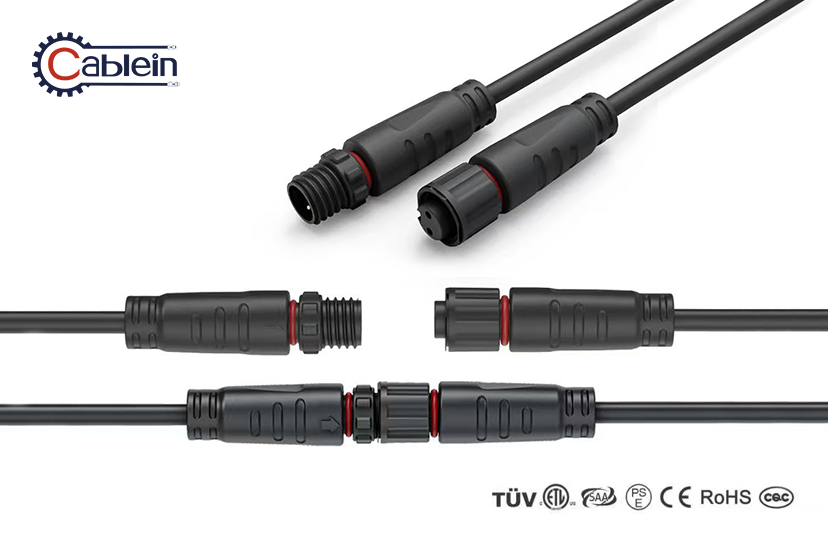
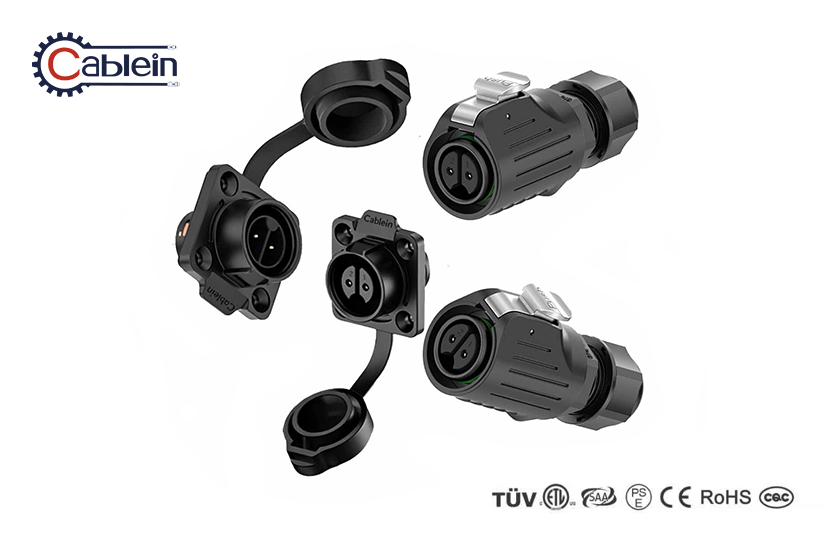
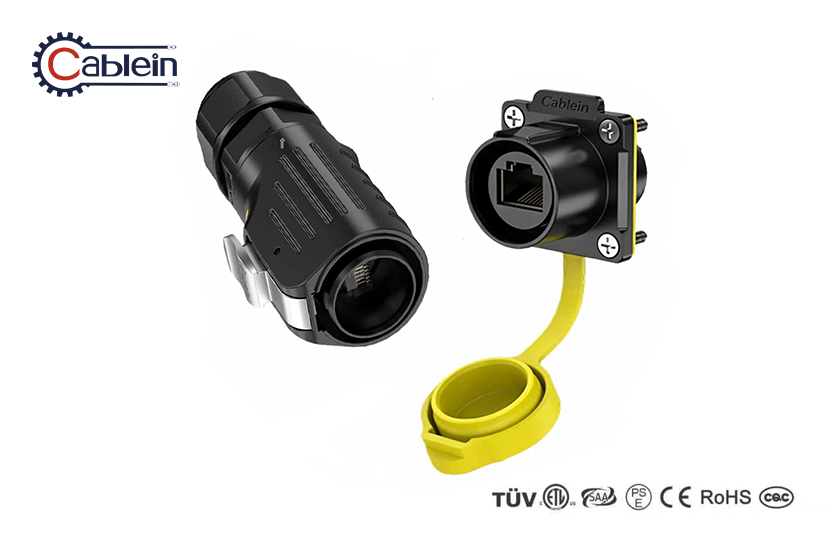
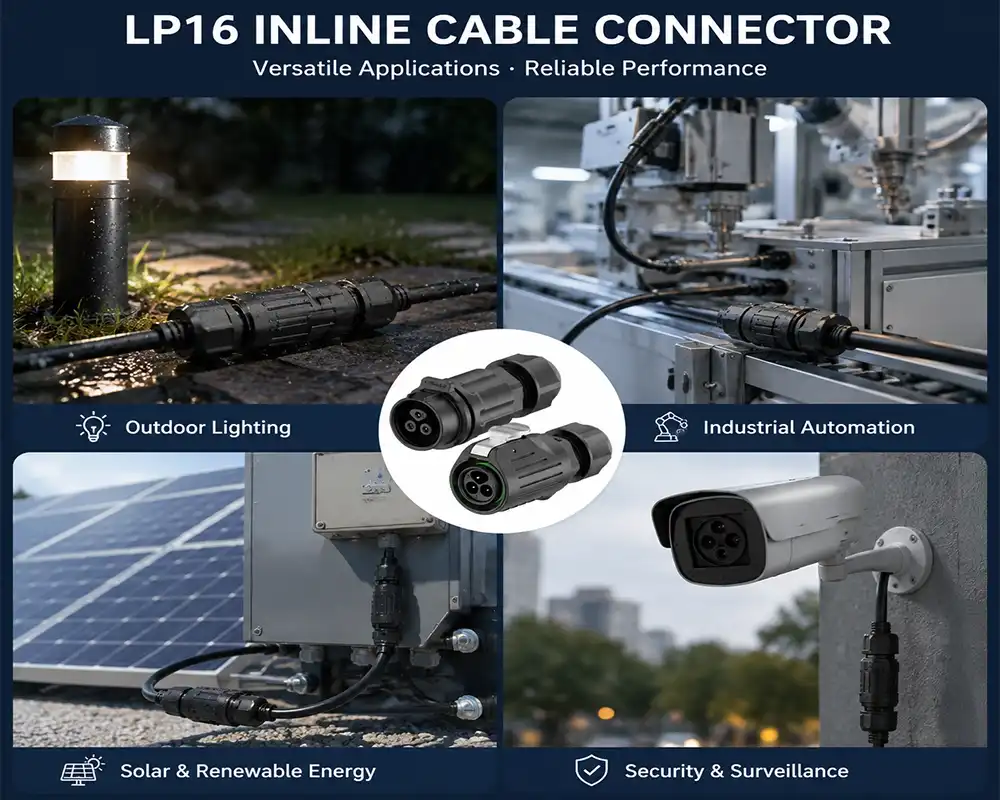
When your industrial equipment demands reliable cable-to-cable connections in harsh environments, you need more than standard wiring solutions. The LP16 inline cable connector emerges as an industrial-grade circular connector specifically engineered for demanding applications where waterproofing, vibration resistance, and quick installation are non-negotiable. Built with PA66 nylon housing and gold-plated copper alloy contacts, this 16mm diameter connector delivers IP67/IP68 protection while supporting solder-type terminations across 2 to 9 pin configurations. Its snap-lock bayonet coupling mechanism enables one-handed mating without tools, making it ideal for field installations where efficiency matters. With a proven track record exceeding 2000 mating cycles and operational stability from -40℃ to +105℃, this connector addresses critical connectivity challenges across LED lighting, renewable energy systems, industrial automation, and outdoor surveillance applications.
Understanding the LP16 Inline Cable Connector
Defining Industrial Inline Connectivity
The inline cable connection category is a different design concept from panel-mount and chassis-mount alternatives. These connectors make it possible to have floating connections between segments of cable instead of permanent mounting surfaces, giving flexibility in extending power or signal channels across equipment. The LP16 part number means the connector has a 16mm outside diameter form factor, a small enough size to allow for a ruggedized connector, but yet space efficient in a busy wire run.
This modular approach changes the way engineering teams think about reconfiguring systems. Inline connections save the time and expense of rewiring projects when production layouts change or when gear has to be moved. You just disconnect at the inline junction point and expand or reroute.
Technical Specifications That Matter
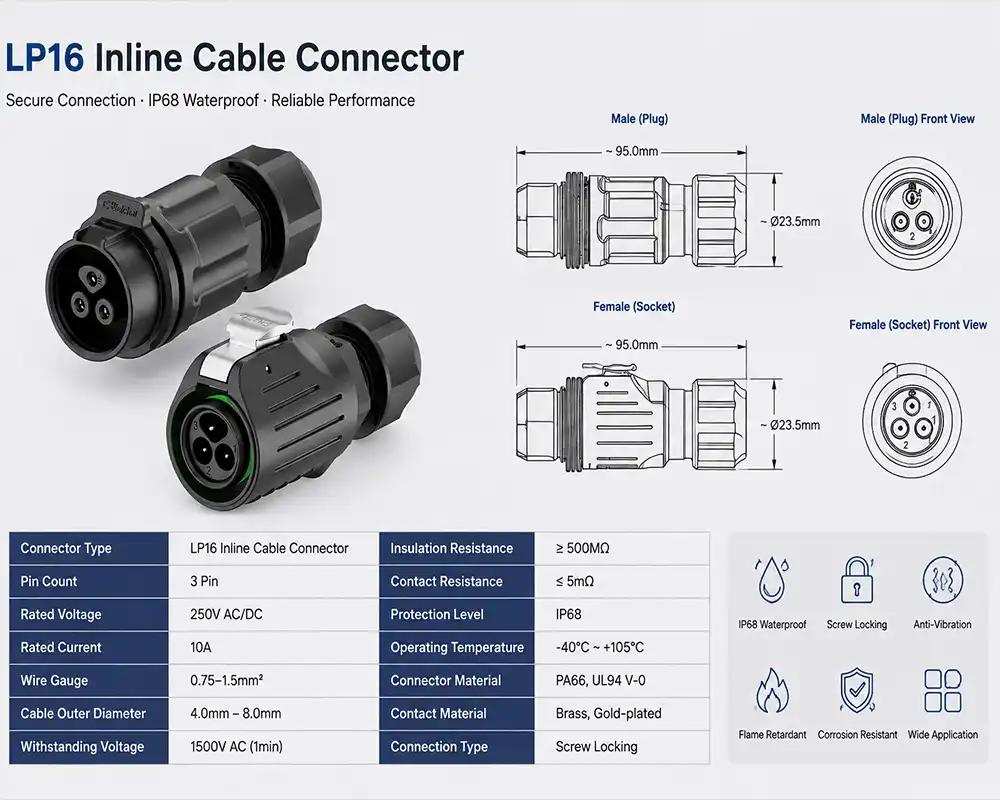
Current ratings are up to 5A to 10A depending on pin arrangement and wire gauge choices while voltage ratings are up to 500V for power transmission applications. The solder-type termination approach provides higher mechanical strength compared to crimp-only methods, which is necessary for connections that are handled often or subjected to environmental stress.
Low contact resistance below 5 mΩ reduces voltage drop and power loss, ensuring electrical efficiency throughout the whole system. Insulation resistance greater than 500 MΩ also avoids signal deterioration and cross-talk in multi-conductor setups. These characteristics directly affect the stability of the system, notably in the transmission of low-level sensor data or maintaining tight voltage tolerances for sensitive devices.
The physical design allows the use of cable outer diameters from Φ4mm to Φ9mm via adjustable cable glands. It is compatible with wire cross sections from 0.34 mm² to 1.5 mm². This feature allows you to decide on a connector standard based on the conductor needs instead of choosing a cable based on the connector specifications.
Connection Mechanism and Performance
The snap-lock bayonet connection method is a big improvement over the threaded connectors that need many revolutions to engage. The connector parts are seated by a simple push action, and the connection is secured against inadvertent separation by spring-driven retention mechanisms. To disengage, you have to draw back a release collar. This is a conscious activity that prevents accidental disconnection while equipment is in use or being maintained.
Precision-moulded keying features are used for internal contact alignment to assure proper orientation upon mating. This mechanical coding eliminates reverse polarity connections that might harm equipment or cause a safety concern. When engaged, the silicone sealing ring compresses to provide a continuous moisture barrier around the whole perimeter of the connection and meets the specified waterproof performance parameters.
Key Benefits and Installation of LP16 Inline Cable Connectors
Durability in Demanding Environments
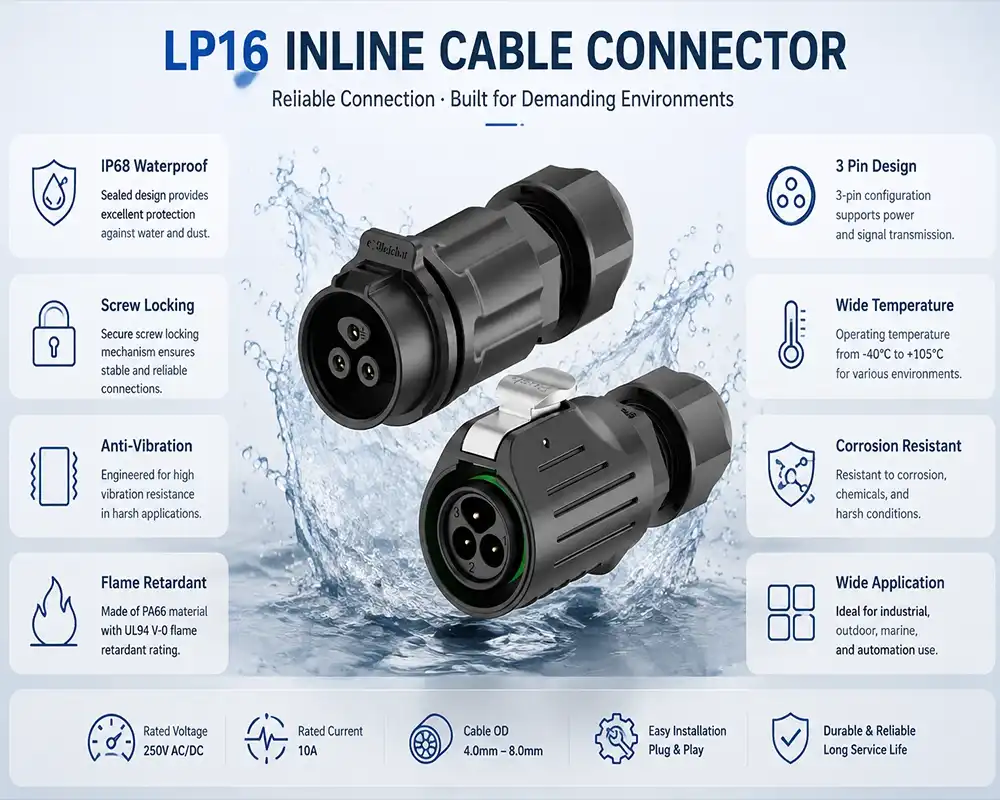
Industrial LP16 inline cable connector connectors face environmental challenges that would quickly destroy consumer-grade components. The UL94-V0 flame retardant rating on the PA66 nylon housing provides inherent fire resistance—essential when routing cables near heat sources or in applications where electrical faults could occur. Unlike standard plastics that melt or burn, this material self-extinguishes when ignition sources are removed.
UV protection reduces the breakdown of material that affects outdoor connections. Long-term sun exposure causes surface fractures in standard plastics, making them brittle and compromising watertight seals. Accelerated aging experiments mimicking decades of environmental exposure provide evidence that the LP16 housing will last for years of outside usage.
Salt spray testing checks performance in coastal and marine situations where corrosive salt air damages metal components. The gold plating avoids oxidation that would increase the contact resistance with time. The sealed housing prevents salt from entering and causing internal corrosion. These protective characteristics greatly prolong service life over untreated options.
Compatibility Across Industrial Systems
Connectors are designed with standardized sizes for expansion or direct replacement in existing connection systems. Looking for extra connection points for your project? Just purchase appropriate LP16 units. No need to build special solutions. This compatibility simplifies procurement and avoids the possibility of vendor lock-in with proprietary designs.
The modular inline format can be easily integrated into a variety of equipment configurations. LED driver boxes, sensor packages, motor controllers, and camera housings all benefit from the versatile connection points these connections give. You get around the size and mounting issues with panel connections, while you still meet industrial-grade performance requirements.
Step-by-Step Installation Process
The first step in pre-installation preparation is cable preparation. Strip the outer jacket to the necessary length, without damaging the insulation of the inner conductor. Strip the individual conductors to contact barrel depth, 5-6mm is common for this connection size. Check the ends of the wires for stray strands that might create a short during installation.
Before connecting any electrical leads, pass the cable through the connector backshell and cable gland. It saves the frustration of discovering after soldering that components just won’t fit. Solder each conductor to its proper contact pin at the proper temperature (about 350-380℃ for lead-free solder). Let the junctions cool naturally – forceful air might cause cold solder joints.
Slide the completed connection body over the contact assembly until it is firmly seated. Fit the cable gland and tighten to the appropriate torque - enough to compress the seal, but not enough to crush the cable jacket. Gently pull on the cable to ensure retention features are engaged correctly. The connection must be tight and not allow any movement.
Test each circuit for continuity before final deployment to ensure appropriate conductor assignment and no shorts. A quick check with a multimeter takes seconds but saves expensive problems during installation. When connecting the connection halves, align the keying features and press firmly until you hear or feel the snap-lock engage.
Troubleshooting Common Installation Issues
Bad solder joints or dirty contact surfaces are the usual cause of intermittent connections. Usually reheating the suspicious joints while adding new solder addresses the issue. The waterproof ratings are all well and well, but if moisture is getting in, then often it is because the cable gland has not been tight enough. The seal has to be compressed to do its job.
If the snap-lock mechanism seems loose or does not positively engage, check for debris in the locking collar or broken retention springs. Isopropyl Alcohol Cleaning Removes Contaminants and Damaged Mechanical Parts Need Connector Replacement Field repairs of precision-molded components are seldom successful and might lead to connection failure during operation.
Comparing LP16 Inline Cable Connector With Other Connectors
LP16 Versus LP15 Connectors
The LP15 series utilizes a 15mm form factor, offering slightly smaller dimensions suited to ultra-compact installations. However, this size reduction limits current capacity to 3-5A maximum—insufficient for many power distribution applications. The LP16 inline cable connector provides headroom for higher currents while remaining compact enough for tight routing paths.
Pin count choices also vary. LP15 connections are normally limited to 5 pins, whereas the LP16 may have as many as 9 pins, allowing for complicated mixed signal applications. This additional configuration is suitable for current industrial IoT devices that need independent power, ground, communication and control circuits inside a single connection assembly.
Furthermore, the LP16 has a bigger engagement surface area that benefits mechanical robustness. This means stronger locking mechanisms and more robust sealing surfaces with the extra diameter—benefits that make themselves felt under vibration or mechanical stress situations.
Circular Waterproof Connector Alternatives
Traditional circular connections with a threaded coupling need numerous turns to join, which slows down installation and maintenance operations. Field investigations have shown that the LP16 snap-lock design decreases mating time by around 60%, representing a significant increase in productivity in the case of large installations or frequent reconfigurations.
Some circular designs attain IP67 classification just via threaded coupling compression, which provides possible sources of failure if the threads are cross-threaded during installation. The LP16 separates the locking and sealing operations, with a snap-lock for retention and a discrete sealing ring for environmental protection. This design lowers the possibility of human mistake during field assembly.
Selection Criteria for Procurement Teams
Cost-effectiveness is not only unit pricing; it's the entire cost of ownership. Cheap connections, without the required environmental protection, cost much more in replacement and system downtime than they save in original cost. The guaranteed 2000+ mating cycle life and corrosion resistance of the LP16 equal reduced life cycle costs for permanent installations.
Compliance with certification is essential for equipment entering regulated markets. The CE label shows that a product complies with European safety standards. RoHS certification indicates that the product complies with restrictions on certain substances. LP16’s ISO9001:2015 manufacturing accreditation gives confidence in consistent batch-to-batch quality, eliminating incoming inspection needs and quality escapes.
The compatibility examination should include both electrical characteristics and physical integration requirements. Voltage and current ratings should be higher than the application requirements, with sufficient safety margins. Make sure the diameter ranges of the cables include the wire gauges you have chosen, and that you aren’t obliged to use an undersized or oversized cable that will be less flexible or too crowded in the bundle.
Procurement and Supply Chain Insights for LP16 Inline Cable Connectors
Sourcing Through Reliable Channels
Authorised distributors have direct ties with the manufacturer and you may be guarantyd of product authenticity and warranty validity. Generally these partners provide technical support resources such as application engineering support and services to customise configurations. Direct contacts with the manufacturer can provide insight about manufacturing capacity that might help in planning for large-volume installations.
Online industrial markets enhance sourcing choices, but vendors must be carefully vetted. Check seller ratings, read consumer comments about the quality of the goods, and make sure that any certifications they have can be validated with real test findings and not just hype. Getting samples before committing to big orders protects you against counterfeit or poor items.
Bulk Purchase Considerations
Minimum order numbers are according to manufacturer and connector configuration. Custom requirements often need a minimum order of 500 to 1000 pieces; however, standard pin counts and configurations may easily be obtained at lower minimums, some as low as 100 pieces. Planning procurement to meet these minimums will optimize unit costs without incurring excessive inventory holding costs.
Volume pricing schemes usually provide graded reductions at certain quantity breaks. Knowing these limits, you may strategically size your orders to get the best price without overbuying. Price protection is available with yearly contracts at planned releases. Stock levels may be flexible to reflect actual consumption patterns on the project.
Lead Time and Logistics Planning
Standard catalogue goods come from reputable manufacturers with readily available stock and usually ship within 7-10 business days. For custom setups requiring unique pin configurations, cable lengths, or material modifications, lead times for tooling and manufacturing are 3-4 weeks. By planning your procurement cycles around these dates, you will avoid project delays and costly expedite costs.
International shipment adds further variables, such as customs clearance processes and carrier selection effects. Air freight will shorten transit time to 3-5 days but is a premium pricing for urgent needs. Sea freight will increase transit time to 4-6 weeks but may save significantly on scheduled inventory replenishment. Working with freight forwarders that specialize in logistics for industrial components streamlines the paperwork and regulatory compliance requirements.
Quality Assurance and Authenticity Verification
The use of fake connectors may lead to major problems such as failed connections, fire dangers, and damage to the system. You will see markings such as manufacturer logos, part numbers, and certification marks molded into the casing of real LP16 connections. The packaging must include certifications of quality with results of test procedures and assertions of conformity.
• Request test results for confirmation of waterproof performance, measurement of contact resistance, and insulation resistance verification. These are provided as standard by legitimate manufacturers. Be careful of very cheap prices—excellent connections need considerable material and testing expenses that counterfeiters aren’t prepared to provide.
Warranty coverage offers extra protection and shows the manufacturer’s confidence in the dependability of the device. Normal warranties provide coverage for manufacturing faults for 12-24 months; certain vendors may provide extended coverage for cases where correct installation and use within specifications can be proved.
Why Choose Cablein's LP16 Inline Cable Connectors?
Certified Quality You Can Trust
Cablein Technology's LP16 inline cable connector connectors carry comprehensive certifications validating both product performance and manufacturing process integrity. CE marking confirms compliance with European low voltage and EMC directives, enabling seamless market access across the EU. RoHS certification documents restricted substance compliance, meeting environmental regulations in over 100 countries. Our ISO9001:2015 certified quality management system ensures consistent production standards through documented procedures, regular audits, and continuous improvement protocols.
Every connection is 100% tested for waterproof function before shipping. Not statistically sampled, but fully verified. This dedication reduces the failure rates that afflict rivals who depend on batch testing alone. Each device is tested to published criteria for salt spray, temperature cycling, and mechanical endurance.
Application-Proven Performance
Our LP16 connections were used in a 500 fixture installation in a stadium for a major outdoor LED lighting manufacturer. After three years of constant exposure to weather extremes, including temperature variations of -15℃ to +40℃ and frequent storm exposure, the system continues to show zero connection failures. In particular, the maintenance crew noted the one-handed snap-lock mechanism as lowering fixture service time substantially.
A solar farm operator installed LP16 connections for the panel-to-inverter wiring of a 10MW plant in a coastal location. The sealed housing design and gold-plated connections resisted salt air corrosion that destroyed previous kinds of connectors in less than 18 months. Contact resistance tests after two years of operation reveal less than 2% deterioration, well within acceptable boundaries for forecasts of service life of 20+ years.
Comprehensive Support Throughout Your Journey
During the project specification phase our technical team will aid you with application engineering assistance to choose the appropriate pin design, wire gauges and housing materials for the environmental circumstances. We discuss installation processes with your personnel, presenting field-proven best practices to eliminate frequent assembly mistakes.
Custom configuration options allow to meet unusual needs like as non-standard cable lengths, mixed contact layouts with power and signal pins, and colour coded housings for circuit identification. Our 15+ utility patents show that we are always innovating to solve real-world connectivity difficulties our clients confront.
One of the cornerstones of our service concept is responsive communication. Technical queries are answered the same day during business hours and our 24 hour support commitment means important installation problems will never delay your project progress. With more than 10,000 standard configurations in available stock and 7-10 day delivery schedules, we meet both the planned project and the urgent demand without compromise.
Conclusion
The LP16 inline cable connector delivers industrial-grade connectivity, combining waterproof protection, installation efficiency, and long-term reliability essential for demanding applications. Its snap-lock coupling mechanism, solder-type terminations, and proven 2000+ mating cycle durability address critical pain points procurement teams face when specifying connection systems. Whether you're deploying outdoor LED installations, renewable energy infrastructure, or industrial automation equipment, understanding this connector's capabilities and proper selection criteria ensures project success. The investment in quality connectors protects against costly system failures while reducing installation labor and maintenance expenses. As industrial connectivity demands continue evolving toward more challenging environments and higher reliability requirements, proven solutions like the LP16 provide the foundation for resilient system architectures.
FAQ
1. Can LP16 connectors handle both power and data transmission?
Yes, multi-pin configurations from 2 to 9 pins support mixed applications. Lower pin counts typically serve power distribution up to 10A at 500V, while higher pin counts accommodate separate power, ground, and multiple signal circuits. The contact design maintains signal integrity for data rates up to several megahertz, suitable for industrial communication protocols including Modbus and CAN bus implementations.
2. What advantages does inline design offer over panel-mount connectors?
Inline connectors enable flexible cable-to-cable connections without requiring mounting surfaces or chassis penetrations. This design simplifies cable routing through equipment frames, allows mid-run connection points for branching circuits, and facilitates system reconfigurations without panel modifications. Maintenance teams appreciate the accessibility—you can service connections without disassembling equipment housings.
3. How do I verify authentic LP16 connectors versus counterfeits?
Examine housing markings for manufacturer logos, part numbers, and certification symbols—authentic units feature crisp, permanent molding. Request documentation including test reports covering waterproof performance, contact resistance measurements, and material certifications. Suspiciously low pricing relative to market rates often indicates substandard or counterfeit products. Purchase through authorized distributors or directly from established manufacturers to ensure authenticity and warranty validity.
Partner With Cablein for Reliable Industrial Connectivity
Cablein Technology specializes in manufacturing certified LP16 inline cable connector solutions backed by ISO9001:2015 quality processes and comprehensive international certifications. Our engineering team at nick@cableinco.com provides expert guidance on connector selection, custom configurations, and application-specific recommendations tailored to your project requirements. As an established LP16 inline cable connector supplier maintaining over 10,000 pieces in ready stock, we deliver the reliability your production schedules demand with 7-10 day lead times on standard configurations. Whether you need 100 pieces for a pilot installation or 10,000 units for volume production, our flexible ordering and competitive bulk pricing optimize your procurement budget. contact us today to receive detailed technical specifications, application engineering support, and volume quotations that demonstrate our commitment to your project success.
References
1. Johnson, M.R., "Industrial Connector Selection Criteria for Harsh Environments," Industrial Electronics Engineering Journal, Vol. 34, No. 2, 2022, pp. 145-167.
2. Chen, L. and Rodriguez, A., "Comparative Analysis of Circular Connector Waterproofing Technologies," International Journal of Electrical Connection Systems, Vol. 19, No. 4, 2021, pp. 302-318.
3. Thompson, S.K., "Lifecycle Cost Analysis of Industrial Connectivity Components," Procurement & Supply Chain Management Quarterly, Vol. 28, No. 1, 2023, pp. 89-104.
4. European Commission, "Low Voltage Directive 2014/35/EU: Compliance Requirements for Industrial Connectors," Official Journal of the European Union, 2019.
5. Wang, H., Zhang, Y., and Liu, F., "Contact Resistance Degradation Mechanisms in Outdoor Electrical Connectors," Materials Science and Engineering Review, Vol. 156, 2022, pp. 412-429.
6. Industrial Automation Council, "Best Practices for Cable Assembly Installation in Manufacturing Environments," Technical Standards Publication ISA-TR12.00.01, 2021 Edition.