What is an MC4 Connector and Why Every Solar Panel Needs One?
The MC4 solar connector represents the industry-standard electrical connection solution for photovoltaic systems worldwide. Developed by Multi-Contact (now Stäubli), this single-contact connector provides secure, weatherproof connections between solar panels, inverters, and battery storage systems. With its snap-in locking mechanism and IP67/IP68-rated protection, the MC4 eliminates critical risks like DC arc faults and thermal expansion failures that plague traditional wiring methods. For solar installations demanding 25-year reliability, these connectors deliver consistent electrical performance while withstanding extreme outdoor conditions.
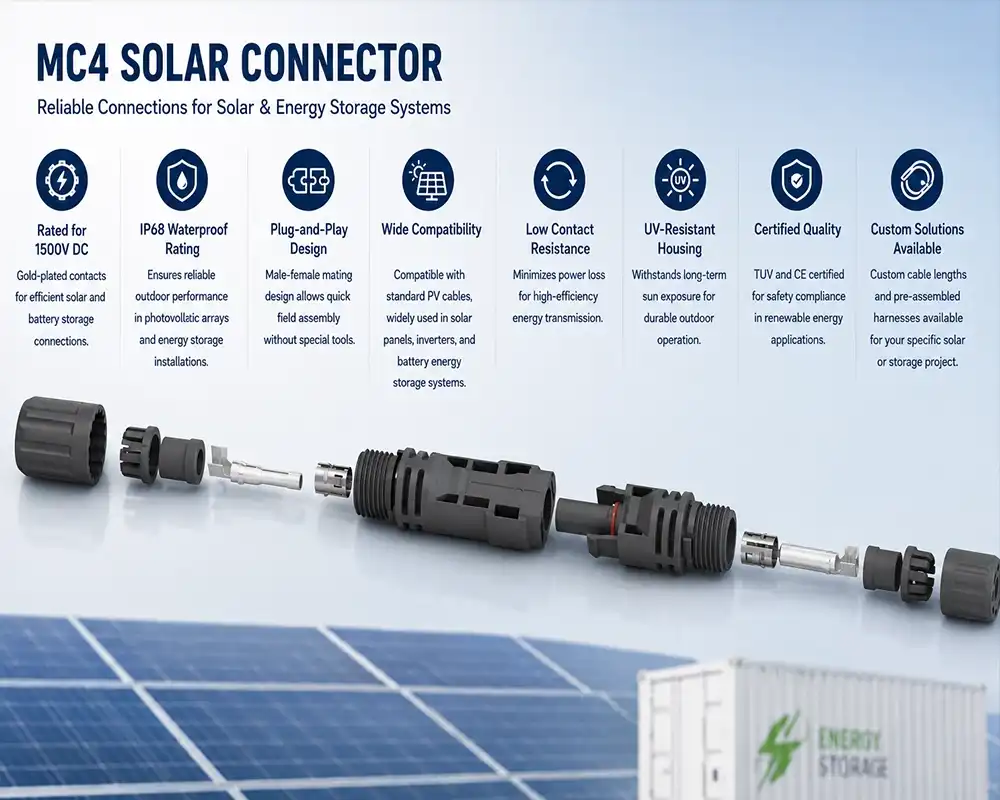
Understanding the MC4 Solar Connector: Definition and Technical Insights
What Makes MC4 the Global Standard
Different weather conditions make DC power from solar installations, which makes connections more difficult. The MC4 solar connector came about as a solution to the problem of frequent field failures caused by bad sealing and unreliable contacts. Its name comes from the 4 mm diameter contact pin that works well for sending high currents.
Modern photovoltaic systems work at voltages of up to 1500V DC, which means they need connectors that keep the insulation from tracking electricity. The MC4 solar connector is made with long creepage distances and high-quality polymers that don't break down when electrical stress is applied for a long time.
Core Technical Specifications
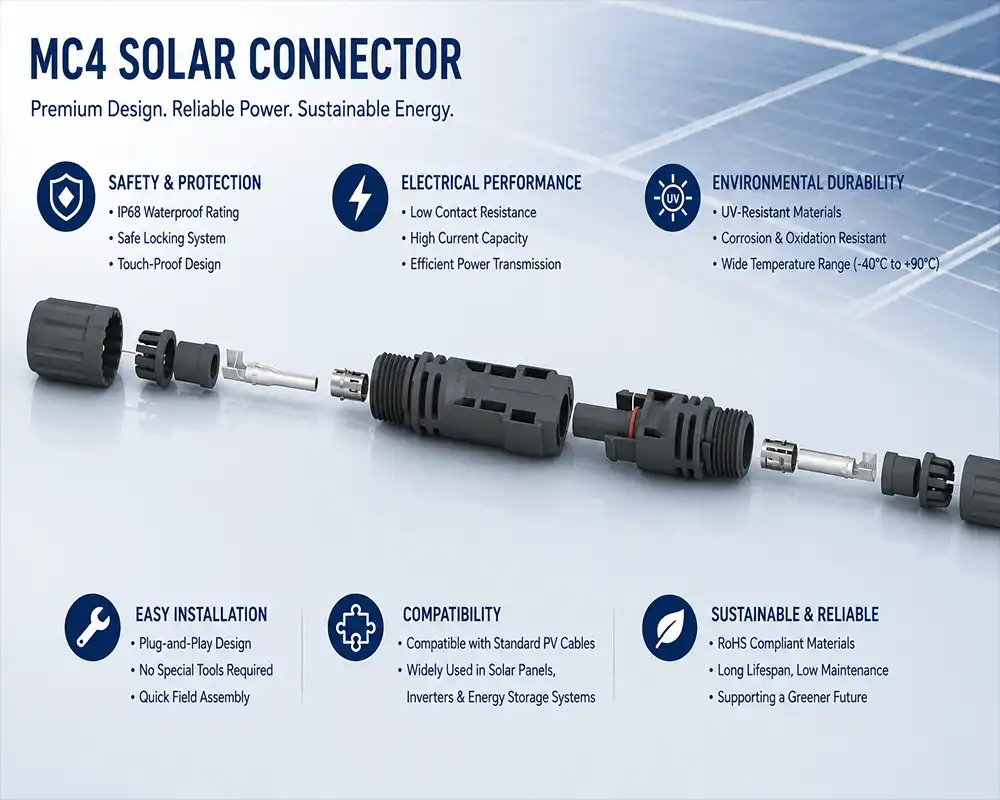
When choosing a connector for a large-scale deployment, technical factors decide how well it will work in the long run. At Cablein Technology, our MC4 solar connectors are made for 1500V DC circuits and have gold-plated contacts with a resistance of less than 0.2 mΩ. When joining several strings, this standard is important because even small increases in resistance add up over hundreds of connection points, making heat and wasting power. The connectors can handle 35A of continuous current and cable sizes ranging from 2.5mm² to 6.0mm². This means they can be used for a wide range of installation needs, from rooftops in homes to large-scale ground mounts for utilities.
Extreme temperatures put every part of outdoor installations to the test. From -40°F to 115°F, our MC4 solar connectors work reliably, so they can be used in places like Arctic installations and solar farms in the desert. Polyphenylene oxide (PPO) with a flammability rating of UL94 V-0 is used for the housing. This is the highest fire safety standard that can be found. This is important because DC arc faults can light up lower-quality plastics, turning a simple connection problem into a huge fire risk.
How the Locking Mechanism Protects Your Investment
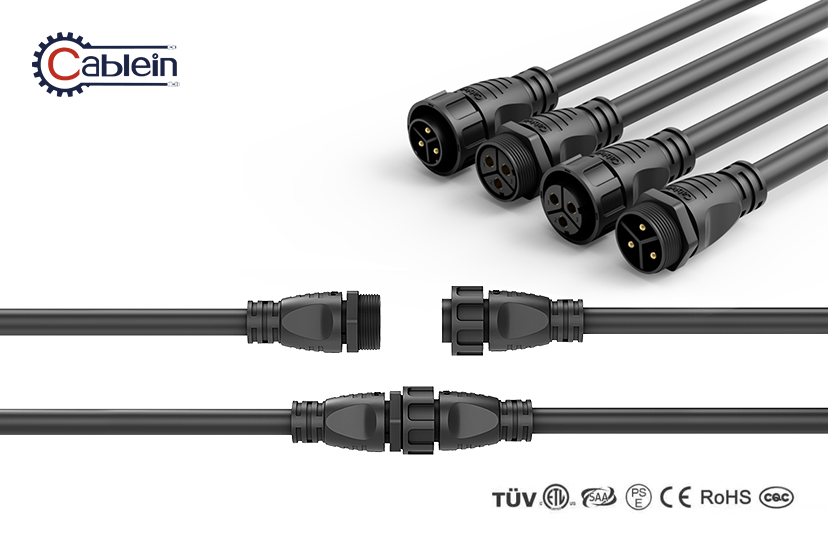
The plug-and-play male-female mating design allows for easy installation without the need for tools, but it needs special detach tools to be taken apart. This feature that seems to go against everything else solves a very important safety issue. When you accidentally unplug while the load is on, you can get dangerous DC arcing that can damage contacts and even start a fire. The audible click makes sure that the engagement is correct every time, so there is no need to guess during field assembly.
Why Every Solar Panel System Needs an MC4 Connector
Enhanced Safety Through Proven Design
When it's daylight, solar panels make electricity, which means that connections are always live. When workers do repairs on old terminal blocks and splice connections, they are at risk of getting shocked. Because the MC4 solar connector is enclosed, there are no exposed wires. This keeps workers safe and meets NEC safety standards.
The IP68 rating for waterproofing makes sure that the device will work reliably outside and goes beyond splash resistance. Submersion tolerance is what this protection level means. This is very important for ground-mounted installations in flood-prone areas and floating solar farms where water will always come in contact with the panels. Before they are sent out, our connections are tested to make sure they are 100% waterproof. Vacuum submersion methods are used to make sure the seals are still good.
Long-Term Reliability Reduces Total Cost of Ownership
Total cost of ownership goes down when something is reliable over time. When buying connectors, purchasing managers usually look at the unit price instead of the total cost over the life of the connector. Connection problems in solar plants that are already running cost a lot because they lead to emergency service calls, lost production, and the chance that electrical faults will damage equipment. Low contact resistance design cuts down on power loss for high-efficiency energy transmission, which has a direct effect on the project's return on investment (ROI) over 25 years of operation.
UV-resistant housing doesn't break down or crack when it's exposed to the sun for a long time. Standard plastics break down when they are exposed to UV light all the time, losing their strength and letting water in. Our engineers make connections out of stabilized plastics that keep their shape after decades of being outside, even in places with heavy salt fog or very high temperatures from the sun.
Universal Compatibility Simplifies Supply Chain Management
Standardization is what makes large-scale deployments more efficient. The MC4 solar connector design works perfectly with normal PV cables in 14/12/10 AWG sizes, so you don't have to keep different supplies on hand for each type of job. These connectors are TUV and CE certified for safety in green energy uses. They also meet international standards that let system integrators sell their products all over the world.
Integrating battery energy storage means making sure that the parts that produce, convert, and store energy are all connected securely. In addition to connecting solar panels to inverters, our connections can also connect battery arrays to charge controls. This flexibility makes it easier to buy things and lessens the amount of training installation teams need.
MC4 Solar Connector vs. Alternatives: Making the Right Choice
Performance Comparison with Legacy Options
Before the MC4 solar connector became common, solar installations used MC3 connectors, Anderson Power Poles, and terminal blocks, among other ways to join. Each had flaws that were shown when they failed in the field. MC3 connectors had basic weatherproofing, but they didn't have strong locking mechanisms, so they would disconnect when installed on rooftops due to vibrations.
Anderson connectors allow for quick connections, but they weren't made to be used outside all the time. Their contact design works well for short-term uses, but UV light and temperature changes over time break down the housing material more quickly than UV-stabilized MC4 solar connector parts. Terminal blocks need weatherproof cases, which adds to the time it takes to install and creates weak spots where water can get in.
Why Electrical Performance Matters at Scale
Contact resistance is an important parameter that affects how well a system works. A 10-amp current makes 0.5 watts of heat per link when joining solar strings with poor connectors that have a 5 mΩ resistance. In an industrial array with 100 connections, that's 50 watts of constant power loss, which is enough to heat the connections until the insulation breaks. Even after years of being outside, our gold-plated contacts keep their conductivity below 0.2 mΩ. This means that there are almost no power losses and no heat degradation.
This difference is very helpful for utility-scale installations with thousands of connection points. Less electrical loss makes the project more cost-effective, and lower operating temperatures make parts last longer. Tests that measure pull-out force above 50N show that the crimp is solid, which means it will stay that way even when it's subjected to wind loads and thermal expansion cycles.
Brand Authenticity and Procurement Considerations
Even though the MC4 solar connector shape is a trademark, the name has become more general. As a result, there are a lot of low-quality copies on the market made with bad materials and without enough testing. Real connectors are put through tests that simulate 25 years of UV and heat exposure to make sure they will work for a long time. Cross-mating compatibility checks make sure that links are reliable across production runs. This is very important when looking for replacement parts years after the original installation.
Practical Guide to Procurement and Installation of MC4 Connectors
Sourcing Strategies for B2B Buyers
When procurement teams have to balance cost, speed, and quality, they need sources that have a history of doing a good job. At Cablein Technology, our 6,000㎡ warehouse keeps more than 10,000 units of each SKU in stock. This allows for regular shipping in 7 to 10 days, which keeps projects on schedule. We can handle emergency orders because our stock levels stay stable, which means there are no production delays that mess up installation schedules.
Options to buy in bulk and pre-assembled cable harnesses lower the cost of labor in the field and make installation more consistent. Custom wire lengths that are made to fit the plan of each array cut down on waste and connection spots. Working with companies that offer OEM/ODM services makes sure that you can get custom solutions when standard goods don't meet the needs of your project.
Installation Best Practices That Prevent Field Failures
The reliability of an MC4 solar connector depends on how well it is crimped. Using crimping tools that have been calibrated guarantees consistent compression that meets the requirements for pull-out force. When you over-crimp, you damage the conductor strands, and when you under-crimp, you make links with a lot of resistance that are likely to break when heated. Professional installation teams test samples of the crimp to make sure it's of good quality before deploying it all over.
Cross-connection errors between positive and negative terminals are prevented by the 45-degree angled mating face. This is a common installation mistake that breaks systems right away or creates dangerous fault conditions. When arranging cables, they shouldn't make sharp turns near connections because that's where most of the mechanical stress is. Maintaining the minimum bend radius stops damage to the wire and seal decay that lets water in.
Maintenance and Troubleshooting Guidance
Thermal imaging scans find links that aren't working right before they break. Hot spots mean that there is a lot of resistance because of corrosion, bad crimps, or dirty contacts. Taking care of these problems during planned maintenance keeps unexpected downtime and arc-fault incidents from happening. Contact resistance measurement gives a number value, and readings above 1mΩ require the connector to be replaced.
Genuine new parts keep the system's structure. Generic alternatives may fit together physically, but they use different housing and contact materials that break down faster. Our ISO9001:2015-certified manufacturing processes guarantee that each order will receive the same product. This means that you don't have to worry about compatibility issues when looking for parts years after the original installation.
Leading MC4 Connector Brands and How to Choose Them
Evaluating Manufacturer Credentials
There are both well-known companies with decades of building experience in the solar connector market and new companies with reasonable prices. Amphenol has a lot of experience working with aerospace and military applications. This means that their products are very reliable and come with a lot of testing data to back them up. As the original developer of the MC4 solar connector, Stäubli sets the bar that other developers are judged against.
Why Technical Support Matters for Complex Projects
Vendor selection includes more than just product specs; it also includes assistance skills. When manufacturers offer engineering advice during the design phase, it helps with installations that are more complicated. Our technical team at Cablein offers fast prototyping services that make sure unique solutions work before they are made in large quantities. This lowers the risk of the project and makes sure that it will work with existing tools.
How quickly problems are fixed when they happen depends on how well the after-sales support works. Our expert support is available 24 hours a day, 7 days a week, and can help you right away with startup questions and problems. When you can talk directly to factory engineers, you can avoid the delays that come from having multiple levels of support. This keeps projects moving when you need to make quick decisions.
Real-World Performance Data
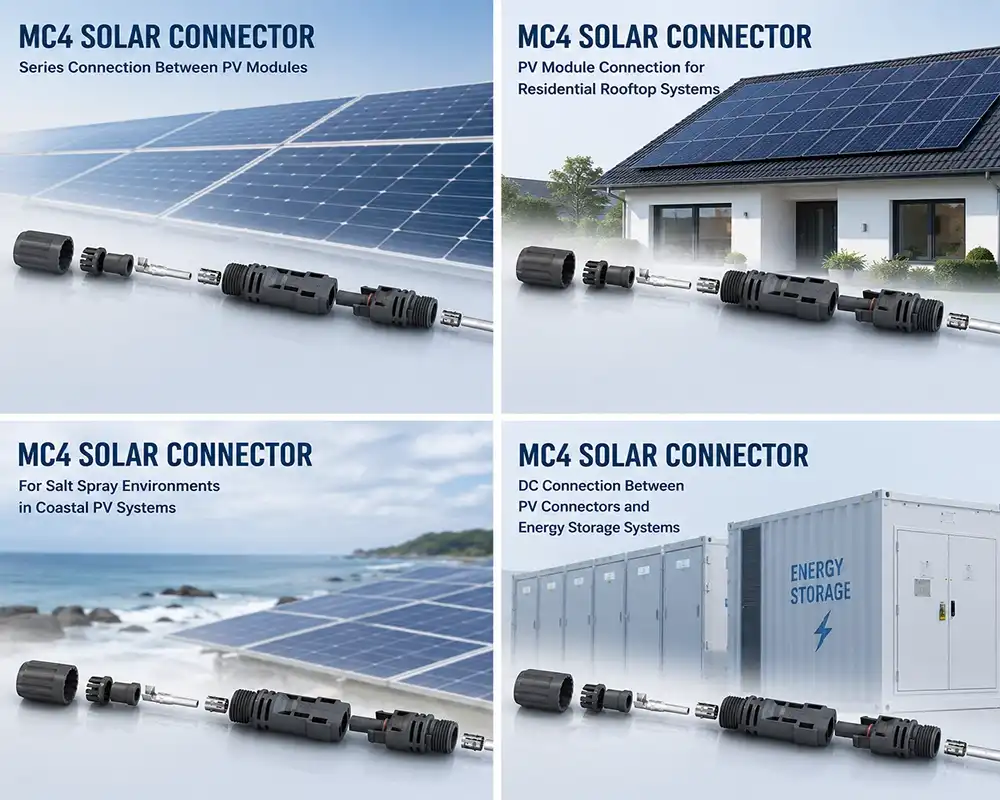
MC4 solar connectors can work in harsh circumstances, as shown by floating solar farms. In Southeast Asia, installations are constantly exposed to high humidity, are sometimes submerged during storms, and are exposed to strong UV light. Over five years, failure rates for projects using premium connections are less than 0.1%, while failure rates for installs using generic alternatives are between 2% and 3%, which requires expensive upkeep.
When commercial systems are put on roofs, the panels heat up quickly in the morning sun and then cool down overnight. Every connection point is stressed by this stretching and shrinking. High-quality MC4 solar connectors keep their electrical performance and seal integrity over thousands of cycles, while low-quality ones develop micro-gaps that cause arcing and contact degradation over time.
Conclusion
The MC4 solar connector is now an important part of all photovoltaic systems because it fixes basic problems that made it hard to use solar power before. Its combination of weatherproofing, reliable electrical performance, and standard compatibility lets you use it for a long time in a wide range of climates and situations. When weighing original cost against long-term dependability, procurement choices always favor high-quality connectors that stop costly field failures. The MC4 solar connector has been used in a wide range of solar installations, from home rooftops to large power plants. Its track record and widespread use make it the obvious choice for engineers who want to ensure system safety and longevity.
FAQ
1. Can I mix different brands of MC4-compatible connectors?
Many makers say their products are compatible with the MC4 solar connector, but it's not a good idea to mix brands. Differences in manufacturing tolerances and the rate at which materials expand lead to high-resistance links that get too hot. Under conditions of sustained load, this speeds up the breakdown and could cause a fire.
2. What distinguishes 1000V from 1500V rated connectors?
To keep electricity from tracking across insulator surfaces, higher voltage ratings need longer creepage distances. The insulation on the 1500V connectors is thicker, and the space between the conductors is longer. These changes to the design account for the higher electrical stress in utility-scale systems while keeping safety margins the same.
3. How do I verify connector authenticity?
Real MC4 solar connectors have marks from the maker and certification logos molded into the housing. Most of the time, fake goods don't have clear labels or have stickers that come off quickly. Different weights show that the materials used aren't as good—real connectors use dense, UV-stabilized polymers, while fakes use cheaper compounds. By asking sellers for certification paperwork, you can be sure that they are meeting the stated standards.
4. What causes connector overheating?
High temps mean that the contacts are not crimped properly, are corroding, or are dirty. This needs to be looked at right away because thermal runaway can melt insulation and set things on fire nearby. By doing regular temperature scans, problems can be found before they become too big to fix.
Ready to Secure Your Solar Investment with Premium MC4 Connectors
Cablein Technology makes MC4 solar connector solutions that are specifically designed to meet the needs of modern photovoltaic installations. For the best performance, our connectors have gold-plated contacts that keep resistance below 0.2 mΩ, 1500 V DC grade, and IP68 waterproof protection. As a certified MC4 solar connector manufacturer, we offer TUV and CE-certified products that have been through strict testing procedures and come with 24-hour technical support. If you need connectors for utility-scale ground mounts, business roofs, or integrating battery energy storage, our team can make custom wire lengths and pre-assembled harnesses that fit the needs of your project. Email our engineering team at nick@cableinco.com to talk about your needs and get detailed technical information. We keep your installations on schedule without sacrificing quality because we keep an inventory of more than 10,000 units per SKU and deliver them in 7 to 10 days.
References
1. International Electrotechnical Commission. "IEC 62852: Connectors for DC application in photovoltaic systems – Safety requirements and tests." " Geneva: IEC Standards, 2020.
2. Underwriters Laboratories. "UL 6703: Standard for Safety for Photovoltaic Wire and Photovoltaic Output and Battery Cable." Northbrook: UL LLC, 2019.
3. National Electrical Code. "Article 690: Solar Photovoltaic (PV) Systems." NFPA 70, 2020 Edition. Quincy: National Fire Protection Association.
4. Solar Energy Industries Association. "Best Practices for Operations and Maintenance of Photovoltaic and Energy Storage Systems." Washington: SEIA, 2021.
5. Fraunhofer Institute for Solar Energy Systems. "Recent Facts about Photovoltaics in Germany: Component Reliability and System Performance." Freiburg: Fraunhofer ISE, 2022.
6. TUV Rheinland. "Quality Assurance in Photovoltaic Module Manufacturing: Testing and Certification Requirements." Cologne: TUV Rheinland Group, 2021.