What Makes an M16 Inline Connector Suitable for Outdoor Applications?
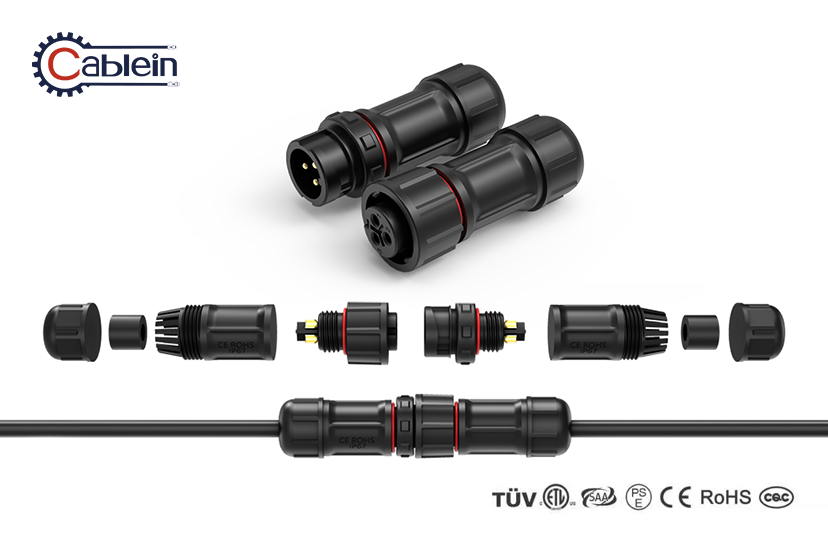
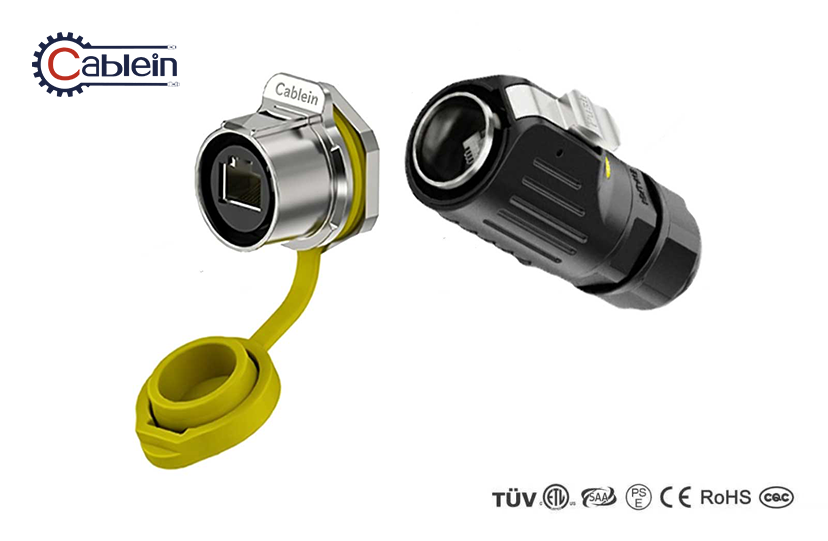
An M16 threaded inline waterproof connector is purpose-built for outdoor electrical installations where standard connectors fail. Its 16mm metric threaded body locks cable ends together with a compression seal, achieving IP67 and IP68 ratings that block dust and water ingress even during temporary submersion. Molded from PA66 nylon with gold-plated copper alloy contacts and a silicone O-ring, it operates reliably from -40℃ to +105℃. For engineers specifying sensor loops, outdoor relay stations, or industrial cable extensions, this connector type delivers the sealing integrity and field-serviceability that outdoor deployments demand.
Understanding M16 Threaded Inline Waterproof Connectors
What They Are and How They Work
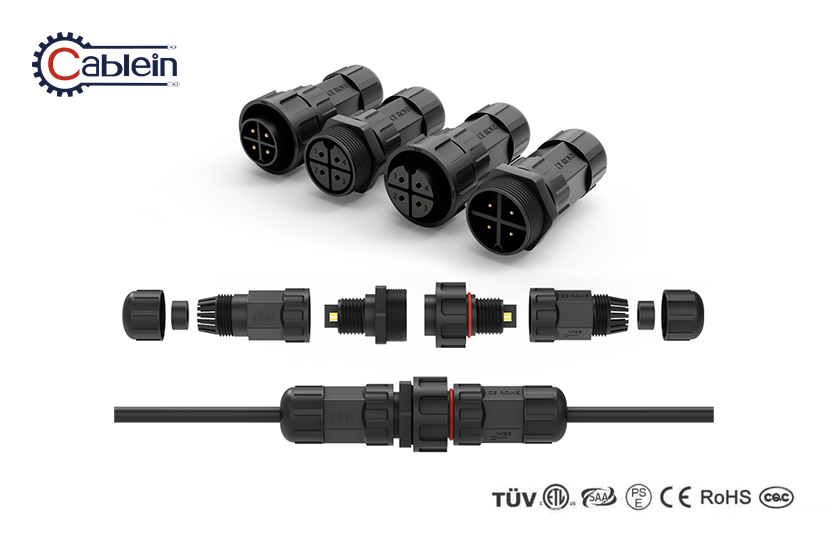
An M16 inline connector uses a threaded coupling nut to connect two cables in a straight-through way. The nut pushes a silicone O-ring against the matching face when it is tightened, making a seal that can't be broken. This mechanical sealing concept is very different from friction-fit designs, where changes in temperature or shaking can slowly open holes that let water in.
Core Materials and Construction
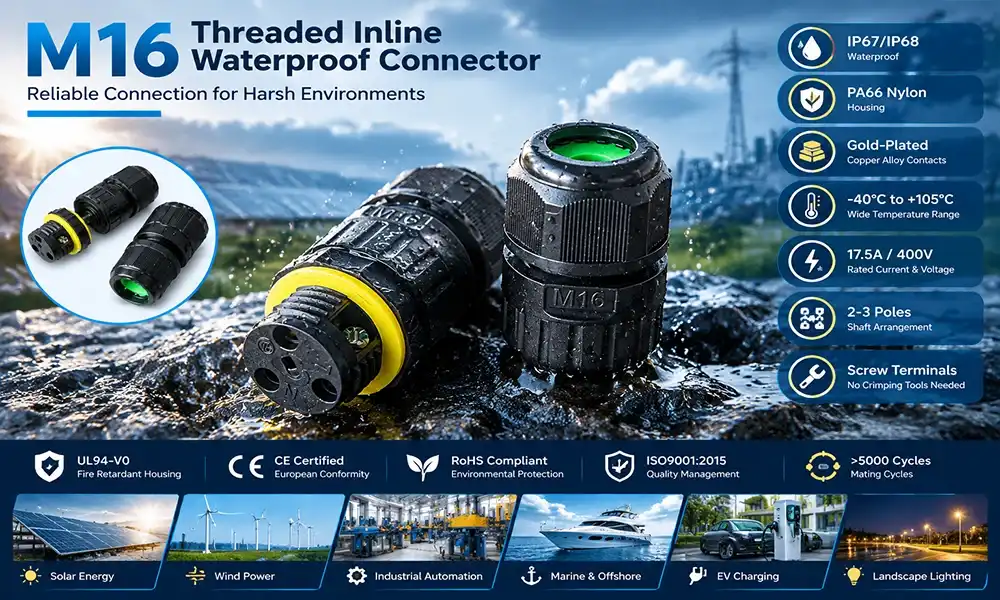
The M16 inline connection body from Cablein is made of glass-filled PA66 nylon, which meets the UL94-V0 flame-retardant standard. The contacts are made of a copper alloy that has been covered in gold. Even after hundreds of mating cycles, the contact resistance stays below 5m©. As long as the temperature range is between -40℃ and +105℃, the silicone closing ring will stay flexible. This means that the seal will stay strong in both extreme cold and extreme heat.
Electrical Specifications That Matter
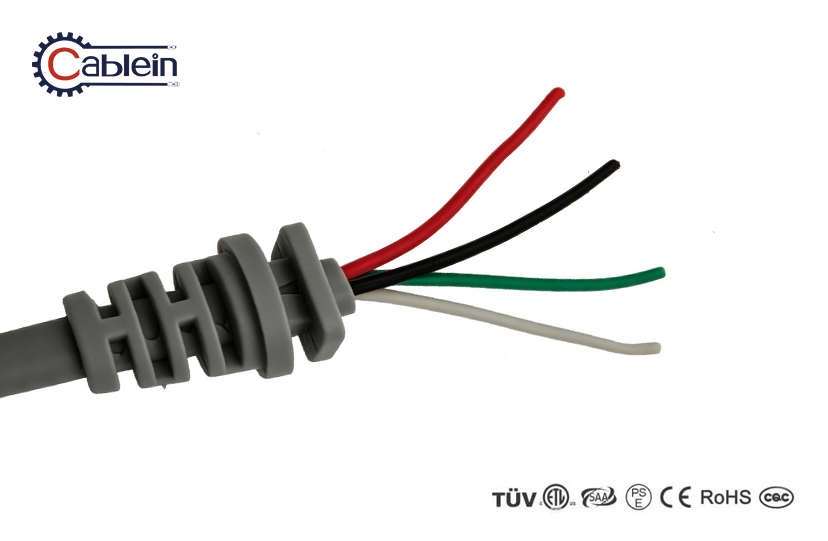
The connection can work with 2–3 pin sets and is rated for 400V and 17.5A per contact. Screw-type connections can handle wires with a thickness of 0.5 mm² to 1.5 mm², which is the standard range for sensor and actuator cables used in plant automation. Matching rubber grommets hold cable jacket outer diameters ranging from 3.5 mm to 10 mm. These grommets also stop moisture from wicking through the cable jacket.
Key Benefits of M16 Inline Waterproof Connectors for Outdoor Use
When you put an electrical link outside, it meets four threats at the same time: water, dust, mechanical vibration, and changes in temperature. All four can be addressed by a well-designed M16 threaded connector that works with all of them.
These are the main reasons why this type of connection is a good choice for outdoor projects:
- Dual IP67/IP68 certification means the M16 threaded inline waterproof connector withstands both short-term immersion at 1-meter depth (IP67) and prolonged submersion up to 1.5 meters for 30 minutes (IP68), covering both above-ground weathering and below-grade trench installations where rainwater pooling is common.
- No crimping tools required on site. The screw-type terminal design lets an electrician strip the wire, insert it, and tighten the terminal screw with a standard flat-head screwdriver. This eliminates the need to carry dedicated crimping presses to remote outdoor sites, cutting installation time per connection by a measurable margin.
- Field-repairable design. Unlike overmolded cable assemblies that require complete harness replacement when damaged, the threaded inline body can be disassembled, the damaged wire re-terminated, and the connector resealed on-site. For outdoor installations in remote locations, this can reduce maintenance costs significantly.
- UL94-V0 flame-retardant housing. The PA66 body stops burning within 10 seconds after a flame source is removed, an important safety attribute for connectors routed near outdoor generators, solar inverters, or lighting control panels.
All of these features lower the total cost of ownership by extending the time between services and preventing the need to replace the harness too soon in the field.
Comparing M16 Inline Connectors to Other Connector Types
M16 vs. M12 Inline Connectors
In industrial automation, the M12 connector format is used to connect sensors that need to work with lower current loads. M12 connections, on the other hand, can handle smaller wire diameters and are usually rated at 4A to 8A. The M16's 17.5A rating gives you the headroom you need for outdoor uses that need more current, like a small drive motor or a multi-sensor junction. This is because it doesn't need a bigger circular connector housing.
M16 Inline vs. Non-Waterproof Inline Connectors
Enclosure boxes protect non-waterproof inline connectors from the environment. These boxes add bulk and extra sealing surfaces that can fail on their own. An M16 threaded inline connector has the seal built right into the connection point. This means that you don't need a junction box outside as often, and there are fewer places where water could get in.
M16 Inline vs. Circular Bayonet Connectors
Bayonet-lock circular connections connect quickly, but they can come away in places with a lot of vibration, like wind turbine nacelles or equipment placed on rails. The M16's threaded coupling needs to be rotated on purpose to disengage. This provides passive vibration resistance without the need for extra locking hardware.
Choosing the Right M16 Connector for Your Needs
Matching IP Rating to Installation Depth
IP67 handles most above-grade outdoor systems, like lighting that is mounted on the ground, outdoor control panels, and sensor wires that are left out in the open. If your project includes wiring below ground in tunnels that flood occasionally or equipment that will be washed with high-pressure water, set IP68 as the minimum requirement. Cablein's M16 threaded inline waterproof connector can handle both grades at the same time, so you don't have to keep separate part numbers on hand for each spot.
Verifying Certifications Before Ordering
For projects that need paperwork for market access, make sure that the connector has CE certification and that the supplier follows ISO9001:2015 quality management. Cablein sends CE test results and ISO9001 certification paperwork with business sales. For OEM purchases that need to be able to track batches, ask for lot-coded shipments and inspection records when you place your order.
Evaluating Cable Compatibility
Compare the outer diameter of the cable you want to use with the grommet options on the connector. Cablein has ranges from 3.5mm to 7mm, 5mm to 8mm, and 7mm to 10mm. Most IP rating failures in the field are caused by grommets that don't fit together properly. It doesn't cost anything to choose the right grommet during the planning phase, but it does cost a lot more to replace a broken connection in the middle of nowhere outside.
Practical Applications and Installation Guidance
Industrial Automation and Sensor Loops
Standard connections fail on plant floors that are cleaned with high-pressure water because the seals break down from being exposed to detergents, and the machines get worn out from being cleaned over and over again. The silicone O-ring stays flexible through thousands of thermal cycles, and the PA66 housing doesn't react with common industrial fluids. Automation engineers use M16 inline connectors as mid-run splice points to connect sensor loops across production zones. This lets individual cable pieces be changed without messing up the whole wire harness.
Outdoor and Renewable Energy Installations
UV light, condensation cycles, and changes in temperature throughout the seasons can damage solar tracking systems and the power lines that power wind turbines. Independent tests by industry groups have shown that UV-stabilized PA66 keeps more than 80% of its tensile strength after 1,000 hours of UV exposure (per IEC 60068-2-5). This means that it can be used as a housing material for long-term outdoor use. The working range of the connector is from -40°C to +105°C, which is the widest range of temperatures that have been recorded at installation sites in North America.
Rail Transit and Vehicle-Mounted Equipment
The connector can handle a wide range of temperatures and doesn't loosen when vibrations occur, making it perfect for display, broadcast, and monitoring modules that are mounted on vehicles. Cablein works with non-disclosure agreements and batch-level tracking information for OEM purchases that are in progress.
Conclusion
An M16 threaded inline waterproof connector is used in outdoor electrical systems because it has a proven ability to seal, materials that last a long time, and an easy-to-install design. Two types of certification (IP67 and IP68), silicone O-ring sealing, PA66 nylon construction, and screw-type terminals that don't need crimping tools all work together to deal with the real-life failure modes that make outdoor connectors less useful. Documentation from CE and ISO9001 helps with buying compliance in all foreign markets. When engineers and purchasing managers need to choose connections for sensor loops, outdoor relay stations, or industrial cable extensions, this type of connector provides a well-documented, easy-to-maintain option backed by manufacturing quality that can be tracked.
FAQ
1. What is the difference between IP67 and IP68 for an M16 inline connector?
IP67 certification means that something is safe to submerge in water up to 1 meter deep for 30 minutes. IP68 takes this to deeper levels for longer periods of time, with the maker setting the exact limits. It means that Cablein's M16 inline connector meets both the stricter IP68 requirement and the more relaxed IP67 requirement at the same time.
2. Can M16 inline connectors handle AC mains voltage outdoors?
Yes, Cablein's M16 inline connector can handle 400V, which is enough for both single-phase and three-phase AC mains in North America and Europe. Before fitting, you should always make sure that the wire gauge and current load don't go over 17.5A per contact.
3. How do I maintain the IP rating after multiple field re-terminations?
Check the rubber O-ring every time you take something apart. If you see any flat spots, surface cracks, or loss of roundness, you should replace it. Cablein suggests keeping extra O-rings on hand for installations that will need to be serviced often.
4. Does the connector require specialized tools for installation?
You don't need any special tools. A standard flat-head screwdriver can be used with the screw-type connections. The threaded connection nut is tightened by hand. Because of how it's made, the connector can be installed and fixed in the field without a special set of tools.
5. What certifications should I request for OEM procurement?
Ask for RoHS compliance statements, ISO9001:2015 scope certificates, and CE test reports. To be able to track a batch, make sure that your purchase order includes lot-coded packing and inspection records.
Partner with Cablein for Your Next Outdoor Wiring Project
Since 2017, Cablein Technology has been making and selling waterproof industrial connectors out of a 6,000-yuan building in Shenzhen. The building is ISO9001:2015 certified and has more than 15 registered patents. We have more than 10,000 of our M16 threaded inline waterproof connectors in stock for each setup. Most orders are shipped within 7–10 days. OEM customization options include changing the number of pins, the color of the case, and the lengths of pre-assembled cables. Full paperwork support is also available. You can email our technical team at nick@cableinco.com to get examples or a price quote for buying in bulk.
References
1. International Electrotechnical Commission. IEC 60529: Degrees of Protection Provided by Enclosures (IP Code). IEC, 2013.
2. Underwriters Laboratories. UL 94: Tests for Flammability of Plastic Materials for Parts in Devices and Appliances. UL Standards, 2018.
3. International Organization for Standardization. ISO 9001:2015 Quality Management Systems — Requirements. ISO, 2015.
4. International Electrotechnical Commission. IEC 60068-2-5: Environmental Testing — Part 2-5: Solar Radiation. IEC, 2010.
5. European Commission. CE Marking and the Low Voltage Directive 2014/35/EU. Official Journal of the European Union, 2014.
6. Whitmore, G. & Larsen, T. "Connector Failure Modes in Industrial Outdoor Environments." IEEE Transactions on Components, Packaging and Manufacturing Technology, Vol. 12, No. 4, 2022.