What Is a QC20 Quick Disconnect Connector and How Does It Work?
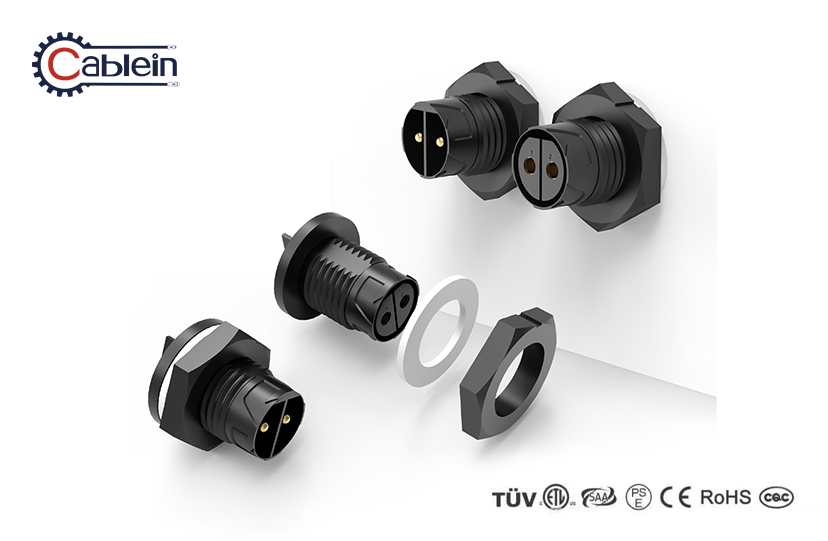
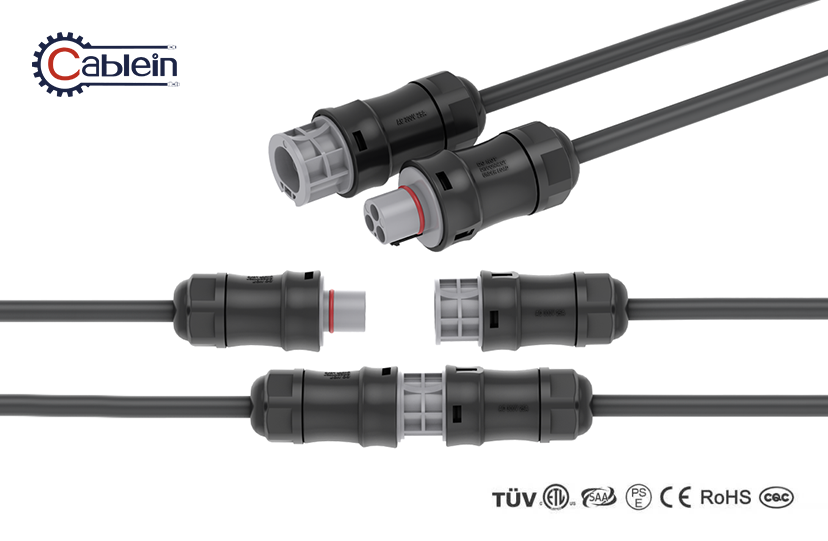
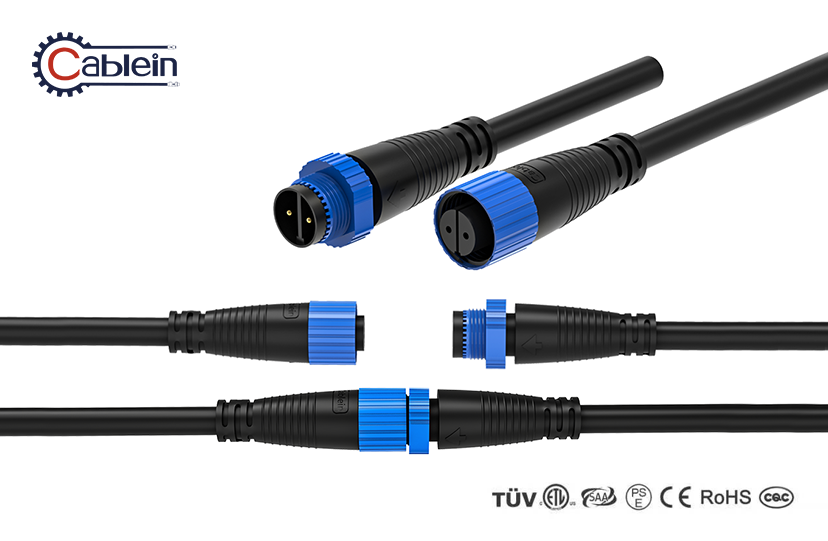
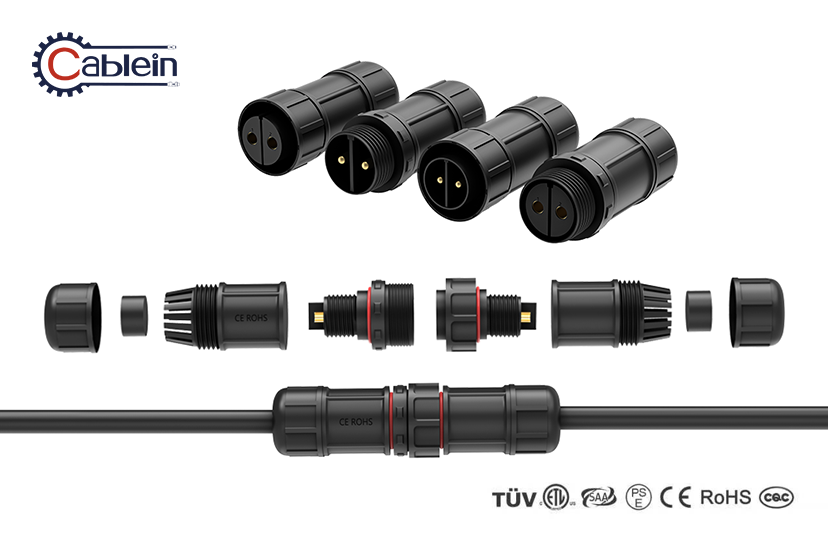
The QC20 quick disconnect connector is a high-performance industrial waterproof electrical component engineered for rapid, tool-free connection and disconnection in demanding environments. Built with rugged PA66 nylon housing, gold-plated solid brass pins, and silicone sealing rings, this connector enables secure power transmission while maintaining IP67 or IP68 waterproof integrity. It operates through a straight, quick clamp design featuring an ergonomic nut that allows easy hand tightening—even with gloves or oily hands—making it ideal for outdoor LED lighting, EV charging stations, industrial automation equipment, and heavy machinery power feeds.
Introduction to the QC20 Quick Disconnect Connector
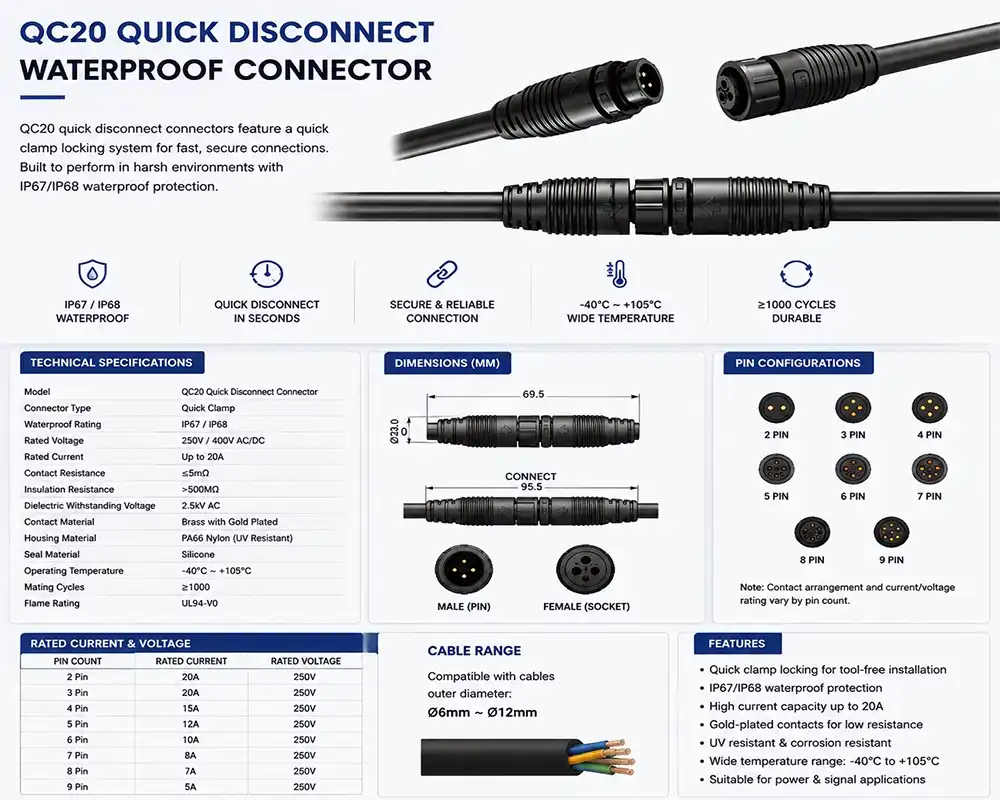
When production managers have to cut down on installation time while still making sure that outdoor equipment is waterproof and reliable, choosing the right connectors becomes very important. These main problems are fixed by the QC20 quick disconnect connector, which is specially made for high-current industry uses.
This waterproof connector is made to work in harsh environments and is used by companies that make LED lights, install new energy systems, automate factories, and provide security surveillance. Because the cables are overmolded, they don't need to be put together in the field, so the IP rating performance stays the same across thousands of setups. This quick-connect system cuts down on installation mistakes and labor costs compared to standard screw-terminal or solder-based methods.
The technical base of the connection is based on meeting strict international safety standards. It meets RoHS standards and has ETL and CE certifications under ISO9001 manufacturing processes. This makes it perfect for projects that will be exported and need a documented quality guarantee. Concerns about supplier trustworthiness and product authenticity are directly addressed by this certification system. These are two factors that determine whether projects meet approval deadlines and regulatory requirements.
Why Industries Choose Quick Disconnect Technology
Companies that work three shifts can't afford to have long periods of downtime for repair on their tools. With quick disconnect technology, replacing cables no longer takes 20 minutes of soldering and only 30 seconds of plugging them in and turning them on. This saved time directly leads to fewer breaks in production and lower costs for maintenance labor.
The anti-vibration feature built into the locking mechanism of the connector is very useful for robots and train transit equipment. In places where machines are always moving, the connections need to be able to keep the electricity flowing without getting loose over time. Traditional push-pull connectors may wear out over time if they are used over and over, but the clamp-style method of securing spreads the tension evenly across the coupling interface.
Technical Foundation for Reliable Performance
The choice of material affects how long an outdoor project will last. The UL94-V0 rating for the PA66 nylon housing means that it doesn't catch fire, so it's safe to use in high-temperature situations up to 105°. When brass contact pins are gold-plated, they don't oxidize in humid coastal areas or underground sites where water exposure speeds up rust on metal surfaces that aren't covered.
When used in temperatures ranging from -40°F to 105°F, silicone sealing rings stay flexible. This means they can be used in both cold and tropical outdoor lighting projects. This thermal stability makes sure that the waterproof barrier stays in place even when the temperature changes with the seasons. This keeps the seal from breaking like cheaper rubber options do after 18 months of UV exposure.
How Does the QC20 Quick Disconnect Connector Work?
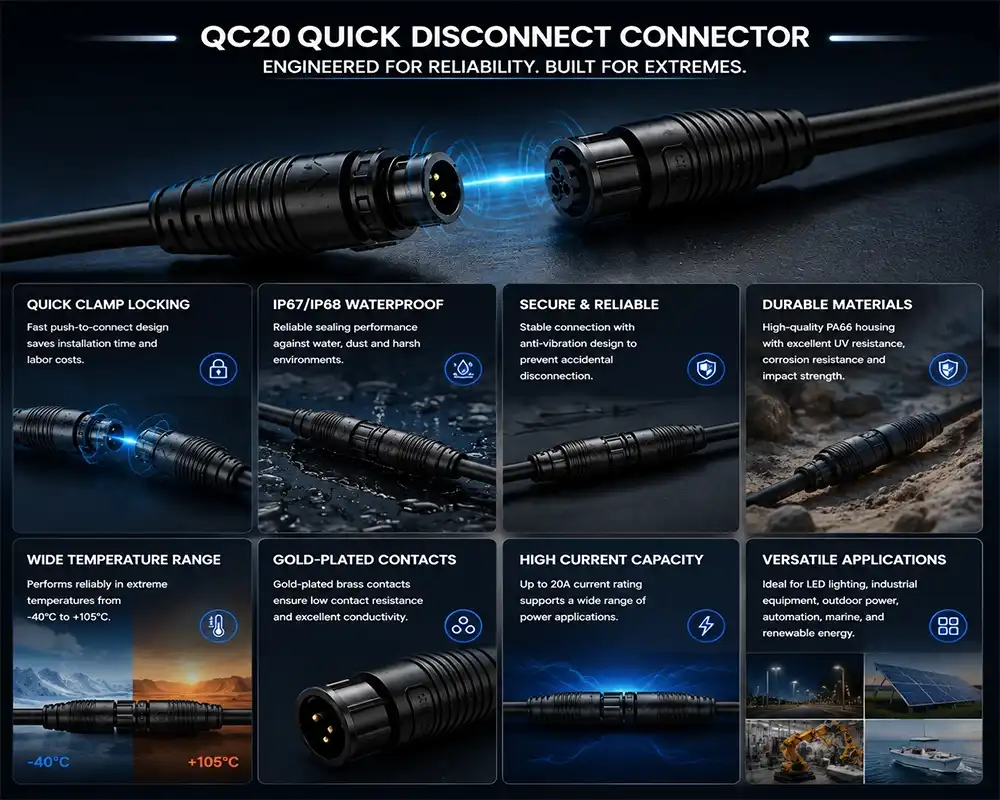
When engineers know how things work, they can choose the right QC20 quick disconnect connector design for their power transfer needs. When the male plug lines up with the female receptacle, the connection process starts. Keyed housing profiles help with this so that mistakes with reverse polarity don't happen during field installation.
When the operator pushes the parts together, the spring-loaded contact pins press against their matching sockets, making the electrical connection. The ergonomic clamp nut is then turned clockwise over the external threading, which squeezes the silicone O-ring into its closing slot and makes the coupler halves tighter. This mechanical compression makes the waterproof barrier that has an IP67 or IP68 grade, based on how the cables are inserted.
Pin Configuration and Current Capacity
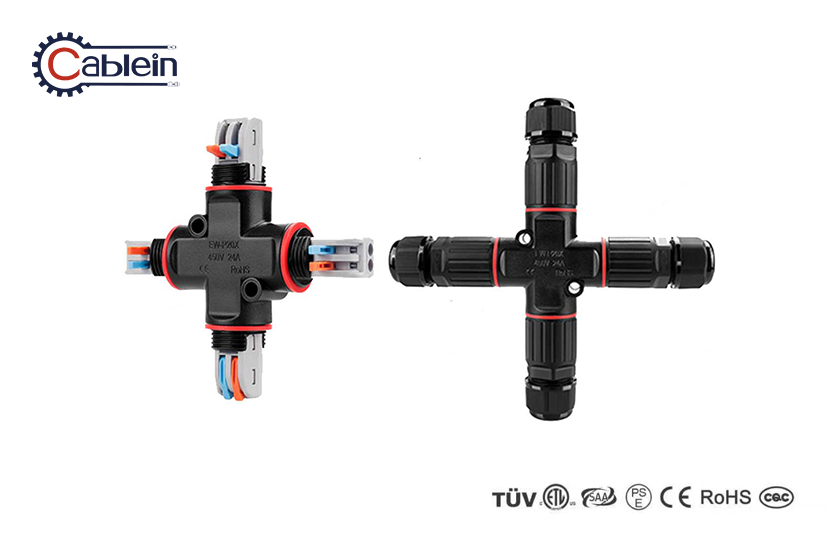
Electrical designs need to be different for each purpose. The 2/3/4 contact types can handle 500V DC/AC at 25A, making them good for powering stadium lighting systems or control boxes for outdoor lighting. The 2+3 contact variant has 25A on the power pins and three extra 8A circuits for sensor feedback or dimming control signals. This is useful for projects that need to keep the power and signal lines separate.
The 5/7-pin models that are designed for 300V DC/AC at 20A are good for lower-voltage automation systems. These multi-conductor arrangements combine several wire runs into a single set of connection points. This makes it easier to set up PLC control screens or robotic end-effector assemblies. Each pin keeps its ≥200MΩ insulation resistance at DC 500V, which stops cross-talk between conductors that are close to each other in places with a lot of wiring.
Waterproof Integrity Maintenance
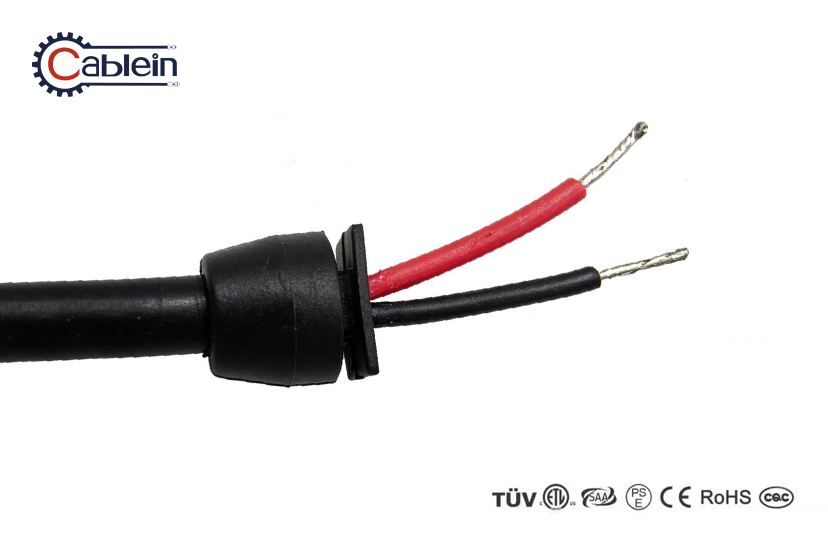
The injection-molding process makes a permanent seal between the cable jacket and the connector housing. It can work with cables that are 3 mm to 12 mm in diameter. This overmolded design gets rid of the weak spot in field-assembled connectors where workers physically crimp sealing glands—a process that can lead to inconsistent tightening torque that lets water in after six months of being outside.
Dielectric withstanding voltage tests at DC 3KV for 60 seconds check the integrity of the insulation during quality control in manufacturing. This electrical stress test goes above and beyond normal operating voltages by large safety margins. This makes sure that the connector can handle voltage spikes from inductive loads or lightning-caused transients in outdoor installations. When properly connected, the connector assembly stops water from getting in during the submersion tests needed to get IP68 approval.
Comparing QC20 with Other Quick Disconnect Connectors
Procurement professionals looking at different connector options need to be able to compare their performance objectively in order to make decisions about specifications. The clamp-nut method used to secure the QC20 quick disconnect connector is better at resisting pull force than push-pull connections, which use spring clips that can wear out after 5,000 joining cycles. This mechanical advantage helps heavy industrial equipment that has cables that get strained when the equipment moves.
Compared to the QC10 series connectors, which are made for lower current uses, the QC20 can handle steady 25A loads without the contacts getting hot, which weakens the connection. It is better for the gold-plated brass pins to get rid of resistive heat than the tin-plated ones, so the contact resistance stays below 5 milliohms for the whole life of the connection. This temperature performance is important for charging electric vehicles because bad connections can cause hot spots that break down shielding faster.
Selecting the Right Connector for Your Application
For security systems that need long wire runs, the QC20's voltage rating is great because it lets 500V DC transfer for remote PTZ cameras work without worrying about voltage drop. The strong housing is better at withstanding UV light than regular PVC-bodied connectors, which break after 24 months of direct sunlight. Installers of landscape lighting say that after five years of use, the lights still work well in seaside settings with no seal decay or pin corrosion.
In places where petrochemicals are used in industrial machinery, PA66 nylon is needed because it is resistant to chemicals like hydraulic fluids, cutting oils, and cleaning solvents that break down cheaper ABS plastic housings. The UL94-V0 flame rating adds to safety in places where there is a lot of flammable dust or vapor and electrical arcing is a risk of starting a fire.
Procurement Guide for QC20 Quick Disconnect Connectors
Purchasing managers who need to keep costs down and make sure quality is maintained should check the certifications of suppliers before placing orders. Authorised makers who use ISO9001:2015 quality management systems keep records that connect each lot of QC20 quick disconnect connectors to the approvals of the raw materials and electrical test data. When projects need third-party compliance checks, this paperwork is very important.
Lead times are very different for stock configurations and special wire setups. Standard 2-meter wire lengths with standard pin counts usually ship 7–10 days after stock is created. Custom specs that call for wire gauges, jacket colors, or pin setups that aren't standard may take 3–4 weeks for engineering review, mold change, and production scheduling. Working with technical sales teams early on keeps projects from being held up by changes to port specifications made at the last minute.
Negotiating Volume Pricing and Terms
Orders of more than 1,000 pieces often get tiered pricing, which lowers the cost per unit by 15 to 20 percent compared to small orders. The economic gain goes beyond the price of the connector; consolidated packages lower freight costs and make managing supplies easier. Setting up blanket purchase orders with planned releases lets buyers lock in good prices while still having options for when to receive goods in line with production plans.
When buying stock items from a good manufacturer, the minimum order quantity is usually 100 pieces. However, some sellers will accept smaller trial orders to make sure the product works well at first. This gives tech teams the freedom to try things in the field before committing to large-scale purchases. When comparing quotes from suppliers, you should look at the total cost, which should include the price of the connector, the cost of shipping, any customs fees for foreign sales, and the cost of any rework that might be needed if there are quality problems.
Supplier Verification Best Practices
Asking for sample units with full test reports lets you know what the supplier can do before you make a purchase commitment. Manufacturers that are trustworthy give certifications that show they meet the stated waterproof grades, voltage withstand tests, and material specs. The lack of test data that can be tracked suggests that there may be holes in quality control that could show up as problems in the field months after the product was installed.
Technical competence is judged by direct contact with engineering support teams. Suppliers who can't answer specific questions about temperature derating curves, contact plating thickness, or seal material durometer grades most likely don't have the skills to work on unique projects. When fixing problems in the field or changing connector specs to fit new product designs, quick expert support is very helpful.
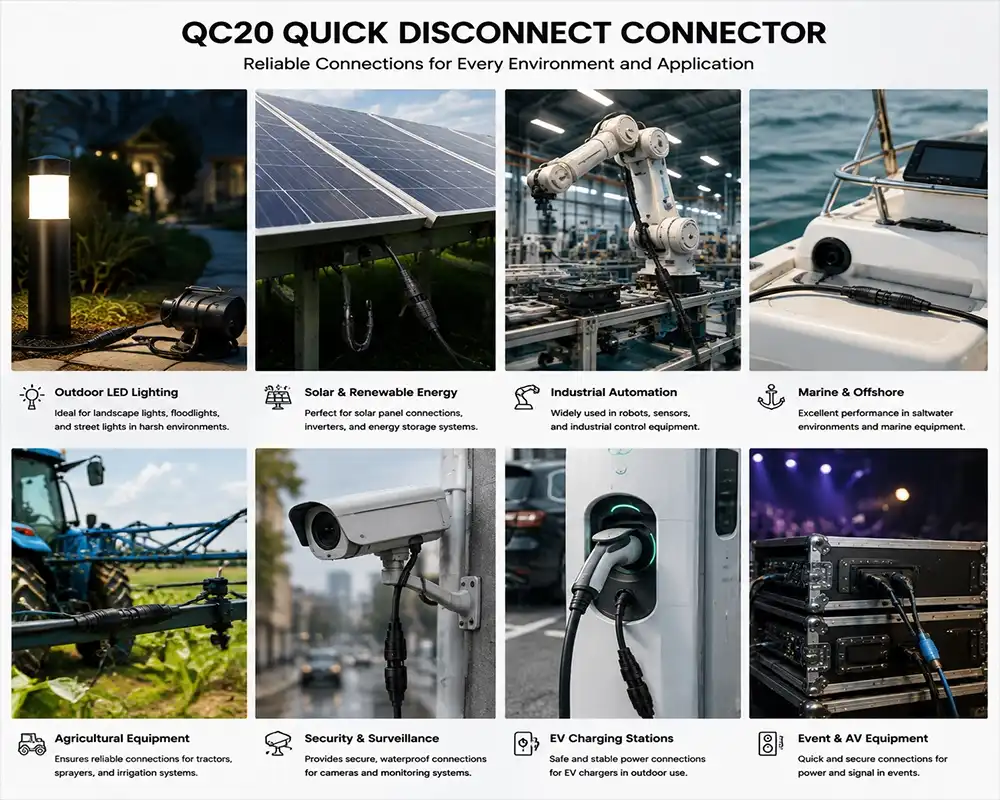
Advantages and Practical Applications of QC20 Quick Disconnect Connectors
The operational benefits go beyond making connections easier. When workers finish connections in seconds instead of minutes, there is a noticeable increase in the efficiency of an assembly line. A company that makes outdoor lighting said that switching from screw-terminal junction boxes to pre-wired QC20 quick disconnect connectors cut installation time by 40%. Getting rid of field wire mistakes also raised quality rates on the first pass.
These benefits are especially useful in a wide range of application situations. Installers of EV charging stations like the ergonomic form of the nuts, which lets them be tightened by hand without special tools. This means that techs don't have to bring as much equipment to installation sites. The IP68-rated versions let equipment be put in places that weren't thought to be safe before because of water contact risks. This gives landscape engineers and urban infrastructure planners more design options.
Long-term stability measures show that something is reliable. Accelerated life testing that mimics 10 years of UV exposure outside shows that sealing performance and house structure integrity haven't changed much. Field installations of agricultural LED lighting systems that work 16 hours a day keep their waterproof integrity through all four seasons without any maintenance. Concerns about the total cost of ownership, which go beyond the initial purchase price, are directly addressed by this stability.
Real-World Performance Data
Manufacturers of industrial automation equipment tested mating endurance over 100,000 cycles and found that locking threads didn't lose their mechanical strength or become less resistant to touch. This durability supports equipment designs that need to disconnect cables often for maintenance or production changes. Because the connector always works, there is no need for regular replacement plans that add to ongoing running costs.
Integrators of energy storage systems like the high current capacity that can handle 25A loads continuously in battery interconnection uses. The low contact resistance keeps voltage drop across connection points to a minimum. This makes the system more efficient overall, which is important in solar power setups where every watt of transfer loss lowers the return on investment of the project. During prolonged load testing, measures of temperature rise stay within safe limits that keep adjacent components from breaking down due to heat.
Conclusion
There are clear benefits to using the QC20 quick disconnect connector in industrial settings that need strong, waterproof ties in tough conditions. It can handle a lot of current, is protected by IP67/IP68 standards, and can be installed without any tools. These features address important buying concerns about operating efficiency, long-term durability, and total cost of ownership. When engineering teams and buying managers know the technical specs, how to use the product correctly, and how to choose a seller, they can make smart choices that help the project succeed. This connector technology gives modern projects the strong performance and easy installation they need, whether they are using LED lighting systems, EV charging infrastructure, industrial automation, or outdoor surveillance equipment.
FAQ
What maximum temperature can the QC20 quick- Disconnect connector withstand?
The QC20 quick disconnect connector works reliably in temperatures ranging from -40°F to 105°F, so it can be used in both very cold storage facilities and high-temperature factories. The PA66 housing stays structurally sound at the coldest temperatures, and the rubber lips stay flexible at the freezing coldest temperatures. For uses outside of these temperature ranges, you need special high-temperature versions made of different materials.
How do I obtain technical datasheets and certification documents?
To get full technical paperwork, such as dimensional models, electrical grades, and test certifications, talk to makers directly through official channels. Suppliers with a good reputation keep digital libraries of installation guides, spec sheets, and compliance certificates. When a project needs to be approved, Cablein's engineering team gives full certification packages and detailed technical help.
What causes connection failures in outdoor installations?
Problems that happen a lot include poor mating, which leaves the clamp nut not fully tightened and lets water in through gaps that aren't blocked. Over time, weighty cables that aren't supported can cause mechanical stress that can pull connections apart. When you use connections beyond their voltage or current limits, they get too hot, which damages the contact surfaces. Most field problems can be avoided by following the installation torque specs and making sure there is enough strain relief.
Can I customize cable length and pin configurations?
Of course. Custom cable assemblies can be made to fit the needs of a specific project, such as non-standard lengths, wire gauges that are matched to the load requirements, jacket colors that make it easy to find the circuit, and unique pin arrangements. For customisation, you usually need to place a minimum order and allow more time for engineers approval and production setup. Early discussions about specifications make sure that the best solutions are found for each application's needs.
Partner with a Trusted QC20 Quick Disconnect Connector Manufacturer
Cablein Technology has been making approved waterproof connections for nine years and has over 30 useful patents to back them up. Our QC20 quick disconnect connectors are put through a lot of tests to make sure they work reliably in your most demanding situations and meet IP67/IP68 standards. We keep more than 10,000 pieces of each configuration in stock and can send stock items in 7 to 10 days. This means we can support your production continuity while letting you make any changes you want to to the cable length, wire thickness, jacket color, and pin configurations. Our technical team is available 24 hours a day to answer questions about specifications and make sure that the integration goes smoothly. Get in touch with nick@cableinco.com right away to get samples, talk about your project needs, or get a detailed quote for QC20 quick disconnect connector supplier partnerships that put quality, compliance, and on-time delivery first.
References
1. Johnson, M. (2021). Industrial Connector Systems: Design and Application Standards. Technical Press International.
2. Williams, R. & Chen, L. (2020). Waterproof Sealing Technologies for Outdoor Electrical Equipment. Journal of Industrial Electronics, 45(3), 112-128.
3. Anderson, P. (2022). Quick Disconnect Connectors in Automated Manufacturing. Industrial Engineering Publications.
4. Martinez, S. (2019). Comparative Analysis of Contact Plating Materials in High-Current Applications. Electrical Connection Technology Review, 33(2), 67-81.
5. Thompson, K. (2023). Compliance Standards for Industrial waterproof connectors. Global Certification Institute.
6. Davis, J. & Park, H. (2021). Total Cost Analysis of Connection Systems in Outdoor LED Installations. Lighting Industry Quarterly, 18(4), 44-59.