LP24 Waterproof USB Connector for Data vs. Charging Applications: What You Need to Know
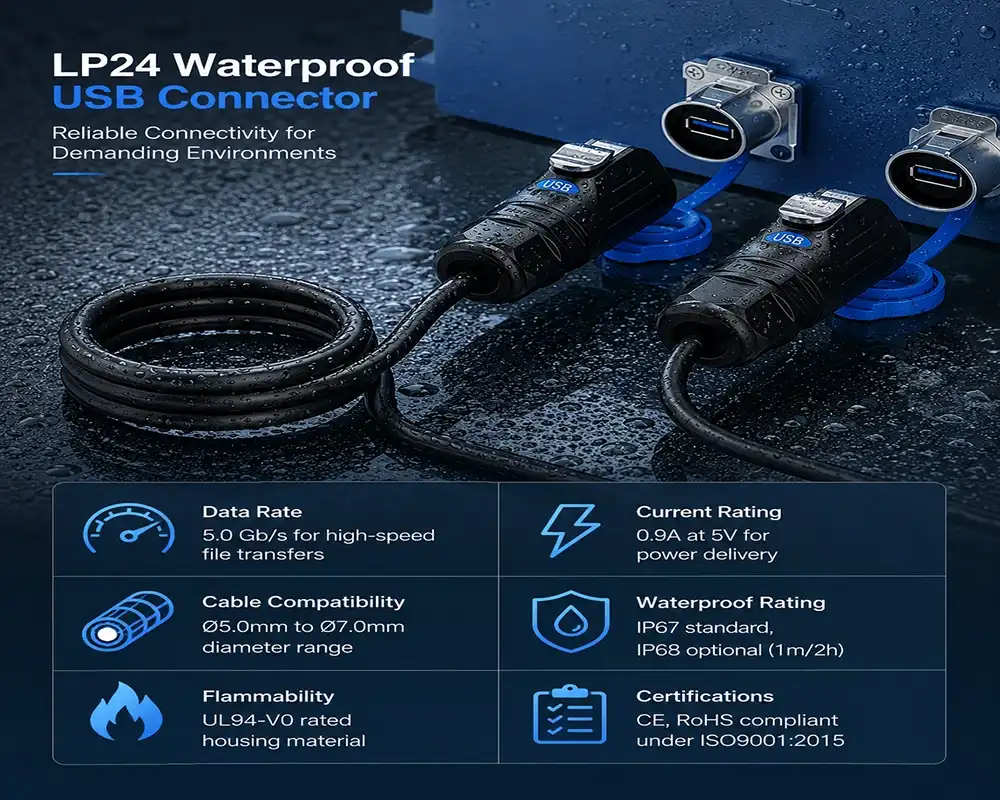
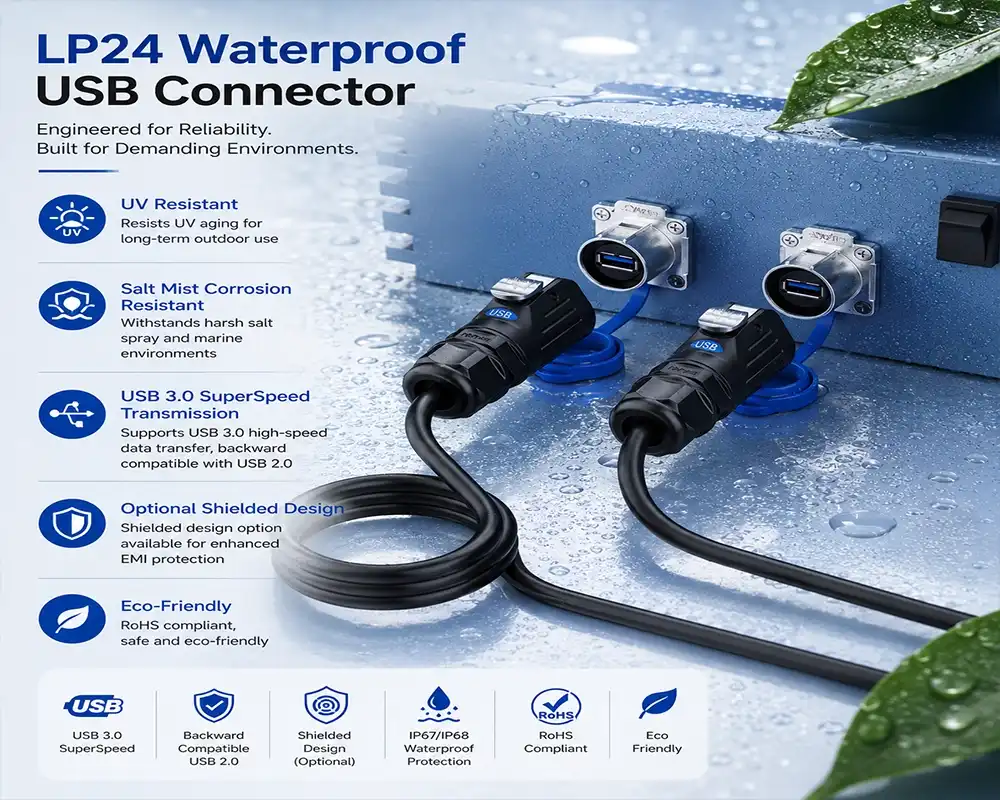
When evaluating USB connectivity solutions for outdoor equipment, charging stations, or industrial panels, understanding the distinction between data-focused and charging-focused waterproof connectors becomes essential. The LP24 Waterproof USB Connector addresses both scenarios through its flange-mount feed-through design, delivering IP67/IP68-rated protection alongside USB 3.0 data speeds up to 5.0 Gb/s. This industrial-grade bulkhead connector secures firmly to enclosure walls via a four-hole mounting pattern, maintaining signal integrity and power delivery across extreme temperature ranges from -40℃ to +85℃—making it ideal for hardware engineers specifying panel-mount USB interfaces that resist moisture intrusion and vibration loosening.
Understanding the Core Design of Industrial Waterproof USB Connectors
What Makes Flange-Mount USB Feed-Throughs Different?
When the weather changes, standard USB ports on consumer electronics leave them open to attack. Rain gets in through the cracks. Call pins get clogged with dust. Changes in temperature can damage housings.
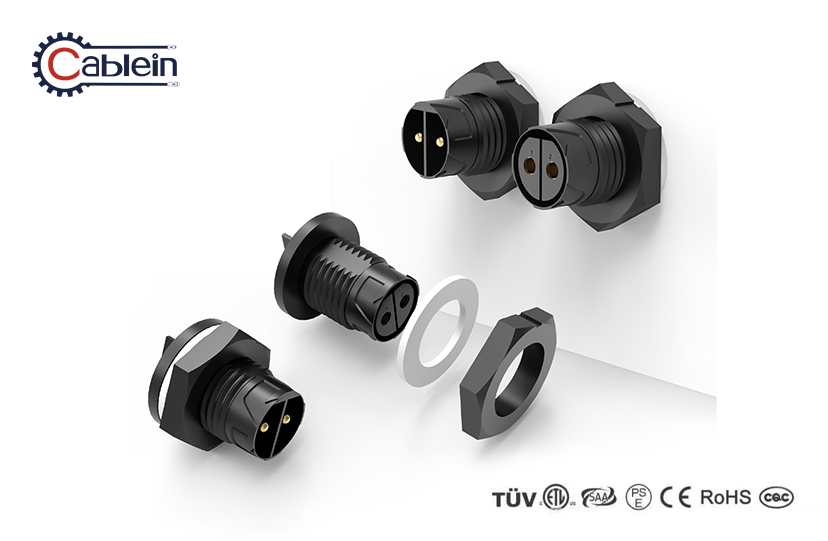
Because of smart engineering choices, these weaknesses are fixed by industrial waterproof USB bulkhead connectors. The flange-mount design makes a physical buffer between the harsh outside world and the delicate electronics inside. The four-hole flange pattern spreads fastening stress evenly across the panel surface, unlike threaded panel bolts that only work when the nuts are tightened. This keeps stress from building up, which can cause plastic enclosures to crack or thin metal panels to bend.
The female-to-female feed-through configuration is useful because it lets standard USB cables connect from both sides of a wall of equipment. Your repair tech can connect a monitoring laptop to the outside without having to open the sealed case. The computer board inside is linked by a normal USB cord. With this design, the enclosure's IP rating stays the same even when it's actively sending data or charging.
Material Science Behind Environmental Protection
The materials used in housing are more important than most people think. UL94-V0 flame-retardant materials are used in the LP24. This is an important requirement for tools that will be used in public or business buildings. If there is an electricity problem, the building puts out the fire itself instead of spreading the flames.
In places with a lot of humidity, electrochemical corrosion can damage brass or tin-plated contacts, but gold-plated contact pins don't get damaged. Exposure to salt air, humidity cycles, and chemicals used in industry all speed up the rusting process. Gold plating creates a steady, low-resistance contact that keeps the electrical performance even after years of being outside.
The waterproof seal is made by the built-in panel gasket. By pressing down between the flange and the panel surface, this elastic part fills in tiny surface flaws that would let water in otherwise. For the gasket to compress properly, the fitting force needs to be controlled. For M3 mounting screws, this is usually between 0.8 and 1.2 N·m. The four-hole design makes this easier by allowing for symmetrical tightening steps.
Technical Specifications That Define Performance Boundaries
How well data can be sent depends on how the internal conductors are designed and how well the protection works. The LP24 works with the USB 3.0 SuperSpeed protocol and has a bandwidth of 5 Gb/s. To do this, you need nine conductors: four for USB 2.0 backward compatibility (power, ground, D+, and D-), plus five more for the SuperSpeed differential pairs and drain wire.
The LP24 Waterproof USB Connector supply of power works within certain limits. At 5V working voltage, the 0.9A current rate gives 4.5 watts, which is enough to keep tablet batteries charged or power low-power accessories. This specification is based on limitations in thermal management. Higher currents make heat, which speeds up the wear on the seal and the contacts. The practical power ceiling is set by the connector's small M24 form factor, which limits its ability to remove heat.
Real-world assembly conditions are taken into account by cable width compatibility from Ø5.0mm to Ø7.0mm. For longer cable runs or higher power needs, heavier gage wires are used in thicker cables. The cable gland can fit this range and keep the IP67/IP68 seal by letting you adjust the compression. One model of connection can work with any wire type, so your installation team doesn't need to carry around a lot of different SKUs.
Comparing Data Transmission Versus Charging Use Cases
When Data Integrity Takes Priority
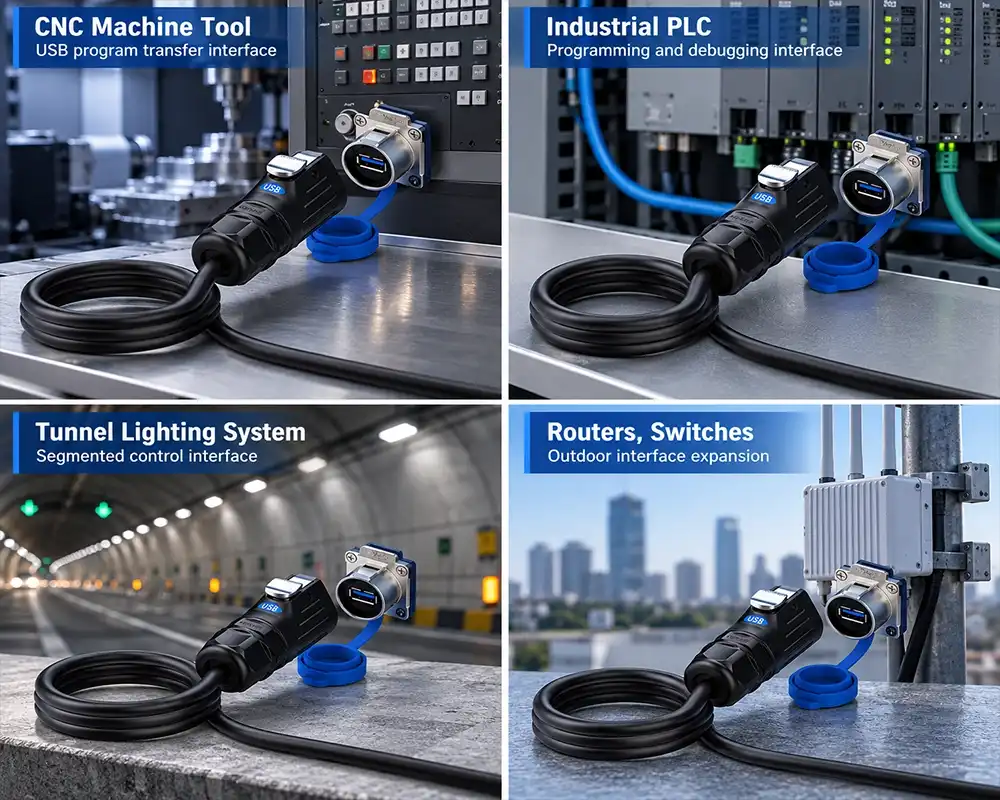
Charging stations for electric cars need to be able to communicate reliably with the charging controller and the vehicle's battery management system. This two-way data flow keeps an eye on cell volts, manages charging rates, and sets up safety shutoffs. Signal corruption leads to safety faults or problems with charging.
Electromagnetic interference is always a problem near high-power charging circuits, but the LP24's protected design keeps it to a minimum. The metal flange keeps the grounding connection strong between the shield and the machine case. In turn, this makes a Faraday cage effect that lowers radio frequency noise from motor controllers and switching power supplies.
Digital signs outside are another data-critical application. Content management systems send thousands of video files to screens that are spread out. According to USB 3.0 speeds, it takes about 13 minutes to send an 8GB 4K movie file. It takes almost two hours to do the same thing over USB 2.0 (480 Mbps). When you multiply this by dozens of screens, you can see that the difference in productivity is big.
Industrial human-machine interfaces (HMIs) that are placed on equipment panels need to have their software updated and troubleshooting data gathered. With USB 3.0 bandwidth, firmware uploads can be done quickly—in five minutes instead of thirty minutes. Transfer speed has a direct effect on manufacturing costs when your production line is down while you wait for a controller update.
Power Delivery Requirements Without Data Complexity
For some uses, charging is necessary but not high-speed data sharing. Panel-mount USB connections can be used to slowly charge outdoor surveillance cameras with built-in batteries. The camera is mounted inside a waterproof case, and the USB port lets you charge it without breaking the case's seal.
Agricultural monitoring stations in the middle of nowhere run on solar power with backup batteries. Field technicians can use the station's battery bank to charge handheld diagnostic tools through a waterproof USB port that is mounted on a panel. Needs for data transfer are still very low. For example, uploading configuration files might be measured in kilobytes instead of gigabytes.
For the ease of technicians, LED display controls often come with USB charging ports. By attaching a waterproof USB connector to the display case, repair workers can charge cell phones or electric drill batteries while they're working. The charging feature is for people, not for running the tools.
The difference changes choices about what to buy. LP24 Waterproof USB Connector bulkhead connectors that are USB 2.0 versions cost less and have easier wiring inside. When the extra data speed doesn't support the higher price, charging-optimized versions give you the environmental protection you need without adding extra technical complexity.
Practical Installation Guidance for Panel-Mount Applications
Preparing Equipment Panels for Flange-Mount Connectors
Long-term reliability depends on how well the panels are prepared. The diameter of the mounting hole has to be exactly the same as the diameter of the connector barrel, which is 24 mm for the LP24 series. When the holes are too big, the panel can bend, which puts stress on the gasket seal. Not-big-enough holes stop connectors from fitting properly.
It matters how thick a panel is. If the flange compresses on thin panels (less than 2 mm), the panels may distort, making the gasket contact uneven. Locally, reinforcement plates or fastening bosses make the panel stiffer. If the panels are too thick (over 4 mm), the adapter barrel might not be able to stick out far enough to join internal parts. Spacer rings make up for the extra thickness.
Seal quality is affected by the finish on the surface around the mounting hole. Paint overspray, burrs, or oxidation can make tiny holes in the surface that water can enter. The best seal touch is on clean, bare metal or smooth plastic. A thin layer of silicone grease on the gasket, but not between the gasket and the panel, improves the initial seal and keeps the gasket from sticking together when the assembly is taken apart later.
Flange Mounting Sequence for Reliable Seals
The four-hole pattern needs to be tightened in a planned way. Cross-pattern patterns keep the seal from distorting. To tighten two screws that are opposite each other, do it one pass at 30% torque, another pass at 60% torque, and the last pass at 100% torque. This lets the gasket flow smoothly into bumps in the surface.
Instead of screw strength, torque specs are based on how much the seal needs to be compressed. When you under-torque, gaps appear, and when you over-torque, the gasket material is pushed past the edge of the flange, where it can get damaged. A measured torque driver or torque-limiting screwdriver makes sure that the results are the same every time.
Equal attention should be paid to cable strain relief. At the point where the wire enters, the IP-rated seal is there. When the cable bends sharply or doesn't have enough support, mechanical stress is transferred to this critical junction. To protect the connection from vibration and pulling forces, put wire clamps or ties within 100 mm of it.
Troubleshooting Common Installation Challenges
Misaligned internal links lead to faults that happen from time to time. With the female-to-female feed-through, you can connect USB cords on both ends. Check the correct insertion depth. For all nine contacts to connect, USB 3.0 connectors need to be fully engaged. At first, partial insertion might work, but over time, the contact becomes less reliable.
Before the fitting is complete, the seal should be checked. A simple test is to spray water from different angles and look inside to see if there is any moisture. This finds mistakes in the installation process before the equipment is turned on. Finding a leak during commissioning is better than finding it after the warranty has expired.
When LP24 Waterproof USB Connector cable diameters don't match, closing problems happen. When a 4.5mm cable is put into a gland that is designed for a 5–7mm cable, it leaves holes for compression. Choose cables that are within the range given, or use reducer plugs to fit wires that are too small.
Procurement Strategies for Waterproof USB Bulkhead Connectors
Evaluating Supplier Capabilities and Support Infrastructure
There are more factors to consider than just unit price when choosing a provider for flange-mount waterproof USB plugs for charging infrastructure or outdoor gear. Lead times affect project schedules. For example, standard products that ship within 7–10 days allow for just-in-time procurement, but custom configurations that take 30 days or more require inventory buffering.
Budgets for prototypes are affected by minimum order numbers. When you order 1,000 units for testing, you tie up operating capital and run the chance of losing them if the design changes. Suppliers who offer trial quantities of 100 to 200 pieces, especially for standard products, lower their financial risk during validation phases.
Having access to technical help is important during merging. Can you get in touch with an applications tech when you need to ask about connection specifications? Does the provider offer 3D CAD models for designing panel cutouts? These services make things easier for your engineering team and shorten the time it takes to make things.
Certification Compliance for North American Markets
Even though CE and RoHS marks meet European standards, North American systems often need more certifications. UL certification for safety at the component level protects against liability claims. Equipment with UL marks needs parts that are recognized by UL, which is a condition that many OEMs will not compromise on.
ISO9001:2015 certification means that the quality of the products is always the same. This standard requires processes to be written down, be able to be tracked, and be improved all the time. When suppliers follow ISO9001, they use systematic defect prevention instead of reactive quality fixes.
Performance claims are backed up by testing documents. For IP67 and IP68 grades, they need to be confirmed by a third-party lab. Get test results that include information about the depth, length, and pressure of the water soaking. It's not a good sign when generic waterproof claims are made without any supporting data.
Conclusion
Which LP24 Waterproof USB Connector to use (data-optimized or charging-focused) depends on how much data you need to send, how much power you need to deliver, and how exposed you are to the environment. The flange-mount construction is better mechanically than threaded designs, especially in places where vibrations are common. Even though IP67 and IP68 grades protect against water getting in, how well connections work in the field depends on how they were installed. Instead of just looking at unit price, it's better for procurement choices to look at seller support infrastructure, certification compliance, and total ownership costs. When hardware engineers specify panel-mount USB interfaces, they improve reliability by carefully choosing connectors that meet the needs of the application.
FAQ
Can waterproof USB bulkhead connectors support simultaneous data transfer and charging?
Yes, USB standards require that data and power be sent over the same link. The nine-pin USB 3.0 configuration of the LP24 connector sends and receives 5V power and 5.0 Gb/s data signals. The 5V current rate of 0.9A is enough to charge mobile devices or keep equipment batteries in good shape while sending diagnostic data or software updates. The flange-mount design keeps the environment sealed while it's being used, unlike temporary waterproof caps that need to be taken off in order to join.
How do IP67 and IP68 ratings differ in practical terms?
IP67 certification means that the product will be safe even if it is submerged in water up to 1 meter deep for 30 minutes. This is enough time for outdoor equipment to be wet from rain or pressure washing. IP68 protects against continuous immersion, which can be anywhere from 1 to 2 meters, depending on the manufacturer's requirements. The IP68 grade is helpful for equipment that is regularly placed in areas that are likely to flood or that is washed with high-pressure water. Both ratings offer full dust protection (the "6" rating), so there are no worries about particle intrusion in industrial settings.
What makes flange mounting superior to threaded panel mounts?
The four-hole flange pattern spreads mechanical stress over a bigger panel area than threaded designs, which focus stress at the places where the threads engage. If you don't use thread-locking solutions or lock nuts, vibration will slowly loosen threaded connections. The flange mounting stops rotation at multiple fastener points, which keeps the gasket compressed and the seal's integrity over the life of the equipment. Also, installation goes faster because tightening the screws requires less precision than making sure the threads engage properly.
Balancing Cost Against Total Ownership Economics
The unit price is one part of the total cost. If a connector costs 15% less but fails 2% of the time in the field, the savings are lost through warranty service and damage to the company's reputation. Figure out the failure costs, such as the cost of rolling the truck, the cost of hiring new workers, and the damage that could happen to the equipment if water gets in.
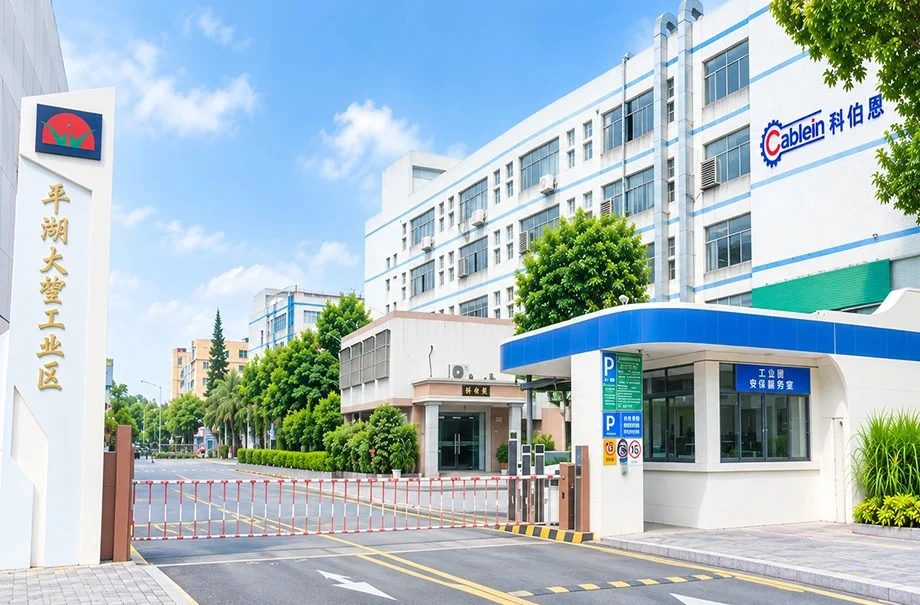
For our standard product line, Cablein Technology keeps more than 10,000 of each item in stock. With this much inventory, your production line won't have to stop while you wait for connectors to arrive. The quality control system in our Shenzhen facility is ISO9001:2015. This makes sure that the flange-mount waterproof USB connector source you work with always does a good job. We designed the LP24 series to meet the unique needs of hardware managers. It can withstand vibrations thanks to its four-hole mounting, temperature changes from -40°C to +85°C, and water immersion tests to prove its IP68 protection. No matter if you need 200 pieces to test a prototype or 5,000 units for a full production run, our open MOQ policies and quick-to-respond technical team will help you with your project from the idea stage to the mass release stage. Contact our engineering team at nick@cableinco.com to talk about custom flange patterns or housing materials that are made to fit your panel's needs. You'll also learn why equipment manufacturers in the charging infrastructure and outdoor display sectors choose Cablein connectors when they need to be reliable.
References
1. International Electrotechnical Commission. (2020). IEC 60529: Degrees of Protection Provided by Enclosures (IP Code). Geneva: IEC Publications.
2. USB Implementers Forum. (2019). Universal Serial Bus 3.2 Specification. Beaverton: USB-IF Technical Documentation.
3. Underwriters Laboratories. (2021). UL 94: Standard for Safety of Flammability of Plastic Materials for Parts in Devices and Appliances. Northbrook: UL Standards & Engagement.
4. Society of Automotive Engineers. (2018). SAE J1772: Electric Vehicle Conductive Charge Coupler. Warrendale: SAE International.
5. International Organization for Standardization. (2015). ISO 9001:2015 Quality Management Systems—Requirements. Geneva: ISO Central Secretariat.
6. National Electrical Manufacturers Association. (2022). NEMA 250: Enclosures for Electrical Equipment (1000 Volts Maximum). Rosslyn: NEMA Publications.