2026 How to Choose a Waterproof USB Connector for Your Devices?
To choose a waterproof USB connector in 2026, start with the operating environment. Then match the IP rating, USB version, current, housing material, and panel size to your device. Verify the test conditions, request datasheets, and test samples before you order in volume. The waterproof usb connectors market keeps attracting outdoor power, lighting, marine, and automation products, so a small pilot order often tells you more than a forecast. I wrote this guide to help product managers compare options step by step, avoid over-specification, and decide with evidence instead of guesswork.
Why Waterproof USB Connectors Matter in 2026
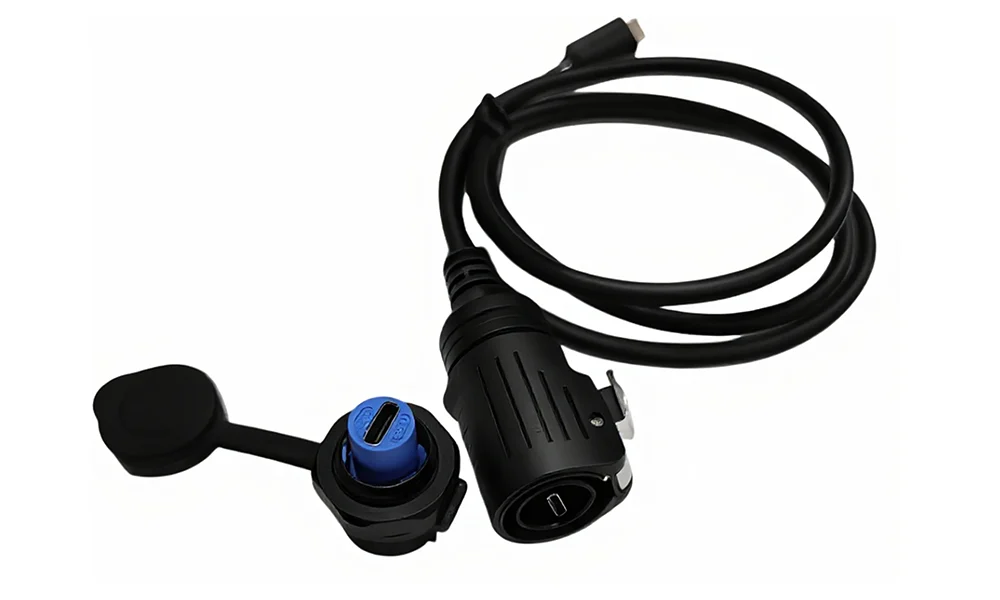
What a Waterproof USB Connector Does
There is usually nothing between the plug and the shell of most USB ports. These holes can be broken by rain, dust, humidity, and salt spray. These things can damage the connections or cause short circuits. As long as the screen shakes, the locking system and O-rings that seal them will stay in place. It looks like a little part that needs to do a big job. If the weather is right, a flashlight, a bike light, or a marine sensor will still work after it rains for the weekend. All of these places use electronics: outside, in cars, on ships, in factories, for security, and in consumer electronics that are connected. Since the amount of touch changes every time, nearby is the first place to look for the right one.
Waterproof Connectors, Sealed Cables, and Dust Caps
In three different ways, you can keep a USB port safe. Each one works in its own way. One part is waterproof and has a locking ring, so the other part is safe when they are joined. A safe USB cable has the plug built right into the wire. It's harder to change that style in the field, but it stops leaks better. When the dust cap is closed, the standard port is safe. But when a wire is put in, there may be a risk. Before I compare choices, I always ask one thing: does the grade apply when the two are mated, when they are not mated with a cap, or only when they are a whole cable assembly? Most of the time, the answer takes half of the list away.
Market Signals Worth Watching
Need study should begin before the first sample is sent out. Then I look at lightning and power goods for outside on Kickstarter to see how they protect their ports by searching for terms like "waterproof USB-C connector" and "IP67 USB port." Rules also say that ports need to look more alike. According to Directive (EU) 2022/2380, most handheld devices now charge through USB-C. From April 28, 2026, this is how all laptops will be charged after that. People who buy things that share a port will want to know how to keep them safe outside. These are only signs, not promises. Teams that try few items, learn quickly, and don't buy a lot of items before getting sales data will do well in the waterproof usb connectors market.
Define Your Requirements Before You Compare Products
Step 1: Define the Application and Environment
Let people see you first. Write down all the things that could happen, like dust, oil, chemicals, salt spray, UV rays, temperature changes, vibrations, and cable movement. A bike computer is always getting wet, muddy, and shaking. A climbing power station, on the other hand, only gets dusty and wet. Next, look at how much power it needs, taking into account the type of USB, data speed, voltage, current, and charging profile. The next thing to do is to write down the details. Some of these are the smallest panel space, the largest mounting hole size, the longest wire length, the largest bend radius, the number of mating cycles, and the direction of the connection. All of this should go on one sheet of paper, in my opinion. Buyers and experts can both look at different quotes at the same time. One that looks good on paper but is hard to set up or fix can't be chosen.
Step 2: Understand Connector Types and Construction
There are USB-A, USB-B, Micro-USB, and USB-C. All four can handle water. You can place something in a panel, inline, on the wall, on a PCB, or with a shielded wire. They have a fixed port that is easy to access by opening the case. When dealing with inline types of wires, there are several ways to do it. Building is just as important as shape. Metal, aluminum, zinc alloy, or stainless steel can all be used to make boxes. People often use rubber or EPDM to cover things. Cord sleeves can be made from PU, TPE, or PVC. Keep an eye on the shielding, O-rings, locking nuts, dust caps, and compression seals as well. These parts work together to determine how long the seal lasts and how well the joint can bend and pull.
Step 3: Choose IP65, IP67, or IP68
IP grades from IEC 60529 let you know how safe something is in a lab. The first number is for things that are solid, like dust. The second one is about water. If it has IP65, dust and water jets won't hurt you. If you get up to one meter of water for thirty minutes, IP67 protects you even more. In settings chosen by the manufacturer, IP68 means that something can be dunked in water for a long time. This means that each item soaks for a different amount of time and at a different depth. Because every grade is different, a bigger number doesn't always mean a better fit. Ask if the grade is good when the two pieces are joined, when the dust cap is put on top, or when the line is put together as a whole. When it comes to chemicals, saltwater, or high-pressure washdown, you shouldn't just trust the code. You should also ask for more test data.
Compare Performance, Applications, and the LP24 Option
Step 4: Compare Electrical and Mechanical Performance
If you seal the electrical or motor parts, they shouldn't work less well. Flash drives and USB 2.0 can both send and receive data. 5 Gbps is the fastest speed for USB 3.0. USB-C adds a design that can be turned around and more power options with USB Type-C and USB Power Delivery. It is important to check the shielding, signal strength, connection length, power capacity, and compatibility of the systems so that they can work together. With a connection that can be taken off, modules can be changed or fixed in the field. Wires that are completely covered are less likely to get wet. Metal makes things safer and stronger. On the other hand, plastic housings are lighter and cost less. I believe you should choose based on the part. For a tough power station, metal might be better than plastic for a small, light hand-held light.
Step 5: Match the Connector to Your Application
Different fields put different amounts of stress on them to link them together. Things that go outside need to be able to stand up to UV light, be easy to put together, and keep their shape. Certain parts of a car need to be able to stay together, handle bumps, work in different temperatures, and not leak fluids. Electricity, coolants, cleaning products, and oil are some of the things that can hurt industrial automation equipment. It's important to test marine gear in salt water and when it's underwater. CCTV cameras need power, data, and wires that are small enough to fit inside small cases in order to work. Check how well they seal after being plugged in and out many times, how well they hold up in the sun, and how well they let go of strain when the cord is pulled. This is important for outdoor lighting, camping power, and cycling gear. This is where most general parts go wrong, so test each one in the real world.
LP24 Waterproof USB Connector at a Glance
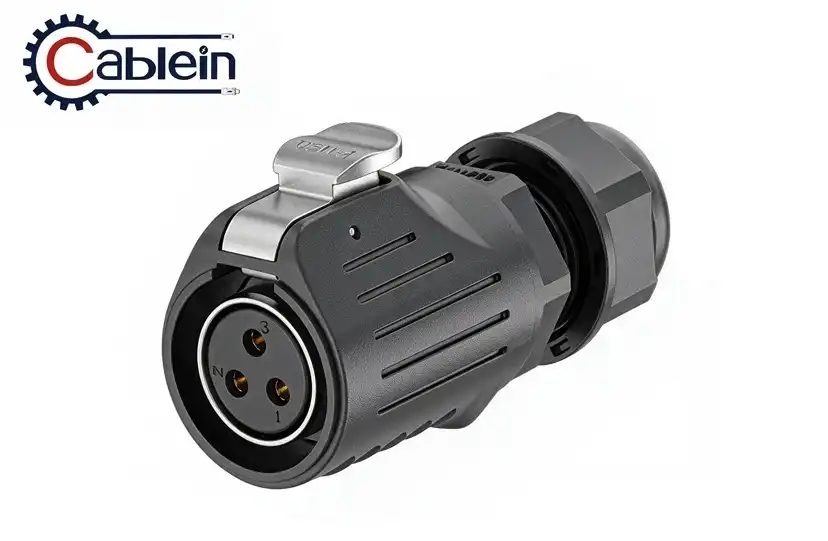
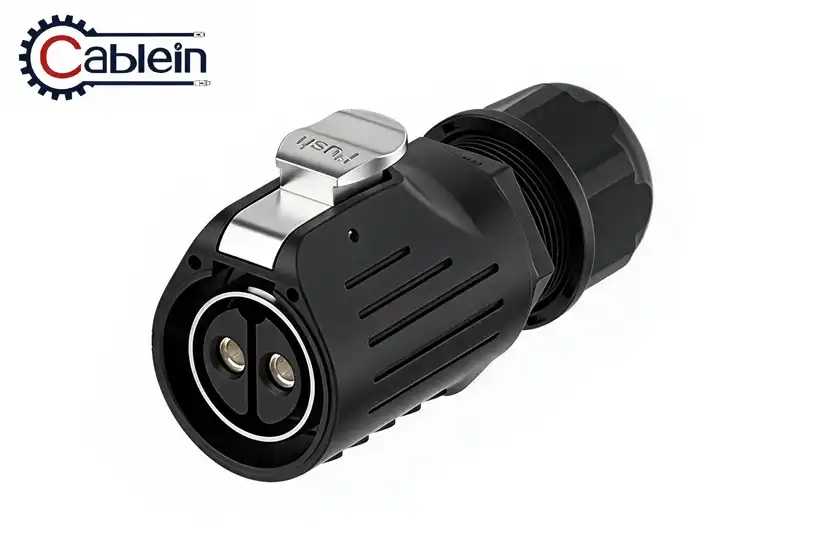
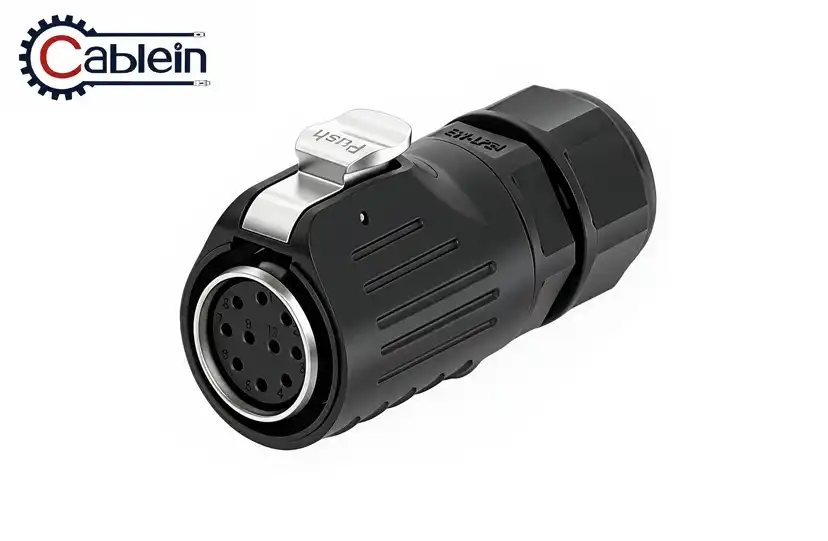
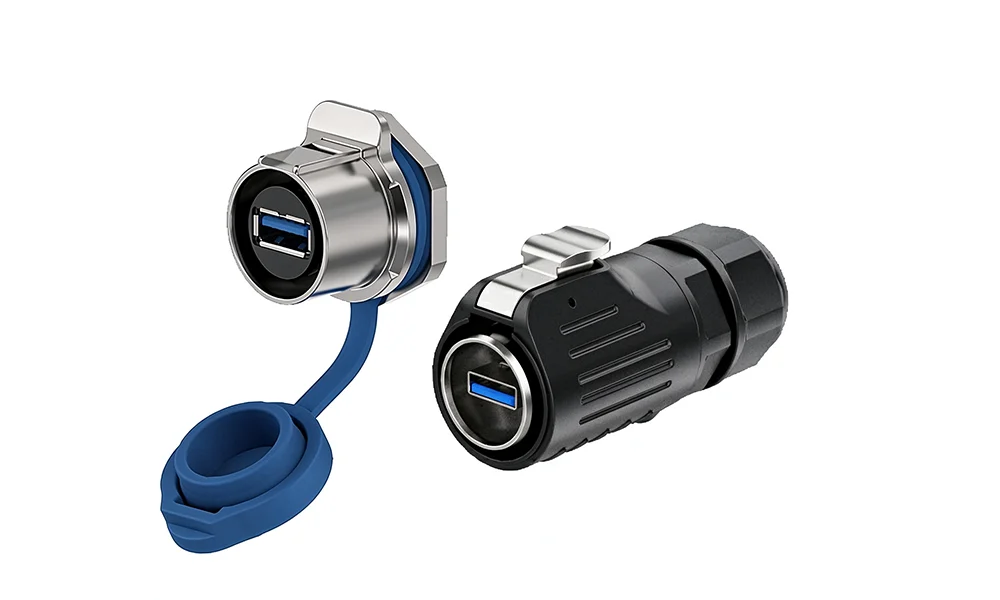
This is the first thing I would check on the LP24 Waterproof USB Connector.
- Sealing and locking: The LP24 is part of the LP line. It has an attachment hole that is 24 mm wide and a 1/4 bayonet that locks without any tools. It's made to be simple to put together and not shake. It carries an IP67 or IP68 seal rating. The company that made it will give you the IP68 depth and length for each version.
- Electrical performance: There are different kinds that work with USB 2.0 and USB 3.0. USB 3.0 models can handle data rates of up to 5 Gbps. It can handle 1.5 A to 5 A of current, and the resistance between the insulation and the contact is less than 30 mΩ. The whole metal shell has EMI shielding that keeps signals from getting messed up.
- Materials and durability: The shells are made of zinc alloy or reinforced PBT, and they are UL94-V0-rated for fire safety. The temperature can range from -40°C to +80°C. Mechanical tests have shown that it can mate more than 500 times. Quality checks also include IPX7 or IPX8 immersion, salt spray for 48 to 96 hours, high-frequency vibration, and insulation withstand voltage tests.
Check these specs to see if the LP24 will fit in your case and be useful. Make sure you get the right one before you place your order.
Build a Selection Matrix and Check Supplier Capability
Step 6: Build a Practical Selection Matrix
You can think of something, and a grid will turn it into a number. When choosing a product, you should think about how well it protects the environment, its USB version, how well it works electrically, how long it lasts mechanically, how well it fits on a wall, the temperature range, its certifications, its ability to be customized, its lead time, how stable its supply is, and its overall cost. They should be put in columns, and the products should be put in rows. Weights should be given based on what they are used for. When used outside, the price per unit might not matter as much as how well it seals. The minimum order quantity (MOQ), sample availability, production wait time, guarantee terms, and the number of items that will be made are all useful fields that should be added. There is less personal bias on the team when two or three people score. At the end, you can make this a clear and strong suggestion to a founder, investor, or client.
Step 7: Verify Quality, Certifications, and Manufacturing Capability
The only thing that matters is the paperwork that supports a supplier's claim. If a company makes waterproof USB ports, they should be able to show you their datasheets, 3D models, electrical specs, IP test conditions, reliability data, material statements, and quality control records. You might also need paperwork about RoHS, REACH, ISO 9001, UL, EMC, or fire safety, depending on the waterproof usb connectors market you're in. It's important to read the certification scope carefully, since a document might only cover one model, cable, or material. Founded in 2017 in Longgang, Shenzhen, Cablein runs a 6,000 ㎡ facility where over 200 workers work. You can choose between ISO 9001:2015, ETL, PSE, SAA, CQC, CE, RoHS, REACH, TUV, and so on for each line of products. Check them out to see which ones are right for the type you picked.
Step 8: Understand Pricing, Supply, and Market Trends
The price of something depends on its IP rating, USB version, housing material, cable length, contact plating, certification needs, tooling, testing, order volume, packaging, and how it is customized. Small power and data connections are used in marine gear, surveillance gear, linked cars, outdoor electronics, and goods that use renewable energy. Each day more and more people want custom cable assemblies and waterproof USB-C connectors. People who buy things now want to know more about supply consistency, following the rules, and being able to keep track of goods. I look at the waterproof USB connectors market by how much it costs as a whole when I'm shopping for something new. Lots of things are important, like how likely it is to break, how much it costs to install and repair, how long you have to wait, how the process works, and how long the service lasts. The price will show up at both pilot size and full scale if you get a quote for different amounts.
Install, Validate, and Order Without Overstocking
Step 9: Install and Validate Correctly
If the connection isn't set up right, it doesn't matter how well it works. Before putting it together, check the direction, the width of the panel, the thickness of the enclosure, the wire's diameter, the bend radius, the state of the seal, and the mounting hardware. Make sure the nuts or couplings are tight enough so that the gasket doesn't get crushed, and clean the surfaces that seal. Hold the connection in place so that the wire doesn't pull, twist, or shake it. It's important to make sure that there is continuity, data sharing, charging speed, proper mating, and environmental safety after setting everything up. For some things, you may need to test them over and over again, underwater, in the dark, while shaking, at different temperatures, for rust, and so on. Labs that work in salty places often use a method called ASTM B117, which is a salt spray method.
Common Mistakes to Avoid
Many of the same mistakes are being made over and over again in different projects. People pick an IP number without seeing how long or hard the test is. The seal doesn't work, but the unit price that costs the least is picked. They don't care about how fast the USB is or how much current it needs. They also don't care about vibration or cable pulling. A lot of people think that a connector is waterproof even if it's not paired or only has a dust cap on it. But this doesn't always happen. Show that what the seller says is true with datasheets, test results, samples, and your own tests in the real world. Take a look at the link, the wires, the case, the seal, and how everything fits together. A small amount of money spent on validation is worth a lot more than failures in the field, redesigns, or service calls.
A Low-Risk Sample-to-Volume Workflow
A staged plan can help teams that don't have a set amount of money to spend. To begin, you need to make a list of the interface, the IP target, the materials, the wire, the temperature range, the mounting measurements, and the estimated volume. Second, get quotes, pictures, test results, and examples from sources you can trust. Third, make sure it works underwater, with electricity, and passes the mechanical life tests. Then, make a small amount to try. Fourth, before you start making more, talk about the price range, tools, wait time, and promise. The MOQ stands for "minimum order quantity." Cablein offers private molds, OEM/ODM customization, custom cable assemblies, and expert support 24 hours a day, seven days a week. In stock at all times are more than 10,000 of each standard item. They can be sent out in 7–10 days. You pick when your orders will come.
Conclusion
It's important to make sure that the waterproof USB link specs that have been tried work in real life in the year 2026. An IP grade is useful once you know the test depth, length, and whether the pipe is mated or capped. It tells you where to start from the setting. Then, check the part's USB type, current, housing material, mounting style, and connection design to see if it works well physically and electrically. To make sure the comparison is fair, we use a weighted selection grid. Sample results, seller datasheets, and certification scope all back up what the price says. Fix any issues before you make large orders if you properly set it up and try it. The EU's USB-C rules, search trends, and the flow of money are all signs that people are paying attention to the waterproof usb connectors market, but they aren't the same as small-batch proof. Think about what you want to do by adding up all the costs, such as the chance of failing and the cost of starting over.
FAQ
1. Is IP68 always better than IP67?
Not all the time. If you are exposed to water up to 1 meter for 30 minutes, IP67 will protect you. The depth and length of time for IP68 are set by the company that makes the jacket. Choose the level of exposure that makes sense for you, and then find out how the test was done.
2. Can a waterproof USB connector support USB 3.0 speeds?
Some can, yes. Some types of LP24 have good pins and insulation inside that allow up to 5 Gbps of data speed. Before you order, make sure you know the exact version.
3. How can I test demand without overstocking?
Pay attention to search trends and projects that use crowdsourcing. Then, ask for some samples and a small amount to test. Right away, ask the seller about the MOQ and some terms early. Then, don't do anything major until you can show that you've made sales and the sales data supports it.
4. Which certifications should I request?
For ISO 9001, RoHS, and REACH, you should ask for proof. Also, if your market needs them, ask for ETL, UL, or CE records. In every file, make sure to talk about the type you have.
Start Your Waterproof USB Connectors Market Project with Cablein
Cablein makes the best waterproof USB connectors on the market. With an IP68 rating, it is waterproof and has more than 30 utility model patents. It also has a 6,000 ㎡ facility in Shenzhen. We have over 10,000 of each item in stock, and it ships within 7–10 days. We also take requests from OEM and ODM companies. Send an email to nick@cableinco.com with a sample plan, the type of waterproof usb connectors market you want to use, and the IP target you want to connect to.
References
1. International Electrotechnical Commission, IEC 60529: Degrees of Protection Provided by Enclosures (IP Code), 2013
2. USB Implementers Forum, USB Type-C Cable and Connector Specification, Release 2.1, 2021
3. ASTM International, ASTM B117: Standard Practice for Operating Salt Spray (Fog) Apparatus, 2019
4. European Parliament and Council of the European Union, Directive (EU) 2022/2380 on Radio Equipment and the Common Charger, 2022
5. European Parliament and Council of the European Union, Directive 2011/65/EU on the Restriction of Hazardous Substances (RoHS), 2011
6. European Parliament and Council of the European Union, Regulation (EC) No 1907/2006 on Registration, Evaluation, Authorisation and Restriction of Chemicals (REACH), 2006