How to Choose Between Solder and Crimp Wire-to-Wire Waterproof Connectors
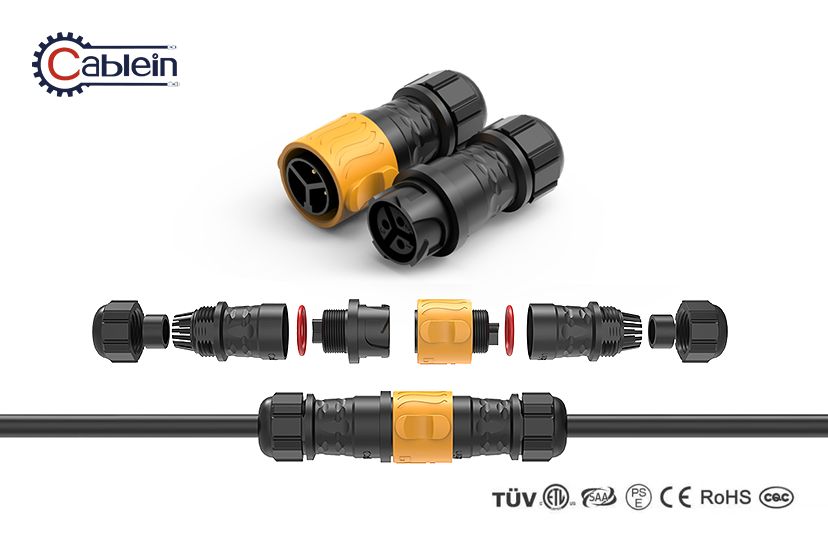
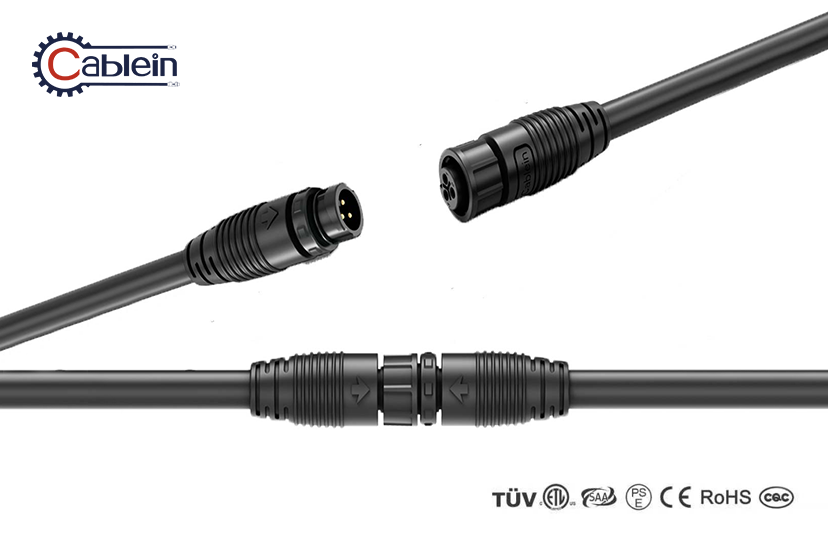
Choosing between solder and crimp termination for waterproof connectors is one of the most consequential decisions in outdoor electrical system design. The LP20 solder type wire-to-wire waterproof connector from Cablein Technology has emerged as a preferred solution for procurement managers and field engineers who demand low contact resistance, IP68 sealing integrity, and 2000+ mating cycles in a single compact package. This guide walks through the core technical distinctions, application criteria, and sourcing considerations that separate a reliable long-term connector from a costly field failure.

Understanding Wire-to-Wire Waterproof Connectors
Wire-to-wire waterproof connections make electrical paths that are completely sealed between two cable runs—no PCB or panel—which is why they are so important in mobile equipment, outdoor lighting systems, and spread sensor networks. The hardest thing for them is keeping the electricity flowing and keeping out the outside world at the same time, often for thousands of connect-disconnect cycles.
How Sealing Architecture Differs Across Connector Families
There are different ways to seal things on the market. Some brands, like the Deutsch DT Series and the TE Connectivity CPC Series, use individually sealed holes around each contact. Other brands, like the LP20, use a compressed silicone O-ring and a cable-entry gland on the mating face of their circular bayonet-style connections. The bayonet method makes assembly easier in the field and provides reliable IP67/IP68 performance without the need for special tools. IEC 60529 says that for an IP68 rating, the device must be submerged in water for more than one meter for a long time. The LP20 meets this standard by being tested for vacuum leaks and water immersion at the factory level.
Key Differences Between Solder and Crimp Wire-to-Wire Waterproof Connectors
The method of termination you pick affects the resistance of the joints, the amount of vibration that can be handled, the time it takes to fix problems, and the total cost of installation.
Crimp termination cold-welds a contact onto a stripped conductor by controlling how much the conductor bends. It can be done quickly on an automatic line and doesn't need heat. Its weakness is that it is easily damaged by choosing the wrong die or having the wrong number of wire strands. A bad crimp increases contact resistance and makes a stress concentration point that wears out when the cable vibrates.
Metallurgically, a solder termination joins the conductor and the contact. When done right, at the suggested 380 °C ± 10 °C for no more than three seconds per pin, the joint has contact resistance below 2.5 mΩ, which is much lower than a normal crimp. Pull-out strength is also higher than what mechanical displacement can give you by itself. The price to pay is process discipline: field failures most often happen at cold solder joints caused by not enough dwell time, and these need to be fixed by trained technicians.
It's important to know how the two methods stack up when used outside or in a rental space:
- Contact resistance: The LP20 solder type wire-to-wire waterproof connector's solder points have a resistance of less than 2.5 mΩ, which lowers the I²R heating losses during high-current LED power runs. Crimp contacts from similar 20 mm shell connectors usually measure 3–5 mΩ, but this can change based on the quality of the die and how well the wire is prepared.
- Vibration endurance: Metallurgical bonding in solder connections keeps the connection strong even when it's vibrating all the time. This is very important for stage lighting beams and mobile generator boxes that are often hit by mechanical shocks.
- Repair in the field: Crimp connectors can be re-terminated with a hand tool, but solder connectors need a portable iron and flux, which can be done, but it takes more time to get ready during live event setup.
- Waterproof consistency: The LP20 solder version has a compression cable gland that seals around the cable jacket no matter what type of termination is used. This means that the waterproof performance depends on the housing seal and not the joint method.
The total cost of ownership is made up of these differences. A cheaper crimp connection that needs two service calls during the rental season for rain events usually costs more than a solder-terminated option that doesn't need any backups.
How to Choose the Right Wire-to-Wire Waterproof Connector for Your Application?
To find the right connection for a job, you need to know four things: the number of predicted mating cycles, the wire gauge range, the rated current, and the ingress protection requirement.
Outdoor LED displays and landscape lighting in coastal areas of the United States must meet IP68 plus 72-hour salt spray compliance. The LP20 has a PA66 nylon or zinc alloy housing that doesn't break down in UV light or rust from salt. A single family of connectors with 2 to 12 pins makes your inventory and your techs' memory more consistent. This is especially helpful for stage and rental situations where 2P to 4P configurations handle 20 A power feeds and 8P to 12P configurations carry DMX or data signals.
When looking for suppliers, give more weight to those who offer TUV and CE certificates along with ISO 9001:2015 paperwork. These qualifications are not just empty marketing claims; they stand for verified production methods and trackable batch records that will protect you if a customer in Europe or North America asks for proof of compliance.
Step-by-Step Guide to Using LP20 Solder Type Waterproof Connectors
The most important factor in how well a solder connection works is how well it is put together. Following a strict process gets rid of the cold-joint failures that give solder termination a bad name that it doesn't deserve.
Take off the jacket of the cable so that 6–8 mm of each conductor strand can be seen. Each strand should have a small layer of rosin-core flux put on it before it is put into the solder cup. Heat your iron to 380 °C and only touch each pin for three seconds at a time. The LP20's PBT insulator can handle short periods of heat but breaks down after longer periods of contact. Once the solder runs and coats the inside of the cup, take the iron away and hold the wire still for five seconds. This will let the joint harden without any cold-flow warping.
Before terminating, slide the waterproof cable gland (tail nut) over the jacket of the cable. Then, tighten it by hand once all the pins are in place. This squeezes the rubber seal inside the jacket, making the barrier against water that the IP68 grade counts on. Before putting the unit into action, make sure there is continuity and a 500 V insulation resistance test.
Benefits of Choosing LP20 Solder Type Waterproof Connectors in Industrial Procurement
When buying something from a business to business (B2B), the LP20 solder type wire-to-wire waterproof connector has clear benefits across a wide range of factors.
These are the main reasons why this link is a good choice for people who buy a lot of them:
- Extended service life: The LP20 solder type wire-to-wire waterproof connector has been tested to mate over 2,000 times with gold-plated copper alloy contacts, making it last longer than connectors rated for 500 rounds in rental inventory rotation, which means you'll spend less on replacements every year.
- Snap-lock bayonet coupling: The quarter-turn locking system of the snap-lock bayonet coupling can be used with one hand and makes an audible click. This cuts the time needed to install each link in truss and festoon rigging by about 40% compared to threaded coupling.
- Broad certification coverage: Paperwork with TUV, CE, and ISO 9001:2015 marks meets the requirements for submitting projects in Europe and North America, so there is no need for extra testing by a third party.
- Customization depth: You can change the number of pins from 2 to 12, the housing from PA66 nylon or zinc alloy, the length of the cable, and the color of the jacket. If you want to keep standard stock, the MOQ is 100 to 200 pieces. OEM private-mold programs start when you need more than 50,000 pieces a year.
These benefits directly lead to fewer failures in the field, less replacement inventory, and faster project completion. Both procurement managers and construction teams see these benefits as good for business.
Conclusion
Crimp termination is better for vibration resistance and faster output on automatic lines, while solder termination is better for contact resistance. The best choice depends on how strict your process is, where it will be deployed, and how much you are willing to spend over its entire life. The LP20 solder type wire-to-wire waterproof connector is a well-designed, certified solution that has been tested and proven to work in outdoor LED, stage lighting, and coastal industrial settings where dependability over thousands of cycles is a must. Before agreeing to a full procurement run, you should compare both termination methods based on your individual working conditions and then ask for samples.
FAQ
What wire gauges does the LP20 solder cup accept?
The 2-pin and 3-pin versions work with wires that are 2.5 to 4.0 mm² (12 to 14 AWG) and can handle 20 A power runs. Higher pin-count models (9–12 pin) can handle signal and data circuits with a size of 0.34–0.75 mm² (22–24 AWG). Before removing wire, you should always check the datasheet for the pin count you want.
Can the LP20 handle saltwater environments?
Yes. The version with the zinc alloy housing has passed a neutral salt spray test for 72 hours, and the gold-plated contacts don't oxidize in humid coastal areas. The rubber O-ring with an IP68 rating keeps its seal even after being submerged for a long time.
How does solder waterproof performance compare to crimp?
The housing O-ring and cable gland seal are what keep the LP20 system waterproof, not the termination joint itself. When the gland is properly torqued, both the solder and crimp types get the same IP67/IP68 grade. The solder joint helps keep the electricity working, but it doesn't keep water out.
Is the LP20 compatible with other LP-series shell sizes?
Not at all. The LP20 number only refers to the 20 mm shell width. It can't be used with plugs from the LP12, LP16, or LP24 lines. In installations with more than one circuit, this keyed standardization stops mismating.
Ready to Source Reliable Waterproof Connectors? Contact Cablein
Providers of approved LP20 solder type wire-to-wire waterproof connectors that ship standard stock in 7–10 days can help you improve your next project. Cablein Technology has connectors that are TUV/CE-certified, can be customized for OEMs from 2 to 12 pins, and comes with dedicated technical support. You can look through the whole catalog at connectorswaterproof.com, or you can email your requirements to nick@cableinco.com to get samples or a quote for a large order.
References
1. Whitmore, J. (2021). Waterproof Connector Selection for Industrial Applications. Connector Industry Magazine.
2. International Electrotechnical Commission. (2013). IEC 60529: Degrees of Protection Provided by Enclosures (IP Code). IEC.
3. Mroczkowski, R. S. (2019). Electronic Connector Handbook: Technology and Applications. McGraw-Hill.
4. Underwriters Laboratories. (2022). UL Standard for Safety: Wire Connectors (UL 486A-486B). UL Standards.
5. NASA. (2016). Workmanship Standards for Crimping, Interconnecting Cables, Harnesses, and Wiring (NASA-STD-8739.4). NASA Technical Standards.
6. TE Connectivity. (2023). Waterproof Connector Design Guide for Outdoor and Marine Applications. TE Connectivity Technical Library.