LP24 Fiber Optic Waterproof Connector for Outdoor Surveillance Systems: Applications and Benefits
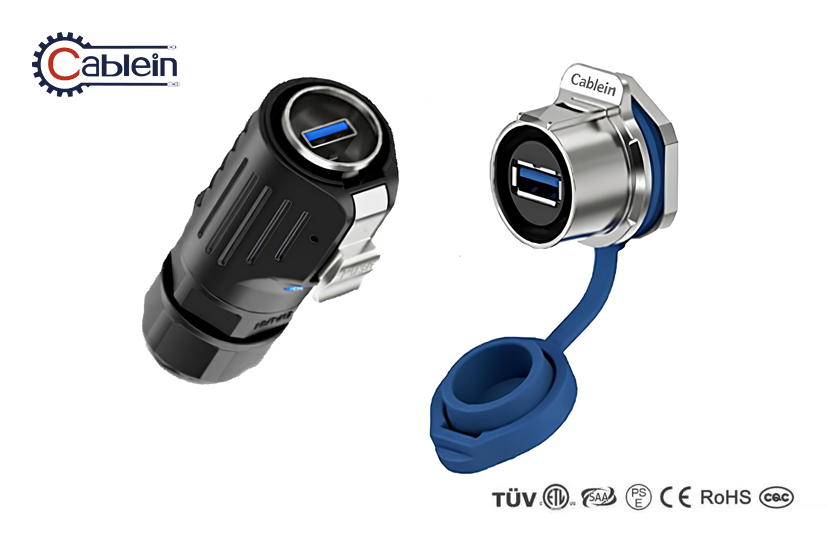
When outdoor surveillance projects demand uninterrupted data transmission through sealed equipment enclosures, the LP24 Fiber Optic waterproof connector stands as an enterprise-grade solution engineered specifically for harsh environments. This panel-mount feed-through connector delivers exceptional optical performance with insertion loss ≤0.35dB and return loss ≥50dB, while maintaining IP67/IP68-rated protection against moisture, dust, and temperature extremes from -40℃ to +105℃. Its precision-engineered design addresses critical challenges faced by photovoltaic monitoring stations, energy storage systems, and outdoor security infrastructures where reliability isn't negotiable.
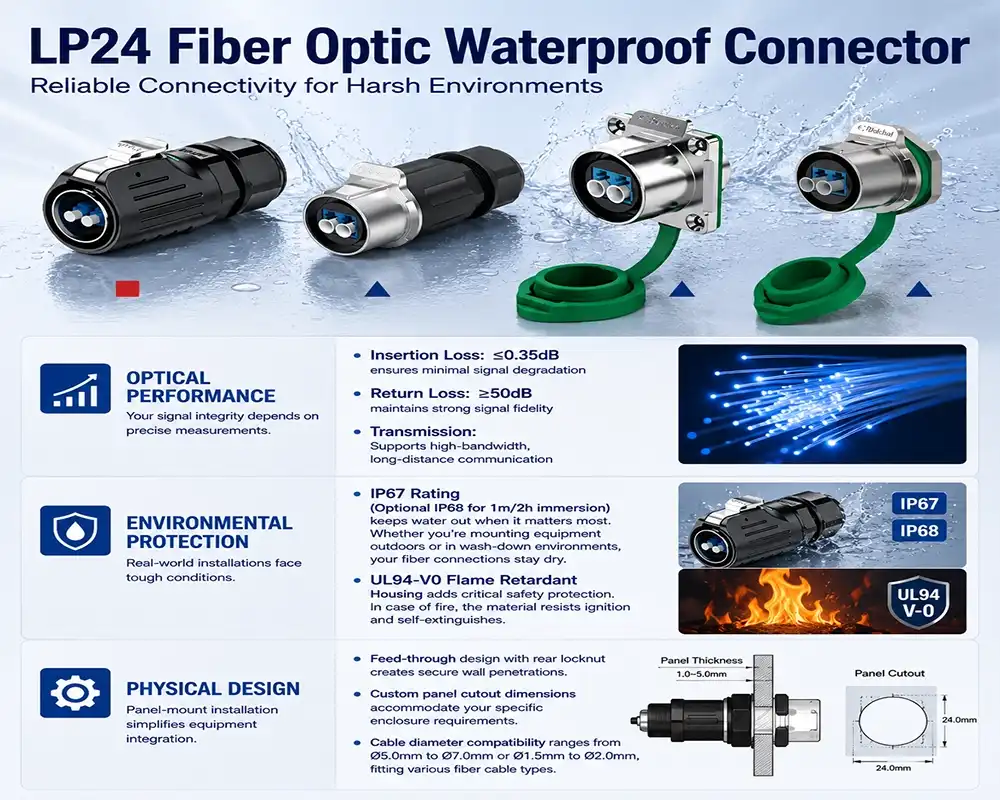
Understanding the LP24 Fiber Optic Waterproof Connector
What Makes This Connector Essential for Outdoor Deployments?
Outdoor surveillance systems are always being tested by the elements. Every day, rain, dust storms, freezing weather, and sweltering heat all pose threats to the security of data. When moisture gets into enclosures or when changes in temperature wear down materials, traditional fiber connections don't work. Cablein Technology's waterproof fiber optic panel connector locks these holes up with smart engineering that protects delicate optical interfaces while keeping the signal's quality.
Core Technical Principles Behind Reliable Performance
The connection uses a female-to-female feed-through design that lets high-bandwidth optical signals pass right through the walls of equipment panels. This pure optical route keeps data integrity over long distances, unlike electrical connections that change signals and add possible interference points. The precise alignment system makes sure that the fiber cores are always perfectly positioned within micrometers. This stops costly misalignments that happen during field setups. With this design, you don't need to do fusion joining or use big outdoor junction boxes. This makes installation easier and cuts down on failure points.
Key Features That Ensure Mission-Critical Reliability
The connector's main strength is that it seals against the environment. The IP67 grade ensures protection against dust entering and short-term immersion in water. The optional IP68 certification adds protection against constant immersion at a depth of 1 meter for two hours. This dual-rating feature gives project managers the freedom to choose the right level of protection based on the risks that are specific to each site.
Choice of material has a direct effect on how long something lasts in a corrosive environment. The UL94-V0 flame-retardant shell is made of high-performance PBT plastic that doesn't break down when exposed to UV light and stays structurally sound from -40°C to +105°C. Chrome-plated zinc alloy options offer better EMI protection for sites close to high-power electrical equipment. The rear locknut installation makes compression seals at panel penetration points that stop water from moving along the cable jackets.
Mechanical durability goes beyond 500 mating cycles, supporting installations where equipment maintenance needs to disengage the connector every so often. The snap-lock coupling device lets you feel and hear that it's properly engaged, which lowers the chance of human mistake during field assembly. Both tight-buffered indoor lines and ruggedized outdoor-rated fiber can be used with cable diameters ranging from Ø1.5mm to Ø7.0mm.
Applications of LP24 Fiber Optic Waterproof Connectors in Outdoor Surveillance Systems
Meeting Surveillance Infrastructure Demands
These days, security tracking networks send high-definition video streams that need a lot of data and no packet loss. Standard commercial-grade connections can't handle the harsh weather that camera arrays placed across solar farms, wind farms, and other important infrastructure places have to deal with. Integrators of surveillance systems need solutions that keep optical performance specs the same over long runs without the need for field service.
Photovoltaic and Energy Storage Monitoring Networks
Large areas are used for solar power plants, and centralized monitoring systems gather information about their performance from battery management systems and distributed inverters. These communication links go through open areas where the cable runs are in full sunlight, where temperatures change from nite to day, and where they are sometimes submerged when it rains a lot. Project managers at renewable energy sites say that LP24 Fiber Optic Waterproof Connector heat-shrink tubing or silicone caulk-sealed standard LC connections break down after 18 months, needing to be replaced at a high cost and causing system downtime.
On a 200MW solar project in the Middle East, a top photovoltaic EPC provider used waterproof panel mount connectors. The project requirements said that the data links had to be able to work in the desert, where temperatures can reach 52°F and sandstorms can bring in rough particles. After 36 months of nonstop use, tests of optical performance showed that insertion loss values stayed within 0.05dB of the first readings. There were no failures of any of the 847 units that were installed, so the cash for planned upkeep that had been set aside to repair the connectors was no longer needed.
Coastal and Offshore Security Systems
Maritime surveillance stations have to deal with salt spray that is bad for them, high humidity, and being in direct contact with water during storm surges. For offshore wind turbine tracking systems and port security camera networks to work, the fiber links need to be able to withstand galvanic corrosion and keep the signal's integrity. In marine environments, standard connectors' metal will rust and their gaskets will break down within months.
A coastal port authority that uses perimeter surveillance to protect important equipment replaced copper-based Ethernet connections that were breaking with fiber optic links that ended in waterproof feedthrough plugs. The structure that was resistant to salt spray and the hermetic sealing got rid of the moisture-related problems that used to require monthly service calls. The quality of the surveillance video got better because the optical links had a steady bandwidth that wasn't affected by electromagnetic interference from equipment that moves cargo.
Smart City Infrastructure Integration
Standardized connections that make installation easier in a variety of mounting conditions are needed for urban video surveillance networks that are connected to traffic management systems and public safety platforms. Outdoor equipment cabinets that hold network switches and video storage arrays need clean entry points for cables that meet environmental standards. Panel-mount fiber connectors let makers make sealed enclosures with bulkhead connections already installed. This cuts down on work that needs to be done in the field and ensures uniform waterproof performance.
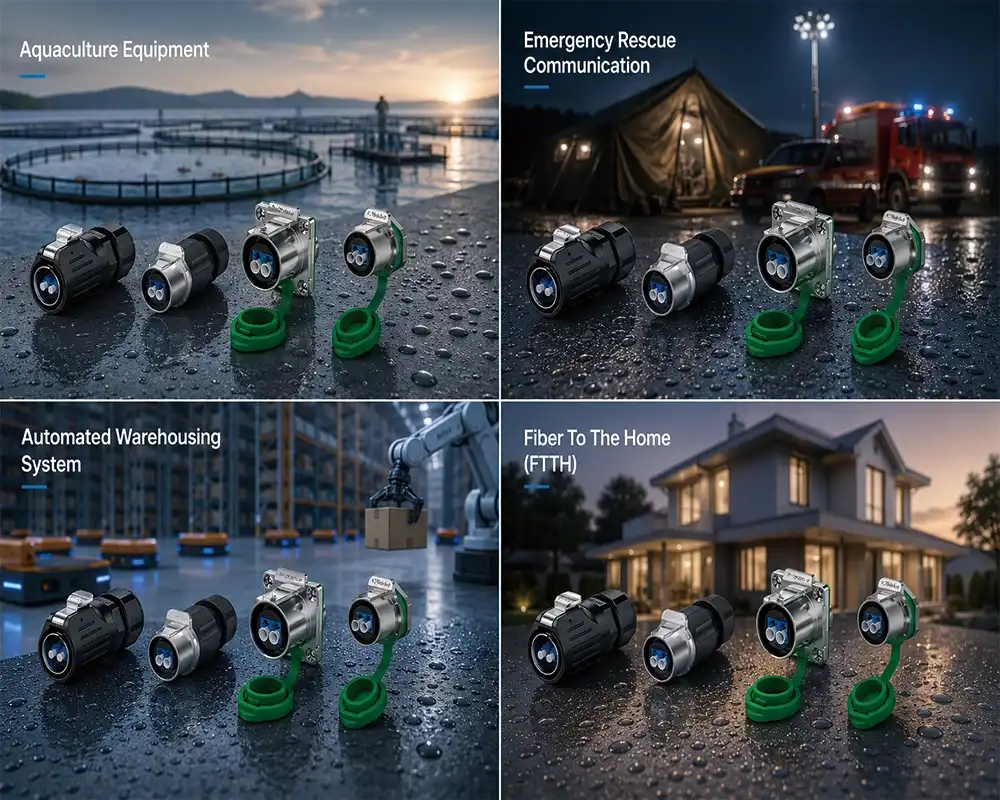
Benefits of Using LP24 Fiber Optic Waterproof Connectors for Procurement Managers and Engineers
Superior Environmental Protection Compared to Standard Solutions
Traditional LC and SC interfaces work well in controlled indoor settings but aren't waterproof by design. Field technicians usually use heat-shrink boots or self-amalgamating tape to wrap connections, which makes the protection uneven and dependent on the quality of the work. These makeshift ways rarely get accurate IP ratings, and they often break when heated and cooled many times, because different materials expand and contract at different rates.
Engineered waterproof solutions use precision-molded gaskets and compression fittings to seal the connector body directly. This factory-controlled closing process makes sure that every unit has the same IP67/IP68 performance. This gets rid of the differences that come from using different methods in the field. Material compatibility testing makes sure that seals don't break when they get cold or soften when they get hot. This keeps their elasticity and closing force over the stated temperature range.
Simplified Installation and Reduced Labor Costs
To do on-site fusion splicing, you need special tools, trained technicians, and a lot of time to prepare the fiber ends, line up the cores, make the splice, and cover the joint with heat-shrink sleeves. Each splice point adds a new way for things to go wrong and makes the project take longer. Panel connections have a snap-lock coupling device that lets general electrical contractors install them even if they don't have fiber optic certification. This increases the pool of workers and lowers hourly rates.
Field-replaceable LP24 Fiber Optic Waterproof Connector design lets you switch out broken connectors without having to re-terminate the cable. When building equipment accidentally damages a connector that is already in place, repair teams can quickly and easily replace the failed unit by disconnecting the bayonet lock and removing it. In spliced connections, damage means cutting the wire, re-splicing it, and re-sealing the whole joint assembly. This modularity is very different from that.
Long-Term Cost Advantages Through Reliability
The total cost of ownership, not just the initial purchase price, must be taken into account in procurement analysis. Failures of connectors in remote installations lead to dispatch fees, equipment rental fees, and lost operational time that quickly outweigh any savings from buying cheaper parts. Connection problems can cause energy tracking systems to lose data, which means they might miss important performance issues and lose money from output.
The strong design can handle mechanical stress from cables moving because of wind loading and temperature changes. Precision-engineered parts keep their alignment over more than 500 mating cycles, which supports installations where seasonal maintenance needs to disconnect equipment from time to time. Choosing materials that don't break down in UV light, ozone, or chemicals increases the service life beyond the normal 5-year project guarantee term.
There are ways to buy in bulk from well-known companies that offer big discounts that make project costs better for large-scale deployments. Suppliers who have been certified with ISO9001:2015 have quality control systems that make sure stability from batch to batch. This lowers the risk of standard drift, which happens when different lots of connectors don't work the same way.
Comparing LP24 Fiber Optic Waterproof Connector with Other Industry Solutions
Technical Specification Differences That Impact Performance
In the lab, standard LC duplex connectors have an insertion loss of about 0.3dB, but they don't protect against the environment. When aftermarket weatherproofing accessories are installed in the field, total insertion loss often rises to 0.5 to 0.8dB because of more interfaces and the chance of being out of alignment. Panel-mount waterproof connectors keep optical interfaces that are factory-aligned and keep the 0.35dB insertion loss standard. They also protect against the environment without affecting performance.
In high-bandwidth situations, data quality is directly affected by how well return loss works. For UPC connections, the precision ceramic ferrules and optimized polish geometry achieve return loss of less than 50dB, and for APC connections, it is less than 60dB. This better return loss cuts down on back-reflections that can lower the quality of transmission in long-haul single-mode installations that are common in monitoring networks.
Material and Design Advantages for Outdoor Resilience
Some generic waterproof connectors have rubber gaskets and plastic housings that break down when exposed to UV light or when temperatures get too high or too low. When the temperature ranges from -40°C to +105°C, high-performance PBT plastic formulas keep their shape and mechanical power. The UL94-V0 flame grade is important for making sure that setups in building-mounted equipment enclosures meet important fire safety standards.
For sites near radio stations, industrial motor controls, or high-voltage switchgear, chrome-plated zinc alloy housing choices offer better EMI shielding. This electromagnetic compatibility keeps the quality of the optical signal from dropping in places with a lot of electrical noise, which is an area where fiber optic connections naturally perform better than copper-based transmission.
Certification and Compliance Credentials
International projects need proof that LP24 Fiber Optic Waterproof Connector they follow the rules in the target markets. TUV and CE approvals show that the equipment meets European safety and environmental standards, which are needed for equipment to be used in EU member states. RoHS compliance checks that limited chemical limits are met, which is something that corporate purchasing policies and government contracting requirements are asking for more and more.
All of Cablein Technology's connectors are made using ISO9001:2015 quality management systems and strict testing procedures. Each production batch goes through 400x digital microscope on the optical end-faces, submersion testing to confirm the IP rating, neutral salt spray rust testing for 48 to 96 hours, cable retention testing to 100N tensile strength, and vibration testing according to IEC 60068-2-6 standards. These written quality controls give procurement managers confidence that specifications will be followed and that performance will be consistent.
Procurement Guide and Supplier Information for LP24 Fiber Optic Waterproof Connectors
Identifying Qualified Suppliers and Manufacturers
For project-specific needs, direct ties with manufacturers often offer the best value. Manufacturers who do their own research and development can make custom panel cutout sizes, housing material choices, and cable diameter compatibility changes that may not be possible with off-the-shelf products. This ability to be customized is useful for adding connectors to custom-made equipment or working around installation restrictions that are unique to the job.
When evaluating suppliers, production ability and inventory control should come first. Manufacturers who keep more than 10,000 of each item in stock show that they care about the reliability of the supply chain and can help with quick project launch plans. Lead time transparency helps project managers match purchase milestones with building milestones so that expensive schedule delays caused by waiting for connector supplies don't happen.
Understanding Pricing Structures and Volume Considerations
Connector prices aren't just based on the cost of materials, the cost of certification, and how precisely they are made. When you buy more than 500 standard configurations or 1,000+ unique configurations, volume-based price tiers usually go into effect. When designing large projects, it's helpful to involve sources early on so that specs can be optimized for the most cost-effective production.
Certification paperwork has a lot of value that goes beyond the physical connector. To get TUV, CE, and UL certifications, suppliers have to spend a lot of money on testing, which they spread out over a lot of production. When projects need certified parts, they should make sure that the supplier's price includes providing the certification papers, instead of taking them as extras that need to be billed for.
Delivery Logistics and Technical Support Considerations
Coordinating international shipping has a big effect on project timelines. Companies that have been around for a while work with UPS, DHL, FedEx, and freight forwarders to get the best shipping prices and times. For urgent needs, air freight options can send stock items in 7–10 days, and sea freight offers cost-effective options for big orders with flexible scheduling.
Professional suppliers are different from commodity brokers because they offer technical support. Engineers looking at connector specs can get help from supplier technical teams that can figure out optical link budgets, suggest the right IP ratings based on installation environments, and show them how to do the installation. During the design and deployment steps, questions are quickly answered by quick help via email, phone, or video chat.
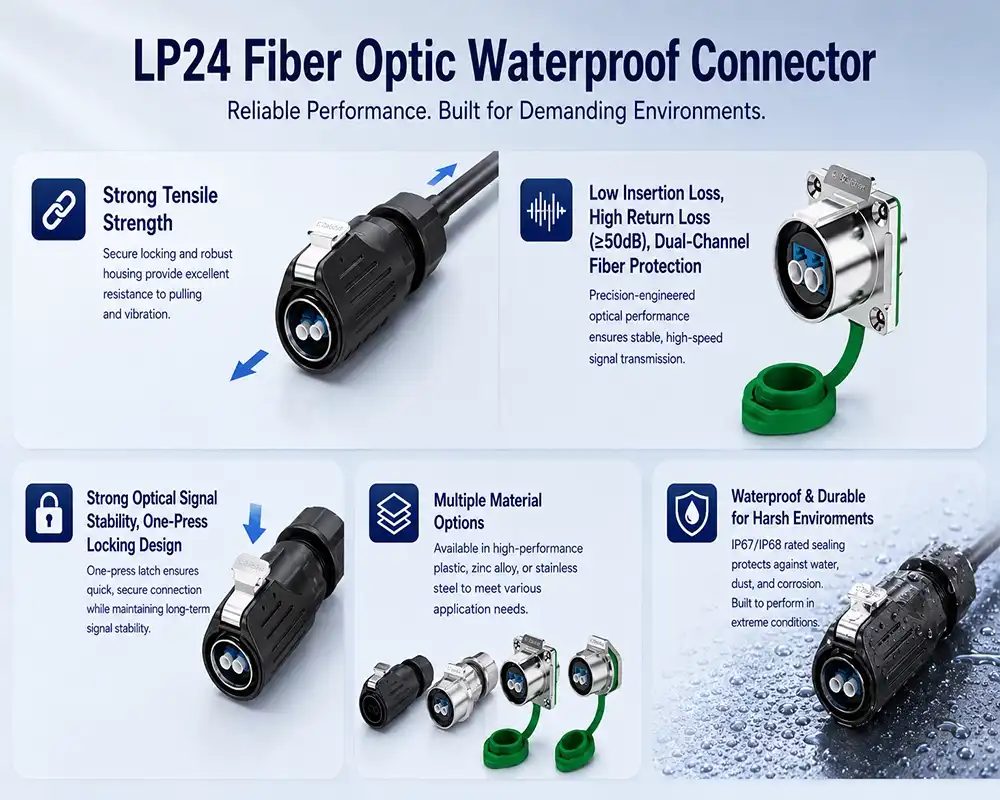
Conclusion
Outdoor security systems that watch over photovoltaic sites, energy storage facilities, and important structures need LP24 Fiber Optic Waterproof Connector fiber connections that can handle harsh weather and still meet optical performance standards. For these uses, waterproof panel-mount ports with IP67/IP68 ratings, precise optical connections, and materials that don't change with temperature are what you need. When project managers and engineers use standard plugs that have been weatherproofed in a less-than-ideal way, they get faster installation, lower upkeep costs, and more reliable long-term performance. Carefully choosing a supplier based on quality certifications, the ability to customize, and technical support makes sure that purchasing decisions are in line with the criteria for project success.
FAQ
What optical performance can I expect from waterproof fiber connectors?
When placed correctly, panel-mount waterproof fiber optic connections have an insertion loss of less than 0.35dB and a return loss of more than 50dB. These specs are the same as normal LC connectors, but they help the environment more. The recommended temperature range is from -40°F to +105°F, and the performance stays the same. This means that the data quality stays the same even in harsh environments.
How does IP68 rating differ from IP67 protection?
The IP67 rating means that the device will be safe even if it is submerged in water up to 1 meter deep for 30 minutes. This makes it suitable for most outdoor installations. IP68 adds security against constant submersion at a depth of 1 meter for 2 hours. This makes it suitable for places that might flood or get sprayed with water. Both scores completely block dust from getting in.
Can these connectors work with existing LC fiber infrastructure?
Yes, the structure on the inside can fit standard LC duplex connections, and the outside is tough enough to protect standard fiber optic gear. Because of this, it is possible to connect to current networks without using special connections or termination gear. Depending on your bandwidth and distance needs, both single-mode and multimode fiber work just as well.
What maintenance do waterproof fiber connectors require?
Because it is protected, it doesn't need much upkeep. When you need to briefly break connections, use lint-free wipes and isopropyl alcohol to clean the exposed fiber end faces before reconnecting them. To keep optical connections clean, you should always use integrated dust caps when links are not mated. The 500+ mating cycle rating means that maintenance disconnections can be done over and over again without affecting performance.
Partner with Cablein for Your Fiber Optic Connectivity Needs
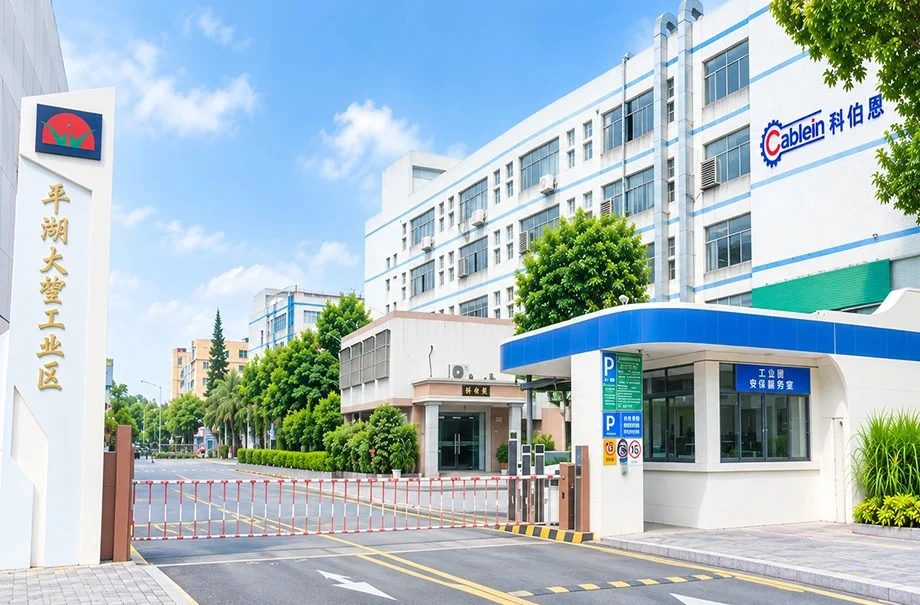
Cablein Technology makes waterproof industrial connectors that are perfect for tough outdoor uses. We are a reliable company that makes LP24 Fiber Optic Waterproof Connectors. Our products are certified by ISO9001:2015 and fully comply with TUV/CE regulations. We offer high-quality connectivity solutions for businesses. Our 6,000-naira factory keeps more than 10,000 of each item in stock, so we can deliver on-time for important projects in 7–10 days and support custom configurations with 15–25 day wait times. Our research team is available 24 hours a day, 7 days a week to help you make the most of your fiber optic infrastructure. They have over 15 patents in waterproof link technology and 9 years of experience in the field. Email our team at nick@cableinco.com to talk about the details of your project, get samples, or get detailed technical documentation. You can see our whole line of products at connectorswaterproof.com and learn why procurement managers around the world trust Cablein for mission-critical connectivity.
References
1. International Electrotechnical Commission. "Environmental Testing Standards for Fiber Optic Connectors: IEC 60068-2-6 Vibration Testing Protocols." IEC Publications, 2021.
2. Telecommunications Industry Association. "Optical Fiber Connector Performance Specifications: Insertion Loss and Return Loss Standards." TIA Technical Standards, 2020.
3. Solar Energy Industries Association. "Communication Infrastructure Requirements for Photovoltaic Monitoring Systems." SEIA Technical Guidelines, 2022.
4. Institute of Electrical and Electronics Engineers. "Weatherproofing Standards for Outdoor Telecommunications Equipment: IEEE 1680 Environmental Criteria." IEEE Standards Association, 2021.
5. International Organization for Standardization. "Quality Management Systems for Fiber Optic Manufacturing: ISO 9001:2015 Implementation in Connector Production." ISO Technical Committee Reports, 2022.
6. European Committee for Electrotechnical Standardization. "Ingress Protection Ratings for Industrial Connectors: IP67 and IP68 Certification Testing Methods." CENELEC Standards Documentation, 2023.