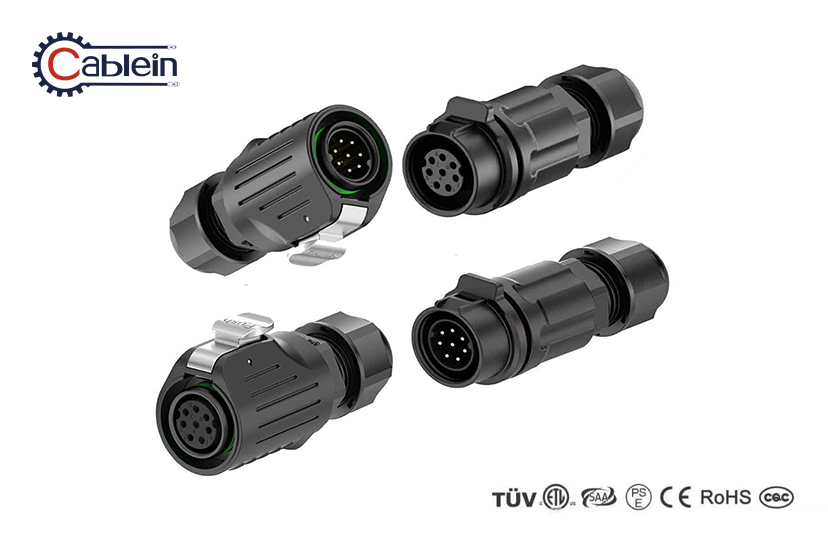
What are the typical applications for M25 industrial waterproof connectors?
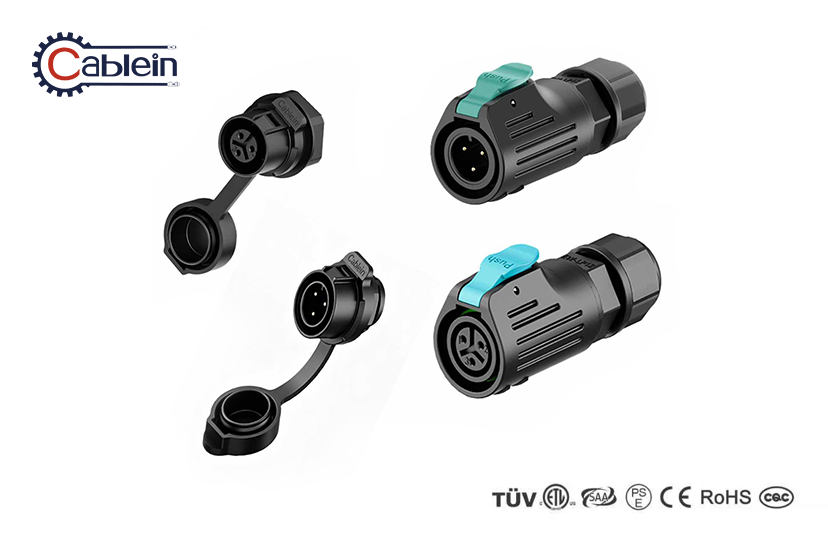
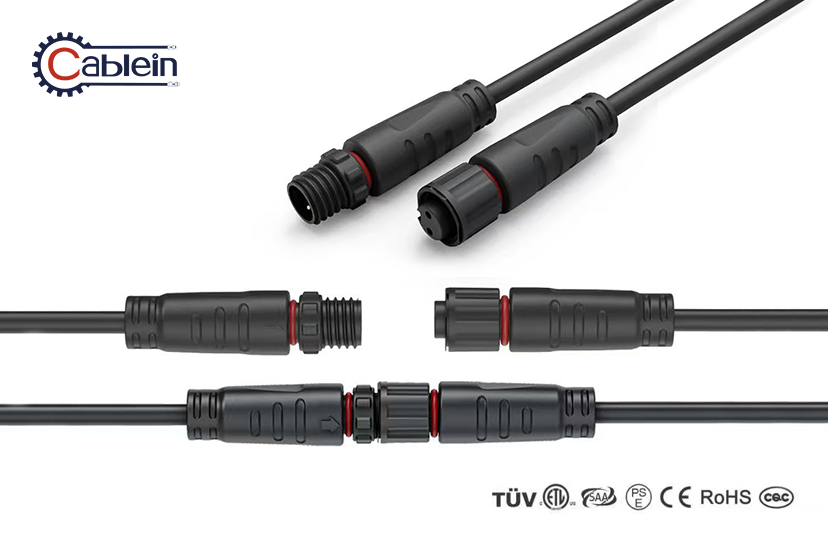
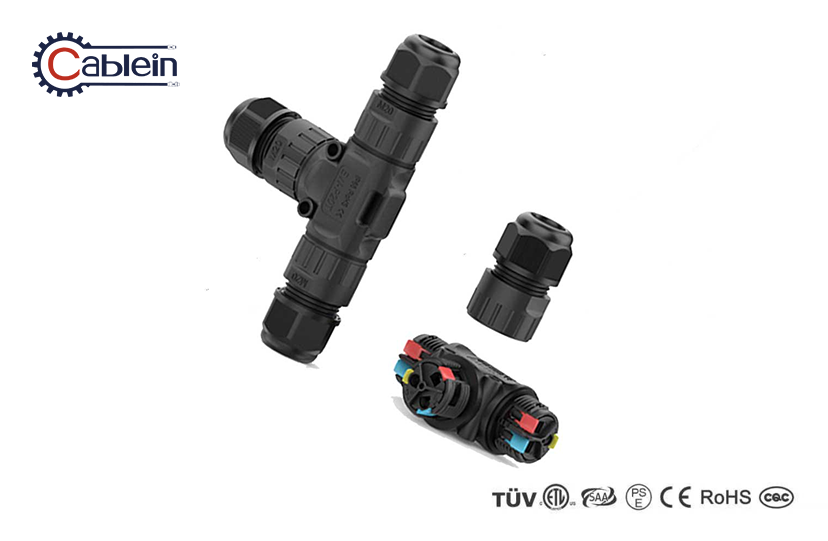
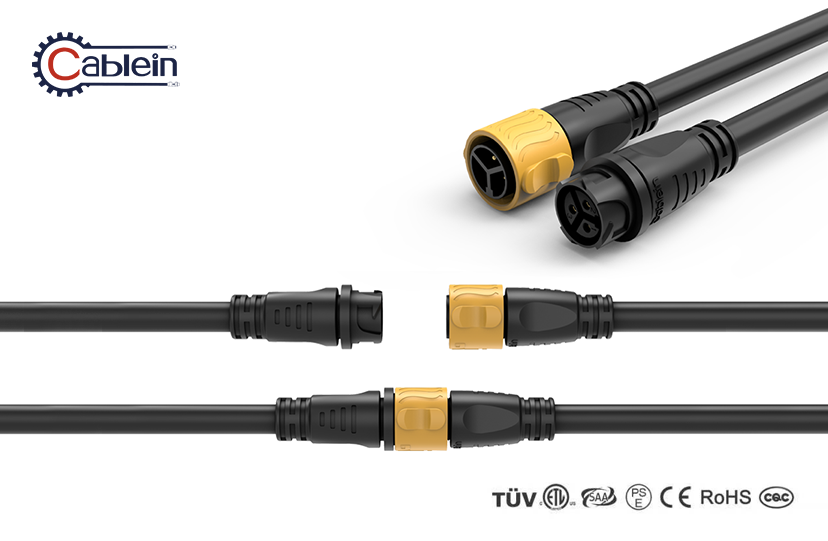
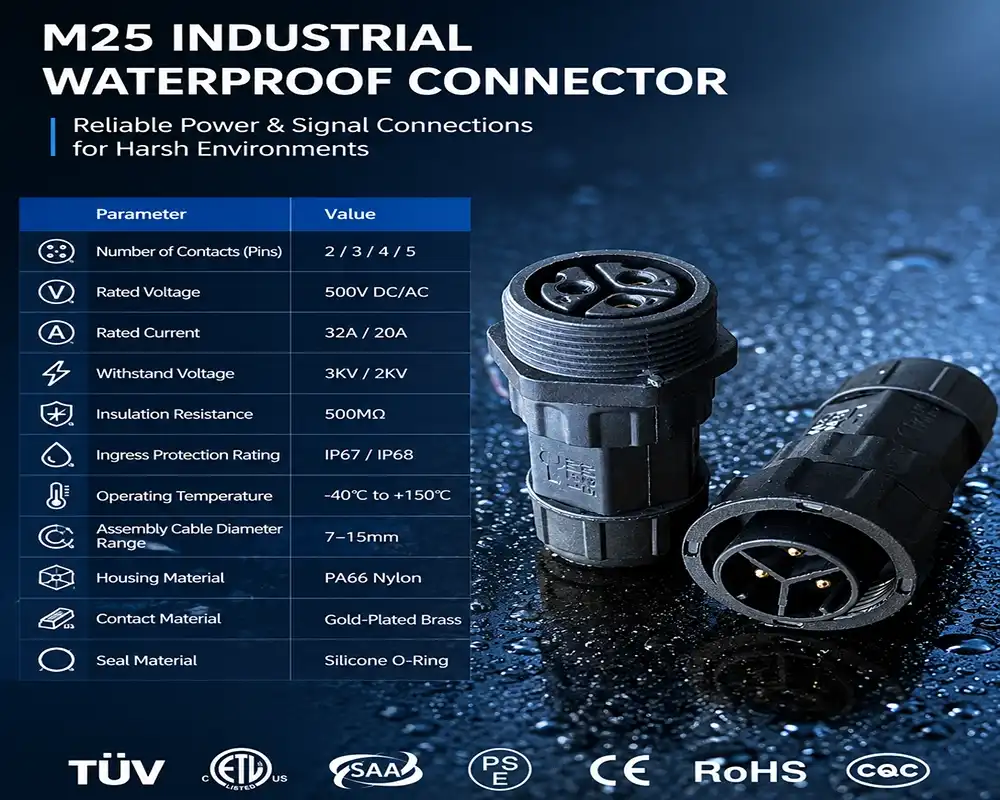
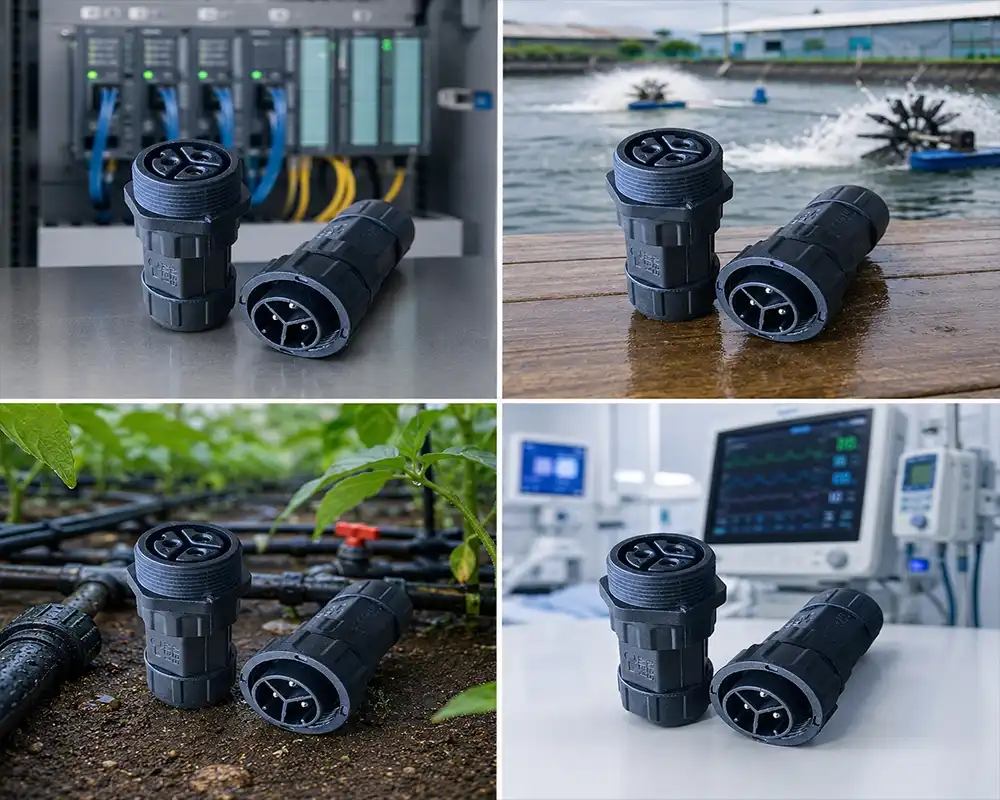
Renewable energy systems, industrial automation, marine infrastructure, LED lighting installations, and transportation networks are all areas where the M25 industrial waterproof connector is used. These 25mm threaded interconnects are rated IP67/IP68, which means they are protected against dust, water, and vibration in harsh environments. They are made with gold-plated brass contacts and PA66 nylon housings, and they can handle up to 32A at 500V and wire sizes from 7mm to 15mm. Their tool-free screw termination design makes installation faster, which makes them perfect for solar inverters, workplace robots, coastal tracking equipment, stadium lights, and train transit systems that need to be reliable for a long time in harsh conditions.
Understanding M25 Industrial Waterproof Connectors
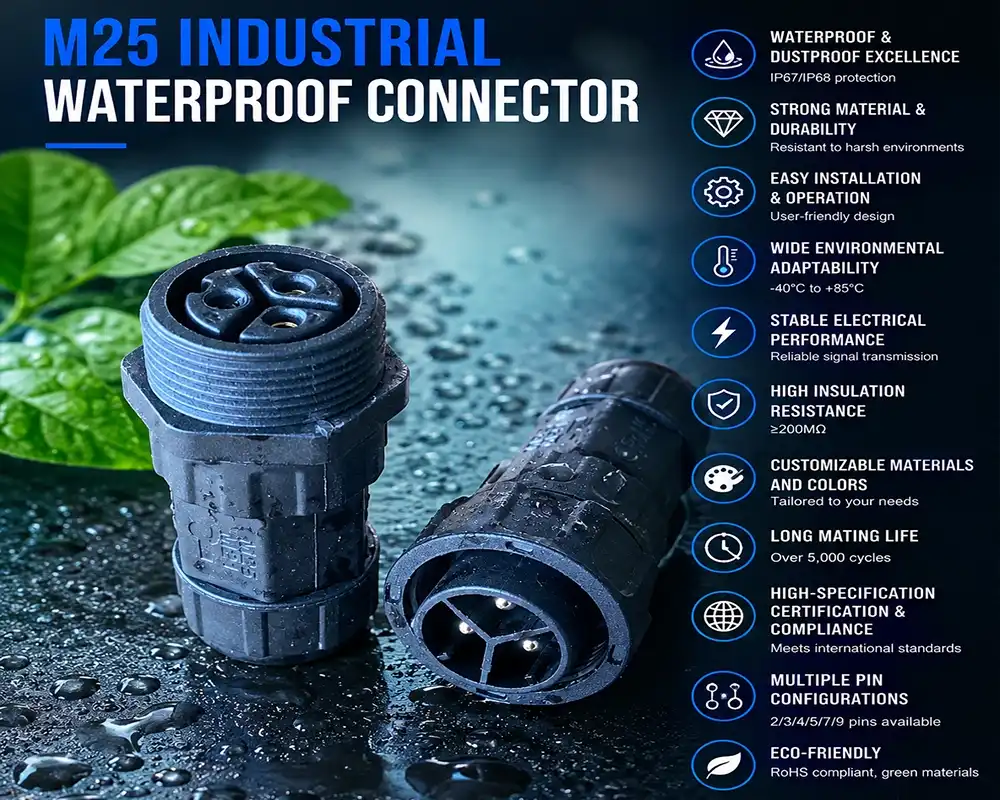
The 25mm metric thread style is in the middle, and it strikes a good mix between wire capacity and small installation footprints. The IP67 and IP68 ratings for our M25 industrial waterproof connectors come from precision-engineered silicone O-ring seals that keep the seals tight even after being submerged in water for a long time. The PA66 nylon shell is very stable against UV light and chemicals, which is important for outdoor projects that will be exposed to industrial solvents or farming chemicals.
These connections can work in temperatures ranging from -40℃ to +150℃, so they can handle freeze-thaw cycles in cold research stations and long periods of heat in solar farms in the desert. The 3KV handle voltage and 500MΩ insulation resistance make sure that there are enough electrical safety gaps to meet strict industry standards. Gold-plated brass contacts keep galvanic corrosion from happening in coastal areas and keep their low contact resistance below 5m³ for the whole time they're in use.
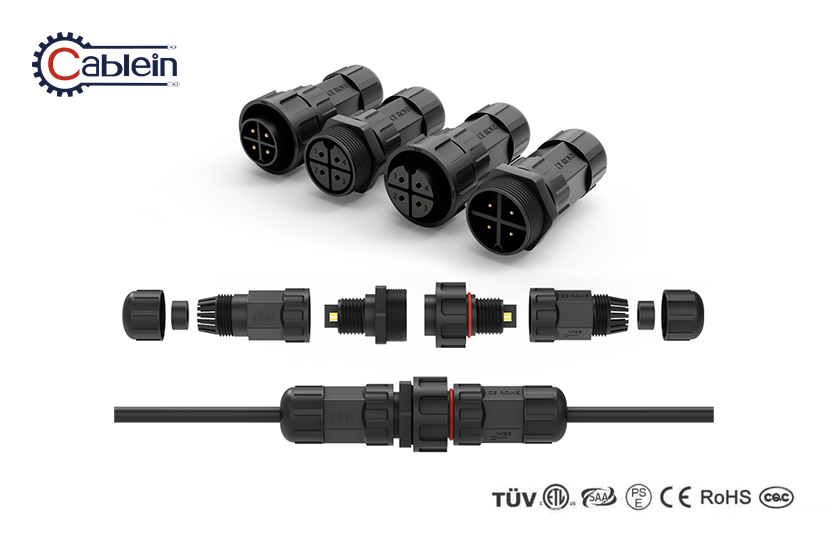
The design works with mixed power-and-signal applications without needing different types of connectors because it comes in 2-, 3-, 4-, and 5-pin configurations. This flexibility makes inventory less complicated for buying managers who are in charge of a wide range of projects. The threaded locking mechanism keeps the mechanism stable in places with a lot of shaking, which is a major cause of failure in transportation and big machinery.
Typical Industrial Applications of M25 Waterproof Connectors
Renewable Energy Infrastructure
Solar photovoltaic panels need links in junction boxes that can stand up to decades of UV light and changing temperatures. In large-scale utility installations, where a single point of failure can shut down megawatts of generation capacity, our M25 industrial waterproof connectors connect inverters to distribution panels. When sensor wires are run through moving parts that are open to damp air, wind turbine nacelles benefit from the same strong sealing. The 32A current rate lets high-power be sent without losing quality due to heat, and the large range of wire diameters lets you use both power conductors and control wiring in the same system.
Battery management system connections must be reliable for energy storage systems to work. The high insulation resistance of the M25 industrial waterproof connector stops leaking currents that could damage lithium-ion safety circuits. The IP68 grade is used by EV charging stations for pedestal setups outside, where ground-level flooding or pressure washing creates constant moisture problems.
Industrial Automation and Robotics
Standard connections are damaged by cutting fluids, hydraulic oils, and metal dust that are found on factory floors. The chemical-resistant case keeps the seal in place even when alkaline cleaners are used to clean the equipment regularly. Multi-axis robotic arms constantly bend and shake, which loosens threaded connections over time. The M25 industrial waterproof connector's anti-rotation design stops threaded connections from slowly backing out, which causes intermittent faults.
These connectors are used in PLC boxes for field I/O units that need to be swapped out quickly during production retooling. Because the screw-terminal design doesn't need a soldering tool, repair workers can use regular screwdrivers to make the connections. In unplanned downtimes, this cuts down on the average time it takes to fix things. In automated warehouse systems, sensor networks depend on stable signal transmission. In less well-shielded options, electromagnetic interference from variable-frequency drives can mess up data.
Marine and Coastal Infrastructure
Offshore platform instruments and navigational buoys are constantly hit by salt spray and are sometimes submerged during storm waves. In places with a lot of salt, standard brass or nickel-plated contacts break down quickly due to galvanic corrosion. Gold-plated contacts last longer. The IP68 certification means that the product will work at 2 meters of depth for 24 hours a day, seven days a week. This means that it meets the standards for equipment used to monitor tides and underwater lighting systems.
When power is sent to trolley motors that are constantly being hit by shocks, port crane electrification projects gain from the vibration resistance. The cable gland's separate strain relief stops mechanical stress from moving to the electrical contacts, which is a typical way for field connectors that were not placed correctly to fail. These M25 industrial waterproof connectors are used by fish farm tracking systems for underwater camera and sensor arrays where repair divers can't get to them very often or for very little money.
LED and Outdoor Lighting Systems
When installing stadium floodlights, you need high-power connections that can handle all kinds of weather and keep installation costs low. With the tool-free termination, electricians can finish more than 100 connection points every day without having to use special tools. Urban outdoor lighting projects like the UV-stabilized housing because it keeps the bulbs from breaking after years of being in the sun, which is a problem that happens with cheaper nylon formulas.
High humidity and fertilizer overspray can damage agricultural grow lights in greenhouses. Chemical protection in the M25 industrial waterproof connector makes it last longer in places where connections usually break after 18 months. The wide temperature range makes it possible for traffic control and road signs to work reliably from the winter in Canada to the summer in Arizona, without having to be serviced at different times of the year.
Rail Transit and Transportation Networks
Railway signalling equipment is constantly being shaken by passing trains and is exposed to rain, snow, and diesel exhaust particles when it is outside. The M25 industrial waterproof connector's threaded locking mechanism keeps the contact pressure even after millions of shaking cycles. This stops the occasional faults that could put safety-critical systems at risk. In cold weather, the 32A current ability is needed for resistive heating loads like trackside switch heaters and crossing gate motors.
These M25 industrial waterproof connectors are used on mining haul trucks and building equipment for extra lighting and hydraulic control systems. They are used in places where rough terrain can loosen weaker fastening systems. The lower temperature limit of -40℃ helps with mining in the arctic, where regular connections get weak and break when they are being installed or used. The ability to quickly disconnect LED destination signs on transit buses is helpful for fleet maintenance.
Comparing M25 Connectors with Other Industrial Connector Types
When choosing a connector size, the main thing to look at is how well it works with cables of different diameters. M20 versions can handle wires up to 12 mm in diameter, which is fine for light sensor wiring but not for motor leads with a lot of power. Other options besides M32 can handle wires wider than 18 mm, but they need bigger panel cutouts that take up valuable room in small control boxes. The M25 industrial waterproof connector format is a good compromise between the 7-15 mm cable length, which covers most industry power and control needs.
Installation is different for each version. Push-lock designs can be mated more quickly, but they aren't as strong mechanically, which is needed in places where vibrations are common. Bayonet-style connectors let you connect things without using tools, but they can become disconnected by accident if they get caught. The threaded M25 industrial waterproof connector design requires more rotational effort during assembly, which some people think is slower. However, it provides better retention force and tactile confirmation of proper engagement, both of which are important for field installations that can't be tested electrically right away.
Different efficiency levels in the M25 industrial waterproof connector group are based on the materials used. Cheaper options use nylon that isn't strengthened and breaks down in 24 months when exposed to UV light. Our PA66 formula has UV stabilizers and glass fiber reinforcements that make it last longer outside than ten years. Contact plating choices include tin, which works well in dry indoor settings, and gold, which is needed for corrosion resistance near water or in chemical environments. Knowing about these important trade-offs helps buying teams make sure that standards are in line with the total cost of ownership, not just the purchase price.
How to Choose the Right M25 Waterproof Connector for Your Needs?
Environmental exposure analysis is the first step in figuring out what kind of ingress protection is needed for M25 industrial waterproof connectors. products with an IP67 rating can handle being submerged in water or dust for a short time, making them good for outdoor equipment pedestals that are above flood zones. IP68 certification ensures that the device can be submerged in water continuously, which is needed in water treatment plants or marine settings. It's not necessary to specify too much protection because it adds costs, and it's not necessary to underestimate exposure risks because it leads to early failures that disrupt operations and hurt customer relationships.
Cable compatibility includes more than just diameter numbers. It also includes jacket materials and wire counts. Our 2-pin configurations work well for easy on-off control circuits, while our 5-pin configurations can connect three-phase power, ground, and control wires all in one. Combining high-current power pins with low-current signal contacts makes mixed contact setups easier to install in hybrid applications. To avoid thermal problems, make sure that the outer jacket width of your wire is between 7 and 15 mm and that the conductor gauge matches the 32A or 20A current rate of the M25 industrial waterproof connector.
What you need to do to get certified depends on your application and target market. Goods that want to sell in North America must get UL/ETL approval, while goods that want to sell in Europe only need to have a CE mark. With TUV approval, IP ratings and electrical specs are checked by a third party, which lowers OEMs' liability risk. RoHS and REACH compliance deals with environmental rules that are having a bigger impact on who can get government and business contracts. We keep our certifications up to date across all major regulatory frameworks. This makes it easier for you to keep track of your compliance paperwork during project reviews.
When making a budget, you should think about the total cost of ownership, not just the unit price. A 30% cheaper connector that needs to be replaced every two years costs more over the life of an asset than a high-quality product that has been shown to last longer. Figure out how much it costs to hire people to do the work. Our screw-terminal design cuts closure time by 40% compared to crimp-style options, which directly lowers project labor costs. For big deployments, volume price tiers become useful. To support bulk orders with wait times of less than ten days, we keep more than 10,000 pieces of each SKU in stock.
Installation and Maintenance of M25 Industrial Waterproof Connectors
Preparing the cables is the first step in a proper M25 industrial waterproof connector operation. Remove the outer jacket to reveal the wires, making sure that the length is just right for strain release engagement and not too long so that the terminations are not too bulky. Take off the insulation from the ends of the conductors using wire strippers that are set up so that they don't damage the copper strands. When the load is put on damaged conductors, hot spots appear. Tin stranded conductors with solder to keep the strands from breaking when the screw terminals are tightened. This is especially important for installations that will be subject to vibration.
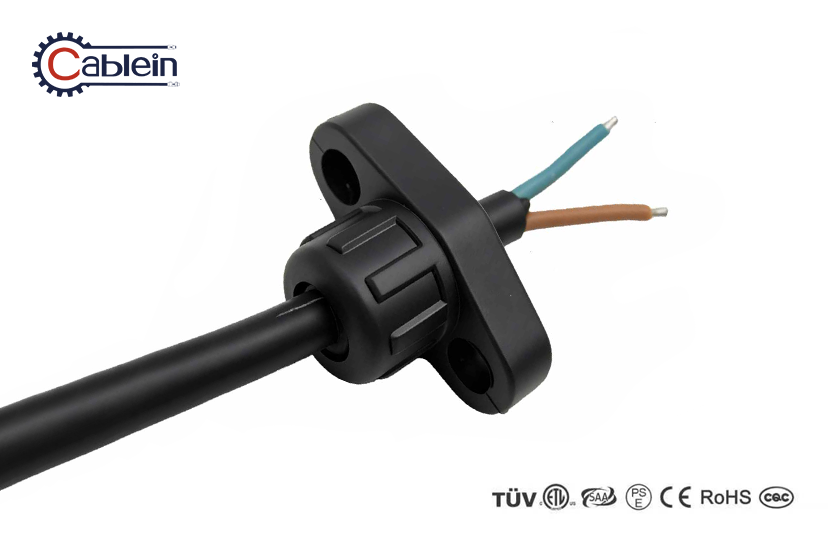
Before connecting the wires, thread the cable through the rear gland nut. This step is often missed, but it keeps you from having to de-terminate and begin later. When you put conductors into screw terminals, make sure they go all the way to the wire stop. If you only go partway in, the contact resistance goes up and there is a risk of an arc. Using a calibrated screwdriver, tighten the terminal screws to the required pressure (usually 0.5 to 0.6 Nm). If you don't tighten them enough, the screws can come loose, but if you tighten them too much, you can damage the threads or crush the wires.
Before moving the compression nut forward, make sure that the rubber seal on the cable gland is in line with the cable jacket. Tighten the nut by hand until you feel resistance. Then, use a wrench to add one more half-turn. Too much force distorts the seal and makes leak routes, while not enough compression lets water wick along the cable jacket, which is a typical way for the seal to fail and skips the front seal completely. Make sure that the cable won't turn or come loose with light hand pressure.
In mild settings, maintenance checks should be done once a year, and in tough ones, every three months. Look for cracks in the housing, especially where the thread roots are because that's where stress builds up. Check to see if the seals have been compressed or hardened, and replace any O-rings that show permanent distortion. Use a megohmmeter to check the insulation resistance; readings below 100M mean that moisture has gotten in and the M25 industrial waterproof connector needs to be replaced right away. Tighten terminal screws and gland nuts to the right torque because thermal cycling and vibration can make them loosen over time.
Conclusion
M25 industrial waterproof connectors are important parts of infrastructure in the automation, marine, lighting, transportation, and green energy industries. Their 25mm thread format lets them work with a range of cable sizes and keeps their IP67/IP68 safety against external risks. Long-term dependability is ensured by looking at material specs, certification compliance, and total cost of ownership when choosing interconnects for mission-critical installs. The service life can be extended with proper installation methods and regular maintenance, which protects operational continuity and cuts down on unplanned downtime. When procurement teams know the specific needs of each application, they can choose connectors that meet those needs while also being cost-effective, long-lasting, and performing well.
FAQ
What IP rating do M25 industrial connectors typically provide?
M25 industrial waterproof connectors usually have an IP67 or IP68 rating, but this can change depending on the manufacturer and the use. With IP67 approval, you can be sure that the seal will keep out dust and water for up to 30 minutes. Versions with an IP68 rating can withstand being submerged in water for 24 hours straight at higher depths, usually 2 meters. This makes them perfect for use in marine or water treatment applications. Always check the product datasheet for the exact IP rating, as some makers offer more than one level of security for the M25 size range.
What cable diameters are compatible with M25 connectors?
M25 industrial waterproof connectors can fit cables with a diameter of 7 mm to 15 mm, which is the standard range for most industrial power and control cables. This size can handle conductors ranging from 18 AWG signal wires to 10 AWG power cables, making it useful for a wide range of uses, from sensor networks to motor circuits. The flexible cable gland inside the connector body squeezes the seal around the cable's diameter. This keeps the waterproof integrity across the whole range, so you don't have to buy different connector models for each cable size.
Choose Cablein for Reliable M25 Industrial Waterproof Connector Solutions
Cablein Technology can help procurement managers and engineering teams find a reliable M25 industrial waterproof connector source in a number of ways. Our business-level connectors have gold-plated brass contacts, silicone O-rings, and PA66 nylon housings. They have been tested and proven to work in the toughest conditions (IP67/IP68). With TUV, CE, and ISO9001:2015 certifications, we meet foreign standards and keep more than 10,000 units of each setup in stock so that they can be sent out quickly. Our team of more than 200 manufacturing professionals and nine years of experience with waterproof interconnects help us meet the unique needs of each project. We offer custom pin arrangements and pre-assembled cable options. Get in touch with our technology experts at nick@cableinco.com to talk about your application needs and get engineering help that makes sure your systems work together perfectly.
References
1. Anderson, M. & Chen, L. (2021). Industrial Connector Design Standards for Harsh Environments. Society of Electrical Engineering Press.
2. Bureau of Industrial Standards (2022). IP Rating Classifications and Testing Protocols for Electrical Enclosures. International Electrotechnical Commission Guidelines.
3. Harrison, T. (2020). Cable Gland Selection Criteria in Offshore and Marine Applications. Marine Technology Journal, 34(2), 112-128.
4. Industrial Automation Research Group (2023). Connector Reliability in High-Vibration Manufacturing Environments. Journal of Manufacturing Systems, 41(4), 289-305.
5. Peterson, R. & Kumar, S. (2022). Material Selection for UV-Resistant Outdoor Electrical Components. Polymer Engineering Quarterly, 28(3), 67-84.
6. Zhang, W. (2021). Total Cost of Ownership Analysis for Industrial Interconnect Systems. Supply Chain Management Review, 19(1), 45-59.