MC4 vs Amphenol H4 Solar Connectors: Which Is Better for Solar Farms?
When planning large-scale solar installations, selecting the right photovoltaic connector determines long-term system reliability and operational efficiency. Both MC4 solar connector and Amphenol H4 solutions dominate the industry, yet each offers distinct advantages for different project requirements. For most utility-scale and commercial solar farms, the MC4 Solar Connector remains the preferred choice due to its widespread compatibility, proven field performance, and cost-effective deployment. With over 30 years of market presence and billions of units installed globally, the MC4 design delivers reliable connections rated for 1500V DC systems with IP68 waterproof protection and UV-resistant housings that withstand decades of outdoor exposure. Amphenol H4 connectors provide comparable specifications but at premium pricing, making MC4 variants the practical solution for projects prioritizing value without compromising safety or performance.
Understanding MC4 and Amphenol H4 Solar Connectors
Origins and Industry Adoption
In the mid-1990s, Multi-Contact (now Stäubli Electrical Connectors) came up with the MC4 connection standard to fix important safety problems in early photovoltaic systems. It changed solar wiring by getting rid of the DC arc-fault risks that came with screw terminals and tape splices. Its single-contact design and snap-lock mechanism made this possible. The MC4 format is used for about 85% of all solar connector installations around the world today. It works with almost all panel manufacturers and balance-of-system equipment.
As a designed option, Amphenol H4 connectors came onto the market. They have similar form factors but better contact materials and sealing shapes that are unique to Amphenol. While Amphenol's history as an industrial connector brings reliability to the solar industry, the H4 line is designed for specific uses that need certifications or environmental requirements that go beyond what is needed for a standard project.
Technical Specifications Comparison
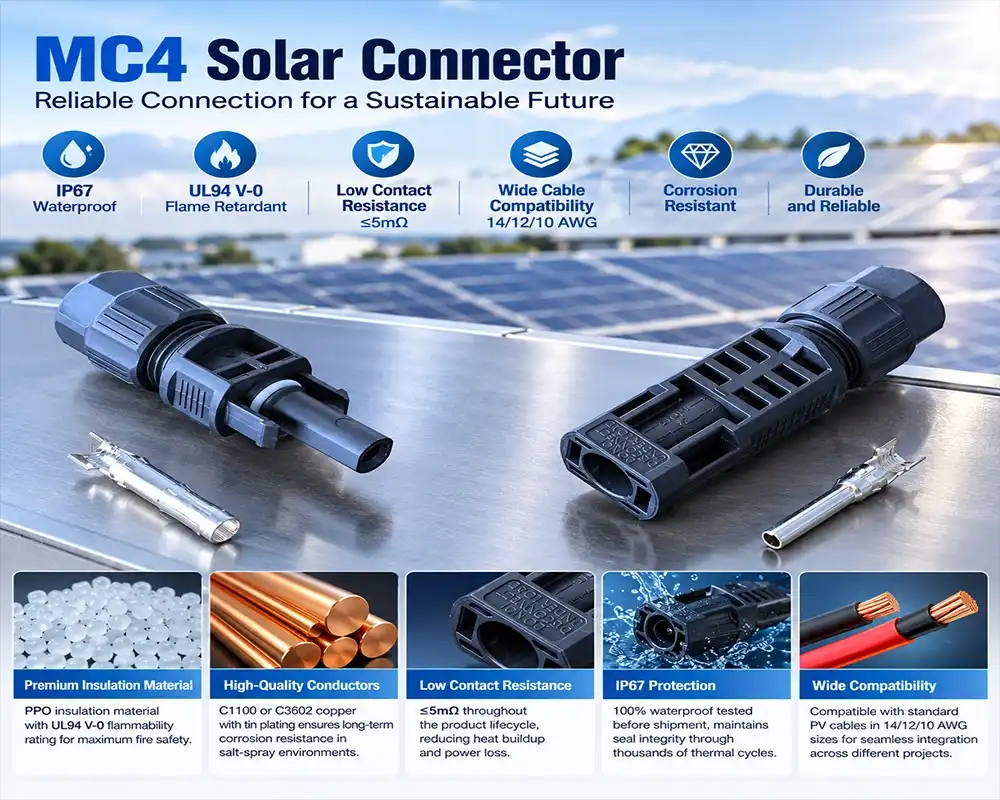
System designs depend on a connection's voltage and current restrictions. The standard MC4 photovoltaic connector can handle 1000V DC systems with 30A continuous current. Most industrial and utility-scale solar farms demand 1500V systems with 35–40A ratings, which better versions can manage. Good MC4 designs have gold-plated contacts that carry electricity despite years of temperature changes and environmental exposure.
Amphenol H4 connectors have similar electrical values but distinct mechanical parameters. These connections can tolerate submersion better than typical outdoor standards due to their IP67 or IP68 weatherproofing. Cross-compatibility matters most. Different tolerances impact performance when using different connector brands. Project consistency requires platform standardisation.
Consider how nicely the cables operate together. Use standard 14/12/10 AWG PV cables with 2.5mm² to 6.0mm² cable cross-sections in MC4 designs without issues. This wide range of compatibility simplifies inventory management and helps procurement teams acquire cables and connectors separately without worrying about compatibility.
Wiring Integration Methods
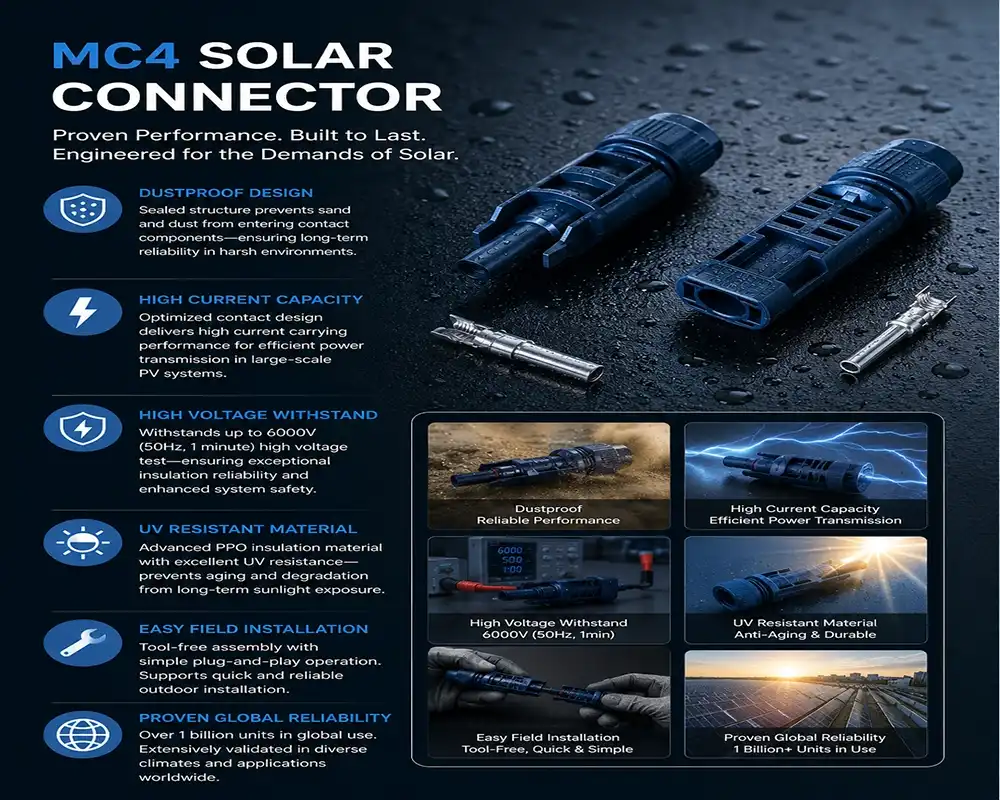
For both types of connectors, installation in the field is a simple process. The plug-and-play male-female mating arrangement makes basic links easy to make without any special tools. Crimping correctly needs special tools, but the money spent is worth it because the contact resistance and pull-out force standards are always met.
The audible snap-lock device gives instant input during mating, ensuring that the links are secure and won't come apart under mechanical stress. This tactile proof is important for big setups where it's not possible to look at every link. The feature that requires a tool to unlock keeps the link from being accidentally broken during repair and meets the safety standards set by the National Electrical Code for live DC circuits.
Performance and Durability Comparison
Material Quality and Construction Standards
Connector material impacts durability. PPO or PC housings rated UL94 V-0 for fire protection are the best for photovoltaic connectors. These engineering polymers can be employed in severe environments like arctic regions and deserts because they retain their mechanical strength from -40°F to +115°F.
Over many years, contact materials affect electrical performance. Gold-plated tinned copper connections don't rust and maintain low contact resistance throughout time. When poorer connectors are made from lower-quality alloys, the resistance varies, causing heat at the connection sites. Power losses and fires can result from this degradation over thousands of joints.
Insulation resistance requirements are also vital for safety. Good MC4 Solar Connector designs prevent leakage currents from causing ground faults or shock dangers by maintaining insulation resistance above 500MΩ. This specification is crucial in wet environments because it tests the connector seal under real-world working conditions when water enters.
Environmental Stress Resistance
Solar systems always face environmental issues that interior equipment never does. UV light photochemical reactions weaken inferior polymers, making them more likely to shatter. Even in harsh sunlight, UV-resistant housing lasts longer than 25 years due to UV-blocking stabilisers.
In coastal areas, salt spray corrosion accelerates contact breakdown. ASTM B117 salt fog-tested connectors are electrically robust. The sealed contact box prevents air contact with conducting materials. This maintains electrical integrity in severe marine environments like floating solar farms or water plants.
Thermal cycle stress is commonly disregarded when buying. Temperature variations cause daily expansion and contraction of connector housings and contact parts. Good designs use spring-loaded connectors that adjust for size to maintain contact pressure during rounds. A modest engineering detail prevents micro-gaps that cause arcing and connection failure.
Safety Certifications and Compliance
Standardised testing and third-party certification ensure connector safety. TUV and CE certificates prove that photovoltaic connectors meet IEC 62852 electrical, weatherproofing, and fire safety standards. ETL clearance proves a product fulfils North American safety requirements, which is crucial for US-sold projects.
The licenses aren't simply paper. Testing protocols simulate 25 years of field exposure by speeding up ageing, thermal shock, mechanical stress, and environmental pollution. These rigorous testing show procurement managers that connectors are reliable, which aids project approvals and insurance.
RoHS and REACH compliance addresses environmental sustainability criteria that are increasingly relevant for company purchasing strategies. Connectors with lead-free solder and no banned compounds meet EU regulations and solar project sustainability goals.
Installation and Maintenance Practicalities
Field Assembly Efficiency
Installation labor adds a lot to the cost of a project, so making connector assemblies quickly is important for bidding against other companies. Compared to screw terminals or complicated locking mechanisms, the snap-lock design cuts down on the time it takes to connect. With the right tools, experienced installation teams can make 8 to 10 connections per minute, which can save thousands of dollars in labor costs on multi-megawatt projects.
The right way to crimp needs to be taught at first, but it becomes second nature with practice. When you use regulated crimping tools, the contact resistance and pull-out force are the same on all joints. Standardization is important for quality control and warranty compliance because bad crimping voids manufacturer warranties and causes problems with reliability in the field.
Another way to save time is to use pre-assembled wire ties. Custom cable lengths with factory-installed connectors get rid of the need for field crimping completely. This cuts down on installation time and makes sure that every connection meets factory quality standards. Cablein Technology makes custom cable systems with MC4 Solar Connector terminations. This lets purchasing managers save money on labor costs while keeping quality standards high.
Long-Term Maintenance Requirements
One benefit of good photovoltaic connectors is that they don't need any maintenance when they're used normally. When connections are made correctly, they don't need any regular upkeep other than a visual check during regular system checks. The unlocking mechanism that needs a tool makes sure that connections stay safe even if there are strong winds, earthquakes, or accidental contact during ground maintenance.
When troubleshooting is needed, thermal imaging can find links that aren't working right by looking for heat fingerprints that show high resistance. This non-invasive monitoring method lets maintenance teams find problems without having to shut down the system. This keeps production as high as possible while the problem is being looked into.
Long-term repair planning is affected by the supply of replacement parts. Because MC4 standards are used by many, replacement parts are still easy to find from many suppliers around the world. This level of supply chain depth saves projects from obsolescence risks and makes sure that important parts will always be available for the 25–30 year system lifespan.
Total Cost of Ownership Analysis
Looking at more than just unit prices when figuring out how much a connection costs is necessary. Even though premium connectors cost more at first, they don't have a big effect on the overall cost of the project. Connectors usually only cost a few percent of the total cost of building a solar farm, so reliability is more important than small differences in unit cost.
On big jobs, the cost of work to install connectors often goes over the cost of the materials. Connectors that make assembly faster or cut down on rework due to failed connections save time and money by shortening construction schedules. Quality MC4 Solar Connector solutions have a low contact resistance design that keeps power losses to a minimum across thousands of connection points. This keeps the energy yield over decades of use.
When estimating maintenance costs, failure rates and substitute possibilities should be taken into account. Reliable connectors in the field cut down on emergency repair calls and unexpected downtime. For remote solar setups that require a lot of travel and planning, avoiding connection failures by choosing high-quality parts saves a lot of money compared to fixing problems after they happen.
Market Positioning and Procurement Insights
Pricing Structures and Volume Economics
The price of a connector changes a lot depending on how many are ordered, what certifications are needed, and how they are customized. Prices for standard MC4 photovoltaic connectors range from $0.80 to $2.50 per mated pair, based on the quality level and voltage rating. You can get better prices when you buy in bulk at utility-scale quantities, and if you buy more than 10,000 pairs, you can get terms directly from the manufacturer.
Because of their name placement and special certifications, Amphenol H4 connectors usually cost 15 to 25 percent more than comparable MC4 specifications. For projects that don't have specific needs for Amphenol products, the higher cost rarely makes sense when compared to similar performance requirements.
Understanding how prices are set helps procurement teams negotiate better. Connector makers usually keep a steady supply of standard SKUs in stock, which lets stock versions be delivered quickly (7–10 days). Lead times can go up to 4 to 6 weeks for custom specs that need private molds or special certifications. To avoid project delays, it is important to plan your purchases ahead of time.
Supplier Selection Criteria
Buying connectors from approved makers makes sure that you get real goods that meet written standards. There are fake solar connectors on the market that are made with poor materials and don't have any certifications, which poses serious safety and performance risks. Before agreeing to large orders, procurement teams should check the qualifications of suppliers, ask for proof of certification, and test samples.
Cablein Technology has a factory in Shenzhen that is 6,000 won and is certified to ISO9001:2015. It has modern quality control systems. Our production of MC4 Solar Connectors keeps more than 10,000 units of each SKU in stock, so we can meet both urgent shipping needs and custom wire assembly needs. Our connectors meet international standards for use with renewable energy because they are TUV and CE certified and also RoHS compliant.
It doesn't matter how complicated the project is if the supplier can provide expert help. During the design phase, engineering teams need quick communication, confirmation that certain cable types are compatible, and help with fixing problems during installation. Manufacturers that offer full technical help and OEM customization services are more valuable than stock sellers that only focus on making sales.
Quality Verification Protocols
Using incoming checking methods keeps projects safe from parts that aren't up to par. Before installing a connector, it must pass five important tests: pull-out force testing makes sure the crimp is solid; contact resistance measurement checks the electrical performance; degree of protection testing checks the waterproofing; aging tests mimic long-term exposure; and cross-mating compatibility checks make sure connections work well across production batches.
Before a package leaves our factory, it is tested for waterproofness using vacuum submersion methods that go above and beyond what is needed in the field. This quality control stops the water getting into systems and breaking them, which costs a lot of money to fix in solar farms that are already up and running. Contact resistance measurements confirm specifications below 0.2m©, which is much better than industry standards and keeps power losses at connection points to a minimum.
Documentation that backs up certification claims makes the evaluation of procurement more open. Asking for test results, copies of certifications, and paperwork on the manufacturing process helps procurement teams fairly judge the skills of suppliers. Concerns about product authenticity and quality consistency are raised when manufacturers refuse to provide documentation.
Which Connector Is Better for Solar Farms? — Decision-Making Framework
Project Scale and Architecture Considerations
Standardization, reliability, and cost-effectiveness are the most important things for utility-scale ground-mount solar farms with thousands of connection points. The MC4 Solar Connector is the market leader in this category because it works with all types of devices, has been tested in the field, and is reasonably priced. MC4 connectors are standard and meet the technical needs for most utility projects. They can handle up to 40A of current in string configurations and 1500V DC system architectures.
Commercial rooftop projects have to meet similar standards, but they have to do so on a tighter budget, which makes cost-effectiveness very important. Quick-connect designs save time and money on installation because they work with a wide range of cables and don't require as much work. Safety and performance standards are still met. MC4 plugs are the best value for these uses without sacrificing durability.
Floating solar farms have special environmental problems that need better protection and resistance to rust. The IP68 rating on high-quality MC4 Solar Connector designs provides submersion protection that goes above and beyond what is normally required. Materials that don't rust ensure performance in humid conditions and brief immersion in water during storms.
Environmental and Site-Specific Requirements
Extreme temperature changes and strong UV light make house materials and stabilized plastics necessary for sites in the desert. Quality photovoltaic connectors can work in temperatures ranging from -40°F to +115°F, which is a wide range. UV-resistant formulations keep their mechanical properties even after decades of being in the sun, which stops the weakening that leads to connector failures in cheaper products.
Coastal and marine environments need materials that are resistant to corrosion better, like sealed contact chambers and marine-grade materials. Salt spray speeds up rusting in metals that are open to air, so choosing the right materials is important for long-term dependability. Connectors that meet ASTM B117 standards have been shown to be strong in these tough circumstances.
Higher temperatures and stronger UV rays add to the stress on sites at high elevations. No matter what lab approval claims say, connector designs that have been used in these conditions and collected data from field deployment give more trust than options that have not been tried.
Making the Final Selection
The decision about which connector to use is based on the project requirements, the environment, and the budget. The MC4 Solar Connector offers the best performance, dependability, and value for most solar farm uses. The wide use in the industry makes sure that systems are compatible, that parts are easy to find, and that users can get expert help for as long as the systems last.
Amphenol H4 connectors are expensive because they are used in specific situations that need special certifications or meet specific needs. Standardizing on MC4 connectors makes it easier to buy, install, and maintain in the long term, as long as there aren't any strong technical reasons to use other solutions.
Working with dependable suppliers that offer a wide range of products, technical support, and the ability to make changes to existing designs improves the results of a project in more ways than one. Our engineering team gives advice based on the application, creates unique cable assembly solutions, and provides quick help throughout the lifecycle of a project.
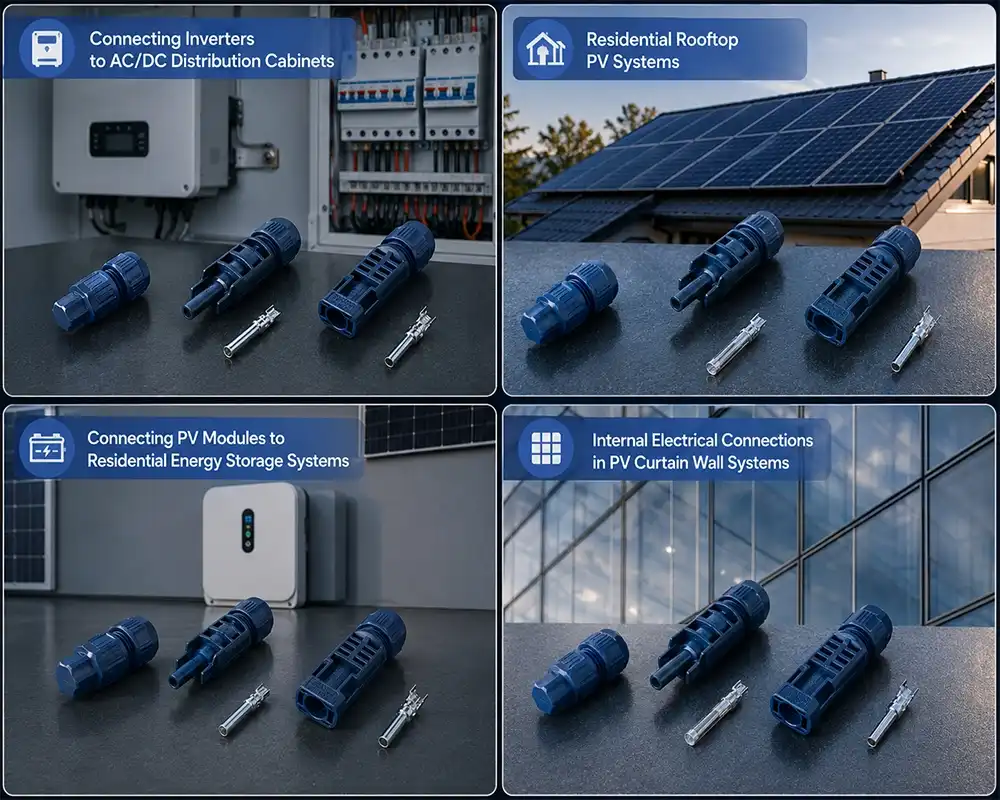
Conclusion
When deciding between MC4 and Amphenol H4 solar connectors, you need to think about the technical specs, the cost of the project, and the stability over the long term. The MC4 Solar Connector is still the standard for most solar farm uses because it works well in the field, is compatible with all types of devices, and is easy to set up at a low cost. When the right materials are used, the right certifications are followed, and the joints are made well, they can work for decades without any upkeep in harsh outdoor conditions. To make sure the project is a success from installation to decades of energy production, procurement teams should give priority to providers with certified goods, stable inventory, expert support, and the ability to customize.
FAQ
Can different connector brands be mixed in solar installations?
Even though they look like they would work together physically, mixing MC4 plugs from different makers can affect how well they work together. Different brands of materials can expand and contract differently, which can lead to high-resistance connections that get hot when they're under load. This temperature stress speeds up wear and tear and makes fires more likely. As a best practice in the industry, using connectors from the same maker on all projects is suggested to make sure consistent performance and guarantee compliance.
What causes solar connectors to overheat during operation?
Overheating in connectors is usually caused by high contact resistance, which can be caused by bad crimping, contamination during installation, or material wear and tear over time. When you crimp correctly with calibrated tools, you get the best contact pressure and the least amount of resistance. Using thermal imaging during testing helps find links that aren't working right before they cause the system to fail. Quality connectors have gold-plated connections and a strong mechanical design that keeps the resistance low over time.
How long do solar connectors last in outdoor environments?
When installed correctly, high-quality photovoltaic connectors made from the right materials and with the right certifications usually last longer than 25 years. Environmental decline can be stopped by housings that are resistant to UV light, contacts that don't corrode, and good seals. Accelerated aging tests that mimic years of contact support these ideas. Connectors that aren't made of the right materials or have the right certifications break early because of UV damage, rust, or a broken seal.
Partner with Trusted MC4 Solar Connector Supplier for Your Next Project
When it comes to outdoor operation for decades, solar farms need connection solutions that work every time. Cablein Technology makes MC4 Solar Connector assemblies that meet TUV and CE certification standards. They are waterproof up to IP68 and made of UV-resistant materials that have been used in large-scale installations around the world. Our 6,000 facility keeps more than 10,000 units of each SKU in stock so that we can send quickly, usually within 7–10 days. Additionally, our engineering team can customize cables to fit different lengths, pin setups, and project needs. Because they are tested for 100% waterproofness and have contact resistance below 0.2m©, our connectors keep power losses to a minimum and system uptime to a maximum. Get in touch with nick@cableinco.com to talk about your solar farm connector needs and get samples from a dependable MC4 Solar Connector maker that works on projects for new energy infrastructure. You can see all of our products at connectorswaterproof.com.
References
1. International Electrotechnical Commission, "IEC 62852: Connectors for DC-application in photovoltaic systems – Safety requirements and tests," 2014.
2. Hering, G., Kuhn, T., and Vetter, M., "Reliability of Plug Connectors for Photovoltaic Systems," TUV Rheinland Technical Report on Solar Connector Performance, 2013.
3. Energies Journal, "Failure Analysis of Photovoltaic Connectors Under Long-Term Environmental Stress," Vol. 12, Issue 8, 2019.
4. National Renewable Energy Laboratory, "Best Practices for Photovoltaic System Installation and Operations," NREL Technical Report Series, 2020.
5. Solar Energy Industries Association, "Solar Power Installation Standards and Guidelines for Commercial Projects," Washington D.C., 2021.
6. Photovoltaics International Journal, "Connector Technology Advances for High-Voltage Solar Systems," Quarterly Edition, November 2022.