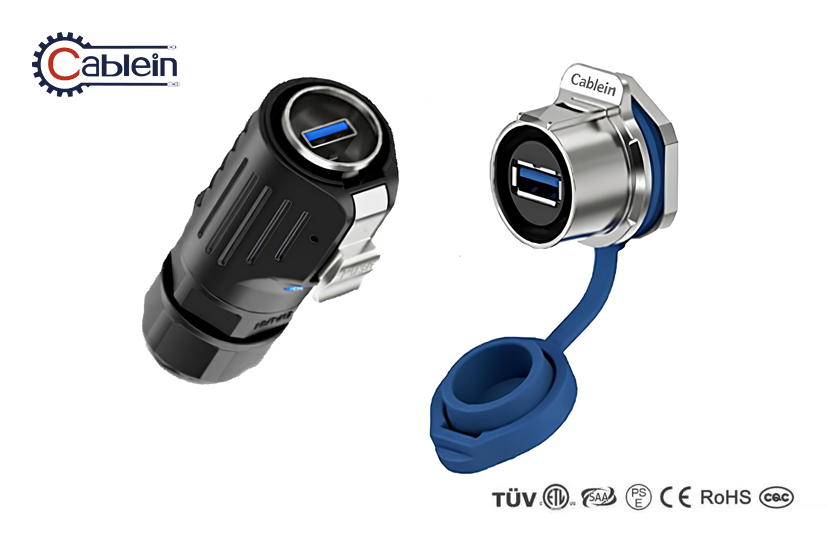
IP68 LP16 Type-C Waterproof Connector: The Robust Backbone of Modern Industrial Connectivity
When your equipment operates in rain-soaked outdoor installations, dusty manufacturing floors, or saltwater environments, standard USB connections become liabilities. The LP16 USB Type-C waterproof connector transforms these vulnerabilities into secure, reliable industrial-grade interface points. This panel-mount solution delivers enterprise-level protection with IP68 sealing while maintaining high-speed data transfer up to 10Gbps and power delivery capabilities. Engineers and procurement managers across LED lighting, renewable energy, industrial automation, and marine sectors rely on this ruggedized connector because it solves a critical problem: maintaining consistent connectivity where conventional ports fail catastrophically under environmental stress.
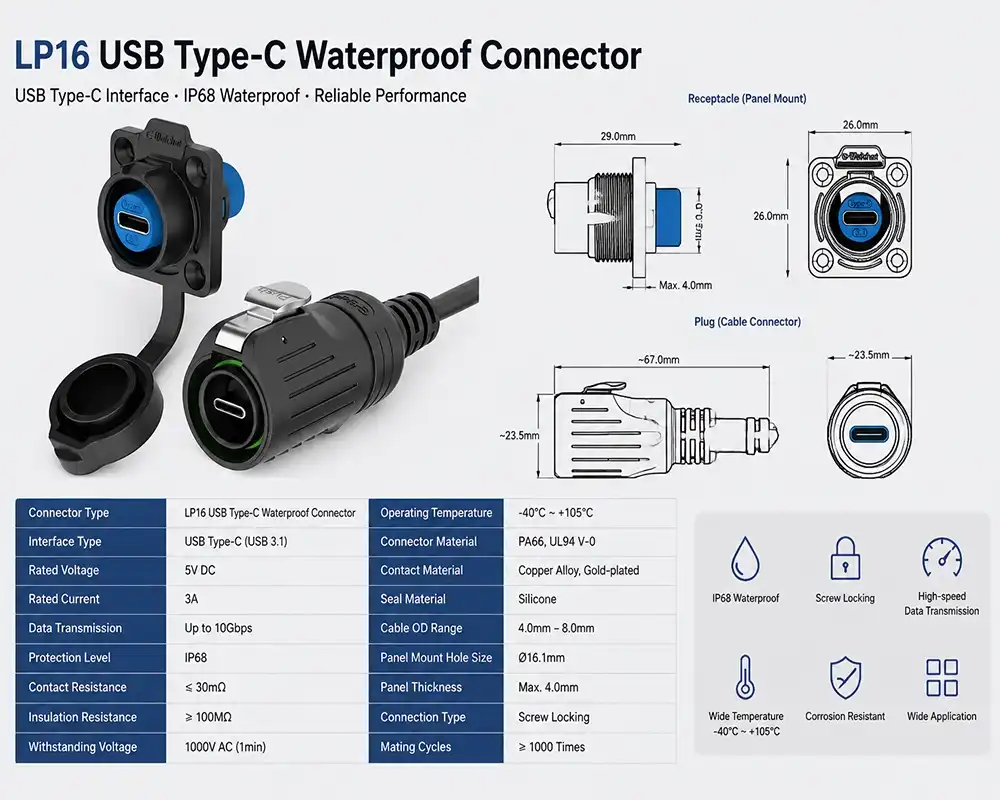
Understanding the LP16 USB Type-C Waterproof Connector: Specifications and Key Features
What Sets This Industrial Connector Apart
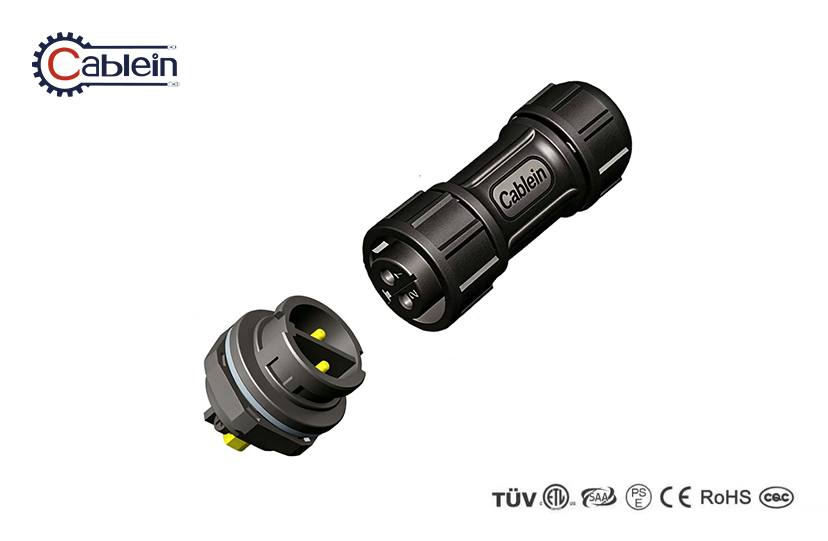
Thoughtful Engineering Delivers USB Type-C for Harsh Environments LP16 This panel mount feed-through design offers a sealed pass-through point in equipment enclosures, not seen in consumer ports. The Type-C female to female permits cable connections to be made from either side of the panel while retaining full data and power functioning and shielding sensitive interior components.
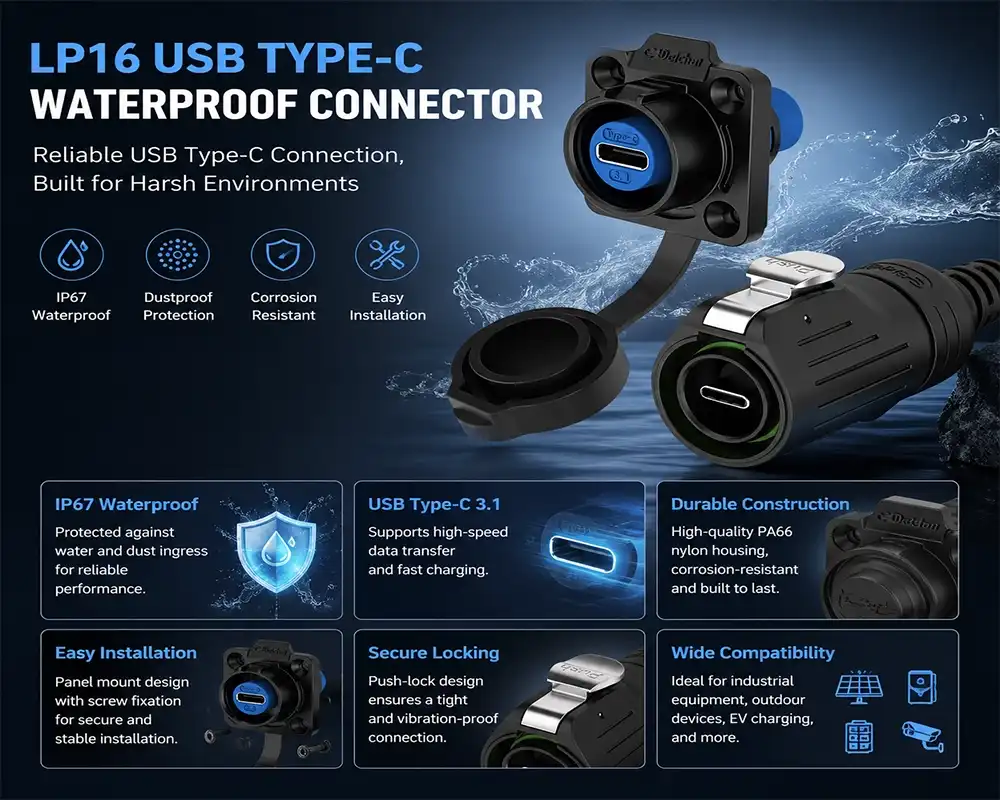
The connection is IP67 and IP68 rated and has advanced sealing methods to avoid dust entry and damage from water immersion. IP67 rating protects against temporary immersion for up to one metre for thirty minutes whereas IP68 versions are designed for constant immersion at defined depths. This difference is crucial when choosing components for outdoor LED setups or underwater data recorders.
Temperature Resilience and Material Engineering
With an operating temperature range of -40℃ to +105℃, it is perfect for severe situations from Arctic monitoring stations to desert solar arrays. The PBT plastic housing offers UL94-V0 flame retardant properties as well as high chemical resistance to industrial fluids and solvents. This material selection also minimises deterioration when the connections are exposed to lubricants, coolants or cleaning chemicals often found in production facilities.
Gold plated copper alloy connectors provide a contact resistance of less than 30mΩ to guaranty steady conductivity for data transmission and power supply. The housing is made of zinc alloy, pearl hard chrome plated for corrosion resistance, and salt spray tested for marine and coastal applications. UV stabilisation protects against outdoor ageing and brittleness and increases the use life when exposed to direct sunshine.
Mechanical Durability and Installation Efficiency
The snap-lock bayonet connection method offers a safe one-handed operation without tools. This is especially important during maintenance when professionals are working from ladders or in tight places. The mechanical life is over 1,700 mating cycles, therefore there are fewer replacements and lower maintenance cost than friction-fit consumer connections that loosen with regular use.
EMI/EMC shielding preserves signal integrity in electrically loud industrial environments where motor drives, welding equipment and high frequency gear cause electromagnetic interference. With its 3A DC @ 20V current handling, the module can accommodate power-hungry peripherals, while its 10Gbps data transmission capabilities satisfies the needs of contemporary industrial IoT applications for real-time monitoring and diagnostics.
Comparing LP16 USB Type-C with Other Waterproof Connectors: Making the Right Choice
Material Strength and Lifespan Analysis
Standard waterproof connectors often compromise between environmental protection and electrical performance. The LP16 USB Type-C waterproof connector balances both through material selection and structural design. While basic IP-rated USB enclosures rely on rubber gaskets that degrade over time, the LP16's bayonet locking mechanism maintains seal integrity across temperature cycles and mechanical stress.
This panel-mount solution is compared to conventional USB Type-C waterproof adapters and strong benefits for permanent installations are shown. The adapters add bulk , and failure points at numerous interfaces . The LP16 removes these weaknesses by building the sealing into the equipment enclosure. The zinc alloy housing offers a greater level of impact resistance than plastic-bodied equivalents, decreasing the likelihood of physical damage during installation and use.
Cost-to-Value Considerations for Procurement Teams
Total cost of ownership is more than just the unit price. Installation labour, frequency of maintenance and downtime due to failure are the major determinants of the economics of the project. The solderless, quick-connect design decreases installation time by around forty percent compared to conventional wiring techniques. This save in labour adds up over big installations, such as stadium lighting systems or solar farm monitoring networks.
Bulk buying has its perks in terms of stocking up for multi-phase projects. In an effort to guaranty a continuous supply of Cablein we always have a stock of more than 10.000 pieces for each item, without any minimum order quantity that lesser suppliers need. Standard configurations ship in 7 to 10 days so you may schedule the installation without project delays.
Decision Criteria for Supply Chain Professionals
In procurement evaluations, certification compliance as well as performance standards should be taken into account. RoHS compliant and TUV and CE certified per ISO9001, installations conform to international safety standards without the need for further clearance procedures. This is especially critical for equipment shipped to European and North American markets, where non-compliant components need expensive redesigns.
Specification matching to current equipment designs is simplified with custom panel cutout measurements and housing material choices. This customisable feature minimises technical modifications and provides a consistent look across product lines. Responsiveness of the technical help during the specification phase avoids expensive errors; we provide 24-hour engineering consulting to answer integration problems prior to production commitments.
The Business Advantage: Procurement Insights for LP16 USB Type-C Waterproof Connectors
Sourcing Strategies for Reliability and Authenticity
You may be sure of the products’ legitimacy and their constant quality by dealing with reputable manufacturers like Cablein Technology. With nine years of industry experience and more than thirty utility model patents, we are the innovators in waterproof connectivity technology. Unlike wholesalers that sell rebranded parts from many sources, direct manufacturer ties provide traceability and technical responsibility.
Regional stock availability from authorised supplier networks means shorter shipment times and lower freight costs. However, for requirements of customisation, direct involvement with the manufacturer is useful. We have an in-house R&D team that builds private moulds for unique applications that generic distributors cannot handle. This is an important capacity when regular goods cannot fulfil project-specific environmental or mechanical criteria.
Purchasing Structures and Total Cost Management
There are savings of scale to be had by buying in bulk . But procurement managers need to balance inventory carrying expenses against volume discounts . We have flexible order procedures that support huge deployments or trial projects and don't penalise a smaller first buy. This technique minimises the financial risk associated with product validation stages before committing to full scale purchase.
Competitive price structures point to production efficiency, not to sacrifice on quality. In our 6,000 square metre plant, precise manufacturing machinery ensures strict tolerances, along with control over labour costs. This operational efficiency allows for pricing that can compete with lower-quality options while offering better long-term dependability.
Quality Assurance Through Certification and Warranty
Systematic quality control throughout manufacturing, in accordance with ISO9001:2015. Each connection is tested for waterproof performance and validated for durability before shipping. This inspection methodology eliminates field failures that interrupt operations and ruin equipment reputations. Salt spray testing proves corrosion resistance claims, not only relying on material data sheets.
The extended warranty coverage reflects the manufacturer’s belief in the life of the device. After-sales assistance comprises technical troubleshooting and the availability of replacement parts throughout the product lifespan. This commitment decreases procurement risk vs providers who leave after the first sale or may not have the engineering ability to fix field difficulties.
Real-World Applications and Benefits of the LP16 USB Type-C Connector
Outdoor Infrastructure and Environmental Resilience
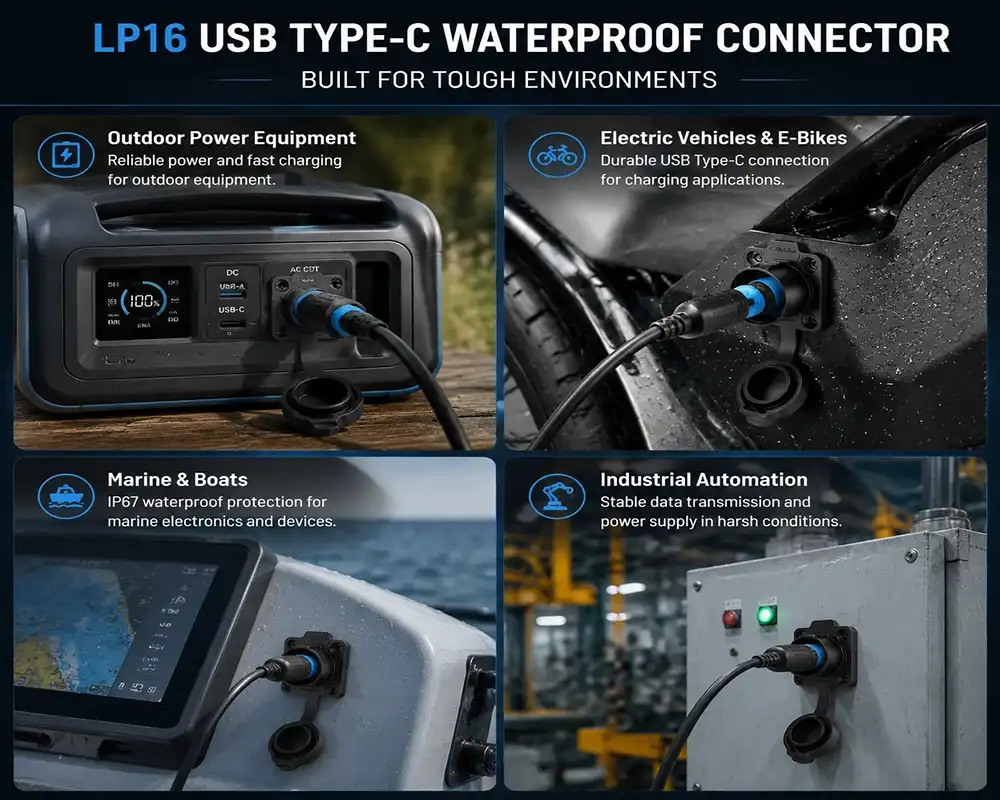
Smart city deployments demand connectivity that withstands weather extremes without maintenance intervention. Stadium displays updating content during rainstorms, intelligent traffic signage operating through winter freeze-thaw cycles, and landscape lighting systems exposed to irrigation moisture all benefit from IP68 protection. The LP16 USB Type-C waterproof connector's UV-stabilized housing prevents the brittleness that causes standard enclosures to crack after months of sunlight exposure.
For municipal projects, installation efficiency is especially important. A one-handed bayonet connection may save a lot of labour hours when technicians install hundreds of linked devices across distant sites. In retrofit projects when existing equipment is upgraded with connection in tight maintenance windows, this efficiency is compounded.
Industrial Automation and Manufacturing Reliability
CNC machines need safe programming interfaces that can resist oil mist, metal dust and vibration. A robotic arm requires diagnostic connections that can withstand unintentional cable stress throughout the robot’s operating cycles. The LP16’s locking mechanism avoids disconnections that disrupt production runs and cause material waste.
In industrial monitoring applications, sensor networks are used to create continuous data streams to support predictive maintenance programmes. Connection reliability directly affects data integrity - if there are intermittent connections you will get incorrect readings that will generate unneeded interventions or will miss real failure signals. This difficulty is solved by the low contact resistance and mechanical stability of gold-plated contacts.
Marine and Renewable Energy Deployments
Standard electronics quickly fail in saltwater situations. Hydrographic sensors, underwater robots, maritime monitoring devices – all need a watertight integrity that can withstand long-term immersion. The LP16’s salt spray resistance and its IP68 certification help to avoid catastrophic failures that threaten expensive equipment installed in remote or deep water sites where rescue and repair are prohibitively costly.
Environmental exposure in EV charging infrastructure and solar monitoring systems also presents comparable concerns. These systems run unattended for years . Connector dependability is key to system uptime . The increased temperature range covers solar panel surface temperatures above ambient and charging equipment running in unheated enclosures under winter circumstances.
Future-Proofing Through Standardization
USB Type-C is the industry's move towards ubiquitous connection. To provide compatibility with expanding peripheral devices and control systems, LP16 connections are specified today. Standardisation means less long-term maintenance complexity compared to proprietary connection systems that need unique replacement parts and restrict alternatives for equipment integration.
The 10 Gbps data transmission capacity surpasses the needs of many industrial applications today, but gives headroom for the future as monitoring and control methods become more data dense. As technology progresses, bandwidth will not become outdated and high resolution video surveillance, real-time thermal imaging and sophisticated sensor fusion applications will benefit from this.
Conclusion
The LP16 USB Type-C waterproof connector addresses fundamental challenges that procurement managers, R&D engineers, and operations professionals face when deploying connected equipment in demanding environments. Its combination of IP68 environmental protection, robust mechanical design, and full USB Type-C functionality delivers reliability that standard consumer connectors cannot match. Material quality, certification compliance, and proven performance across diverse applications make it a strategic choice for industrial connectivity infrastructure. When project success depends on connections that endure rather than fail, this industrial-grade solution provides the durability and performance that critical applications demand.
FAQ
1.Does the LP16 support USB Power Delivery specifications?
The connector handles up to 100W power delivery with high-current contacts rated for 20V/5A. This capability supports power-hungry devices including industrial tablets, high-brightness displays, and control panels that require both data connectivity and substantial power delivery through a single interface.
2.What distinguishes IP67 from IP68 protection levels in this product?
IP67 certification protects against temporary immersion at one meter depth for thirty minutes, suitable for equipment exposed to rain or occasional splashing. IP68 versions accommodate continuous underwater operation at specified depths, necessary for permanently submerged applications like underwater robotics or marine sensors.
3.Can standard USB-C cables connect to LP16 sockets?
While the internal interface follows USB-C standards, achieving rated IP protection requires the matching LP16 series plug with integrated sealing and bayonet locking. Using standard cables compromises waterproof integrity and mechanical security that industrial environments demand.
Partner with Cablein for Your Industrial Connectivity Needs
Selecting the right LP16 USB Type-C waterproof connector supplier impacts project timelines, budget performance, and long-term operational reliability. Cablein Technology combines manufacturing expertise with responsive technical support to serve LED lighting manufacturers, renewable energy system integrators, industrial automation companies, and infrastructure contractors across global markets.
Our engineering team provides customization support for specialized panel cutout dimensions, housing materials, and cable assembly configurations that standard products cannot accommodate. With certifications including TUV, CE, ETL, and RoHS compliance, our connectors meet international market requirements without additional approval delays.
Contact nick@cableinco.com to discuss your project specifications with our technical team. Whether you need sample evaluation, bulk procurement quotes, or custom development consultation, we deliver the LP16 USB Type-C waterproof connector manufacturer partnership that accelerates your product development while ensuring field reliability. Our stable inventory and seven-to-ten day delivery cycles keep your production schedules on track.
References
1. Industrial Connector Standards Committee. "Waterproof Connector Testing Protocols for Harsh Environments." International Electrotechnical Commission Technical Report, 2022.
2. Zhang, L. and Roberts, M. "Material Selection for Outdoor Electronic Enclosures: Comparative Analysis of Polymer Performance." Journal of Industrial Electronics, vol. 48, no. 3, 2021, pp. 112-128.
3. American Society for Testing and Materials. "Standard Test Methods for Environmental Stress on Electronic Connectors." ASTM International Publication D-5432, 2023.
4. Chen, W. "Signal Integrity in Industrial USB Implementations: Shielding and Contact Resistance Effects." IEEE Transactions on Industrial Electronics, vol. 69, no. 7, 2022, pp. 7234-7242.
5. European Committee for Electrotechnical Standardization. "Safety Requirements for Industrial Control Equipment Interconnections." CENELEC Standard EN 61984:2021.
6. Mitchell, D. and Thompson, R. "Total Cost of Ownership Analysis for Industrial Connectivity Infrastructure." Supply Chain Management Review, vol. 27, no. 2, 2023, pp. 44-59.