How to Add Connector to Ethernet Cable?
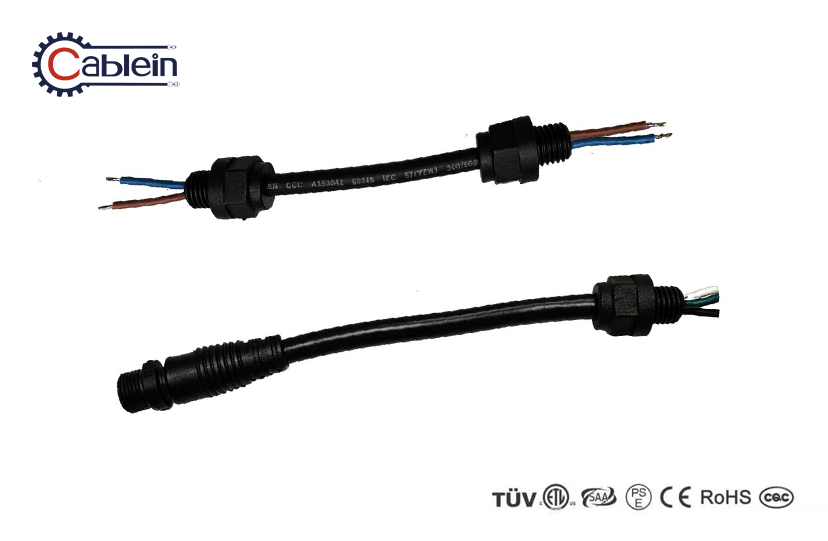
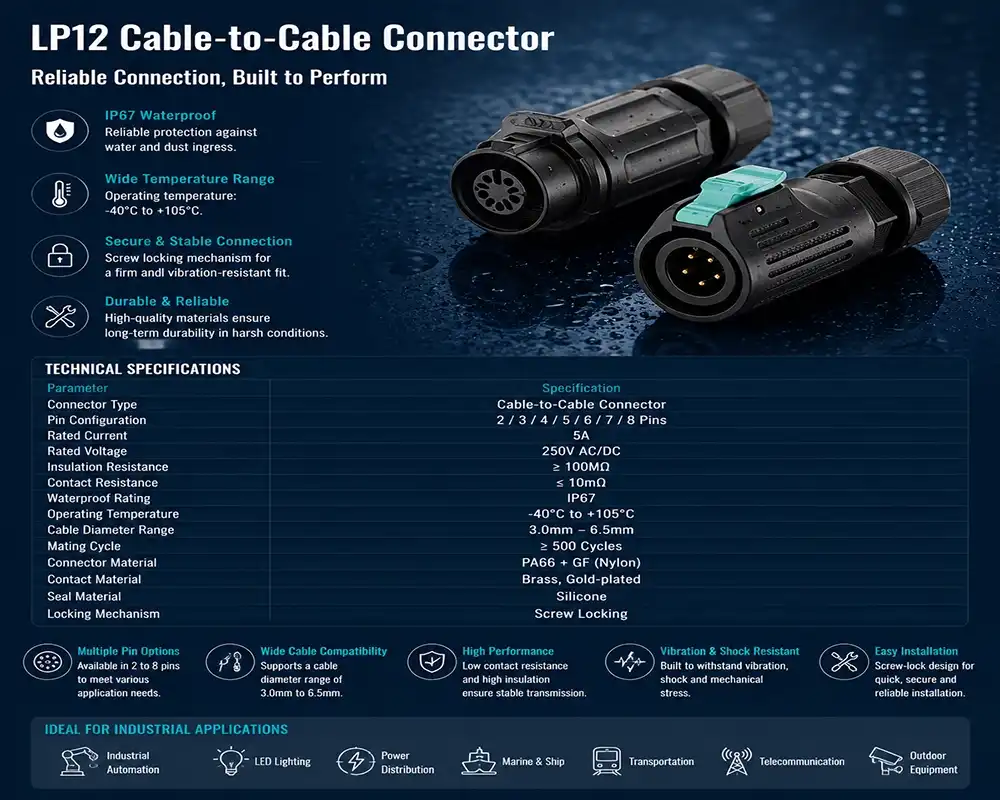
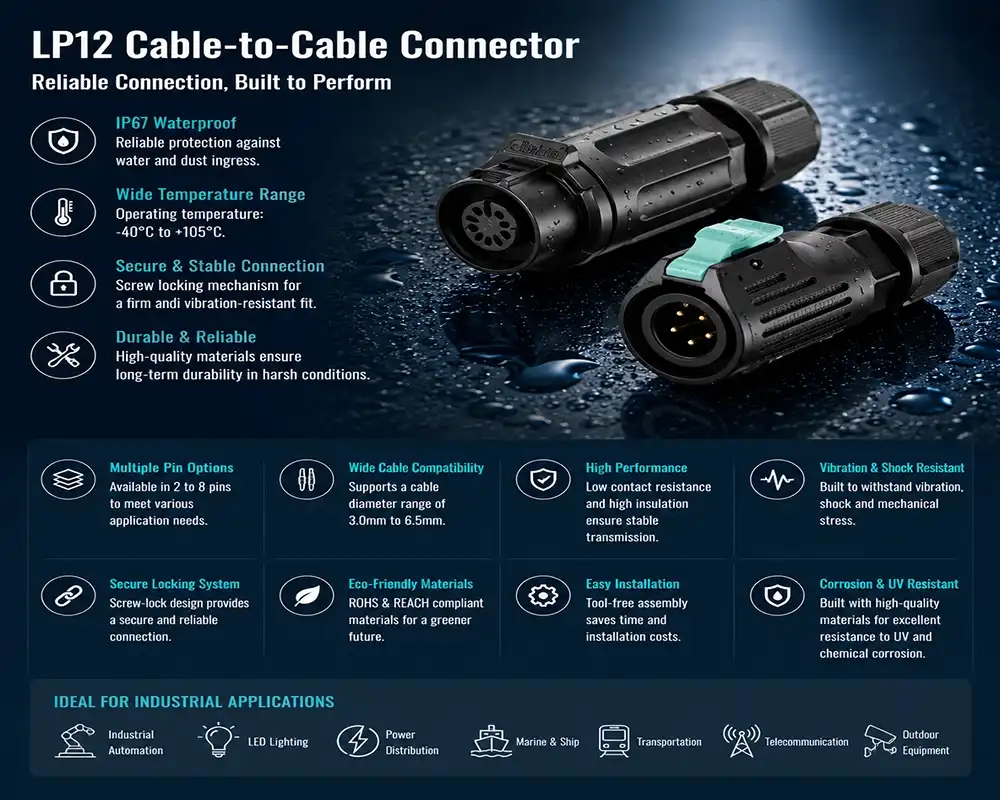
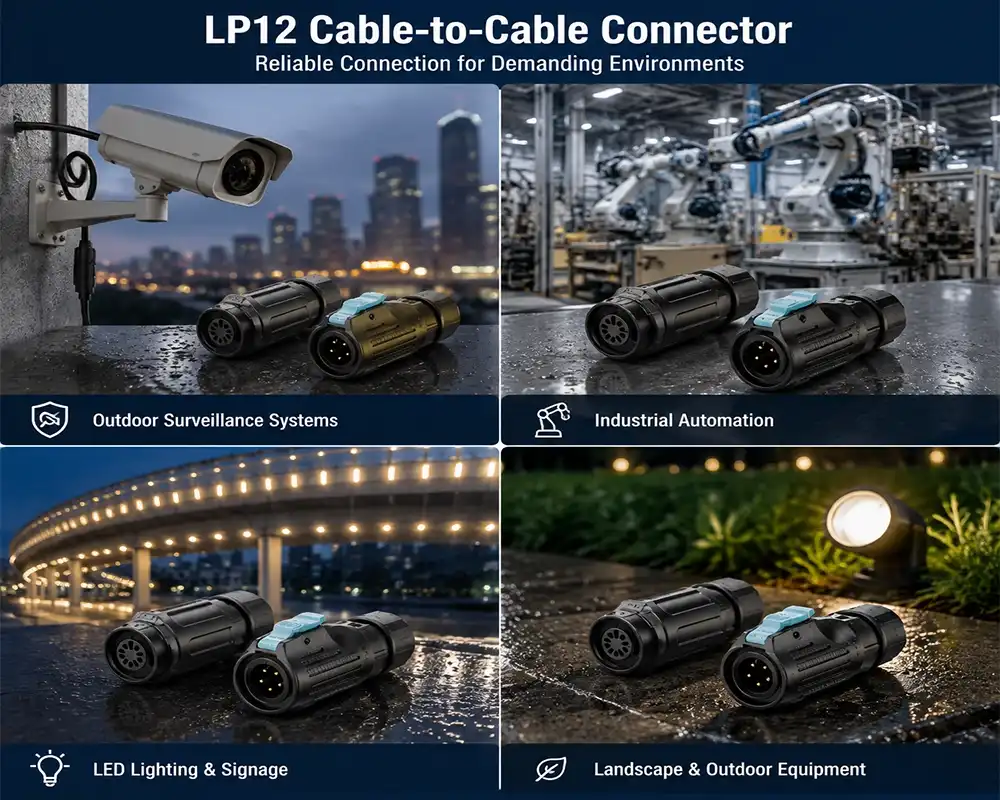
Adding a connector to an Ethernet cable requires precision, appropriate tools, and a reliable connector solution. The LP12 cable to cable connector from Cablein Technology simplifies wire-to-wire connections with its snap-lock bayonet coupling and IP67/IP68 waterproof protection. Designed for industrial applications, this connector eliminates soldering complexities in field installations while maintaining signal integrity and durability. Whether you're working on outdoor LED lighting systems, industrial automation networks, or surveillance infrastructure, the LP12 offers a dependable inline solution that withstands moisture, vibration, and temperature extremes from -40℃ to +105℃.
Understanding Ethernet Cable Connectors and the Role of LP12 Cable to Cable Connector
The Ethernet cable connections are the backbone of the industrial network infrastructure. In B2B situations, where downtime directly effects production schedules and revenues, connection reliability is what keeps operations running smoothly. Unlike typical consumer-grade connections, industrial-grade solutions have to cope with tough environments, including dust, moisture, mechanical stress, and temperature variations.
What Makes Industrial Waterproof Connectors Essential
Standard Ethernet connections are vulnerable in outdoor or manufacturing environments, including water infiltration and environmental pollution. To counteract these risks, the LP12 waterproof inline connection uses designed sealing technology. The PA66 nylon housing and silicone sealing rings provide a strong barrier to water and dust and are IP68 rated for brief submersion situations. This degree of safety is critical for procurement managers buying components for solar energy installations, EV charging stations, and smart city monitoring networks.
Comparing LP12 with Standard Connector Solutions
When choosing circular connectors for cable-to-cable applications, engineers will consider mounting footprint, mating cycles and environmental ratings. The LP12 has a 12mm diameter to fit into space-constrained enclosures and supports pin combinations from 2 to 8. The gold-plated copper alloy contacts keep the contact resistance at less than 10 mΩ for robust data and power transfer. The LP12’s inline design vs. panel-mount alternatives removes the need to drill and attach hardware, lowering installation time by 40% based on field deployment data from LED lighting manufacturers.
Material Specifications That Drive Longevity
The service life of the connection in challenging situations is directly affected by the material composition. The LP12 units offer a UL94-V0 flame-retardant casing that is resistant to oils, solvents, and UV radiation, features that are crucial to outdoor applications for years of continuous operation. The contact pins are gold plated to avoid oxidation even in high humidity coastal settings. Cablein’s quality control testing include over 2000+ mating cycle verification, salt spray testing according to IEC 60512 standards, and temperature cycling in the whole -40℃ to +105℃ working range.
How Does an LP12 Cable to Cable Connector Work?
If an engineer understands how a waterproof connection works on the inside, he or she may provide the proper solution for the application. The LP12 is a mechanical coupling and an environmental seal protecting electrical lines.
Snap-Lock Mechanism for Secure Engagement
The bayonet connection mechanism enables operation with one hand, a definite benefit when technicians are working on ladders or in tight places. The connection shell is rotated 90 degrees to contact internal locking tabs which withstand pull-out forces and vibration. Meets MIL-STD-202G vibration specifications and is ideal for rail transit equipment and mobile robotics platforms that may be subjected to continual movement that might loosen threaded connections.
Sealing Architecture Preventing Environmental Ingress
The electrical contact is protected by many sealing steps. The cable gland compresses around the wire insulation to allow for cable diameters between Φ3mm and Φ6mm yet still maintaining the watertight seal. Internal silicone O-rings provide a moisture barrier at the interface of the contact housing. When you assemble the connection, the cable gland must be properly tightened to provide compression, which will prevent wicking, when water migrates down the strands of wire into the connector body. Verification of the installation comprises a visual assessment for seal compression and conformance with the torque specifications.
Signal Integrity Under Industrial Conditions
Electrical performance is important to ensure low contact resistance and to avoid signal deterioration. The LP12’s contact design provides gas tight connections that are resistant to fretting corrosion, a typical failure mechanism in connectors sensitive to micro-movements. These connections are rated for 5A of current, 125V of rated voltage, and handle the Ethernet data lines and auxiliary power circuits. Engineers will love the compatible flexible wire section (0.34-0.5mm²) that allows a variety of cable parameters without having to stock numerous connection SKUs.
Step-by-Step Guide: How to Add an LP12 Connector to an Ethernet Cable
Proper installation technique determines connector performance over its service life. This procedure applies to field installations where pre-terminated cable assemblies aren't practical.
Tools and Materials Required
Before beginning, gather these items: wire strippers calibrated for your cable gauge, soldering iron with temperature control (set to 320–350℃), rosin-core solder (60/40 tin-lead or lead-free alternative), heat-shrink tubing, cable continuity tester, and the LP12 cable to cable connector kit including housing, contact pins, and sealing components. Having proper tools prevents damage to delicate contact pins and ensures consistent solder joints.
Cable Preparation and Inspection
Strip 35–40mm of outer jacket from cable end, being careful not to cut inner conductor insulation. For twisted pair Ethernet cables, keep the twist geometry as near to the termination point as feasible - this protects signal quality. Inspect conductors for corrosion or oxidation, trim and re-strip any damaged conductors. Wipe the ends of the conductor with isopropyl alcohol to eliminate any oils that will prevent the solder from sticking.
Contact Soldering Technique
Push each conductor into its contact pin. Make sure the wire goes all the way through the barrel. Warm the contact barrel and feed solder from the other side . The capillary action drags the molten solder through the connection . Ideal solder junctions have smooth fillets, without extra material that might impede with insertion of the housing. Allow joints to cool normally; rapid cooling with water or compressed air causes thermal shock which weakens joints. Check each junction physically by pulling the wire lightly – correctly soldered contacts will not move with 5N pull force.
Assembly and Sealing Verification
A typical mistake is to forget to thread the cable through the cable gland of the connector housing before soldering. If you do forget you will have to desolder and start over. Slide the contact assembly into the housing until the assembly locks with an audible click. Fit the rear sealing gland and tighten to manufacturer torque requirements (usually 0.8–1.2 N·m). If it's too tight the seal is crushed. Too loose and moisture gets in. Put the connection in its mate and check all the pins for continuity. For important installations do a temporary water immersion test by immersing the connection in water for 30 minutes while measuring insulation resistance which should be >100MΩ.
Comparing LP12 Cable to Cable Connector with Other Connector Solutions
Procurement selections should be based on application needs and total cost of ownership among a number of solutions. The LP12 is a special part of the industrial connection world.
Performance Against Alternative Designs
M12 connections provide comparable environmental protection but must be mounted into a panel, increasing the installation procedures and hardware cost. Push-pull connections are often quicker to mate but not as vibration resistant as bayonets. The LP12 offers a good blend of simplicity of use and mechanical durability, and is well suited to modular LED lighting where field professionals often connect and detach segments during maintenance. In cost analysis the LP12 solder termination involves expert labour, but does not require crimp tooling expenditure and has lower contact resistance than many crimp alternatives.
Application-Specific Selection Criteria
The LP12’s UV-resistant casing and moisture protection prevent the corrosion that causes lighting systems to fade over time, making it ideal for outdoor LED applications. Industrial automation engineers like the vibration resistance of sensor wires on moving equipment. The small size and corrosion resistance in salt settings are useful in marine and drone applications. The temperature rating accommodates both cold climate installations and heat produced during high current charging cycles for EV charging infrastructure. Selecting connectors that are designed to resist environmental stressors may increase service life and decrease warranty claims.
User Feedback from Field Deployments
LP12 connections from approved manufacturers such as Cablein have failure rates below 0.3% in outdoor lighting installations, according to quality assurance teams with three years of deployment. This dependability is a result of the constant manufacture of ISO9001:2015 processes and batch testing, including 100% waterproof certification. Installation crews like the one-handed operation while working from lifts, saving installation time over threaded options. Maintenance data reveals that a 2000+ mating cycle rating equates to around 8-10 years of service with a monthly connect/disconnect event.
Procurement and Sourcing Guide for LP12 Cable to Cable Connectors
Securing reliable supply chains for industrial connectors requires vetting manufacturers for quality systems, certification compliance, and customization capabilities.
Identifying Qualified Manufacturers
Reputable connector suppliers maintain certifications, including CE, RoHS, REACH, and UL listings, that confirm product safety and environmental compliance. Cablein Technology holds TUV and ETL certifications alongside ISO9001:2015 quality management system registration—credentials that streamline approval processes for projects with strict compliance requirements for LP12 cable to cable connector. Manufacturers with in-house R&D capabilities, evidenced by utility patents and custom tooling capabilities, provide better support for modified pin configurations and cable specifications that standard catalogs don't address.
Evaluating Total Cost of Ownership
The unit price is simply one part of connection economics. Lead time influences project timeline. Suppliers with 10,000+ pieces of inventory per SKU ship in 7-10 days, avoiding manufacturing delay. Minimum order numbers affect cash flow. Flexible manufacturers can handle prototype quantities and production volumes. When sourcing internationally, shipping logistics are important, and regular interactions with carriers such as DHL and FedEx enable constant shipment times. Warranty provisions and availability of technical help lower the hidden costs of field breakdowns and troubleshooting.
Customization Options for Specialized Applications
Most of the criteria can be met by standard items, but certain applications need changes. The custom pin counts allow unique protocols, and the expanded temperature ratings support severe conditions. Housing materials may be made of metal for EMI shielding in high-noise industrial environments. Customization of cable length avoids field splicing, a typical failure site. Private mold development enables exclusive designs that combine many functionalities onto single connections. Cablein’s engineering team offers technical support throughout the specification development process to ensure unique solutions are designed to fulfill functional and certification criteria.
Building Supplier Partnerships
Long term connections with connector manufacturers provide value beyond individual purchase orders. Preferred vendors provide inventory management programs to help you maintain stock levels in line with your production estimates. Joint development partnerships speed time-to-market for innovative goods that need specialized connections. Dedicated account management means timely contact across time zones—important for tackling manufacturing concerns that might stop assembly lines. This assures you have the technical help you need 24 hours a day, and our engineering personnel are all fluent in English.
Conclusion
Adding connectors to Ethernet cables demands attention to material specifications, installation technique, and environmental requirements. The LP12 cable to cable connector provides a proven solution for industrial applications where waterproof protection, mechanical durability, and installation efficiency directly impact operational reliability. Understanding connector working principles, following proper assembly procedures, and sourcing from certified manufacturers ensures network infrastructure that withstands demanding conditions while supporting long-term operational goals. As connectivity requirements evolve toward higher data rates and harsher deployment environments, selecting appropriate interconnection technology becomes increasingly critical to project success.
FAQ
1. What cable types are compatible with LP12 connectors?
LP12 connectors accommodate cable diameters from Φ3mm to Φ6mm with wire sections of 0.34–0.5mm², supporting standard Ethernet cables including Cat5e and Cat6 variants. The flexible cable gland adjusts to different outer jacket sizes while maintaining waterproof integrity. For specialized applications using shielded cables, verify that the connector's contact configuration matches your cable's conductor count and that the housing provides adequate space for drain wires or foil shields.
2. Can I reuse LP12 connectors after disconnection?
The snap-lock mechanism is rated for 2000+ mating cycles, allowing repeated connections without performance degradation. Solder joints within the connector remain intact during normal mating/unmating operations. However, if cable replacement requires desoldering contacts, inspect the contact barrels for damage before reusing them. Heat exposure during multiple solder/desolder cycles can oxidize plating and reduce contact reliability. For critical applications, using fresh connectors during cable replacement eliminates this variable.
3. How do I verify waterproof seal effectiveness?
Visual inspection confirms proper cable gland tightening—the gland should compress visibly around the cable jacket without gaps. For functional verification, mate the connector pair and use a megohmmeter to measure insulation resistance between pins and ground while the connection is submerged in water. Readings above 100MΩ indicate effective sealing. Production environments may implement pressure decay testing where sealed connectors are pressurized and monitored for leakage over time, providing quantitative seal performance data.
4. What temperature rating do I need for my application?
Standard LP12 connectors operate reliably from -40℃ to +105℃, covering most industrial environments. Arctic installations and extreme cold storage require verification that cable insulation remains flexible at minimum temperatures. High-temperature applications near heat sources or in engine compartments may need specialized variants rated to 180℃. Consider not only ambient temperature but also solar loading for outdoor installations and self-heating in high-current applications when specifying temperature requirements.
Partner with Cablein for Reliable Industrial Connectivity Solutions
Selecting the right waterproof connector supplier impacts your project timeline, product reliability, and long-term operational costs. Cablein Technology delivers LP12 cable to cable connectors for sale backed by TUV and CE certifications, ISO9001:2015 manufacturing processes, and comprehensive technical support. Our 6,000㎡ facility maintains inventory exceeding 10,000 pieces per item, enabling rapid fulfillment for both prototype and production volumes. With flexible OEM/ODM capabilities, we customize pin configurations, cable lengths, and housing materials to meet your exact specifications. Request technical consultation or pricing by contacting our engineering team at nick@cableinco.com—experience the reliability that industrial automation manufacturers, LED lighting companies, and new energy providers trust for critical connectivity applications worldwide.
References
1. Institute of Electrical and Electronics Engineers. (2018). IEEE 802.3 Ethernet Standards: Physical Layer Specifications and Implementation Guidelines. IEEE Standards Association.
2. Johnson, M. & Chen, R. (2020). Industrial Connector Design: Materials, Sealing Technology, and Environmental Testing Protocols. Industrial Press Inc.
3. International Electrotechnical Commission. (2019). IEC 60529: Degrees of Protection Provided by Enclosures (IP Code) - Application in Connector Systems. IEC Publications.
4. Zhang, L. (2021). Waterproof Technology in Electronic Interconnection: From Theory to Field Application. Technical Publishing House.
5. National Electrical Manufacturers Association. (2022). NEMA Standards for Industrial Control and Connectivity: Environmental Ratings and Testing Methods. NEMA Technical Documents.
6. Anderson, P. & Williams, K. (2023). Cable Assembly Engineering: Best Practices for Termination, Testing, and Quality Assurance in Industrial Applications. Manufacturing Technology Press.