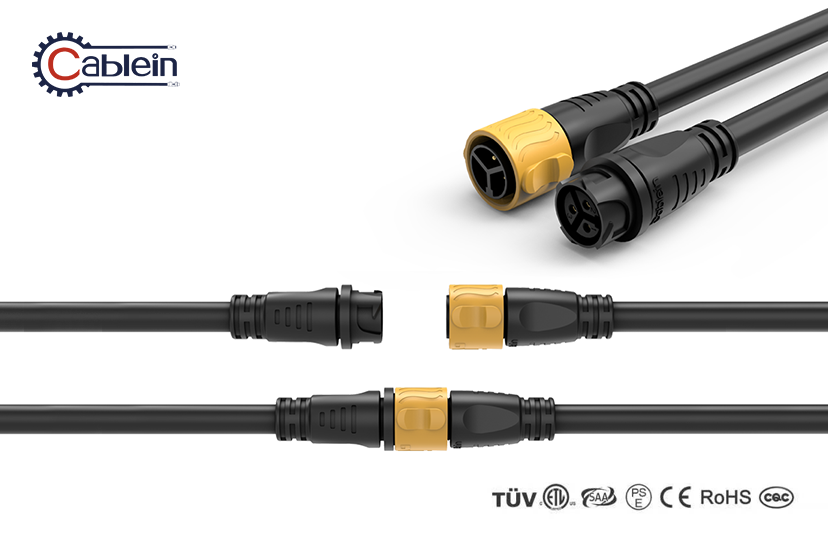
How to Choose Waterproof Couplers for Outdoor Network Installations
If you want to install a network outside, you should start by thinking about the weather. Then match the level of protection, the type of cable, and the signal performance to it. In addition to supporting Cat5e or Cat6 speeds and maintaining contact resistance consistently under heat, vibration, and moisture, a good waterproof ethernet connector should have an IP67 or IP68 rating on the entire mated assembly. The next step is to choose between a molded cable assembly, a coupler, or a cable gland. Finally, test the samples on real equipment and look at the quality records of the supplier. This guide was written for engineers and buyers who need links that stay online outside.
Start With the Environment and the Ratings
Define the Outdoor Installation Requirements
The first thing I always do is ask myself, "Where will this link live?" A solar controller, a buried junction, a camera on a pole, and a boat deck are all different places that put different amounts of stress on a connector. Rain, condensation, dust, sunlight, salt, oil, chemicals, vibration, and impact are the first things that come to mind. Then write down information about the cable, such as its category, conductor type, outer diameter, jacket material, speed, temperature range, and PoE load. Here are the specifics that tell you if you need a waterproof RJ45 coupler to connect two cables, a cable gland to seal an opening in an enclosure, or an already-terminated assembly. Later, engineers and buyers will save time because they can score each sample against the same goals if the requirements are written down and kept short.
Understand IP67 and IP68 Ratings
It is IEC 60529 that gives IP ratings. The first number is for solids, and the second number is for liquids. A 6 means it doesn't let dust in. A 7 means the product can be submerged for a short time, usually for 30 minutes at a depth of up to 1 meter. With an 8, you can stay submerged for as long as the manufacturer says you can. The depth and length of time vary from product to product. An IP68 label that doesn't say how deep or how long it lasts doesn't tell you much. Ask what the tests were done under and make sure that the rating covers the whole pair, including the plugs, seals, housing, and cable. A lot of outdoor links that are above ground can use IP67. For sites that are buried, likely to flood, or get washed away, I look for IP68 test data that can be proven. NEMA 250 enclosure types are also used in U.S. standards. There is a way to compare them to IP codes in the standard, but the two systems check for different things.
Evaluate Electrical and Mechanical Compatibility
Both the signal and the water must be blocked by a waterproof ethernet connector. Match the type of cable to the connector. ANSI/TIA-568.2-D says that Cat5e can work at 100 MHz and Cat6 can work at 250 MHz. Both of these can support Gigabit Ethernet over 100 meters of twisted pair under IEEE 802.3. Look at the data for insertion loss and return loss. Link drops can happen when there isn't enough contact pressure inside a sealed housing. This can raise the contact resistance. Pick shielded versions if you will be near motors, drives, or solar inverters, and make sure the shield is properly grounded. For PoE, look at the current rating, the contact plating, the temperature rise, and the resistance to corrosion. Then look at the mechanical side. Check the temperature, strain relief, locking strength, and UV stability.
Compare Connection Methods and Verify Performance
Compare Common Waterproof Ethernet Connection Methods
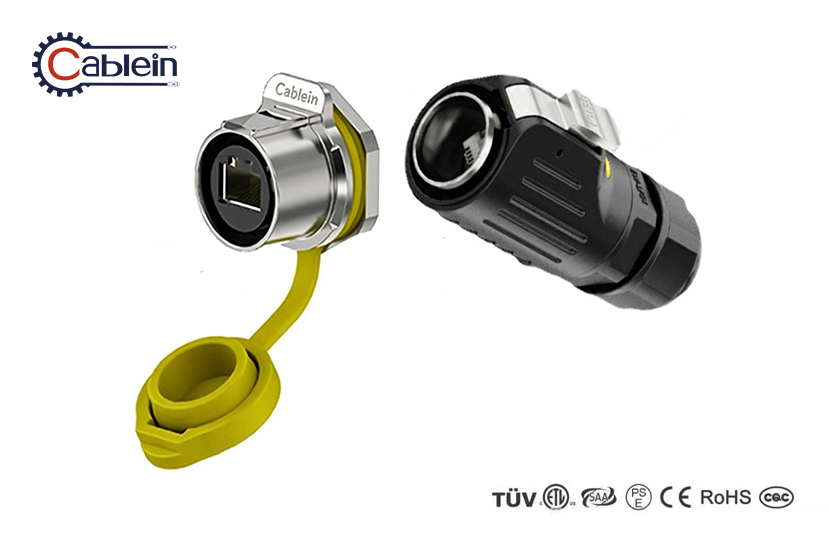
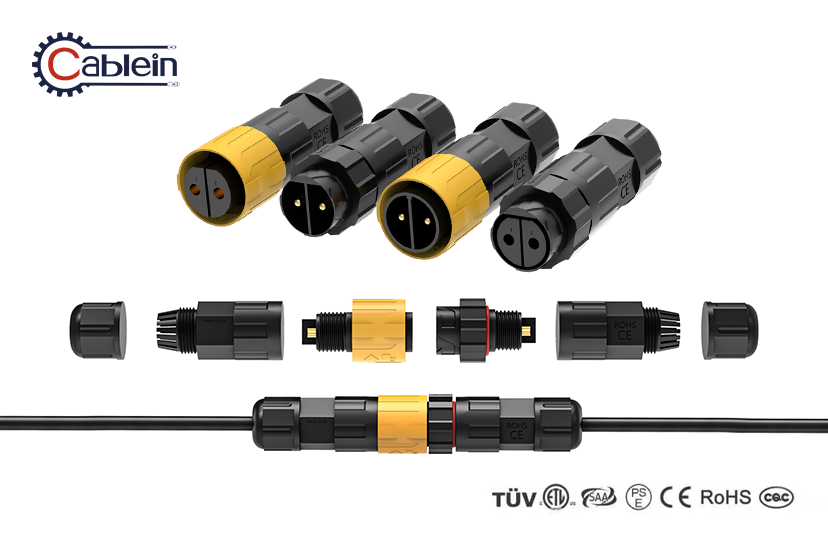
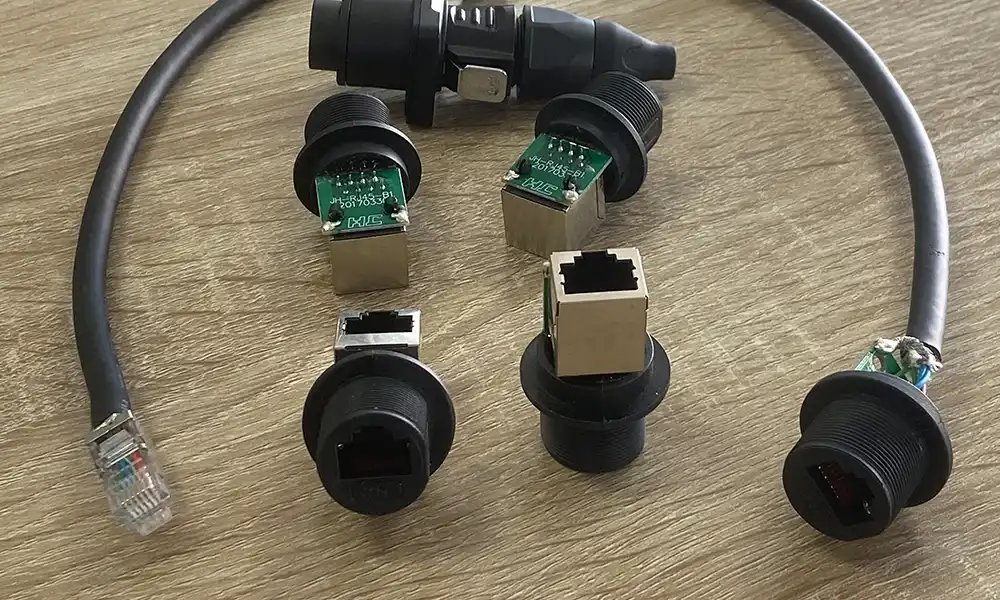
There are four main ways to set up an Ethernet link outside. Two cables can be joined with a waterproof RJ45 coupler. A cable gland keeps a cable from getting wet where it goes through the wall of an enclosure. Field-installable connectors let you make cables of any length and route them in any way you want. When you use factory-molded assemblies, the electrical performance and sealing are always the same. This makes large or repeated deployments easier because there are fewer steps to do on-site. Technicians can open, check, and re-terminate a joint with reusable designs. Most of the time, molded designs give up that serviceability in exchange for a consistent seal. I look at labor cost, access to maintenance, and failure risk all at the same time. A molded assembly is often better for a camera mast that is hard to get to, while a reusable coupler may be better for a test site that moves around a lot.
Test Signal Quality Before You Approve a Sample
However, bench and field tests are what really make the difference. A typical approval process includes three steps: testing a sample on the real device, putting a small pilot batch to use, and then getting orders every month. A cable certifier would be used to compare the sample's insertion loss, return loss, and near-end crosstalk to the Cat5e or Cat6 limits. I would then run the link at full gigabit speed for a few days while changing the temperature. This is because drops in contact resistance are a common sign of contact resistance drift. Don't just look at the pass or fail result; also keep an eye on packet loss and link renegotiations. Keep track of the results by lot so that you can check later shipments against the sample that was approved.
Follow a Proven Installation Process
If a connection is assembled incorrectly it will not operate properly. Before you assemble, make sure that the cable diameter, the RJ45 plug, the coupler and the seals all match. Use the same wiring standard, T568A or T568B, throughout the whole project. Test the cable before closing the housing. Clean and dry the sealing surfaces. Ensure the plugs are firmly installed, the gaskets are in the correct location and the torque is tightened to the mark. Provide some strain relief and drip loop in the cable so water can't get to the junction. Then test the connection for continuity, speed, PoE capability, and packet stability. Lastly, provide the specifics of the installation. Your team may utilise that record to identify the source of each subsequent failure.
Match the Connector to Your Application
Select the Right Fit for Different Use Cases
Each app emphasises the relationship differently. Security cameras require tiny housings that resist UV light, are well-sealed, and run PoE reliably. Outdoor Wi-Fi access stations have to contend with interference, wind and temperature variations. In industrial equipment vibration, oil and chemicals are introduced, thus shielding and mechanical retention are more significant. Salt spray test findings (such as ASTM B117 testing) are vital for maritime systems and requested by many purchasers as verification. Solar systems are subject to UV radiation, temperature changes and electrical noise all at once. There are subsurface networks for water pressure, condensation, soil movement and drainage." An IP rating alone does not cover such problems when selecting a waterproof ethernet connector, and I want to see evidence in this scenario.
Build a Practical Selection Matrix
A scoring matrix makes sure that buying and engineering work together. I divide the criteria into three groups:.
- Protection and environment: Score IP67 or IP68 on the mated assembly, temperature range, UV resistance, chemical resistance, salt-spray performance, and vibration behavior. Marine projects weigh immersion and corrosion most heavily, while rooftop access points weigh UV and temperature cycling. Write the target value beside each item so every sample gets scored the same way.
- Electrical performance: Compare Cat5e or Cat6 compatibility, insertion loss, return loss, contact resistance, shielding, and PoE current rating. Industrial sites near drives and inverters should give shielding the highest weight. Ask each supplier to provide measured data and its test conditions on the mated connector, not only on the bare cable.
- Supply and cost: Include certifications, cable diameter range, reusability, installation method, MOQ, lead time, warranty, and unit price. Compare the total installed and lifecycle cost, including labor and possible truck rolls for repairs, instead of the unit price alone. A cheap part that returns from the field costs far more than it saves.
This matrix turns opinions into numbers and speeds up the sample approval process.
Avoid Common Selection Mistakes
If you only look at the IP label, you could cause a lot of problems outside. Check the test standard, the conditions for immersion, the status of mating, UV exposure, chemical resistance, and vibration performance. Then check to see if it works. If you use the wrong plug sizes, jacket materials, conductor structures, or a mix of third-party plugs, you could hurt both the signal quality and the sealing. Damaged gaskets, loose compression nuts, cables that aren't supported, and bad routing are all examples of installation mistakes that let water in. I suggest installer training, visual inspection, post-installation testing, and regular maintenance checks for places that are hard to get to. One gasket that gets pinched can ruin a design that is otherwise good.
Choose the Right Supplier and Finalize the Order
Evaluate Waterproof Ethernet Connector Manufacturers and Suppliers
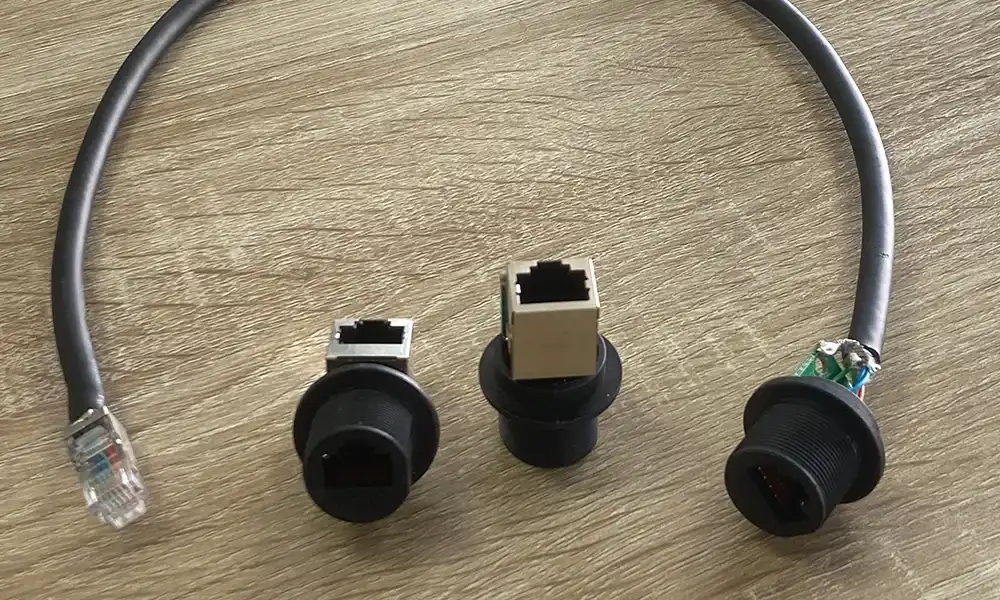
The supplier determines the consistency of your parts from the first sample to the twelfth order each month. Request drawings, material data, certificates, IP test results. Ensure testing was conducted on the whole assembled item that fits together. If the final product requires it, search for CE or TUV documentation. Get to know about the factory final inspection, the quality of the gaskets, the torque and the contact crimping. If you create under your own brand you may utilise unique cable lengths, shielding, colours, packaging, labelling and private moulds. When I interview a manufacturer of a waterproof Ethernet connection I also ask about MOQ, lead time, shipping conditions, warranty, traceability, technical support and how the team manages modifications to materials or designs.
What Cablein Offers for Outdoor Network Projects?
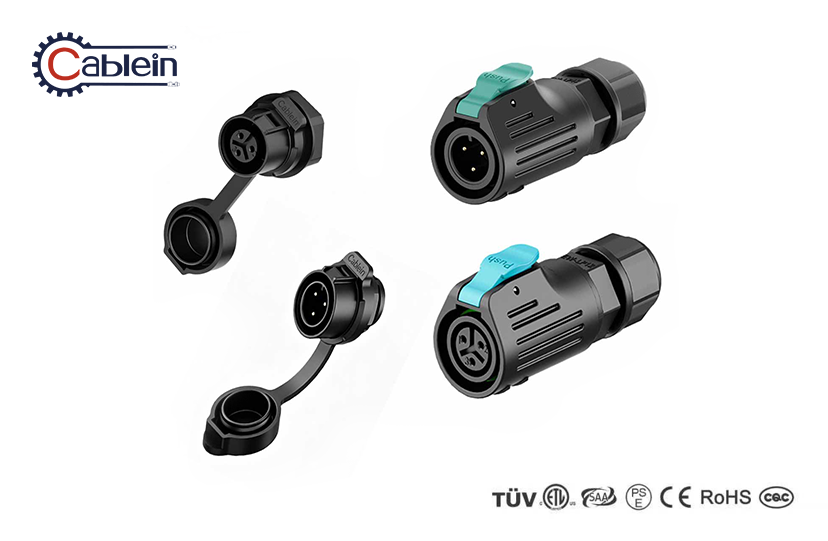
Founded in 2017, Cablein is a national high-tech enterprise headquartered in Longgang, Shenzhen. We develop and manufacture specialised cable assemblies and industrial waterproof connections in a 6,000-naira facility with around 200 staff. We provide IP67/IP68 circular and panel mount, push-lock and solder-free quick-connect styles, as well as bespoke harnesses. We have several applications for our goods, including security and surveillance. We follow the ISO9001:2015 and undertake a complete examination to make sure the waterproofing works and the product lasts. Each product series has several kinds of certifications, such CE, RoHS, REACH, ETL, PSE, SAA, CQC, TUV and so on. Make sure you know which series you need. We have over 10,000 of each item and can deliver stocked products within 7-10 days. For bespoke orders we can work around your project. You may ship with UPS, DHL, FedEx and freight forwarders. Once we know the sort of cable you have and your performance needs, our experts will figure out what waterproof Ethernet connection choice is appropriate for you.
Final Decision Checklist
“Before you approve an order, check that the specs in one document are right. Things to look for include: IP level, cable type, network speed, PoE power, shielding, cable diameter, jacket type, temperature range, measurements, locking method and number of predicted mating cycles. Then confirm the quantity, the replacement parts needed, the certificates, the sample approval, any special demands, the packaging, the labelling, the manufacturing capacity, the lead time, the guarantee, and the technical support. Choose the choice with the least number of risks that meets all of your demands, not simply the cheapest. Finally, be careful to test samples on your actual cable and equipment before placing a big or recurring purchase. The final proof is a pilot batch in service and it keeps your return rate low.
Conclusion
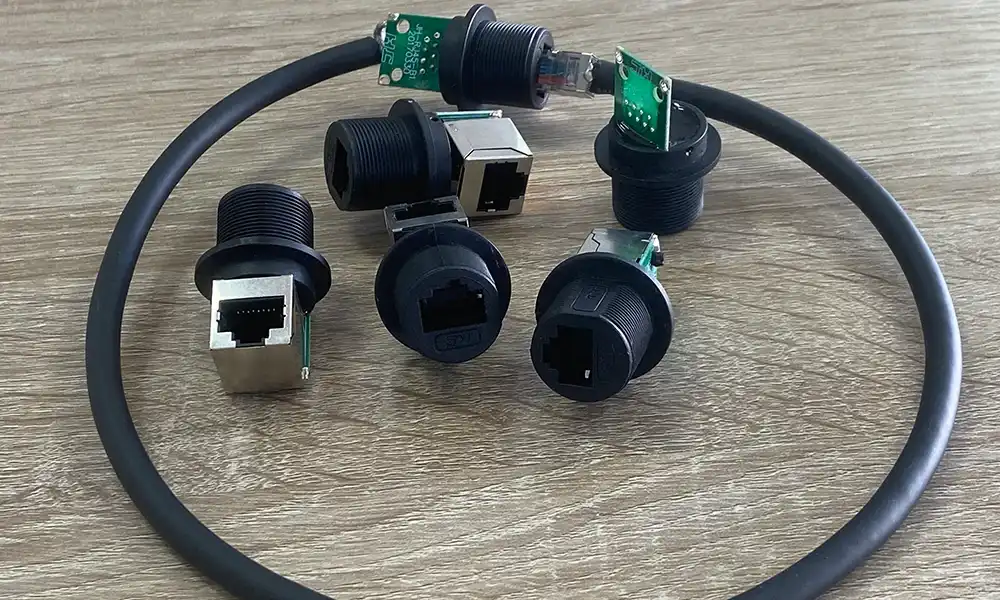
Before you choose a waterproof ethernet connector for outdoor ethernet there are things that you need to know about the environment and the cable. This is because the requirements depend on how much water, UV light, salt, vibration and heat the wire will be subjected to. IP67 is for temporary immersion, IP68 requires particular test circumstances, and both only apply to the finished product. Regardless of the signal type, insertion loss, return loss, contact resistance, shielding and PoE capacity must be verified on actual hardware. Different sorts of maintenance and operations need different kinds of couplers, cable glands and moulded assemblies. To safeguard the seal, make sure you fit the correct one. When quality control is verified by the suppliers, certificates and customisation and applications are compared based on scores, there are less likely to be failures in the field. Sample and pilot testing indicate that the ideal option is not the cheapest component, but the part with the least risk to the total application.
FAQ
What is the difference between IP67 and IP68?
IP67 protects against short-term immersion, usually up to 1 meter for 30 minutes. IP68 covers continuous immersion in water up to the depth and for the amount of time specified by the manufacturer. It's not always clear which is better. Match the conditions that were tested to your site.
Can a waterproof ethernet connector carry PoE?
Yes, as long as the contacts, plating, and current rating are right for the PoE class. Compare the temperature rise data to the needs of your device as set out in IEEE 802.3at or 802.3bt.
Do shielded cables need a shielded connector?
Yes. Connect a shielded cable to a shielded connector and make sure the cable is properly grounded so the shield stays in place. This helps keep interference from getting too close to motors and inverters.
What should I include in a quote request?
Give the IP rating, the type and diameter of the cable, the shielding needs, the amount needed, the environment, the customization needs, and the documentation needs.
Request a Cablein Waterproof Ethernet Connector Quote for Your Outdoor Network
Cablein offers waterproof ethernet connector solutions with IP67/IP68 ratings, OEM/ODM customization, ISO9001:2015 quality control, quick shipping (7–10 days for in-stock items), and 24-hour technical assistance. Different series have different certifications, such as CE, RoHS, and TUV. Send your cable type, environment, quantity, and test goals to nick@cableinco.com, and our team will help you find a solution and set up samples.
References
1. IEC 60529: Degrees of Protection Provided by Enclosures (IP Code), 2013
2. IEEE 802.3: IEEE Standard for Ethernet, 2022
3. IEEE 802.3bt: Physical Layer and Management Parameters for Power over Ethernet over 4 Pairs, 2018
4. ANSI/TIA-568.2-D: Balanced Twisted-Pair Telecommunications Cabling and Components Standard, 2018
5. ASTM B117: Standard Practice for Operating Salt Spray (Fog) Apparatus, 2019
6. NEMA 250: Enclosures for Electrical Equipment (1000 Volts Maximum), 2020

_1792292825484.webp)