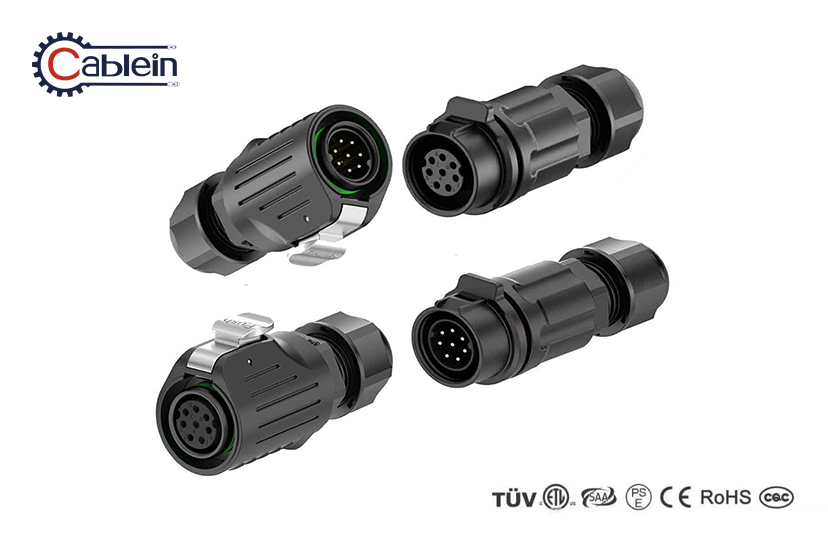
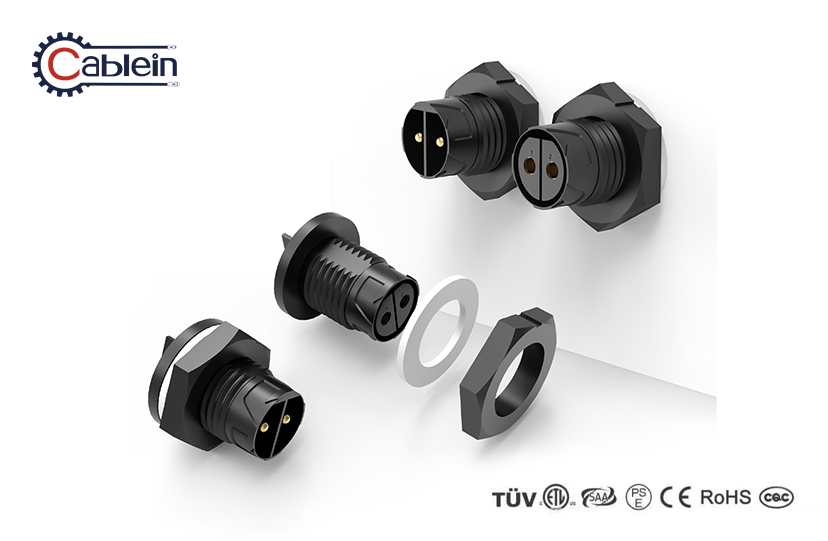
What are the common applications for M20 inline waterproof electrical connectors?
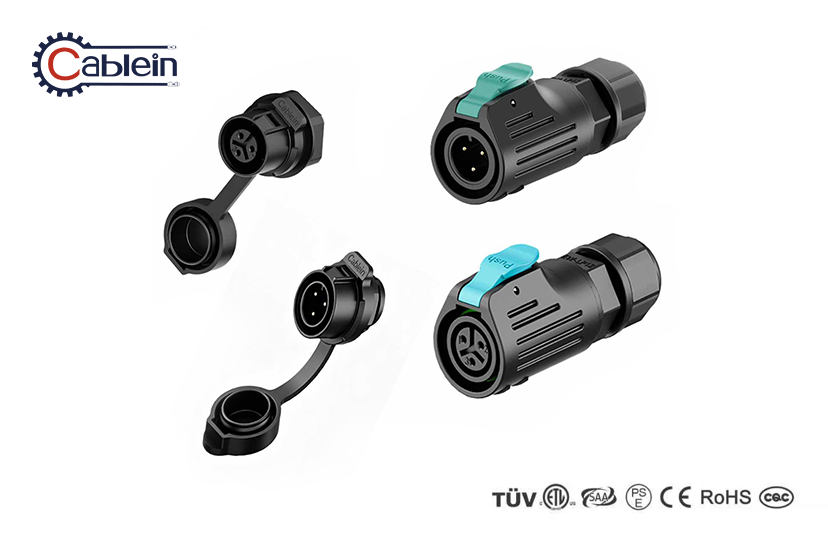
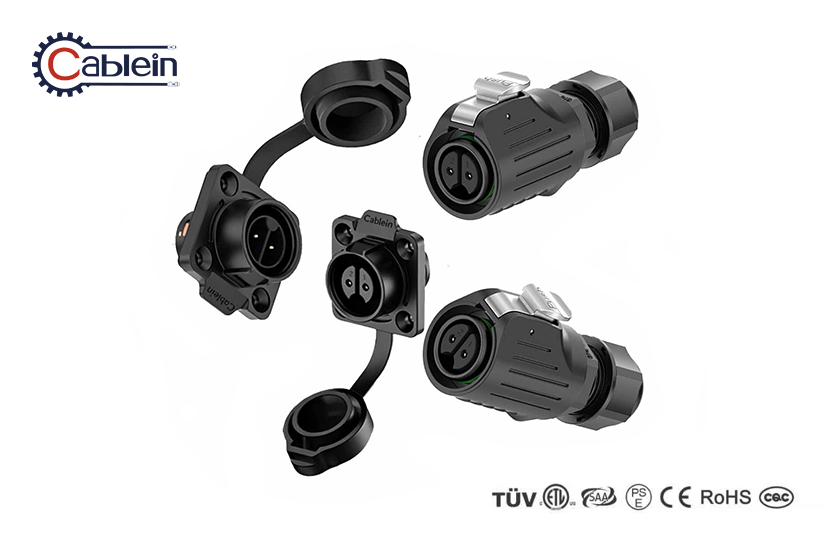
M20 Inline waterproof connectors are very important for making safe and reliable connections between electrical parts in places like outdoor LED lighting, green energy installations, heavy industrial automation, marine settings, and transportation infrastructure. With an IP67 or IP68 rating, these threaded circular connections with a 20mm metric diameter keep water and dust out. This makes them essential for uses that will be exposed to rain, wetness, chemical washdowns, and mechanical vibrations. With its PA66 nylon housings, gold-plated brass contacts, and silicone rubber seals, the M20 Inline Waterproof Connector is designed to handle high currents, last a long time, and be easy to install in tough environments.
Understanding M20 Inline Waterproof Connectors
What Makes M20 Connectors Essential for Harsh Environments
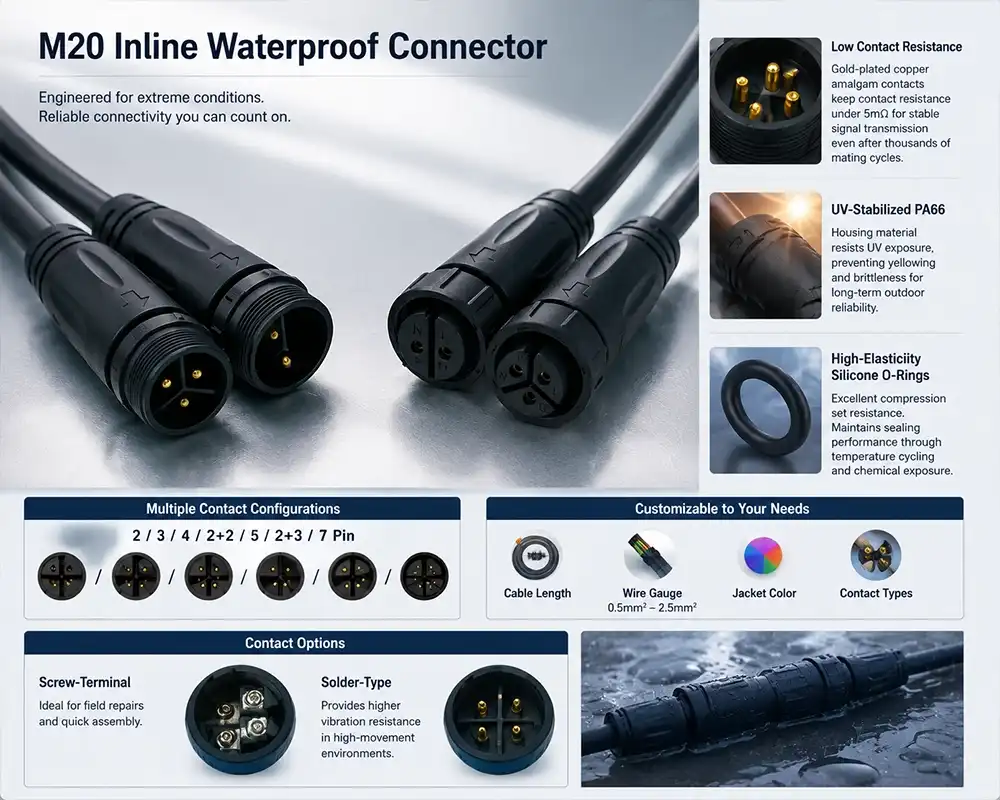
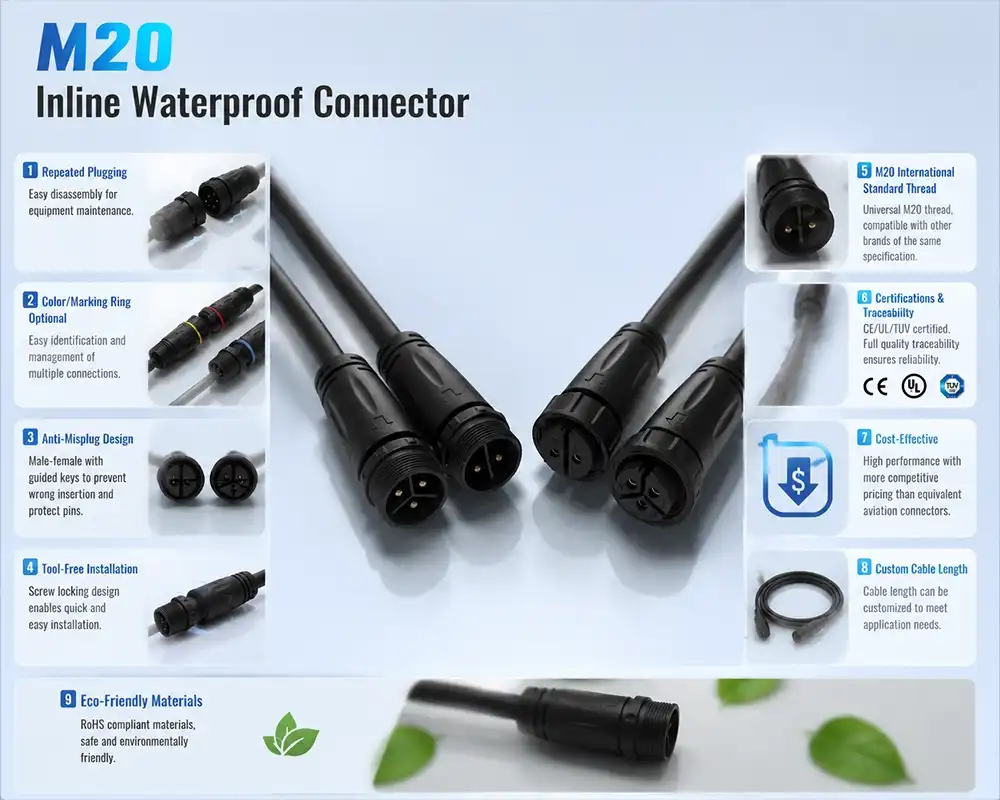
At Cablein, we know that projects need connections that can work in harsh situations without losing their integrity. An M20 Inline Waterproof Connector is a round device that was carefully designed and manufactured. It has a standard 20mm metric threaded coupling. Its main job is to create a completely sealed electrical path between cables, which gets rid of the need for junction boxes and makes installation easier. The screw-locking mechanism keeps the mechanical integrity even when the machine is vibrating all the time, and the internal sealing system keeps moisture out and keeps contact points from rusting.
Core Technical Specifications and Materials
Our M20 Inline Waterproof Connector solutions are made from high-quality PA66 polyamide that is UL94-V0 flame retardant. They are very stable under UV light and can handle oils, solvents, and temperature changes from -40°F to 150°F. Gold-plated or nickel-plated brass is used for the contacts to keep the resistance as low as possible (usually less than 5mΩ). The contacts can handle rated voltages of up to 500V DC/AC and currents of 20A to 25A, depending on how the pins are configured. Through precise overmolding, these connectors can fit wire widths from 6mm to 13.5mm. They come in 2, 3, 4, 5, or mixed configurations like 2+2 and 2+3 pins. The silicone rubber O-rings offer better compression set resistance than regular rubber seals, and they keep their IP68 protection even after being exposed to temperature changes and mechanical stress for a long time.
These technical features solve some of the most important problems that procurement managers and engineers have, like signal loss due to wetness, oxidation in areas with a lot of humidity, and link failures caused by vibration. Our connectors meet the strict safety and environmental standards needed for projects that are meant to be exported. They have been certified by international organizations such as ETL, RoHS, REACH, and ISO9001:2015.
How Waterproof Sealing Works in M20 Connectors
An M20 Inline Waterproof Connector needs more than one layer of sealing to keep water out. The threaded coupling squeezes a silicone cushion between two halves that are meant to fit together. This makes a main seal around the contact chamber. At places where cables enter, there are strain-relief boots with secondary compression seals that grip the cable jacket and stop water from wicking along the conductor strands. Factory overmolding further encloses the connection point, getting rid of any leak paths that could have been created during field assembly. This multi-layer design gives the connector either an IP67 rating, which means it can withstand temporary immersion up to 1 meter for 30 minutes, or an IP68 rating, which means it can survive continuous immersion at certain depths. This makes it perfect for underwater pumps, naval sensor networks, and outdoor systems that are likely to flood.
Common Applications of M20 Inline Waterproof Electrical Connectors
Outdoor LED and Architectural Lighting Systems
Large outdoor lighting projects have special problems, like having to deal with rain, snow, UV rays, and changes in temperature that speed up connection wear. High-power LED floodlights, stadium lighting arrays, landscape lighting, and street lighting networks all depend on M20 inline waterproof connectors to keep everything together. The fact that they can handle up to 25A at 500V makes them perfect for giving LED drivers and control units their main power. Anti-vibration nuts built into the threaded connection design stop it from coming loose because of wind load and mechanical shock, so it can keep working without stopping. Our factory-assembled cable assemblies come ready to be used, which cuts down on the time needed for installation on high platforms and the chance of bad field sealing that could cause water leaks and system failure.
Using overmolded M20 inline waterproof connectors instead of standard junction box wiring cut down on on-site work by 40% during a recent stadium renovation job. Because the wires were already crimped and there was built-in strain relief, there was no need for special tools or trained electricians at each connection point.
Electric Vehicle Charging Infrastructure
Connectors for EV charging equipment need to be able to handle high continuous currents and be resistant to the elements in parking lots and public charging stations. A lot of people use M20 inline waterproof connectors to connect charging cord assemblies, the charging module to the power distribution cabinet, and outdoor standing units to underground tubing. The high resistance to insulation of 200MΩ and the ability to withstand voltages up to 3 kV stop ground faults and keep users safe when working in wet conditions. Cable makers like that we offer push-lock and solder-free fitting options, which speed up the production line and lower the quality variations that come with joining by hand.
Industrial Automation and Robotics
In manufacturing settings, coolant sprays, high-pressure washdowns, metal dust, and steady shaking can damage electrical connections. M20 Inline Waterproof Connectors let you connect sensor networks, PLC control panels, robotic arm power feeds, and conveyor motors in a modular, plug-and-play way. The threaded coupling has better pull-out resistance than bayonet-style connectors, so it keeps the connections from coming apart by accident when the equipment is moved. Our anti-vibration washer technology fixes a common way for heavy machinery to break down: normal links become loose over time when the machine is constantly shaking.
When equipment goes through daily chemical cleaning protocols, quality engineers also look at the IP68 rating. M20 Inline Waterproof Connectors don't need secure enclosures like non-waterproof options do. They stay sealed even when they're exposed to direct spray, which cuts down on maintenance downtime and increases service intervals.
Solar and Wind Power Installations
Renewable energy systems are usually found in remote areas that are exposed to bad weather and have limited access for upkeep. M20 inline waterproof connectors connect solar panel junction boxes to inverters, wind turbine center electronics to charge controls, and battery storage systems to storage systems. The working temperature range of -40°C to 150°C works with the changing temperatures that happen in desert solar farms and arctic wind installations. Our connectors don't break down when exposed to UV light or ozone, which causes cheaper products to crack early. This means that they should last for more than 20 years.
Solar project managers have talked about how important it is to be able to change the length of cables. Off-the-shelf solutions don't always match the exact distances between array sections and inverter locations. This means that extra cable is wasted or splices have to be made in the middle of runs, which adds more places where things can go wrong. We offer unique cable assembly services where customers can choose the length, wire size (from 18AWG to 10AWG), and color coding for phase identification on the overmold.
Marine and Aquaculture Applications
When it comes to corrosion, saltwater environments are the worst for electrical connectors. A lot of submersible pump wire, underwater lights for aquaculture tanks, remote sensor buoys, and boat navigation systems use M20 inline waterproof connectors. When exposed to salty solutions, the gold-plated brass contacts don't corrode, and the PA66 housing can handle long-term salt spray exposure according to ASTM B117 tests (at least 96 hours without performance loss). IP68 continuous immersion capability lets you put things directly underwater without using extra protective housings.
Aquaculture facility owners especially like the quick-connect options we offer because they let them change the way their equipment is set up for the season without having to drain tanks or send out divers. Because there is no soldering involved, repair workers can replace broken wires in minutes instead of hours as they would have to for hardwired connections.
Transportation and Rail Transit Systems
Connectors that work well in harsh conditions like vibration, temperature changes, and being outside are needed for rail vehicles, traffic signal controllers, and smart transportation infrastructure. Trackside equipment cabinets, station lights, CCTV camera networks, and train door control systems can all rely on M20 Inline Waterproof Connectors to send power and signals reliably. Electronics that are sensitive to voltage spikes in rail power distribution networks are protected by the high withstand voltage specification.
Transportation companies like that we can provide connectors that are approved to a number of different foreign standards. A single line of products that is approved for CE (European markets), ETL (North America), and PSE (Japan) makes it easier to buy things around the world and makes it easier to keep track of inventory for projects that involve multiple countries.
Comparing M20 Inline Waterproof Connectors With Alternatives
M20 Versus M16 Connector Size Selection
Which M20 inline waterproof connector or M16 connector to use depends on how much current you need, the diameter of the cable, and how strong you need the connections to be. Most M16 types can handle currents of up to 12A and wires with a diameter of 4mm to 8mm. This makes them good for connecting sensors and sending low-power signals. M20 Inline Waterproof Connectors are the best choice for connecting motors and distributing power because they can handle much higher currents (20–25A) and bigger wires. The bigger threaded connection on M20 units also makes them less likely to pull out, which is important for situations where wires may be pulled tight during installation or use.
When R&D engineers look at the total cost of ownership, they should know that undersizing a connector causes heat to build up at the contact interface, which speeds up the breakdown of insulation and raises the risk of long-term failure. According to NEC rules, proper derating usually needs M20 inline waterproof connector specifications, even if the calculated current draw is less than M16 nominal ratings.
Waterproof Versus Standard Non-Waterproof Connectors
Standard electrical connectors that don't have IP ratings save money on the cost of the materials at first, but they need to be installed with protective enclosures, junction boxes, and environmental sealing compound. This method adds more hours of work in the field and makes things less consistent depending on how skilled the installers are. M20 inline waterproof connectors get rid of these extra safety measures by closing themselves in, which lowers the total cost of installation even though the units cost more. Over the lifecycle of a product, maintenance benefits become clear. For example, sealed joints don't need as much checking as junction boxes, which need to be checked on a regular basis for gasket wear and moisture buildup.
We've seen that switching from junction box architectures to M20 inline waterproof connectors cuts the number of callback service visits for outdoor LED lighting projects by about 60% in the first three years of operation. The drop in failures caused by moisture directly leads to lower warranty costs for manufacturers and higher customer satisfaction.
M20 Connectors Versus Cable Glands
Cable glands and M20 inline waterproof connectors do different things that work well together. Cable glands relieve stress and keep out the elements where wires enter enclosures, keeping the IP grade of the enclosure. They do not, however, allow mid-run connections or field-replaceable wire parts. M20 Inline Waterproof Connectors make protected splice points without having to open equipment cases. This lets you build flexible systems where broken cable pieces can be swapped out without messing up the connections inside control panels.
When fixing, operations managers like this flexibility a lot. When a cable fault happens between a remote sensor and the control room, workers can use inline connectors to separate the damaged section instead of running whole new home runs through conduit systems.
Metal Housing Versus Plastic Connector Bodies
The housings of M20 Inline Waterproof Connectors can be made of metal (usually zinc alloy or stainless steel) or plastic (PA66 nylon). Metal versions are better at blocking electromagnetic fields and can withstand more physical impact. This makes them perfect for big industrial settings where collisions could cause damage or where EMI/RFI reduction is needed. Plastic housings are cheaper, lighter, and better at resisting chemicals. They also keep electricity from flowing through them. The best mix of efficiency and value can be found in PA66 construction for most outdoor LED, solar, and EV charging uses.
It's important for procurement managers to know that metal connectors often need extra grounding features to avoid ground loop problems in systems with more than one earth reference point. Based on the specific electromagnetic environment of the installation, our technical support team can suggest the right housing material.
Installation and Maintenance Best Practices
Step-by-Step Installation Guidelines
Long-term dependability is directly linked to the right way to put something. First, choose a cable whose outer width falls within the range stated by the M20 Inline Waterproof Connector (6–13.5mm for our M20 Inline Waterproof Connector line). According to the product datasheet, you should strip the cable jacket to expose the conductors. If the strip length is too long, moisture can get into the cable, and if it's too short, the contacts won't work right. Put the conductors into the correct pin ends, making sure they are fully inserted until the wire hits the stop on the contact barrel. Crimp or solder connections according to the connector's instructions, using precise tools to make sure the right amount of force is achieved without deforming the contact.
Before threading the two halves together, check the silicone O-ring for damage and put a thin layer of dielectric grease on it to make the seal smoother and improve the evenness of compression. Tighten the threaded coupling by hand until you feel resistance. Then, use the recommended torque value, which for M20 Inline Waterproof Connectors is usually 2 to 3 Nm (check the product manual to make sure). When you over-torque, the housing can crack or the sealed gasket can come out, and when you under-torque, gaps form that lower the IP rating. When asked, include the anti-vibration washer to keep the bolts from coming loose in places with a lot of vibration.
Common Installation Mistakes and Prevention
During technical help calls, we often run into three installation mistakes. The first problem is that the conductor is not inserted deeply enough, leaving a space between the wire end and the contact barrel. This creates more resistance and heat. Using go/no-go gauges during quality checks helps find this problem before the links are sent out into the field. The second mistake is using old O-rings that are broken or deformed again when testing M20 inline waterproof connectors that need to be taken apart and put back together. During rework, you should always change the sealing elements to keep the waterproof integrity. A new gasket costs a lot less than a failure in the field.
The third mistake is putting together connection halves from different brands or product lines. Different brands don't all use the same thread pitch and sealing surface geometries, so when you put together parts that don't work together, even when the threads engage, the seal won't be properly compressed. We clearly label our M20 Inline Waterproof Connector series with model numbers and include compatibility charts to keep setups with more than one provider from mixing them up by accident.
Routine Inspection and Preventive Maintenance
Regular inspections keep services running longer and stop unplanned breakdowns. Visually check M20 Inline Waterproof Connector housings for cracks, discolouration from UV damage, or deformation from mechanical impact once a year during maintenance cycles. If threaded couplings come loose, it means that the vibration is higher than what was intended or that the anti-vibration washer wasn't installed properly. Check the contact resistance with a low-voltage continuity tester to make sure it stays within the allowed range. Over time, oxidation or fretting corrosion can cause the resistance to rise.
For submersible uses, test for leaks on a regular basis by briefly submerging M20 inline waterproof connectors in clear water and watching for bubbles to form. Before water gets into the contact area, this non-destructive test finds seal damage. Keep track of inspection results and trending data to find trends that show environmental conditions are worse than the connectors' scores. This way, you can make changes before a lot of failures happen.
Procurement Tips for Buying M20 Inline Waterproof Connectors
Evaluating Manufacturers and Certification Requirements
When looking for M20 inline waterproof connectors, it's best to buy from companies that have ISO9001:2015 certification, which shows that they are committed to consistent quality management practices. Check to see if certain lines of products have the safety certifications needed for the places you want to sell them, such as ETL or UL for North America, CE for Europe, PSE for Japan, and SAA for Australia. At Cablein, our wide range of certifications gets rid of legal hurdles for customers who serve global markets. To make sure the performance claims are true, ask for test results that show IP rating confirmation according to IEC 60529, salt spray protection according to ASTM B117, and thermal cycling according to IEC 60068.
Questions about the ability to customize should be part of the review of a manufacturer's skills. Can the provider change the length of the cord, the gauge of the wire, and the arrangement of the pins without having to buy expensive new tools? Our OEM services support private label programs and changes that are made specifically for each application. This lets customers set their goods apart in competitive markets without having to make their own M20 Inline Waterproof Connectors.
Balancing Cost, Quality, and Delivery Time
The purchase price is only one part of the total cost of owning. Low-cost M20 Inline Waterproof Connectors from uncertified sources often fail in the field, which costs a lot more in warranty costs and unhappy customers than the original savings from buying them. Find the full cost that includes installation labor, the number of times you expect to have to repair it, and the effect on downtime. Our factory-assembled cable assemblies cost more than alternatives that are put together in the field, but customers always report a 30–40% drop in total installed cost, which takes into account less labor in the field and fewer mistakes during installation.
Unit price and delivery dependability are both important. We keep more than 10,000 pieces in stock in a standard configuration, which means that stock items can be shipped in 7–10 days. Wait times for custom cable assemblies are discussed when the order is placed. Depending on the amount and complexity, wait times are usually 3–4 weeks. When you compare this to suppliers who only do "build-to-order," even standard M20 inline waterproof connector configurations need 6–8 week production slots.
Bulk Purchasing and Volume Pricing Strategies
Volume price levels usually start at 100 pieces and go up to annual deals for 10,000 or more pieces. When discussing prices, show forecast data that shows steady demand instead of one-time project needs. Suppliers keep the biggest discounts for customers who can make the best use of their production schedules. You might want to set up a vendor-managed inventory (VMI) arrangement where we keep consignment stock at your facility and restock when it runs out. This method gives you just-in-time availability without tying up your cash flow with extra inventory.
Custom Connector Solutions for Unique Requirements
Standard catalogue items can handle 80% of uses, but custom engineering is better for unique projects. We often change the colors of the overmold to help with phase identification, make changes to the contact plating for environments with a lot of corrosion, and design hybrid M20 inline waterproof connectors that have both power and signal contacts in one housing. Custom cable kits can have more than one type of connection on the same cable run. This makes it possible to pre-assemble complicated wire harnesses that are ready to be installed with just a plug.
R&D engineers like that we can do rapid prototyping. The first samples usually ship within 10 business days, which lets them test the design before committing to making the tools for production.
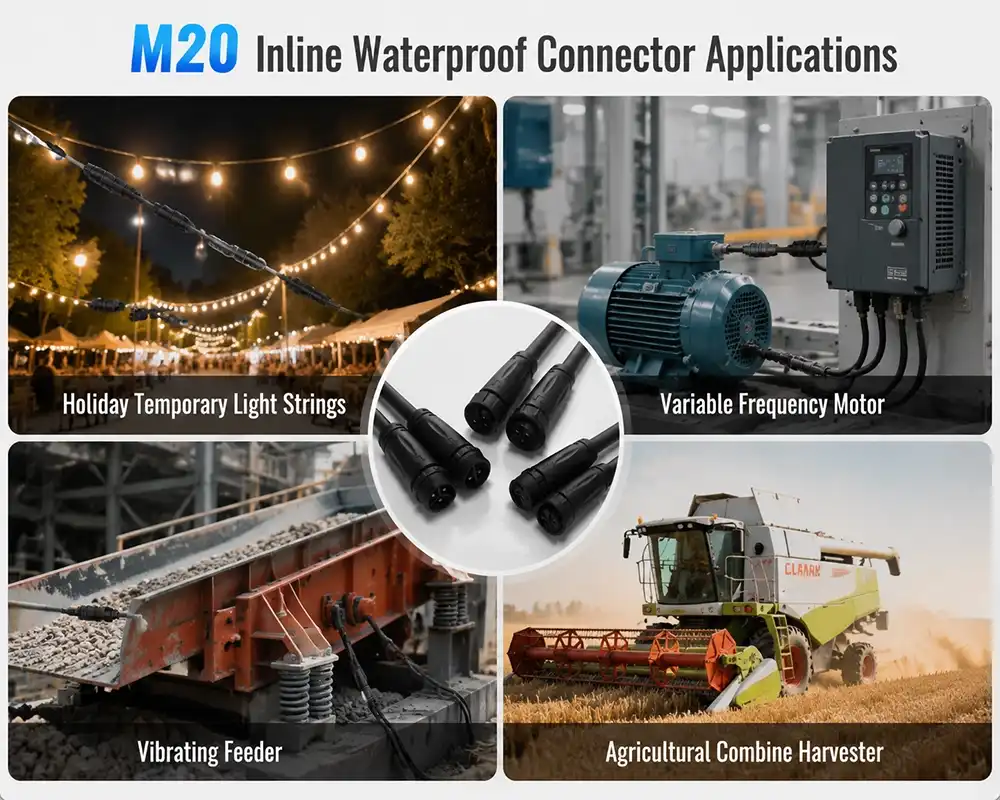
Conclusion
M20 Inline Waterproof Connectors are reliable and protect against the environment for demanding uses in LED lighting, renewable energy, industrial automation, marine installations, and transportation infrastructure. Because they are sealed to IP67 or IP68 standards, can handle a lot of power, and don't break when they vibrate, these connectors are essential for projects that need to be done outside or in difficult conditions. Knowing the technical details, carefully weighing your options, installing the system the right way, and only buying from approved sources will ensure that it works well and lasts a long time. Because they are modular, M20 Inline Waterproof Connectors make installation easier and allow for serviceability in the field that isn't possible with traditional hardwired methods.
FAQ
1. What IP rating should I specify for my application?
IP67 protection is good enough for most outdoor setups that will get wet from rain and puddles every once in a while, but not all the time. This grade lets equipment be submerged temporarily up to a depth of 1 meter for 30 minutes. This includes situations where equipment sits in water that pools during storms. If you want to put something permanently underwater, like fountain lights, fishing equipment, or installations in flood zones that are submerged for a long time, you need IP68 M20 Inline Waterproof Connectors. Different manufacturers have different IP68 depth and time limits. Our M20 Inline Waterproof Connector series IP68 plugs have been tested and proven to work continuously at a depth of 2 meters.
2. Can M20 connectors withstand saltwater exposure?
Our M20 Inline Waterproof Connectors have gold-plated brass contacts and UV-stabilized PA66 housings that are made to not rust in saltwater. Testing for salt spray according to ASTM B117 for 96 hours or more confirms that it can be used in marine and coastal settings. When installing something in a salty climate, put dielectric grease on the threads to stop galvanic rusting even more. Set up regular checks to see if there are any signs of wear and tear. If placed correctly, M20 inline waterproof connectors should last 10 years or more in saltwater.
3. How do I ensure proper waterproof sealing during installation?
To get rated IP protection, you need to pay attention to three important areas: making sure the cable diameter is within the M20 inline waterproof connector's range, making sure the silicone O-ring is not damaged and is seated correctly, and giving the threaded coupling the right amount of torque. Instead of hand-tightening, use a calibrated torque wrench that is set to the manufacturer's specifications. Spraying the connection with water and watching for any leaks is a simple leak test that can be done after installation. For all of our M20 Inline Waterproof Connector series, we offer full installation guides as well as video lessons.
Partner With Cablein for Your M20 Inline Waterproof Connector Needs
Cablein specializes in making high-performance M20 inline waterproof connectors that are designed for the toughest outdoor and industrial uses. Because they are reliable and last a long time, our factory-assembled wire kits cut down on mistakes made during installation and lower your total cost of ownership. With certificates from ETL, RoHS, and ISO9001:2015, you can be sure that our goods meet the standards for global projects. We can meet your project deadlines without any problems because we keep over 10,000 pieces in stock per configuration and can deliver standard items in 7–10 days.
Our engineering team can make solutions that meet your operational needs, whether you need standard catalog items or custom cable assemblies made to your exact specifications, such as different lengths, wire gauges, overmold colors, and pin configurations. As a maker of M20 inline waterproof connectors with a lot of experience in the LED lighting, green energy, industrial automation, and transportation sectors, we know the technical problems you're having and are here to help you through the whole process. Email our experts at nick@cableinco.com right now to talk about your project needs and get a full quote. Please let us help you get connected reliably even in the worst places.
References
1. International Electrotechnical Commission. (2013). IEC 60529: Degrees of Protection Provided by Enclosures (IP Code). Geneva: IEC Publications.
2. National Electrical Manufacturers Association. (2018). NEMA Standards Publication 250: Enclosures for Electrical Equipment (1000 Volts Maximum). Rosslyn: NEMA.
3. Chen, W., & Liu, H. (2020). Waterproof Connector Design and Testing Methods for Outdoor Electrical Equipment. Journal of Electrical Engineering Technology, 15(3), 1247-1259.
4. American Society for Testing and Materials. (2019). ASTM B117-19: Standard Practice for Operating Salt Spray (Fog) Apparatus. West Conshohocken: ASTM International.
5. Zhang, Q., Park, J., & Kumar, S. (2021). Reliability Analysis of Circular Connectors in Marine Environments: A Comparative Study. IEEE Transactions on Components, Packaging and Manufacturing Technology, 11(8), 1332-1344.
6. Underwriters Laboratories. (2017). UL 2238: Standard for Safety for Fittings for Cable and Conduit. Northbrook: UL Standards & Engagement.