Waterproof Splitter Connector: Features, Benefits, and Applications
One incoming cable is split into two or more sealed branches by a waterproof splitter connector. This keeps outdoor wiring safe from dust, rain, and vibration. The most important things about it are an IP67 or IP68 seal, a fixed branch layout like T or Y, and secure locking or strain relief. Fewer field splices, faster installation, and fewer failures due to water are its main benefits. The things that use it the most are security cameras, LED lights, solar and energy systems, and business tools. This guide explains how it works, what you should check before you buy, and how Cablein can help with large projects.
Why Waterproof Splitter Connectors Matter in Outdoor Wiring
Risks of Unprotected Cable Splits
A run outside is weak everyplace there is an open splice. Water gets through loose tape or caps and then wicks along conductors that are spread out. After that, corrosion happens, and resistance goes up. More stress is caused by dust, UV light, pole vibration, and hits that happen by accident. This usually leads to a fault that only happens sometimes, like a camera that stops working after it rains. Crews have to go back, find the broken joint, and fix it, which costs money. A project with a lot of camera points will lose a lot of time and money if even a few of them fail. Instead of leaving the branch point to be taped in the field, a sealed splitter moves it into a safe housing.
What Is a Waterproof Splitter Connector?
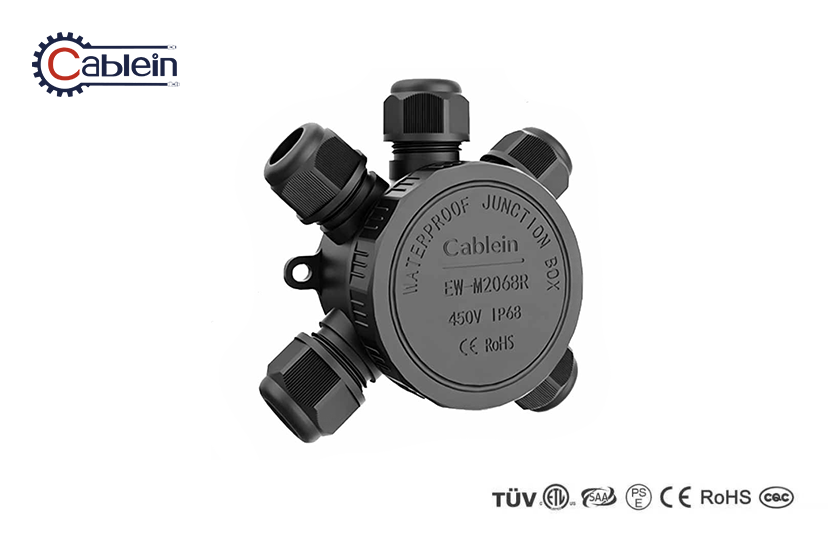
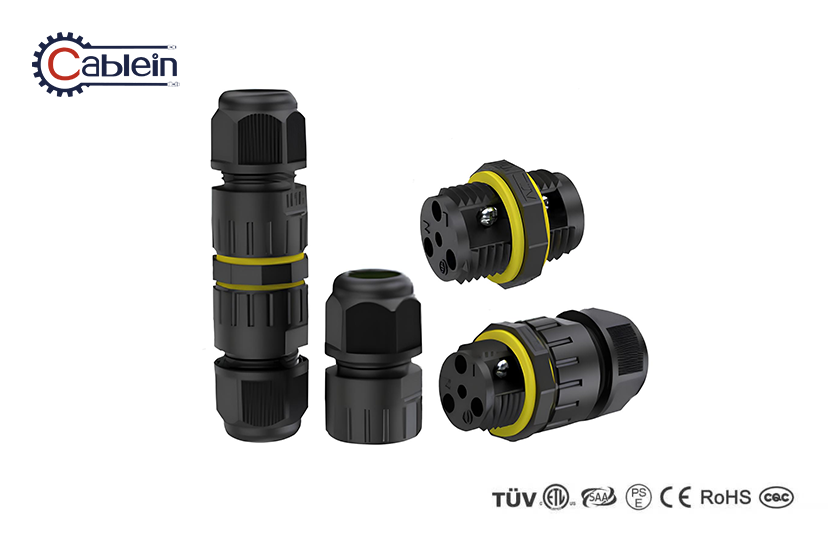
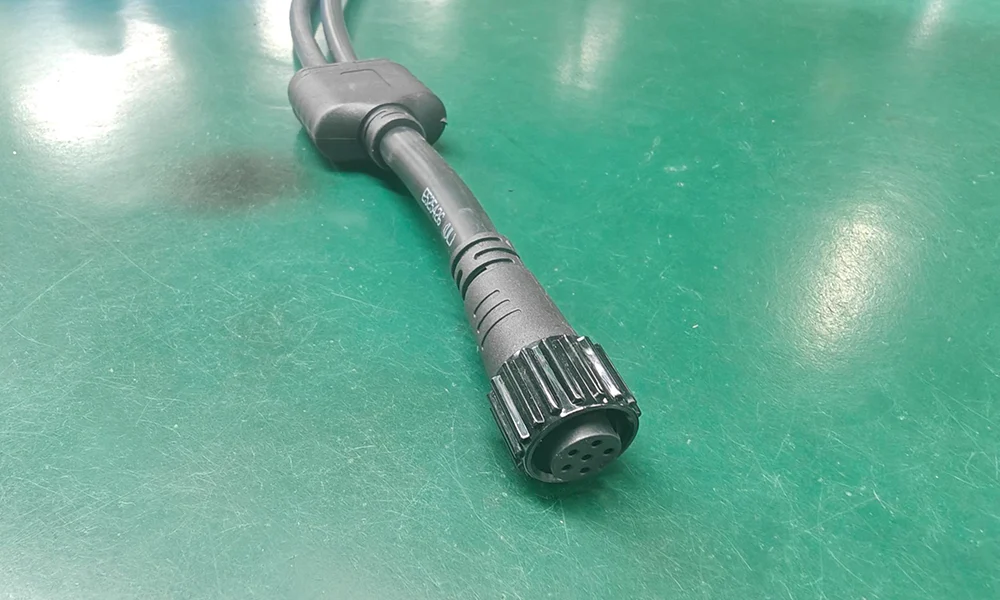
A waterproof splitter connector is a sealed electrical part that splits one incoming cable into two or more circuits that go out. Crimp contacts, molded conductors, gaskets, or resin sealing may be used on the inside of the design. The junction box is bigger, and this one is made for a set branch layout, like two- or three-way outputs. How long something works depends on its housing material, contact plating, cable-entry size, locking style, and strain relief. They don't build each branch point by hand; instead, a factory does it. This means that the results are the same from the first unit to the thousandth. When many installers work from the same parts list on a big job, that consistency is important.
T Splitters, Y Splitters, and Multi-Pin Layouts
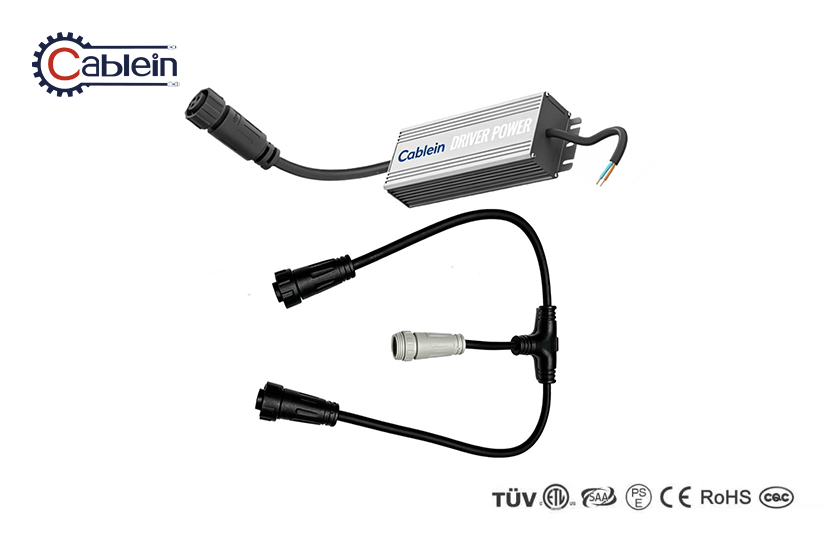
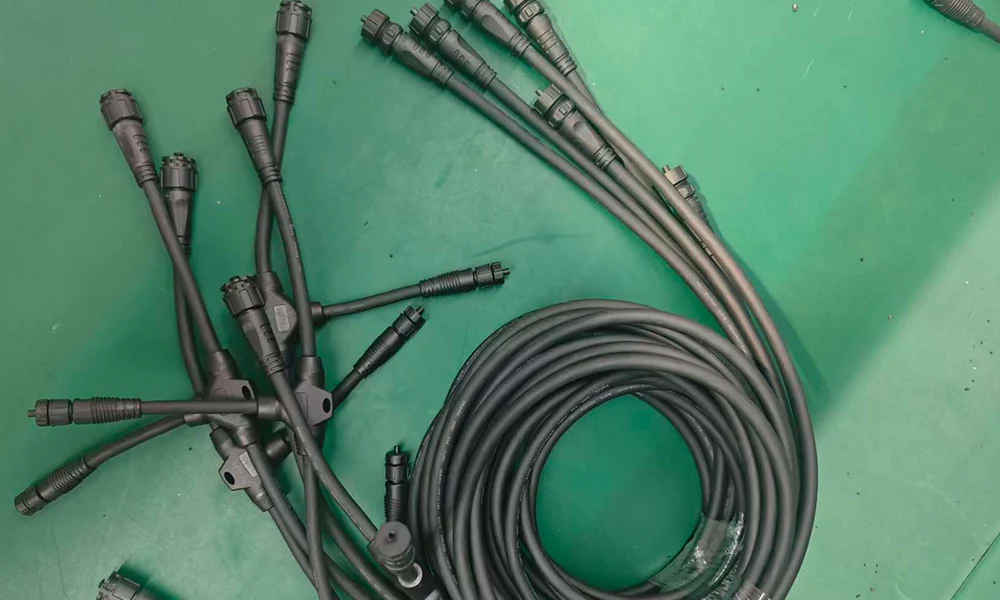
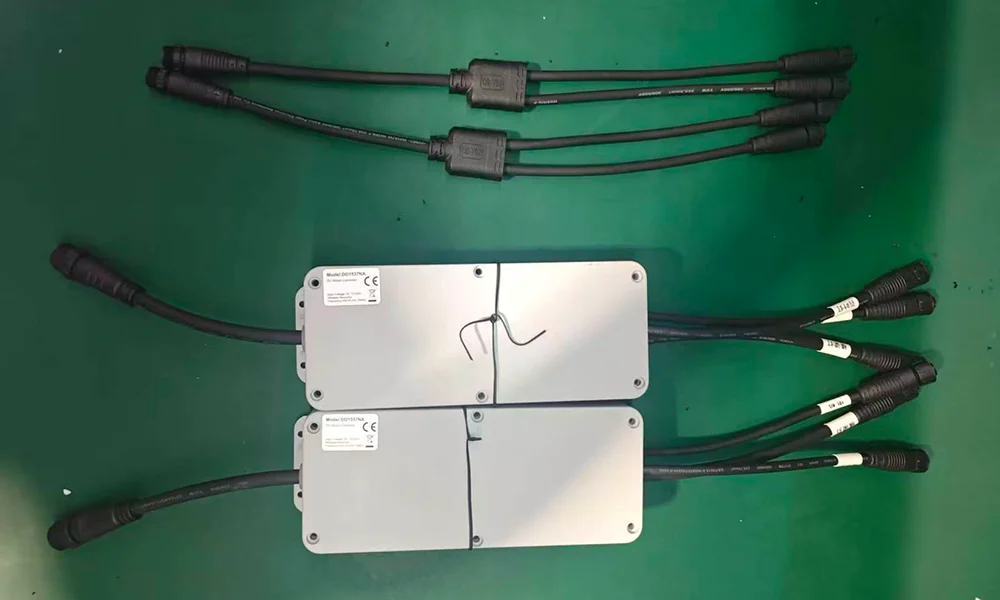
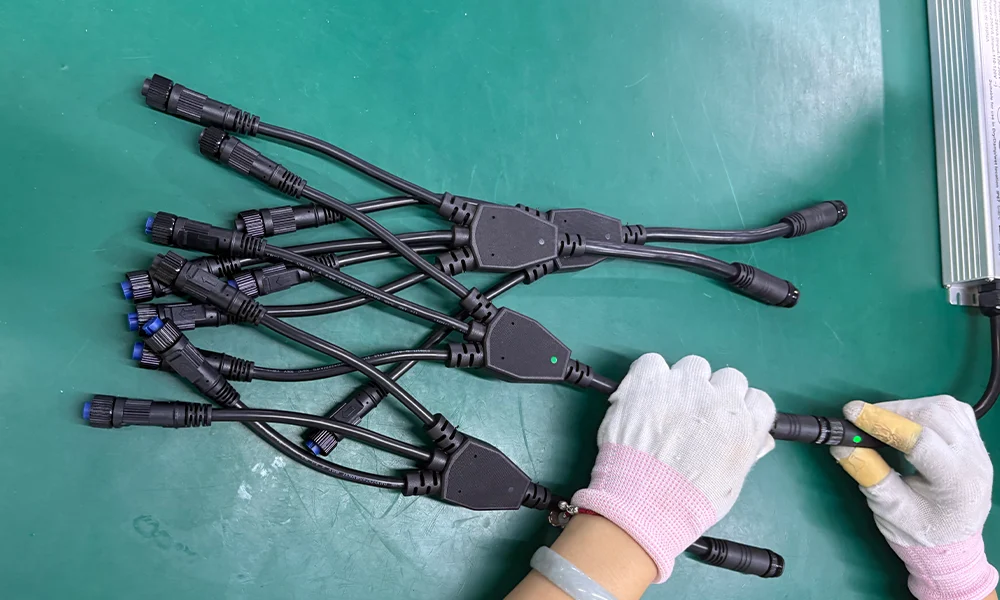
For one-in, many-out wiring, Cablein makes T and Y splitters. The branch line is at a right angle to the main line when a T splitter is used. This is good for straight runs along poles or rails. There are two outputs on a Y splitter, and it works best when two devices are close to each other. The idea behind multi-pin versions is the same. For example, a 6-pin parallel Y splitter takes one 6-wire input and splits it into two 6-wire outputs. This way, both outputs have the same voltage. Each model has a different number of pins, wire gage, and branch length, so send us your needs before you place your order. Through OEM and ODM service, we can also make cables to your exact lengths and branch specifications.
Key Features and Technical Specifications
IP Ratings Explained
IEC 60529 gives us the IP code. The first number is for solids, and the second number is for water. IP65 seals out dust and low-pressure water jets. IP67 is dust-proof and can handle being submerged for up to 30 minutes at a depth of 1 meter. IP68 covers immersion for longer or deeper periods of time, but the exact depth and time depend on the test conditions used by the manufacturer. This means that two IP68 products might not be the same. IP67 is good enough for most outdoor camera and light runs. If water will be on the connector for a long time, choose IP68. The rating is only valid when the connector is fully mated and sealed with a cable that works with it. Do not think of NEMA 250 enclosure types as direct IP equivalents because they use a different system.
Electrical and Material Specifications
Look at the data sheets first before you compare prices. To begin, find out the rated voltage, the rated current per pin, and the size of the conductor that the contacts can handle. Then look at the outside diameter of the cable. The seal only works within a certain range. This is because the temperature range for an equipment cabinet in Arizona and a pole in Minnesota is very different. Material for housing is also important. Check for flame-retardant ratings where the project calls for them and UV resistance on runs that will be in direct sunlight. Corrosion resistance and signal loss are both affected by contact plating. Check to see if the pins on a multi-pin splitter are wired in parallel or as separate branches. Ask the seller to write down all the numbers for your specific model.
Certifications to Verify for U.S. Projects
Before a product gets to a job site in the U.S., buyers often ask for paperwork. Cablein's T and Y splitters are certified to UL2238 and EN61984. Depending on the series, our products are also certified to ETL, CE, RoHS, REACH, and TUV. UL 2238 covers cable assemblies and fittings for industrial control and supervisory circuits. IEC 61984, on the other hand, sets safety standards and tests for connectors. Each certificate is only good for a certain series, so make sure that each one fits your exact model. Check the rules in your area too, because installations need to follow both the National Electrical Code (NFPA 70) and the rules set by the government in your area. This will help your quality team keep track of the project. Ask for test reports along with your quote.
Installation and Wiring Guide for Outdoor Projects
Wiring Layout for One-In, Multi-Out Runs
It's easy to read. The splitter takes in one main cable, and each branch cable leaves through its own sealed port.
Come up with a plan before you pull the cable. Set up a drip loop so water can run away from the seal and each splitter close to the devices it feeds. In DC circuits, make sure that the polarity stays the same from the input to each branch. It is important to keep the combined load of all the branches below what the connector, cable, and any upstream fuse or power supply can handle. For PoE cameras, IEEE 802.3bt can send up to 90 W from the switch port, and TIA-568.2-D makes sure that twisted-pair channels stay balanced up to 100 meters away. Make sure that the design of the splitter can carry both power and data.
Step-by-Step Installation Checklist
On every site, do things in the same order. First, make sure that the splitter works with the cable, voltage, current, and polarity. Second, turn off the power. The third step is to cut the conductors to the length of the strip shown on the data sheet. This is the fourth step. Press the terminals or connectors together until they lock. Fifth, make sure that all of the gaskets are in place. Next, tighten the housing or locking ring as directed. Third, put the right cap on any port that isn't being used. The last step is to test the continuity and polarity. Next, gently pull the cable to check the strain relief. With solder-free and push-lock designs, there is less work to do at the terminal stage, which is helpful for crews that work from ladders and lifts.
Common Installation Mistakes
Most problems in the field can be traced back to a few small mistakes. There may be a gap around the jacket because the cable diameter is too big for the seal range. Conductors might not fit all the way into the terminal, which leads to heat and contact that doesn't last. During assembly, a gasket could twist or pick up dirt. A port that isn't being used may stay open. Installers also tighten the cable or bend it sharply at the exit, which puts stress on the seal over time. Finally, someone may add one more thing to the circuit, which would push it past the current limit of the connector. Most callbacks can be avoided with an installers' one-page checklist, and a sample trial lets your crew work on the exact part before delivering the whole thing.
Benefits and Applications in Security, Lighting, and Industry
Benefits for Installers and Integrators
This is what you can expect when you choose a sealed splitter over splices that are made by hand.
- Lower failure risk: A factory-sealed branch point keeps water, dust, and corrosion away from the contacts, so you see fewer intermittent faults after storms. Fewer faults mean fewer return visits, and every truck roll you avoid protects project margin and your standing with the end customer on service contracts.
- Faster installation: A preconfigured one-in, multi-out part replaces cutting, splicing, and sealing at every branch. Crews mate and lock the connectors, then move on. On projects with dozens of camera or light points, the minutes saved at each point add up to real labor savings across the whole job.
These benefits solve the issues that integrators bring up most often, such as water getting in, high labor costs, and callbacks. Also, every unit that is put together in a factory has the same result, so inspectors look for a clear branch point instead of hand-taped joints. Even though it costs more per unit than a basic connector, a sealed splitter can save you money over the course of its life.
Security and Surveillance Applications
I would put splitters outside for safety reasons first. You can connect several cameras, sensors, or lights to a single run that goes along a fence, in a parking lot, or the edge of a building. Each branch point faces the weather. Instead of taped joints, a waterproof Y splitter or T splitter can be used at those points. When several crews work in large areas, it's easier to use uniform parts for smart city and campus wiring. Check with the supplier about the type of cable and signal needs if your cameras use PoE, since a power-only splitter won't carry Ethernet data. Cablein says that security and surveillance are two of its main uses.
LED Lighting, Energy, and Industrial Uses
In many other areas, the same "one-in, multi-out" logic is used. Splitters let more than one fixture get power from a single supply line. This is used for LED lighting in cities, stadiums, and farms. Solar, electric vehicles, and energy storage systems are all examples of new energy systems that need sealed branches that can handle UV light and changes in temperature. In areas that are washed down, industrial automation groups sensors together on the same cable run. Cablein also works with medical devices, underwater robots, and rail transit, and each has its own set of rules. If you want to use something underground, it needs to be tested for burial, soil moisture, and freeze-thaw cycles. Don't think that a standard IP67 part is enough.
How to Choose and Buy a Waterproof Splitter Connector?
Splitter vs. Junction Box and Other Methods
Every method is good for a specific task. Normal wire connectors are less expensive, but they don't protect wires as well when they're outside. It takes skill and time to make heat-shrink joints, but they offer good protection that lasts and relieves stress. Gel-filled designs can seal quickly and may let service people get to them. Molded or resin-sealed splitters work well for long-term installations. Because it has more space inside, a junction box is better when you need fuses, a lot of terminals, or easy access for maintenance. When you need small, repeatable branches in a lot of places, a waterproof splitter connector is the best choice. Don't just look at the labels; compare IP67 and IP68 claims based on how they were tested.
Selection Steps and Sample Testing
Pick things out in the right order. List the types of exposure first, such as temperature, rain, UV rays, chemicals, vibrations, and immersion. Second, check the voltage, the steady current, the starting current, and the drop in voltage over the run. Third, match the sealing range to the size of the conductor and the diameter of the cable jacket. Fourth, pick a layout with two, three, or your own custom ways to go. Then get some samples and check them out on a real site. Check the connections, continuity, insulation resistance, pull strength, and resistance to water getting in. A field test lets you see how fast your team works and whether the seal stays in place when the cable is bent in real life. Allow large amounts only after those checks are successful, and plan time for testing into your schedule.
Supplier Evaluation, Stock, and Lead Time
Stock and lead time can make or break a job's pace. Get test reports, data sheets, drawings, certificates, the minimum order quantity (MOQ), production capacity, and quality records from each supplier. Don't just look at the unit price; compare the total cost, which includes freight, duties, installation labor, and the risk of having to replace the item. Cablein became a company in 2017 in Shenzhen. It has a 6,000-square-meter building with more than 200 employees. We always have over 10,000 of each item in stock and can ship them within 7–10 days. We use UPS, DHL, FedEx, and freight forwarders to ship by sea or air. We hold ISO9001:2015 certification and more than 30 utility model patents, and all of our products are tested to make sure they are waterproof and will last. We set a schedule with you for when to send custom orders.
Conclusion
A waterproof splitter connector replaces field splices with a sealed, factory-made branch point. This makes outdoor runs less likely to get water in, rust, or intermittent faults. IP67 is good for most short-term immersion needs, while IP68 depends on the test conditions listed by the manufacturer. Each project needs to have the right electrical ratings, cable diameter, materials, and certifications. The rating is safe as long as the installation is done right, with full seating, sealed unused ports, and polarity checks. One-in, multi-out logic is used by security cameras, LED lighting, energy systems, and industrial equipment. Junction boxes are still better for wiring that is more complicated. Testing samples and checking stock, lead time, and paperwork lowers the risk of buying something and lowers the cost of labor, callbacks, and the whole lifecycle.
FAQ
Is IP67 enough for outdoor security cameras?
Most of the time, yes. According to IEC 60529. IP67 means that it is dust-proof and can withstand being submerged in water for up to 30 minutes. If water could cover the connector for a long time, choose IP68 and ask the supplier how they test their products.
When should I use a junction box instead of a splitter?
When the circuit needs fuses, a lot of terminals, or service access often, use a junction box. A splitter is best used when you need a small, clear branch, like when you need one cable to power two or three devices.
Can I bury a waterproof splitter connector?
Yes, but only if the company that makes the model tests it for burial, soil moisture, pressure, and freeze-thaw cycles. A standard IP67 rating doesn't prove that something can be buried, so get written confirmation first.
Does Cablein offer custom splitters?
Yes. We do OEM and ODM work, and we can make custom cable lengths and branch specifications. Email your needs to nick@cableinco.com.
Request a Waterproof Splitter Connector Sample or Quote from Cablein
CableIn makes waterproof splitter connectors that are UL2238/EN61984 certified. They keep over 10,000 of each item in stock and can deliver them in 7–10 days. Send your cable size, number of branches, voltage, current, and annual volume to nick@cableinco.com. We'll get back to you with a quote and more information about samples.
References
1. IEC 60529, Degrees of Protection Provided by Enclosures (IP Code), 2013.
2. IEC 61984, Connectors – Safety Requirements and Tests, 2008.
3. NFPA 70, National Electrical Code, 2023.
4. NEMA 250, Enclosures for Electrical Equipment (1000 Volts Maximum), 2020.
5. IEEE 802.3bt, Standard for Ethernet Amendment: Power over Ethernet over 4 Pairs, 2018.
6. ANSI/TIA-568.2-D, Balanced Twisted-Pair Telecommunications Cabling and Components Standard, 2018.