How to Attach an LP12 Cable-to-Cable Connector for Secure Electrical Connections
When you're working in outdoor LED installations, industrial automation, or solar energy systems, secure electrical connections can make or break your project. The LP12 cable to cable connector stands out as a reliable solution designed specifically for demanding environments where traditional connectors fail. This circular inline connector features a compact 12mm mounting diameter paired with IP67/IP68 waterproof protection, making it ideal for applications from landscape lighting to EV charging equipment. With its snap-lock bayonet mechanism and PA66 nylon housing, this connector eliminates common installation headaches while delivering performance rated from -40℃ to +105℃ across more than 2000 mating cycles.
Understanding LP12 Cable-to-Cable Connectors
What Makes LP12 Connectors Different?
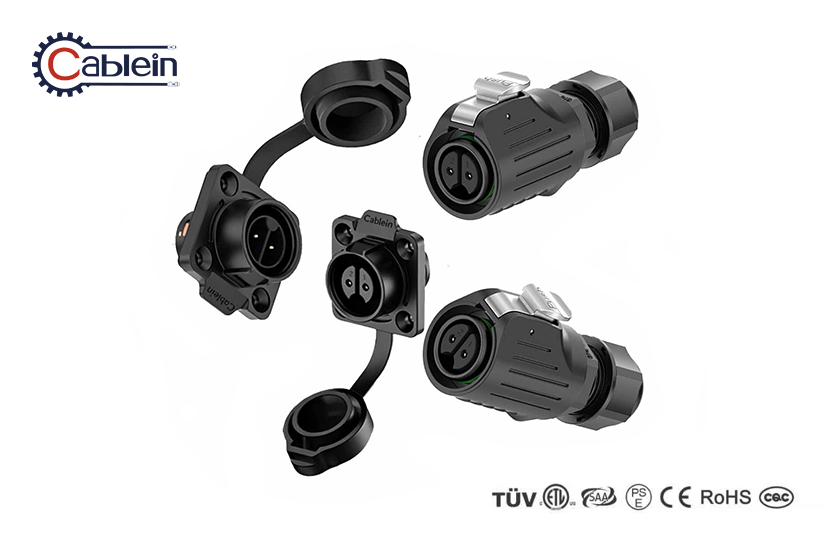
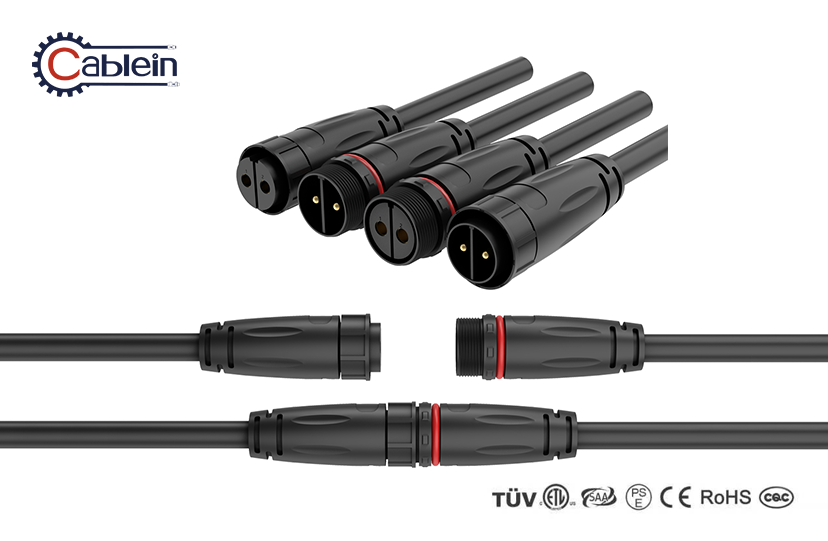
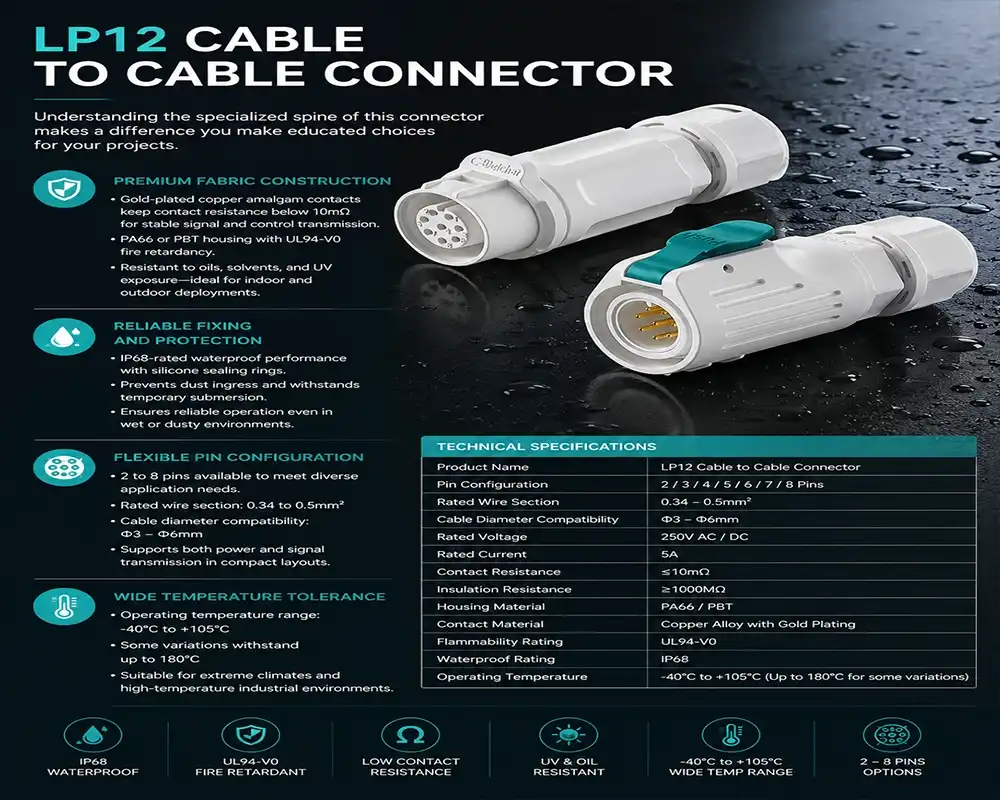
The LP12 series is a special type of circular multi-pin connectors that were made for places with limited space. Panel-mount connectors need set mounting places, but these inline connections connect two wires right in the field. This design solves real problems you face every day, like weak signals in crowded areas, water getting into outdoor gear, and equipment disconnecting by accident when it's being moved.
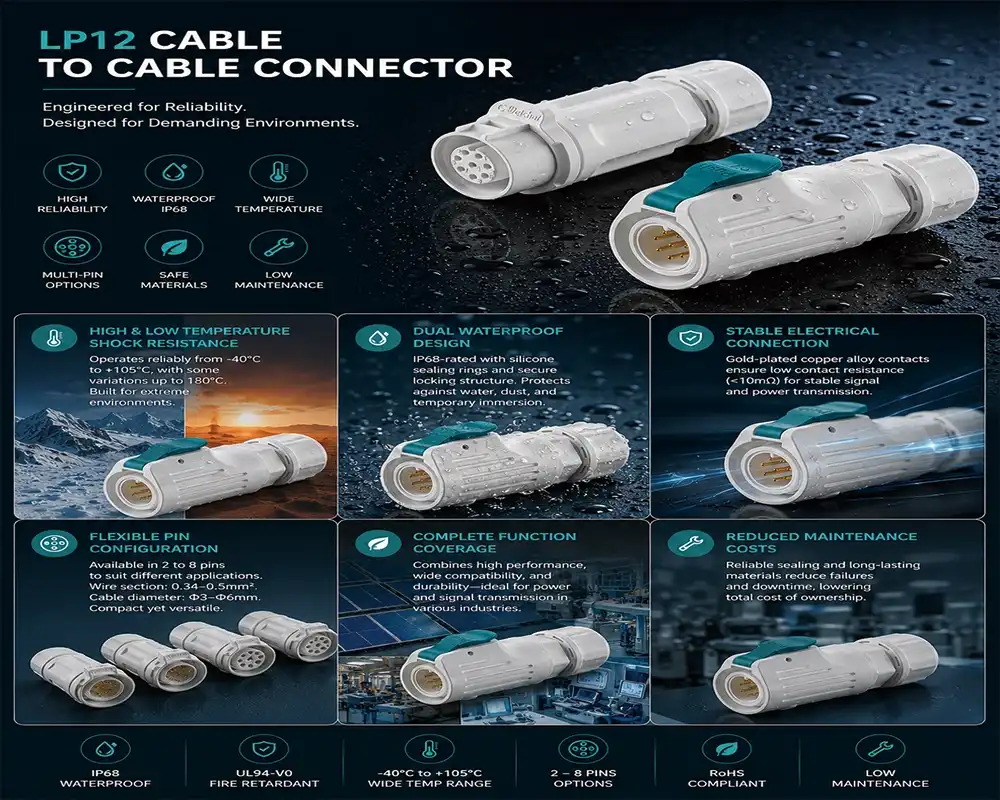
The connector's 12mm size makes it work surprisingly well. Gold-plated copper alloy contacts keep the contact resistance below 10mΩ, which makes sure that power and signals are always sent. The PA66 or PBT housing is UL94-V0 flame retardant and can stand up to oils, solvents, and UV light. Because of this, your links will stay strong whether you're using them on a stadium lighting rig or briefly submerged in a naval navigation system.
Core Specifications and Pin Configurations
If you know about the technical background, you can find connections that meet your needs. The LP12 can work with wire pieces ranging from 0.34 mm² to 0.5 mm² and 2 to 8 pin configurations. Cable width compatibility ranges from 3mm to 6mm, so it can be used for a wide range of wiring needs. According to IEC testing standards, the rated current for each contact can reach 5A, and the voltage can go up to 125V AC/DC.
The rubber closing ring has an IP68 rating, which means it keeps dust out and can handle being submerged for a short time. This is important when putting tools to use in wet processing areas or outdoor farming lights that will be exposed to water. Temperature range of -40°F to +105°F (and some versions can handle up to 180°F) makes it suitable for both harsh environments and high-heat workplaces.
Where LP12 Connectors Excel
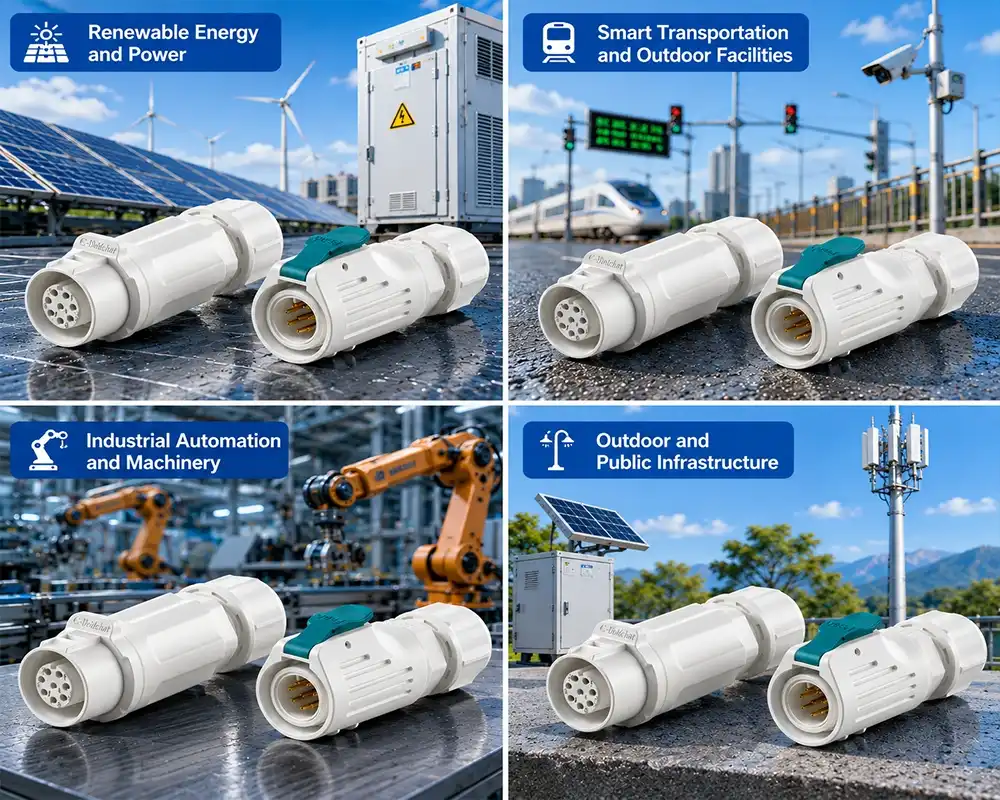
These connectors fix connectivity issues in several regions. Outdoor LED and smart lighting solutions require modular driver connections and control signals. Installation in the field is quick and uncomplicated without panel mounting due to its inline design. It also protects architectural installations from rain and humidity, which can reduce signal and brightness.
Industrial automation equipment like robotic arms, conveyor systems, and sensor networks needs shake-resistant connectivity. The snap-lock prevents accidental connection loss during high-speed movement. This reduces downtime and improves system reliability. Marine electronics and UAV platforms that need stable connectivity in lightweight settings will love its tiny size and salt-resistant design.
Renewable energy installation has requirements. Solar panel connectors and electric vehicle charging stations must withstand outside temperatures. Waterproof and temperature-tolerant, the LP12 will stay electrically stable for years with minimum maintenance.
Step-by-Step Guide to Attaching an LP12 Cable-to-Cable Connector
Preparing Your Tools and Materials
Get the tools you need before you start the installation. A small flat-head screwdriver, rosin-core solder, a soldering iron (usually 60W with temperature control), heat shrink tubing, and a multimeter for continuity testing are the things you'll need. Check that your wires are compatible by making sure that their width is between 3 and 6 mm and their circuit gage is between 0.34 and 0.5 mm².
Check both halves of the connection in good lighting. Check to see if the rubber closing ring is torn or has changed shape. Check the gold-plated contacts for damage or rust. Make sure the locking mechanism works smoothly and doesn't need too much force. These basic checks keep failures in the field from happening, which would waste time and materials.
Cable Preparation and Stripping Technique
How well the LP12 cable to cable connector cables are prepared has a direct effect on how reliable the connection is. Usually, 6 to 8 mm from the end, measure and mark the cable jacket so that it can be taken off. To keep copper strands from getting cut, use wire strippers that are set for the gage of your cable. When conductors are broken or cut unevenly, they create high-resistance places that heat up when they are loaded.
Take off the individual wires until you see 4-5 mm of bare wire. To keep the ends of stranded wire from fraying, twist them tightly clockwise. Cover the uncovered conductor tips with a thin layer of solder. This keeps the group of wires stable and helps the heat move better during the final soldering. Before moving on, slide the right heat shrink tubing onto the cable, making sure to position it far enough back so that it doesn't shrink too quickly from the soldering heat.
Wiring According to Pinout Configuration
Accurate pinout stops polarity switching and signal crossing. Check the wiring diagram for your version of the LP12—configurations change depending on the number of pins and the use. In most cases, the power pins are on the outside and the data lines are on the inside, but you should always check this against the manufacturer's instructions.
Connect the tinned ends of the conductors to the contact sockets that match in the connector housing. Keep the depth of placement the same for all pins to make sure they all have the same amount of mechanical support. Use the right temperature (usually 320–350℃ for lead-free solder) and apply solder to the contact-wire joint. A shiny, curved filet should form around the joint as the solder flows easily around it. Stay away from cold joints that have a grainy texture or a lot of buildup.
Assembling the Connector and Locking Mechanism
After soldering, let joints cool naturally. Thermal stress from forcing cooling weakens connections. Place the cable gland and closing parts over the ready wire. The rubber O-ring must fit evenly in its groove to be watertight.
Match the housing's alignment markers to align the connector halves. The snap-lock blade will click into place when you press the two sections together. The one-handed procedure requires moderate pressure. If the resistance feels wrong, separate the pieces and check for dirt or misaligned connections.
Tighten the cable gland to hand-tight plus a quarter turn for the needed force. The sealing ring will deform and the housing may crack if tightened too much. Undertightening lets water in. When you gently pull on the cable, it should stay put.
Testing and Troubleshooting Common Issues
Field failures are prevented by verification. Before testing each pin-to-pin link, set the multimeter to continuity. Gold links should have resistance values within the 10m© range. Measure insulating resistance between adjacent pins. Readings below 100M© indicate contamination or solder bridging.
Gently pull the cable with 5–10N of force and check the connection. The locking mechanism should not loosen. Wiggle the connecting body while monitoring continuity. Signs that change indicate loose contacts that need to be addressed.
Cold solder junctions from insufficient heat, contact misalignment from hurrying assembly, and seal damage from inadequate cable gland pressure are common difficulties. Submerge the product in water if waterproofing is crucial. Bubbles indicate a failing seal. Fix any issues immediately—field repairs cost more and take longer than proper installation.
Comparing LP12 Connectors with Other Cable Connectors
Design Differences from Standard Connectors
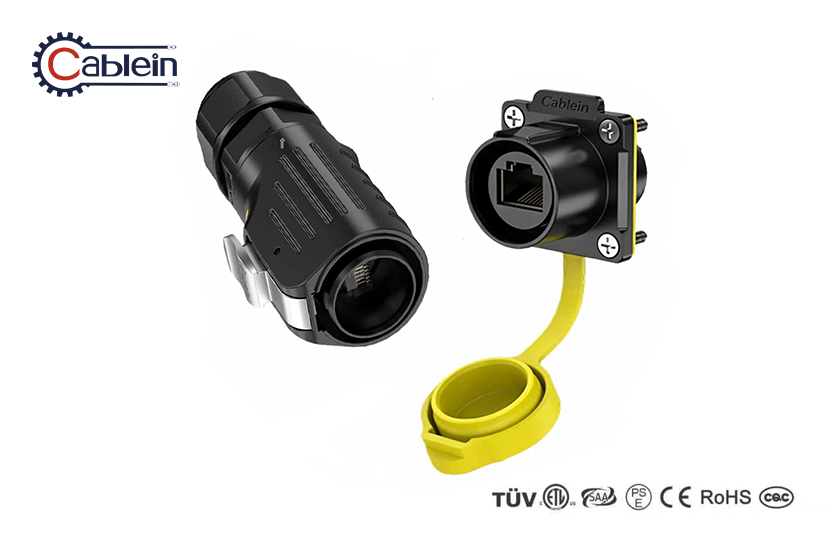
When you compare the LP12 to common options like the RJ45 or standard circular connectors, you can see that it has clear advantages. RJ45 plugs are great for data networking, but they don't offer strong safety against the elements. Their plastic latches break when they are put under a lot of force, and the basic models don't protect against water. The LP12's metal or reinforced nylon bayonet lock can withstand more than 2000 mating cycles and stays in place even when it's being shaken.
Traditional screw-terminal connectors make links that are safe, but they take a long time to install and need trained workers. To properly strip wires, wrap them around leads, and tighten multiple screws without damaging the conductors, you must be careful not to over-torque. The LP12 cable to cable connector solder termination and snap-lock coupling cut installation time by 40 to 60 percent in most field situations.
In terms of signal integrity, standard push-fit connections that are useful for testing have higher contact resistance over time because the spring tension weakens. The LP12's gold-plated contacts keep the resistance stable over the connector's lifetime, which is very important for uses where voltage drop impacts system performance.
Use-Case Suitability and Performance Trade-offs
Finding the best connector means balancing a lot of different factors. The LP12 is good for uses that need a small size, protection from the environment, and a lot of connect-disconnect cycles. When troubleshooting driver problems in LED lighting setups, quick field changes are helpful. Even though constant vibrations can break threaded connections, industrial sensors need to be able to link reliably.
When making decisions about what to buy, cost is important. The LP12 usually costs 15 to 25 percent more than regular circular connectors. This investment up front pays off in lower labor costs, fewer breakdowns, and longer service gaps. Figure out the total cost of ownership, which includes the time it takes to install, the rate at which it is likely to break, and the cost of replacement over a 5-year period.
Quality connectors are different from commodity goods because they work better in industry settings. The operating temperature range of the LP12 covers places as cold as arctic outdoor installations and as hot as industrial ovens. It has an IP68 rating, which means it can handle direct water spray, short-term submersion, and buildup condensation—all of which would destroy unsealed connectors in months.
The M12 and M8 types are other plugs that work with LP12 cords. They are waterproof in a similar way, but their locking methods and pin densities are different. M12 plugs have more pins (up to 12 places), which is good for complex signal routing. M8 versions, on the other hand, have smaller footprints for very small devices. Think about these choices based on the number of pins you need and the room you have for placing them.
Procurement Considerations for LP12 Cable Connectors
Sourcing from Reliable Suppliers
It takes work to find approved LP12 cable to cable connector providers. Give more weight to manufacturers who have the right certifications, like TUV, CE, ETL, and ISO9001:2015 quality management. These credentials show that the manufacturing process is consistent and that international safety standards are met. Ask for copies of the certificates and use the databases of the issuing body to make sure they are real.
Prices change based on the number of pins, the type of housing (metal or plastic), and the number of items ordered. Plastic connectors with two to four pins usually cost between $1.80 and $3.50 per pair when bought in 1000-piece lots. Versions with metal casings cost 25–40% more. Custom pin configurations or wire lengths may raise unit costs by 15 to 30 percent, but they don't cost anything to change in the field.
Depending on how customized the items are, the minimum order quantity is usually between 100 and 500 pieces. Stock connectors usually have lower MOQs, but for custom-molded versions, you need at least 500 to 1000 pieces to cover the cost of the tools. Some of the benefits of buying in bulk are volume savings (10–20% off when you buy 5000 or more pieces), combining freight, and getting priority production schedule during times of high demand.
Evaluating Supplier Capabilities
Check the supplier's technical support and service infrastructure as well as their prices. Can they offer tech help when choosing a product? Do they have sample programs that let you try them out before you commit fully? Response time is important—suppliers who answer technical questions within 24 hours show that they care about their customers.
How reliable deliveries are is affected by how much can be made. Urgent orders are usually filled within 7 to 10 days by suppliers who keep stable stock levels (usually 10,000 or more pieces per standard variant). Custom orders take 3–4 weeks to make, and during busy times, lead times get longer. Set up clear ways to talk about production schedules and make sure that big orders are confirmed at key points along the way.
Logistics prices and delivery times are affected by where things are delivered. Direct connections with shipping companies like UPS, DHL, and FedEx for air freight or well-known freight forwarders for ocean freight ensure low prices and safe travel times. When suppliers offer delivered duty paid (DDP) prices, it makes clearing customs easier and cuts down on fees that come as a surprise.
Ask for quality proof, like inspection reports, waterproof test results, and data from mating cycles. Reliable sellers give out badges of compliance that show they follow RoHS rules and material certifications. This paperwork is very important when your goods need to be approved by regulators or when customers want to know where their products came from.
Ensuring Long-Term Security and Performance of LP12 Connections
Maintenance Best Practices
Scheduled inspections keep important LP12 cable to cable connector systems from breaking down without warning. Visual checks should be done every three months to look for cracks in the case, deformed seals, and contact rust. Increase the number of inspections to once a month in tough areas like marine settings, chemical processing plants, or dusty farms.
How to clean depends on what kind of pollution there is. If dust and dirt build up, use moderately pressurized air (40 to 60 PSI) to blow it out without hurting the seals. If there is oil or chemical residue, use lint-free cloths and rubbing alcohol to gently wipe it off. Do not use strong solvents that break down silicone seals or nylon housings.
Careful inspection of the gold plating quality is part of contact upkeep. Minor rust on the outside of the housing is only for looks, but touch surface degradation affects how well the electrical system works. If the contact resistance readings are more than 15m©, which is 50% above the specification, you should replace the connector during the next maintenance window.
Environmental Factors and Lifecycle Management
Temperature cycling speeds up the wear and tear on seals and housings. Connectors that are constantly changing temperatures from -20℃ to +80℃ may need to be replaced every 3 to 5 years, even if they look fine on the outside. Keep track of the times of installation and the surroundings to figure out how often to replace something.
Applications with a lot of vibration, like train transit equipment, industrial robots, and mobile machinery, put a lot of stress on solder joints and locking mechanisms. Even the strong LP12 design breaks down when high frequencies are vibrated all the time. Use wire ties at regular distances to stop vibrations from getting to the bodies of connectors when vibration dampening is not possible.
When installed outside, ultraviolet light can damage nylon housings. UL94-V0 materials don't break down easily, but long-term sun exposure weakens them over time. If the job requires direct sunlight for more than six hours a day, you might want to think about protective shrouding or UV-resistant boot covers.
Upgrading and Future-Proofing Strategies
Connectors get better as technology changes. Newer versions of the LP12 have better sealing systems, higher current values, and better materials. When trying to upgrade a system, you should check to see if next-generation connectors offer enough speed gains to make the replacement costs worth it.
When you do a phased upgrade, you need to think about backward compatibility. Check to see if the new connectors will work with the old cable assemblies so that the whole system doesn't have to be rewired. Transitional adapters from suppliers make it easier to switch from older connection standards to the latest LP12 standards.
Long-term upkeep is easier with good documentation methods. Keep track of where connectors are, when they were installed, and the history of maintenance. Taking pictures during the initial installation helps with troubleshooting years later, when the original installers may not be available. Tracking plug serial numbers with digital asset management systems lets you plan repair based on real-world data about how well things are working.
Implementations in the real world show that LP12 is reliable. In 2019, more than 800 LP12 plugs were used in a big stadium lighting upgrade in the southwestern United States. After four years of being exposed to strong sun, extreme temperatures, and monsoon rains, the failure rate stayed below 0.5%. This was a much better performance than the general waterproof connectors that were previously put, which failed at a yearly rate of 8%. Because of this performance, maintenance costs dropped by more than $15,000 a year, and the system's uptime went from 94% to 99.7%.
Conclusion
Learning how to install LP12 cable to cable connectors will make your project more reliable right away and save you money in the long run. The methods talked about, from properly preparing the cables to checking them in a planned way, make sure that the connections can handle harsh industrial settings. Knowing how LP12 connectors stack up against other options helps you make smart purchasing choices that meet the needs of your individual application. When you maintain your connectors properly, they last longer, and planned upgrades protect your systems against changes in technology. When engineers focus on the real-world problems that LED lighting, automation, and renewable energy face, these small 12mm connectors show that strong performance doesn't have to mean big designs.
FAQ
Can LP12 connectors work with non-LP12 cables?
The LP12 cable to cable connector can fit normal wires with a width of 3 to 6 mm and a conductor size of 0.34 to 0.5 mm². Cable type compatibility is based on the insulation material and the way the conductors are set up, not the brand name. Before you place the connection, make sure that the cable's physical dimensions and electrical ratings match the connector's requirements.
What tools are essential for LP12 installation?
For basic installation, you will need wire strippers that are set to the gage of your cable, a temperature-controlled soldering iron (60W is suggested), rosin-core solder, and a multimeter to check for continuity. More pressure reduction is provided by heat-shrink tubing. Torque-limiting screwdrivers are useful for professional installations because they make sure that the cable gland is tight enough without applying too much torque, which can damage the seals.
How do I maintain secure connections in high-vibration environments?
To get good vibration resistance, make sure the solder joints are smooth and completely cool before putting the parts together. There is a lot of mechanical stress that can be put on the snap-lock bayonet system, but extra strain release stops stress transfer. Use the right clamps to secure the cables every 150 to 200 mm, making service loops that can absorb movement without sending force to the connector bodies.
Partner with Cablein for Industrial-Grade LP12 Solutions
When you upgrade your electrical systems with certified LP12 cable to cable connectors from a reputable maker, the job will be a success from the start to the end. Cablein Technology makes waterproof connectors for businesses that are backed by TUV and CE certifications and are made under ISO9001:2015 quality management. They have over 9 years of experience in this field. Our engineering team is available 24 hours a day to help you choose the right product and give you options for customization that include 2–8 pin configurations and housing materials that are best for your needs. We support both urgent replacements and large-scale project rollouts because we keep more than 10,000 pieces of each standard variant in stock and can deliver them in 7 to 10 days for urgent needs. Email our team at nick@cableinco.com to talk about your particular needs, get technical specs, or set up a sample review. Visit connectorswaterproof.com to learn more about our full range of waterproof connection options.
References
1. Industrial Connector Standards and Applications, Society of Automotive Engineers Technical Paper Series, 2021.
2. Waterproof Connector Design and Testing Protocols, International Electrotechnical Commission Publication 60529, 2019.
3. Cable Assembly Best Practices for Harsh Environments, Institute of Electrical and Electronics Engineers Standards Association, 2020.
4. Comparative Analysis of Circular Connector Technologies in Industrial Automation, Automation Technology Review, Volume 34, 2022.
5. Lifecycle Cost Analysis of Industrial Connectors in Outdoor Applications, Journal of Electrical Infrastructure, 2023.
6. Quality Assurance Methods for Waterproof Electrical Connectors, American Society for Quality Control Guidelines, 2021.