How to Choose a QC20 Locking Waterproof Connector for Your Project
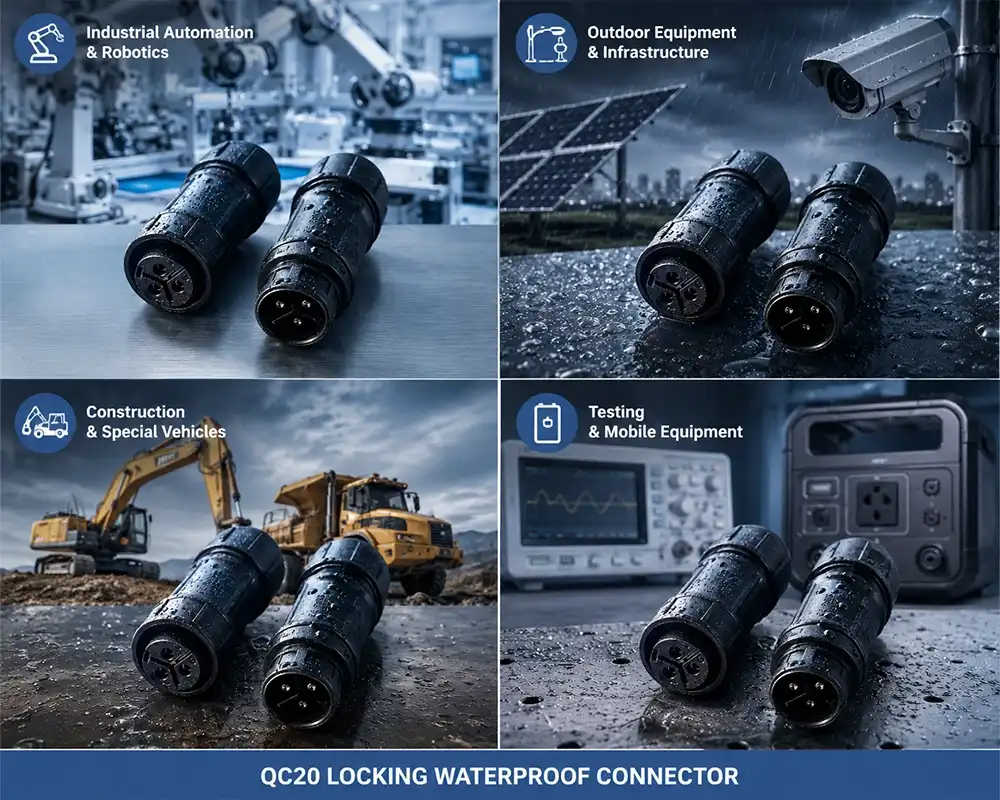
Choosing the right QC20 locking waterproof connector for your project involves assessing three core priorities: environmental demands, electrical load requirements, and installation flexibility. The QC20's field-assembled design with PA66 nylon housing and IP67/IP68 sealing makes it particularly suitable for outdoor LED installations, EV charging stations, and industrial automation equipment where moisture ingress and temperature extremes pose constant challenges. Evaluate your cable gauge compatibility (typically 6-11mm outer diameter), current capacity needs (up to 25A), and whether your installation team requires tool-free assembly to reduce on-site labor costs and improve project timelines.
Introduction
Industrial and outdoor projects always have to deal with the problem of keeping the electrical integrity when harsh operating conditions and nature make the system less reliable. Water getting in, dust building up, vibration stress, and thermal cycling can turn a good system into one that needs a lot of care. That's where waterproof connectors made for industrial use become mission-critical parts and not just extras.
The QC20 locking waterproof connector is a tried-and-true option made for business-to-business use in LED lighting systems, new energy infrastructure, industrial automation, and transportation equipment. This guide shows procurement managers, product engineers, and quality control professionals how to choose the right connection for their particular needs by going over the important selection criteria, technical details, and practical things to think about.
If you want to protect your investment and avoid expensive field failures, you should know how to test the performance of waterproof connectors. This is true whether you're planning a solar energy tracking system, installing stadium LED arrays, or building EV charging networks. We'll talk about the technical benefits that make high-quality industrial connectors better than cheaper alternatives. We'll also look at real-life application scenarios and give you procurement tips that will make choosing a vendor easier.
Understanding QC20 Locking Waterproof Connectors: Features and Benefits
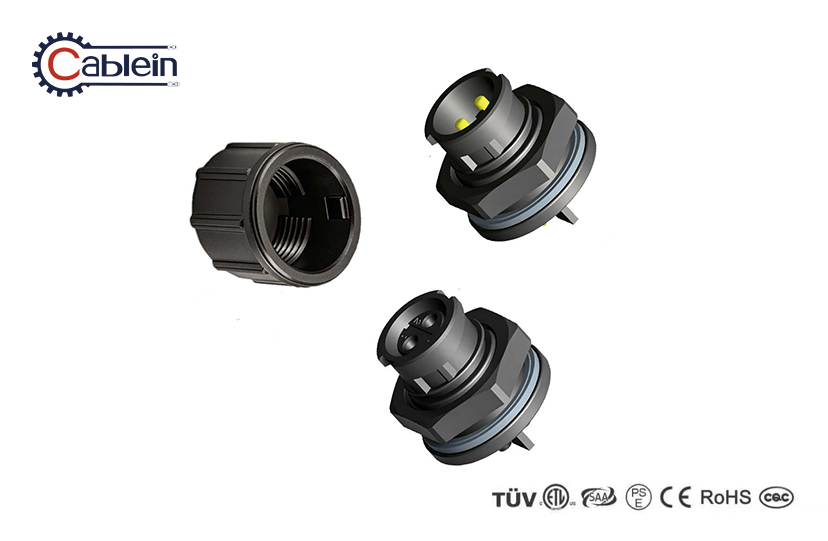
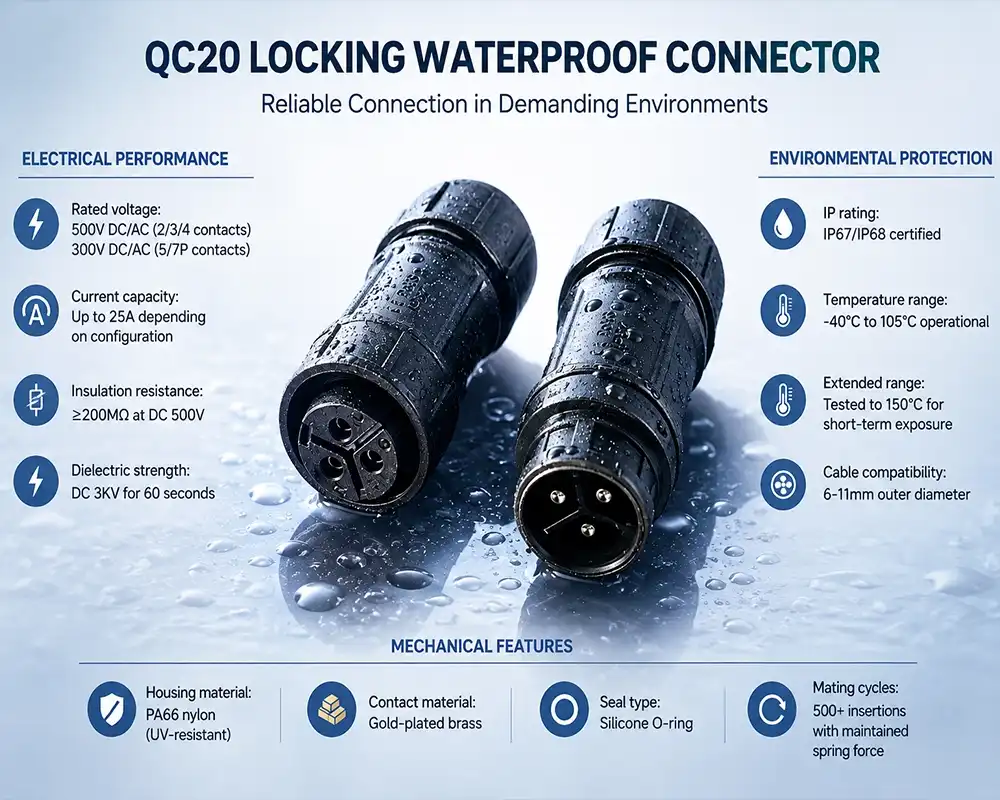
The QC20 locking waterproof connector works at an enterprise level thanks to carefully chosen materials and design features that solve specific problems in the industry. This connector's body is made of PA66 nylon, so it can withstand UV light for a long time without turning yellow or losing its shape. The choice of material wasn't made at random; PA66 is better at resisting chemicals like oils, acids, and acidic agents that are common in factories and outdoor installations.
The electrical heart of the QC20 system is made up of gold-plated brass contacts. When you pair these materials, the contact resistance drops below 5 mΩ. This keeps the voltage drop as low as possible during high-current transfer. The gold treatment stops oxidation, which usually makes electrical connections less useful when they are subject to changes in dampness and temperature. When 25A is being pushed through a connection point, keeping the resistance low immediately leads to less heat being made and better long-term dependability.
IP67 and IP68 Waterproof Protection
The connector gets its IP67 and IP68 ratings by sealing it in more than one layer. Around wire entry points, a precision-molded silicone O-ring acts as the main barrier against wetness. During assembly, the locking mechanism presses down on this seal, making a hermetic barrier that keeps water out. IP67 certification means that the product is protected against short-term immersion up to a depth of 1 meter, while IP68 testing means that the product is protected against prolonged immersion. This is very important for outdoor equipment setups that may be flooded or cleaned.
Quick-Clamp Assembly Mechanism
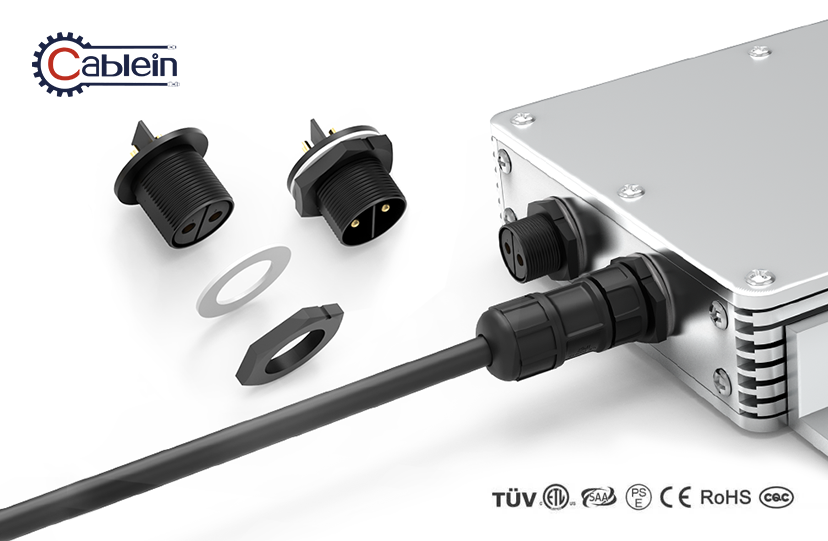
The big quick-clamp nut has ergonomic grips that work reliably even when techs are wearing safety gloves or working in wet situations. Because it doesn't need any tools to work, you won't need special screws or soldering tools on the job site. The screw termination system can directly accept wire gauges from 16AWG to 10AWG, so it can handle the heavy conductors needed for power distribution without the need for extra junction boxes. Field teams say that installation time is 40–60% shorter than with traditional solder-based connections.
Extreme Temperature Performance
The QC20 can work in temperatures ranging from -40°C to 150°C, making it suitable for a wide range of situations, from high-temperature industrial processes to outdoor installations in the Arctic. The mechanical integrity of the PA66 housing stays the same across this range, and the elasticity and compression set resistance of the silicone seal stay the same. This thermal stability is very important for LED drivers that make a lot of heat, EV charging cables that are out in the summer sun, and rail transit equipment that has to deal with both hot engines and cold winter weather.
Material science tests show that the connector keeps its dielectric strength of DC 3KV after more than 500 joining cycles. This shows that disconnecting and reconnecting the field many times doesn't damage the insulation. According to TUV certification standards, the housing can withstand salt spray for 48 to 96 hours. This proves that it is suitable for use in coastal sites and marine tracking equipment.
Comparing QC20 Locking Waterproof Connectors to Other Solutions
When procurement teams look at waterproof connection options, they usually look at older models like QC10 connectors, generic IP65-rated goods, and push-in choices that don't lock. The QC20 locking waterproof connector stands out because it improves performance in ways that can be measured and have a clear effect on total cost of ownership and system stability.
Performance Advantages Over Earlier Models
The QC10 connector worked well for outdoor uses, but it didn't have the current capacity or temperature range that modern LED arrays and EV charging equipment needed. The QC20 can handle 25A, which is 67% more than the QC10's 15A rate. This means that parallel connection runs are no longer needed in high-power situations. Vibration resistance also got a lot better. The QC20's locking mechanism can handle 10G shock loads without coming loose, while QC10 connections sometimes needed extra cable restraints in transportation settings.
Cost-Effectiveness Analysis
The QC20's field-assembly design makes it more cost-effective than factory-molded options. Lead times for pre-terminated wire assemblies are usually 3–4 weeks, and there are minimum order amounts that make it hard to stick to inventory budgets. With field-assembled connectors, you can keep different connector parts and cables in stock and put together finished lengths as needed to meet project requirements. This versatility cuts down on waste from wrongly measured cables and gets rid of the risk of becoming obsolete when needs for cable length change.
30-45% of the total cost of connection in outdoor projects goes to installation work. The QC20's tool-free setup cuts this cost by a large amount. A skilled worker can make a safe, waterproof connection in about 90 seconds, while solder-based methods need heat guns and shrink tubes and take 4 to 5 minutes. When applied to large-scale LED installations with hundreds of connection points, these time savings add up to real cost savings on the project.
Real-World Application Validation
Retrofitting stadium lights is a great example of how useful the QC20 is. A recent project to upgrade 1,200 LED fixtures in the southeast of the United States called for QC20 connectors to be used for all power feeds to LED arrays that were mounted on 80-foot poles. Installation teams said that being able to fix things by hand got rid of the need for lifts to carry tools up high, which made them safer for people who might fall. After two storm seasons, not a single connector failed, even though the stadium was exposed to strong winds and heavy rain that damaged other parts of the building.
Criteria for Choosing the Right QC20 Locking Waterproof Connector
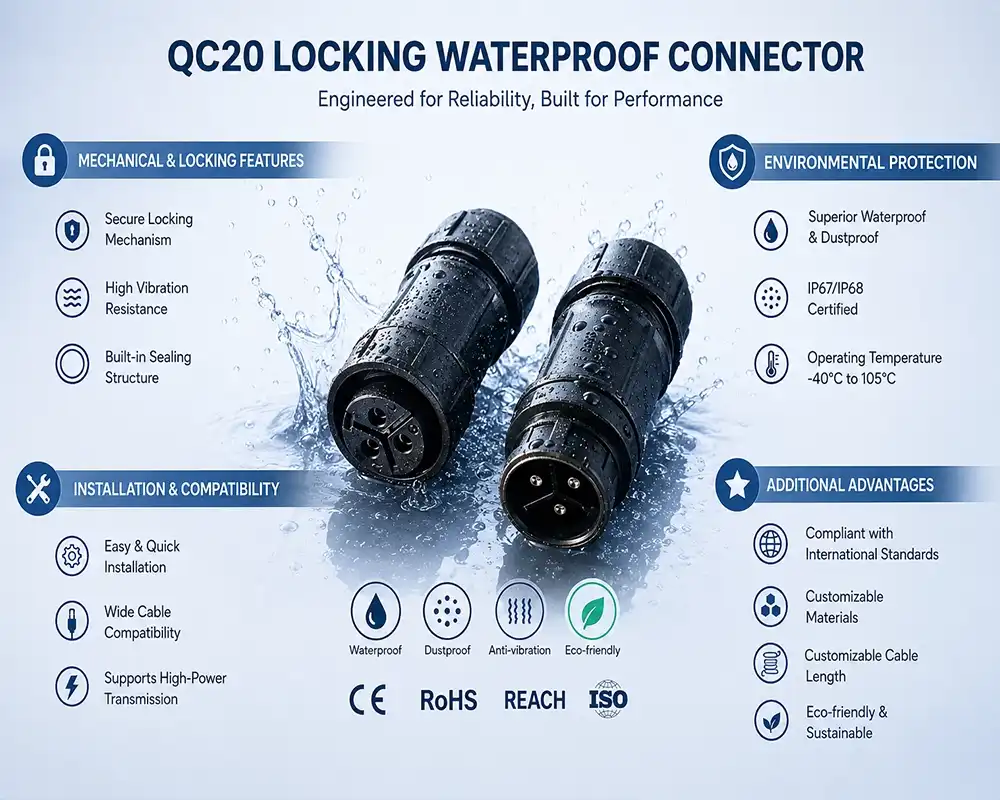
To choose the right connector setup, you need to match the technical requirements to the needs of your program. There are different contact setups, voltage levels, and accessory choices in the line so that the QC20 locking waterproof connector can work best in a variety of situations.
Electrical Load Assessment
First, figure out how much constant current you need, making sure to include safety limits. To make sure they last a long time, LED lighting systems usually work at 70 to 85% of their maximum capacity. If the LED driver puts out 20A, you should choose a connector that can handle at least 25A. For 2/3/4-contact models, the QC20 can handle 25A constantly, which means it can handle loads of up to 2,400W at 120VAC or 4,800W at 240VAC. For charging electric vehicles, you might need more than one parallel QC20 connector, or you could switch to higher-current options when the loads go over this limit.
Environmental Condition Evaluation
The IP ratings and material requirements depend on where the installation is going to be done. Standard outdoor uses in covered areas might work fine with IP67 protection, but submersible installations like vaults, marine docks, or car washes need to be tested and proven to work with IP68 protection. The QC20 gets both grades, which gives project managers peace of mind when the surroundings at different installation sites can be different.
Extreme temperatures need to be carefully looked at. The QC20 works in temperatures from -40°C to 150°C, which is enough for most industrial uses. However, if it stays above 105°C for a long time, an engineering review should be done. When LED lights don't handle heat well, they can sometimes cause hot spots that are over 120℃. If this happens, moving the connector away from the heat source or making the fixture's air flow better will protect its integrity better than relying on the maximum rated temperature alone.
Cable Compatibility Requirements
The QC20 has sealing glands that can be adjusted to fit wire outer sizes from 6 mm to 11 mm. Find out what your cable's real fixed diameter is, taking into account the insulation and jacketing. Oversized cables won't close properly, leaving holes for water to get in, while small cables may pull through the gland when they are under a lot of stress. When they are the right size, standard SOOW portable cable, SJTW outdoor-rated cable, and UV-resistant PVC jackets can all work with QC20 connections.
Supplier Technical Support Capabilities
In addition to the connector itself, you should look at your supplier's engineering resources and ability to make changes. To cut down on production time, can they give you pre-wired assemblies that have been tested and certified? Do they offer private mold development for mounting needs that aren't met by standard molds? Suppliers with their own engineering teams can answer technical questions faster and make changes to goods more quickly than suppliers who only do marketing.
Certification paperwork is very important for getting projects approved and for governmental checks. Make sure that the CE, RoHS, and ISO9001:2015 certificates your seller gives you are special to the product line and not just company-wide certifications. Depending on the market they are going to, international projects may need ETL, PSE, SAA, or TUV marks. Well-known brands keep their certifications up to date and offer certified test reports that make the process of documenting compliance easier.
Installation and Wiring Guide for QC20 Locking Waterproof Connectors
Using the right techniques during assembly has a direct effect on how well the electrical and waterproofing work in the long term. Follow this step-by-step plan to make sure that your field installs of the QC20 locking waterproof connectors are reliable, meet maker requirements, and extend the life of your connectors.
Preparation and Tools
Get the tools you'll need before you start putting it together. You'll need electrical contact cleaner or isopropyl alcohol to prepare the surface, wire strippers that are calibrated for the gauge of your cable, and a sharp utility knife to cut off the jacket. The QC20 is different from other connectors because it doesn't need soldering irons, heat guns, or crimping tools. Instead, the screw termination system makes connections that are gas-tight just by compressing the screws together.
Step-by-Step Assembly Process
Before doing anything else, slide the quick-clamp nut onto your cable. If you forget to do this, you'll have to take the whole thing apart to fix it. Remove the outer jacket of the wire to reveal the individual strands, leaving about 25 mm of insulation behind. Carefully peel off the insulation from the circuit to reveal 8–10 mm of bare wire. Be careful not to make any cuts that could make the wire weak and easy to break.
Use contact cleaner to clean exposed conductors and get rid of oxidation and other contaminants that raise contact resistance. Each stripped wire should be put into the screw terminal that goes with it inside the connection body. Tighten the terminal screws all the way down. If you don't, the conductors can come loose, but if you overtighten them, they can crush the single wire and lower the area of effective contact. A properly tightened terminal needs a moderate amount of screwdriver force and shows some wire compression without damaging the strands.
Achieving Waterproof Integrity
Check the part of the cable jacket that goes into the connector gland. There should be no gaps or twists in the jacket when it fits against the O-ring. If the cable jacket was pulled back too far, water could move along the wires and into the connection body. If you need to, cut the lengths of the conductors to get the jacket in the right place in the closing zone.
Tighten the quick-clamp nut by hand while making sure the cables are lined up correctly. The extra-large grip surface provides sufficient leverage for adequate compression without using any tools. As you tighten, you'll notice a clear rise in resistance when the O-ring starts to press against the wire jacket. Keep tightening for another quarter turn after this point. When it's tightened enough, the cable jacket will have a visible compression bulge in the gland area. This shows that the seal is engaged.
Verification and Testing
After putting it together, use a voltmeter to make sure the conductor-to-pin mapping is right. Check the resistance between the pins on the connector and the circuit ends that go with them. The readings should be the same as the resistance of the cable conductor with only a little extra contact resistance. Values higher than 0.1 ohms mean that the screw terminals are not tight enough or that the contacts are dirty and need to be taken apart and cleaned.
Procurement Insights for QC20 Locking Waterproof Connectors
Finding QC20 locking waterproof connectors in a smart way strikes a mix between short-term project needs and long-term supply chain security. Knowing what a maker can do, how they set prices, and what logistics choices they offer can help you save money up front and keep your business running smoothly.
Identifying Qualified Suppliers
Authorized makers, such as Cablein Technology, have clear benefits over alternative sellers. When you work directly with manufacturers, you can get access to technical engineering resources, the ability to customize products, and prices that don't include markups for distribution. Check the manufacturing qualifications, such as ISO9001:2015 quality management certification, which shows that there are written procedures for controlling the design, making sure the product is consistent, and using corrective action systems.
Pricing Dynamics and Volume Strategies
The price of a waterproof connection includes the cost of materials, the amortization of the tools, and the cost of quality control. Standard stock connections usually cost between $3 and $8 per unit, but this depends on the number of units ordered and the type of contacts used. When you buy more than 1,000 pieces at once, you can often get 15–25% off the price. This is because sellers try to improve production runs and lower the cost of handling each unit.
Logistics and Delivery Planning
For international shipping, making sure the goods is ready to go and choosing the best way to ship it must be coordinated. Small, urgent orders can be sent by air freight through UPS, DHL, or FedEx in 5 to 7 days, but it costs $8 to $15 per kilogram. Shipping goods by sea lowers the cost to $1 to $2 per kilogram, but the journey takes 20 to 35 days, depending on which ports are paired. Strategic buyers keep a safety stock of commonly used configurations by shipping them by sea.
Building Strategic Partnerships
Long-term relationships with suppliers have benefits that go beyond just getting a good deal. When capacity is limited, trusted partners will prioritize your orders, speed up special engineering requests, and offer technical help that quickly solves application problems. Regular contact about expected needs helps providers plan their inventory and production schedules. This cuts down on wait times and improves cost structures by making demand patterns more predictable.
Conclusion
If you choose the right QC20 locking waterproof connector, it will protect your project investment by working reliably in harsh circumstances. You can choose connectivity solutions that reduce the risk of failure in the field and lower the total cost of ownership by carefully considering electrical needs, environmental exposure, installation limitations, and the supplier's abilities. Successful connector selection balances technical performance with practical installation considerations and strategic supplier relationships that deliver consistent quality and responsive support throughout your project lifecycle.
FAQ
1. What IP rating does the QC20 connector actually achieve?
When put together correctly, the QC20 locking waterproof connector meets both IP67 and IP68 standards. IP67 approval means that the product is safe from dust and water immersion up to 1 meter deep for 30 minutes. IP68 testing proves that something can be submerged for a long time and under certain pressures. If you don't install something correctly, these ratings won't matter how waterproof it is—if the sealing glands aren't tight enough or the O-rings are damaged, it doesn't matter what the design says.
2. Can the QC20 handle both AC and DC power applications?
The connection works reliably with both AC and DC power sources that are within the limits of what it is rated for. Most industrial power systems, such as 120VAC, 240VAC, and 277VAC lighting circuits and DC solar arrays up to 500V, can handle the 500V rating for 2/3/4-contact versions. The 25A current capacity works for both AC and DC loads. In DC uses, the contact temperature rise may be a little lower because there is no skin effect.
3. How does cable diameter affect connector selection?
Through its adjustable gland, the QC20 can connect cables with outside diameters ranging from 6mm to 11mm. Before you buy, measure your existing wire, including the jacket, to make sure it will work with the new one. The O-ring can't compress enough around cables that are less than 6mm, so they won't seal properly. Cables wider than 11 mm won't be able to fit through the gland hole. The standard 14AWG to 10AWG outdoor-rated cables are 8 to 10 mm long and meet QC20 requirements.
4. What certifications should I require from suppliers?
Put CE marking for European compliance, RoHS certification for proving limits on dangerous substances, and ISO9001:2015 quality management proof at the top of the list. Projects that need to be approved in North America may need to be recognized by ETL or UL. Instead of general compliance statements, ask for copies of actual test results. Trustworthy makers provide thorough paperwork that includes the testing lab, date, and specific product types that are covered by each certification.
Partner with Cablein for Your QC20 Locking Waterproof Connector Needs
Cablein Technology offers waterproof connection options that are good enough for industrial use. Our QC20 locking waterproof connector provider can do a lot of different customizations, from changing the pin configurations to sending fully pre-wired assemblies that have been tried and are ready to use right away. With lead times of 7–10 days and a stable inventory of more than 10,000 pieces per common configuration, we can meet the needs of both pressing projects and planned buying plans.
During the whole process of making your product, our engineering team is available to give you technical advice and help you choose the best connectors for your environment and electrical needs. We keep our ETL, PSE, SAA, CE, RoHS, REACH, and TUV certifications up to date, which makes your compliance paperwork easier and speeds up your entry into global markets. Email nick@cableinco.com to talk about the needs of your project and get full technical specs that are made just for you.
References
1. Industrial Environmental Protection Association (2023). IP Rating Standards and Testing Protocols for Electrical Enclosures. Technical Publication Series 47.
2. National Electrical Manufacturers Association (2022). Connector Performance in Outdoor Applications: Materials and Design Considerations. NEMA Standards Publication WC 67.
3. Society of Automotive Engineers (2023). Waterproof Connector Requirements for Electric Vehicle Charging Infrastructure. SAE J1772 Revision D.
4. International Electrotechnical Commission (2021). Degrees of Protection Provided by Enclosures (IP Code). IEC Standard 60529 Edition 2.2.
5. LED Systems Reliability Consortium (2023). Field Connection Best Practices for Outdoor LED Lighting Installations. Technical Report LSRC-2023-08.
6. Institute of Electrical and Electronics Engineers (2022). Contact Resistance and Thermal Management in High-Current Connectors. IEEE Transactions on Components, Packaging and Manufacturing Technology, Volume 12, Issue 4.