How to Choose an LP16 RJ45 Wire-to-Wire Waterproof Connector for Industrial Use
When selecting an industrial Ethernet connector for harsh environments, you need reliability that goes beyond standard networking components. The LP16 RJ45 wire-to-wire waterproof connector addresses this need by combining IP67/IP68-rated environmental protection with Cat5e and Cat6 data transmission standards. This connector features a female-to-female feed-through design that enables cable extension in outdoor installations where moisture, dust, and temperature extremes threaten conventional connections. With robust PBT or zinc alloy housing, gold-plated contacts, and snap-lock coupling mechanisms, the LP16 delivers dependable Ethernet connectivity for LED lighting systems, industrial automation networks, security surveillance infrastructure, and renewable energy installations.
Understanding LP16 RJ45 Wire-to-Wire Waterproof Connectors
Industrial networking needs more than what Ethernet parts made for offices can provide. Standard RJ45 connections break when they get wet or dusty, but waterproof Ethernet connectors protect your network port with a sealed case that is made for use outside. The LP16 model solves the problem of inline extension, which means connecting two Ethernet cables together in places where weather and other contaminants would normally weaken or destroy the signal.
Core Design and Industrial-Grade Features
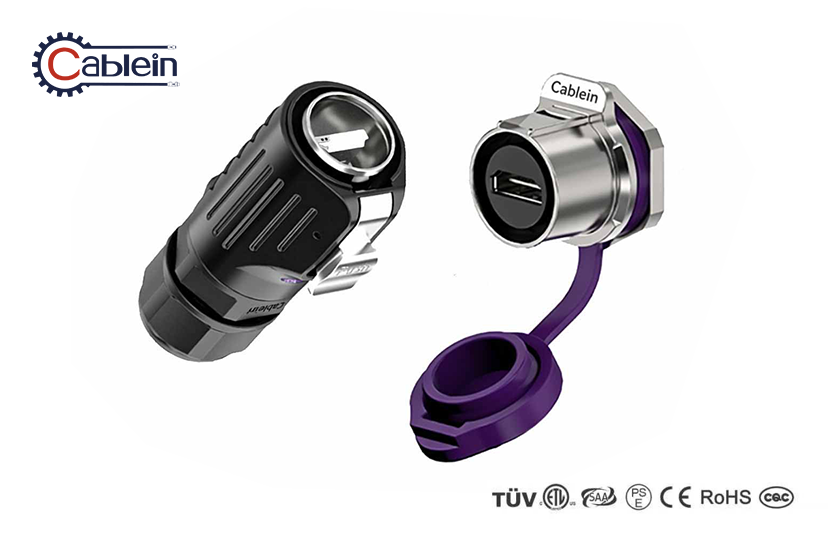
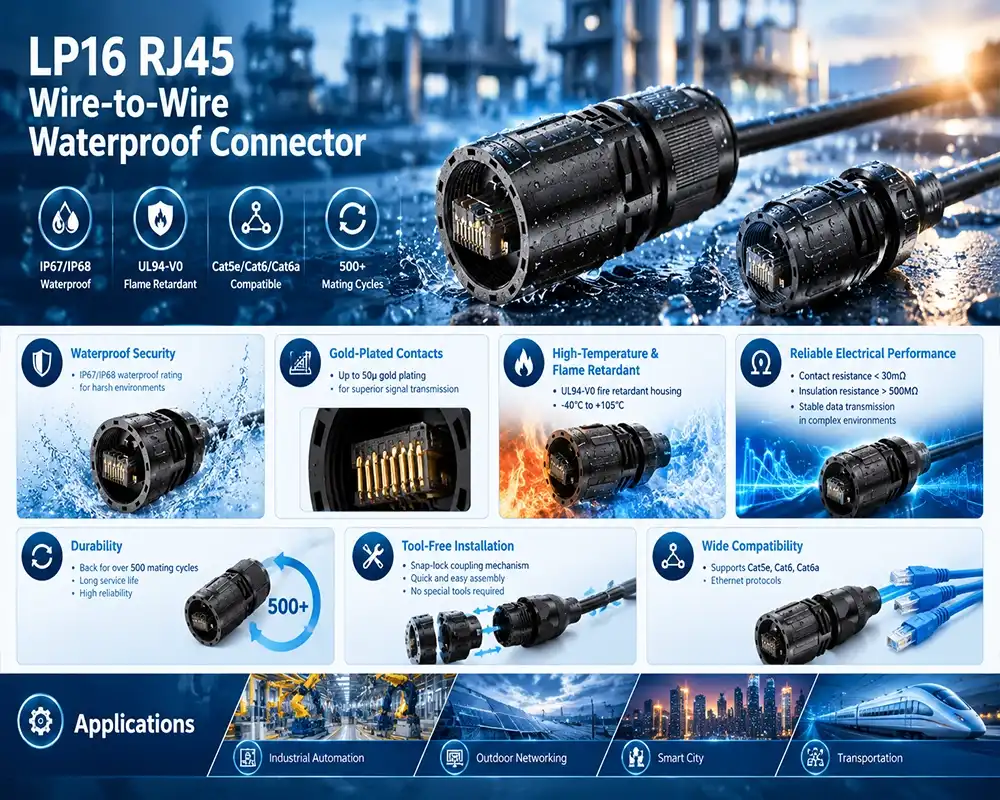
The LP16 has a wire-to-wire feed-through design that is very different from panel-mount options. With this setup, you can connect two cable runs in the middle of installation without having to find a permanent mounting point. The 16mm housing width fits the internal RJ45 interface while keeping the profile small enough for placement in small areas. Inside, gold-plated contacts that are up to 50μ thick don't oxidize even after years of use, so the signal stays strong even in surroundings that are corrosive. The snap-lock coupling mechanism lets you connect and disconnect without using any tools. This cuts down on installation time and makes connections that are secure and can withstand vibration.
Temperature goes from -40°F to +105°F, which includes very cold storage areas and solar installations that get very hot. Fire safety rules for electrical cabinets are met by the UL94-V0 flame resistant housing. Silicone sealing rings make multiple barriers against water entry, meeting IP67 standards for diving up to 1 meter and IP68 standards for ongoing underwater operation in some setups.
Technical Specifications That Matter
Electrical performance has a direct effect on how reliable your network is. The LP16 keeps its insulation resistance above 500MΩ, which stops signal leakage that could lead to data errors. The contact resistance stays below 30m©, which keeps the voltage drop across the connection to a minimum. The connector can handle Power over Ethernet (PoE) applications up to 1.5A and has a rated voltage of 125V AC and a withstand capability of 1000V AC. It supports IEEE 802.3af/at standards for IP cameras and wireless access points.
The LP16 RJ45 wire-to-wire waterproof connector protected design protects against electromagnetic interference (EMI) from all sides, which is very important when wires are used near motor drives or high-frequency switching equipment in automation systems. Mechanical longevity is higher than 500 mating cycles, which supports systems that need to be accessed for repair every so often. Because it works with both Cat5e and Cat6, you don't have to worry about slowing down data rates—the connection allows Gigabit Ethernet without any problems.
Comparing LP16 RJ45 with Other RJ45 Connector Models
Standard RJ45 patch connections work well in offices but don't protect against the elements. Outdoor-rated wires with TPU jackets are better at withstanding bad weather, but when they are connected, the plug contact is still exposed to water. Panel-mount waterproof connectors help with some of this, but they need fixed mounting points that aren't always available when they are installed in the field.
Environmental Rating Disparities
Most industrial RJ45 plugs don't have an IP rating, which means they can't keep water or dust out. IP20-rated versions keep fingers from touching them, but they stop working right away when they get wet. The LP16's IP67 rating is a big improvement—it can handle being submerged for a short time and direct water jets from any direction. Some competing models say they are waterproof, but they don't have any third-party testing to back that up. The LP16's environmental performance has been independently confirmed by TUV and CE certifications based on ISO9001 standards.
The LP11 waterproof connector type is often used in smaller cable uses by people who work in industrial automation. The LP16 stands out because it is RJ45 compatible, which means it can be directly connected to normal network equipment. You don't need to buy special adapters to use patch cords, switches, and testing gear that you already have. This compatibility makes inventory simpler and troubleshooting easier.
Ruggedness for Industrial Applications
Office networking doesn't have to deal with a lot of mechanical stress, changing temperatures, or chemical contact. In industrial settings, links are constantly shaking from machines, the temperature can change between climate-controlled areas and the outdoors, and they may come into touch with lubricants or cleaning agents from time to time. The LP16's housing is made of PBT plastic, which is resistant to common industrial chemicals and more stable in UV light than standard PVC. Different types of zinc alloy are even more resistant to impact, making them better for areas with a lot of foot traffic where hits could happen by accident.
Industrial waterproof connectors are different from regular RJ45 clips because they have a bayonet-style locking device. Standard plastic locks are easy to break when they are hit by something hard or when they are exposed to UV light. The LP16's snap-lock design means that it takes conscious effort to disconnect, so it can't be accidentally disconnected. It also doesn't need any tools for approved repair.
Key Criteria for Choosing the Right LP16 RJ45 Wire-to-Wire Waterproof Connector
Understanding your working surroundings is the first step in selection. Different fields have different problems that affect which connection specs are most important.
Defining Operational Requirements
Different businesses are affected by temperature changes in different ways. In desert regions, solar inverter systems are often exposed to 85℃ temperatures, while in the north, outdoor LED screens are exposed to -40℃ winters. The LP16 can handle temperatures between -40°F and +105°F, giving it room to heat up from the PoE current.
The needs for moisture protection change depending on whether it rains occasionally or constantly, and there is a lot of humidity. For LED arena lighting to work, it needs to be protected against rain and high-pressure water during cleaning. Sprinkler systems send water directly at agricultural irrigation controllers, so they need to have IP68 ratings. In marine and coastal settings, salt spray corrosion is a big problem. The LP16 has passed a 48-96 hour salt spray test, which means it will last for a long time.
Vibration levels in train transit or industrial robotics need mechanical designs that keep the electricity flowing even when the robot is moving all the time. The LP16's strong internal contact design and secure locking mechanism stop the loose connections that happen with regular RJ45 plugs in installations that are prone to vibration.
Electrical Specifications and Data Rate Compatibility
Your network architecture tells you what kind of data transmission capabilities you need. Simple tracking devices work well with 100Mbps Fast Ethernet and Cat5e cables. Gigabit Ethernet throughput is needed by high-resolution video surveillance systems, especially those with 4K cameras. Cat6 cables and connectors can provide this. The LP16 RJ45 wire-to-wire waterproof connector works with both standards, so you can update your system without having to change any connectors.
PoE adds to the usefulness of a network by sending power along with data. IEEE 802.3af gives basic IP cameras 15.4W, and 802.3at (PoE+) gives pan-tilt-zoom cameras with heaters 30W. The LP16 can handle this much power without getting too hot thanks to its 1.5A rating at 125V AC. Shielded versions cut down on electromagnetic interference that could damage medical or lab equipment that is sensitive.
Certifications and Compliance Standards
For international projects to work, the connections need to meet the safety and environmental rules of the area. Putting a CE mark on a product lets it be sold all over the European Union. ETL approval shows that you follow the safety rules for electricity in North America. PSE approval lets the product be sold in Japan, and SAA certification covers installations in Australia. RoHS and REACH compliance makes sure that the connector doesn't have any banned hazardous chemicals. This meets environmental rules and business sustainability goals.
Manufacturing methods that are certified by ISO9001:2015 show that quality control is always in place. This is important when ordering a lot for deployments in multiple sites because you need to be sure that batch 10 works the same as batch 1. TUV testing makes sure that IP grades and electricity performance are correct, which lowers the risk in mission-critical situations.
Procurement Guide: Where and How to Buy LP16 RJ45 Waterproof Connectors?
A successful procurement process strikes a balance between technical needs and business concerns. When it comes to order amounts, customization, and transportation, business-to-business buyers face different problems than retail buyers.
Evaluating Supplier Credibility
Having a direct connection with a company has benefits beyond just saving money. When you're choosing a product, engineering support makes sure that you choose connectors that really meet the needs of your application, not just ones that are close matches in the catalog. You can now customize things like the length of the cables, pre-assembled harnesses with connectors on both ends, or the way the pins are set up for specific protocols.
More than 10,000 of each common item are kept in stock by Cablein Technology, so prototypes and small production runs can be started right away. The 7–10 day delivery window for in-stock items helps you stay on track with your projects. Instead of hard timelines based on MOQ, custom orders get adjustable schedules that are in line with your production needs.
Having the right certifications and paperwork on hand is important during the project approval process. Infrastructure projects for cities, the installation of commercial buildings, and the expansion of industrial plants all need proof that they meet the standards that apply. Your buying process will go more smoothly if suppliers are ready to give you copies of certificates, test reports, and material statements.
Bulk Ordering and Price Negotiation Strategies
When it comes to making connectors, volume price changes a lot. Catalog prices apply to orders of 100 to 500 pieces, while big discounts are available for orders of 5,000 to 10,000 units. With annual buy deals that include expected volumes, you can get better prices and be sure of getting what you need when supply is limited. Buying directly from the factory cuts out the middleman, which is especially helpful for OEMs that are adding connectors to their products.
Managing lead times means finding a balance between the costs of keeping inventory and the ability to make changes quickly. Suppliers with contract inventory programs will leave stock at your facility without expecting to be paid right away. This lowers your working capital needs while still making sure that the stock is available right away. This method works especially well for contract makers who work with many OEM clients whose needs change over time.
Managing Logistics and Global Supply Chains
Shipping goods internationally makes buying things in the United States more difficult. Air freight can get parts to you quickly, but it costs a lot. It's good for sample orders or replacing parts that you need right away. Sea freight is a very cheap way to transport large amounts of goods, but it takes 4 to 6 weeks to deliver, so you need to plan ahead. Partners in business with UPS, DHL, FedEx, and freight forwarders give you choices that fit your price and time frame.
When not done right, import paperwork and customs clearance for LP16 RJ45 wire-to-wire waterproof connector can slow down deliveries. Commercial invoices, packing lists, and certificates of origin from suppliers who have experience with international trade are formatted in a way that makes customs processing go smoothly. When making a budget, harmonized tariff codes that are specific to waterproof connectors help you figure out the exact landed costs.
Installation Best Practices and Maintaining Optimal Connector Performance
Using the right fitting methods will determine whether your waterproof connection works as well as it could or breaks too soon.
Step-by-Step Installation Process
To prepare the cable, you should first use good cable cutters to make clean, straight cuts instead of tool knives, which leave the ends of the conductors ragged. Cut the length of the outer jacket to match the connector's requirements. Too much exposed cable causes stress concentration spots, and not enough length stops the contacts from properly engaging. Arrange the sets of conductors according to the T568A or T568B wire standards. To keep the signal quality, keep the twist all the way to the end point.
The LP16's RJ45 female-to-female feed-through design makes installation easier in the field compared to connectors that need each wire to be terminated individually. Make sure the latches are fully engaged before inserting the pre-terminated patch cords into both connector ends. Before mating, check the state of the sealing rings. Rings that are damaged or missing quickly lose their waterproof integrity. Tighten the locking rings by threading them finger-tight and then squeezing them together lightly with your hand. Too much tightening bends sealing rings and puts stress on parts inside the machine.
At the places where cables enter, environmental sealing tape or heat-shrink boots offer extra security. The LP16's internal sealing keeps water out of the connector body, but the changes between the wire jackets need extra protection. This method of double sealing makes the product last longer in harsh environments, like marine settings or chemical processing areas in factories.
Preventive Maintenance and Performance Verification
Scheduling regular inspections keeps small problems from getting worse and causing system failures. Physical damage, UV degradation of wire jackets, or loose locking rings can be found visually during every three months of maintenance checks, before they become a problem. Use standard cable testers to check network connectivity, make sure signals stay connected, and find problems like rising resistance from corroded contacts.
Cleaning methods are important in dusty places where germs build up even when things are sealed waterproof. To avoid short circuits, turn off the power before you clean. Isopropyl alcohol and lint-free cloths can be used to clean the outside and closing ring threads. Stay away from solvents made from petroleum, as they break down silicone sealing rings. Every time the joints are taken apart, check the sealing rings and replace any that show signs of cracks, compression set, or surface damage.
Monitoring the environment goes along with physical inspection. By keeping track of temperatures, you can see when systems are getting close to their thermal limits, which is when high current loads or extreme temperatures put stress on parts. Sensors that measure humidity in shelters with multiple connections show airflow issues that could cause condensation, even if each link is waterproof.
Conclusion
Finding the right industrial waterproof Ethernet connection means weighing how well it protects against the environment, how well it works electrically, how easy it is to install, and how much it costs to own the whole thing. With its proven IP67/IP68 sealing, wide temperature range, Cat5e/Cat6 support, and tool-free installation, the LP16 RJ45 wire-to-wire waterproof connector meets these needs. Successful launches start with clearly defining the operational requirements. Next, a trustworthy provider is chosen, paying close attention to certifications and the ability to customize the solution. Finally, the right installation and upkeep methods are used to complete the process. This methodical approach ensures stable network connectivity in harsh environments where regular parts would fail. This protects your infrastructure investment and cuts down on downtime.
FAQ
Can LP16 connectors support Power over Ethernet applications?
With a 1.5A current rating at 125V AC, the LP16 design meets PoE requirements and works with IEEE 802.3af and 802.3at standards. Contacts that are gold-plated have less resistance, which means that electricity drops and heat builds up less. Check the electrical specs of the connector against the specific PoE power class standards to make sure there is enough room for error, especially for PoE+ devices that are drawing the most power.
What differentiates IP67 from IP68 waterproof ratings?
IP67 approval means that the product will be safe even if it is submerged in water up to 1 meter deep for 30 minutes. This means that it can be used in rain and sometimes floods. IP68 protects against continuous submersion, which is needed for installations that will be submerged in water or in places where water stays still for a long time. The LP16 has an IP67 rating by default, but there are IP68 versions for specific uses that need better sealing.
How do I verify connector authenticity and quality?
Ask for proof of certification, such as IP rating test reports, RoHS compliance certificates, and ISO9001 quality system verification. Suppliers with a good reputation give this paperwork quickly. Quality indicators include uniform molding with no flash, smooth locking ring threading, and sealing rings that are properly seated. Specific numbers for contact resistance and insulation resistance are confirmed by electrical tests.
Partner with Cablein for Reliable Industrial Connectivity Solutions
Cablein Technology offers tried-and-true LP16 RJ45 wire-to-wire waterproof connector options that are backed by nine years of specialized production knowledge and extensive foreign certifications, such as TUV, CE, RoHS, and REACH. Our engineering team is available 24 hours a day to help with application-specific advice, custom wire length setups, and pre-assembled harness solutions that are made to fit the needs of your project. As a straight manufacturer of LP16 RJ45 wire-to-wire waterproof connectors, we keep a large stock on hand for quick shipping and can make changes to fit specific needs. To talk about your industrial Ethernet connectivity needs and get full technical specs, email our procurement experts at nick@cableinco.com or visit connectorswaterproof.com.
References
1. Institute of Electrical and Electronics Engineers. "IEEE Standard for Ethernet—Amendment: Physical Layer and Management Parameters for Power over Ethernet." IEEE 802.3at-2009, 2009.
2. International Electrotechnical Commission. "Degrees of Protection Provided by Enclosures (IP Code)." IEC 60529, Edition 2.2, 2013.
3. Telecommunications Industry Association. "Commercial Building Telecommunications Cabling Standard." TIA/EIA-568-B.2-1, 2002.
4. Underwriters Laboratories. "Standard for Safety for Polymeric Materials—Industrial Applications." UL 94, Thirteenth Edition, 2013.
5. International Organization for Standardization. "Quality Management Systems—Requirements." ISO 9001:2015, Fifth Edition, 2015.
6. American Society for Testing and Materials. "Standard Practice for Operating Salt Spray (Fog) Apparatus." ASTM B117-19, 2019.